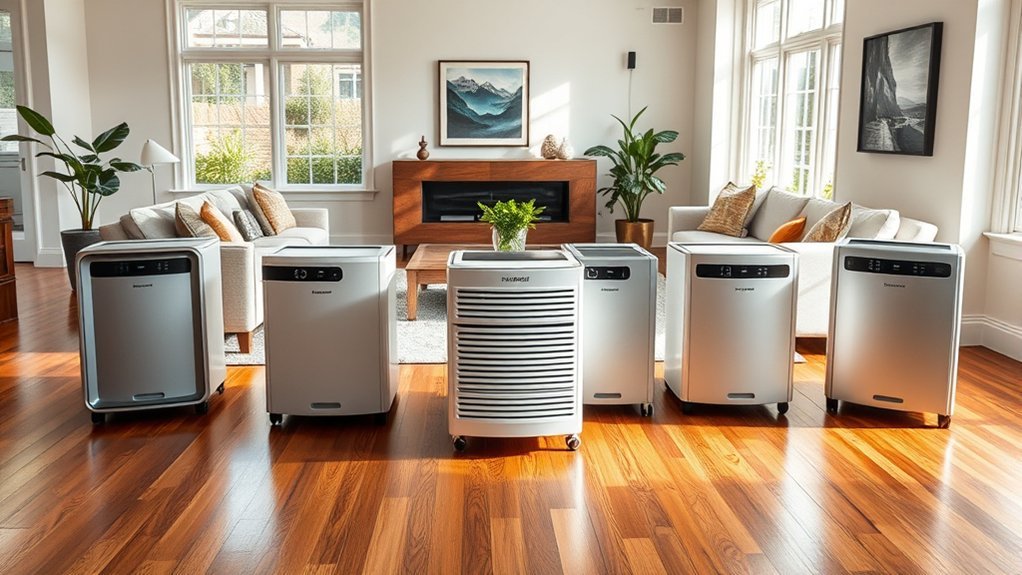
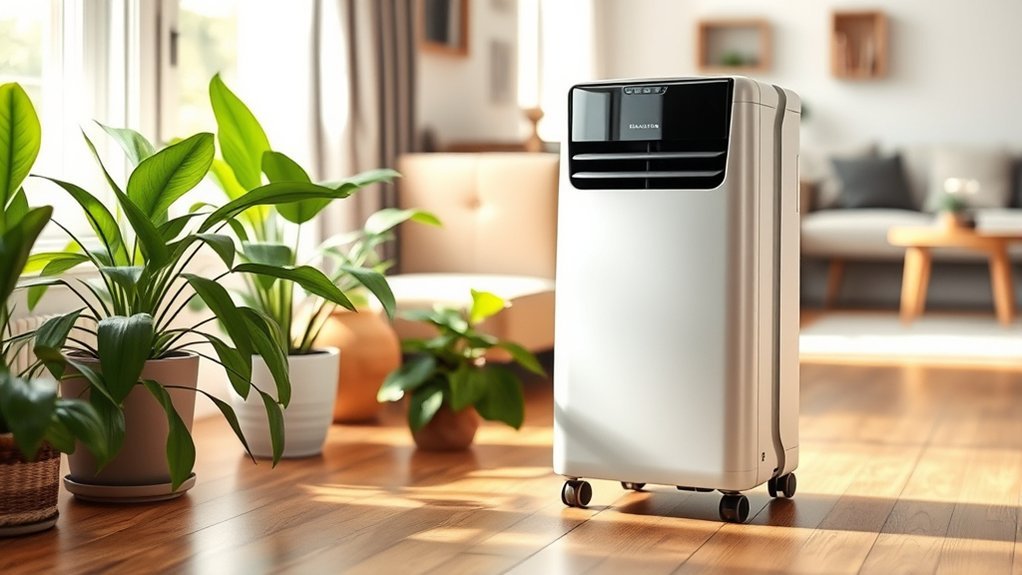
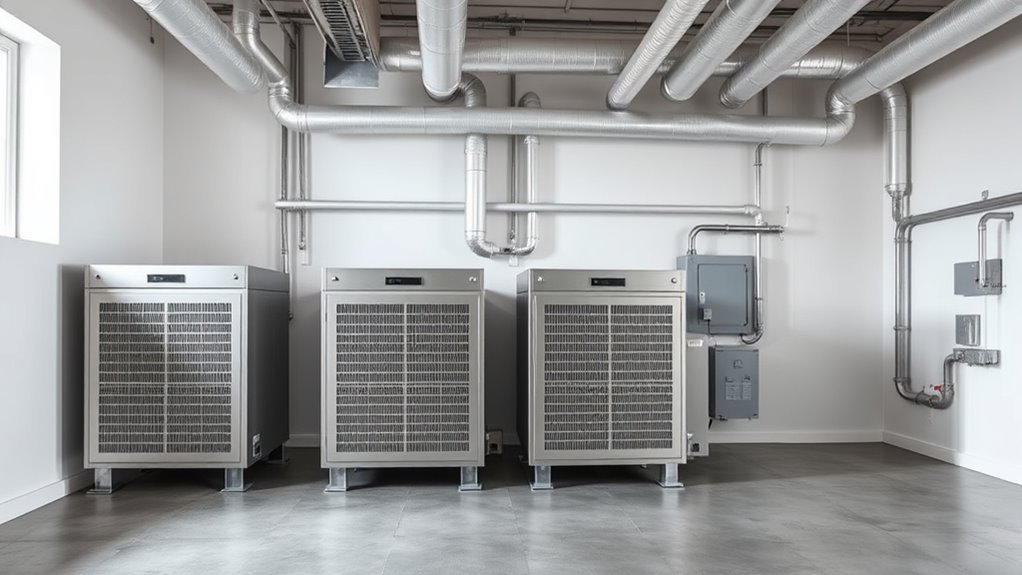
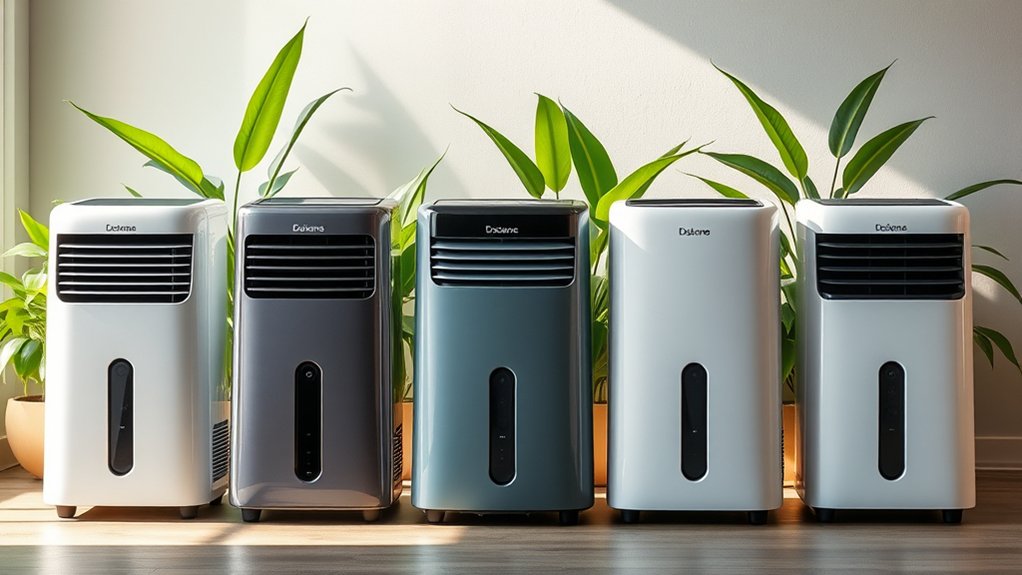
If you need a ducted whole-house dehumidifier in 2026, focus on models built for permanent duct connections, continuous drainage, and automatic humidity control. The strongest matches in this list are the Waykar 158-Pint, AprilAire E070 Pro, Santa Fe Ultra98, CoAiro 208-Pint, and AprilAire E080 Pro. Each serves a different home size and installation style, so compare standardized capacity, duct size, airflow, drainage, filtration, and warranty terms before choosing.
- Compare pint ratings only when they use the same test conditions.
- Manufacturer square-foot estimates are starting points, not substitutes for a moisture-load calculation.
- Confirm duct diameter, external static-pressure requirements, drain routing, electrical needs, and control compatibility before buying.
- Whole-home installation is usually best handled by a qualified HVAC professional.
Quick Comparison of the Best Ducted Whole-House Dehumidifiers
| Product | Best For | Capacity Claim | Coverage Claim | Notable Features | Amazon |
|---|---|---|---|---|---|
| AprilAire E080 Pro | Best overall for larger homes | 80 pints/day | Up to 4,400 sq. ft. | 10-inch duct collars, automatic control, washable MERV-8 filter | Check Price |
| Santa Fe Ultra98 | Best premium filtration | About 98–100 pints/day, depending on version | Up to 2,300 sq. ft. | MERV-13 filtration, insulated cabinet, ventilation-ready design | Check Price |
| AprilAire E070 Pro | Best compact professional model | 70 pints/day | Up to 2,200 sq. ft. | 8-inch duct collars, automatic control, crawl-space-friendly cabinet | Check Price |
| Waykar 158-Pint | Best for large ducted crawl spaces | 158 pints/day at high-temperature, high-humidity conditions | Up to 6,500 sq. ft. | Duct-ready inlet and outlet, wired control, remote humidity sensor | Check Price |
| CoAiro 208-Pint | Best for flexible high-capacity ducting | 208 pints/day at saturation conditions | Up to 3,000 sq. ft. | Multiple duct configurations, wired controller, fresh-air connection | Check Price |
Important comparison note: A capacity measured at saturation or near-saturation conditions can look much higher than a capacity measured under the standardized conditions used for residential comparisons. Do not compare the largest number on the box without checking the test temperature and relative humidity.
Waykar 158 Pints Crawl Space Dehumidifier with Remote Control
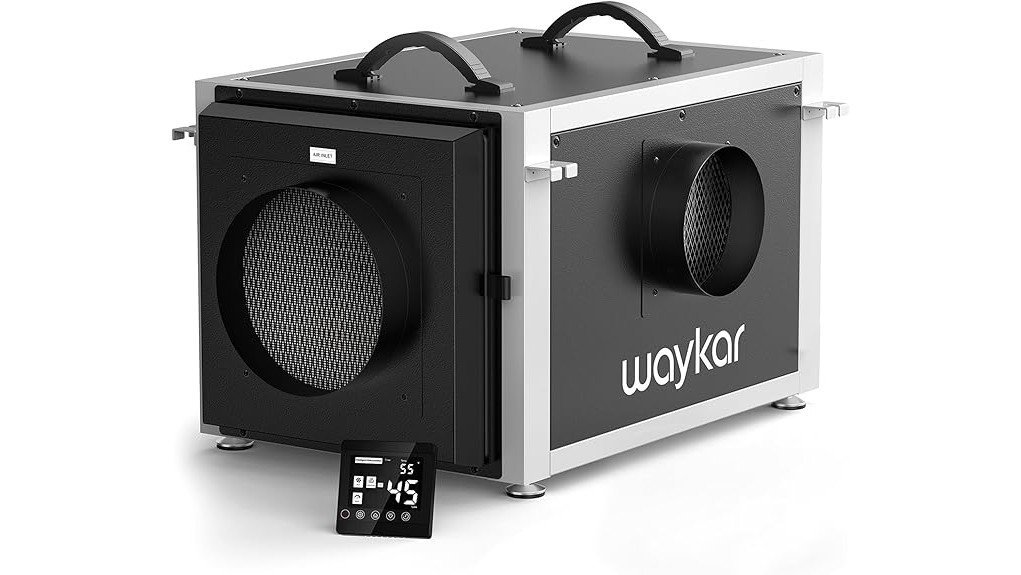
The Waykar 158-Pint model solves a common installation problem: getting high-capacity moisture control into a crawl space, basement, or utility area while keeping the controls accessible. Its duct-ready inlet and outlet support an inline or bypass-style installation, while the wired controller and separate humidity sensor let you monitor the space without crawling back to the unit.
The advertised 158-pint rating is measured under very warm, very humid conditions, so it should not be treated as directly equivalent to an 80-pint DOE-style residential rating. Waykar lists coverage up to 6,500 square feet, but actual performance depends on sealing, climate, ceiling height, airflow, and moisture load.
Why You’ll Like It: It combines dual-duct capability, continuous drainage, automatic defrost, a remote control panel, and a remote humidity sensor in a low-profile commercial-style cabinet.
Who Should Buy This: Homeowners, contractors, or facility managers who need a ductable unit for a large sealed crawl space, basement, garage, or utility zone.
Who Should Avoid This: Buyers who need a quiet portable room unit, a simple bucket-style dehumidifier, or a small-space solution.
Pros:
- Duct-ready inlet and outlet make it more suitable for fixed airflow routing than a standard portable unit.
- Wired controls and a separate sensor reduce the need to access a tight crawl space.
- Continuous drainage and auto defrost support longer unattended operation.
Cons:
- The headline pint rating uses extreme test conditions, so comparison shopping requires extra care.
- The large coverage figure is a manufacturer estimate, not a site-specific load calculation.
- Installation, duct sizing, drainage, and sensor placement require planning.
AprilAire E070 Pro Dehumidifier Bundle (70 Pint)
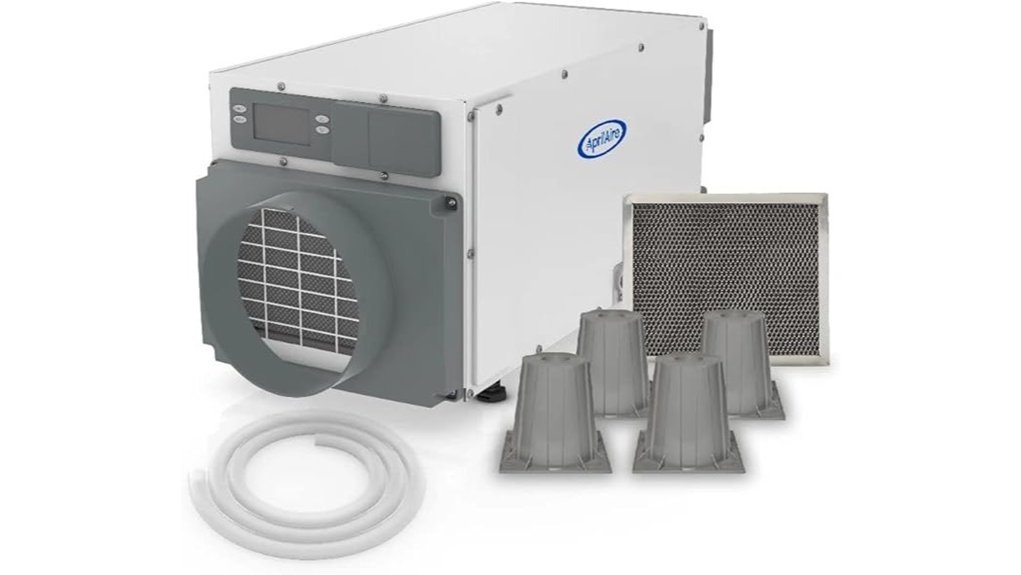
The AprilAire E070 Pro is a strong choice when you want a professional-grade ducted dehumidifier without stepping up to a much larger cabinet. It removes up to 70 pints per day and is currently positioned by the manufacturer for sealed crawl spaces, basements, or whole-home applications up to about 2,200 square feet.
Its 8-inch inlet and outlet collars make it ready for ducted installation, while the built-in control can automatically start dehumidification when humidity rises above the selected target. The base unit includes continuous-drain hardware and a washable MERV-8 filter. Because the linked item is sold as a bundle, verify the exact number of filters, risers, hoses, and other accessories on the current Amazon listing.
Why You’ll Like It: The compact cabinet, duct collars, automatic control, washable filter, and no-bucket drainage design make it easier to build into a permanent moisture-control system.
Who Should Buy This: Owners of smaller homes, basements, or sealed crawl spaces who want a recognized whole-home platform and professional installation support.
Who Should Avoid This: Owners of very large or unusually wet homes that need more capacity, or renters who cannot install ducts and a permanent drain.
Pros:
- Standardized 70-pint capacity is easier to compare with similar whole-home models.
- Includes duct collars and automatic humidity control for permanent installations.
- Compact dimensions suit crawl spaces and mechanical rooms with limited clearance.
Cons:
- Current manufacturer coverage is lower than the 2,800-square-foot figure previously stated.
- Professional installation is recommended for ducted whole-home use.
- Bundle contents may change by seller and should be checked before purchase.
Whole Home Ducted Dehumidifier with MERV-13 Filtration
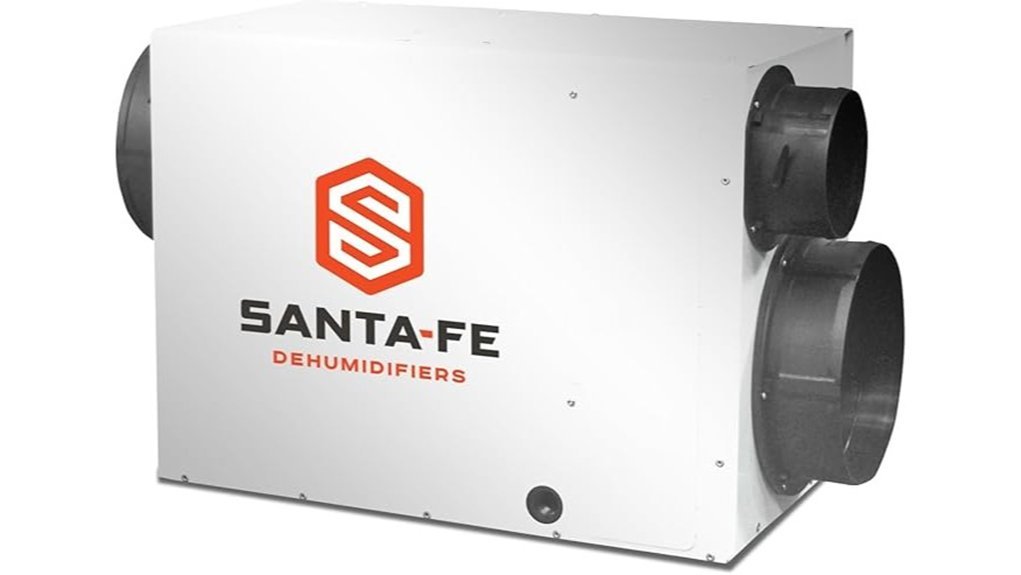
The Santa Fe Ultra98 is designed for dedicated whole-home humidity control, filtration, and optional ventilation. It suits homes up to about 2,300 square feet and uses a MERV-13 filter, making it the strongest filtration-focused option in this group.
The model name reflects the earlier 98-pint specification, while current manufacturer literature lists approximately 100 pints per day under standardized conditions. Its insulated horizontal cabinet, optional vertical discharge, and ventilation-ready design give an HVAC contractor more installation flexibility. Confirm the exact generation, refrigerant, controls, and warranty shown on the Amazon listing because older and newer versions may differ.
Why You’ll Like It: It combines whole-home dehumidification with higher-grade filtration, strong airflow, a well-insulated cabinet, and optional outdoor-air ventilation.
Who Should Buy This: Homeowners who value filtration, quieter mechanical-room operation, and a premium ducted platform for a medium-size home.
Who Should Avoid This: Buyers seeking a plug-and-play unit, the lowest upfront cost, or coverage for a substantially larger home.
Pros:
- MERV-13 filtration captures finer particles than the MERV-8 filters included with some competitors.
- Designed specifically for whole-home ducting and optional ventilation.
- Insulated cabinet and horizontal form factor support quieter, flexible installation.
Cons:
- Requires an external control and professional duct planning.
- Different product generations may show 98- or 100-pint specifications and different warranty terms.
- Ventilation must be designed carefully because outdoor air can add humidity in some climates.
Whole House Dehumidifier 208 Pint with Drain Hose
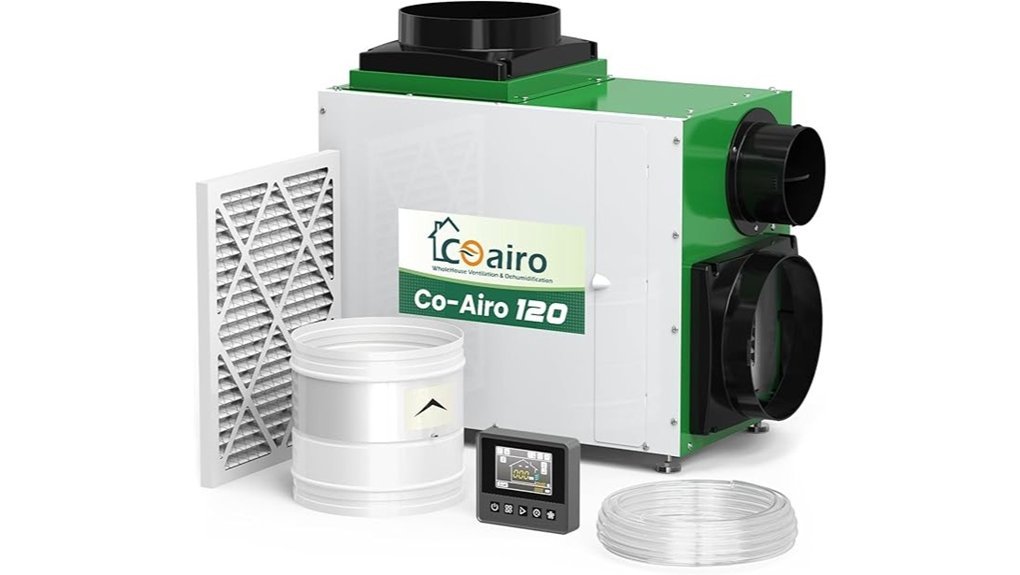
The CoAiro whole-house dehumidifier is aimed at buyers who need multiple duct configurations, a wired controller, continuous drainage, and an optional fresh-air connection. The listing advertises up to 208 pints per day at saturation conditions and coverage up to 3,000 square feet.
That 208-pint number should not be compared directly with standardized 70-, 80-, or 100-pint ratings. Before buying, confirm the exact model number and ask for the unit’s capacity and efficiency at the standard comparison condition, along with its duct sizes, static-pressure chart, electrical draw, included filter, and current warranty.
Why You’ll Like It: It offers flexible inlet and outlet placement, two airflow settings, a wired display, continuous drainage, and a fresh-air connection for a custom installation.
Who Should Buy This: Buyers working with an HVAC professional on a custom ducted setup for a large home, grow room, basement, or commercial-style space.
Who Should Avoid This: Shoppers who want a clearly standardized capacity comparison, a widely documented residential platform, or a simple do-it-yourself installation.
Pros:
- Supports multiple duct arrangements and fixed whole-space installation.
- Wired controls and continuous drainage suit unattended operation.
- Fresh-air connection can be useful when properly designed for the climate and building.
Cons:
- The 208-pint saturation rating can overstate performance relative to standardized residential ratings.
- Key sizing data should be confirmed with the seller or manufacturer before purchase.
- Fresh-air ducting can increase latent load in hot, humid weather if designed incorrectly.
AprilAire E080 Pro Whole-House Dehumidifier, 80-Pint
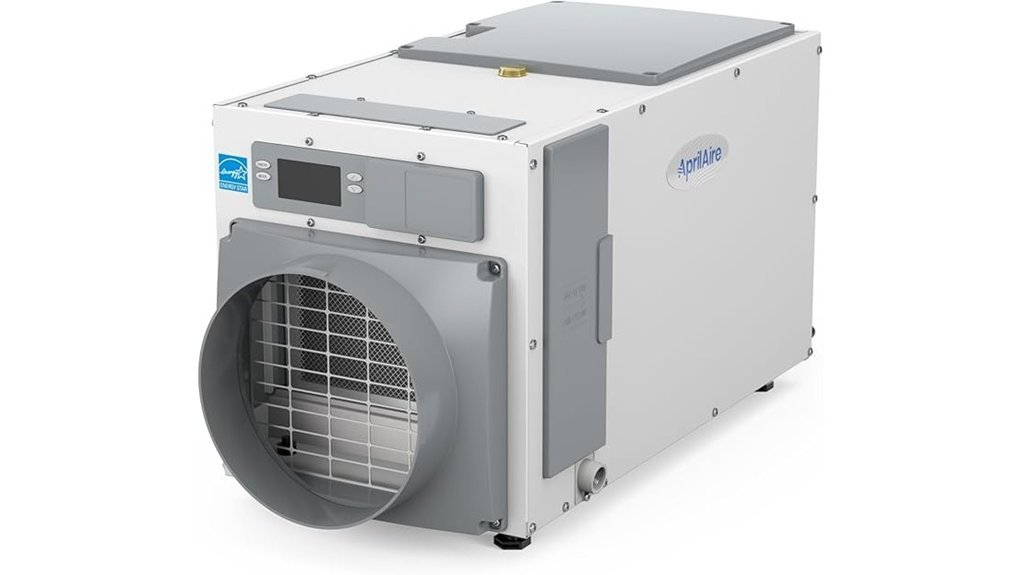
The AprilAire E080 Pro is the most balanced choice here for many larger homes. It removes up to 80 pints per day, is designed for basements, sealed crawl spaces, and whole-home applications, and is currently listed by the manufacturer for spaces up to 4,400 square feet.
The unit includes 10-inch inlet and outlet duct collars, a backdraft damper, a barbed drain fitting, a washable MERV-8 filter, and a built-in digital control that can be positioned for easier access. It runs automatically when humidity rises above the target and does not use a collection bucket. A drain hose may need to be supplied separately, depending on the package.
Why You’ll Like It: It combines a clear standardized capacity, broad residential coverage, duct-ready hardware, automatic control, and low routine maintenance.
Who Should Buy This: Homeowners who want a well-documented whole-house system for a larger basement, sealed crawl space, or central duct installation.
Who Should Avoid This: Buyers who need a portable unit, do not have a practical drain route, or have a smaller space that can be handled by the E070.
Pros:
- 80-pint standardized capacity and manufacturer-rated coverage up to 4,400 sq. ft.
- Includes duct collars, damper, automatic control, and washable MERV-8 filtration.
- No collection bucket and minimal routine maintenance once correctly installed.
Cons:
- Professional duct and drain installation adds to total project cost.
- A drain hose is not necessarily included with the base unit.
- MERV-8 filtration is useful for equipment protection but is less efficient than the Santa Fe unit’s MERV-13 filter.
Factors to Consider When Choosing a Ducted Whole House Dehumidifier
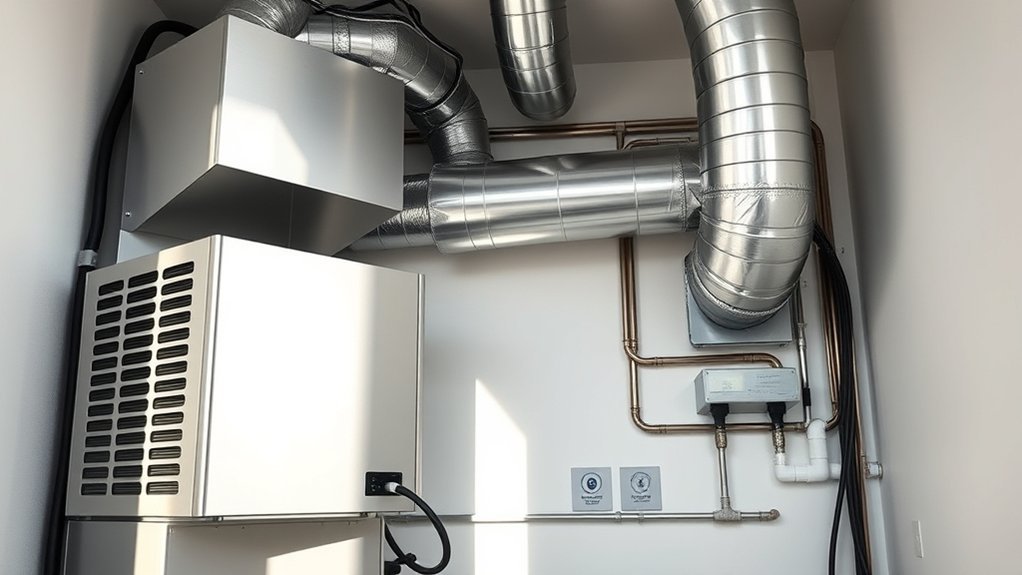
Choose a ducted whole-house dehumidifier by matching the unit to the building’s actual moisture load, duct design, drainage route, electrical supply, and control strategy. Square footage matters, but it is only one part of proper sizing.
Coverage Area and Moisture Load
Manufacturer coverage figures are useful for narrowing the list, but they assume particular ceiling heights, climates, leakage rates, and moisture conditions. A tightly sealed 2,500-square-foot home may need less capacity than a smaller house with a wet foundation, frequent outdoor-air infiltration, or an unsealed crawl space. For a permanent whole-home installation, ask an HVAC professional to consider climate, air leakage, basement or crawl-space condition, number of occupants, ventilation rate, and known water problems.
Moisture Removal Rate
Always check the temperature and relative humidity used for the pint-per-day rating. A unit rated at 95°F and 90% RH or at saturation will show a much larger number than the same machine tested under standardized residential conditions. For a fair comparison, use the standardized capacity and integrated energy factor when available, then treat extreme-condition ratings as secondary information.
Ducting Configuration
Confirm the inlet and outlet collar sizes, supported installation diagrams, required airflow, and external static-pressure limits. Long duct runs, undersized flex duct, too many elbows, or an incorrect return-and-supply layout can reduce moisture removal and increase noise. Decide whether the dehumidifier will operate as a dedicated system, connect to the HVAC return and supply, or serve a crawl space separately. Follow the manufacturer’s approved diagrams and local mechanical codes.
Energy Efficiency
Look for an ENERGY STAR certification and compare integrated energy factor rather than relying only on wattage. Smart humidistats, proper duct sealing, correct sizing, clean filters, and a realistic humidity target also reduce wasted runtime. Avoid assuming that the biggest unit is automatically the most efficient choice.
Drainage Options
A permanent dehumidifier needs a reliable condensate path. Gravity drainage requires continuous downward slope, the correct tubing size, and any trap specified by the manufacturer. A condensate pump can move water upward when a floor drain is unavailable, but it adds another component that needs maintenance. Include an overflow or float-safety strategy when the installation location could be damaged by a leak.
Noise Levels and Placement
Sound depends on the cabinet, fan speed, compressor, duct velocity, mounting surface, and how close the unit is to occupied rooms. An insulated cabinet and lower duct velocity can reduce transmitted noise. Place the unit where filters and service panels remain accessible, and use vibration isolation when the installation instructions allow it.
Filtration and Ventilation
A dehumidifier filter primarily protects the equipment and may also capture airborne particles. Compare MERV ratings, replacement cost, and pressure-drop requirements. A fresh-air connection is different from filtration: it brings outdoor air into the system and must be sized for the home and climate. In hot, humid conditions, too much outdoor air can increase the dehumidification load.
Warranty Support
Read the warranty terms before installation. Coverage may depend on product registration, professional installation, approved controls, routine filter care, and proof of purchase. Also check whether labor, shipping, refrigerant, and diagnostic visits are covered or whether the warranty applies only to parts.
Before You Buy Checklist
- Confirm the exact model number and current package contents.
- Compare capacity at the same test conditions.
- Verify duct collar sizes and approved installation layouts.
- Check voltage, circuit requirements, airflow, and static-pressure data.
- Plan the drain route and any condensate pump or overflow protection.
- Confirm control, thermostat, or HVAC interlock compatibility.
- Measure service clearance for filter and coil access.
- Review warranty registration and installation requirements.
Frequently Asked Questions
How Noisy Are Ducted Whole House Dehumidifiers?
Most produce a steady fan-and-compressor sound. What you hear inside the living space depends heavily on cabinet insulation, duct velocity, mounting, and installation location. A mechanical room, basement, or sealed crawl space usually reduces perceived noise better than placing the unit beside a bedroom.
Do They Work With Existing HVAC Systems?
Many do, but only when the manufacturer supports the proposed return-and-supply arrangement. The HVAC blower, dehumidifier fan, dampers, controls, and duct pressures must work together. Use the installation manual and have an HVAC professional verify the design before connecting the unit to existing ductwork.
How Often Do Filters Need Replacement?
There is no universal schedule. Inspect the filter regularly and clean or replace it according to the manufacturer’s instructions. Dust, pets, construction debris, longer runtimes, and higher-MERV filters can shorten the service interval.
Can They Operate in Extremely Cold Spaces?
Only within the model’s stated inlet-air temperature range. Auto defrost helps manage frost, but it does not make every unit suitable for an unheated winter space. Below the approved range, capacity can fall and icing or shutdowns can occur.
What Maintenance Do Ducted Dehumidifiers Require?
Routine work includes checking the filter, keeping the condensate line and pump clear, inspecting duct connections, confirming the humidity sensor is accurate, and keeping service clearances open. Follow the manual for coil cleaning and arrange professional service if performance drops, the unit leaks, or error codes appear.
What Humidity Level Should I Use?
Many homes are comfortable around 45% to 55% relative humidity, while general indoor-air guidance often recommends staying below 60%. The best setting depends on climate, building materials, comfort, and condensation risk. Avoid forcing humidity unnecessarily low because that increases runtime and energy use.
Conclusion
The best ducted whole-house dehumidifier is the one that matches your real moisture load and can be installed with the correct ducts, drain, controls, and service access. The AprilAire E080 Pro is the strongest all-around choice for many larger homes, the Santa Fe Ultra98 stands out for premium MERV-13 filtration, and the AprilAire E070 Pro is a practical compact option. The Waykar 158-Pint and CoAiro 208-Pint can suit higher-capacity custom installations, but compare their ratings at standardized conditions before deciding.