
Choosing a dehumidifier for an Australian home starts with electrical suitability and real moisture-removal performance, not the largest room-coverage number on the box. Check that the exact model is intended for 220–240V, 50Hz operation, uses an Australian/New Zealand plug, carries the required Regulatory Compliance Mark (RCM), and is supported by an identifiable Australian or New Zealand supplier. Then compare extraction capacity, operating temperature, drainage, noise, energy use, and after-sales support.
Quick Verdict
For most Australian homes, choose an Australian-market compressor or desiccant dehumidifier with a clearly stated litres-per-day rating, a humidistat, suitable drainage, and local support. A plug adaptor changes only the plug shape; it does not change voltage or frequency. A transformer also does not establish Australian compliance, correct 50Hz operation, or local warranty coverage.
Before You Buy an Australian Dehumidifier
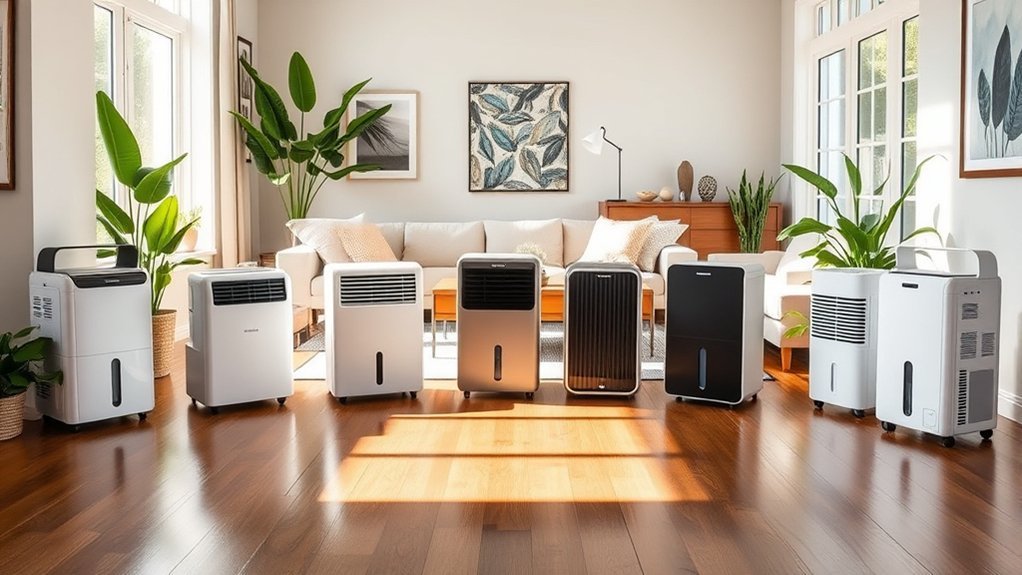
Start with the rating label and supplier details. After that, compare the unit with the room’s actual moisture source, temperature, ventilation, and drainage options. A broad coverage claim alone does not show how quickly the appliance will control wet windows, indoor clothes drying, a damp laundry, or tropical humidity.
| Check | What to Look For | Why It Matters |
|---|---|---|
| Electrical compatibility | A rating label showing 220–240V and 50Hz, plus an Australian/New Zealand plug | Confirms that the exact model is intended for Australian household supply rather than a different voltage or frequency |
| Compliance and supplier | An RCM on the product’s rating label or another permitted location, with traceable supplier and model details | The mark should be linked to a responsible supplier that has taken the required compliance steps |
| Extraction capacity | Litres per day, together with the temperature and relative humidity used for the test | Capacity can appear much higher when measured under unusually hot and humid laboratory conditions |
| Operating temperature | The manufacturer’s minimum and maximum operating-temperature range | Compressor performance can fall in cooler rooms, while some models may defrost or pause more often |
| Room conditions | Room size, moisture source, ventilation, indoor temperature, and local climate | A wet laundry or tropical room needs more drying ability than a mildly humid bedroom of the same floor area |
| Drainage | A practical tank, gravity-drain connection, or built-in pump | Suitable drainage reduces frequent emptying and makes longer operation easier |
| Noise | A stated dB rating for the fan speed or mode you expect to use | Compressor and fan noise can be noticeable in bedrooms, studies, and living areas |
| Warranty and consumer support | An Australian seller, clear warranty contact, return process, spare filters, and repair support | A manufacturer’s warranty may not cover a parallel import, and remedies can be harder to enforce against an overseas seller |
Official verification tip
Before ordering an unfamiliar model, check the supplier and equipment details through the EESS equipment search and responsible-supplier search. For grey or parallel imports, review the ACCC guidance on consumer rights and warranty limitations.
Choose the Right Dehumidifier Type
| Type | Best For | Main Limitation |
|---|---|---|
| Compressor | Warm, humid rooms, laundries, living areas, and larger moisture loads | Performance may fall in colder rooms, and compressor noise can be noticeable |
| Desiccant | Cooler rooms, winter condensation, and spaces where added warmth is useful | Often uses more electricity during extended operation |
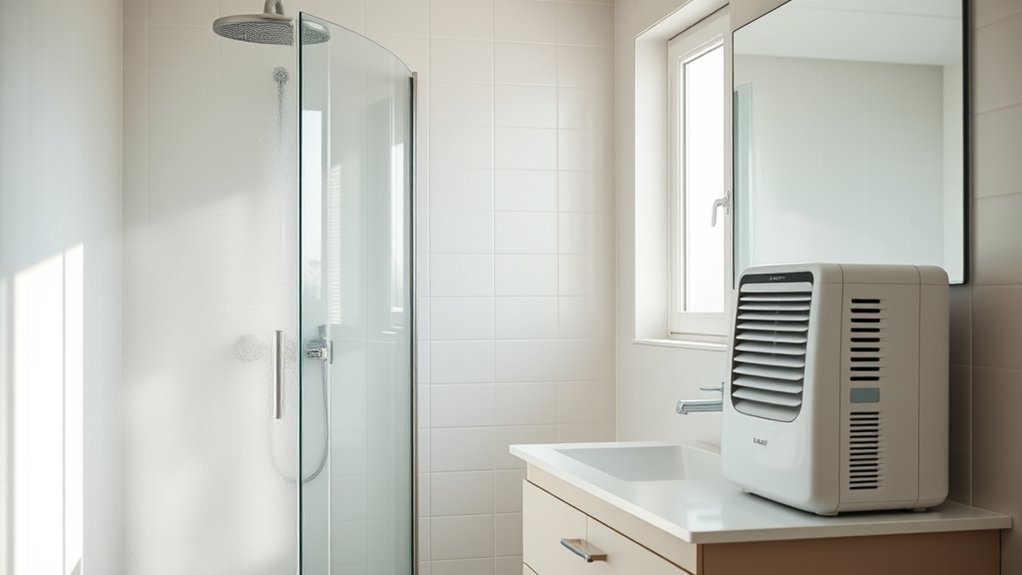
| Thermoelectric | Small enclosed spaces with mild moisture, such as wardrobes or compact bathrooms | Low extraction capacity makes it unsuitable for persistent dampness or large rooms |
Compressor Dehumidifiers
Compressor models cool air over a coil so water condenses into a tank or drain. They are usually the strongest choice for warm, humid rooms and ongoing moisture from showers, cooking, or indoor clothes drying. Compare the low-temperature specification, defrost function, noise, and litres-per-day test conditions rather than relying on coverage claims alone.
Desiccant Dehumidifiers
Desiccant models absorb moisture with a rotating material and can remain useful in cooler rooms where compressor performance may drop. They can also add some warmth to the room. Compare wattage and expected daily use carefully because the heating process may increase running costs during long operating periods.
Thermoelectric Dehumidifiers
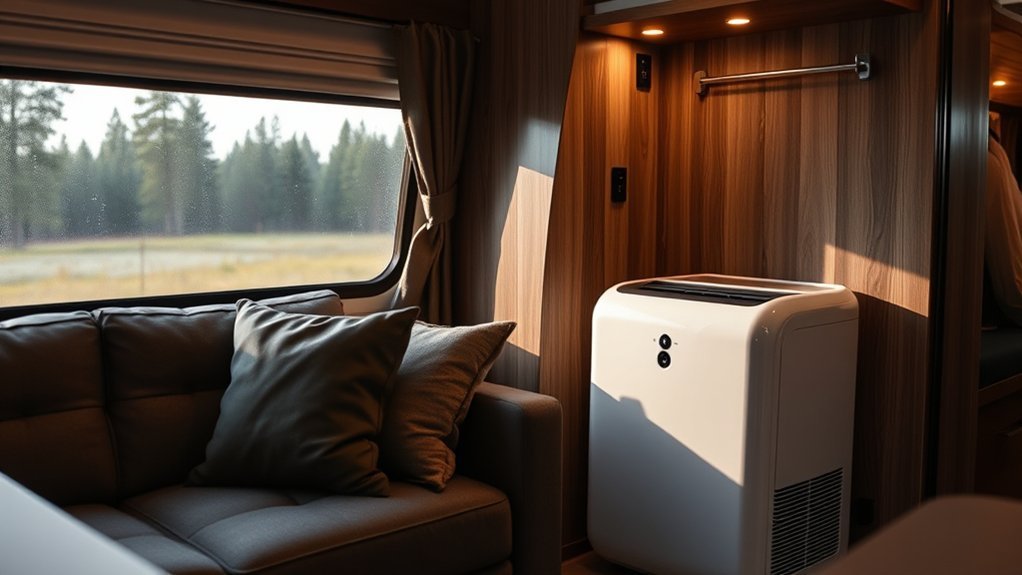
Small thermoelectric or Peltier units are best treated as light-duty options for enclosed wardrobes, compact bathrooms, caravans, or mild condensation. They are often quiet and portable, but large room-coverage claims can be misleading. For persistent dampness, repeated mould, wet windows, or a laundry that stays humid, a properly sized compressor or desiccant model is usually more realistic.
How to Size a Dehumidifier
Do not size a dehumidifier from floor area alone. First identify how much moisture enters the room, how warm the room is, whether doors and windows remain open, and whether the appliance will serve one closed room or a larger connected area.
- Light moisture: occasional window condensation, a musty wardrobe, or a small bathroom after short showers.
- Moderate moisture: regular condensation, indoor clothes drying, a poorly ventilated bedroom, or a laundry that stays damp.
- Heavy moisture: persistent high humidity, visible damp patches, repeated mould growth, flood recovery, or a large open-plan area in a humid climate.
Compare models by litres removed per day under stated test conditions. When two units advertise similar coverage, the model with the stronger verified extraction rate and suitable operating-temperature range will usually handle an ongoing moisture load more effectively. A humidistat is valuable because it can cycle the appliance around the selected humidity instead of running continuously after the room is dry enough.
Do not confuse tank size with extraction capacity.
A 3-litre tank does not mean the appliance removes 3 litres per day. Tank capacity only shows how much water the container holds before it must be emptied; extraction capacity describes moisture removal under stated test conditions.
Australian Climate and Room Considerations
Australia includes tropical, subtropical, temperate, cool, and dry climate zones, so one dehumidifier type will not suit every home. Warm coastal and northern areas may need stronger extraction and continuous drainage. Cooler southern rooms may benefit from a unit designed to operate effectively at lower temperatures. In dry inland areas, a dehumidifier may only be needed for a bathroom, laundry, leak, or seasonal condensation problem.
Ventilation and building maintenance remain essential. Use externally vented exhaust fans in kitchens, bathrooms, and laundries where possible, repair plumbing or roof leaks, and avoid drying clothes indoors without adequate airflow. A dehumidifier can reduce moisture in the air, but it cannot repair the source of water entering the building or replace professional mould remediation when the problem is extensive or recurring.
Drainage Options
Manual Water Tank
A removable tank is simple and works wherever the appliance can be positioned safely near a suitable power outlet. Check tank capacity, handle design, spill protection, and automatic shut-off when full. A small tank can become inconvenient in very humid conditions or during laundry drying.
Gravity Drainage
A gravity hose allows water to flow continuously to a floor drain, sink, or suitable outlet below the dehumidifier. The hose must slope downward without kinks, loops, or raised sections. Confirm the required hose diameter and whether a hose is included.
Built-In Pump
A built-in pump can move water upward or farther away when a drain is not directly below the appliance. Check the maximum lift height, included hose length, pump controls, and whether the pump is covered by the same warranty as the main unit.
Noise and Bedroom Use
Compare noise ratings in the same operating mode. A low or sleep setting may be more comfortable at night but may remove moisture more slowly. Look for a dimmable display, adjustable fan speed, timer, and suitable restart behaviour only when those features match your use. Place the unit on a firm, level surface and maintain the clearance stated in the manual to reduce vibration and restricted airflow.
Energy Use and Running Costs
Compare input power in watts, moisture removed per day, and any efficiency figure supplied for the exact Australian-market model. A low-wattage unit is not automatically cheaper to operate if it runs continuously while removing very little moisture. A correctly sized appliance with a reliable humidistat may reach the target sooner and cycle off more often.
Simple running-cost estimate: divide the appliance wattage by 1,000, multiply by the hours used, and multiply again by your electricity tariff per kilowatt-hour. Actual cost will vary as the compressor or heater cycles.
Use a timer or smart schedule only when it does not interrupt the drying job. For heavy moisture, longer operation with safe continuous drainage may be practical until humidity is under control, after which the humidistat can maintain the chosen level.
Before You Buy Checklist
- Confirm the exact model is rated for 220–240V and 50Hz operation.
- Check for an Australian/New Zealand plug and an appropriate RCM marking.
- Confirm the supplier and model details through official records where possible.
- Verify extraction capacity in litres per day and note the test conditions.
- Check the operating-temperature range for the room you need to dry.
- Match the unit to moisture severity and room layout, not floor area alone.
- Choose a tank, gravity hose, or pump arrangement you can use safely.
- Check operating noise in the mode you will use most often.
- Confirm the seller, warranty process, returns, repair support, and replacement-filter availability.
- Measure the installation space and leave the airflow clearance required by the manual.
- Check current electrical-product recalls before using an unfamiliar or second-hand unit.
Dehumidifier Maintenance
Switch off and unplug the appliance before cleaning it. Empty and rinse the tank regularly, clean the filter according to the manual, and keep the air inlet and outlet free of dust. Inspect the drain hose for kinks, slime, or blockages. Do not immerse the appliance or handle its plug with wet hands. After moving a compressor dehumidifier, follow the manufacturer’s instructions before switching it on so the refrigerant and compressor oil can settle when required.
Frequently Asked Questions
What Humidity Level Should I Aim For?
A practical starting setting is around 50% to 55% relative humidity, then adjust for comfort, climate, condensation, and the building. Avoid making the room unnecessarily dry. A separate hygrometer can help you compare the room reading with the dehumidifier’s built-in sensor. If condensation or mould keeps returning, investigate ventilation, leaks, insulation, and other moisture sources rather than relying only on a lower setting.
Can a Dehumidifier Stop Mould?
It can reduce the airborne moisture that supports mould growth, but it will not remove existing mould or fix leaks, rising damp, waterproofing faults, or poor ventilation. Existing mould should be cleaned or remediated safely, and the underlying moisture source must be corrected to reduce regrowth.
Can a Dehumidifier Reduce Allergens?
Lower humidity may make conditions less favourable for mould and dust mites. However, a dehumidifier is not a substitute for cleaning, ventilation, leak repair, or a suitable air purifier when airborne particles are the main concern. People with persistent respiratory symptoms should seek appropriate medical advice.
Can I Use a US Dehumidifier in Australia?
Check the rating label before doing anything. If a US-market model is rated for 120V or 60Hz-only operation, it does not match Australian household supply. A travel adaptor does not change voltage or frequency, and a transformer does not provide RCM compliance, correct frequency operation, or Australian warranty support. When suitability cannot be confirmed for the exact model, choose a unit supplied for the Australian market.
Is a Compact Dehumidifier Enough for a Bedroom?
It may be enough for mild condensation in a small, enclosed bedroom. For regular wet windows, indoor clothes drying, visible dampness, or a humid climate, compare a compressor or desiccant model with a clearly stated litres-per-day capacity and acceptable sleep-mode noise.
How Long Should a Dehumidifier Run?
Run it until the room reaches the selected humidity and the source of excess moisture is controlled. A humidistat can then cycle the appliance automatically. A unit that runs continuously without lowering humidity may be undersized, poorly positioned, obstructed, operating outside its effective temperature range, or working while new moisture is constantly entering the room.
Final Recommendation
Buy for Australian conditions, not just the product headline.
Prioritise verified electrical suitability, an appropriate RCM and responsible supplier, extraction capacity under stated conditions, a workable drainage method, acceptable noise, and dependable local support. Once those requirements are confirmed, choose the smallest unit that can comfortably manage the room’s real moisture load without operating at maximum output all day.


[…] marking and local warranty: Australian buying guides stress that RCM marking and a responsible local supplier are non-negotiable before […]