
Affiliate disclosure: This article contains Amazon affiliate links. We may earn a commission from qualifying purchases at no extra cost to you. Product specifications and availability can change, so confirm the current listing before ordering.
Marketplace note: The product links below point to Amazon.com. Buyers outside the United States should confirm voltage, plug type, warranty coverage, shipping eligibility, and local electrical requirements before ordering.
The best dehumidifier for a large home should be chosen by moisture load, drainage, room layout, and operating conditions—not by an oversized square-footage claim alone. The four high-capacity models below are the strongest matches from the original lineup for large basements, garages, open living areas, and other demanding spaces. The Waykar is the best general-purpose choice with gravity drainage, while the DECIUU and Avylo add built-in pumps for difficult drain locations. The Gasbye is another high-capacity option with a relatively large collection tank.
Quick Verdict
Choose the Waykar 120-Pint when you want the strongest overall balance of seller-stated capacity, wide coverage, automatic controls, and straightforward gravity-hose drainage. Choose the Gasbye 115-Pint for another high-moisture option with a 1.7-gallon tank. The DECIUU 100-Pint is the most practical pick when water must be pumped upward, while the Avylo 90-Pint combines pump drainage with the largest collection tank in this comparison.
How these products were selected
The final lineup prioritizes current product relevance, high seller-stated moisture-removal capacity, practical drainage, automatic humidity control, and suitability for large or persistently damp residential spaces. These are editorial comparisons of listing information, not claims of hands-on testing.
Quick Comparison
Capacity-label warning: Pint ratings below are seller-stated maximums. Some are measured in unusually hot and humid conditions and may not equal a standardized DOE or AHAM residential rating. Use the figures for general comparison only and confirm the current specification sheet before buying.
| Product | Seller-Stated Maximum | Coverage Claim | Tank and Drainage | Best Fit | Check Details |
|---|---|---|---|---|---|
| Waykar | Up to 120 pints/day at 95°F and 90% RH | Up to 6,000 sq. ft. | 1.14-gallon tank or gravity hose | Large open spaces with a lower drain | Check Availability |
| DECIUU | Up to 100 pints/day | Up to 5,000 sq. ft. | 1.45-gallon tank, gravity hose, or built-in pump | Basements without a lower floor drain | Check Availability |
| Avylo | Up to 90 pints/day at 90°F and 90% RH | Up to 4,500 sq. ft. in Amazon’s specification table | 2.11-gallon tank, gravity hose, or built-in pump | Pump drainage with fewer manual tank emptyings | Check Availability |
| Gasbye | Up to 115 pints/day | Up to 4,500 sq. ft. | 1.7-gallon tank or gravity drain hose | Very damp large rooms with a lower drain | Check Availability |
Before you buy: Coverage figures are marketing guides rather than guarantees. Real performance depends on temperature, starting humidity, ceiling height, room layout, airflow, water intrusion, and how often doors and windows are opened. Fix active leaks or seepage before relying on any portable dehumidifier.
Waykar 120 Pints Energy Star Dehumidifier
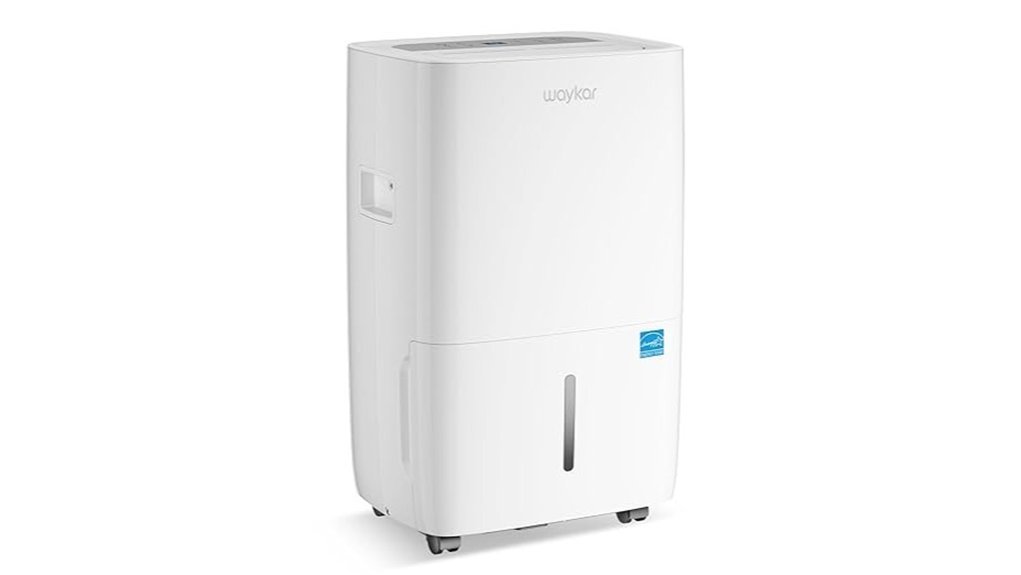
Best Overall for Large Spaces
The Waykar is the strongest general-purpose choice in this lineup for a large basement, garage, workshop, laundry area, or open living space with a suitable lower drain. Its listing states a maximum of 120 pints per day at 95°F and 90% relative humidity, coverage up to 6,000 sq. ft., adjustable humidity control, auto defrost, a 1.14-gallon tank, and continuous gravity drainage.
Why you may like it: Its automatic swing function can direct airflow through a wider area, while the humidistat, timer, restart memory, wheels, and carrying handle reduce day-to-day attention. It offers more placement flexibility than a fixed commercial unit while retaining a high seller-stated maximum capacity.
Who should buy this: Consider it when you have a large, open, persistently damp space and can route the included hose continuously downhill to a floor drain, sink, or condensate system.
Who should avoid it: It may be excessive for a lightly damp bedroom. It does not include a lift pump, so it cannot send water upward through the drain hose without a separate compatible condensate pump.
- Main benefit: High seller-stated maximum capacity with simple automatic operation.
- Tank: Approximately 1.14 gallons.
- Drainage: Manual tank or continuous gravity hose.
- Check first: Standard-condition capacity, dimensions, hose route, operating-temperature range, and current warranty.
DECIUU 100 Pint Dehumidifier with Pump
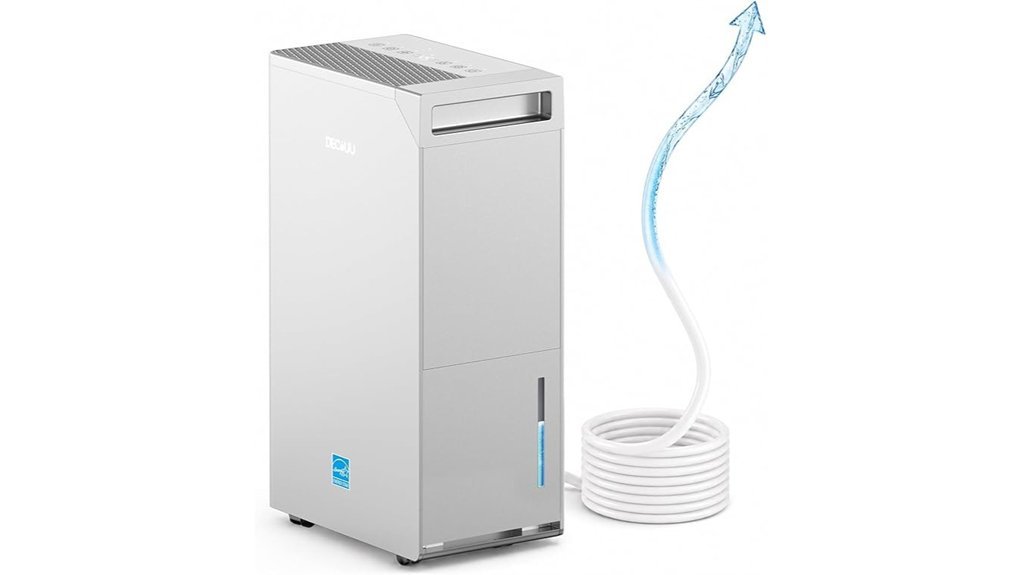
Best Built-In Pump Pick
The DECIUU is the most practical choice when the nearest suitable drain is above the dehumidifier. Its listing states a maximum of 100 pints per day, coverage up to 5,000 sq. ft., a 1.45-gallon tank, and three drainage methods: manual tank collection, a gravity hose, or a built-in pump.
Why you may like it: The current listing states that its pump can move collected water upward by as much as 16.4 feet, giving you more freedom to reach a utility sink or elevated drain. Adjustable humidity control, auto restart, auto defrost, a timer, and multiple fan speeds support unattended basement use.
Who should buy this: It is best for a large basement, garage, or laundry area where a continuously descending gravity hose is not possible.
Who should avoid it: Buyers with a nearby floor drain may prefer the simpler Waykar or Gasbye. A pump adds tubing and internal components that need periodic inspection and cleaning.
- Main benefit: Flexible water removal when the drain is above the appliance.
- Tank: Approximately 1.45 gallons.
- Drainage: Manual tank, gravity hose, or built-in pump.
- Check first: Current pump-lift limit, hose length, check-valve instructions, standard-condition capacity, and pump-cleaning schedule.
Avylo 90-Pint Dehumidifier for Basement with Pump
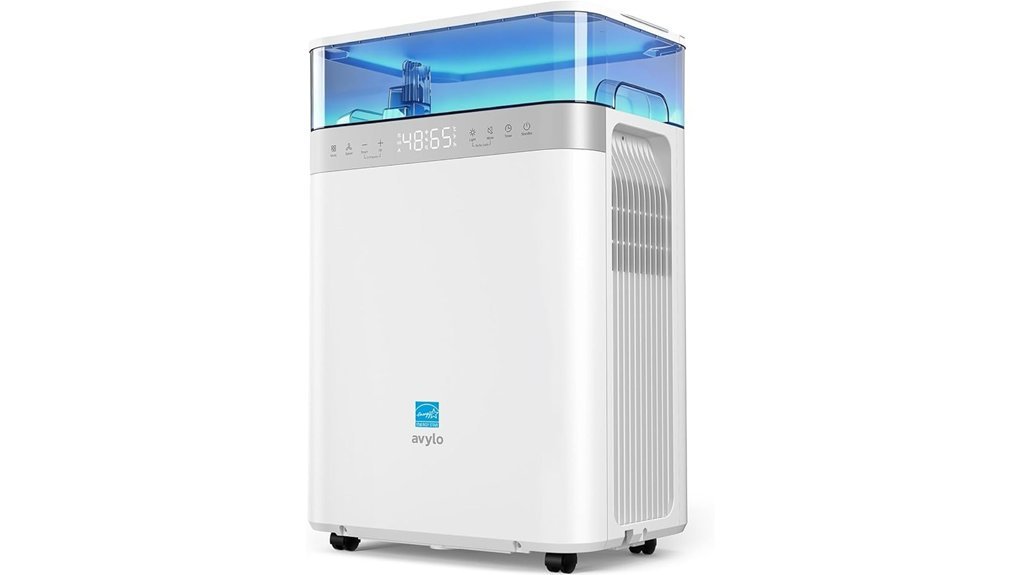
Best Large Tank with Pump
The Avylo combines a seller-stated maximum of 90 pints per day at 90°F and 90% relative humidity with a top-mounted 2.11-gallon tank and three drainage methods. Amazon’s structured specification table lists coverage up to 4,500 sq. ft., although other text on the listing may show 5,000 sq. ft.; buyers should confirm the current specification before ordering.
Why you may like it: Its tank is larger than those of the other retained models, which can reduce emptying frequency when a permanent hose is unavailable. The built-in pump also allows water to travel toward a higher drain, while auto shut-off and auto defrost support routine operation.
Who should buy this: It suits a large basement or utility space where you need both pump drainage and a generous backup tank.
Who should avoid it: Its larger body and approximately 38.6-pound weight may be awkward in tight rooms. Buyers should also verify the current pump-lift limit because it is essential to planning the hose route.
- Main benefit: Built-in pump plus the largest collection tank in this comparison.
- Tank: Approximately 2.11 gallons.
- Drainage: Manual tank, gravity hose, or built-in pump.
- Check first: Conflicting coverage figures, dimensions, pump lift, test conditions, and access for maintenance.
Gasbye 115-Pint Dehumidifier for Large Rooms
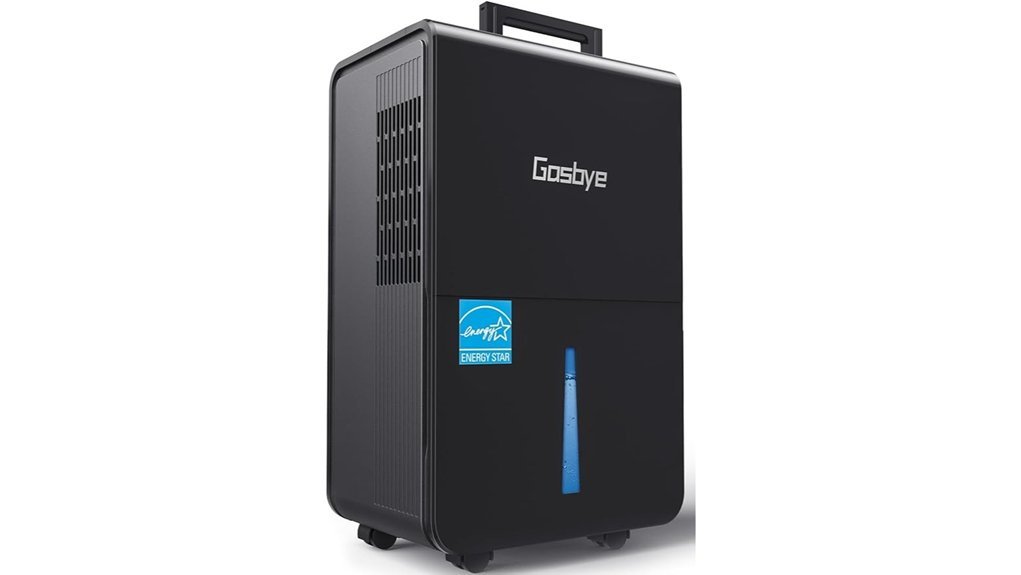
Best High-Moisture Gravity-Drain Pick
The Gasbye listing describes a maximum moisture-removal rate of 115 pints per day for spaces up to 4,500 sq. ft. It includes a gravity drain hose, a 1.7-gallon collection tank, automatic shut-off, automatic restart, and a seller-stated sound level of 45 dB.
Why you may like it: It combines a high seller-stated maximum with a tank larger than the Waykar and DECIUU tanks. That can be useful when you occasionally need manual collection but still want the option of continuous drainage for longer unattended operation.
Who should buy this: It is a sensible alternative for a very damp basement, large garage, or open living area with a floor drain or another outlet below the drain port.
Who should avoid it: It cannot pump water upward by itself. The advertised sound figure may also be measured at a selected fan setting, so buyers placing it near a bedroom should check the full noise specification.
- Main benefit: High seller-stated capacity with a relatively large tank.
- Tank: Approximately 1.7 gallons.
- Drainage: Manual tank or continuous gravity hose.
- Check first: Capacity test conditions, hose length, noise by fan speed, certification details, and current warranty.
How to Choose a Dehumidifier for a Large Home
Start With Moisture Load, Not Only Square Footage
A lightly damp 3,000-square-foot open area may need less extraction than a wet 1,500-square-foot basement with seepage or frequent laundry drying. Look for condensation, musty odors, visible dampness, drying laundry, room temperature, and how quickly humidity rises after the machine stops. Treat seller coverage figures as broad comparison guides, not guaranteed sizing calculations.
Compare Capacity Test Conditions
Do not compare pint figures until you know the test temperature and relative humidity. A maximum measured near 90°F to 95°F and 90% RH can be substantially higher than the amount removed under cooler household conditions. Look for the standardized capacity on the product label, manual, ENERGY STAR record, or current specification sheet.
Choose the Right Drainage Method
A manual tank offers flexible placement but requires regular emptying. Gravity drainage is convenient when a floor drain, sink, or condensate inlet is lower than the dehumidifier’s drain port. A built-in pump is worth considering when water must move upward or across a room. Follow the manufacturer’s maximum pump lift, hose length, and routing instructions, and keep gravity hoses continuously sloped without kinks.
Check Room Layout and Airflow
One portable dehumidifier works best in an open area. Closed bedroom doors, separate floors, narrow hallways, and divided basement rooms restrict circulation, so a single large machine may not control every part of a home evenly. Leave the clearance specified in the manual around the intake and exhaust, and do not push the cabinet tightly against a wall.
Compare Tank Size and Maintenance Access
A larger tank reduces emptying frequency, but tank size matters much less when a reliable continuous drain is available. Make sure you can remove the bucket, clean the filter, reach the hose connection, and inspect pump tubing without moving heavy furniture. Pump models need more maintenance than simple gravity-drain units.
Compare Noise at the Speed You Will Use
Noise claims may be measured at a low fan setting or under selected laboratory conditions. Compressor startup, high fan speed, pump operation, or vibration on an uneven floor can sound louder than the headline number. For living areas, place the unit on a level surface and choose enough capacity that it does not need to run continuously at maximum speed.
Verify Energy and Electrical Details
Check the current product label for certification, wattage, voltage, frequency, plug type, amperage, and operating-temperature range. Certification years and model variants can change. Plug the appliance into a properly grounded outlet and follow the manual’s circuit and extension-cord instructions. Do not assume an Amazon.com model is suitable for another country’s electrical system.
Plan for Maintenance
Clean the filter according to the manual, wash and dry the tank, inspect the drain hose, and keep the intake free of lint and dust. Pump models also require the pump reservoir, tubing, and any check valve to be inspected for buildup. Regular maintenance supports airflow, reduces odors, and helps prevent leaks or unexpected shutdowns.
Address the Source of the Moisture
A dehumidifier can manage moisture in the air, but it cannot repair foundation seepage, plumbing leaks, roof damage, poor grading, or an incorrectly vented dryer. Correct active water problems first. Standing-water cleanup and major flood restoration may require professional drying equipment rather than a normal residential unit.
Selection Checklist
- Match capacity to dampness, temperature, ceiling height, and room layout.
- Check the conditions used for the advertised pints-per-day figure.
- Choose manual tank, gravity drain, or pump drainage before deciding placement.
- Confirm pump lift, hose length, dimensions, weight, and maintenance access.
- Verify voltage, plug, wattage, warranty, operating range, and current certification.
- Fix leaks, seepage, drainage, or ventilation problems instead of relying only on the appliance.
Frequently Asked Questions
Can One Portable Dehumidifier Handle an Entire Large House?
It may control a large open area, but closed rooms, stairways, and multiple floors restrict airflow. A large home may need more than one portable unit or a professionally sized ducted whole-house dehumidifier.
How Large Should My Dehumidifier Be?
Use room size only as a starting point. Dampness level, temperature, ceiling height, airflow, seepage, laundry drying, and the capacity test standard are equally important. A smaller but very wet basement can require more moisture removal than a larger, mildly humid room.
Is a Built-In Pump Worth It?
Yes, when the drain is above the dehumidifier or a continuously descending gravity hose is impossible. If a lower floor drain is nearby, gravity drainage is simpler, quieter, and has fewer parts to maintain.
What Is the Difference Between a Maximum Pint Rating and a Standard Rating?
A seller may advertise the most water a machine removes in very hot, humid air. A standardized rating uses defined test conditions so products can be compared more consistently. Always check which conditions produced the advertised number.
What Humidity Setting Should I Use?
A setting around 45% to 55% is a practical starting range for many homes. Adjust it based on condensation, comfort, room temperature, climate, and the needs of the building. Extremely low settings can increase run time and electricity use without solving the underlying moisture source.
How Often Should I Clean the Filter?
Follow the manual for the exact schedule. Inspect it more often in dusty basements, workshops, laundry areas, or homes with pets. A blocked filter reduces airflow and can lower moisture-removal performance.
Can a Dehumidifier Help With Mold, Allergies, or Asthma?
Reducing excess moisture can make an indoor space less favorable for mold growth and dust mites, but a dehumidifier does not remove existing mold, repair leaks, or treat a medical condition. Correct the moisture source and seek qualified remediation or medical advice when appropriate.
Why Is My Dehumidifier Running Without Collecting Much Water?
The room may already be near the target humidity, the temperature may be too low, airflow may be blocked, or the unit may be undersized. Check the filter, intake clearance, humidity setting, drain hose, frost indicators, and operating-temperature guidance in the manual.
Can I Drain a Dehumidifier Into a Sink?
A gravity-drain model can reach a sink only when the entire hose remains below the drain port with a continuous downward slope. A built-in pump can send water toward a higher sink within its stated lift and hose-length limits.
Final Recommendation
For a large basement or open living area with a lower drain, the Waykar 120-Pint offers the strongest overall combination of seller-stated maximum capacity, broad coverage, automatic controls, and straightforward continuous drainage. The Gasbye 115-Pint is a strong alternative when you want another high-capacity gravity-drain model with a larger tank.
Choose the DECIUU 100-Pint when pump lift and flexible hose routing are the deciding factors. Choose the Avylo 90-Pint when you want pump drainage plus a 2.11-gallon backup tank, but verify its conflicting coverage figures before purchasing.
Whichever model you choose, confirm the current standard-condition capacity, electrical requirements, dimensions, drainage route, operating-temperature range, certification, and warranty. A correctly sized dehumidifier with reliable airflow and drainage will be more useful than a larger model installed where it cannot discharge water properly.

[…] Best Dehumidifier for Large Homes: 4 Top Picks 2026 […]