
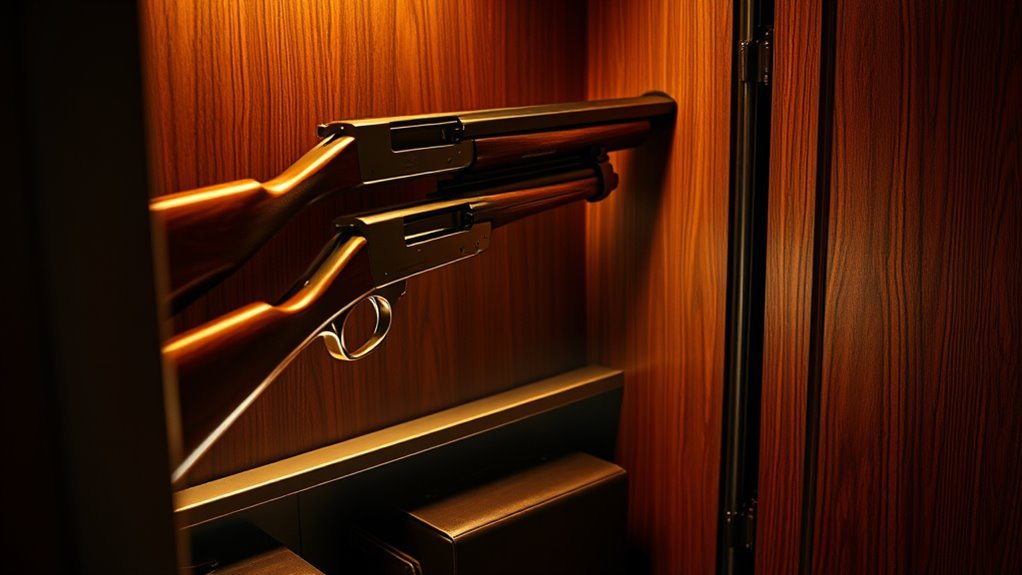
A dehumidifier rod is a slim, low-watt heated bar used inside small enclosed spaces where damp air gets trapped. It does not collect water in a tank. Instead, it gently warms the air, encourages slow air circulation, and helps reduce condensation on stored items. It works best in wardrobes, cabinets, safes, lockers, tool storage, and similar spaces with limited airflow.
Quick Answer
A dehumidifier rod is a small heated rod that helps keep enclosed storage spaces drier by warming the air and reducing condensation. Use one in a wardrobe, cabinet, safe, toolbox, boat compartment, or camper cabinet when the space is closed, mildly damp, and too small for a full room dehumidifier.
Key Takeaways
- A dehumidifier rod helps prevent condensation; it does not pull water into a tank like a compressor dehumidifier.
- It works best in small, enclosed spaces with poor airflow, such as wardrobes, safes, cabinets, lockers, and tool storage.
- Install it low, level, and clear of fabrics, paper, solvents, and stored items.
- Use a hygrometer to check results instead of guessing.
- For valuable cameras, documents, electronics, or collectibles, a dry cabinet gives better humidity control.
What Is a Dehumidifier Rod?
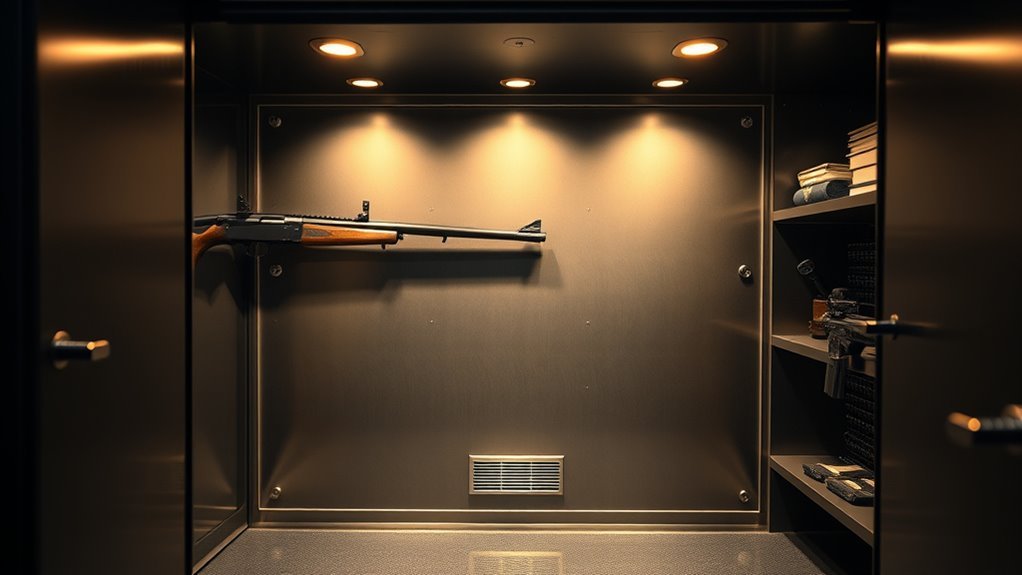
A dehumidifier rod is a narrow electric heating device made for moisture-prone storage spaces. Official product descriptions for heated safe rods explain that they work by slightly increasing air temperature inside a safe or enclosure so air can circulate continuously and reduce humidity, mildew, and condensation risk. Lockdown, for example, lists dehumidifier rods for gun safes, boat hulls, camper cabinets, and other small spaces that harbor moisture.
The key difference is simple: a rod does not remove water into a bucket. It lowers condensation risk by warming the air and surfaces inside a closed space. Warmer air has a lower relative humidity than cooler air with the same moisture content, so moisture is less likely to settle on metal, leather, paper, or fabric.
Note: A dehumidifier rod is best for prevention. If a wardrobe, cabinet, or safe already smells strongly musty, has visible mold, or has standing water, fix the water source and dry the space first.
How a Dehumidifier Rod Works
A dehumidifier rod uses low-level heat to warm nearby air. As the warmed air rises, cooler air moves down toward the rod. This creates a gentle convection loop inside the enclosure. The movement is slow, quiet, and fan-free, but it can be enough to reduce condensation in a tight space.
This is why placement matters. When the rod sits low in the space, warm air can rise through the cabinet, wardrobe, safe, or locker instead of heating only one corner.
Heat-Driven Moisture Control
Heat-driven moisture control works by reducing the chance that water vapor will condense on cool surfaces. The U.S. Environmental Protection Agency explains that condensation prevention can involve reducing humidity, increasing ventilation or air movement, insulating cold surfaces, and increasing air temperature. EPA mold and moisture guidance also recommends keeping indoor relative humidity below 60%, ideally between 30% and 50% when possible.
That does not mean every storage space must sit exactly at one number. Leather, wood instruments, camera gear, paper documents, and firearms may have different ideal storage ranges. A small digital hygrometer is the easiest way to know what is actually happening inside the enclosure.
Air Circulation Basics
Air circulation is the rod’s main helper. Without airflow, damp air can sit in corners, behind boxes, under shelves, or around metal parts. A rod creates mild air movement without a fan, which makes it useful in closed spaces where a normal room dehumidifier would be too large.
For best results, keep the enclosure mostly closed, leave some clearance around the rod, and avoid packing items so tightly that air cannot move.
What a Dehumidifier Rod Does Not Do
A dehumidifier rod is not a cure for every humidity problem. It does not pump water out of the air, drain into a tank, or let you set an exact humidity target. It also cannot dry a full room, a wet wall, a leaking cabinet, or a flooded storage area.
- Use a rod for mild dampness and condensation prevention.
- Use desiccant packs for small sealed boxes or short-term storage.
- Use a dry cabinet for precise humidity control.
- Use a room dehumidifier or repair work for large spaces, leaks, or persistent high humidity.
Dehumidifier Rod Benefits for Wardrobes
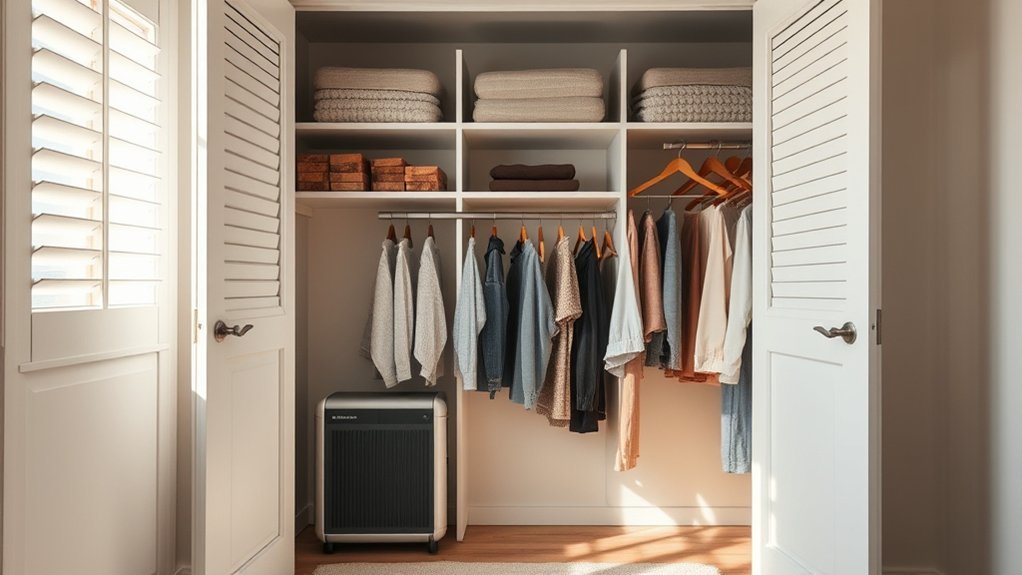
In a wardrobe, a dehumidifier rod can help reduce the damp conditions that lead to musty smells, mildew risk, and condensation on metal hardware. It is most useful when the wardrobe is against a cool wall, rarely opened, packed tightly, or used in a humid climate.
For clothes, shoes, leather bags, belts, and storage boxes, the goal is not to make the space hot. The goal is to keep the air moving gently and make condensation less likely.
Pro Tip: Put a small hygrometer on a shelf before installing the rod, then check it again after 24–48 hours. If humidity stays high, the space may be too large, too open, or too damp for a rod alone.
Best Places to Use a Dehumidifier Rod
A dehumidifier rod works best in small to medium enclosed spaces where air sits still and moisture can collect. Good locations include:
- Wardrobes and closets: helps reduce musty odors and dampness around clothes, shoes, and bags.
- Gun safes and lockers: helps reduce condensation that can contribute to corrosion on metal parts.
- Tool cabinets and toolboxes: helps protect tools from rust in garages, sheds, or basements.
- Kitchen and bathroom cabinets: useful where closed cabinets trap mild dampness, as long as the rod is installed safely and kept away from stored goods.
- Boat, camper, and RV compartments: useful during storage when the compartment is enclosed and has safe access to power.
- Instrument or equipment cabinets: helpful for mild humidity control, though valuable instruments and electronics may need a dry cabinet instead.
When a Dehumidifier Rod Works Best
A dehumidifier rod works best when the problem is trapped air, mild condensation, or seasonal dampness in a closed storage area. It is not meant to fight an active leak or dry a wet room.
You are more likely to get good results when:
- the space is enclosed but not airtight;
- the doors close properly;
- the rod is mounted low and level;
- stored items do not block airflow;
- the rod is matched to the enclosure size;
- a hygrometer confirms humidity is improving.
For general mold prevention, the EPA recommends keeping indoor relative humidity below 60% and ideally between 30% and 50% when possible.
Dehumidifier Rod Limitations in Larger Spaces
A dehumidifier rod is not powerful enough for most rooms, open wardrobes, large walk-in closets, or cabinets with big air gaps. In a large or leaky space, the gentle heat spreads out too far to create useful convection.
Common limits include:
- No exact humidity setting: you cannot choose a target RH like 45%.
- No water collection: it does not remove liquid water into a tank.
- Limited coverage: one rod may not protect a large cabinet or walk-in space.
- Heat sensitivity: some items should not be stored close to any heated device.
- Electrical access: it needs a safe outlet and proper cord routing.
If humidity remains high after installation, do not add rods blindly. Measure the space, check the product’s coverage rating, inspect for leaks, and improve ventilation or use a stronger dehumidifying method.
Dehumidifier Rod vs Dry Cabinet
A dehumidifier rod is simple, quiet, and low-maintenance. A dry cabinet is more precise. The better choice depends on what you are storing and how much control you need.
| Option | Best For | Main Limitation |
| Dehumidifier rod | Wardrobes, safes, lockers, tool cabinets, camper cabinets, and mild condensation control | No exact humidity setting and no water collection |
| Desiccant pack | Small sealed boxes, camera cases, drawers, and short-term storage | Needs recharging or replacement |
| Dry cabinet | Cameras, lenses, documents, electronics, collectibles, and items needing a set RH range | Higher upfront cost and fixed storage volume |
| Room dehumidifier | Basements, bedrooms, laundry rooms, and large damp areas | Larger, noisier, and requires draining or tank emptying |
Some dry cabinets are designed for controlled humidity storage. For example, Eureka Dry Tech lists low-humidity dry cabinets and auto dry boxes with a 25%–55% RH range, while industrial models can go lower. If you need that kind of target range, a rod is not the right tool by itself.
Recommended Products
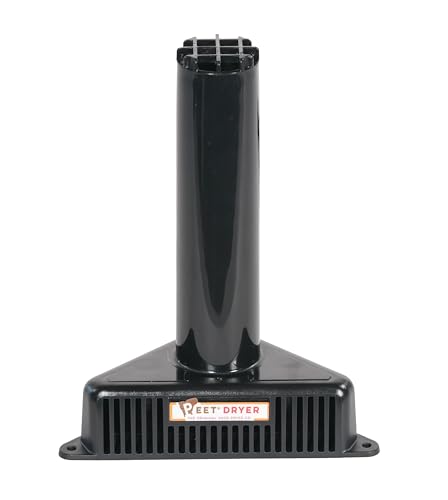
ALL-IN-ONE GUN SAFE DRYER AND DEHUMIDIFIER: Actively circulates warm air to eliminate moisture and control humidity in gun safes and cabinets up to 300 cubic feet, protecting firearms, coins, and documents from rust and corrosion.

OPTIMAL PROTECTION - Safeguard your valuable lenses, cameras, and equipment from humidity, dust, and fungus with this electronic dry cabinet, ensuring their longevity and peak performance.

Electronically Controlled Dehumidifier, Reduces Humidity
How to Install a Dehumidifier Rod
Installing a dehumidifier rod is usually simple, but it is still an electrical heat-producing device. Read the product manual first, check the label for voltage and coverage, and use only the mounting hardware supplied or recommended by the manufacturer.
At a Glance
| Time Required | 10–20 minutes after reading the manual |
| Difficulty | Easy, if a safe outlet is already available |
| Tools Needed | Mounting clips or brackets, screwdriver, tape measure, hygrometer |
| Cost | Varies by brand, length, coverage rating, and market |
Recommended Products

* Excellent Quality - Constructed of solid stainless steel, thick and rust-resistant makes It's long-lasting to use. Those closet brackets hold a maximum diameter of 1-1/4 Inch rod.

PREMIUM DURABILITY: Crafted from great quality stainless steel, these brackets for curtain rods are thick, rust-resistant, and designed for long-term use without deformation. These Closet Pole Sockets maintain appearance and stability, providing a no-wobble support for the rods
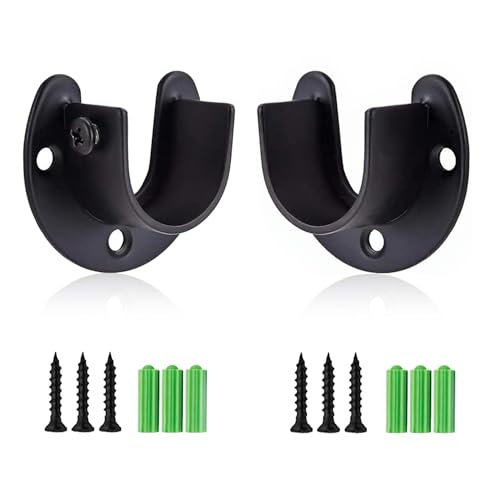
* Excellent Quality - Those heavy duty closet rod holder constructed of solid stainless steel, thick and rust-resistant makes It's long-lasting to use. Able to hold a maximum diameter of 1 Inch rod.
Choose the Right Spot
Place the rod horizontally near the bottom of the enclosed space. Heat rises, so low placement helps create a better convection loop. Avoid corners where stored items will press against the rod or block airflow.
Good placement has three qualities:
- the rod is low and level;
- air can move around it;
- the cord reaches a safe outlet without strain, pinching, or an extension cord.
Mount the Rod Securely
Use the mounting clips or brackets that came with the rod. Tighten them enough to stop the rod from rolling, sagging, or touching stored items. Do not place the rod loose on fabric, cardboard, carpet, paper, or a shelf full of clutter.
| Checkpoint | What to Do |
|---|---|
| Position | Mount low, horizontal, and stable. |
| Clearance | Keep clothing, paper, cardboard, solvents, and loose items away from the rod. |
| Cord | Route the cord so it is not pinched by doors, drawers, hinges, or stored items. |
| Fit | Match the rod length and coverage rating to the enclosure. |
Test for Safe Operation
After mounting, plug the rod into a proper wall outlet and let it run while you are nearby. Confirm that it warms normally, stays secure, and does not make buzzing, popping, or burning smells.
Warning: Do not use a dehumidifier rod with a cracked plug, frayed cord, loose connection, scorch mark, or damaged housing. Unplug it and replace it.
Check the humidity reading after a day or two. If the reading does not improve, the rod may be undersized, blocked, poorly placed, or being used in a space with an active moisture source.
Safety Tips for Using a Dehumidifier Rod
A dehumidifier rod is much smaller than a space heater, but it still produces heat and uses electricity. Treat it with the same basic respect you would give any small heated appliance.
- Read the manual first. Follow the manufacturer’s voltage, clearance, mounting, and continuous-use instructions.
- Use a listed product. Choose a rod from a reputable brand with a recognized safety listing when available.
- Avoid extension cords and power strips. Electrical Safety Foundation International guidance for heating appliances recommends plugging directly into a wall outlet and avoiding extension cords or power strips.
- Keep combustible items away. Do not let the rod touch clothes, paper, cardboard, solvents, bedding, towels, or packaging.
- Inspect regularly. Look for dust buildup, loose mounting clips, hot plugs, cord wear, or unusual smells.
- Use the right outlet. Use a grounded outlet, and use GFCI protection where required by local code or in damp-adjacent areas.
- Do not cover it. Covering a heated rod traps heat and can create a hazard.
The U.S. Consumer Product Safety Commission advises keeping space heaters at least three feet from furniture, bedding, and curtains. A dehumidifier rod is not the same appliance, so always follow the rod manufacturer’s clearance instructions first, but the principle is still useful: keep anything that can burn away from heat.
How to Choose the Right Rod Size
Choose the rod by enclosure size, not just by price. Many rods are sold by length, such as 12, 18, 24, or 36 inches, but the most important number is the manufacturer’s coverage rating. Check the product label or manual for the recommended cubic feet, cabinet size, or safe size.
Recommended Products
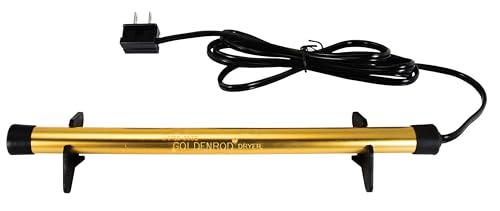
SPECS: 12 inches long with a 110-120 volt AC plug, 6 foot power cord to protect up to 100 cubic feet

Helps prevent rust and corrosion

PROTECT YOUR INVESTMENTS: Don't let moisture & condensation take a toll on your arms and valuable belongings any longer. Introducing the Zarpax gun safe dehumidifier rod, the compact yet formidable solution to keep your enclosed storage spaces moisture-free. Whether it's your prized gun locker, cherished heirlooms, or essential documents, our humidity absorber rod ensures your arms and other possessions stay safe, dry, and in pristine condition.
Match the Rod to the Space
Measure the inside height, width, and depth of the wardrobe, safe, cabinet, or locker. Multiply them to estimate cubic volume, then compare that number with the rod’s rated coverage.
- Small spaces: compact wardrobes, small safes, lockers, narrow cabinets.
- Medium spaces: standard wardrobes, larger safes, tool cabinets, camper storage.
- Large spaces: tall cabinets, wide wardrobes, large safes, boat compartments.
If the space is large, loosely sealed, or opened often, a larger rod may not solve the problem. In that case, a dry cabinet, desiccant system, fan-assisted ventilation, or room dehumidifier may be better.
Small, Medium, and Large Rods
Rod length affects coverage, but not every brand uses the same wattage or rating. A small rod may be enough for a narrow cabinet. A medium rod may suit a normal wardrobe or safe. A larger rod may be needed for a wide storage cabinet or bigger compartment.
Avoid two mistakes: using a rod that is too small to affect the space, or using an oversized rod in a cramped area where it sits too close to stored items.
Placement for Best Coverage
For best coverage, install the rod horizontally near the base of the space and leave a clear path for air to rise. Do not hide it behind tightly packed boxes or hang clothes directly over it.
After installation, use a hygrometer to confirm whether humidity is dropping. The reading matters more than assumptions.
When Not to Use a Dehumidifier Rod
A dehumidifier rod is not the right choice in every situation. Skip it or use a different solution when:
- there is visible water, flooding, or an active leak;
- the space contains flammable vapors, solvents, fuel, or chemicals;
- stored items are heat-sensitive and cannot be kept away from the rod;
- there is no safe outlet nearby;
- the cabinet or room is too large for the product’s coverage rating;
- you need a precise humidity set point for expensive equipment or collectibles.
Troubleshooting a Dehumidifier Rod
If the rod does not seem to help, do not assume it is defective right away. Most problems come from sizing, placement, airflow, or a moisture source the rod cannot overcome.
| Problem | Likely Cause | Fix |
|---|---|---|
| Humidity stays high | Rod is undersized, blocked, or space is too open | Check coverage rating, move stored items, improve closure, or use a stronger option |
| Musty smell remains | Existing mold, damp fabric, or hidden moisture source | Remove damp items, clean the space, dry it fully, and fix leaks |
| Rod feels unsafe or smells hot | Blocked airflow, damage, dust, or electrical issue | Unplug it, inspect it, clean the area, and replace damaged units |
| No outlet nearby | Power access problem | Use rechargeable desiccant or have a qualified electrician add a suitable outlet |
Frequently Asked Questions
How much electricity does a dehumidifier rod use?
Most dehumidifier rods are low-wattage appliances, but wattage varies by brand, length, and model. Check the product label or manual for the exact number. Longer rods and higher-coverage models usually use more power than compact rods.
Can a dehumidifier rod run continuously overnight?
Many rods are designed for continuous use, but you should confirm that your specific model is rated for it. Before leaving it running overnight, mount it securely, keep it clear of stored items, inspect the cord and plug, and follow the manufacturer’s instructions.
Does a dehumidifier rod affect clothing fabrics?
It should not damage clothing when installed correctly, but garments should never touch the rod. Keep fabric, paper, and leather items away from direct contact and leave enough space for air to move around the rod.
How often should a dehumidifier rod be replaced?
There is no universal replacement schedule. Replace the rod if it has a damaged cord, cracked housing, loose plug, scorch marks, unusual odor, unstable heating, or visible wear. Otherwise, inspect it regularly and follow the brand’s warranty and maintenance guidance.
Can you use a dehumidifier rod in humid climates?
Yes, but only for small enclosed spaces. In very humid climates, a rod may help reduce condensation inside a wardrobe, safe, or cabinet, but it will not dehumidify a full room or fix a leak. Use a hygrometer to confirm results.
Is a dehumidifier rod better than silica gel?
A rod is better for continuous condensation prevention in an enclosure with power. Silica gel is better for small sealed boxes, drawers, and portable cases without power. Some people use both: a rod for airflow and warmth, plus desiccant for extra moisture buffering.
Do I still need a hygrometer?
Yes. A hygrometer is the simplest way to know whether the rod is working. Place it inside the wardrobe, safe, or cabinet and compare readings before and after installation.
Conclusion
A dehumidifier rod is a simple way to reduce condensation in a small enclosed space. It is quiet, compact, and useful in wardrobes, safes, lockers, cabinets, and tool storage where damp air tends to sit. Its strength is prevention, not precision. For best results, choose the right size, mount it low, keep combustibles away, inspect it regularly, and measure humidity with a hygrometer. If you need exact humidity control for cameras, documents, electronics, or collectibles, a dry cabinet is usually the better long-term choice.
Sources
- Lockdown Golden Rod Dehumidifier Rod — supports how heated dehumidifier rods work, product lengths, voltage, and suitable enclosed-space uses.
- U.S. EPA: A Brief Guide to Mold, Moisture and Your Home — supports indoor humidity guidance, condensation prevention, and moisture-control principles.
- U.S. Fire Administration: Heating Fire Safety — supports keeping burnable items away from heat sources and broader heating safety guidance.
- U.S. Consumer Product Safety Commission: Space Heater Safety — supports the three-foot clearance principle for heat-producing appliances.
- Electrical Safety Foundation International: Space Heater Safety Tips — supports electrical safety guidance, including inspecting plugs and avoiding extension cords/power strips with heating appliances.
- Eureka Dry Tech — supports dry-cabinet humidity-control ranges and comparison with heated rods.


RBVN… hmm, new name to me. What’s the buzz? Spill the tea if you know anything. Visit them at rbvn