Last updated: August 19, 2026 · Reviewed for dehumidifier amperage, circuit-load, and moisture-control accuracy
A portable compressor dehumidifier commonly draws roughly 2 to 10 amps while the compressor is running, but the exact current is model-specific. Published Haier examples list 4.2 running amps for a 30-pint unit, 4.7 amps for a 50-pint unit, and 7.5 amps for a 70-pint unit. Startup current can be much higher for a moment, so use the nameplate amperage and the manufacturer’s electrical instructions for any circuit decision.
Quick Answer
Most portable compressor dehumidifiers fall in a broad 2- to 10-amp running range, but the rating label is the number to trust. If the label shows amps, use that value. If it shows only watts and volts, watts ÷ volts is only a rough estimate for an AC compressor load; power factor can make the actual current higher. Check the manual before deciding whether a 15-amp shared circuit is acceptable.
Key Takeaways
- A typical portable dehumidifier usually runs in the 2- to 10-amp range, but the nameplate rating is the number to trust.
- If the label gives amps, use that value. Watts ÷ volts is only a rough AC estimate, not a substitute for the rated-current value.
- Circuit requirements are model-specific. Some manufacturers require a dedicated 15-amp circuit, while others tell you to follow the model’s installation instructions.
- Startup current can briefly rise above running current, so breaker trips often happen when the compressor starts.
- For basement use, plug directly into a grounded outlet, avoid extension cords, and aim for indoor humidity near 30% to 50%.
At a Glance
| Time Required | 2 to 5 minutes to check the label and circuit load |
| Difficulty | Easy if the label is visible; call an electrician if wiring or breaker capacity is unclear |
| Tools Needed | Dehumidifier label, owner’s manual, breaker panel label, optional plug-in meter that displays amps |
| Cost | $0 if you use the label; optional plug-in current meter cost varies by retailer |
How Many Amps Does a Dehumidifier Use
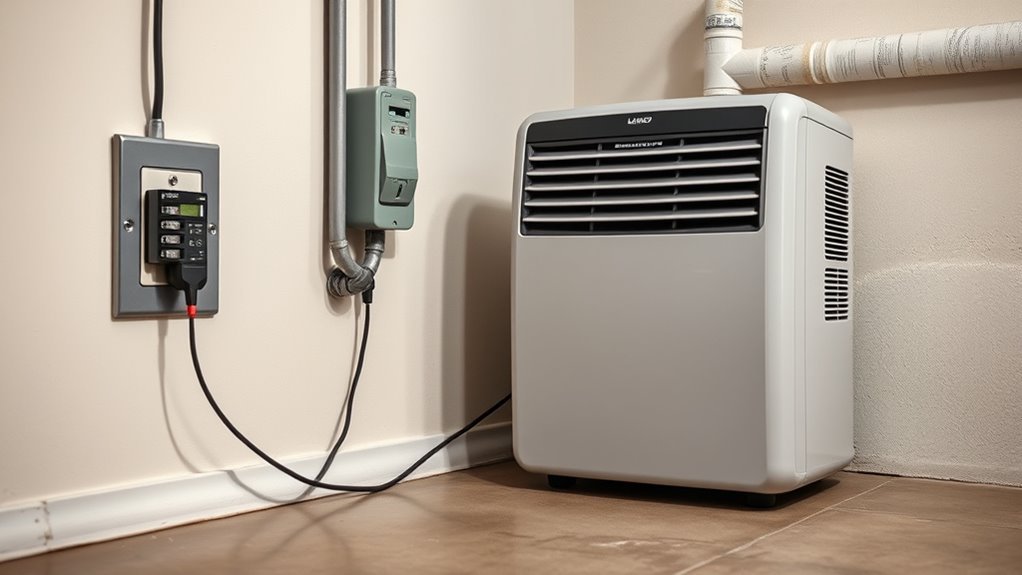
A dehumidifier commonly draws a few amps during normal compressor operation, with a broad consumer range of roughly 2 to 10 amps. Capacity can influence power demand, but pint rating alone does not tell you the current. Compressor design, voltage, pump load, fan settings, efficiency, and operating conditions all matter.
The most reliable source is the unit’s rating label and owner’s manual. Look for wording such as amps, A, rated current, watts, W, or input power. If amperage is listed, use that value for the circuit check.
If watts are the only power value shown, watts ÷ volts gives only a rough current estimate for an AC compressor load. Actual current can be higher when power factor is below 1, so do not use W ÷ V as a substitute for a listed amp rating or the manufacturer’s circuit requirement.
For efficiency, compare ENERGY STAR dehumidifier guidance and the ENERGY STAR Product Finder. ENERGY STAR measures dehumidifier efficiency by Integrated Energy Factor, or liters of water removed per kilowatt-hour. A higher number means the unit removes more moisture for each unit of electricity used.
For AC loads, watts and volt-amps are not always the same. Eaton’s power-factor guidance explains that watts equal volt-amps multiplied by power factor. That is why a simple watts-to-volts division can understate current for a compressor appliance.
Sample Manufacturer Amp Examples
Manufacturer examples help you sanity-check the range, but they do not replace your own label. Haier’s published dehumidifier power-consumption chart lists higher max amp draw during compressor startup than during normal running.
| Example Size | Watts | Running Amp Draw | Max Amp Draw |
| 30-pint example | 450W | 4.2A | 9.6A |
| 50-pint example | 550W | 4.7A | 10.8A |
| 70-pint example | 727W | 7.5A | 17.25A |
These examples show why a dehumidifier can run normally on modest current yet draw much more for a moment at compressor startup. Treat them as electrical examples, not as a universal size chart. ENERGY STAR notes that the DOE test procedure for portable dehumidifiers changed in June 2019, including a lower test temperature, so older capacity labels should not be treated as directly interchangeable with current sizing conventions.
Can You Estimate Dehumidifier Amps by Pint Size?
Pint capacity is useful for moisture-removal performance, but it is not precise enough for an electrical safety decision. Two dehumidifiers with the same capacity can have different current ratings because their compressors, fans, pumps, controls, and efficiency differ.
| What You Find | What to Do |
| Nameplate lists amps or rated current | Use that amperage as the primary running-current reference. |
| Label lists watts and volts but no amps | Use W ÷ V only as a rough estimate; check the manual or manufacturer data for rated current. |
| Manual requires a dedicated circuit | Follow that requirement even if the running amperage looks low. |
| Breaker trips at compressor startup | Stop repeated resets. Reduce shared loads and have the appliance or circuit checked if trips continue. |
For sizing context, Haier’s published examples show 4.2 running amps for a 30-pint model and 4.7 running amps for a 50-pint model, but those values should not be copied to a different brand or model. The rating label on the actual dehumidifier remains the final reference.
Why Dehumidifier Start-Up Amps Are Higher
Even when a dehumidifier’s running current is modest, the startup draw can be higher for a brief moment. The compressor motor needs extra current to start moving before it settles into normal operation. This short burst is often called inrush current or startup current.
You usually do not need to calculate startup current for everyday use, but you should pay attention to symptoms. If the breaker trips right when the compressor starts, the outlet may be sharing power with too many other devices, the circuit may have weak connections, or the unit may need service.
Warning: Do not ignore repeated breaker trips, hot plugs, buzzing outlets, melted plastic, burning smells, or flickering lights when the dehumidifier starts. Turn the unit off and have the circuit or appliance checked.
How to Find Your Dehumidifier’s Exact Amps
You can check your dehumidifier’s electrical load in a few simple steps:
- Find the rating label. It is usually on the back, side, inside the bucket area, or near the power cord.
- Look for amps or rated current. It may say “A,” “amps,” “rated current,” or “current.”
- If you only see watts, make a rough estimate. Watts ÷ volts can give a ballpark figure, but it may understate current on an AC compressor load. Check the manual or manufacturer data before using the estimate for a circuit decision.
- Read the electrical instructions. Look for a required outlet voltage, breaker size, grounding requirement, or dedicated-circuit statement.
- Check the circuit. See whether the outlet is on a 15-amp or 20-amp breaker and identify what else shares that breaker.
- Add other loads. If the same circuit also runs a freezer, washer, sump pump, space heater, or microwave, do not assume the remaining capacity is enough just because the breaker has not tripped yet.
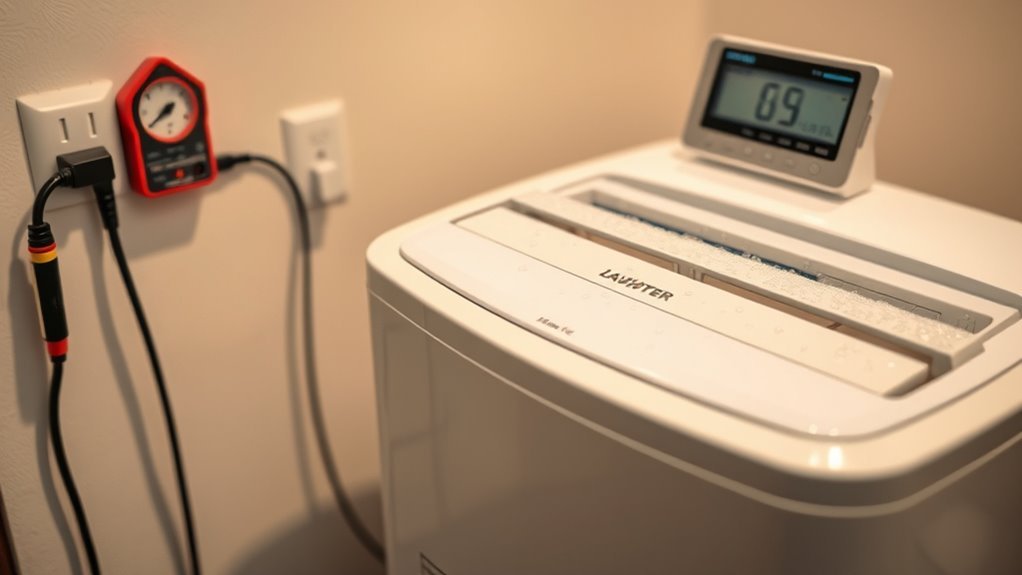
Pro Tip: If you want a real-world reading, use a plug-in meter that displays amps/current directly. A watts-only reading is useful for energy tracking, but W ÷ V is not an exact current measurement for a compressor load.
How Much Power Do Energy-Efficient Models Draw
Energy-efficient dehumidifiers can remove moisture with less electricity than similar non-certified models. According to ENERGY STAR, certified dehumidifiers use more efficient refrigeration coils, compressors, and fans to remove the same amount of moisture while using about 20% less energy than similarly sized conventional units.
That does not mean every ENERGY STAR model has the same amp draw. A large ENERGY STAR unit may still use more amps than a small non-certified unit because it does more work. Compare the unit’s label, capacity, annual energy use, and Integrated Energy Factor. ENERGY STAR says a higher Integrated Energy Factor means a more efficient dehumidifier.
Recommended Products

True ENERGY STAR Most Efficient 2025 Compressor Dehumidifier (2600 Sq.Ft) - High-Efficiency Dehumidifier - Dr.Prepare dehumidifier features a high-performance and quiet compressor that removes up to 38 pints of moisture per day (at 95°F, 90% RH). Ideal for basements, living rooms, bathrooms, bedrooms, garages, or travel trailers. Being able to adjust humidity from 30%RH to 80%RH, and cut costs bills year-round. (You can verify Dr. Prepare models DDH12LA on the official ENERGY STAR Product Finder.)

【Compact Size, Big Efficiency】 The upgraded 2025 Waykar dehumidifier features cutting-edge rotary compressor technology. It’s more compact but still powerful, capable of removing up to 34 pints of moisture per day (at 95℉, 90% RH), ideal for spaces up to 2,000 sq. ft. such as living rooms, basements, bedrooms, and offices. The adjustable humidity range from 30% to 80% helps you easily maintain the ideal indoor humidity

【Ideal for Large Homes & Basements (Up to 5,000 Sq. Ft)】The Waykar 80 pint dehumidifier efficiently removes up to 80 pints of moisture per day in high-humidity conditions (95°F, 90% RH). In warmer, damp spaces like basements (86°F, 80% RH), it removes 62 pints/day. This dehumidifier for basement is perfect for large areas such as basements, bathrooms, bedrooms, and living rooms. Customize your space by adjusting the humidity level from 30% to 80%, creating a drier and healthier environment
Do Dehumidifiers Need a Dedicated Circuit
There is no single dedicated-circuit rule that applies to every portable dehumidifier. The correct answer is the requirement in the specific model’s owner’s manual or installation instructions. The unit should also be connected to a properly grounded outlet that meets those instructions.
Manufacturer guidance can be stricter than a generic circuit estimate. Haier says its dehumidifiers should use a dedicated circuit and a 15-amp, properly grounded 3-prong 115-volt outlet. GE Appliances says its dehumidifiers should plug directly into a properly grounded 3-prong wall outlet and not into an extension cord, surge protector, or multi-outlet adapter. GE also tells owners to consult the model instructions for electrical requirements.
Use a dedicated circuit or ask an electrician to evaluate the outlet if:
- The breaker trips when the compressor starts.
- The dehumidifier shares a circuit with a freezer, sump pump, washer, microwave, or space heater.
- The outlet, plug, or cord gets warm.
- The home has older wiring or ungrounded two-slot outlets.
- You are installing a whole-home dehumidifier.
ENERGY STAR advises users to observe manufacturer electrical warnings, keep drainage away from electrical cords and connections, and connect the dehumidifier to a properly grounded outlet.
Recommended Products

Versatile 20 Amp to 15 Amp Plug Adapter: This 3 prong adapter converts a standard 125V 15 amp grounded outlet into a NEMA 5-20R receptacle, enabling connection of 20 amp equipment or a 20 amp extension cord with support for up to 1875 watts. Ideal as a 20 amp to 15 amp plug adapter for garage, workshop, or home use.
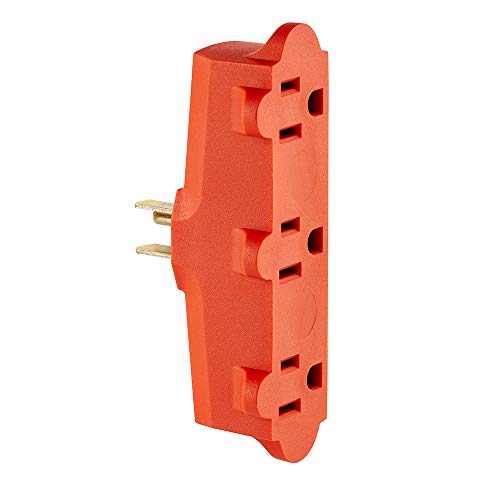
HD molded vinyl tri tap adapter

Expand Your Outlet – Turn one outlet into three with the GE 3 Outlet Plug Adapter allowing you to power triple the amount of electronics from one plug
Circuit Load Limits
A standard household circuit is often rated for 15 amps or 20 amps. The breaker size tells you the maximum circuit rating, not how much spare power is available at one outlet. Several outlets may share the same breaker.
To understand a shared circuit, add the nameplate running amps of devices that may operate at the same time and remember that motors can draw more current at startup. Do not treat the breaker rating as guaranteed spare capacity at one receptacle. If you are not sure which outlets share a breaker, or you are unsure how code rules apply to a long-running load, ask a licensed electrician.
Breaker Trip Prevention
To reduce breaker trips, plug the dehumidifier into a grounded outlet on a lightly loaded circuit. Avoid running it on the same circuit as a freezer, refrigerator, space heater, washing machine, sump pump, or heavy power tool.
If the breaker trips only once after several devices run together, the circuit may simply be overloaded. If it trips repeatedly with only the dehumidifier connected, stop using that outlet and check the appliance, outlet, and breaker.
Safe Wiring Requirements
Safe wiring starts with a grounded outlet, the circuit required by the manufacturer, and a power cord in good condition. Do not cut off the grounding pin, force a plug into the wrong outlet, or use a loose receptacle. In basements, crawl spaces, laundry areas, and other moisture-prone locations, make sure the receptacle protection also meets the electrical code adopted in your jurisdiction.
The Electrical Safety Foundation International warns that extension cords are temporary, should not replace permanent wiring, and should not be overloaded. For a dehumidifier, the safer choice is to plug directly into a grounded wall outlet.
Warning: Do not run a dehumidifier from a light-duty extension cord, daisy-chained power strip, damaged cord, or outlet that feels hot. Moisture plus overloaded wiring is a serious shock and fire risk.
What Size Circuit Does a Dehumidifier Need
Use the circuit size and outlet type specified for your model. A 15-amp, 115- or 120-volt grounded circuit is common for portable household dehumidifiers, and Haier specifically requires a dedicated 15-amp, 115-volt circuit for its dehumidifiers. Other brands and whole-home systems may have different requirements.
A 20-amp circuit does not automatically make an installation safer or more appropriate. The breaker, conductors, receptacles, and appliance instructions must all match. Never replace a 15-amp breaker with a 20-amp breaker simply to stop nuisance trips.
Whole-home dehumidifiers are different. Because they may connect to HVAC ductwork and run as installed equipment, follow the manufacturer’s installation manual and local code.
Recommended Products

Semiconductor dehumidifiers use thermoelectric cooling to remove moisture from the air. They create a drier, more comfortable environment by reducing humidity and improving air quality.

Upgrade High Efficient Dehumidification: Dehumidifier utilize semi conductor condensation technology, ensuring quiet operation while effectively extracting moisture from the air. This advanced feature helps keep humidity levels below 45%

Effective Moisture Control for Home: OWAAE dehumidifier is designed to reduce excess moisture and help maintain comfortable humidity levels in everyday living spaces. It works best in moderate-to-high humidity environments, improve overall air comfort at home
How to Tell If Your Circuit Can Handle It
To tell whether your circuit can handle a dehumidifier, compare the unit’s rated amps with the circuit capacity and the other loads already using that breaker.
- Read the dehumidifier label. Find amps or watts.
- Use rated amps when available. If only watts are shown, treat W ÷ V as a rough estimate and check the manual or manufacturer data for current.
- Find the breaker size. Many household branch circuits are 15A or 20A, but the appliance instructions still control the setup.
- Identify shared devices. Check whether other outlets, lights, or appliances are on the same breaker.
- Check the manual for a dedicated-circuit requirement. If the manufacturer requires one, do not rely on a shared-circuit calculation.
- Leave headroom. If the total simultaneous load is close to the breaker rating, or startup causes trips, use an appropriate different circuit or ask an electrician.
If the dehumidifier runs normally, the plug stays cool, and the breaker does not trip, the circuit is likely handling the load. If anything smells hot, buzzes, sparks, or trips repeatedly, stop using it until the problem is checked.
How to Safely Run a Dehumidifier in Your Basement
A safe basement setup starts with a grounded outlet, good airflow, and a clear drainage plan. Basements often have damp air, concrete surfaces, sump pumps, freezers, and older wiring, so you should be more careful than you would be in a bedroom or hallway.
Use this basement checklist:
- Plug directly into a grounded outlet. Avoid extension cords and power strips, and follow any dedicated-circuit requirement in the manual.
- Confirm required shock protection. Basement and other damp-location receptacle rules depend on the electrical code adopted where you live; have an electrician verify the outlet if you are unsure.
- Give the unit breathing room. Keep air intake and discharge areas clear.
- Keep the drain hose safe. Route it to a floor drain or sump area without crossing cords or walkways.
- Set a realistic humidity target. The EPA recommends keeping indoor humidity below 60%, ideally between 30% and 50%.
- Clean the filter. Restricted airflow makes the unit work harder and can reduce performance.
- Fix moisture sources. Extend downspouts, clean gutters, repair leaks, and vent dryers outdoors.
Note: A dehumidifier controls moisture in the air, but it does not fix a leak, foundation drainage problem, roof issue, or plumbing problem. If humidity keeps returning, find the moisture source.
Frequently Asked Questions
How many amps does a 30 pint dehumidifier use?
There is no universal 30-pint amperage. Haier publishes one 30-pint example at 4.2 running amps and 9.6 max amp draw. Another brand or model can differ, so use the rating label and owner’s manual on your own dehumidifier.
How many watts does a dehumidifier use?
Many portable compressor dehumidifiers use a few hundred watts while the compressor runs. Haier’s published examples range from 450 watts for one 30-pint model to 727 watts for one 70-pint model. Use your own label for the exact wattage. Do not treat watts ÷ volts as an exact amp rating for an AC compressor load.
Do dehumidifiers need a dedicated circuit?
It depends on the model. Haier requires a dedicated 15-amp, 115-volt circuit for its dehumidifiers, while other manufacturers may give different instructions. Follow the owner’s manual first; do not assume a shared circuit is acceptable from amperage alone.
Is it okay to run a dehumidifier 24 hours a day?
Yes, if the manufacturer allows continuous operation and the unit is plugged directly into a safe grounded outlet. Use the humidistat, clean the filter, and set up continuous drainage if the bucket fills quickly.
Can a dehumidifier share a circuit with a freezer or sump pump?
Only if the dehumidifier’s manual allows a shared circuit and the total simultaneous load is within the circuit’s safe capacity. A freezer, sump pump, washer, or space heater can leave little headroom. If the manufacturer requires a dedicated circuit, follow that requirement.
Can I plug a dehumidifier into an extension cord?
Plug the dehumidifier directly into the grounded wall outlet specified by the manufacturer. Haier and GE guidance for their dehumidifiers says not to use extension cords, and GE also says not to use surge protectors or multi-outlet adapters. Follow your own model’s manual.
Why does my dehumidifier trip the breaker?
Possible causes include a shared-circuit overload, compressor startup current, a weak connection, or an appliance or breaker fault. Follow the model’s circuit requirement and reduce other loads only if sharing is allowed. If the breaker keeps tripping, stop using the unit and have the appliance or circuit checked.
How many amps does a 50 pint dehumidifier use?
The exact amperage depends on the model. Haier publishes one 50-pint example at 4.7 running amps and 10.8 max amp draw. Use that only as a reference point; check the nameplate and manual on your own 50-pint dehumidifier.
Can a dehumidifier run on a 15 amp circuit?
Many portable models are designed for 115- or 120-volt household power, but the circuit requirement is model-specific. Haier requires a dedicated 15-amp circuit for its dehumidifiers. Check your manual, account for other loads on the breaker, and do not upsize a breaker to stop trips.
Conclusion
Most portable compressor dehumidifiers fall within a broad 2- to 10-amp running range, but your model’s nameplate and manual are the final authority. Use listed amps whenever available; watts ÷ volts is only a rough estimate for an AC compressor load. Follow any dedicated-circuit requirement, plug directly into a properly grounded outlet, avoid overloaded circuits and extension cords, and stop using the unit if the breaker repeatedly trips or the plug or outlet gets hot. For basement moisture control, aim for roughly 30% to 50% relative humidity and fix the moisture source if humidity keeps returning.
Sources
- Haier — Dehumidifier Power Consumption — supports sample wattage, startup amp draw, and running amp draw examples.
- Haier — Dehumidifier Electrical Requirements — supports 15-amp grounded outlet and no extension-cord guidance for Haier models.
- GE Appliances — Dehumidifier Extension Cord or Surge Protector Guidance — supports direct grounded outlet, no extension cord, no surge protector, and no multi-outlet adapter guidance.
- ENERGY STAR — Dehumidifiers — supports efficiency, capacity, placement, grounded outlet, humidity, and current specification guidance.
- ENERGY STAR Product Finder — Certified Dehumidifiers — supports checking certified model data and current product listings.
- U.S. EPA — A Brief Guide to Mold, Moisture and Your Home — supports the 30% to 50% humidity target and mold/moisture prevention advice.
- CDC — Mold — supports mold health cautions and keeping home humidity no higher than 50%.
- Electrical Safety Foundation International — Extension Cord Safety Tips — supports extension cord, overload, grounding, and electrical fire prevention guidance.
- Eaton — Understanding VA Versus Watts — supports the power-factor distinction between real power in watts and apparent power in volt-amps.
- ENERGY STAR — Dehumidifier Testing and Capacity — supports the June 2019 DOE test-procedure change and the lower 65°F portable-dehumidifier test condition.