Affiliate disclosure: As an Amazon Associate I earn from qualifying purchases. This article contains affiliate links to Amazon, so we may earn a commission if you buy through them, at no extra cost to you.
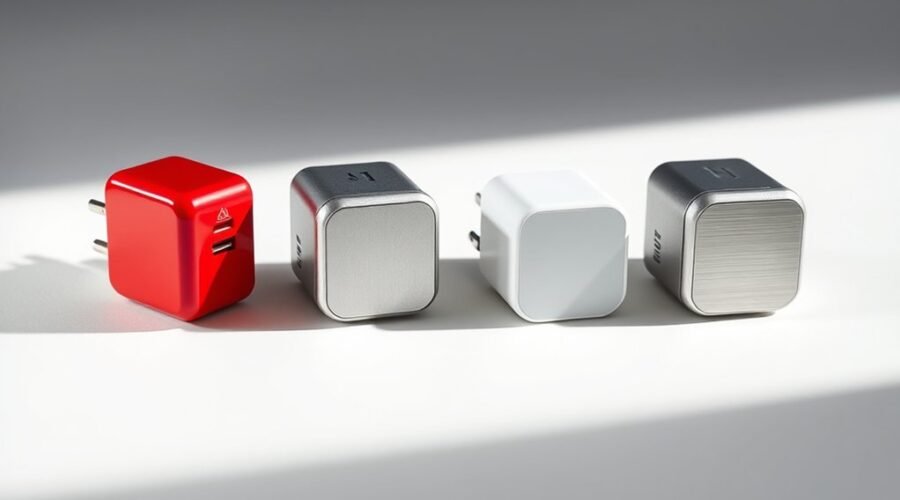
The four best USB wall chargers for 2026 are the Anker 65W 3-Port Foldable USB-C Charger Block, Apple 20W USB-C Power Adapter, Anker Desktop Charger 60W 6 Port USB Multiple Charging Hub, and Anker Quick Charge 3.0 18W USB Wall Charger. Each offers a different balance of speed, portability, and device support. The Anker models suit multi-device and fast-charging needs, while Apple fits the iPhone ecosystem well. More details reveal which charger matches each use case best.
Anker 65W 3-Port Foldable USB-C Charger Block
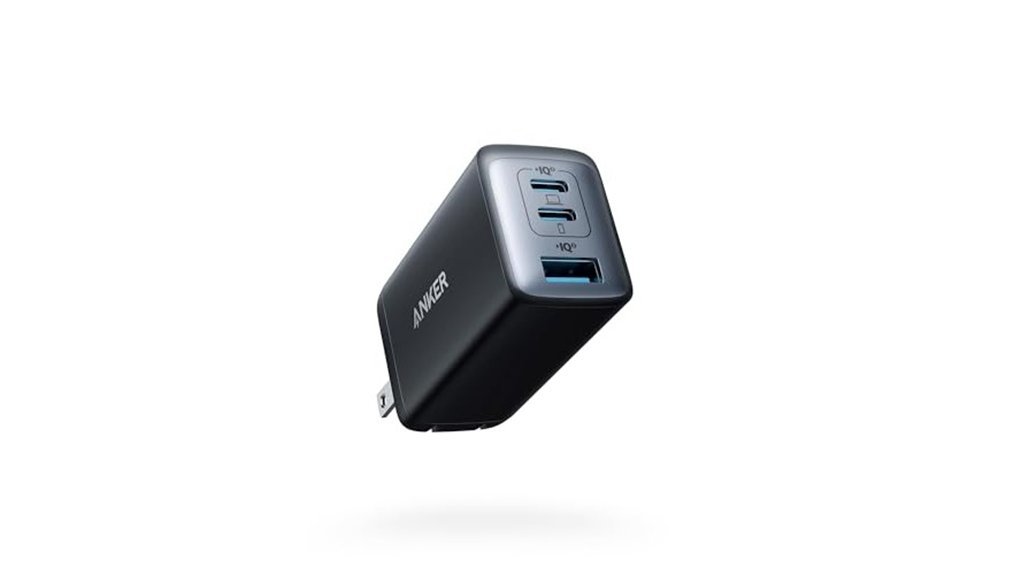
The Anker 735 Charger (Nano II 65W) stands out for travelers and multi-device users who want a compact, foldable USB-C charger without sacrificing power. The Anker 65W 3-Port Foldable USB-C Charger Block delivers up to 65W from a single USB-C port, enough for a 2020 MacBook Pro 13-inch, while distributing power efficiently across three connected devices. Its AirPods Pro-sized body and foldable plug make it easy to pack. GaN II technology helps shrink the design without reducing performance. The black A2667111 model includes a welcome guide and an 18-month warranty with customer support.
Best For: Travelers, students, and multi-device users who need a compact, foldable USB-C charger that can power a laptop and other devices efficiently.
Pros:
- Delivers up to 65W from a single USB-C port, enough for a 2020 MacBook Pro 13-inch.
- Compact, AirPods Pro-sized design with a foldable plug makes it easy to carry.
- GaN II technology helps keep it small without sacrificing performance.
Cons:
- Power is shared when charging multiple devices, so total output per device drops.
- Only one USB-C port is ideal for USB-C users but less convenient for mixed-device setups.
- Black color and model-specific design may offer limited style or variation options.
Apple 20W USB-C Power Adapter Charger
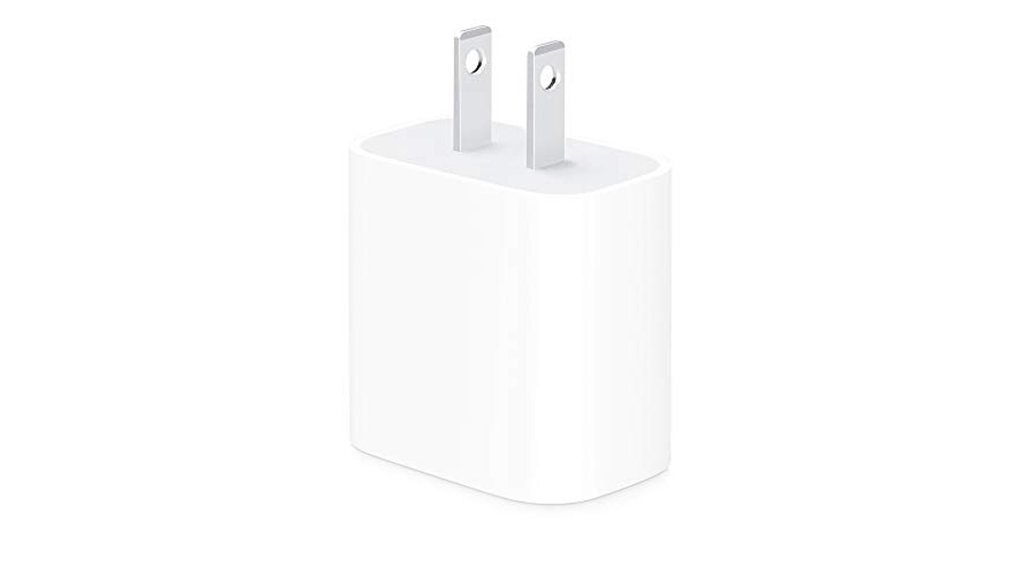
Apple’s 20W USB-C Power Adapter is ideal for iPhone users who want reliable fast charging. The white wall charger, model MHJA3AM/A, delivers up to 20W of power and can bring an iPhone 8 or later to 50% in about 30 minutes. It also performs efficiently with iPad Pro and iPad Air. Compatibility extends to all iPhone, AirPods, iPad, and Apple Watch models. Suited for home, office, or travel, it is a USB-C adapter only, so a charging cable must be purchased separately.
Best For: iPhone, iPad, AirPods, and Apple Watch users who want a compact 20W USB-C wall charger for reliable fast charging at home, in the office, or while traveling.
Pros:
- Fast-charges iPhone 8 or later, reaching about 50% battery in around 30 minutes.
- Compatible with a wide range of Apple devices, including iPad Pro and iPad Air.
- Compact white USB-C adapter that’s convenient for home, office, or travel use.
Cons:
- Charging cable is not included and must be purchased separately.
- Only provides a single 20W USB-C charging option, so it may not be ideal for larger power needs.
- Best performance is mainly within the Apple ecosystem, with limited usefulness for non-Apple accessories.
Anker Desktop Charger, 60W 6 Port USB Multiple Charging Hub
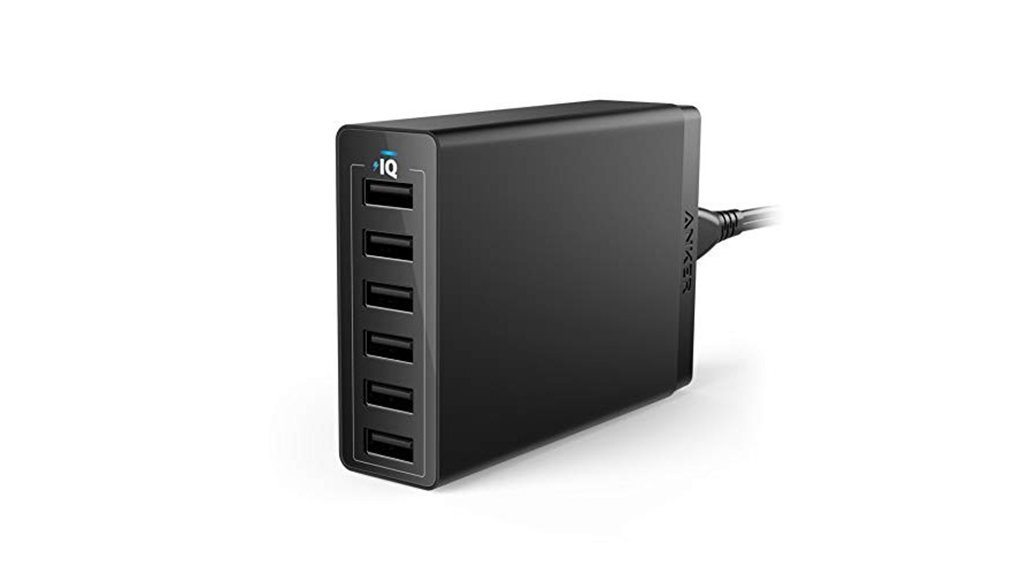
Anker’s 60W, 6-port PowerPort suits users who need to charge several devices at once. It uses PowerIQ and VoltageBoost to deliver fast charging, offering up to 2.4 amps per port, with a 12-amp combined output. The compact desktop design helps reduce clutter and is practical for travel or home use. Anker includes proprietary safety protection and UL certification for added confidence. It supports Android, Apple, laptops, and 100–240V input worldwide. The package adds a detachable cord, hook-and-loop strip, welcome guide, and 18-month warranty, reinforcing its value-focused reputation.
Best For: People who need a compact, reliable 6-port USB charger for powering multiple Android, Apple, or other USB devices at home, at work, or while traveling.
Pros:
- Fast charging with PowerIQ and VoltageBoost, delivering up to 2.4 amps per port
- Six ports with 60W total output make it easy to charge several devices at once
- Includes safety protection, UL certification, and a useful 18-month warranty
Cons:
- Does not support Qualcomm Quick Charge
- Not ideal for charging higher-power laptops that require more than USB output can provide
- No built-in cable management beyond the included hook-and-loop strip
Anker Quick Charge 3.0 18W USB Wall Charger
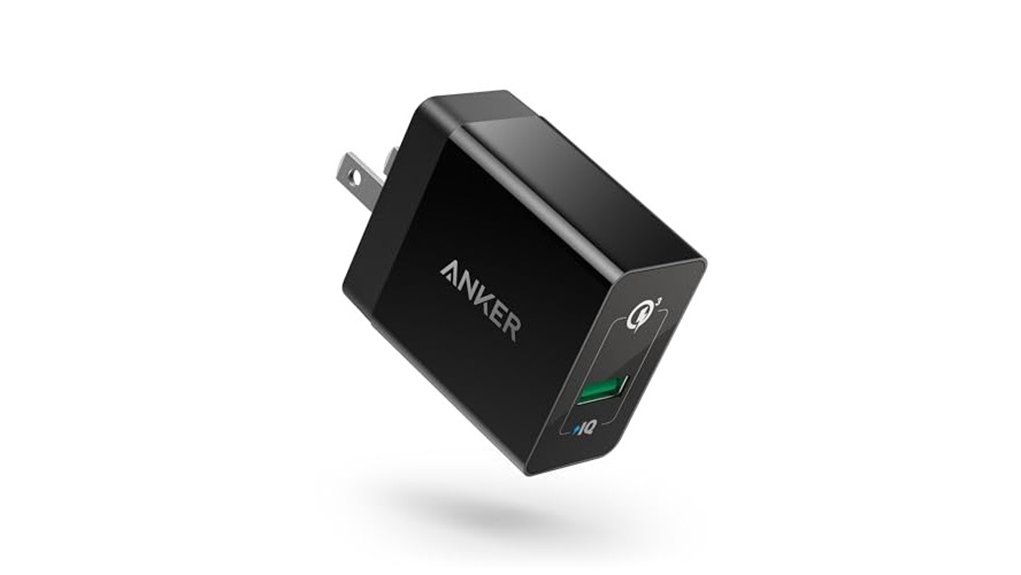
Built for budget-minded fast chargers, Anker’s 18W Quick Charge 3.0 wall adapter delivers dependable speed. Backed by a brand trusted by more than 50 million users, it combines Quick Charge 3.0 and PowerIQ for efficient charging across Qualcomm 1.0, 2.0, and 3.0 devices, plus non-Quick Charge models up to 2.4A. It works with Galaxy, Note, LG, iPhone, and iPad devices, though iPhone 8 and newer charge at standard rates. Surge protection and temperature control add safety, while the included guide, 18-month warranty, and responsive support improve ownership confidence.
Best For: Budget-minded users who want a reliable 18W fast charger for a wide range of Qualcomm Quick Charge and USB devices, including Galaxy, LG, iPhone, and iPad models.
Pros:
- Supports Quick Charge 3.0 and PowerIQ for efficient charging performance.
- Works with many devices, including Qualcomm Quick Charge 1.0/2.0/3.0 and non-Quick Charge devices up to 2.4A.
- Includes surge protection, temperature control, an 18-month warranty, and responsive customer support.
Cons:
- iPhone 8 and newer do not fast-charge and only charge at standard rates.
- Single-port wall charger, so it’s less convenient for charging multiple devices at once.
- Best suited for users who need value and compatibility rather than premium charging features.
Factors to Consider When Choosing USB Wall Chargers 2026: Top Picks and Buying Guide
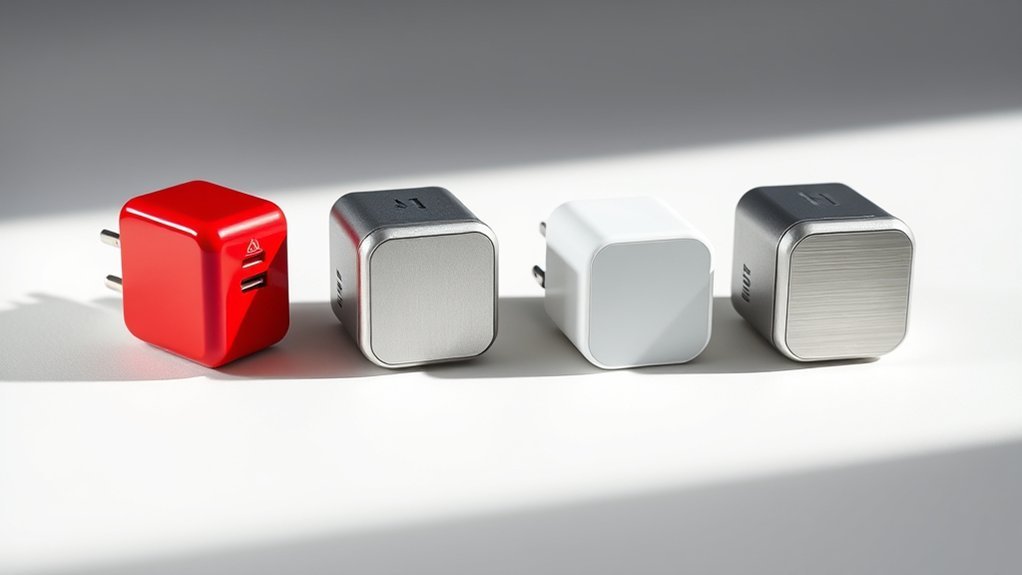
When choosing a USB wall charger, charging speed and port count often shape how well it fits daily use. Device compatibility, size and portability, and built-in safety features also influence whether a model is practical and reliable. A balanced choice usually depends on matching these factors to the devices and travel needs at hand.
Charging Speed
Charging speed is largely a matter of wattage, with higher-output USB wall chargers able to deliver power more quickly to compatible devices. Devices that support the charger’s maximum output can charge particularly faster, while lower-capacity devices may draw only what they can safely accept. Fast-charging standards such as Quick Charge and Power Delivery can further shorten charging times by raising delivered power in a controlled way. Compatibility matters, since higher wattage offers little advantage if a device cannot use it. For best results, the charger’s output should meet or exceed the device’s maximum input rating. When this alignment is correct, charging remains efficient and avoids the slower rates seen with underpowered adapters.
Port Count
Beyond charging speed, port count plays a major role in how useful a USB wall charger is in daily use. The number of ports determines how many devices can charge at the same time, which matters for households, offices, and travel setups with several gadgets. Models with three or six ports are especially practical in shared spaces, reducing the need for extra adapters and outlets. Some multi-port chargers include smart power distribution, which helps divide available power efficiently and lowers the risk of overload. A higher port count also adds flexibility, letting one charger handle phones, tablets, and even laptops. Still, total wattage should be checked carefully, since it affects how much power each connected device receives in multi-port use.
Device Compatibility
Device compatibility is one of the most important checks when choosing a USB wall charger, since the best model is only useful if it works properly with the devices it powers. A suitable charger should match the needs of smartphones, tablets, and laptops, delivering the right level of power without waste. Support for fast charging standards such as Qualcomm Quick Charge or Power Delivery matters for devices that can use them, since these technologies reduce charging time. Total wattage also deserves attention, because higher-output chargers can better serve power-hungry laptops and larger tablets. Safety features should not be overlooked either; surge protection and temperature control help reduce the risk of damage during charging and improve overall reliability for daily use.
Size And Portability
Size and portability play a major role in choosing a USB wall charger, especially for frequent travelers and daily commuters. Compact models are easier to slip into a bag, backpack, or pocket, making them practical for constant movement. Foldable prongs add another advantage by reducing bulk and helping protect the charger during transport. A design roughly comparable in size to an AirPods Pro case can strike a useful balance between power and convenience. Multi-port options also support charging several devices at once without requiring extra chargers, which helps keep travel kits streamlined. Lightweight construction further improves usability by lowering the overall load in a carry-on or everyday bag. For many users, the best choice combines small dimensions, low weight, and efficient use of space.
Safety Features
Safety features should be a top priority when comparing USB wall chargers, since dependable protection helps prevent overheating, surges, and damage to connected devices. A strong model includes surge protection and temperature control to manage heat during extended charging sessions. UL certification is also important, as it shows the charger has undergone independent safety testing for reliability. Buyers should check for built-in overcurrent protection, which can halt charging if current rises beyond safe limits. Short circuit protection is equally valuable because it shields both the charger and connected electronics from electrical faults. Together, these safeguards reduce risk and support consistent performance. When these protections are present, a charger is better positioned to deliver safe daily use across phones, tablets, and other USB-powered devices.
Warranty Coverage
Warranty coverage is another important factor when comparing USB wall chargers, since it can indicate how much support a buyer can expect after purchase. Coverage commonly lasts from 18 months to several years, protecting against manufacturing defects and reflecting the brand’s confidence in durability. A longer term can suggest stronger reliability, though the exact value depends on the charger and maker. Some policies include customer support for troubleshooting, which can be useful if charging problems arise. Others apply only to the charger itself, while certain warranties extend to accessories or added components. Because terms differ widely, buyers should read the fine print before choosing. Reviewing warranty details helps compare brands more accurately and reduces surprises if a replacement or repair becomes necessary later.
Frequently Asked Questions
How Do USB Wall Chargers Affect Smartphone Battery Lifespan?
USB wall chargers affect smartphone battery lifespan mainly through heat, charging speed, and voltage stability. Well-regulated chargers reduce wear, while cheap or overheating ones can accelerate battery degradation over time, shortening usable capacity.
Are USB Wall Chargers Safe to Use Overnight?
Yes, overnight charging is generally safe, provided the charger is reputable and undamaged. Modern phones usually stop drawing power when full, so the risk is mostly a tiny whisper of heat, not catastrophe.
Can One Charger Power Laptops and Phones Simultaneously?
Yes, a single charger can power laptops and phones simultaneously if it has enough wattage and multiple ports. The charger must support power delivery profiles for both devices, or charging may slow considerably.
What Certifications Should a USB Wall Charger Have?
It should have safety certifications like UL, ETL, or CE, plus USB-IF compliance for proper charging standards. For higher-wattage models, look for FCC and, where relevant, Energy Star or equivalent efficiency approvals.
Do USB Wall Chargers Work With International Voltage?
Like a passport at a border crossing, many USB wall chargers work internationally if labeled 100–240V. They may need only plug adapters, not voltage converters; single-voltage models can falter abroad, risking damage.
Conclusion
In the end, the right USB wall charger is like a wise innkeeper on a long journey: it welcomes every device, serves power swiftly, and never wastes a traveler’s time. Anker’s versatile blocks, Apple’s trusted compact adapter, and the multiport desktop hub each suit different needs, while the Quick Charge option speeds smaller quests. Choosing well means fewer tangled detours, safer charging, and a steadier path through the busy digital road ahead.