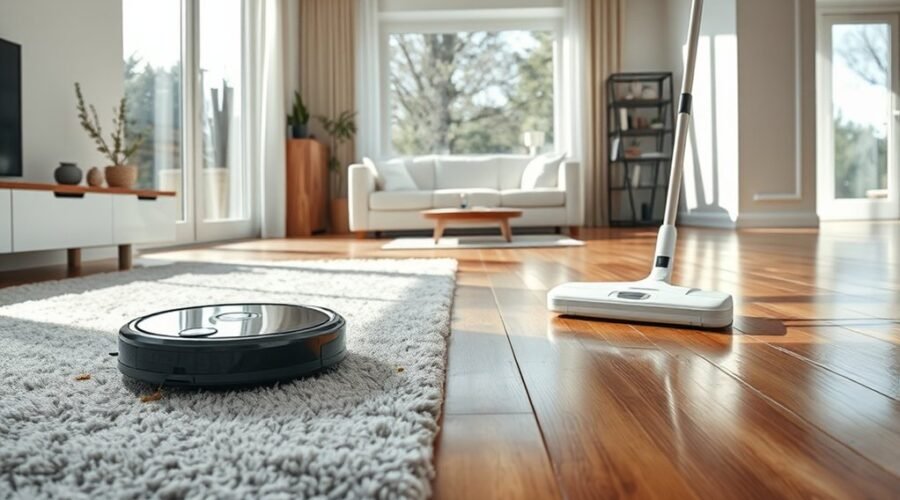
Robot vacuums and robot mops are built for different jobs, and the gap matters more than many buyers expect. One handles dust, crumbs, and pet hair across multiple floor types, while the other is meant for wiping spills and light grime on hard surfaces. Some homes need both, but not every machine does both well. The real difference lies in performance, floor type, and upkeep, and the details can change which one is the better fit.
Robot Vacuum vs Robot Mop
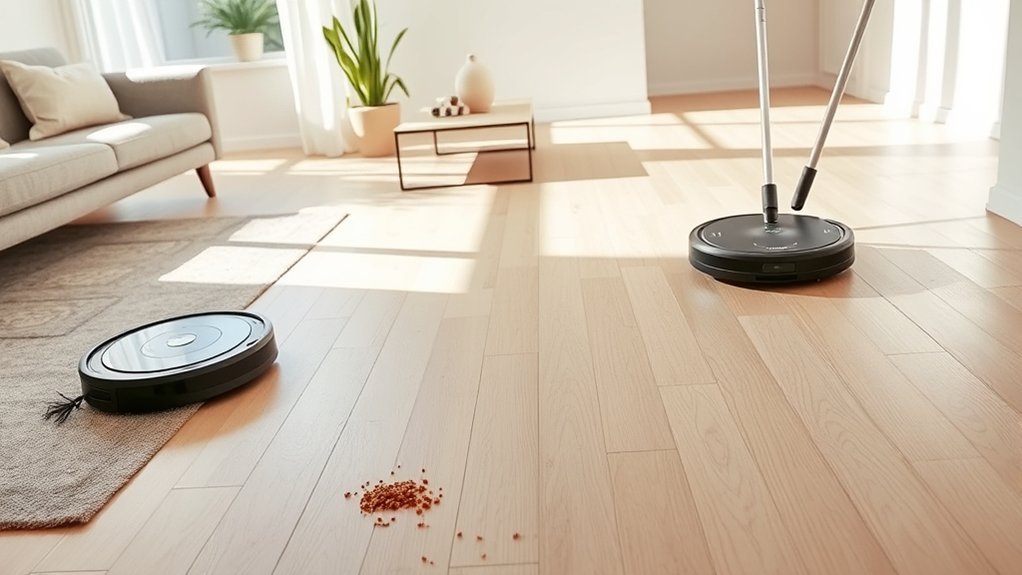
Robot vacuums are built to handle dry messes like dust, dirt, and pet hair, using suction and rotating brushes to clean carpets, rugs, and hard floors. A robot vacuum is suited to collecting dust and debris across mixed flooring, with suction power doing the heavy lifting.
Robot vacuums handle dust, dirt, and pet hair with suction and brushes across carpets, rugs, and hard floors.
In contrast, a robot mop targets wet messes and stains, relying on mop pads and water solution for cleaning hard floors such as tile and laminate. This distinction helps households choose the right tool for simpler, more autonomous upkeep.
Maintenance also differs: robot vacuum users empty the dustbin and clean filters, while robot mop care means refilling the tank and washing pads.
Vacuum-mop combos add convenience by covering both jobs, yet they may underperform compared with specialized models. For consumers seeking freedom from daily chores, the choice depends on surface type, mess type, and how much compromise feels acceptable.
What Is a Robot Vacuum?
A robot vacuum is an autonomous cleaner designed to remove dry messes like dust, dirt, and pet hair from carpets and hard floors.
It relies on suction, usually paired with rotating brushes, to lift debris efficiently.
Advanced sensors help it navigate around obstacles and map cleaning paths for more consistent coverage.
Cleaning Dry Messes
Designed to handle everyday dry debris, a robot vacuum uses suction and rotating brushes to pick up dust, dirt, and pet hair with minimal effort from the homeowner. For cleaning dry messes, it offers hands-free support that can free time for other priorities.
A robot vacuum can move across carpets, wood floors, and tile, making it practical for varied homes. Many models include advanced navigation and obstacle avoidance, helping them cover rooms more efficiently while steering around furniture. Collected debris is stored in a dustbin that should be emptied regularly to maintain performance.
Suction And Navigation
Using suction and rotating brushes, a robot vacuum lifts dust, dirt, and pet hair from carpets, wood, and tile with little hands-on effort. It differs from a robot mop by targeting dry debris, not wet spills. | Feature | Benefit |
| — | — |
|---|---|
| AI-powered navigation | Maps rooms, avoids obstacles, and improves cleaning efficiency |
| High suction power | Supports performance for deep cleaning, with some models reaching 30,000 Pa |
| Sensors and dustbin care | Detects stairs, reduces falls, and keeps suction steady after emptying the dustbin |
This combination gives users more freedom from daily floor work. Reliable navigation helps the robot vacuum move around furniture and under beds, while regular filter and dustbin maintenance preserves output over time. For households seeking practical automation, suction remains the core measure of performance.
What Is a Robot Mop?
A robot mop is a floor-cleaning device made for wet messes, using water and mop pads to wipe away spills, sticky spots, and light stains on hard surfaces. A robot mop supports cleaning wet messes on hard floors, reducing the need for hands-on labor and giving households more freedom from routine chores.
- A water reservoir releases moisture as the unit moves.
- Mop pads lift grime during light cleaning and daily upkeep.
- Some models use cleaning solutions for stronger results.
- Maintenance includes refilling tanks, washing pads, and preventing mold.
This type of machine is best viewed as a maintenance tool, not a full replacement for traditional mopping. It helps keep floors presentable between deeper cleanings, but embedded stains and heavy dirt often still require manual effort.
For consumers seeking convenience, a robot mop offers a practical, time-saving way to keep surfaces fresher with less work.
Which Floors Do They Clean Best?
Floor type is one of the clearest ways to separate robot vacuums from robot mops. A Robot vacuum is the more flexible choice for mixed surfaces, moving across carpets, hardwood, tile, and laminate with ease.
Floor type is one of the clearest ways to separate robot vacuums from robot mops.
It is built for dry cleaning, using suction to lift debris, dust, and pet hair from both rugs and bare floors. That makes it practical for homes where one machine must handle several zones without constant switching.
A robot mop is better suited to hard flooring such as tile, wood, and laminate. Its mopping function is aimed at sticky spots, spills, and stains, often leaving floors looking fresh and shiny.
It should not be used on carpets, where moisture is a poor fit. For homes with carpets, the Robot vacuum usually delivers stronger results.
For hard flooring and daily spill control, the robot mop offers a cleaner finish. The best choice depends on the floors in need of cleaning and freedom from manual upkeep.
How Robot Vacuums and Mops Work
Robot vacuums clean by combining suction with rotating brushes that loosen and lift dry debris, then pull it into an onboard dustbin that must be emptied regularly unless the model has an automatic emptying base.
A robot vacuum uses airflow and brushes to handle dust, crumbs, and pet hair across carpets and hard floors, supporting automated cleaning with less daily effort.
A robot mop works differently, relying on mop pads dampened by water or cleaning solutions to wipe hard floors and lift spills or stains.
Its water tank needs refills, and its pads need washing or replacement to stay effective. Some hybrid models offer versatility by switching between functions, though each task may be less specialized.
- Robot vacuum: suction for dry messes.
- Robot mop: mop pads for wet cleanup.
- Dustbin: collects debris for disposal.
- Water tank: supplies liquid for mopping.
Which Handles Dry and Wet Messes Better?
For dry messes, robot vacuums generally perform better because suction and rotating brushes are built to collect dust, dirt, and pet hair from carpets and hard floors. Their efficiency for dry debris can be high, making them the stronger choice for everyday sweeping freedom.
| Task | Better Choice | Why |
|---|---|---|
| Dust, crumbs, hair | Robot vacuum | Strong suction lifts dry debris |
| Spills, sticky spots | Robot mop | Wet mopping wipes surfaces clean |
| Tile and wood | Robot mop | Suited to hard floors |
| Mixed cleaning | Dual function model | Handles vacuuming and mopping |
| Light messes | Either, with limits | Performance depends on the mess |
A robot mop uses water or cleaning solution to handle wet messes, but it works best on light spills rather than heavy dirt. A robot vacuum-mop combo offers dual function convenience, though it may trade some performance. Practical buyers often match the tool to the mess, then choose the device that supports cleaner spaces with less effort.
Robot Vacuum vs Mop Maintenance
Maintenance is often where the difference between a robot vacuum and a robot mop becomes most apparent.
Robot vacuum maintenance usually centers on simple, repeatable tasks: users need to empty the bin, clean filters, and clear brushes every few weeks to keep peak performance. Maintenance frequency can shift from weekly to monthly, depending on pet hair and floor type.
Robot mop maintenance tends to be more hands-on. It calls for water tank refills, clean water, and washing or replacing mop pads, especially in larger spaces where capacity runs out faster. Tank cleaning matters too, since it helps prevent buildup and mold.
- Check bins, brushes, and filters regularly.
- Rinse the tank and refill with clean water.
- Wash or replace mop pads as needed.
- Do routine inspections for blockages or wear.
These cleaning tips support longer life and more freedom from avoidable chores.
Pros and Cons of Each Device
| Device | Pros | Cons |
|---|---|---|
| Robot Vacuum | Handles dry debris well | Needs regular dustbin care |
| Robot Mop | Good for spills on hard floors | Requires water and pad washing |
| Hybrid models | Combines vacuuming and mopping | Often less efficient overall |
From a buyer’s view, maintenance demands and cost considerations matter. Vacuums often cost more upfront, while mops may be cheaper but narrower in use. Hybrid models add convenience, though not perfect performance.
Robot Vacuum-Mop Combos Explained
Robot vacuum-mop combos are built to handle both dry debris and light wet messes, making them a practical choice for homes with mixed floor types.
These robot vacuum-mop combos support versatile cleaning by pairing suction with a water reservoir and microfiber pads, helping improve cleaning efficiency without demanding constant human effort.
- Dry crumbs and dust are lifted first.
- The cleaning mode then adds controlled damp mopping.
- Intelligent features, such as auto-lifting mop pads, keep carpets protected.
- Battery life usually lasts 100 to 150 minutes, depending on the cleaning mode.
This setup offers freedom from repeated manual sweeping and mopping, especially in busy households.
Still, the combo design is a balanced compromise rather than a specialist solution. Suction strength may trail dedicated vacuums, and wet cleaning capability may be lighter than a separate mop’s performance.
For many users, however, the convenience of one device handling two tasks remains the main appeal.
How to Choose Between Them
Choosing between a robot vacuum and a robot mop starts with the floor type in the home: vacuums work on carpets and hard floors, while mops are best for tile, wood, or laminate.
The next consideration is the kind of mess most often present, since dry dust and pet hair favor a vacuum and wet spills or stains call for a mop.
Maintenance and convenience also matter, because vacuums need dustbin and brush care, while mops require water refills and pad cleaning.
Floor Type Needs
Floor surfaces should guide the choice: robot vacuums are best for homes with a mix of carpets and hard floors, where they can handle both without issue, while robot mops are designed only for hard surfaces like tile, wood, and laminate.
A Robot vacuum supports daily cleaning across varied floor types, keeping carpets and hard floors in order during routine cleaning sessions. A robot mop offers focused care for smooth surfaces, but it should not be expected to manage carpeted rooms.
For greater freedom, some buyers choose a vacuum with mop combo for broad coverage.
- Mixed floors: choose a Robot vacuum.
- Hard floors only: choose a robot mop.
- Need flexible cleaning sessions: consider a vacuum with mop.
- Prioritize effective cleaning and home cleanliness.
Mess Type Matters
When the main mess is dry debris, a robot vacuum is usually the better fit because it is built to pick up dust, crumbs, and pet hair from carpets, rugs, and hard floors.
When spills and sticky residue are the bigger issue, a robot mop is more appropriate for cleaning wet messes on hard surfaces.
A robot vacuum suits homes with mixed flooring types and frequent dry messes, while a robot mop is best where spills happen often and floors stay mostly bare.
For households that face both, a vacuum-mop combo can help clean with less compromise and more freedom.
The key is matching the tool to the mess, not the other way around.
That approach keeps cleaning simple, practical, and tailored to real daily life.
Maintenance And Convenience
Once the type of mess is clear, upkeep becomes the next practical factor in deciding between a robot vacuum and a robot mop. A robot vacuum asks for dustbin emptying and filter cleaning, usually weekly to monthly.
A robot mop shifts the burden to the water tank and mop pads, which need refills, washing, or replacement after several uses to stop mold.
- Robot vacuum: better for dry debris, lower hands-on upkeep.
- Robot mop: better for wet spills, but more pad care.
- Combo model: boosts convenience, yet may reduce suction power.
- Home layout: carpets favor a robot vacuum; hard floors suit a robot mop.
The best cleaning strategy depends on how much maintenance a household will tolerate while seeking freedom from chores.
Frequently Asked Questions
What Are the Key Differences Between a Robot Mop and a Robot Vacuum?
A robot mop uses water and pads for wet spills; a robot vacuum uses suction and brushes for dry debris. Robot mop benefits, robot vacuum efficiency, floor types compatibility, battery life comparison, smart features overview, maintenance tips, suction power analysis, user experience feedback, and cleaning technology advancements reflect home automation trends.
Is the Mop Feature Worth It on Robot Vacuums?
Yes—if floors could speak, hard surfaces would praise it. For suitable floor types, mop efficiency, water capacity, and smart features improve surface compatibility; yet maintenance requirements, cost comparison, cleaning frequency, performance expectations, and user reviews should guide buying.
What Are the Disadvantages of Using a Robot Mop?
Robot mop limitations include floor compatibility issues, maintenance challenges, and water tank capacity constraints. Cleaning effectiveness concerns, suction power limitations, battery life constraints, noise levels comparison, price considerations, and reliability factors often make them less freeing for users.
Is It Better to Get Separate Robot Vacuum and Mop?
Yes—on mixed floor types, separate machines often improve robot efficiency: vacuum suction power handles dry debris, mop cleaning performance handles stains. Coincidentally, brand comparisons, smart features, battery life, maintenance costs, price range, and user convenience often favor dedicated units.
Conclusion
In the end, the choice depends on what a home needs most. A robot vacuum is usually the stronger choice for everyday dust, crumbs, and pet hair across mixed flooring. A robot mop is better suited to hard floors that need a gentle touch after spills or light marks. Combo models can be convenient, though they may be a little less polished in either role. For many households, a dedicated device tends to bring the most dependable results.