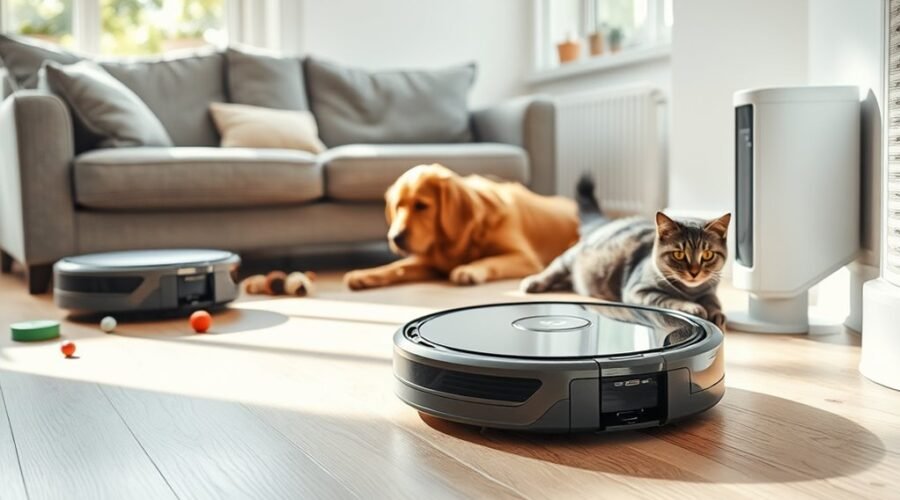
A robot vacuum for homes with pets only works well after a few early steps are handled. The device should be fully charged, the floor cleared of cords and toys, and pet areas marked in the app. Daily scheduling can reduce hair buildup before it spreads. Yet setup alone does not guarantee performance, since suction, brush design, and dock features all shape how well it manages shedding over time.
What to Set Up Before Your First Run?
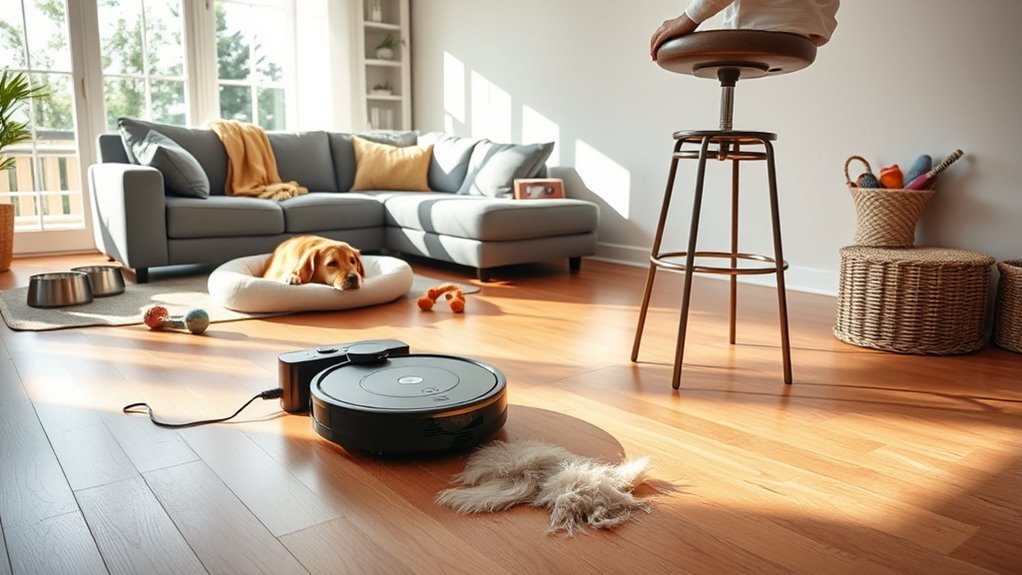
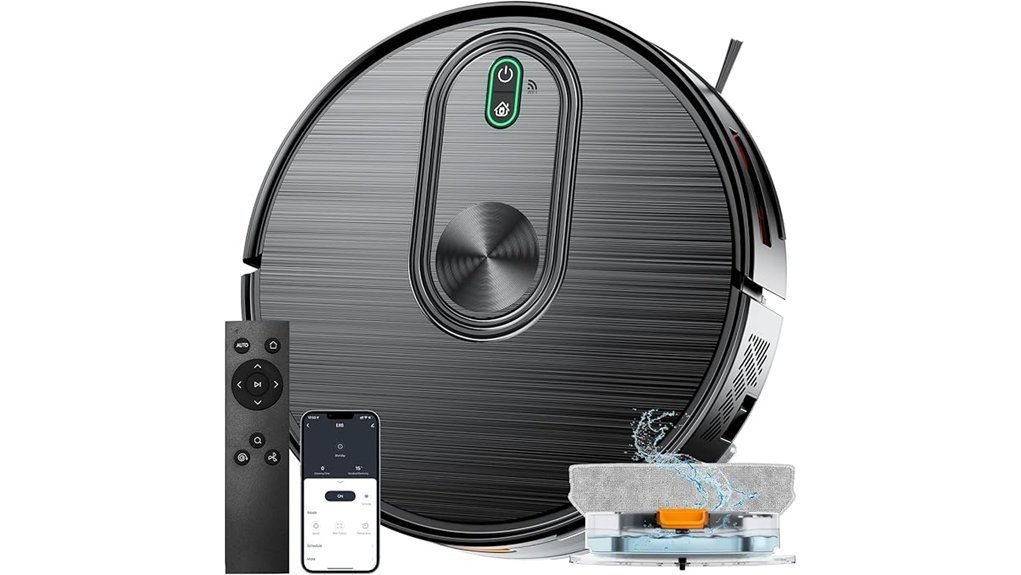
Before the first cleaning cycle, the robot vacuum should be fully charged, particularly on models with high-capacity batteries such as the MOVA V70 Ultra Complete, which uses a 6,400 mAh battery for longer runs.
The initial setup should then focus on the cleaning area: remove loose obstacles, cables, and small objects so advanced systems can map the space without interruption.
If the app allows it, define pet zones around beds, bowls, or toys to reduce unnecessary entries and improve cleaning efficiency.
A schedule should be created early, since regular runs support consistent shedding control and help users reclaim time from repetitive chores.
The auto-empty dock also deserves attention during setup, because correct placement and connection affect maintenance performance and storage capacity.
Review bin, water, and detergent functions if supported, then confirm that the robot vacuum can return reliably.
Careful preparation before the first run supports orderly operation and more effective daily cleaning.
How Robot Vacuums Pick Up Pet Hair Daily?
Robot vacuums handle daily pet hair removal through a combination of strong suction, specialized brushes, and efficient navigation. In homes with pets, this setup supports pet owners seeking cleaner floors with less labor. High suction power helps the Robot vacuum lift loose and embedded pet hair, while anti-tangle rubber brushes keep strands moving toward the bin instead of wrapping around the roller.
| Feature | Daily effect |
|---|---|
| Suction power | Lifts pet hair from floors |
| Anti-tangle rubber brushes | Reduces wrapping and drag |
| LiDAR navigation | Maps rooms and avoids obstacles |
| Daily runs | Limits buildup before it spreads |
| Cleaning performance | Keeps coverage consistent |
LiDAR navigation lets the vacuum cover open areas and edges systematically, improving cleaning performance across changing layouts. Regular daily runs matter because shedding accumulates quickly; frequent passes preserve a more controlled environment. Some models also add hard-floor mopping support, which can further support surface cleanup, but pet hair removal still depends mainly on airflow, brush design, and route planning.
Why Carpet Pickup and Anti-Tangle Brushes Matter?
Carpet pickup is a key factor in pet homes because loose hair often settles deep into carpet fibers where weaker suction and basic brush systems fail to reach. For this reason, robot vacuums with strong carpet pickup and deep cleaning capacity deliver more reliable pet hair pickup, especially on mid-pile surfaces.
Anti-tangle brushes matter because long strands can wrap around rollers, reducing cleaning efficiency and forcing frequent intervention. Advanced brush technologies, including patented rubber designs, help keep performance steady while limiting maintenance.
- A mat filled with embedded pet hair
- Brushes turning without clumps of fur
- Suction lifting debris from dense fibers
- A floor returning to calm order
Proven carpet cleaning is especially valuable in multi-pet households, where shedding repeats daily and standard systems quickly lose effectiveness. Models with strong carpet scores show that effective brush control and suction together support cleaner carpets, fewer interruptions, and a more autonomous routine for households seeking practical freedom.
Which Dock Features Help With Pet Hair and Dander?
Equally important, the dock can determine how practical a pet-focused robot vacuum feels over time.
Auto-Emptying Docks reduce hands-on maintenance by transferring pet hair into sealed bins that may hold debris for up to 100 days. High-Efficiency Filtration, especially HEPA-level systems, captures fine pet dander and other allergens, supporting cleaner air for households that value relief from constant exposure.
Self-Cleaning Features matter when the dock handles mop pads with hot water, helping remove pet stains and limiting cross-contamination between cleaning tasks.
Adjustable Emptying Frequency gives users control over when the dustbin clears, aligning each cleaning cycle with shedding patterns instead of forcing a fixed schedule.
Smart Navigation Systems in dock-supported units improve obstacle avoidance around pet zones, reducing interruptions and increasing coverage.
Taken together, these dock features shift the vacuum from a device that requires frequent supervision into one that preserves autonomy, consistency, and a more liberated daily routine for pet owners.
How to Maintain Your Pet Robot Vacuum?
Maintaining a pet robot vacuum requires a consistent routine that keeps suction strong and prevents hair-related blockages. The robot vacuum should be treated as a low-friction tool for liberated living: empty dustbin after each run, especially in homes with shedding pets, so pet hair does not reduce airflow.
Weekly maintenance should clean brushes and filters, removing wrapped strands before they harden into resistance. Frequent cleaning cycles, ideally daily, limit buildup and support efficient performance without constant human supervision.
- A brush tangled with pale fur, lifted into light.
- An open dustbin, packed with compressed debris and dander.
- Auto-empty docks humming beside the charging base.
- A navigation map rerouting around chairs for better obstacle avoidance.
If the model includes auto-empty docks, the routine becomes even lighter, since debris is transferred automatically. Periodic software updates and navigation recalibration also help obstacle avoidance, keeping the machine responsive in crowded pet areas.
Frequently Asked Questions
Is It Okay to Use a Robot Vacuum Every Day?
Yes; daily use is generally acceptable. Effective daily maintenance for pet hair depends on vacuum schedules, floor types, battery life, noise levels, cleaning modes, navigation technology, maintenance tips, and user reviews indicating reliable performance.
What Is the Best Robot Vacuum for Homes With Pets?
Dreame L60 Ultra PE appears best: 100% pet hair pickup and 30,000Pa suction power. Its battery life, navigation technology, dustbin capacity, floor types, noise levels, smart features, maintenance tips, and price comparison remain compelling.
Are Robot Vacuums Worth It if You Have Pets?
Yes; for many households, they are worth it. Strong vacuum technology improves robot efficiency on varied surface types, reducing pet hair and pet dander. Cleaning schedules, battery life, noise levels, daily maintenance, and user reviews matter.
Is Roomba or Shark Better for Pet Hair?
Roomba generally suits pet hair better, owing to stronger suction power, superior filter efficiency, and reliable navigation systems. Shark performance often offers better price comparison, but user reviews favor Roomba features, battery life, and lower maintenance tips.
Conclusion
In homes with pets, a robot vacuum performs best when it is fully charged, the floor is cleared, and pet zones are set in the app before the first run. Daily scheduled cleaning, strong suction, and anti-tangle brushes help capture hair on hard floors and carpets alike. For example, a household with two shedding dogs can reduce visible fur dramatically by pairing an auto-empty dock with routine brush and filter maintenance.