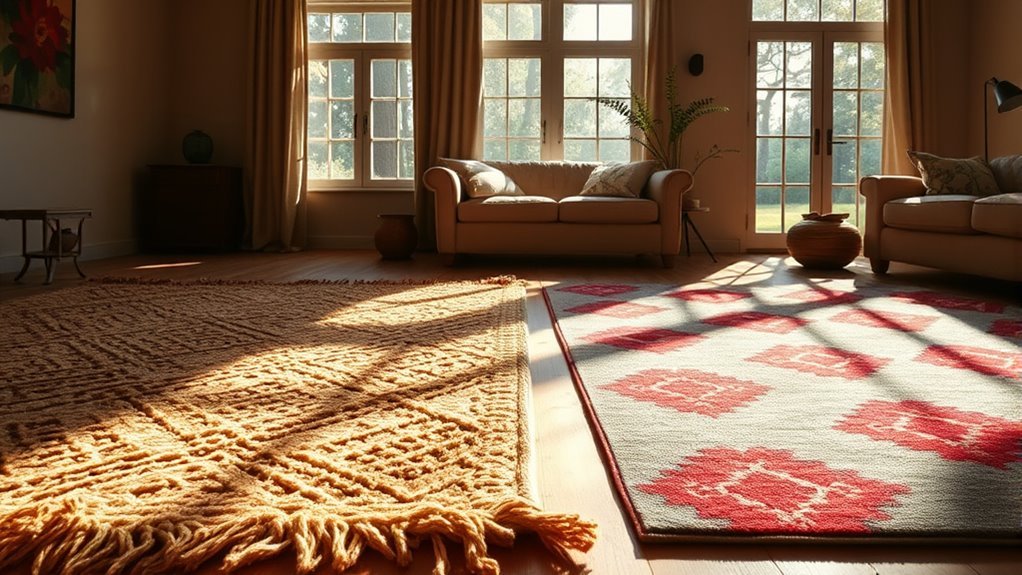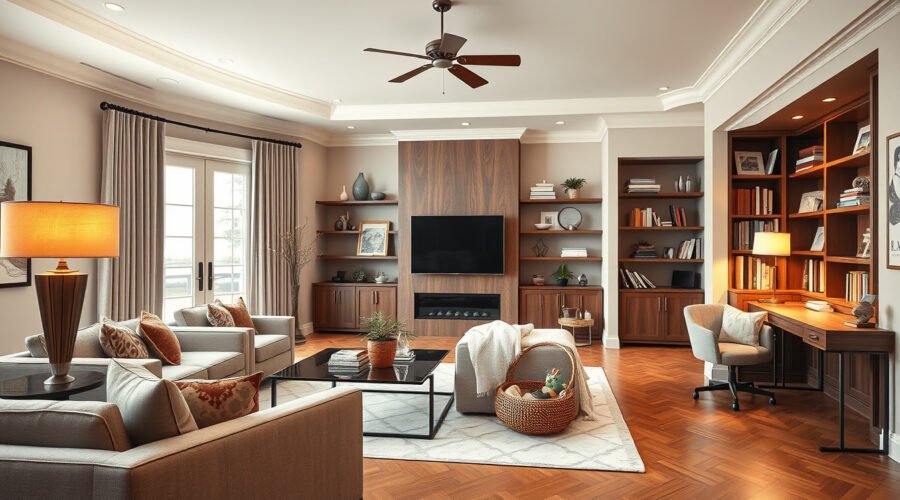
Comparing a living room vs. family room vs. den comes down to how you host guests, relax with household members, and carve out quiet time. While open floor plans often blur the boundaries between shared spaces, giving each room a distinct job prevents clutter and wasted square footage. The right label depends less on room size alone and more on location, acoustic privacy, upholstery durability, lighting, and daily traffic.
Quick Answer
A living room is a polished, front-of-home space built for hosting guests and conversation. A family room is a durable, casual hub near the kitchen for daily TV, games, kids, and pets. A den is a smaller, enclosed retreat with a door for quiet work, reading, or hobbies.
Key Takeaways
- Living rooms prioritize conversation: Place seating 8 to 10 feet apart near the front entry without a dominant TV screen.
- Family rooms demand heavy-duty materials: Choose washable fabrics rated for at least 30,000 Wyzenbeek double rubs and deep sectionals set for comfortable screen viewing.
- Dens rely on enclosure and task lighting: Use a solid-core door (STC 28–35) and 3,500K–4,100K lighting for focused work or reading.
- Single-room homes need clear zones: Separate conversation, media, and desk areas using area rugs, lighting layers, and 30-to-36-inch walkways.
- Dens are not legal bedrooms by default: Never list a den as a bedroom unless it meets local building codes for floor area, ceiling height, and emergency window egress.
Living Room vs. Family Room vs. Den: Quick Comparison
The fastest way to tell these three spaces apart is to look at who uses the room, where it sits in the floor plan, and how much wear the furniture takes. This table compares the core specifications of a living room, family room, and den side by side.
| Feature | Living Room | Family Room | Den |
|---|---|---|---|
| Primary Use | Hosting guests, conversation, entertaining | Daily TV, games, kids, pets, lounging | Remote work, reading, hobbies, quiet media |
| Typical Location | Front of the home near the main entry | Back of the home or open to the kitchen | Tucked-away corner, basement, or flex room |
| Enclosure & Privacy | Open to foyer or dining area; low privacy | Open or semi-open; moderate privacy | Enclosed with doors; high privacy |
| Typical Feel | Polished, tailored, and more formal | Relaxed, spacious, and durable | Cozy, quiet, and adaptable |
| Core Furniture | Standard sofa, accent chairs, coffee table | Deep sectional, media console, closed storage | Desk, reading chair, bookcases, sleeper sofa |
| Fabric Durability | 15,000+ double rubs (light residential) | 30,000+ double rubs (heavy-duty performance) | 15,000–25,000 double rubs (medium duty) |
Comparing Living Rooms, Family Rooms, and Dens: Key Definitions and Purposes
These three room names come from different eras of residential architecture, and each evolved to solve a specific household problem. Understanding how each room developed helps you decide how to furnish and use the square footage you have.
The living room replaced the formal Victorian parlor in the early 20th century, after Ladies’ Home Journal editor Edward Bok campaigned for a brighter front reception space. In multi-room homes, it still serves as the public showcase near the front door, designed for welcoming visitors and holding face-to-face conversations without household clutter in view.
The family room emerged after World War II. In George Nelson and Henry Wright’s 1945 book Tomorrow’s House, the architects proposed a “Room without a Name” where households could play games, allow messy hobbies, and use wipe-clean surfaces without ruining the formal living room. Modern family rooms sit near the kitchen and anchor daily routines.
A den is a smaller, enclosed secondary room built for solitude or one-on-one use. Unlike a living room or family room, a den almost always has four walls and a door, allowing it to function as a home office, library, study, craft room, or secondary TV nook.
Understanding the Purpose of Each Room
Assigning one primary job to each room prevents furniture overcrowding and keeps daily mess contained. While a living room prioritizes visual order and guest hospitality, a family room prioritizes physical comfort and media viewing, and a den protects focus and quiet.
Quick verdict: Designate your front-facing space as the living room for hosting, your largest kitchen-adjacent space as the family room for daily lounging, and your smallest enclosed room as the den for work or reading.
Defining Each Space’s Role
Clear room roles guide every buying decision, from sofa depth to storage cabinets. When you know a room’s main job, you avoid buying delicate upholstery for a high-traffic zone or squeezing a bulky sectional into a quiet study.
| Room | Main Function | Design Focus | Flexibility |
|---|---|---|---|
| Living Room | Formal reception area for guests, conversation, and hosting. | Visual balance, structured seating, and architectural focal points. | Low to moderate; best kept tidy and ready for company. |
| Family Room | Everyday hub for watching TV, playing games, and lounging together. | Deep comfort, stain resistance, media sightlines, and toy or game storage. | Moderate; adapts to movie nights, play areas, and casual dining. |
| Den | Private secondary room for focused work, reading, hobbies, or overnight guests. | Acoustic control, task lighting, vertical shelving, and compact footprint. | High; easily switches between office, library, media nook, and guest space. |
Specific Usage Scenarios
Matching specific household activities to the right room stops conflicts over noise and screen time. Use these common scenarios to divide activities across your floor plan.
The living room works best for hosting and unplugged conversation, such as book clubs, holiday appetizers, coffee with neighbors, or quiet acoustic instruments like a piano. Seating faces inward toward a fireplace or coffee table rather than a wall-mounted television.
The family room handles active, screen-centered entertainment. It is the natural home for weekend movie marathons, multiplayer video games, board games, pet beds, and kids’ floor play where spills and heavy traffic are routine.
The den supports solo focus and small-scale retreats. Use it for video calls, remote work, tax prep, reading, model building, or watching a late-night show when others are asleep.
How Location and Layout Affect Each Room’s Purpose
A room’s position in your floor plan dictates how much foot traffic it gets, while its furniture layout controls how people interact inside it. Using standard interior clearance measurements ensures each space functions comfortably without blocked pathways.
| Room Type | Typical Location | Best Layout Strategy | Key Spacing Target |
|---|---|---|---|
| Living Room | Near the front entry and formal dining room | Symmetrical or U-shaped seating facing each other for eye contact. | 8 to 10 feet between facing seats; 14 to 18 inches to the coffee table. |
| Family Room | Back of the house, off the kitchen, or in a finished basement | L-shaped sectional or arc oriented toward the media wall with open floor space. | 1.2 to 1.63 times the TV diagonal for viewing (about 6.5 to 8.8 feet for a 65-inch TV). |
| Den | Quiet hallway, front study off the foyer, basement, or bonus room | Desk positioned perpendicular to windows to cut screen glare, plus a corner reading chair. | 36 to 48 inches behind the desk chair to slide back comfortably. |
How Do You Choose Between a Living Room, Family Room, and Den?
If your home has an extra room or a flexible floor plan, choose its identity based on the biggest gap in your daily routine. Audit how often you host outside guests versus how much time you spend streaming media or working from home.
Follow these four rules to assign the right role to your space:
- Designate a living room if your main lounge is visible from the front door and you want a clutter-free zone where adults can talk without competing with a television.
- Designate a family room if the space connects directly to the kitchen or backyard and needs to absorb daily foot traffic from kids, pets, and group movie nights.
- Designate a den if at least one person works from home, takes confidential calls, studies, or needs a door that closes to block household noise.
- Split one large room into zones if you live in an apartment or single-living-area house, anchoring each activity with its own rug and lighting fixture while keeping 30-to-36-inch walkways clear.
Selecting the Right Aesthetic for Living Rooms, Family Rooms, and Dens
Color palettes, textures, and light temperatures immediately signal how a room should be used. Matching lighting output and surface finishes to the room’s purpose keeps a living room feeling welcoming, a family room feeling relaxed, and a den feeling alert or cozy.
- Aesthetic theme: Emphasize architectural symmetry and tailored silhouettes in living rooms, plush textures and casual warmth in family rooms, and personal character in dens.
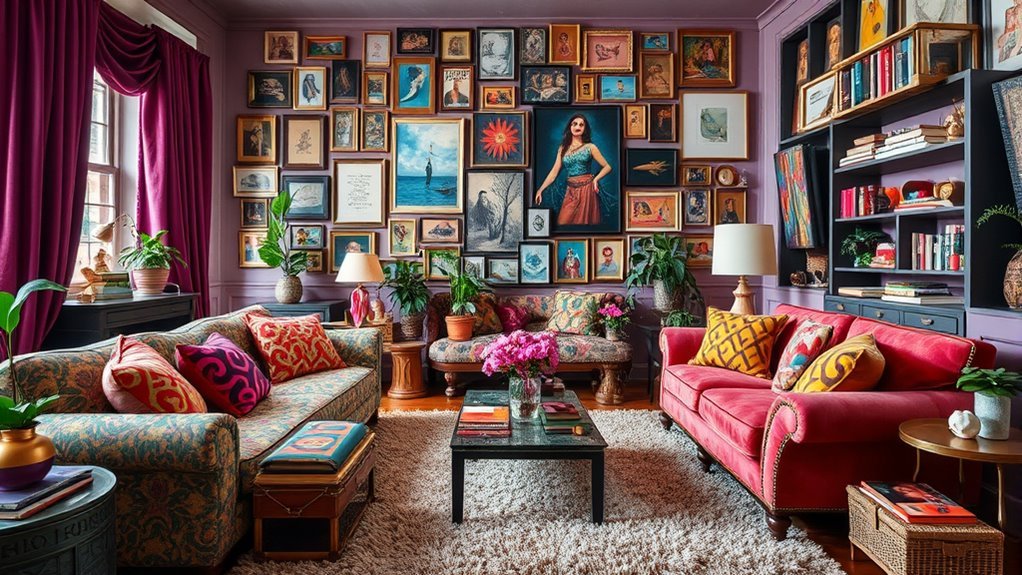
- Color palette: Use airy neutrals or high-contrast accents in front living rooms, warm mid-tones that hide everyday dust in family rooms, and saturated or moody hues (such as forest green, navy, or warm charcoal) in dens.
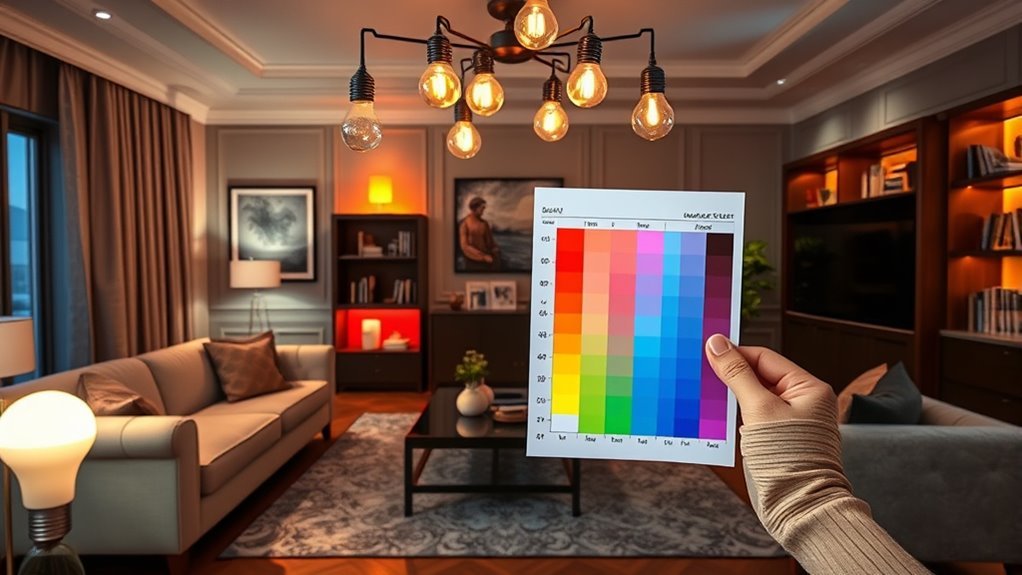
- Lighting temperature and CRI: Follow U.S. Department of Energy color temperature guidelines by choosing warm white LED bulbs (2,700K to 3,000K) with a Color Rendering Index (CRI) of 80 or higher for living and family rooms, and neutral white task lighting (3,500K to 4,100K) in dens used as offices.
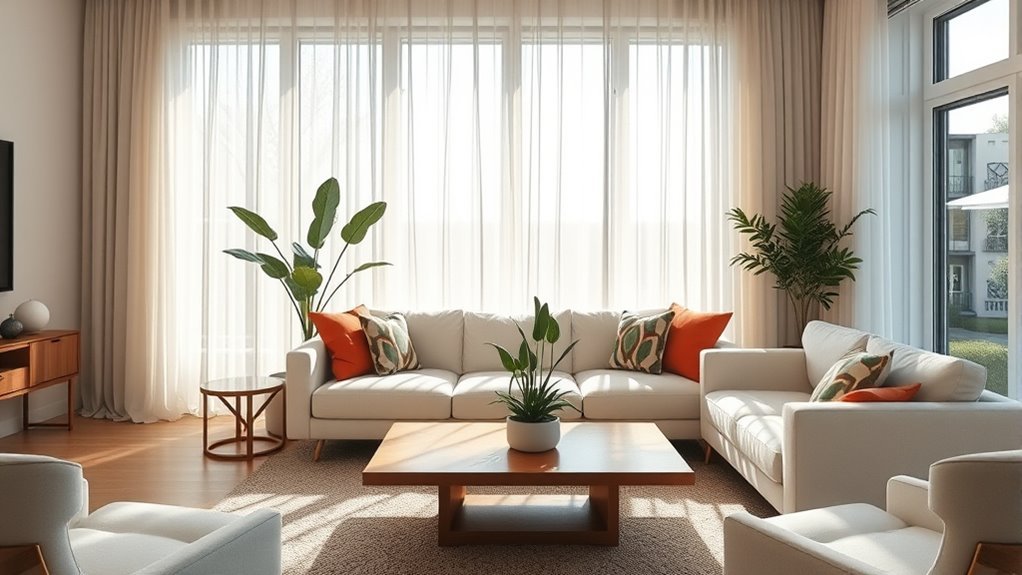
- Window treatments: Hang sheer-and-drapery layers in living rooms for diffused daylight, motorized or cordless blackout roller shades in family rooms to stop TV glare, and adjustable wood blinds or woven shades in dens.
- Decor accents: Display sculptural art and coffee-table books in living rooms, framed family photos and washable throw blankets in family rooms, and personal collections, bookshelves, or hobby gear in dens.
Recommended Products

【Reliable & Sturdy Construction】 This uplighting indoor floor can light works as a floor uplight, plug in spotlight, or short corner lamp. Crafted from premium aluminum (6"H x 2.52"W) for great heat dissipation, sturdy structure and solid durability. With fine workmanship and sleek black finish, it delivers reliable spot lights performance — perfect accent lighting for dim indoor spaces.

RELIABLE & STYLISH FLOOR CAN LIGHT - All components are UL certified, including light bulb, lamp holder, cable and switch, safe and durable. White metal construction, 8" high × 3.5" wide beveled cylindrical shape give the uplights fashion and art, perfect for indoor accent lighting.

【Great Quality 3000K Up Lights Indoor】Built with a durable metal body and replaceable warm white GU10 bulbs, this 2-pack offers great quality and works well for reliable everyday lighting, while the warm light is great for creating a cozy, relaxing atmosphere
Choosing Furniture: Comfort vs. Elegance in Living Rooms, Family Rooms, and Dens
Seat depth, frame construction, and fabric abrasion ratings determine whether furniture looks crisp for guests or survives daily lounging. Check the upholstery spec sheet and seat dimensions before buying pieces for each room.
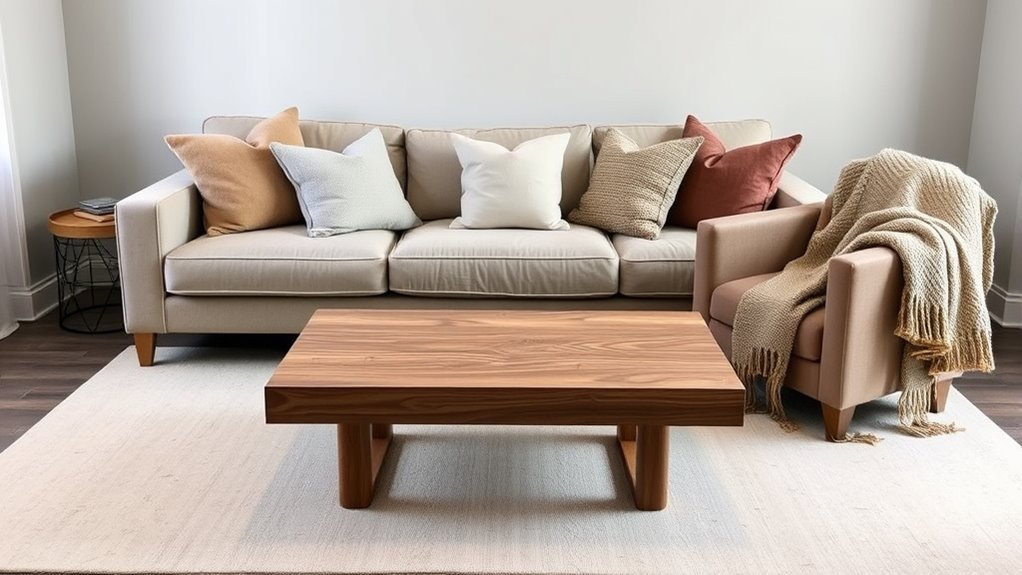
A living room works best with upright, supportive seating that keeps guests comfortable during conversation. Look for sofas with a standard seat depth of 20 to 22 inches, exposed legs that create an airy footprint, and fabrics rated at 15,000 Wyzenbeek double rubs under Association for Contract Textiles (ACT) abrasion guidelines for low-traffic private spaces.
A family room demands lounge-ready dimensions and high-traffic textiles. Choose deep sectionals (23 to 26+ inches of seat depth), rounded storage ottomans instead of sharp-cornered glass tables, and solution-dyed acrylic, polyester microfiber, or top-grain leather rated at 30,000 or more Wyzenbeek double rubs for heavy-duty use.
A den needs compact, multi-tasking furniture that maximizes a smaller footprint. Pair an ergonomic desk chair or a single swivel recliner with wall-mounted shelving and an apartment-scale sofa (72 to 80 inches wide) or daybed.
Pro tip: Check the upholstery cleaning code on the manufacturer tag before buying a family room sofa. Code W (water-based cleaners) or WS (water or mild solvent) is much easier to spot-clean after food and pet spills than Code S (solvent-only) or X (vacuum only).
Recommended Products
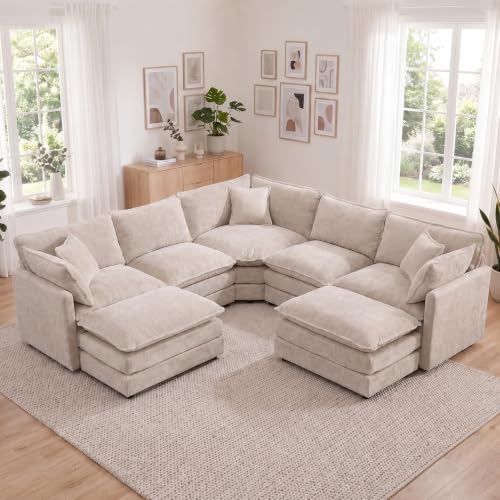
Breathable Chenille Fabric, Pet-Friendly & Easy Clean: This brown sectional couch is wrapped in chenille fabric that features a soft and skin-friendly texture. With breathable fabric design, this chenille sofa helps maintain freshness and dryness. It only requires simple wiping for daily upkeep. As a family-friendly sofa, it offers a practical everyday seating option for households with children and pets

Versatile and Flexible Modular Sofa: Our sectional sofa couch consists of 2 L-shaped oversized chaises, each L- shape sofa is lightweight. This modular sectional couch have 4 using modes, you can convert the modular sectional sofa according to your needs. add flexibility and personalized style to your living space

Spacious Deep Seat & Cloud-Like Comfort: Designed with an ultra-deep 25-inch seating area and thick double-layer foam cushions, this U-shaped sectional sofa delivers cloud-like softness and full body wrapping support. Matching fluffy back pillows perfectly fit your body curve, allowing you to relax, lounge, nap or chat freely after long workdays, bringing effortless leisure comfort for daily family use.
What If One Room Has to Do Everything?
Most apartments, condos, and starter homes have a single main living space that must serve as a living room, family room, and den at the same time. You can prevent visual chaos by dividing the room into distinct functional zones using furniture backs, area rugs, and targeted lighting.
Float your sofa 3 feet away from the wall rather than pushing every piece against the perimeter. Use an 8-by-10-foot or 9-by-12-foot rug to anchor the main seating and TV zone, and place a pair of swivel chairs across from the sofa so they can turn toward the screen on movie nights or face the sofa when guests visit.
Tuck a compact den zone into a rear corner or behind the floating sofa using a 42-to-48-inch console desk with closed drawers. At the end of the workday, hide laptops and cables inside the drawers and switch off the desk lamp so the room shifts back to a relaxing lounge.
Recommended Products
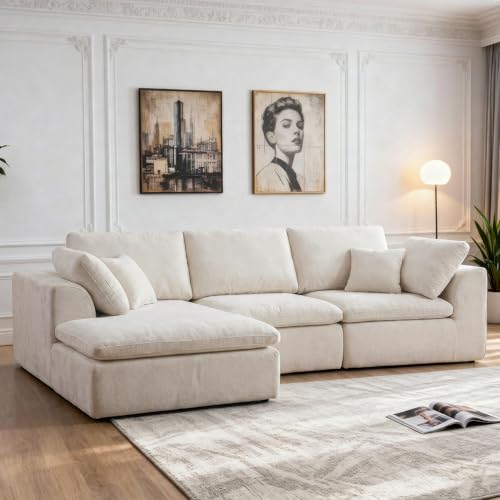
【110" Deep L-Shaped Chaise Lounge】 Designed for ultimate relaxation, this 110-inch boneless sectional features a dedicated chaise configuration (Right/Left facing) that creates a cohesive L-shaped look. Unlike floating pieces, this layout anchors your living room, providing a spacious deep seat lounge area to fully stretch out your legs. Ideally suited for corner placement, offering the immersive comfort of a cloud couch with a structured, high-end aesthetic.

Cloud-Like Comfort: Featuring 3D cutting technology, the memory foam sofa is filled with 30D elastic foam, providing excellent support and resilience for a more comfortable seating experience. Experience cloud-like comfort the moment you sit down

〈Dimensions Guide & L Shaped Sofa Style〉:This couch cushion covers for sectional sofa is made up of 3 pieces (including 2 individual cushion covers and 1 chaise lounge cover).Suitable size - each individual cushion cover fits up to 21-24 inch width, 22-28 inch depth, 2-10 inch thickness while the chaise cover fits up to 36-39 inch width, 54-68 inch depth, 2-10 inch thickness. Please measure your sofa before buying to ensure that our cushion covers matches your sofa.
Noise Levels and Privacy in Each Room: What to Expect
Sound travels quickly through open-concept doorways and hollow partitions, making acoustic planning essential when assigning room roles. Evaluating how sound moves through your floor plan keeps loud entertainment from disrupting focused work or sleep.
Noise Levels Overview
Every room generates and absorbs sound differently depending on its wall enclosure and surface materials. Use these acoustic traits to match activities to the right part of your house:
- Living room: Produces moderate-to-high conversational noise during social gatherings, amplified if the room has tall ceilings, hardwood floors, and open archways to the foyer.
- Family room: Carries sustained 60-to-75-decibel sound from televisions, surround-sound speakers, kitchen appliances, and active play.
- Den: Maintains the lowest ambient noise floor, especially when enclosed by insulated drywall and lined with filled bookshelves that absorb mid-to-high frequencies.
- Door construction impact: Standard hollow-core interior doors only provide a Sound Transmission Class (STC) rating of 20 to 25, allowing normal speech to pass through, whereas upgrading a den to a solid-core door raises the rating to STC 28 to 35.
Privacy Considerations
Visual and acoustic privacy determine whether you can take a confidential work call or unwind without interruption. A front living room offers the least privacy because entryways, stairwells, and front windows expose the space to deliveries and passing household members.
A family room sits deeper inside the house, shielding you from street view while remaining open to everyone inside the home. A den offers complete visual and acoustic separation whenever you close the door.
| Room Type | Typical Noise Level | Privacy Level | Best Acoustic Upgrade |
|---|---|---|---|
| Living Room | High during hosting; low daily | Low (open to entry and hallways) | Lined drapery and a dense wool rug with a felt pad |
| Family Room | Moderate to high daily | Moderate (shared household hub) | Upholstered sectional, fabric wall art, and acoustic media panels |
| Den | Low | High (enclosed with a door) | Solid-core door (STC 28–35) with perimeter weatherstripping |
Ideal Activities Per Room
Matching activities to each room’s privacy and sound profile stops household members from competing for the same square footage:
- Living room: Hosting dinner guests for drinks, reading quietly during the day, playing acoustic instruments, or holding formal family discussions.
- Family room: Watching live sports or movies, playing console video games, spreading out board games or puzzles, and supervising young kids while cooking.
- Den: Leading remote video meetings, studying for exams, recording podcasts, building crafts, or reading in a quiet armchair.
Choose the Right Room for Your Lifestyle
You do not need to keep a room’s original builder label if it does not fit the way your household actually lives. Many homeowners repurpose an unused formal living room into a double-door den or merge a small den with an adjacent kitchen to expand the family room.
Prioritize a dedicated living room if you entertain frequently and want one space that stays guest-ready in five minutes. Prioritize a family room if your household spends evenings together around a screen or kitchen island. Prioritize a den if remote work, solo hobbies, or occasional overnight guests need a private room with a door.
Maximizing Your Home’s Value: The Role of Living Rooms, Family Rooms, and Dens
Well-defined living spaces help buyers and appraisers immediately understand how a home functions. Staging each room with a single, unmistakable purpose prevents buyers from seeing flex spaces as awkward or wasted square footage.
In real estate listings, a dedicated den or home office is a major selling point for remote workers, while a kitchen-connected family room appeals to households who want everyday togetherness. However, how you label a den on a listing sheet carries strict legal and appraisal rules.
Under International Residential Code (IRC) Chapter 3 building planning rules, a habitable room classified as a legal bedroom must meet specific safety and size benchmarks:
- Minimum floor area (IRC Section R304): At least 70 square feet of floor space, measuring at least 7 feet in any horizontal direction (some local jurisdictions require 80 to 100 square feet).
- Minimum ceiling height (IRC Section R305): At least 7 feet tall over at least 50% of the required floor area.
- Emergency escape and rescue opening (IRC Section R310): An operable exterior door or egress window with a minimum net clear opening of 5.7 square feet (5.0 square feet at grade level), at least 24 inches high and 20 inches wide, with a sill height no more than 44 inches above the floor.
- Heating, ventilation, and access: A permanent heat source, natural light and ventilation, and private entry through a door without walking through another bedroom.
Even if a basement den or windowless flex room cannot be counted in the legal bedroom tally, finished above-grade dens with at least 7-foot ceilings still count toward your home’s total square footage under Fannie Mae appraisal guidelines for gross living area (ANSI Z765-2021). Basement dens are recorded separately as below-grade finished area.
Warning: Never advertise a windowless den as a bedroom on a resale or rental listing, and avoid placing a bed in a room that lacks a code-compliant 5.7-square-foot emergency egress window. Misrepresenting bedroom counts can trigger failed home appraisals, buyer lawsuits, or municipal code fines.
Frequently Asked Questions
What Is the Difference Between a Living Room, Family Room, and Den?
A living room is a polished, front-of-home space designed for hosting guests and holding conversations. A family room is a casual, high-traffic hub near the kitchen for daily TV, games, kids, and pets. A den is a smaller, enclosed room with a door used for quiet work, reading, or hobbies.
What Is the Difference Between a Living Room and a Family Room?
A living room sits near the front entry, uses more tailored furniture arranged 8 to 10 feet apart for conversation, and often skips the television. A family room sits deeper in the house, features deep sectionals and washable fabrics (30,000+ double rubs), and centers around a media console.
Is a Den the Same as a Family Room?
No, a den and a family room serve opposite social needs. A family room is a larger, open communal space built for group entertainment, whereas a den is a smaller, enclosed room with doors designed for solo focus, remote work, reading, or quiet one-on-one media viewing.
Can a Den Be Used as a Bedroom?
You can place a sleeper sofa or guest bed in a den for occasional visitors, provided the room has safe ventilation and exits. However, to legally list a den as a bedroom under IRC standards, it must have at least 70 square feet of floor area, 7-foot ceilings, permanent heating, and an exterior egress window with a 5.7-square-foot clear opening.
Do You Need Both a Living Room and a Family Room?
No, you do not need both rooms if one well-planned space fits your household routines. In apartments and single-living-area homes, combining durable performance upholstery with tailored silhouettes and hidden media storage lets one room welcome guests and handle everyday lounging.
What Should You Put in a Den?
Furnish a den around its main quiet activity. Most dens work best with a compact desk, an ergonomic or swivel reading chair, vertical bookcases, a 3,500K–4,100K task lamp, and a small loveseat or daybed, topped off with a solid-core door to block household noise.
What Is the Best Layout for a Combined Living Room and Family Room?
Anchor the primary seating group on a large area rug facing both the television and a pair of swivel accent chairs so the layout supports both movie nights and face-to-face conversation. Keep 30-to-36-inch walkways open around the perimeter and use closed credenzas to hide remotes, consoles, and toys when guests arrive.
Final Thoughts on Living Rooms, Family Rooms, and Dens
Choosing between a living room, family room, and den comes down to matching each room’s location and enclosure to your daily habits. Use your front-facing living room for polished hosting, your kitchen-connected family room for durable everyday comfort, and your enclosed den for quiet work or reading.
Before buying new furniture or rearranging your layout, measure your main room’s walkways and write down the single primary job that space needs to perform every day.
Sources
- Herman Miller (WHY Magazine): Architectural history of George Nelson and Henry Wright’s 1945 book Tomorrow’s House and the origin of the postwar family room.
- U.S. Department of Energy (DOE): Correlated Color Temperature (CCT) Kelvin ranges and Color Rendering Index (CRI) guidelines for residential living spaces and offices.
- Association for Contract Textiles (ACT): Voluntary Performance Guidelines for ASTM D4157 Wyzenbeek upholstery abrasion ratings in low-traffic and high-traffic spaces.
- International Code Council (IRC Chapter 3 Building Planning): Minimum habitable room floor area (Section R304), ceiling height (Section R305), and emergency escape and rescue opening standards (Section R310).
- Fannie Mae Selling Guide: Residential appraisal standards and ANSI Z765-2021 requirements for calculating above-grade gross living area (GLA) and below-grade rooms.