Affiliate disclosure: As an Amazon Associate, we may earn from qualifying purchases made through links on this page, at no extra cost to you.
If you need a dehumidifier for a cool basement, garage, laundry room, or other cold indoor space in 2026, start with the room temperature, not only the advertised square footage. The three compressor models below have a documented minimum operating temperature of 41°F (5°C). They are suitable for cool, non-freezing indoor rooms, but they are not designed for spaces that regularly drop below freezing. Compare the minimum temperature, drainage setup, realistic moisture-removal capacity, tank size, and noise-related features before choosing.
Quick verdict: The Frigidaire 50 Pint Wi-Fi Dehumidifier is the strongest overall choice for a large cool basement because it combines a documented 41°F minimum with a 50-pint rating, a large bucket, continuous drainage support, and remote controls. The Waykar 34 Pint is the better value-focused option, while the Kesnos CTH30B is easier to place in a smaller cool room.
Important: Automatic defrost helps manage frost in cool air, but it does not make a compressor dehumidifier freeze-proof. For rooms that regularly stay below 41°F, consider a purpose-built desiccant dehumidifier or warm the space before use.
Quick Comparison
| Product | Best For | Documented Temperature Range | Drainage | Amazon |
|---|---|---|---|---|
| Frigidaire 50 Pint Wi-Fi | Best Overall | 41°F to 89°F | 2.7-gallon bucket or continuous gravity drain | Check Details |
| Waykar 34 Pint | Best Value | 41°F to 95°F | 0.66-gallon tank or included gravity hose | Check Details |
| Kesnos CTH30B | Best for Smaller Cool Rooms | 41°F to 90°F | 0.39-gallon tank or included gravity hose | Check Details |
Capacity and coverage claims are not always measured under the same temperature and humidity conditions. Treat them as sizing guides, not direct apples-to-apples comparisons. Moisture removal will be lower in a cool room than in warm, highly humid test conditions.
Selection note: These three models remain because their operating information supports use at 41°F or above. The list does not include products that advertise automatic defrost without a clearly documented minimum room temperature.
Frigidaire 50 Pint Wi-Fi Dehumidifier
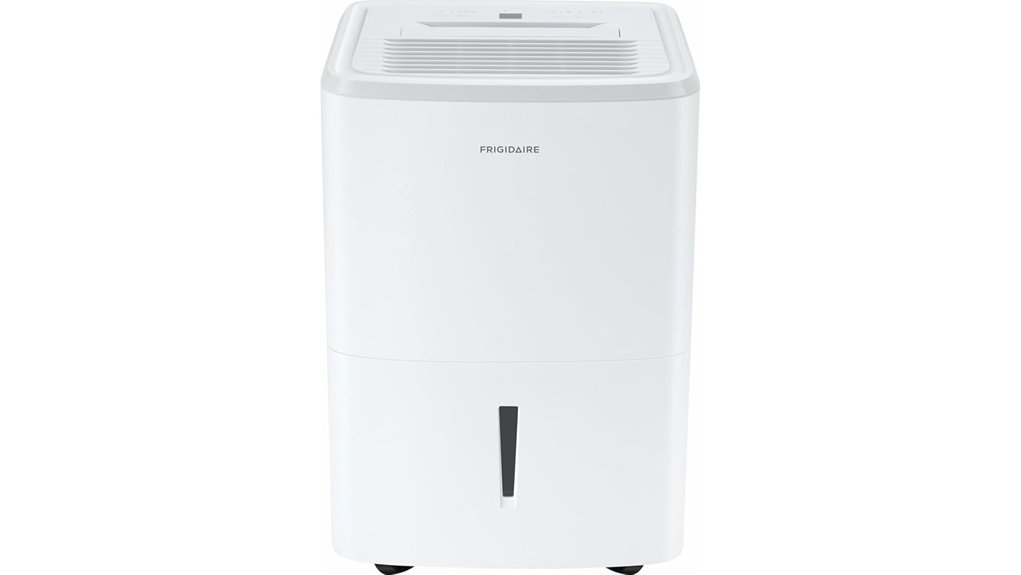
The Frigidaire 50 Pint Wi-Fi Dehumidifier is the clearest match for a cool-room article because the manufacturer states that it can operate at temperatures down to 41°F. Its 50-pint rating, three fan speeds, 2.7-gallon bucket, washable filter, caster wheels, continuous-drain support, and Wi-Fi controls make it practical for large basements, garages, attics, and other damp indoor areas.
Why you’ll like it: It combines a documented 41°F minimum with strong airflow, a large collection bucket, and convenient remote control. The large bucket also reduces emptying compared with compact models.
Best For: Buyers who want a recognized-brand compressor dehumidifier for a large cool space that remains at or above 41°F.
Who Should Avoid It: Anyone using an unheated space that regularly falls below 41°F, or anyone who needs a very quiet bedroom unit.
Pros:
- Manufacturer-documented low-temperature operation down to 41°F.
- 50-pint capacity, three fan speeds, Wi-Fi controls, and a large 2.7-gallon bucket.
- Washable filter, wheels, handle, auto shutoff, and ENERGY STAR certification.
Cons:
- Heavier and louder than compact bedroom-focused models.
- Not suitable for freezing rooms or outdoor exposure.
- A gravity-drain hose may need to be purchased separately, so confirm what the current listing includes.
Waykar 34 Pint Dehumidifier with Drain Hose
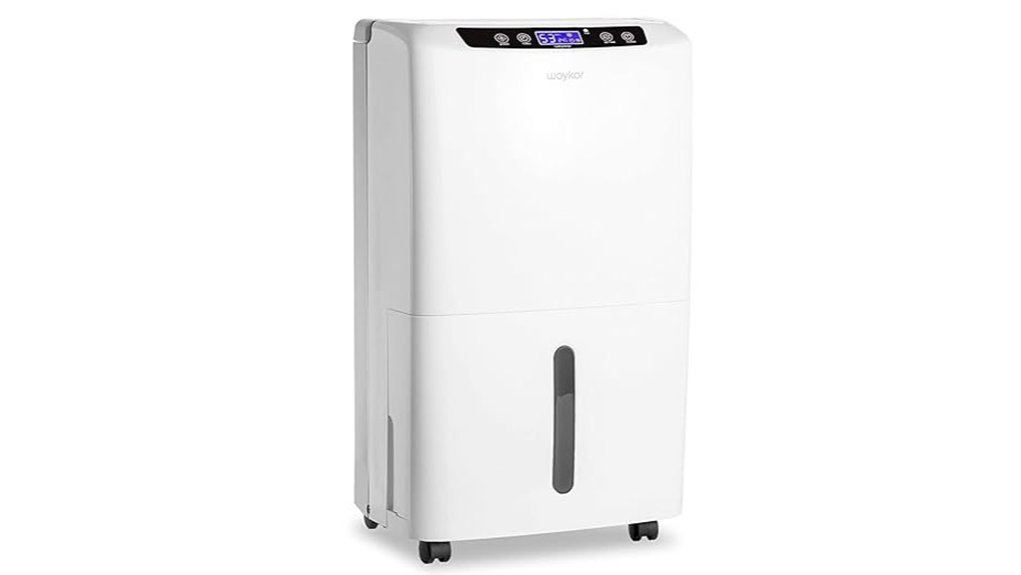
The Waykar 34 Pint model has a documented operating range of 41°F to 95°F. It offers automatic defrost, adjustable humidity from 30% to 80%, two fan speeds, a 24-hour timer, auto restart, a washable filter, and both tank and hose drainage. Its advertised 34-pint maximum is measured at 95°F and 90% RH, so expect lower water removal in a cool basement.
Why you’ll like it: It provides the core features most buyers need without relying on app controls: set-point humidity control, automatic shutoff, wheels, and continuous drainage.
Best For: Medium-size cool basements, offices, or storage rooms that remain between 41°F and 95°F, especially where simple controls matter more than Wi-Fi.
Who Should Avoid It: Buyers whose room drops below 41°F or who need heavy-duty drying after flooding or an active leak.
Pros:
- Documented 41°F to 95°F operating range, automatic defrost, and auto restart.
- Includes a drain hose and a removable washable filter.
- Easy to move with handles and 360-degree wheels.
Cons:
- Advertised capacity falls as room temperature and humidity decrease.
- The 0.66-gallon tank may require frequent emptying.
- Only two fan speeds and no app-based control.
Kesnos CTH30B Energy Star Dehumidifier
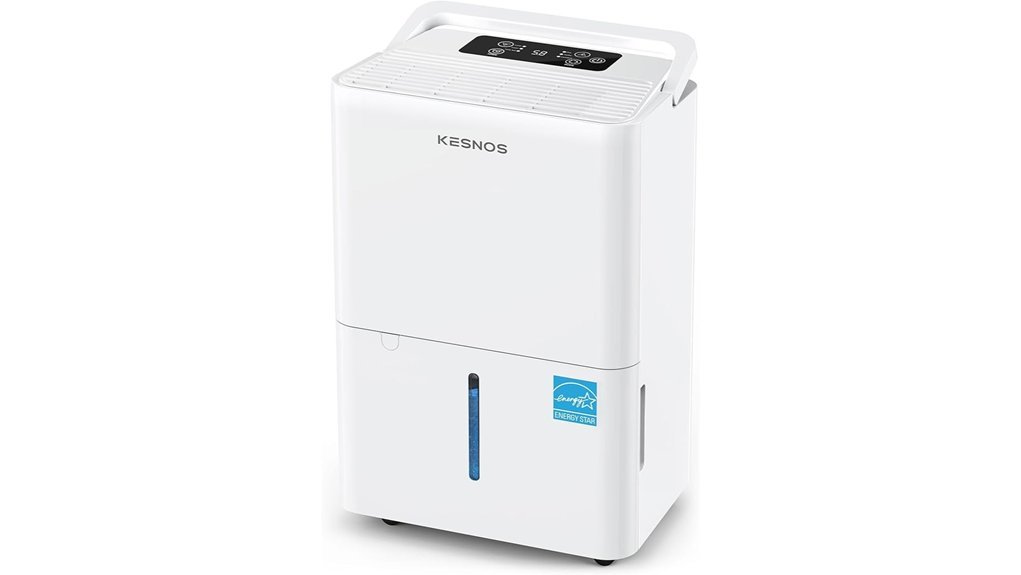
The Kesnos CTH30B is a compact ENERGY STAR-certified dehumidifier with a documented operating range of 41°F to 90°F. It includes automatic defrost, four modes, a timer, memory restart, continuous drainage, and an advertised low-noise setting. The 30-pint claim is measured under warm, highly humid conditions, so it is better treated as a small-to-medium-room option than a heavy-duty whole-basement machine.
Why you’ll like it: It is easier to place and move than a full-size 50-pint model, and its low wattage, sleep-friendly controls, and hose connection suit steady maintenance use.
Best For: Bedrooms, offices, laundry rooms, and moderately damp basement zones that remain between 41°F and 90°F.
Who Should Avoid It: Buyers trying to dry a flooded basement, a very large open area, or a room that frequently drops below 41°F.
Pros:
- Documented 41°F to 90°F operating range with automatic defrost and memory restart.
- Compact footprint, wheels, hidden handle, and multiple operating modes.
- Tank or continuous gravity drainage.
Cons:
- Small 0.39-gallon tank fills quickly in damp conditions.
- Maximum-condition “30-pint” marketing should not be compared directly with DOE-rated 30- or 50-pint units.
- No Wi-Fi or built-in pump.
Factors to Consider When Choosing a Dehumidifier for Cold Temperatures
A cold-room dehumidifier must match both the moisture load and the lowest temperature in the space. Square-foot claims alone are not enough. Use the checklist below before choosing a model.
Check the Minimum Operating Temperature
The most important specification is the manufacturer’s minimum operating temperature. Many compressor dehumidifiers can work in cool basements but are not designed for freezing conditions. A documented minimum such as 41°F is more useful than a vague “basement ready” claim. If the room regularly drops below the stated limit, choose a desiccant model or warm the space.
Auto Defrost Is Not Freeze-Proofing
Automatic defrost temporarily stops or changes compressor operation when frost is detected on the coil. This protects performance in cool air, but it does not make the appliance suitable for subfreezing rooms. Always follow the operating range in the manual.
Compare Capacity Under the Same Test Conditions
Some listings advertise a maximum pint figure measured at very high temperature and humidity, while other products use a standardized rating at milder conditions. A “34-pint” maximum-condition model may remove far less water in a 50°F basement. Check the stated test conditions before comparing capacity.
Size for Moisture Load, Not Only Square Footage
A mildly damp 2,000 sq. ft. basement may need less capacity than a wet 700 sq. ft. laundry room. Consider visible condensation, musty odors, groundwater seepage, laundry drying, open doors, and how often the unit will run. For active leaks or flooding, fix the water source first.
Choose the Right Drainage Method
Continuous gravity drainage is useful for long-term basement operation, but the hose must run downhill without kinks. A built-in pump is better when the drain is above the unit. Keep the hose indoors or protected from freezing, and follow the manufacturer’s installation instructions.
Use a Separate Hygrometer
Built-in humidity sensors can differ from a separate meter because of airflow and sensor position. A basic hygrometer placed several feet away helps you confirm whether the room is holding your target level. For many damp rooms, a target around 45% to 50% RH is a practical starting point, but follow the appliance manual and adjust for condensation and comfort.
Consider Noise and Placement
Advertised sound levels may apply only to the lowest fan setting. Leave the required clearance around the air inlet and outlet, keep the filter clean, and place the unit on a level surface. For bedrooms, prioritize sleep mode and low-speed noise rather than maximum extraction.
Look for Efficient Controls
ENERGY STAR certification, a humidistat, auto restart, timers, and multiple fan speeds can reduce unnecessary runtime. The best energy-saving feature is accurate set-point control, because the unit can pause after reaching the desired humidity.
Cold-space safety note: Do not operate an indoor dehumidifier outdoors, in standing water, with blocked airflow, or below its approved temperature range. Plug it directly into a properly grounded outlet and follow the manual for drainage, clearance, filter cleaning, and storage.
Frequently Asked Questions
Which Dehumidifier Is Best for a 41°F Basement?
The Frigidaire is the strongest choice for a large, persistently damp basement because it has the highest rated capacity and the largest bucket in this comparison. The Waykar is a value-focused alternative, while the Kesnos is better suited to a smaller zone. At 41°F, expect slower water removal than the headline capacity figures suggest.
How Do Dehumidifiers Perform Below 40°F?
Portable compressor dehumidifiers lose extraction capacity and may frost heavily as the room approaches freezing. The models in this article have a 41°F minimum and should not be treated as subfreezing appliances. For consistently colder rooms, a purpose-built desiccant dehumidifier is usually the safer category to consider.
Does Auto Defrost Mean a Dehumidifier Works Below Freezing?
No. Auto defrost helps clear frost from the evaporator coil during cool-room operation, but the unit still has a minimum approved temperature. Check the manual and stop using the appliance if the room falls below that limit.
Can I Use a Dehumidifier in an Unheated Garage?
Yes, only when the garage remains within the model’s operating range and the unit is protected from rain, standing water, dust, and freezing drainage lines. A garage that regularly falls below 41°F needs a different solution, such as a purpose-built desiccant model or reliable space heating.
What Humidity Should I Set in a Cold Basement?
Start around 45% to 50% RH and adjust based on condensation and comfort. Setting the target too low can make the compressor run longer without providing a meaningful benefit, especially in colder air.
Should I Use Continuous Drainage in Winter?
Continuous drainage is convenient when the hose can maintain a steady downhill slope to an indoor drain. Prevent kinks, avoid standing water at the hose end, and do not route the line through a location where it can freeze.
How Often Should I Clean the Filter?
Check the filter every two to four weeks during regular use, or more often in dusty basements and garages. Follow the manual, allow a washable filter to dry fully, and keep the air inlet and outlet clear.
Conclusion
Final recommendation: Choose the Frigidaire 50 Pint Wi-Fi Dehumidifier for a large cool basement or garage that stays at or above 41°F. Choose the Waykar 34 Pint when value and straightforward controls matter most. Choose the Kesnos CTH30B for a smaller cool room where compact size and low-speed operation are priorities.
Whichever model you choose, confirm the current manual, keep the unit within its approved temperature range, and use continuous drainage only when the hose can run downhill without freezing or kinking.
The best dehumidifier for a cold room is the one whose approved operating range matches the lowest temperature in the space. All three remaining models are documented for operation down to 41°F, but none is intended for freezing conditions. Compare moisture load, drainage access, tank size, room layout, and realistic cold-weather performance before buying.