
A crawl space dehumidifier with a built-in pump is useful when gravity drainage is difficult or the nearest drain sits above the unit. The best choice depends on the moisture load, crawl space layout, operating temperature, airflow, pump lift, and how the manufacturer measured its pint rating. This guide compares six relevant pump-equipped models for 2026 and separates high-temperature saturation claims from AHAM or DOE ratings where those figures are available.
Affiliate disclosure: This article contains Amazon affiliate links. We may earn a commission from qualifying purchases at no extra cost to you. Product placement is based on buyer fit, stated specifications, drainage design, and practical limitations—not commission size.
Quick verdict
- Best overall for a typical crawl space: CADPXS Remois XP125, because it provides saturation, AHAM, and DOE capacity figures instead of relying on one headline number.
- Best high-airflow option: Waykar 125 Pint, with a stated 300 CFM airflow rate and both pump and gravity drainage.
- Best heavy-duty option: Airecoler GT-XP7, with a stated 73-pint AHAM rating and 285 CFM airflow.
- Best compact, quieter option: ARGENDON Shield 60P, with a stated 60-pint AHAM rating, a 19.6-foot pump hose, and a listed sound level below 48.3 dBA.
- Best for a smaller crawl space: ALORAIR Sentinel HD35P, rated for up to 1,000 sq. ft. with 35 pints per day at AHAM conditions.
Important capacity note
A “125-pint,” “155-pint,” or “170-pint” headline may be measured in hot, nearly saturated air. AHAM and DOE ratings use cooler, more realistic test conditions and are usually lower. Compare models at the same test condition whenever possible, and treat manufacturer square-footage claims as rough guidance rather than a guaranteed result.
Quick Comparison
| Model | Stated Capacity | Claimed Coverage | Airflow | Pump Route | Best For | Amazon |
|---|---|---|---|---|---|---|
| CADPXS Remois XP125 | 125 PPD saturation; 55 PPD AHAM; 36.68 PPD DOE | Up to 1,300 sq. ft. | 147 CFM | 19.6-ft pump hose; gravity option | Balanced residential performance | Check Price |
| Waykar 125 Pint | 125 PPD at 95°F, 90% RH | Up to 6,500 sq. ft. | 300 CFM | 16.4-ft pump hose; 6.6-ft gravity hose | Large, open crawl spaces | Check Price |
| Airecoler GT-XP7 | 170 PPD saturation; 73 PPD AHAM | Up to 7,500 sq. ft. | 285 CFM | 16.4-ft pump hose | Heavy moisture loads and job sites | Check Price |
| Airzentti 155 Pint | 155 PPD saturation; 70 PPD AHAM | Up to 7,500 sq. ft. | 220 CFM | 16.4-ft pump lift; 6.56-ft gravity hose | Large-area dual-drainage setup | Check Price |
| ARGENDON Shield 60P | 145 PPD saturation; 60 PPD AHAM | Up to 1,800 sq. ft. | 165 CFM | 19.6-ft pump hose; 6.5-ft gravity hose | Compact installation and lower listed noise | Check Price |
| ALORAIR Sentinel HD35P | 70 PPD saturation; 35 PPD AHAM | Up to 1,000 sq. ft. | 115 CFM | 19.6-ft pump hose; 6.5-ft gravity hose | Small crawl spaces and lighter loads | Check Price |
Coverage figures are manufacturer claims. Actual performance depends on temperature, air leakage, standing water, vapor barriers, compartment layout, and whether air can move freely through the entire crawl space.
CADPXS Crawl Space Dehumidifier with Pump — Best Overall
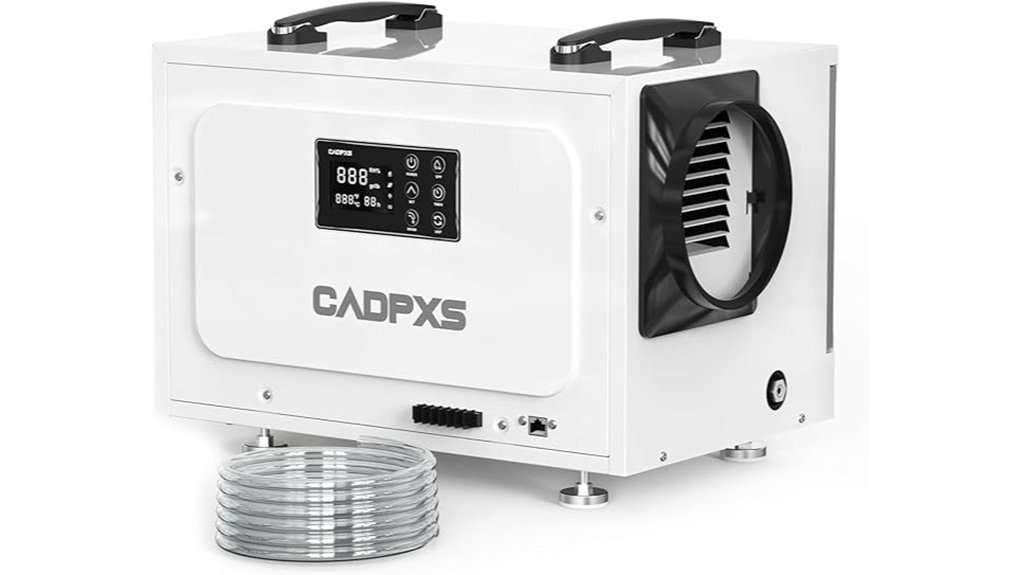
The CADPXS Remois XP125 is the easiest model here to compare honestly because the manufacturer publishes three capacity figures: 125 pints per day at saturation, 55 pints per day at AHAM conditions, and 36.68 pints per day under DOE conditions. It is intended for spaces up to 1,300 sq. ft. and moves 147 CFM of air.
Its built-in pump uses a 19.6-foot hose, while a 6.56-foot gravity hose provides a second drainage option. The compact metal body, adjustable feet, carrying handles, auto defrost, timer, memory restart, and washable MERV-1 filter make it practical for crawl spaces where access is limited.
Why you’ll like it: Transparent capacity ratings make sizing and comparison easier.
Best for: Typical residential crawl spaces, basements, and storage areas that need automatic pumped drainage.
Who should avoid it: Buyers who need the highest possible airflow or a unit specifically rated for a very large open commercial area.
Pros:
- Publishes saturation, AHAM, and DOE moisture-removal ratings.
- Built-in pump with a 19.6-foot hose plus gravity drainage.
- Compact footprint, auto defrost, timer, and restart memory.
Cons:
- The listed noise level is up to about 58.4 dBA, so it is not the quietest option here.
- Its 147 CFM airflow is lower than several larger commercial models.
- The 125-pint headline should not be mistaken for its AHAM or DOE capacity.
Waykar 125 Pint Crawl Space Dehumidifier with Pump — Best High-Airflow Option
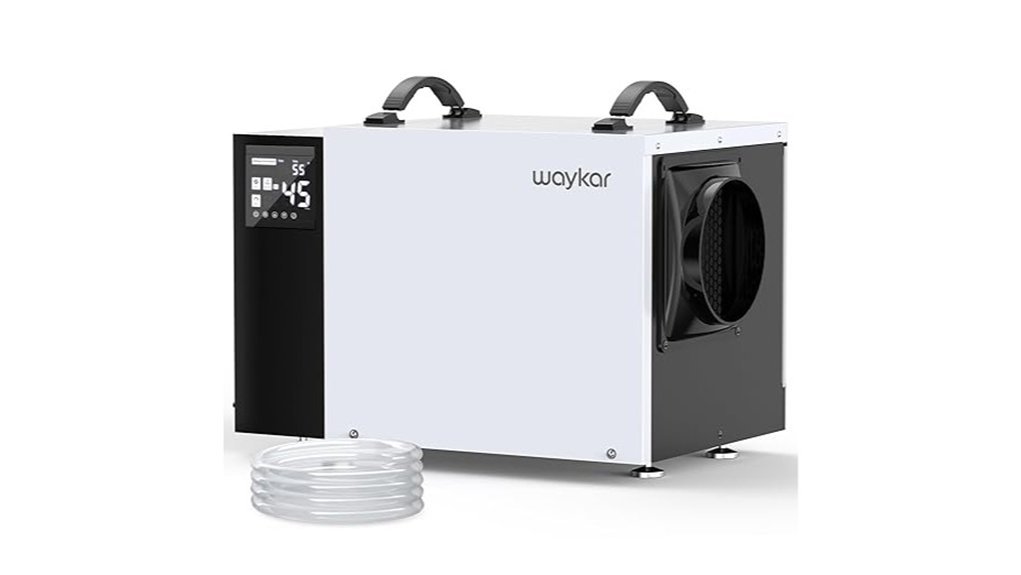
The Waykar AFW2.0DPM is designed for large crawl spaces and other open areas. It is rated to remove 125 pints per day at 95°F and 90% relative humidity, with a stated 300 CFM airflow rate and manufacturer coverage claim of up to 6,500 sq. ft. Because the capacity figure comes from hot, very humid conditions, compare it cautiously with models that publish AHAM or DOE output.
Drainage is flexible: the package is listed with a 16.4-foot pump hose and a 6.6-foot gravity hose. The metal housing, adjustable feet, washable filter, auto defrost, power-loss memory, and digital controls suit long-term crawl-space installation. A wired remote is optional rather than a standard wireless remote, so check what is included with the current listing.
Why you’ll like it: The 300 CFM airflow can help circulate humid air through a large, open crawl space.
Best for: Larger spaces with good internal airflow and a drain located above or away from the unit.
Who should avoid it: Buyers who need a clearly published AHAM or DOE capacity for direct apples-to-apples comparison.
Pros:
- High stated airflow of 300 CFM.
- Includes pump and gravity drainage routes.
- Auto defrost, restart memory, adjustable feet, and reusable filter.
Cons:
- The 125-pint rating is measured at 95°F and 90% RH, not AHAM or DOE conditions.
- The 6,500-sq.-ft. claim may be optimistic in divided, leaky, or very wet crawl spaces.
- The wired remote may be optional and should not be assumed to be included.
Airecoler 170 Pint Commercial Dehumidifier with Pump — Best Heavy-Duty Option
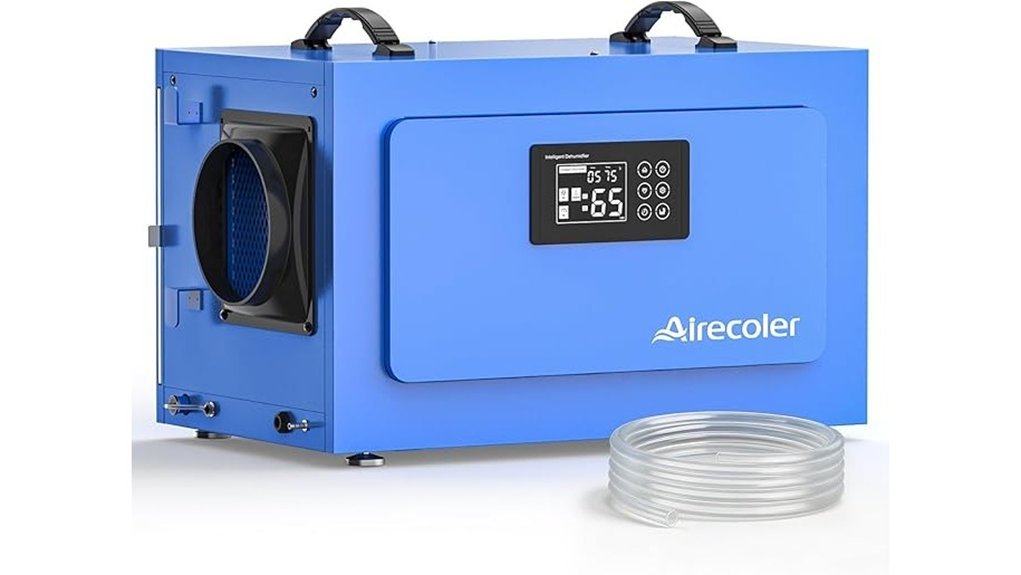
The Airecoler GT-XP7 is built for heavier moisture loads in crawl spaces, basements, warehouses, garages, and restoration work. Its published ratings are 170 pints per day at 95°F and 95% RH and 73 pints per day at 80°F and 60% RH. It also provides 285 CFM of airflow and a manufacturer coverage claim of up to 7,500 sq. ft.
The built-in pump uses a 16.4-foot hose for upward drainage. Auto defrost, restart after a power interruption, a washable filter, error detection, and a 24-hour timer support unattended operation. The unit weighs about 63.2 pounds and measures approximately 23.6 × 14.6 × 13.6 inches, so plan the access route before installation.
Why you’ll like it: A 73-pint AHAM rating and 285 CFM airflow provide a clearer picture of real-world heavy-duty performance.
Best for: Large or persistently damp areas, property maintenance, and restoration work.
Who should avoid it: Buyers who need a lightweight machine for frequent carrying through a narrow access opening.
Pros:
- Publishes both saturation and AHAM capacity.
- Strong 285 CFM airflow with pump-assisted drainage.
- Auto defrost, restart memory, timer, and washable filter.
Cons:
- At about 63.2 pounds, installation may require two people.
- The 7,500-sq.-ft. figure is a manufacturer maximum, not a universal sizing guarantee.
- Warranty coverage is split by component, so read the current terms before purchase.
Airzentti 155 Pint Commercial Dehumidifier with Pump and Hose — Best for Flexible Large-Area Drainage
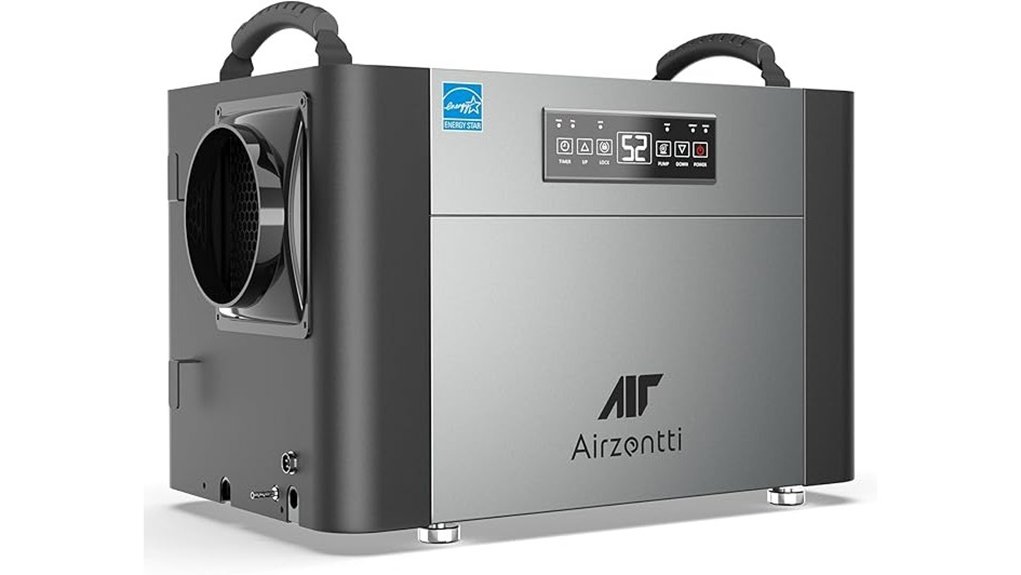
The Airzentti model is listed at 155 pints per day in near-saturation conditions and 70 pints per day at AHAM conditions, with 220 CFM airflow and a stated coverage area of up to 7,500 sq. ft. It includes a built-in pump rated for up to 16.4 feet of lift and a 6.56-foot gravity-drain hose.
Humidity settings, timer controls, auto defrost, auto restart, a screen lock, adjustable feet, and a duct collar make it flexible for crawl spaces, basements, garages, and light restoration work. The unit weighs about 60 pounds. Because a clear official manufacturer specification and warranty page was not located during this review, verify the model number, certification claims, warranty, and included accessories on the live Amazon listing before ordering.
Why you’ll like it: It combines a 70-pint AHAM claim with pump drainage, gravity drainage, and optional ducting support.
Best for: Buyers who need flexible installation in a larger space and are comfortable verifying the current listing details.
Who should avoid it: Buyers who require clearly documented manufacturer support and certification records before purchase.
Pros:
- Lists both 155-pint saturation and 70-pint AHAM capacity.
- Built-in pump, gravity hose, and duct collar support flexible setup.
- Auto defrost, restart, timer, and screen-lock functions.
Cons:
- Official warranty and certification details were not independently confirmed.
- The 7,500-sq.-ft. claim should be treated as a maximum marketing estimate.
- At about 60 pounds, it is not ideal for frequent relocation.
ARGENDON Crawl Space Dehumidifier with Pump and Hose — Best Compact Quiet Pick
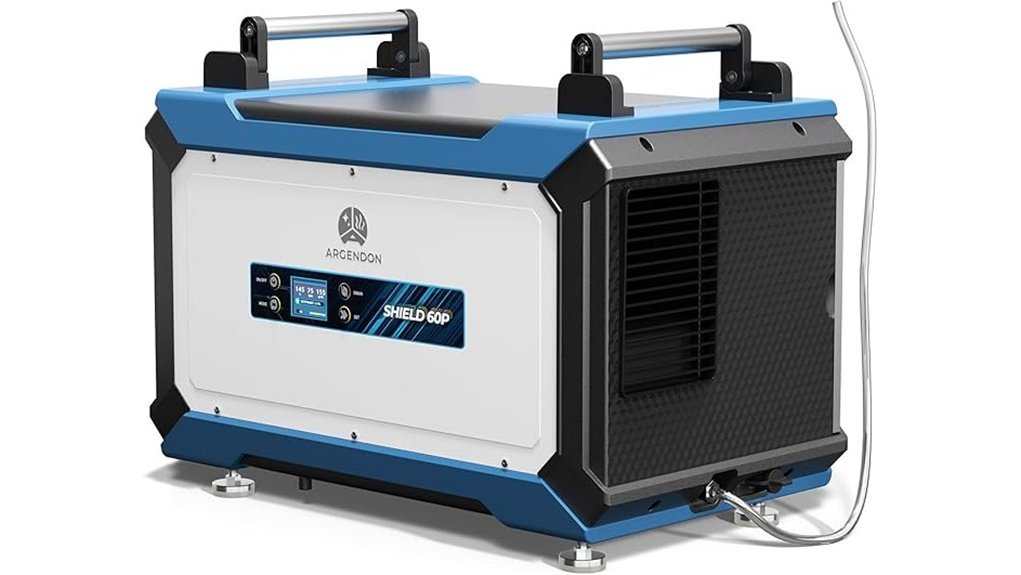
The ARGENDON Shield 60P balances capacity, pump reach, and a compact body. It is rated at 145 pints per day at saturation and 60 pints per day at AHAM conditions, with 165 CFM airflow and coverage up to 1,800 sq. ft. The listed sound level is below 48.3 dBA, making it one of the quieter stated options in this comparison.
The condensate pump uses a 19.6-foot hose, while a 6.5-foot hose supports gravity drainage. The 46.5-pound unit includes auto defrost, memory restart, adjustable feet, a replaceable MERV-1 filter, and dual-drain capability. The manufacturer lists ETL certification and a five-year limited warranty; confirm registration and component-specific terms before purchase.
Why you’ll like it: It offers a useful 60-pint AHAM rating, long pump hose, compact dimensions, and a lower listed noise level.
Best for: Residential crawl spaces where access, vibration, and noise under living areas matter.
Who should avoid it: Buyers who need the highest airflow for a very large, open commercial space.
Pros:
- 60-pint AHAM rating with 165 CFM airflow.
- Long 19.6-foot pump hose plus gravity drainage.
- Compact 46.5-pound design and listed sound level below 48.3 dBA.
Cons:
- Lower airflow than the Waykar, Airecoler, and Airzentti models.
- Optional mounting or remote accessories should not be assumed to be included.
- The five-year warranty may have registration or component limitations.
ALORAIR 70 Pint Crawl Space Dehumidifier with Pump — Best for Small Crawl Spaces
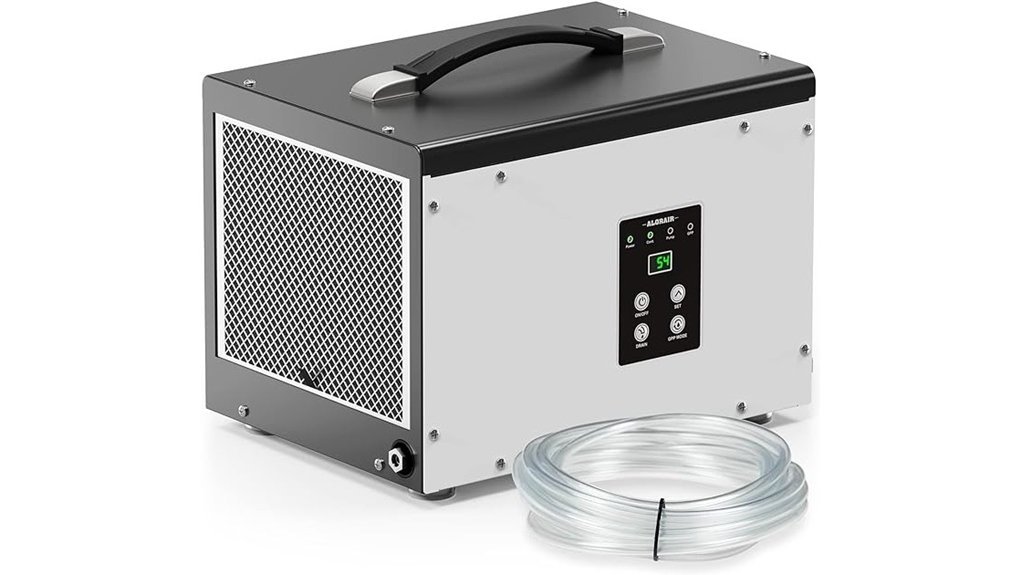
The ALORAIR Sentinel HD35P is the smallest-capacity model in this guide. It is rated at 70 pints per day at saturation and 35 pints per day at AHAM conditions, with 115 CFM airflow and coverage up to 1,000 sq. ft. That makes it better suited to smaller sealed crawl spaces and moderate moisture loads than to major water-damage work.
The unit weighs about 38.18 pounds and is listed at around 50 dBA. Its built-in pump uses a 19.6-foot hose, and a 6.5-foot gravity-drain route is also supported. Auto defrost, memory restart, a MERV-1 filter, and a six-year limited warranty add practical value. Treat the MERV-1 filter as basic equipment protection rather than a substitute for an air purifier.
Why you’ll like it: It is lighter and easier to place than the larger commercial units while still offering a long pump-drain route.
Best for: Smaller encapsulated crawl spaces, storage areas, and moderate humidity control.
Who should avoid it: Buyers dealing with severe water intrusion, a large divided crawl space, or a high drying load.
Pros:
- 35-pint AHAM rating is clearly stated.
- Relatively light 38.18-pound body with pump and gravity drainage.
- Auto defrost, restart memory, and listed noise around 50 dBA.
Cons:
- Lowest AHAM capacity and airflow in this comparison.
- Best suited to spaces up to about 1,000 sq. ft. under suitable conditions.
- MERV-1 filtration is basic and should not be marketed as high-level air purification.
Factors to Consider When Choosing a Dehumidifier for a Crawl Space With a Pump
A crawl-space dehumidifier should be sized for the real moisture load, not only the floor area printed in a listing. Before buying, check capacity test conditions, airflow, pump lift, drainage route, minimum operating temperature, access dimensions, electrical requirements, noise, filter maintenance, and warranty terms.
Compare Capacity at the Same Test Condition
The headline pint number is often a saturation rating measured in hot, extremely humid air. AHAM and DOE figures are lower because they use cooler test conditions. A 170-pint saturation model is not automatically more powerful in a real crawl space than another machine with a clearly documented AHAM or DOE rating. Use the AHAM or DOE figure first when it is available, then compare airflow and operating temperature.
Coverage Area and Moisture Load
Square footage is only a starting point. A sealed crawl space with a vapor barrier may need far less capacity than a leaky space with exposed soil, plumbing seepage, or standing water. Fix bulk-water entry, drainage problems, and major air leaks before expecting a dehumidifier to control the space. In divided crawl spaces, confirm that air can move between sections or plan for ducting or more than one unit.
Pump Lift and Drainage Route
Measure the true vertical rise from the dehumidifier to the discharge point, then add enough hose length for a smooth route. Do not confuse hose length with guaranteed vertical lift. Avoid kinks, protect exterior drain lines from freezing and blockage, and provide a gravity fallback when practical. A water alarm or condensate safety switch is worth considering when a blocked drain could damage the building.
Operating Temperature and Auto Defrost
Auto defrost helps a compressor dehumidifier manage frost near the lower end of its rated operating range, but it does not make the unit suitable for freezing conditions. Check the manufacturer’s minimum temperature and protect the drain line from ice. If the crawl space regularly falls below the unit’s limit, address insulation and temperature control before relying on continuous operation.
Energy Efficiency and Electrical Use
Do not assume that a specific refrigerant or compressor type guarantees a fixed percentage of energy savings. Compare a verified Integrated Energy Factor, ENERGY STAR listing when applicable, nameplate wattage, airflow, and capacity at the same test condition. Estimate monthly electricity with this formula: watts × operating hours ÷ 1,000 = kilowatt-hours. Actual run time will change with weather, set point, sealing, and moisture load.
Noise, Controls, and Access
Noise matters when the unit sits below a bedroom or living area. Compare stated dBA ratings, use a level platform, and prevent hoses or duct collars from vibrating against framing. Also confirm that you can reach the filter and control panel after installation. Restart memory, a humidistat, a timer, remote-control compatibility, and error alerts are useful only when the current model actually includes them.
Before You Buy Checklist
- Measure the crawl space and the access opening.
- Identify standing water, leaks, exposed soil, and outside-air entry.
- Compare AHAM or DOE capacity before saturation capacity.
- Measure vertical pump lift and the full hose route.
- Confirm the minimum operating temperature.
- Check voltage, amperage, grounded-outlet requirements, and local code.
- Verify included hoses, filters, remote controls, duct collars, and mounting parts.
- Read warranty registration, labor, shipping, and component exclusions.
Safety note
A dehumidifier controls airborne moisture; it does not repair plumbing leaks, foundation water entry, failed gutters, groundwater intrusion, or damaged building materials. Keep the unit out of standing water, use a grounded outlet, follow clearance requirements, and consult a qualified contractor when moisture is severe or structural damage is suspected.
Frequently Asked Questions
How Often Should a Crawl Space Dehumidifier Be Serviced?
Follow the model’s manual rather than one universal schedule. Inspect the filter and drain system monthly at first, then adjust the interval based on dust and runtime. Clean or replace the filter as directed, check hoses for slime or kinks, keep the coils and air openings clear, and arrange professional service if performance drops, refrigerant components need attention, or the pump repeatedly faults.
Can a Pump Dehumidifier Run Continuously in Freezing Temperatures?
No. Run it only within the manufacturer’s stated temperature range. Auto defrost can manage frost near the lower operating limit, but freezing air or a frozen drain hose can stop water removal and damage the drainage system.
Do I Need a Condensate Backup Alarm for a Crawl Space Unit?
It is not mandatory in every installation, but it is a sensible safeguard when a clogged hose or failed pump could cause water damage. Consider a water alarm, pump-failure alert, or condensate safety switch, especially when the unit is difficult to inspect.
How Much Electricity Does a Crawl Space Dehumidifier Use?
Check the nameplate or manual for watts or amps, because usage varies widely by model. To estimate consumption, multiply watts by daily operating hours and divide by 1,000. For example, a 600-watt unit running 12 hours per day uses about 7.2 kWh per day before utility rates are applied.
Can One Dehumidifier Handle Multiple Connected Crawl Spaces?
Sometimes. One unit may work when the sections are genuinely open to one another, the total moisture load is within capacity, and air can circulate back to the machine. Isolated compartments, closed foundation walls, or long narrow runs may require ducting, transfer grilles, circulation fans, or separate dehumidifiers.
What Humidity Should I Set in a Crawl Space?
A practical starting range is often about 45% to 55% relative humidity. Watch for condensation and musty odors, and adjust based on local climate, building materials, and the dehumidifier’s cycling behavior. Avoid setting the target unnecessarily low, because that can increase runtime and electricity use.
Should I Use Pump or Gravity Drainage?
Use gravity drainage when you have a reliable downward-sloping route to an approved discharge point; it is mechanically simpler. Use the built-in pump when water must travel upward or across a route that cannot maintain continuous slope. In either case, secure the hose and inspect it regularly.
Conclusion
The best crawl space dehumidifier with a pump is not necessarily the model with the largest headline pint number. For most homeowners, the CADPXS Remois XP125 is the most balanced choice because its saturation, AHAM, and DOE ratings are clearly separated. The ARGENDON Shield 60P is a strong compact option when listed noise and long pump reach matter, while the ALORAIR Sentinel HD35P fits smaller crawl spaces. For heavier loads, compare the Airecoler GT-XP7, Waykar AFW2.0DPM, and Airzentti 155 Pint by AHAM output, airflow, access dimensions, and verified support—not square footage alone.
Final recommendation
First fix active leaks and ground moisture, then choose the smallest model that can handle the real load at realistic test conditions. Confirm pump lift, minimum temperature, drainage safety, and warranty terms on the live product page before ordering.

[…] you’re weighing a crawl space dehumidifier, it is usually worth it when relative humidity repeatedly stays above 60% after leaks, standing […]
[…] or consider a whole-home system when humidity stays high throughout the house. A wet basement, crawl space, or divided floor plan may need its own moisture-control […]