Affiliate disclosure: As an Amazon Associate I earn from qualifying purchases. This article contains affiliate links to Amazon, so we may earn a commission if you buy through them, at no extra cost to you.
The two best lazy susans for 2026 are the Lipper International 18-Inch Lazy Susan and the RamPro 10-Inch Non-Skid Lazy Susan. The Lipper offers durable acacia wood, a roomy surface, and smooth rotation for kitchens or dining tables. The RamPro suits smaller spaces with a compact design, strong steel ball bearings, and a non-skid top. The right choice depends on size, grip, and maintenance needs, and more useful details follow below.
Lipper International 18-Inch Lazy Susan Kitchen Storage, Acacia
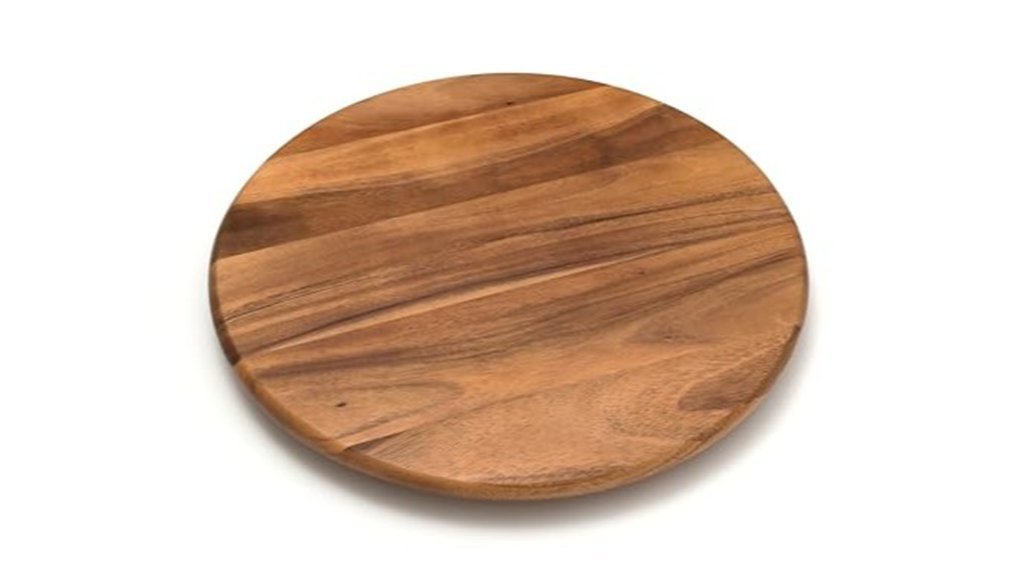
The Lipper International 18-Inch Lazy Susan Kitchen Storage stands out for shoppers who need a spacious, no-fuss organizer for spices, condiments, or tabletop essentials. Made from durable acacia wood, the 18-inch turntable measures 1.25 inches thick and offers a sturdy, wooden look suited to kitchens and dining areas. It rotates smoothly for quick access on a dinner table, cabinet, or closet shelf. No assembly is required, though the bottom screw should be loosened after delivery for best performance. Care is simple: do not soak it, and avoid dishwasher, microwave, or refrigerator use.
Best For: Home cooks, entertainers, and anyone needing a large, attractive turntable for spices, condiments, or tabletop storage.
Pros:
- Spacious 18-inch size provides plenty of room for multiple items.
- Durable acacia wood construction offers a sturdy, stylish look.
- No assembly required and rotates for easy access.
Cons:
- Must be hand-cleaned carefully; cannot be soaked or put in dishwasher.
- Bottom screw needs to be loosened after delivery for best performance.
- Natural wood design may not match every kitchen style.
RamPro 10 Inch Non-Skid Lazy Susan Turntable
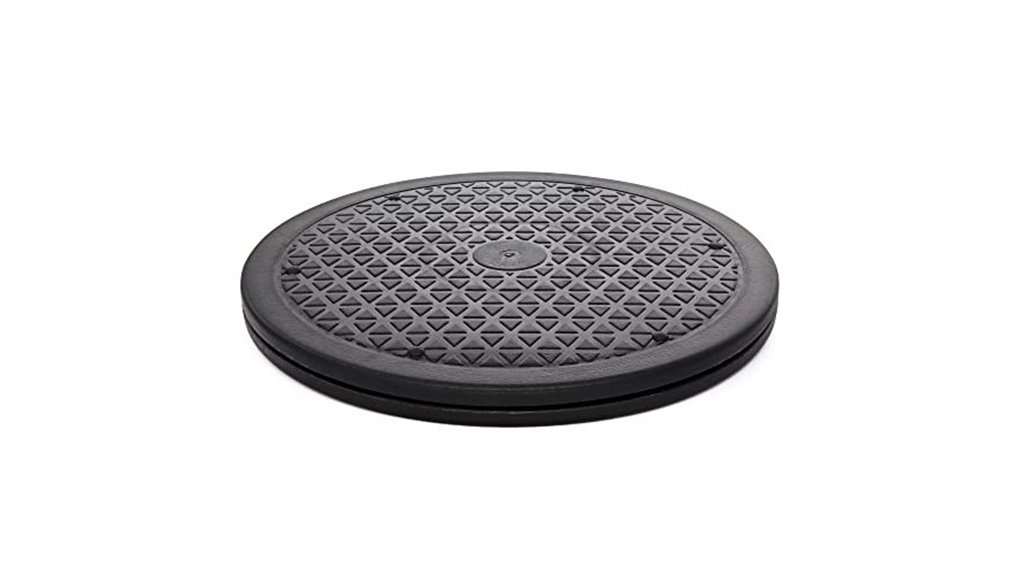
RamPro’s 10-inch non-skid turntable suits users who need compact, heavy-duty rotation with a secure grip. The black Model 92000 measures 10 inches across and 0.5 inches high, making it suitable for cabinets, desktops, and tables. Its diamond-pattern surface helps keep items stable, while two internal rings of 12 steel ball bearings support smooth 360-degree movement and lasting durability. Rated to hold up to 65 pounds, it can manage kitchen goods, speakers, electronics, or house plants. One unit is included, offering practical organization for home, work, or school.
Best For: People who need a compact, heavy-duty, non-skid rotating platform for organizing kitchen items, electronics, speakers, or plants.
Pros:
- 360-degree swivel makes it easy to access items from any angle.
- Diamond-pattern non-skid surface helps keep objects stable.
- Supports up to 65 lbs and uses steel ball bearings for durable, smooth rotation.
Cons:
- 10-inch size may be too small for larger items or bulky setups.
- Black color may not suit every decor or workspace aesthetic.
- Includes only one turntable, so multiple uses require additional purchases.
Factors to Consider When Choosing Lazy Susans 2026: Top Picks and Buying Guide
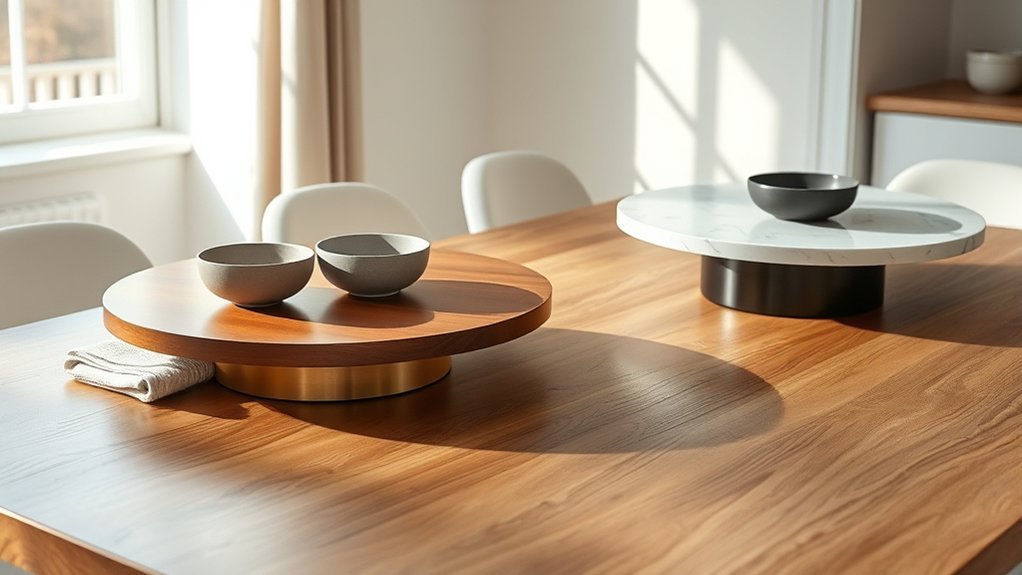
Choosing the right Lazy Susan in 2026 depends first on size and diameter, since the fit must match the intended space and items. Material durability, rotation smoothness, and load capacity also matter, as they shape long-term performance and everyday ease of use. Surface grip is equally important because a stable base helps keep stored items secure during turning.
Size And Diameter
Size and diameter play a major role in how well a Lazy Susan fits its space and purpose, with larger models like 18 inches offering more usable surface area and smaller versions around 10 inches better suited to compact cabinets or countertops. A diameter of at least 10 inches is usually preferred for kitchen items, since it keeps condiments and spices reachable without crowding limited space. The chosen size should match the intended setting, whether inside a cabinet, on a table, or across a countertop. Height also matters, because a thicker profile can reduce clearance where a lower design would work better. Larger units may improve capacity, but they can also need steadier support to maintain smooth rotation under heavier loads and use.
Material Durability
Material durability is a key factor in how well a Lazy Susan performs over time, especially in busy kitchens and storage areas. Acacia wood offers strong everyday resilience and a refined appearance, while heavy-duty plastics and metals are better suited to repeated use and heavier loads. Weight capacity should be checked closely; a model rated for up to 65 lbs suggests dependable support for bulky items. Surface texture also matters, since diamond-patterned finishes can help keep contents from shifting during use. Construction quality further influences longevity, with steel ball-bearings often indicating better-built hardware. Maintenance needs should not be overlooked, because some materials require specific cleaning or conditioning to preserve their appearance and prevent damage, making long-term durability more dependable.
Rotation Smoothness
Rotation smoothness often separates a frustrating Lazy Susan from a genuinely useful one, and it depends largely on the bearing system underneath. A well-engineered turntable uses multiple steel ball bearings, often arranged in dual internal rings, to reduce friction and keep movement steady. That design supports a full 360-degree spin without sticking, jamming, or uneven resistance, making items easier to reach quickly. Simpler mechanisms with fewer bearings may feel less stable and wear sooner. Material choice can also influence performance, since heavier constructions need sturdier bearings to preserve fluid motion. Routine care matters as well: cleaning debris from the track and applying light lubrication can help maintain smooth rotation and extend service life over time.
Load Capacity
Load capacity is a key factor when choosing a Lazy Susan because it determines how much weight the turntable can safely support without losing stability or function. Models with higher ratings, such as 65 lbs, are better suited to heavier loads like kitchen appliances or several spice containers, since they maintain safer rotation under pressure. Material composition also matters, because sturdier construction usually provides greater support and long-term durability. Capacity can differ widely across sizes and designs, so specifications should always be checked before buying. A well-engineered Lazy Susan distributes weight evenly across its base, which helps preserve performance when loaded near maximum limits and reduces stress on components over time. That balance supports reliable everyday use.
Surface Grip
Surface grip plays an essential role in keeping items secure as a Lazy Susan turns, reducing the risk of slipping and improving overall usability. Textured finishes, including diamond patterns and similar raised designs, increase friction and help items stay in place during rotation. Non-skid materials and rubberized coatings add another layer of stability, making the surface more dependable for everyday use. Grip quality also works alongside weight capacity, since sturdier internal mechanisms support heavier contents without undermining stability. A well-made surface should maintain traction under load rather than allowing shifting or wobbling. Regular cleaning matters as well, because dust, grease, and residue can weaken grip over time. Proper maintenance preserves performance, extends longevity, and keeps the turntable functioning smoothly and safely.
Intended Use
Intended use should guide the choice of a Lazy Susan just as much as grip and stability do, since different designs are built for different settings. Some models suit kitchen storage for spices and condiments, while others work better as organizers for electronics or household items. Size also matters: larger versions fit dining tables, whereas smaller ones are more practical inside cabinets or on desktops. Material choice should match the setting as well, with wood offering a refined look for dining areas and plastic or metal providing everyday practicality. Weight capacity should align with the load, since some units support up to 65 lbs. Functional details such as non-skid surfaces or ball-bearing mechanisms can further improve steadiness and ease of rotation.
Maintenance Needs
Maintenance needs can be a deciding factor when selecting a Lazy Susan, especially when the piece will see frequent use. Wooden models, including acacia, usually demand more attention than plastic or metal options. They should not be soaked, placed in dishwashers, microwaves, or refrigerators, since moisture and temperature changes can damage the material. Instead, they benefit from occasional cleaning and periodic treatment with food-safe mineral oil to help prevent cracking or warping. Non-skid designs made from durable plastic or metal are generally simpler to maintain and often need only a wipe with a damp cloth. Regardless of material, the rotating mechanism should be inspected for debris or wear, and screws or connections should be tightened after setup and checked periodically thereafter.
Stability And Weight
Stability and weight often determine whether a Lazy Susan feels secure in daily use or wobbly under pressure. A model with strong weight capacity, especially one built from heavy-duty materials, is better suited for bulky dishes, condiments, or pantry goods. Diameter matters as well: larger designs usually offer a wider base, which helps reduce tipping. A low profile can further improve balance by keeping the center of gravity close to the surface. Thickness also contributes to firmness. For rotating performance, more bearings often support smoother, steadier movement and greater durability. A non-skid surface is equally important, since it keeps items from sliding during turns. Together, these traits create a safer, more dependable organizer that performs well under everyday use.
Frequently Asked Questions
How Do I Clean a Lazy Susan Without Damaging the Bearing?
He would wipe the surface with a damp cloth and mild soap, avoiding excess water near the bearing. Then he would dry it fully, apply a small amount of silicone lubricant, and rotate gently.
Can Lazy Susans Support Heavy Appliances on Granite Countertops?
Yes, some lazy susans can support heavy appliances on granite countertops if they have sturdy bearings, a solid base, and adequate weight ratings. Heavier items should be placed carefully to avoid instability and surface damage.
Are Bamboo Lazy Susans Better for Humid Kitchens?
No, bamboo lazy susans are not always better in humid kitchens. They resist warping better than some woods, yet they can still swell, crack, or mildew; sealed plastic or metal often lasts longer there.
Do Lazy Susans Come Fully Assembled or Require Setup?
Lazy Susans sometimes arrive fully assembled, but many require minimal setup, such as attaching a base or inserting hardware. Product descriptions usually specify assembly level, and simple models often need no tools.
How Can I Stop a Lazy Susan From Sliding During Use?
They can be stopped from sliding by placing a non-slip mat, rubber pad, or adhesive grip feet underneath. Tightening the base, adding weight, and ensuring a level surface also help keep movement minimal during use.
Conclusion
Choosing between the Lipper International 18-Inch Acacia Lazy Susan and the RamPro 10-Inch Non-Skid Turntable comes down to space, stability, and use. In fact, countertop organizers can reduce clutter by up to 30%, making even small kitchen upgrades feel significant. Larger setups benefit from the Lipper’s roomy design, while compact spaces may prefer the RamPro’s non-skid grip. Careful attention to size, material, and maintenance helps guarantee the right long-term choice.