Disclosure: As an Amazon Associate, we earn from qualifying purchases. If you buy through an Amazon link on this page, we may earn a commission at no extra cost to you.
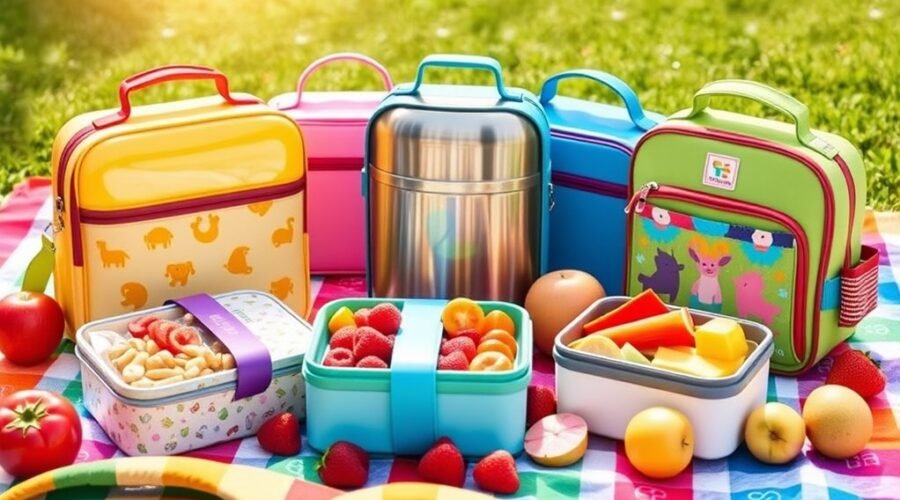
Looking ahead to 2027, the best lunch box for your child depends on age, appetite, cleaning needs, and whether you need active cooling or a built-in thermos. The Bentgo Kids Prints Bento Lunch Box is a strong all-around choice for ages 3 to 7, the PackIt Freezable Classic Lunch Box is useful when you want built-in cooling without a separate ice pack, the OmieBox models make it easier to pack hot and cold foods together, and the Munchkin Lunch Bento Box is designed for toddlers and kids from 18 months up.
Quick Verdict
Best overall for younger kids: Bentgo Kids Prints. Best built-in cooling: PackIt Freezable Classic. Best for hot and cold meals: OmieBox. Best for older kids: OmieBox UP. Best for toddlers: Munchkin Lunch Bento Box. Choose by age fit and meal type first, then compare weight, cleaning, and capacity.
| Product | Best For | Standout Feature | Main Tradeoff | Amazon |
|---|---|---|---|---|
| Bentgo Kids Prints | Ages 3–7 | Five compartments, 2.4-cup capacity | Outer shell should be hand-washed | Check Price |
| PackIt Freezable Classic | Cold lunches without loose ice packs | Freezable gel built into the walls | Must be frozen before use; not dishwasher safe | Check Price |
| OmieBox | Ages 3–7; hot + cold meals | Built-in 8.5-oz insulated thermos | About 1.7 lb and more parts to clean | Check Price |
| OmieBox UP | Ages 9+ and larger meals | 12-oz thermos plus built-in ice pack | Heavier and requires multi-part cleaning | Check Price |
| Munchkin Lunch Bento Box | 18+ months | Five compartments and included utensils | No built-in cooling | Check Price |
How These Picks Were Compared
The products were compared by age fit, meal capacity, temperature-control method, portability, cleaning requirements, material information, and the type of lunch each design handles best. The goal is to match the lunch box to the child and meal routine rather than treat one design as best for every family.
Bentgo Kids Prints Bento Lunch Box (Dino Fossils)
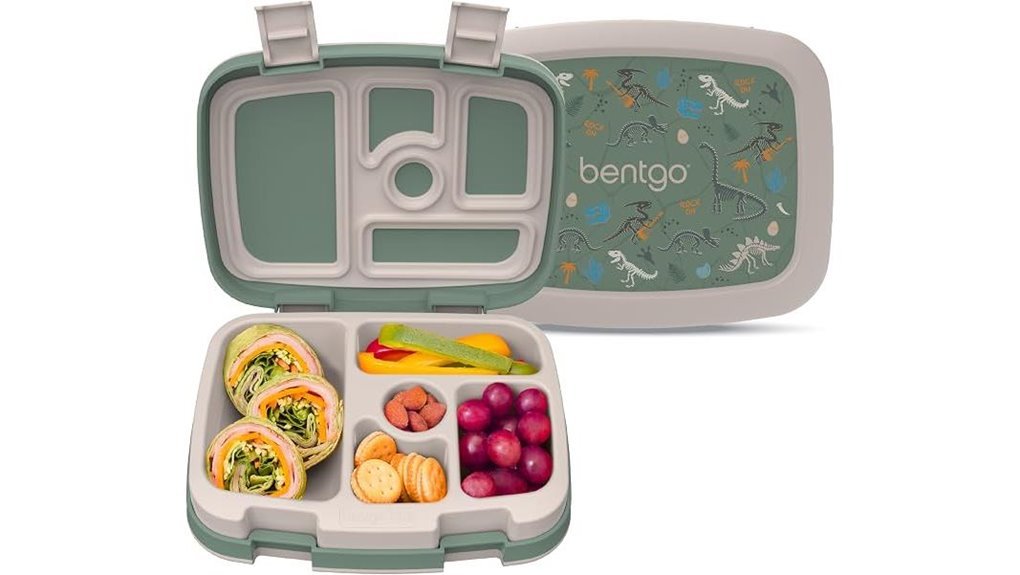
Best for: Children ages 3 to 7 who do well with small, separated portions and easy-open latches.
The Bentgo Kids Prints Bento Lunch Box has five compartments with a total capacity of 2.4 cups. Its secure lid is designed to help keep the compartments separated, while the rubber-coated edges add protection against everyday drops. The removable food tray is microwave safe and top-rack dishwasher safe; Bentgo recommends hand-washing the outer shell to help preserve the seal.
Key Features
- Five compartments: Useful for separating an entrée, fruit, vegetables, dip, and a small snack.
- Kid-focused sizing: Designed for ages 3 to 7 with a 2.4-cup total capacity.
- Material information: Listed as made with food-safe materials free of PFAS and BPA.
- Easy-open latches: Designed for small hands and independent mealtime use.
Pros and Cons
Pros:
- Five separated compartments make varied lunches easier to organize.
- Rubber-coated edges and a secure lid suit everyday school use.
- The removable tray can go on the top rack of the dishwasher.
Cons:
- The outer shell should be hand-washed.
- The 2.4-cup capacity may feel small for older children or bigger appetites.
- It does not provide active cooling on its own, so temperature-sensitive foods may still need an appropriate insulated setup.
Who should buy this: Families who want a compact bento with reliable portion separation for preschool and early elementary ages.
PackIt Freezable Classic Lunch Box – Black
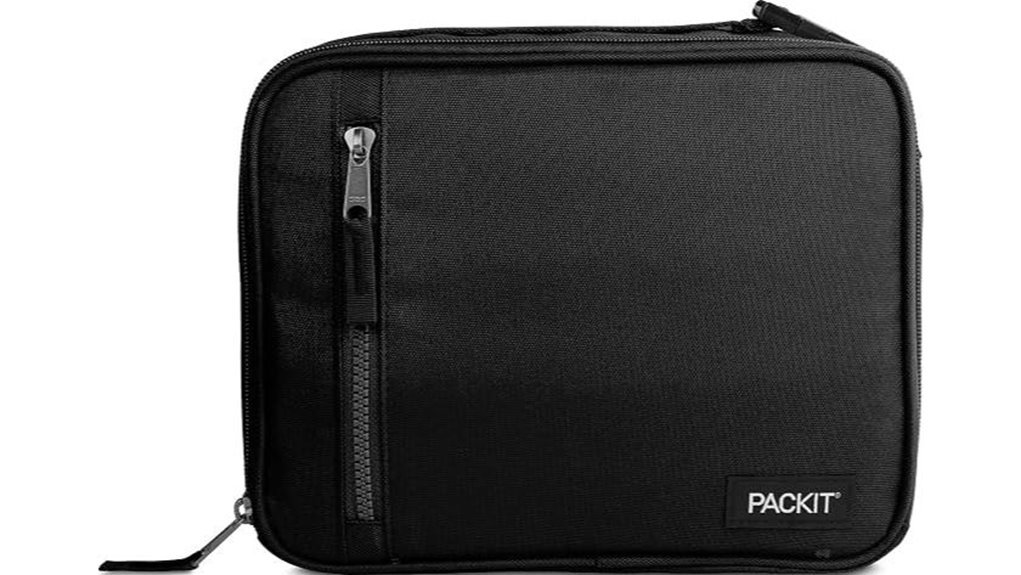
Best for: Families who want a soft lunch box with built-in cooling and do not want to pack a separate ice pack.
The PackIt Freezable Classic Lunch Box uses freezable gel built into the walls. Freeze the lunch box before use and the bag itself becomes the cooling layer. Its horizontal shape can hold a bento, snacks, and a 12-ounce drink, while the wide zip opening makes packing easier.
Key Features
- Built-in freezable gel: No separate ice pack is required when the bag is properly frozen.
- Collapsible design: Folds flatter for freezer storage.
- Clip-and-go handle: Can attach to a backpack or other bag.
- Front zip pocket: Useful for small items such as an ID card or wipes.
- Material information: PackIt lists the Classic as PVC-free, BPA-free, phthalate-free, and lead-free.
Pros and Cons
Pros:
- Built-in cooling reduces the need to remember a separate ice pack.
- Collapsible design saves freezer space.
- Roomy enough for a bento-style container, snacks, and a drink.
Cons:
- It must be frozen ahead of time for the cooling feature to work as intended.
- PackIt recommends wiping or hand-washing the interior and spot-cleaning the exterior; it is not machine or dishwasher safe.
- A frozen gel-lined lunch box can feel bulkier or heavier than a basic non-insulated bag.
Who should buy this: Parents who regularly pack cold foods and want cooling integrated into the lunch bag itself.
Omie OmieBox Kids Insulated Bento Lunch Box (Pink Berry)
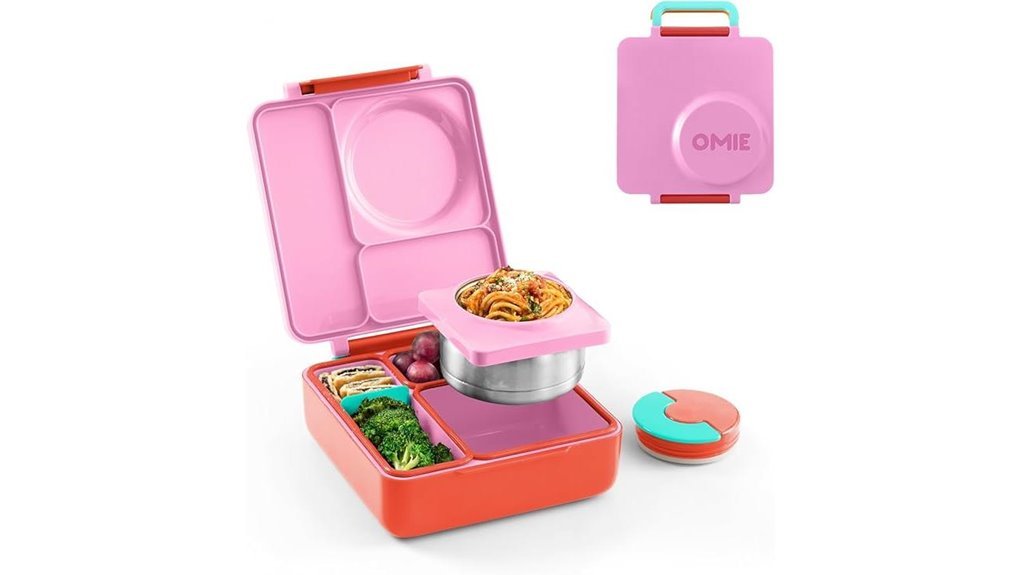
Best for: Children ages 3 to 7 who want a warm main dish and separate cold or room-temperature sides in one lunch box.
The OmieBox combines bento compartments with a built-in insulated thermos. The current Pink Berry model linked here has an 8.5-ounce thermos, while the full box has a 47-ounce volume. It weighs about 1.7 pounds, so it offers more temperature-control flexibility than a basic bento but is also heavier.
Key Features
- Hot + cold format: The insulated thermos sits beside separate bento compartments.
- Age fit: Omie describes the original OmieBox as designed for ages 3 to 7.
- Materials: Uses 18/8 304-grade stainless steel, food-grade plastic, and silicone; listed as BPA-free and phthalate-free.
- Replaceable parts: Replacement seals and other components are available, which can extend useful life.
Pros and Cons
Pros:
- Lets parents pack a hot main and separate sides in one container.
- Built-in thermos reduces the need for a separate food jar.
- Replaceable components can make long-term maintenance easier.
Cons:
- At about 1.7 pounds before food is added, it may feel heavy for some younger children.
- Multiple seals and thermos parts require more cleaning attention than a simple bento tray.
- High-liquid foods should go in the thermos rather than the side compartments.
Before you buy: Check that your child can comfortably open the thermos and carry the loaded box. Remove the gasket and lid seal during cleaning and dry the parts thoroughly before reassembly.
Omie OmieBox UP Kids Insulated Bento Box, Cherry Pink
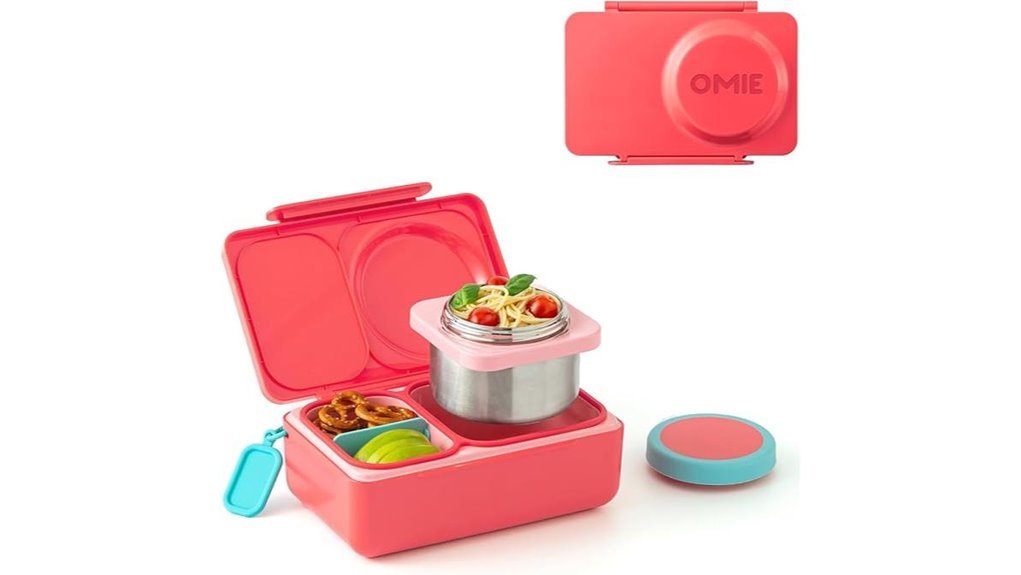
Best for: Children ages 9 and up who need a larger hot-food portion and a more mature lunch-box layout.
The OmieBox UP is designed for older kids and combines a 12-ounce insulated thermos with a roomy side compartment and a built-in removable ice pack. The thermos is 40% larger than the original OmieBox thermos, and the Amazon product information states that warm food can stay warm for up to four hours when used as directed.
Key Features
- 12-ounce thermos: Gives older kids more room for soup, pasta, leftovers, and other hot meals.
- Removable ice pack: Helps cool the side compartment while the thermos handles the hot main.
- Age fit: Designed for ages 9 and up.
- Materials: Uses 18/8 304-grade stainless steel, food-grade plastic, and silicone; listed as BPA-free and phthalate-free.
- Cleaning: The inner tray is top-rack dishwasher safe; Omie recommends hand-washing the other parts and removing the gasket and lid seal for cleaning.
Pros and Cons
Pros:
- Larger thermos suits bigger appetites and older students.
- Combines hot-food storage and a chilled side in one system.
- Replacement parts are available.
Cons:
- Heavier and more complex than a simple lunch bag or plastic bento.
- Only the inner tray is recommended for top-rack dishwasher cleaning; the remaining parts need hand care.
- Hot food and hot water require careful handling during packing and use.
Safety note: Use caution when filling or opening the thermos with hot food or hot water. For school use, make sure the child can safely operate the lid without forcing it.
Munchkin Lunch Bento Box for Kids
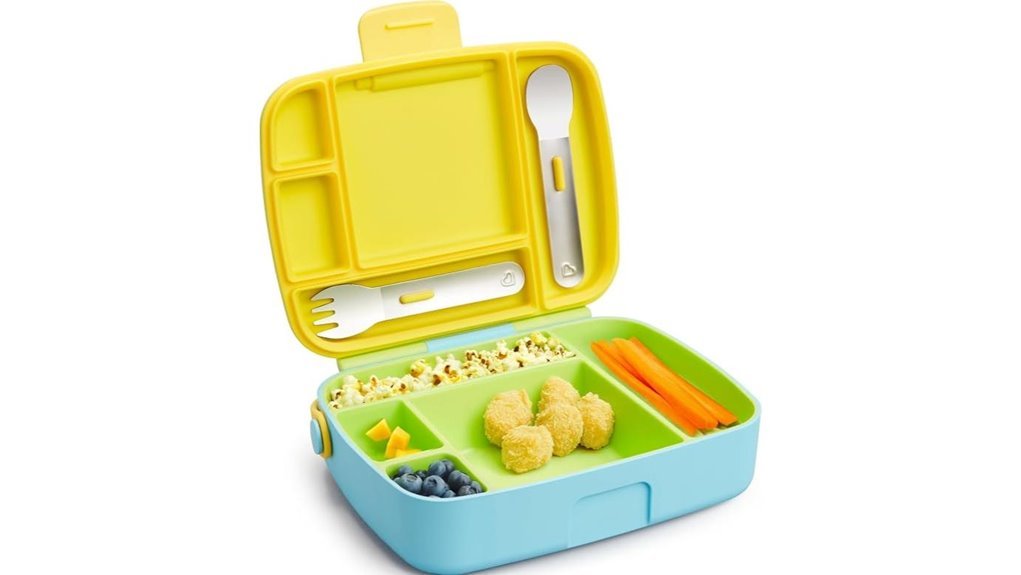
Best for: Toddlers and young children ages 18 months and up who need a straightforward divided lunch box with included utensils.
The Munchkin Lunch Bento Box has five compartments and includes a stainless steel toddler fork and spoon that snap into the lid. Its built-in carrying handle and colorful design make it convenient for daycare, preschool, school lunches, and travel.
Key Features
- Five compartments: Sized for kid-friendly foods such as a sandwich, fruit, vegetables, snacks, or a juice box.
- Included utensils: Stainless steel fork and spoon snap into the lid for storage.
- Age range: Listed for ages 18 months and up.
- Material information: Listed as BPA-free.
- Cleaning: Top-rack dishwasher safe.
Pros and Cons
Pros:
- Five compartments make it easy to separate foods.
- Included utensils reduce the need to pack a separate fork and spoon.
- Top-rack dishwasher cleaning is convenient for frequent use.
Cons:
- It does not have built-in active cooling.
- The fixed compartment layout may not fit every container or large food item.
- Families packing highly perishable foods may still need a suitable insulated bag and cold source.
Who should buy this: Families who want an easy-to-understand first lunch box for daycare, preschool, or early school years.
Factors to Consider When Choosing Lunch Boxes for Kids in 2027
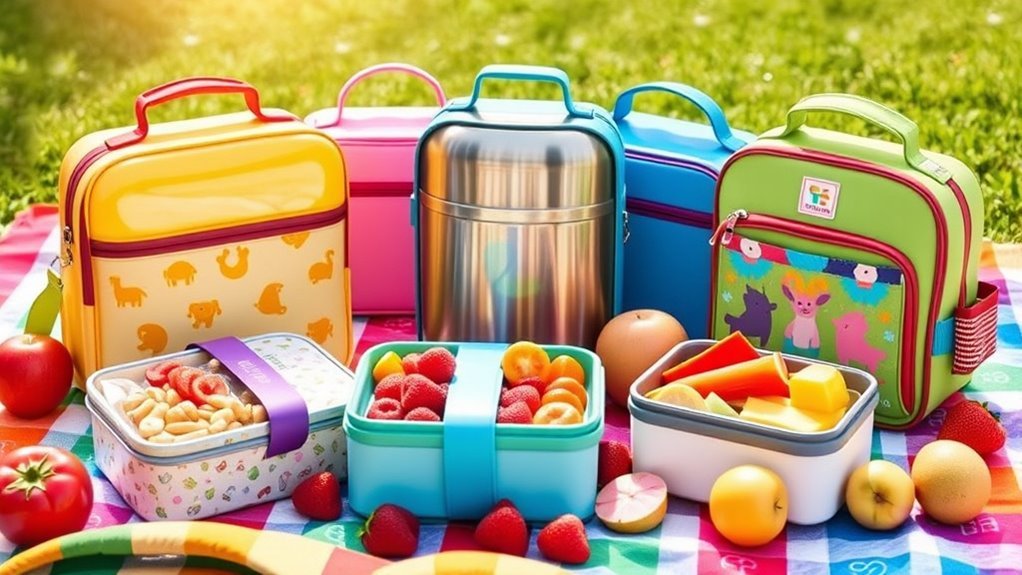
The best kids lunch box is the one that fits the child’s age, typical lunch, school routine, and cleaning setup. Before buying, compare safety and material information, capacity, temperature control, portability, and how many parts must be washed each day.
Safety and Material Quality
Review the manufacturer’s food-contact material information and care instructions for the exact model you are buying. All five picks in this guide are currently listed as BPA-free, but their construction differs: some use plastic trays, some use stainless steel thermoses, and the PackIt uses a soft insulated bag with built-in freezable gel.
- Check the exact model: Materials and care instructions can vary by version or color.
- Inspect seals and closures: Replace damaged gaskets, cracked parts, or worn components when the manufacturer offers replacements.
- Match the design to the meal: Use thermos compartments for liquids when directed, and use suitable cooling for foods that need to stay cold.
Design and Functionality
Think about what your child actually needs to open, carry, and eat from during a short lunch period.
- Multiple compartments: Helpful for children who prefer foods separated.
- Easy-open latches or zippers: Important for younger children who eat independently.
- Built-in cooling: Useful when you do not want a loose ice pack.
- Thermos compartment: A better fit for soups, pasta, and warm leftovers.
- Simple cleaning: Fewer pieces generally mean less daily washing.
Size and Capacity
Capacity should match appetite, not just age. A smaller 2.4-cup bento may work well for preschool portions, while older children may prefer a larger hot-food jar or a roomy lunch bag.
- Check backpack fit: Compare the product dimensions with the child’s school bag.
- Consider loaded weight: Thermos-based lunch boxes can be noticeably heavier once filled.
- Plan for drinks: Confirm whether the lunch box has room for a drink or whether the bottle will travel separately.
- Think about food shape: Fixed compartments can limit tall containers or oversized sandwiches.
Ease of Cleaning
Cleaning instructions vary significantly among these products. Bentgo’s removable tray is top-rack dishwasher safe while its outer shell should be hand-washed. PackIt’s Classic is not dishwasher safe. Munchkin’s bento is top-rack dishwasher safe. Omie recommends removing seals for cleaning, and the OmieBox UP inner tray can go on the top rack while other parts are best hand-washed.
Before You Buy Checklist
- Can your child open and close it without adult help?
- Is the capacity enough for a normal school lunch?
- Will the loaded weight be comfortable to carry?
- Does the meal need active cooling, a thermos, or neither?
- Will the box fit inside the backpack or lunch tote?
- Are you comfortable with the daily cleaning routine?
Insulation and Temperature Control
These five products use different temperature strategies. PackIt relies on frozen gel walls for cold foods. OmieBox and OmieBox UP use insulated thermos compartments for warm foods, while OmieBox UP also adds a removable ice pack for its side compartment. Bentgo Kids Prints and Munchkin are primarily divided food containers, so temperature-sensitive meals may require a separate insulated setup.
Frequently Asked Questions
Are These Lunch Boxes Dishwasher Safe?
Not all of them. The Bentgo removable tray and Munchkin Lunch Bento Box are top-rack dishwasher safe. The PackIt Freezable Classic is not dishwasher safe. For OmieBox and OmieBox UP, follow the manufacturer’s part-by-part cleaning instructions; the OmieBox UP inner tray is top-rack dishwasher safe while other parts are recommended for hand washing.
What Age Range Are These Lunch Boxes Suitable For?
The age fit varies by model. Munchkin lists its Lunch Bento Box for 18 months and up. Bentgo Kids Prints and the original OmieBox are designed around ages 3 to 7. OmieBox UP is designed for ages 9 and up. PackIt’s Freezable Classic is a general lunch box rather than a rigid age-specific bento, so choose it based on the child’s ability to carry and use it.
Do These Lunch Boxes Come With a Warranty?
Warranty coverage varies by brand and can change. Omie currently lists a one-year limited warranty for OmieBox and OmieBox UP. For the other products, check the current manufacturer or Amazon listing before purchase rather than assuming the same coverage applies to every model.
How Do I Clean and Maintain These Lunch Boxes?
Follow the instructions for the exact model. Remove food residue promptly, clean removable seals where applicable, and let all parts dry thoroughly before closing or storing the lunch box. Do not put the PackIt Freezable Classic in a dishwasher, and do not put Omie thermos components in a microwave, oven, or on a stovetop.
Are the Materials Used BPA-Free?
Yes. The current manufacturer or product information for all five picks identifies them as BPA-free. Some models also list additional material details, such as PFAS-free construction for Bentgo Kids Prints or phthalate-free materials for PackIt and Omie products.
Which Lunch Box Is Best for Hot Food?
Choose the original OmieBox for younger children who need a smaller built-in thermos, or OmieBox UP for ages 9 and up when a 12-ounce thermos and larger-meal layout are more useful. For best results, follow the manufacturer’s thermos preheating and filling instructions.
Which Lunch Box Is Best for Cold Food Without a Separate Ice Pack?
The PackIt Freezable Classic is the most direct fit because its freezable gel is built into the lunch box walls. Freeze it before use according to the manufacturer’s instructions so the cooling system is ready for the school day.
Conclusion
For a versatile younger-kid bento, Bentgo Kids Prints is the easiest starting point. Choose PackIt Freezable Classic if built-in cold storage matters most, OmieBox if a child ages 3 to 7 regularly takes hot meals, OmieBox UP for older kids who need a larger thermos, and Munchkin Lunch Bento Box for toddlers and young children who benefit from five simple compartments and included utensils. The right choice is the one that fits the child’s appetite, school routine, carrying comfort, and the amount of cleaning you want to do each day.