Disclosure: As an Amazon Associate, we earn from qualifying purchases. If you click a link on this page and make a purchase, we may receive a small commission at no extra cost to you.
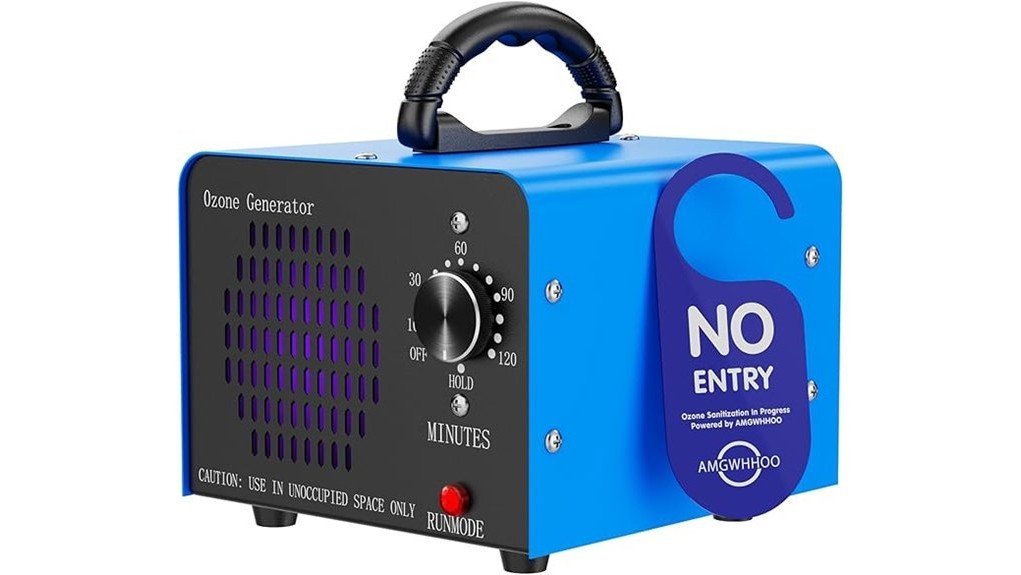
Strong smoke, pet, cooking, or musty odors can be hard to remove after you have cleaned the source. The Amgwhhoo Ozone Generator Machine is a high-output unit marketed at 200,000 mg/h for odor treatment in unoccupied spaces, with a metal body, timer control, and HOLD mode. Its biggest advantage is straightforward, high-output operation, but its biggest limitation is also serious: ozone is a lung irritant, so this is not a normal air purifier for rooms where people or pets are present. This review helps you decide where the machine fits, how its listed specifications compare, and what safety limits you should understand before buying.
Quick Verdict
Rating: 7/10, Recommended with caveats
Best For: Buyers who need occasional odor treatment in a fully unoccupied home, room, vehicle, basement, or similar enclosed space.
Bottom Line: The Amgwhhoo unit combines a listed 200,000 mg/h maximum output, metal housing, manual timer, and compact 4.2-pound design. The tradeoff is that you must treat ozone as a controlled-use tool, not a continuous occupied-space air cleaner, and the Amazon page shows conflicting coverage figures that you should verify before purchase.
Key Specifications
| Specification | Detail |
|---|---|
| Brand | Amgwhhoo |
| ASIN | B0DQ238RWD |
| Product type | Ozone generator for odor treatment in unoccupied spaces |
| Listed maximum ozone output | 200,000 mg/h |
| Coverage claim | Marketing bullet says up to 7,000 sq ft; Amazon’s specification table also lists 1,500 sq ft, so verify the intended coverage for the exact variant before buying |
| Dimensions | 5.9″D × 6.69″W × 7.77″H |
| Weight | 4.2 lb |
| Power | 120 W, AC powered |
| Listed noise level | 38 dB |
| Housing | Metal |
| Controls | Manual timer knob with HOLD mode for continuous output until manually switched off |
| Color options shown | Blue and black |
| Package contents | Ozone generator, power cord, bag, 2 fuses, and user manual |
| Safety note | Operate only in an unoccupied space and follow the manual for treatment, ventilation, and re-entry |
Before You Buy: Do not treat the 7,000 sq ft marketing claim as a guaranteed working area. Amazon also lists a 1,500 sq ft floor-area figure on the same product page, and ozone concentration can vary with room size, layout, ventilation, and treatment time. More importantly, ozone should not be used around people, pets, or plants.
What Is the Amgwhhoo Ozone Generator?
The Amgwhhoo B0DQ238RWD is a compact, AC-powered ozone generator built for intermittent odor-treatment jobs. The current Amazon listing describes a 200,000 mg/h maximum output and a metal enclosure, while the body measures 5.9 by 6.69 by 7.77 inches and weighs 4.2 pounds. That size makes it easier to move between a room, basement, vehicle, or other treatment area than a larger commercial cabinet-style machine.
The unit uses a timer knob for a set treatment period and includes a HOLD setting that keeps ozone output running until you turn the machine off. That control layout is simple, but HOLD mode also creates a clear risk if you forget the unit is operating. For most household odor jobs, you should follow the product manual and use the shortest appropriate controlled cycle rather than treating continuous operation as the default.
This machine is not a replacement for source control, ventilation, or a conventional filter-based air cleaner. The U.S. Environmental Protection Agency states that ozone is a lung irritant and that ozone generators should not be used in occupied spaces. You can review the agency’s guidance on ozone generators sold as air cleaners before deciding if this type of product is appropriate for your situation.
Who Should Buy It?
Best For
- You need occasional treatment for persistent smoke, pet, cooking, vehicle, or basement odors after cleaning the odor source.
- You can fully vacate and isolate the treatment area, including removing people, pets, and plants.
- You prefer a compact metal unit with a manual timer rather than a complicated control panel.
Skip If
- You want an air cleaner that can run safely while your family or pets remain in the room.
- You need particle filtration for dust, pollen, or routine indoor-air cleaning.
- You cannot control access to the space or provide thorough ventilation after treatment.
Output and Coverage
The listing’s headline specification is a maximum ozone output of 200,000 mg/h. That is the figure buyers will notice first, but output alone does not tell you the right treatment time or safe re-entry point. Room volume, airflow, surfaces, odor source, and leakage into nearby spaces can change actual ozone concentration.
The listing also contains a coverage inconsistency. Its marketing bullet says the unit can cover up to 7,000 square feet, while Amazon’s specification table lists a floor area of 1,500 square feet. Because those two numbers are not equivalent, you should verify the exact variant and instructions rather than sizing a treatment solely from the larger claim.
Design, Build, and Portability
The metal housing is a practical advantage for a utility device that may be moved between treatment locations. At 4.2 pounds and under 8 inches tall, the unit is compact enough to carry and store without taking much shelf space. Amazon lists blue and black color options, although color has little effect on the buying decision for this type of equipment.
The listed 38 dB noise level suggests the fan or internal components are not intended to be especially loud. Noise matters less here than with a bedroom air purifier because the room should be empty during operation, but a lower listed noise level can still be useful when you are treating an isolated room near occupied parts of a building.
Controls and Ease of Use
The control scheme is intentionally simple. You turn the timer knob to set an operating period, leave the area, and allow the machine to run without anyone inside. The HOLD position produces ozone continuously until you manually switch the unit off.
That simplicity is helpful, but it means safe use depends on your setup and attention. There is no reason to treat HOLD as the standard choice for a routine household job. A forgotten continuous cycle can create unnecessary exposure risk and may make post-treatment ventilation more difficult.
Pro Tip: Remove or clean the odor source before you run the machine. Ozone treatment should not be used as a substitute for disposing of smoke-damaged material, cleaning pet contamination, fixing moisture problems, or improving ventilation.
Step-by-Step Guide to Safer Use
1. Deal with the source first. Clean, remove, or repair the cause of the odor whenever possible. If the source remains, the smell may return after treatment.
2. Clear the space completely. Remove people, pets, and plants. Close access so nobody enters while the unit is running.
3. Read the manual for the exact variant. Confirm the recommended timer settings, placement, and re-entry instructions. Do not assume a treatment time based only on the 200,000 mg/h output claim or 7,000 sq ft marketing figure.
4. Use a controlled timer setting. Set the machine, leave the area, and avoid casual use of HOLD mode. If HOLD is required for a specific professional-style treatment, use it only with a clear plan for shutdown and access control.
5. Ventilate thoroughly after the cycle. The product listing says to allow additional time after ozone generation ends, but a fixed number of minutes should not be treated as a universal guarantee of safe re-entry. Follow the manual and applicable safety guidance, ventilate with outdoor air, and do not rely on odor alone to judge ozone concentration.
How It Performs in Real Use
For Smoke or Cooking Odors
After you remove the source and clean affected surfaces, the machine’s high listed output makes it a plausible tool for a vacant room with lingering odor. It is better suited to an occasional treatment window than daily operation. Heavy smoke contamination may still require material removal or professional remediation.
For Pet-Odor Treatment
You can use the machine only after pets are removed from the treatment area and the actual contamination has been cleaned. Ozone does not replace washing, enzyme cleaning, litter-box maintenance, or removal of urine-soaked materials. The benefit is treating residual odor in an empty, controlled space after those steps.
For a Vehicle
The compact 4.2-pound body makes vehicle treatment one of the more practical use cases. The vehicle must remain empty during operation, and you should follow the manual for placement, cycle time, and ventilation before anyone gets back inside.
For Everyday Occupied Rooms
This is where the product does not fit. If you want continuous air cleaning while people are home, a conventional air cleaner designed for occupied-space use is the more appropriate category. EPA guidance specifically warns against using ozone generators in occupied spaces.
Common Mistakes to Avoid
- Running it around people, pets, or plants: The Amazon listing itself says the area must be unoccupied during operation.
- Using ozone instead of fixing the odor source: Clean smoke residue, pet contamination, moisture problems, or spoiled material first.
- Assuming the largest coverage claim applies to every setup: The same Amazon page shows both 7,000 sq ft and 1,500 sq ft figures.
- Leaving HOLD mode on without a shutdown plan: Continuous output continues until you manually switch the unit off.
- Using smell as a safety meter: A strong or weak odor does not provide a reliable measurement of ozone concentration.
- Skipping post-treatment ventilation: Follow the manual and ventilate with outdoor air before normal use of the space resumes.
Pros and Cons
Pros
- High listed maximum output of 200,000 mg/h for intermittent odor-treatment work.
- Compact 5.9 × 6.69 × 7.77-inch body and 4.2-pound weight make it easy to move.
- Metal construction is more utility-focused than a lightweight decorative housing.
- Simple timer knob keeps setup straightforward.
- Package includes a power cord, carry bag, two fuses, and user manual.
Cons
- Cannot be treated like a normal occupied-space air purifier because ozone is a lung irritant.
- Amazon shows conflicting 7,000 sq ft and 1,500 sq ft coverage information.
- HOLD mode can keep producing ozone until manually switched off, so careless use can increase exposure risk.
Is It Worth the Price?
The Amgwhhoo makes the most sense as a specialized odor-treatment tool, not as a daily air-cleaning appliance. Its feature set is basic rather than premium: you get a metal housing, AC power, a manual timer, HOLD mode, and a small accessory package instead of sensors, an app, or automatic air-quality controls.
That can still be strong value if your priority is occasional treatment of an empty space and you are comfortable following strict safety procedures. It is not the best fit if you need an appliance that can run continuously around your family, if particle filtration is your goal, or if you cannot isolate and ventilate the treatment area.
How It Compares to Alternatives
For routine occupied-space air cleaning, a HEPA air purifier with activated carbon serves a different and generally more appropriate role because it is designed to filter particles and adsorb some gases without intentionally producing ozone. Source removal and outdoor-air ventilation should also come before any deodorizing device when you can identify the cause of the problem.
For severe smoke damage, persistent building contamination, or odors tied to moisture and mold, professional remediation may be more appropriate than repeated ozone cycles. The Amgwhhoo is most sensible when you understand those limits and want a portable, manual tool for controlled, unoccupied odor-treatment jobs.
Frequently Asked Questions
Can the Amgwhhoo ozone generator run while people are in the room?
No. The Amazon listing says the machine is intended for unoccupied spaces and that people, pets, and plants should be kept away while it operates. EPA guidance also warns against using ozone generators in occupied spaces.
Is the output really 200,000 mg/h?
The current Amazon product title and feature bullet list a maximum output of 200,000 mg/h for ASIN B0DQ238RWD. Treat that as the manufacturer’s listing claim, not as a measured independent performance result.
Does it cover 7,000 square feet?
The marketing bullet says up to 7,000 sq ft, but Amazon’s specification table also lists a 1,500 sq ft floor area. Because of that conflict, verify the exact variant and manual rather than assuming the larger number applies to every treatment.
What does HOLD mode do?
HOLD mode keeps the machine producing ozone until you manually turn it off. Because that can extend a treatment indefinitely, use it only when you have a controlled setup, restricted access, and a clear shutdown plan that follows the manual.
How long should you wait before going back into the room?
Do not use a single fixed waiting time as a universal safety guarantee. Follow the product manual, ventilate thoroughly with outdoor air, and use applicable professional or regulatory guidance for your situation before re-entry.
Can this replace a HEPA air purifier?
No. A HEPA purifier is designed to capture airborne particles and can be used in occupied settings when operated as directed. This ozone generator is an intermittent odor-treatment device that intentionally creates ozone and should be used only in an unoccupied area.
What comes in the package?
The Amazon product description lists one ozone generator, one power cord, one bag, two fuses, and one user manual. Check the seller’s current package details before ordering in case the bundle changes.
Who should skip this ozone generator?
Skip it if you need continuous air cleaning in an occupied home, cannot keep people and pets out of the treatment area, or need a filter for dust and allergens. It is also a poor fit when the underlying odor source has not been cleaned or repaired.
The Bottom Line
The Amgwhhoo B0DQ238RWD is worth considering when you need a compact, high-output ozone generator for occasional odor treatment in a fully unoccupied space and can follow strict setup, access, and ventilation procedures. Its 200,000 mg/h listing claim, metal body, simple timer, and 4.2-pound design are practical strengths, but the coverage discrepancy and inherent ozone exposure risk keep it from being a general-purpose air purifier. Buyers who need safe, continuous occupied-room air cleaning should choose a different technology.
Ready to Buy?
Check the latest product details, variant information, and seller terms before you decide.