Affiliate disclosure: As an Amazon Associate I earn from qualifying purchases. This article contains affiliate links to Amazon, so we may earn a commission if you buy through them, at no extra cost to you.
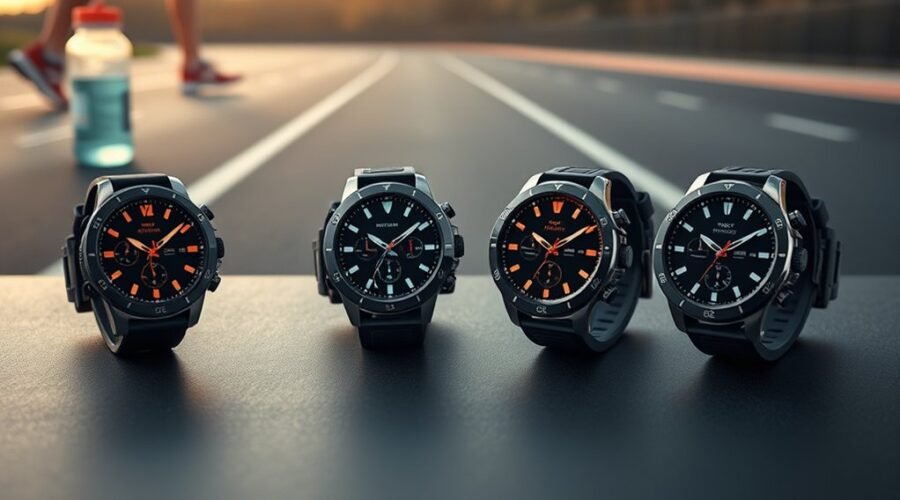
The four best running watches for 2026 are the Garmin Forerunner 55, POLAR Pacer, Apple Watch Series 8, and Polar H10 chest strap. Garmin offers reliable GPS, long battery life, and suggested workouts. POLAR keeps things light with strong endurance and clear outdoor visibility. Apple adds advanced health tools and safety features. Polar H10 delivers top-tier heart rate accuracy. Each suits different training needs, and more details help narrow the best fit.
Garmin Forerunner 55 GPS Running Watch (010-02562-00)
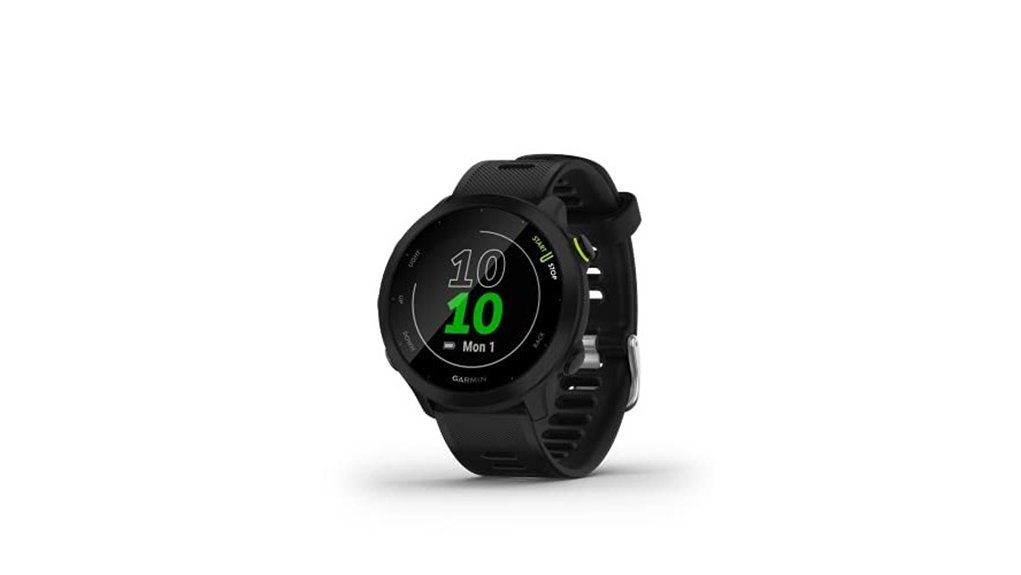
The Garmin Forerunner 55 GPS Running Watch is a strong choice for runners who want reliable GPS tracking and practical training guidance without unnecessary complexity, since it combines pace support, suggested workouts, and long battery life in a simple, lightweight package. It tracks distance, speed, and route data during runs, while PacePro offers GPS-based pacing for selected courses or distances. Training tools include race time predictions and finish estimates. Battery life reaches up to two weeks in smartwatch mode and 20 hours in GPS mode. Wrist heart rate, wellness metrics, and Bluetooth connectivity add useful everyday value.
Best For: Runners who want a straightforward GPS running watch with reliable tracking, helpful pacing tools, and long battery life for everyday training.
Pros:
- Up to 2 weeks of battery life in smartwatch mode and 20 hours in GPS mode
- PacePro, suggested workouts, and race/finish time estimates support structured training
- Lightweight, simple design with wrist heart rate monitoring and Bluetooth connectivity
Cons:
- No advanced smartwatch features compared with higher-end Garmin models
- Heart rate tracking is wrist-based and not a medical device
- Requires the Garmin Connect and Connect IQ apps for full customization and connectivity
POLAR Pacer Ultra-Light GPS Fitness Tracker Smartwatch
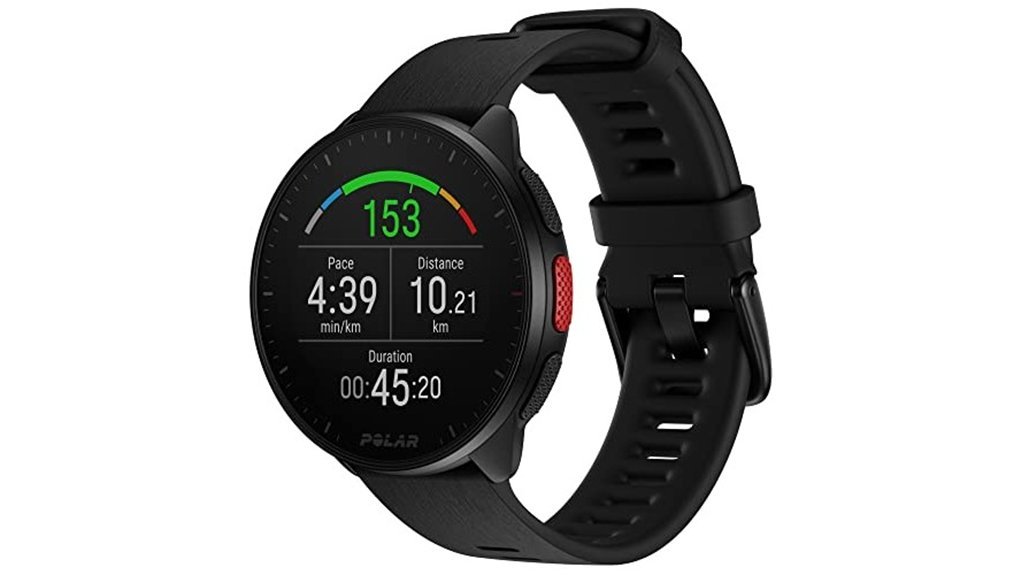
Built for runners who want dependable basics, the POLAR Pacer keeps training simple and focused. This ultra-light GPS fitness tracker smartwatch from POLAR, model 900102174, comes in black and a size range of S-L. It records time, pace, distance, laps, and stopwatch data, while GPS maps every step and turn. An always-on MIP color display improves readability outdoors. Battery life reaches up to 35 hours in training mode or 100 hours in power save mode. Designed for men and women, it suits runners seeking reliable tracking across fitness levels.
Best For: Runners who want a lightweight, easy-to-use GPS smartwatch with essential tracking and strong battery life.
Pros:
- Tracks key running metrics like time, pace, distance, laps, and stopwatch
- Always-on MIP color display is easy to read outdoors
- Long battery life: up to 35 hours in training mode and 100 hours in power save mode
Cons:
- Focuses on basic running features rather than advanced smartwatch functions
- No mention of music, notifications, or app ecosystem features
- Best suited for runners, so it may not appeal as much to non-runners
Apple Watch Series 8 GPS 41mm Midnight Band
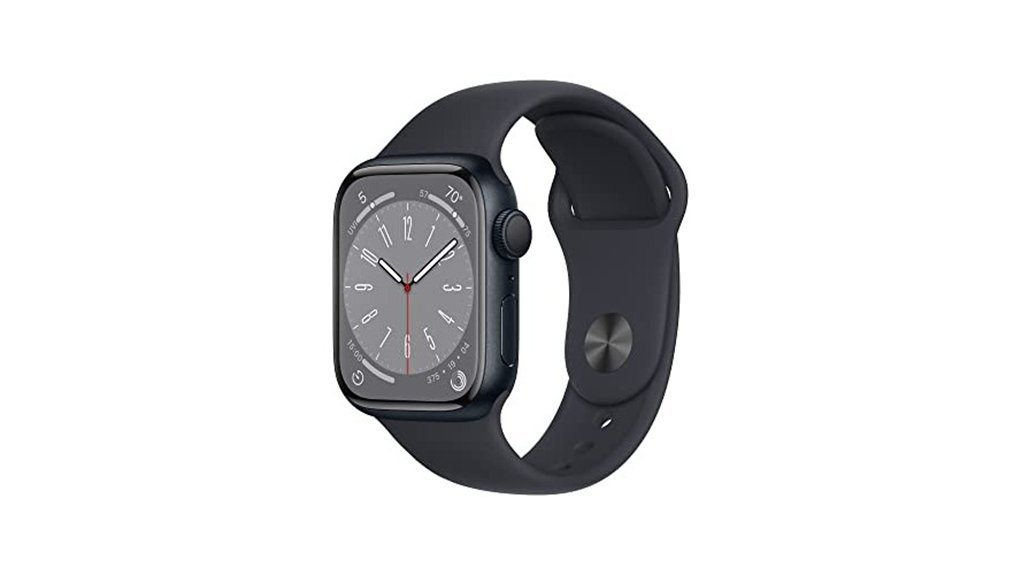
With advanced health tracking and dependable safety tools, this watch suits runners who value holistic monitoring. The Apple Watch Series 8 GPS 41mm Midnight Band adds blood oxygen readings, ECG, temperature sensing, and Sleep Stages for a fuller picture of recovery and readiness. The Enhanced Workout app supplies richer training metrics, while three months of Apple Fitness+ broaden guided support. Crash Detection, Fall Detection, and Emergency SOS strengthen on-road confidence. Its crack-resistant, IP6X, WR50 build improves durability. The Always-On Retina display stays readable, and iPhone compatibility, Apple Pay, app access, and customizable faces enhance daily usefulness.
Best For: Runners and everyday Apple users who want advanced health tracking, strong safety features, and a durable, easy-to-read smartwatch with deep iPhone integration.
Pros:
- Blood oxygen, ECG, temperature sensing, and Sleep Stages offer comprehensive health insights.
- Crash Detection, Fall Detection, and Emergency SOS add valuable safety protection.
- Always-On Retina display, app access, Apple Pay, and customizable watch faces improve daily convenience.
Cons:
- Requires an iPhone 8 or later, so it’s not ideal for non-Apple users.
- GPS model depends on iPhone or Wi‑Fi for some connectivity features.
- Premium features may be more than casual users need, making it a pricier choice.
Polar H10 Heart Rate Monitor Chest Strap
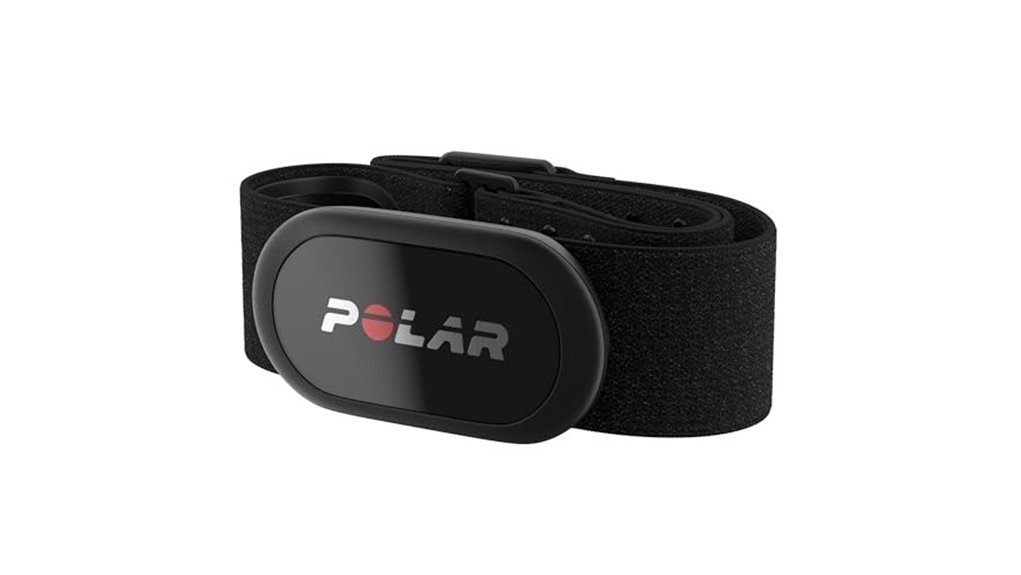
Polar H10 is ideal for runners who want chest-strap accuracy and flexible connectivity. The Polar H10 Heart Rate Monitor Chest Strap, model 92075964, delivers the brand’s most precise heart rate measurement, with improved electrodes and a secure buckle design that help maintain reliable contact. It supports Bluetooth, ANT+, and 5 kHz, and can connect to multiple devices at once, including two Bluetooth connections. Silicone dots improve comfort and reduce interference. Fully waterproof and powered by an included CR2025 battery, it also stores hours of workout data for later review and analysis.
Best For: Runners and endurance athletes who want highly accurate chest-strap heart rate tracking with broad device compatibility and reliable all-day workout performance.
Pros:
- Exceptional heart rate accuracy with Polar’s top-tier sensor performance
- Supports Bluetooth, ANT+, and 5 kHz, including multiple simultaneous connections
- Waterproof design with comfortable silicone dots and included CR2025 battery
Cons:
- Chest strap fit may not be as convenient as wrist-based monitors
- Requires a CR2025 button cell battery, so replacements must match exactly
- Best suited for serious training use, which may be more than casual users need
Factors to Consider When Choosing Running Watches 2026: Top Picks and Buying Guide
Selecting a running watch in 2026 begins with GPS tracking accuracy, battery life needs, heart rate monitoring, training features, and device compatibility. Each factor can shape how well the watch supports daily runs, long sessions, and structured workouts. A clear comparison of these elements helps narrow the best options for different runners.
GPS Tracking Accuracy
GPS accuracy is the backbone of a reliable running watch, since it determines how precisely distance, pace, and route data are recorded. Strong performance in this area shapes training analysis, race pacing, and route review. Watches with high-quality positioning can stay dependable in demanding settings, including streets lined with tall buildings and trails under dense tree cover. Multi-satellite support, such as GPS, GLONASS, and Galileo, helps improve location lock and reduces drift. Regular software updates also matter, because they can refine tracking algorithms and correct errors over time. For runners who depend on consistent data, these features are more valuable than flashy extras. A watch that combines robust satellite support with ongoing firmware improvements offers a more trustworthy running experience overall.
Battery Life Needs
Endurance matters as much as accuracy when choosing a running watch, because battery life determines how reliably it can support training, racing, and daily wear. Battery performance varies widely, with some models lasting only a few days in smartwatch mode and others reaching about two weeks before needing a charge. For runners who log long sessions or ultras, GPS endurance becomes especially important, since location tracking drains power faster than basic use. In power-saving modes, certain watches can stretch beyond 100 hours, making them suitable for extended events and back-to-back workouts. Buyers should weigh how often GPS will be used, how long training sessions usually last, and whether daily convenience matters. More features often mean shorter runtime, so balance capability with endurance.
Heart Rate Monitoring
Heart rate monitoring helps runners gauge effort in real time by showing whether they are training in the right zone for speed, endurance, or recovery. It lets a watch display current heart rate zones, making it easier to judge whether a session is too easy, too hard, or appropriate for the goal. Many modern models use wrist-based sensors, which add convenience because no chest strap is required. For those who want greater precision, chest strap monitors usually remain more accurate. Some watches also track heart rate continuously throughout the day, giving a fuller picture of wellness. Advanced systems may estimate fitness markers such as VO2 max and recovery time, helping users understand broader conditioning trends without needing separate equipment or complicated setup.
Training Features
Training features can make a running watch far more useful by turning it into a true coaching tool. Advanced options such as race time predictions and finish time estimates help runners gauge progress and set realistic goals. PacePro-style GPS pacing guidance can be especially valuable for maintaining a steady target pace across changing terrain. Multiple activity profiles add versatility, letting one device track running, cycling, swimming, and HIIT without switching platforms. Suggested workouts based on training history and fitness level can also guide structured improvement while supporting recovery between harder sessions. Customizable workout settings further strengthen this value, since they allow the watch to reflect personal goals, preferred metrics, and training intensity. Together, these features help create a more adaptive and effective training experience.
Device Compatibility
Beyond training tools, device compatibility plays a major role in how well a running watch fits into everyday use. A buyer should first confirm that the watch supports the smartphone’s operating system, since full features often depend on a specific companion app. Bluetooth connectivity is important for quick syncing with fitness apps, notifications, and workout data. Watches with a dedicated app store offer added flexibility, letting users install extra watch faces, data fields, and useful functions. Multi-device support, such as Bluetooth and ANT+, broadens connection options for heart rate straps and other sensors. Integration with major fitness platforms also matters, because it opens up community challenges, coaching plans, and detailed analysis that can improve long-term running progress and help keep data organized across devices.
Frequently Asked Questions
Which Running Watch Has the Best Battery Life for Ultramarathons?
Garmin Enduro 2 is often considered the strongest ultramarathon choice, delivering exceptional GPS battery life and long solar-assisted endurance. For race-day reliability, it outlasts most competitors, though actual runtime depends on settings and conditions.
Can Running Watches Estimate Running Power Accurately?
Running watches can estimate running power reasonably well, especially with integrated sensors and algorithms, but accuracy varies by brand, model, terrain, and form. They are useful for trends, though not perfectly precise.
Are Running Watches Suitable for Swim Tracking?
Yes, many running watches suit swim tracking, especially waterproof models with lap counting and stroke metrics. However, accuracy varies by brand and pool or open-water conditions, so specialized swim watches often perform better.
Do Running Watches Work Well With Third-Party Training Apps?
Yes, many running watches work well with third-party training apps, offering sync, workout import, and data sharing. Compatibility varies by brand, so some features may be limited or require specific connections.
How Often Should a Running Watch Be Updated or Replaced?
A running watch typically needs a fresh installment every two to four years, or sooner if battery life wanes, software support fades, or sensors grow unreliable; replacement often follows declining usefulness rather than failure.
Conclusion
In sum, the Garmin Forerunner 55, POLAR Pacer, Apple Watch Series 8, and Polar H10 each serve a distinct runner with different needs, from simple GPS tracking to advanced heart-rate precision. The best choice depends on budget, comfort, battery life, and training goals. As with a finely tuned chronometer, the right watch should vanish on the wrist while quietly improving performance. For runners in 2026, the decisive factor remains fit, function, and reliability.