Affiliate disclosure: As an Amazon Associate I earn from qualifying purchases. This article contains affiliate links to Amazon, so we may earn a commission if you buy through them, at no extra cost to you.
For drought-stricken lawn rehab in 2026, Scotts Turf Builder Starter Food for New Grass is a strong pick for rebuilding roots and speeding early growth. Spectracide Weed Stop for Lawns Plus Crabgrass Killer helps clear more than 470 weeds, including crabgrass, with fast visible results. Scotts Turf Builder Sun & Shade Grass Seed offers drought tolerance and fills thin areas well. Choosing the right product mix can make recovery faster and more reliable.
Scotts Turf Builder Starter Food for New Grass
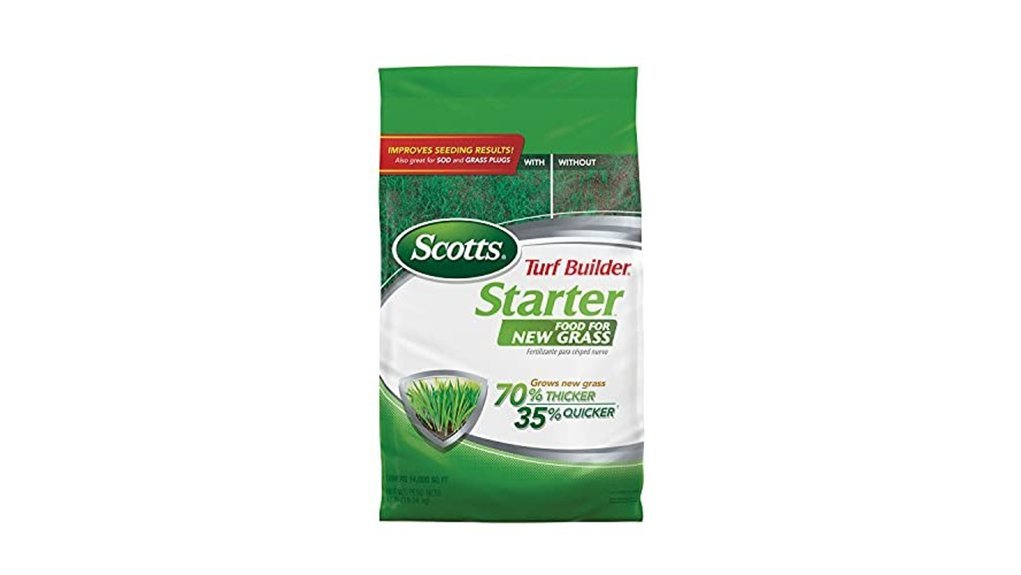
Scotts Turf Builder Starter Food for New Grass is best suited for homeowners establishing a new lawn, as well as those laying sod or planting grass plugs, because its 24-25-4 formula is designed to accelerate early growth and strengthen roots. The Scotts product, model 21814, covers up to 14,000 square feet with a 42-pound bag. It is formulated for all grass types and helps new turf grow 70% thicker and 35% quicker than unfed grass. Its nutrient balance supports faster blade and root development, improving seeding results in lawn and patio settings.
Best For: Homeowners starting a new lawn, or anyone laying sod or planting grass plugs, who want a starter fertilizer that helps new grass establish faster and stronger.
Pros:
- Helps new grass grow 70% thicker and 35% quicker than unfed grass.
- Supports faster root and blade development for healthier early growth.
- Works on all grass types and is effective for new grass, sod, and plugs.
Cons:
- Designed mainly for new lawns, so it may not be the best choice for established grass.
- Large 42 lb. bag may be more than some small projects need.
- Requires proper application to get the best seeding results.
Spectracide Weed Stop for Lawns Plus Crabgrass Killer, Ready-to-Use, 1 Gal
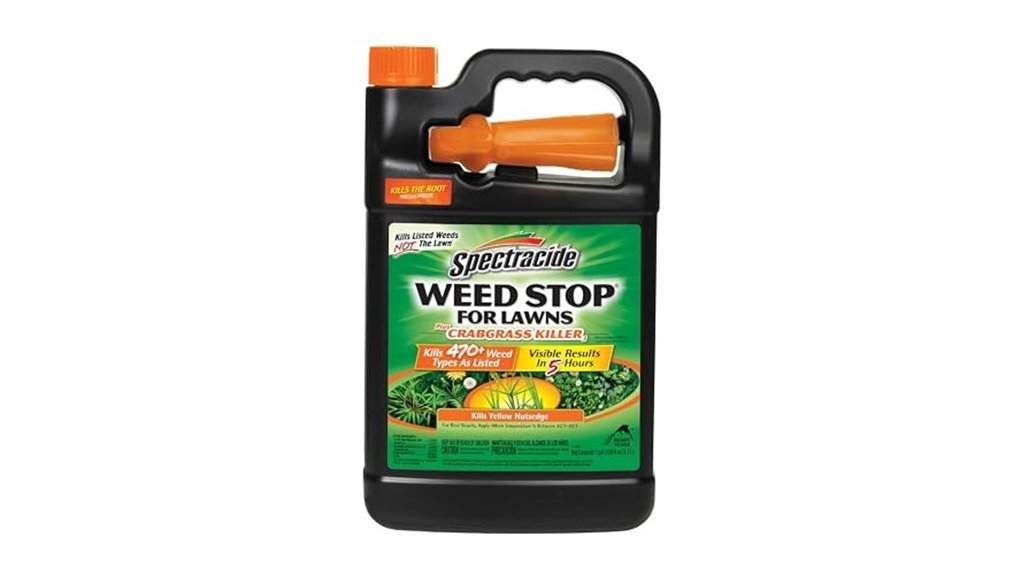
Spectracide Weed Stop for Lawns Plus Crabgrass Killer suits homeowners seeking fast, ready-to-use weed control. This 1-gallon Spectracide formula, manufactured by United Industries, targets more than 470 weed varieties, including dandelion, chickweed, clover, crabgrass, and yellow nutsedge. It is designed to kill weeds without harming the lawn when used as directed, and it works by moving down to the root. Visible results may appear within five hours. Because no mixing is required, it offers a straightforward option for lawn rehab when weeds are competing with stressed turf.
Best For: Homeowners who want a ready-to-use, fast-acting weed killer for lawns that targets a wide range of weeds, including crabgrass, without requiring mixing.
Pros:
- Kills weeds down to the root for more complete control
- Works on over 470 weed varieties, including dandelion, clover, chickweed, and yellow nutsedge
- Ready-to-use formula makes application quick and simple
Cons:
- Only effective when used exactly as directed
- May not be suitable for every lawn type or all weed infestations
- Results, while fast, may still require repeated applications for stubborn weeds
Scotts Turf Builder Sun & Shade Grass Seed
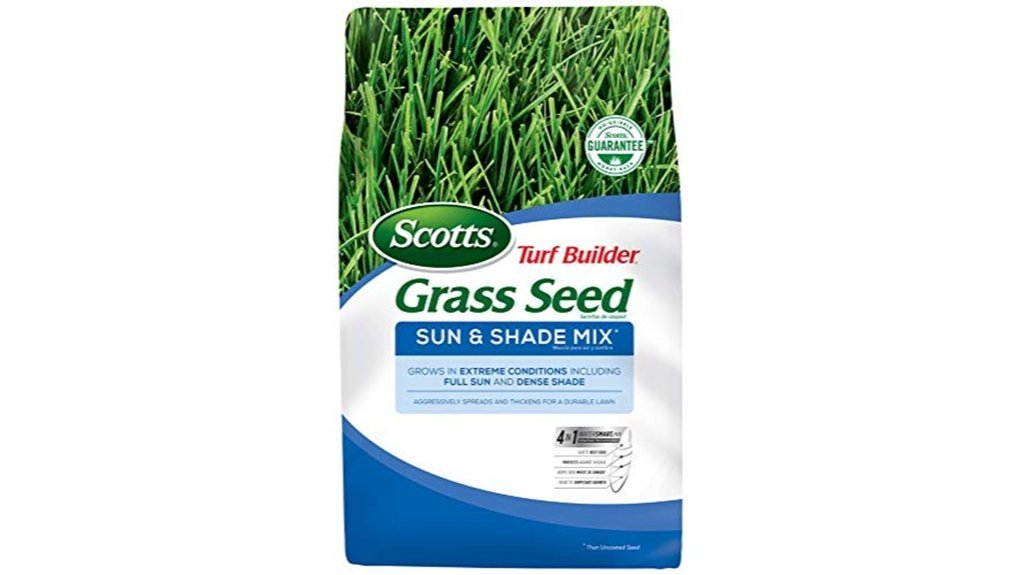
Built for lawns facing both blazing sun and heavy shade, this mix suits demanding yards. Scotts Turf Builder Grass Seed Sun & Shade Mix is designed for lawns that see both full sun and dense shade. Its fine-bladed texture and medium to high drought resistance help it stay green under stress. The 20-pound bag can cover up to 8,000 square feet and spreads aggressively to fill bare or thin spots. The WaterSmart PLUS coating keeps seed moist longer, adds nutrients, and helps protect seedlings from disease, giving repairs a stronger start in extreme conditions.
Best For: Homeowners with lawns that need a versatile grass seed for both full sun and dense shade, especially those dealing with bare spots and drought stress.
Pros:
- Handles both blazing sun and heavy shade well
- Aggressively spreads to help repair thin or bare areas
- WaterSmart PLUS coating helps seed stay moist longer and supports stronger early growth
Cons:
- 20 lb bag may be more than needed for smaller lawns
- Best performance may still depend on proper watering and lawn care
- Fine-bladed grass may require regular maintenance for a neat look
Factors to Consider When Choosing How to Rehab a Drought-Stricken Lawn: Useful Products and Buying Tips
Choosing how to rehab a drought-stricken lawn starts with matching the product to the lawn’s recovery needs, including soil moisture stress, thinning turf, and damaged roots. The best results usually come from selecting grass seed or repair products that fit the existing grass type, improve soil nutrients, and support root recovery. Sun and shade conditions should also guide the choice so the lawn can establish evenly and hold up after the drought.
Drought Recovery Needs
A drought-stricken lawn needs a careful reset, starting with a clear assessment of stress signs such as browning, wilting, and thinning patches. Once damage is gauged, recovery should focus on rebuilding roots and restoring soil function. A drought-tolerant seed mix can improve survival in dry spells, while a fertilizer formulated to support root growth and nutrient uptake helps weakened grass recover without forcing excess top growth. Deep, infrequent watering encourages roots to follow moisture downward, increasing resilience over time. Aeration also matters, because it loosens compacted soil, improves oxygen flow, and allows water to penetrate more effectively. Together, these measures create a practical rehabilitation plan that addresses immediate stress and supports longer-term drought recovery for the lawn.
Grass Type Match
Matching grass type to site conditions is a key step in drought recovery, since varieties differ in drought resistance and in how well they handle full sun or dense shade. Fescue and zoysia are often practical choices for dry lawns because both offer medium to high drought resistance. Sun exposure should also guide selection: grasses suited to open, sunny areas may fail in deep shade, while shade-tolerant types can thin under strong heat. Fine-bladed grasses can create a denser, more refined look, but they often need more water than coarser, tougher options. Blending compatible grass types can improve resilience by spreading risk across different environmental stresses and giving the lawn a better chance to recover evenly after drought.
Soil Nutrient Boost
Even after the grass type is selected, a drought-recovery plan still depends on restoring soil nutrients so roots and blades can rebuild quickly. Balanced fertilizers with a ratio such as 24-25-4 can supply nitrogen, phosphorus, and potassium in proportions that encourage thicker growth and faster recovery. Products formulated for new grass are often useful because they support germination and early establishment in stressed soil. Soil testing should guide selection, since it reveals nutrient shortages before amendments are applied. By correcting those gaps, a lawn can develop denser blades and stronger resilience against future dry periods. The most effective rehab products are those that match the soil’s actual needs rather than relying on broad, untargeted feeding.
Root Repair Support
Robust root repair is essential when rehabbing a drought-stricken lawn, since healthy roots anchor the grass and drive efficient water and nutrient uptake. Products that support new grass establishment are especially valuable because they encourage quicker root growth and faster recovery. Drought-resistant seed varieties are another strong option, as they are bred to build deeper, sturdier root systems that better tolerate harsh conditions. Coated seeds can also help by holding moisture around the seed longer, which steadies hydration during early establishment. In addition, choosing a fertilizer formulated for new grass can supply the balanced nutrients roots need without overfeeding the lawn. When soil nutrients are properly aligned, root recovery improves, and the lawn is better positioned to regain density and overall resilience.
Sun And Shade Fit
Once root repair products have helped a drought-stricken lawn begin recovering, the next step is choosing grass seed that fits the site’s light conditions. The best options are varieties rated for both full sun and dense shade, since lawn areas often receive uneven exposure. Drought-resistant seed is also important, because medium to high tolerance helps new grass withstand dry spells after repair. Products that spread aggressively can help fill bare and thin patches while improving turf density. Coated seed, especially formulas with moisture-retention technology, can hold water longer and support faster germination. Texture and growth habit matter too, because the new seed should blend with existing grass and match the lawn’s practical and visual needs without creating an obvious mismatch.
Coverage And Size
Coverage and size should be checked carefully before buying lawn rehab products, because the right package must match the area being treated. Product labels usually list coverage in square feet, and that number should be compared with the lawn’s actual size before purchase. Some fertilizers and seed blends treat up to 14,000 square feet, while others are suited to only 8,000. Evaluating the package size against the area prevents shortages and helps avoid waste. Larger containers can be a better value for expansive lawns, since they may reduce repeat buying. Application rates on the package should also be reviewed, because they show how much material is needed per square foot. Matching coverage to the lawn’s needs supports efficient rehabilitation and more consistent results.
Weed Control Options
After coverage and size are matched to the lawn, weed control becomes the next key purchase for a drought-rehab plan. Effective weed control matters because weeds take nutrients, water, and sunlight from recovering grass. Products should be chosen for the weed types present, since broadleaf and grassy weeds often need different formulas. A strong option reaches the roots, not just the top growth, because root penetration reduces regrowth and improves long-term cleanup. Fast visible results, ideally within hours, help confirm whether the treatment is working. Ready-to-use formulas also appeal to homeowners because they remove mixing steps and simplify application. In a stressed lawn, the best weed control product balances targeted action, root-level elimination, speed, and convenience while supporting the grass’s return.
Frequently Asked Questions
How Soon After Watering Restrictions Can I Start Lawn Rehab?
They can usually begin lawn rehab once watering restrictions end and the soil is moist enough to support growth, often after one full watering cycle. A soil test and local rules should guide timing.
Can I Rehab Drought Damage Without Reseeding the Entire Yard?
Yes—partial rehab can restore drought damage without full reseeding. Bare patches yield to overseeding, compost, and deep watering, while surviving grass contrasts with brittle gaps like green threads mending a faded, sun-bleached carpet.
What Soil Tests Help Identify Drought Recovery Needs?
Soil tests for pH, nutrient levels, organic matter, compaction, infiltration, and salinity help identify drought recovery needs. They reveal whether roots can access water, absorb nutrients, and rebuild turf vigor after stress.
Are There Pet-Safe Options for Drought-Damaged Lawn Treatment?
Yes, pet-safe options exist. Like a gentle rain after a long heat wave, they can include compost topdressing, corn gluten meal, and organic fertilizers labeled pet-safe. He should always verify ingredients and keep pets off treated areas briefly.
How Do I Prevent Future Drought Stress After Rehab?
Future drought stress can be reduced by choosing deep-rooted grass, watering deeply but infrequently, mulching clippings, raising mowing height, aerating compacted soil, improving organic matter, and avoiding excessive nitrogen, especially during heat.
Conclusion
In the end, reviving a drought-stricken lawn calls for the right mix of feeding, weed control, and reseeding. Scotts Turf Builder Starter Food for New Grass supports tender new growth, Spectracide Weed Stop for Lawns Plus Crabgrass Killer helps clear unwanted competition, and Scotts Turf Builder Sun & Shade Grass Seed fills bare spots with resilient coverage. As the adage goes, “A stitch in time saves nine,” and prompt lawn care can make all the difference.