Affiliate disclosure: As an Amazon Associate I earn from qualifying purchases. This article contains affiliate links to Amazon, so we may earn a commission if you buy through them, at no extra cost to you.
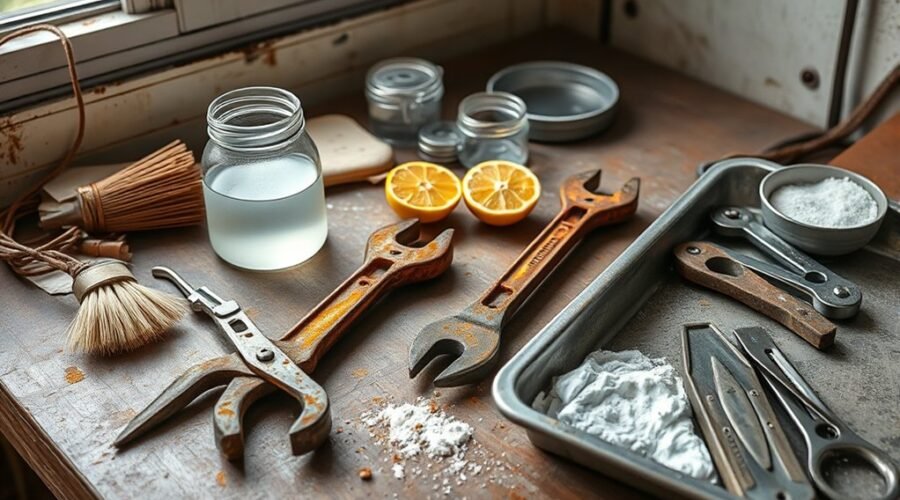
The best ways to get rust off tools in 2026 use simple cleaners, abrasives, and protective finishes. Stardrops The Pink Stuff works well on light rust and grime. Dura-Gold scuff pads and KTOJOY steel wool handle tougher buildup. Vinegar and baking soda offer low-cost rust removal. Microfiber cloths help wipe residue clean. Boiled linseed oil protects cast iron and wood afterward. Storage cabinets reduce future rust. More useful tips follow for harder cases.
Stardrops The Pink Stuff Miracle Cleaning Paste, 17.6 Oz
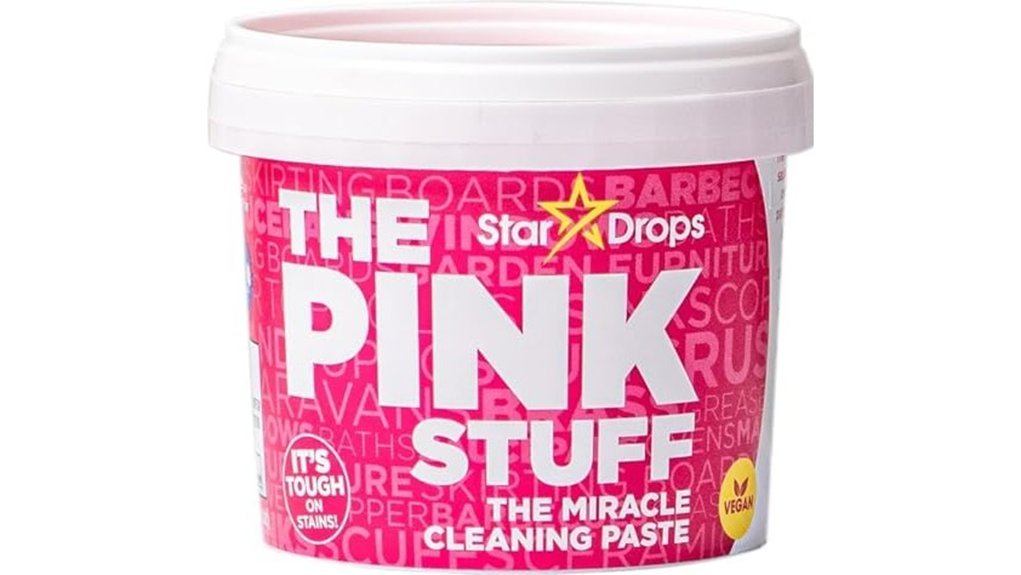
Stardrops The Pink Stuff Miracle Cleaning Paste is a practical choice for anyone looking for a non-scratch cleaner that can tackle rust-related grime along with burnt-on residue, soap scum, and other tough buildup on tools and nearby surfaces. Its paste formula works on stainless steel, ceramic, porcelain, and glass, making it useful for sinks, tubs, shower doors, tile, grout, cookware, garden furniture, and car wheels. Applied with a damp cloth or sponge, it lifts dirt efficiently with little product. A light rhubarb scent remains after rinsing, leaving surfaces clean and fresh.
Best For: People who want a versatile, non-scratch paste cleaner for tackling tough grime, burnt-on residue, soap scum, and rust-related buildup on a variety of household and outdoor surfaces.
Pros:
- Works on many surfaces, including stainless steel, ceramic, porcelain, and glass.
- Effective on stubborn messes like burnt-on food, soap scum, limescale, and rust-related grime.
- A little product goes a long way and leaves a light fresh rhubarb scent.
Cons:
- Requires manual scrubbing with a cloth or sponge, so it is not a spray-and-wipe cleaner.
- May not be ideal for those who prefer fragrance-free cleaning products.
- As a paste, it can be messier to apply and rinse than liquid cleaners.
Dura-Gold Premium 6″ x 9″ 10 Scuff Pad Variety Pack, 2 Each Maroon, Gray,
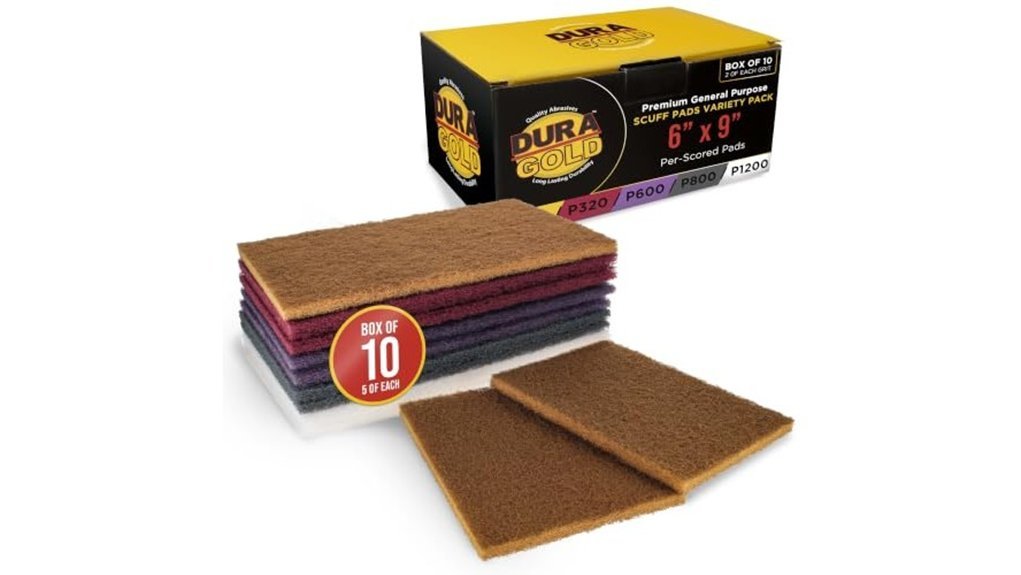
Dura-Gold’s scuff pad pack suits users needing controlled rust cleanup and surface prep. The 6 x 9 inch assortment includes 10 reusable pads: maroon, gray, gold, purple, and white, with two of each. Maroon offers P320 grit for general work, while gray provides P800 ultra-fine finishing. The non-woven, resin-coated aluminum oxide construction resists tearing, clogging, and loading. It works dry or wet on metal, paint, wood, and more. For rusted tools, it helps remove oxidation, blend repairs, and leave a consistent finish without aggressive scratching.
Best For: Users who need a versatile set of reusable scuff pads for controlled rust removal, surface prep, and fine finishing on metal, paint, wood, and other materials.
Pros:
- Includes five grit levels with two pads each for different prep and finishing tasks.
- Durable non-woven, resin-coated aluminum oxide pads resist tearing, clogging, and loading.
- Works wet or dry on a wide range of surfaces for auto, woodworking, and general shop use.
Cons:
- May be more abrasive than needed for very delicate surfaces or ultra-light polishing.
- Variety pack may include grits some users won’t use often.
- Not a replacement for heavy-duty sanding when major material removal is required.
KTOJOY 6 Pack Stainless Steel Wool Scrubber, Scouring Pads
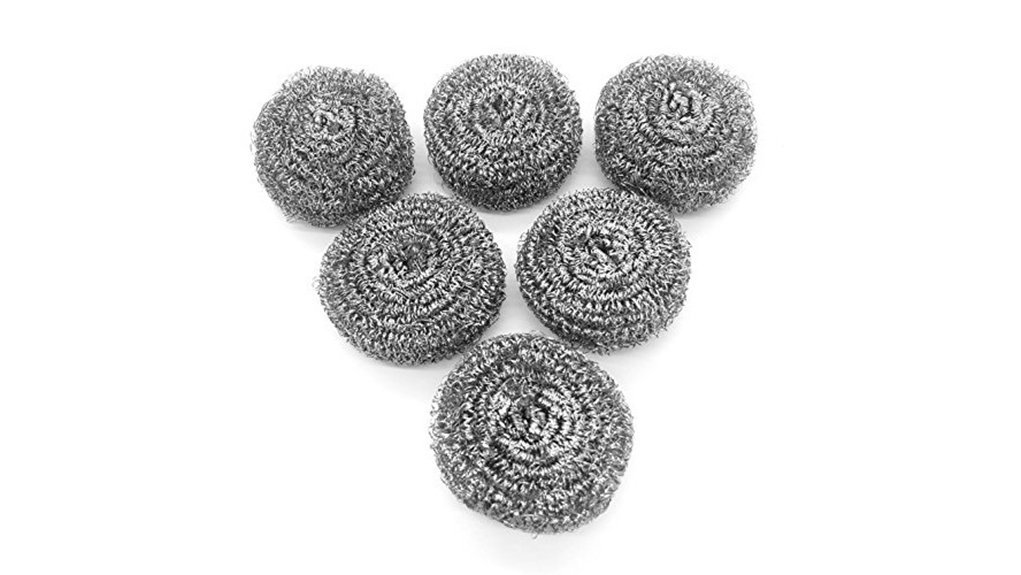
KTOJOY’s stainless steel wool scrubbers suit users tackling rust on tools and other tough surfaces. This 6-pack of silver, 3 x 3 x 1.5-inch pads uses 410 stainless steel for reusable abrasion and broad surface contact. The tightly coiled, circular design offers flexible coverage, while the center and outer rings improve grip and help reduce hand strain. After use, the pads rinse clean for repeated jobs. They also serve well on ovens, grills, pots, pans, and outdoor furniture, making them a practical rust-removal option for mixed cleaning tasks.
Best For: People who need a reusable, heavy-duty scrubber for removing rust and tackling tough cleaning jobs on tools, grills, ovens, pots, pans, and outdoor furniture.
Pros:
- Made from 410 stainless steel for durable, reusable abrasive cleaning
- Tightly coiled circular design offers good surface coverage and ergonomic grip
- Rinses clean easily and can be used on a variety of tough surfaces
Cons:
- Not ideal for delicate surfaces that could be scratched
- May be too abrasive for light everyday cleaning tasks
- Small 3 x 3 x 1.5-inch size may require multiple pads for larger jobs
Amazon Basics Microfiber Cleaning Cloths, Pack of 24
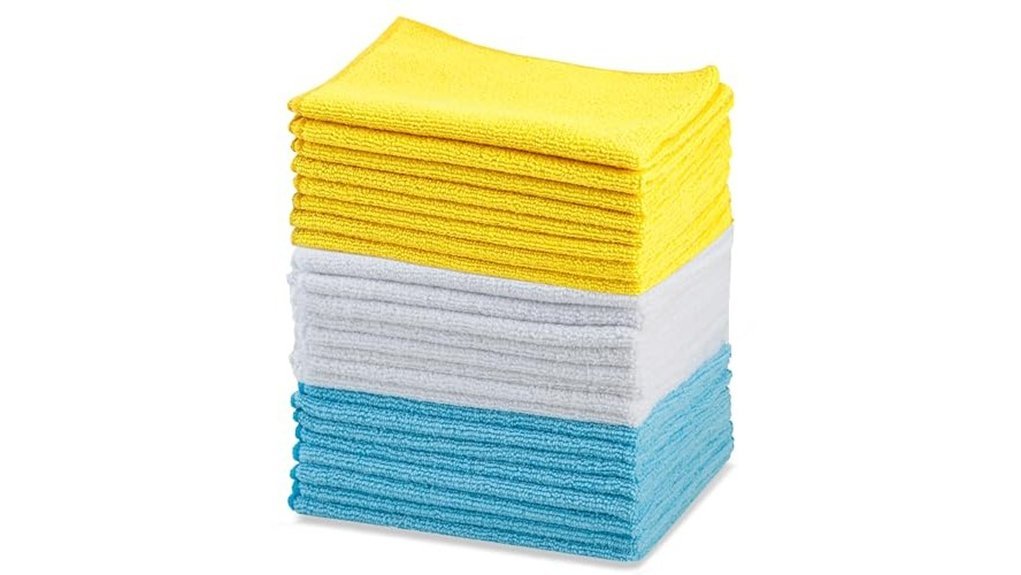
Amazon Basics Microfiber Cleaning Cloths suit readers who want a soft, reusable way to wipe away rust residue. The 16 x 12-inch cloths come in a 24-pack with blue, white, and yellow options. Their ultra-soft, non-abrasive surface helps lift debris without scratching tools, while dry or liquid use supports streak-free, lint-free results. They are highly absorbent, soaking up eight times their weight, and can be reused hundreds of times. Machine washing keeps maintenance simple, with separate first washing and like colors recommended.
Best For: People who want a soft, reusable, and highly absorbent microfiber cloth set for streak-free cleaning of cars, tools, boats, and other surfaces.
Pros:
- Ultra-soft and non-abrasive, so it helps clean without scratching surfaces.
- Highly absorbent and effective for both dry and liquid cleaning.
- Machine washable and reusable for hundreds of uses.
Cons:
- Colors are limited to blue, white, and yellow.
- Must be washed separately before first use and with like colors.
- May not be ideal for tasks requiring a heavier-duty scrubbing cloth.
45% Pure Vinegar – Concentrated Industrial Grade (1-Gallon)
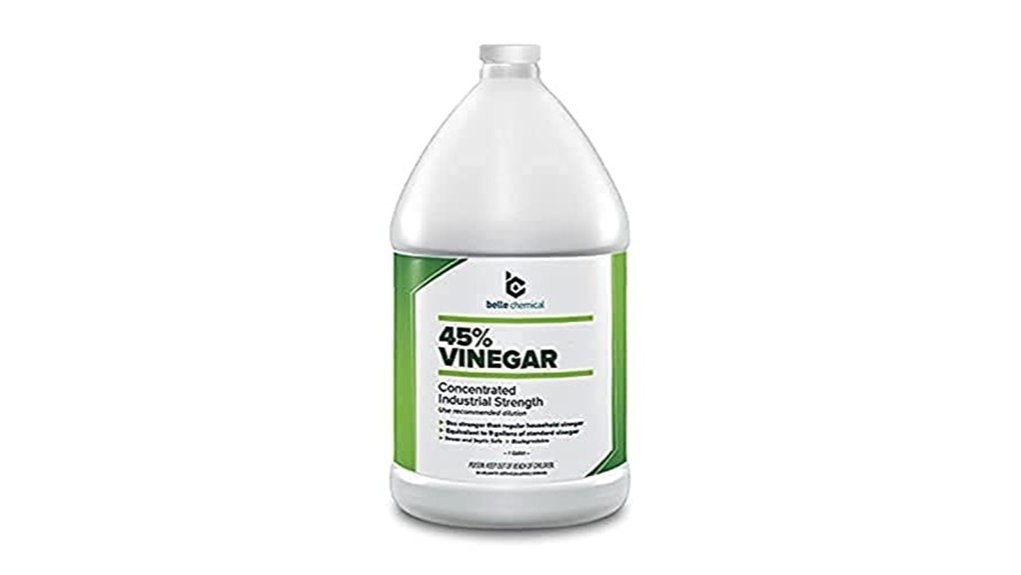
45% Pure Vinegar suits users who need a highly concentrated rust-removal solution for heavy-duty tasks. This Belle Chemical product comes in a 1-gallon, 128-fluid-ounce container and is sold as an industrial-strength vinegar for demanding applications. Its high concentration may help address stubborn rust on tools when a stronger approach is preferred. Because it is a concentrated product, careful handling is essential, and standard safety guidelines should be followed. For storage, it should be kept in a cool, dry place away from direct sunlight to preserve quality and maintain readiness for future use.
Best For: Users who need an industrial-strength, highly concentrated vinegar for heavy-duty cleaning or rust-removal tasks.
Pros:
- High 45% concentration for stronger cleaning performance
- Large 1-gallon size offers good value for demanding jobs
- Useful for industrial and heavy-duty applications
Cons:
- Requires careful handling due to its concentrated strength
- May be too strong for everyday household use
- Needs proper storage away from sunlight in a cool, dry place
Rust-Oleum Automotive 253351 32-Ounce Low Voc Mineral Spirits Quart
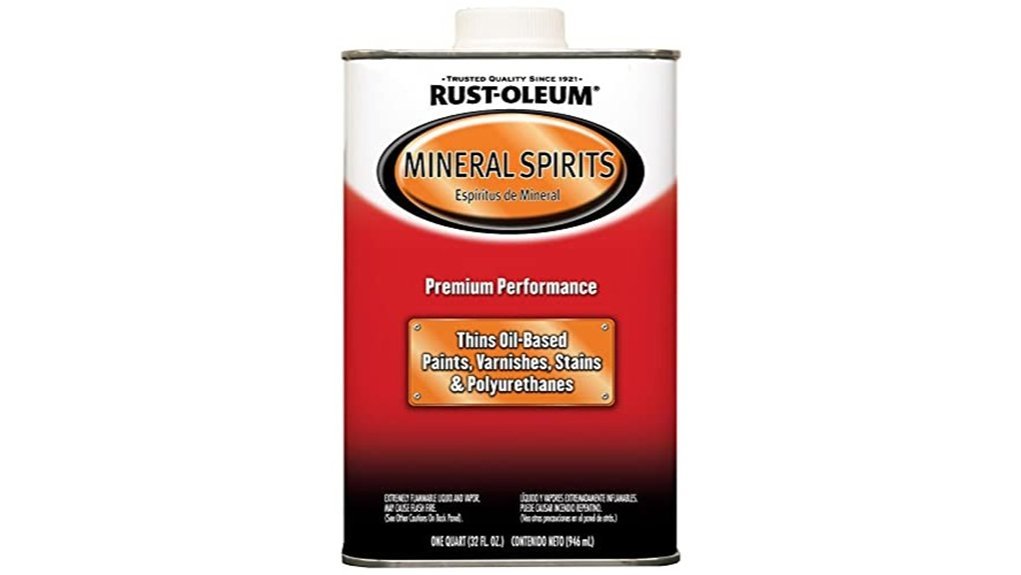
Rust-Oleum Automotive 253351 suits users needing a low-odor, no-residue mineral spirits for rust cleanup. As a 32-ounce low-VOC formula, it serves home improvement tasks and other oil-based applications with premium performance. It thins oil-based paints and stains, helping improve flow while reducing brush drag or pull. The product is described as the finest paint thinner available, making it useful where clean handling matters. Its lowest-odor formulation supports indoor work, and the lack of residue helps tools remain ready for the next step. Rust-Oleum’s model 253351 offers practical versatility.
Best For: DIYers, painters, and home improvement users who want a low-odor, no-residue mineral spirits for thinning oil-based paints and stains.
Pros:
- Lowest-odor formula helps make indoor use more comfortable
- No residue left behind, so tools stay clean and ready for the next step
- Thins oil-based paints and stains while improving flow and reducing brush drag
Cons:
- Only comes in a 32-ounce single-pack size, which may be limiting for larger projects
- Best suited for oil-based applications, so it is not a universal thinner for all materials
- Mineral spirits may still require proper ventilation and careful handling despite the low-VOC formula
ARM & HAMMER Baking Soda, 2.7 Lbs
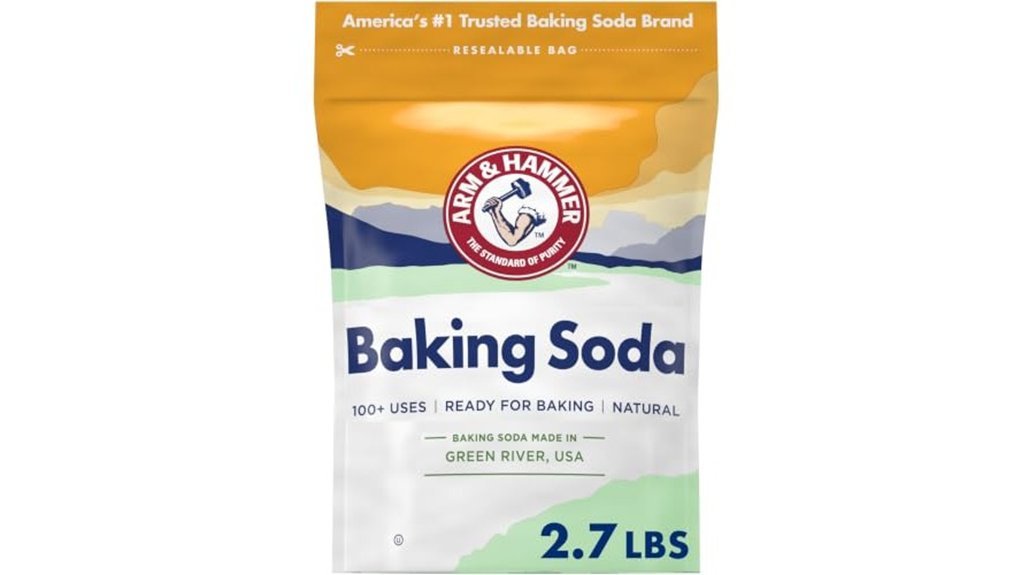
ARM & HAMMER Baking Soda, 2.7 lbs suits users who want a simple, natural rust-removal option. Its pure, additive-free formula can be mixed into a paste for light tool rust, then scrubbed away without harsh chemicals. The same 100+ use household staple is safe around children and pets, making it practical for workshops and homes. Food-grade crystals and clean composition add confidence for general cleaning tasks. Beyond rust care, it also freshens carpets, brightens laundry, cleans sinks, and supports DIY projects. Made in Wyoming, it reflects sustainable production with renewable-energy packaging.
Best For: People looking for a simple, natural, multi-use household powder for light rust removal, cleaning, baking, and everyday freshening tasks.
Pros:
- Pure, additive-free formula is safe for use around children and pets.
- Versatile 100+ use staple for rust removal, laundry, sinks, carpets, and DIY projects.
- Food-grade, made in the USA, and packaged with renewable-energy support.
Cons:
- Not a specialized rust remover, so it may be less effective on heavy or deep rust.
- A powder paste method can take more scrubbing and effort than commercial rust treatments.
- Basic formula may feel too simple for users wanting scented or enhanced cleaning products.
Furniture Clinic Boiled Linseed Oil 250ml Glossy Finish
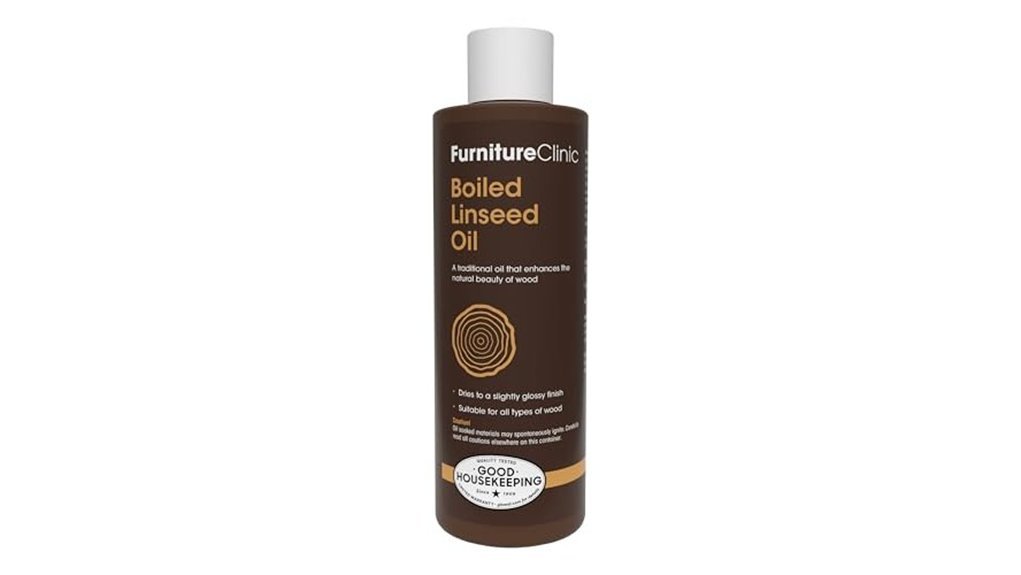
Furniture Clinic Boiled Linseed Oil suits users restoring worn wooden tool handles and porous surfaces. The 250ml Furniture Clinic BLO250-V2 formula is evaluated by the Good Housekeeping Institute, supporting its reliability. It penetrates wood, fills pores, and deepens grain while leaving a glossy finish that slightly darkens fibers. Hot-air treatment helps it dry faster and form a tough, hard-wearing coat. It also works on terracotta tiles and porous stone, indoors or outdoors, except exterior oak. Applied correctly, it seals and protects surfaces.
Best For: People restoring worn wooden tool handles, furniture, or other porous surfaces who want a glossy, protective finish.
Pros:
- Penetrates wood pores to restore and enhance the natural grain.
- Dries faster thanks to hot-air treatment, helping form a tough, hard-wearing finish.
- Versatile for use on many wooden surfaces, terracotta tiles, and porous stone.
Cons:
- Slightly darkens the original wood fibers, which may not suit all finishes.
- Not suitable for exterior oak wood.
- Requires proper application for best penetration and protection.
Pataku Black Metal Garage Storage Cabinet
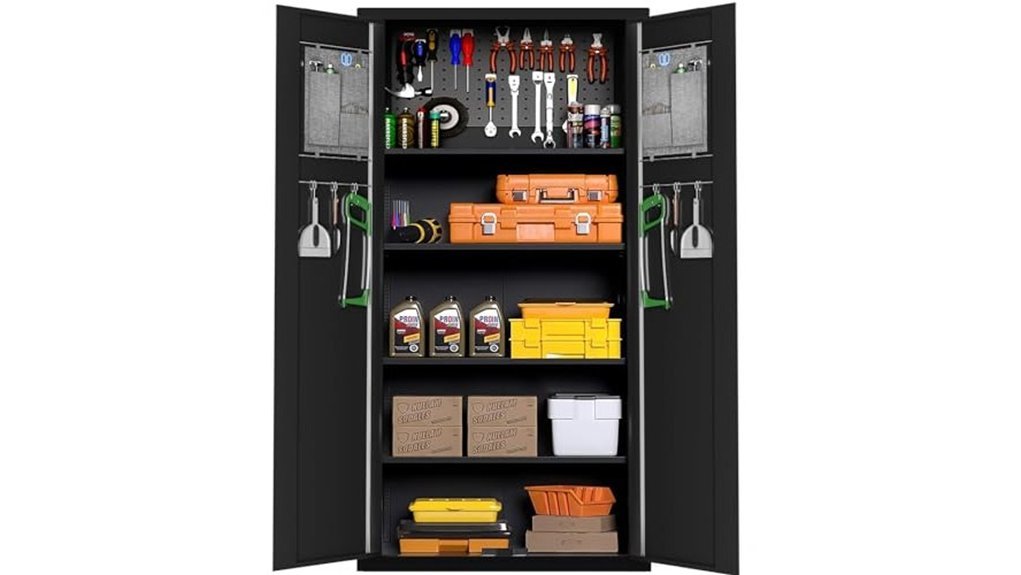
For users needing secure, rust-resistant tool storage, the Pataku Black Metal Garage Storage Cabinet stands out. The PT-6DBG-BLACK is a black metal locking cabinet made by Pataku, built from full steel and finished with powder coating for rust-proof, anti-corrosive protection. Its four height-adjustable shelves support heavy loads, while the built-in pegboard, six hanging rods, textile pockets, and hooks improve organization. Lockable doors with two keys help protect valuables. A wall anchoring kit adds stability and child safety. Suitable for garages, offices, utility rooms, and laundry rooms, it offers practical, durable storage.
Best For: Homeowners, garage organizers, and small business users who need a secure, heavy-duty, rust-resistant storage cabinet with flexible organization options.
Pros:
- Full steel construction with powder coating for rust-proof, anti-corrosive durability
- Four height-adjustable shelves with very high load capacity for heavy items
- Built-in pegboard, hanging rods, pockets, and hooks for versatile organization
Cons:
- Large size may be too bulky for small spaces
- Assembly and wall anchoring may take time and effort
- Black finish may show dust, smudges, and scratches more easily
Factors to Consider When Choosing 8 Easy and Effective Ways to Get Rust Off Tools: Useful Products and Buying Tips
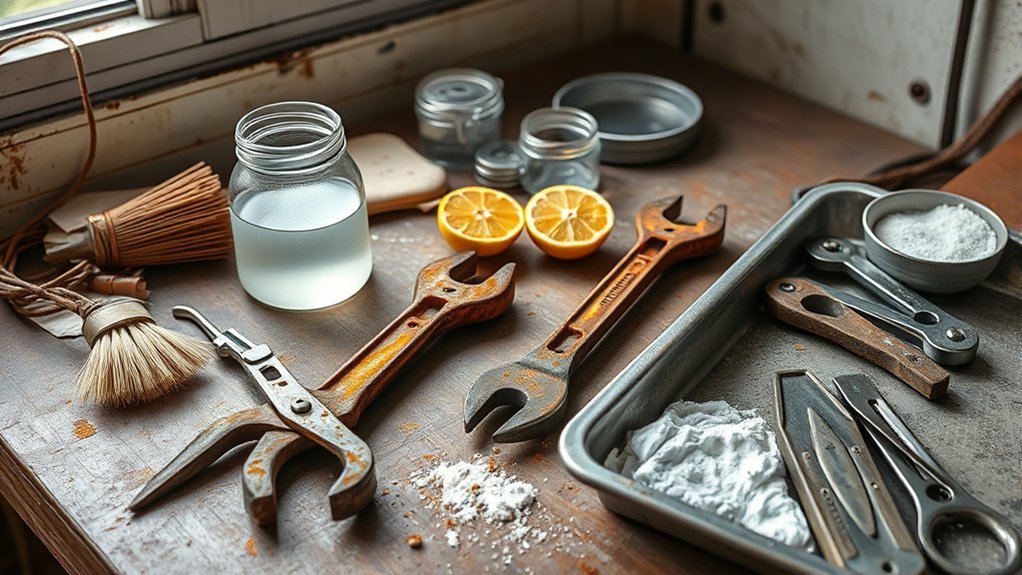
Choosing the right rust removal method depends on rust severity, since light surface oxidation calls for a different approach than deep corrosion. Tool material compatibility and abrasive strength also matter, because the wrong product can damage finishes or metal surfaces. Ease of application, along with safety and ventilation, helps narrow the options to methods that are practical and safe to use.
Rust Severity Levels
Rust does not all look or behave the same, so severity is the first factor to assess before choosing a removal method. Light rust usually appears as a thin surface discoloration and can often be addressed with simple cleaning methods or mild products. Moderate rust shows flaking and pitting, indicating deeper corrosion that may need stronger techniques and more effective removers. Severe rust is the most serious stage; it creates holes, weakens structure, and can make a tool unsafe. In such cases, professional intervention or replacement is often the practical choice. Moisture exposure time strongly affects progression, as does metal type, with ferrous metals generally corroding faster than stainless steels or other alloys. Regular maintenance and protective coatings help limit future rust and reduce severity.
Tool Material Compatibility
The right rust-removal method depends not only on how severe the corrosion is, but also on what the tool is made of. Stainless steel usually tolerates rust removal well, yet it benefits from gentle cleaning to prevent scratches and preserve its finish. Aluminum requires extra caution because acidic removers can trigger unwanted corrosion if applied carelessly. Cast iron responds well to oil-based treatments, which help lift rust while leaving behind a protective barrier against future oxidation. Because material sensitivity varies, a product that works on one tool may damage another. Before full treatment, a small test on an inconspicuous area helps confirm compatibility and reduces the risk of surface harm. Choosing a method matched to the metal improves results and helps protect tool life.
Abrasive Strength Options
Abrasive strength should match the rust level and the tool’s material to avoid unnecessary wear. Coarser grits, such as P150, are suited to heavy corrosion because they remove buildup quickly, while finer grits, such as P1200, are better for final smoothing and light surface staining. Non-woven abrasive pads provide a balanced option, removing rust effectively without scratching most surfaces, which helps protect delicate tools. Flexible scuff pads add value by reaching contoured areas and producing a consistent finish across irregular shapes. For severe rust on metal, stainless steel wool scrubbers deliver aggressive action and can be reused, improving cost efficiency. The best choice depends on how much rust is present and whether the abrasive strength matches the tool’s material and finish.
Ease Of Application
After selecting the right abrasive strength, attention should shift to how easy a rust remover is to use in practice. Products that come as sprays or wipes often offer the simplest handling, since they can be applied quickly and removed with little effort. Clear, beginner-friendly instructions also matter, because they reduce guesswork and help users follow each step correctly. Fast-acting formulas are preferable when they dissolve rust in minutes, shortening the overall task. Versatility is another advantage, especially when a remover can be used with ordinary cloths or brushes instead of specialized equipment. Formulas that avoid long scrubbing sessions or repeated rinsing further streamline cleanup. In this way, ease of application becomes a major factor in choosing an efficient rust removal product for tools.
Safety And Ventilation
Safety and ventilation should be treated as essential priorities when choosing a rust remover for tools. Products that release solvent or acid fumes should be used only in spaces with steady airflow. Opening windows and running fans can help disperse vapors and reduce exposure. Protective goggles and gloves are important because splashes and irritants may contact eyes or skin during treatment. When abrasive pads, wire brushes, or other particle-producing methods are used, a mask can limit inhalation of fine debris. Safety instructions on product labels should always be reviewed before use, since they often specify required protective gear and airflow conditions. A careful focus on these precautions helps make rust removal safer and more controlled, without adding unnecessary risk to the task.
Reusability And Value
Reusability and overall value should guide the choice of rust removal products, especially when tools need regular maintenance. Reusable scouring pads and microfiber cloths often deliver better long-term savings than disposable alternatives, because they can be used repeatedly without losing much effectiveness. Durable materials matter, since strong pads and cloths resist wear and continue working through many cleaning sessions. Multi-purpose solutions also add value by handling rust, grime, and general cleanup with one product, reducing purchases and storage needs. Absorbency and washability should be checked closely; cloths and pads that survive hundreds of washes provide strong performance and less waste. High-quality tools and cleaners may cost more at first, but their durability, efficiency, and reduced replacement needs usually make them the smarter investment.
Frequently Asked Questions
How Do I Prevent Rust From Returning After Cleaning Tools?
He should dry tools completely, apply a thin coat of oil or rust inhibitor, and store them in a low-humidity place. Regular inspection and cleaning after use will help prevent rust from returning.
Can Rust Damage Tool Performance Permanently?
Yes, rust can permanently damage tool performance if it pits, weakens, or alters moving parts. Light surface rust is usually reversible, but severe corrosion may reduce precision, strength, and lifespan despite cleaning.
Are Some Tool Metals Harder to De-Rust Safely?
Different metals vary in de-rusting difficulty; hardened steel and plated surfaces tolerate care better than cast iron or aluminum alloys. As the saying goes, “An ounce of prevention is worth a pound of cure.”
How Often Should I Inspect Tools for Early Rust?
They should inspect tools monthly, and after every use in damp, salty, or dirty conditions. Frequent checks catch early rust, allowing quick cleaning, drying, and protective oiling before corrosion becomes harder to remove.
What Storage Conditions Reduce Future Tool Rust?
A dry barn kept a grandfather’s wrench set bright for decades. Tools fare best in low humidity, stable temperatures, sealed containers, and away from concrete; silica gel and light oil further discourage rust.
Conclusion
To sum up, choosing the right rust remover and support products can turn tired tools into dependable helpers again. From vinegar and baking soda to scrubbing pads, microfiber cloths, and protective linseed oil, each option plays its part like a small team working toward one goal: restoration. With the right care and storage, rust loses its grip, and tools can stay cleaner, longer, and ready for the next job.