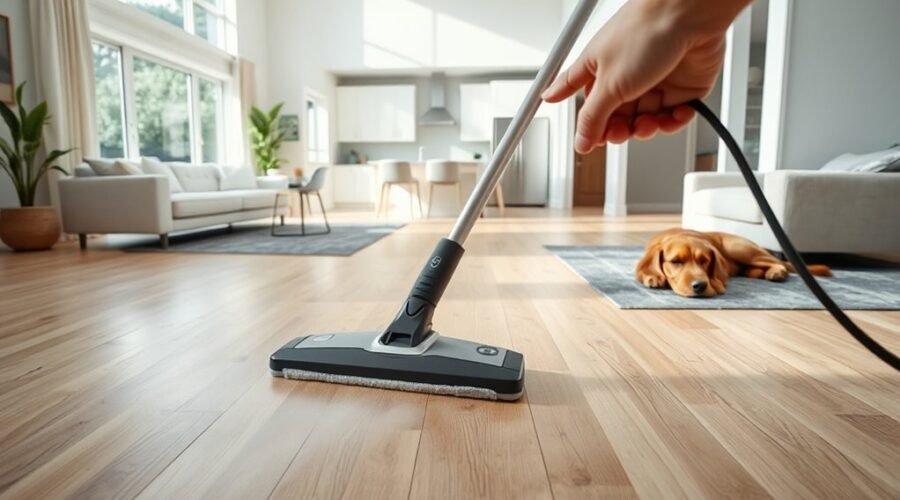
Steam mops can clean hard floors efficiently, but not every surface can tolerate heat and moisture. Sealed tile, stone, vinyl, and some laminate often handle steam well, while unsealed hardwood, waxed finishes, cork, and carpet can be damaged. The key issue is not just cleanliness, but surface compatibility and manufacturer limits. Before using one, the safest choice may be less obvious than it seems.
What Floors Can You Steam Mop?
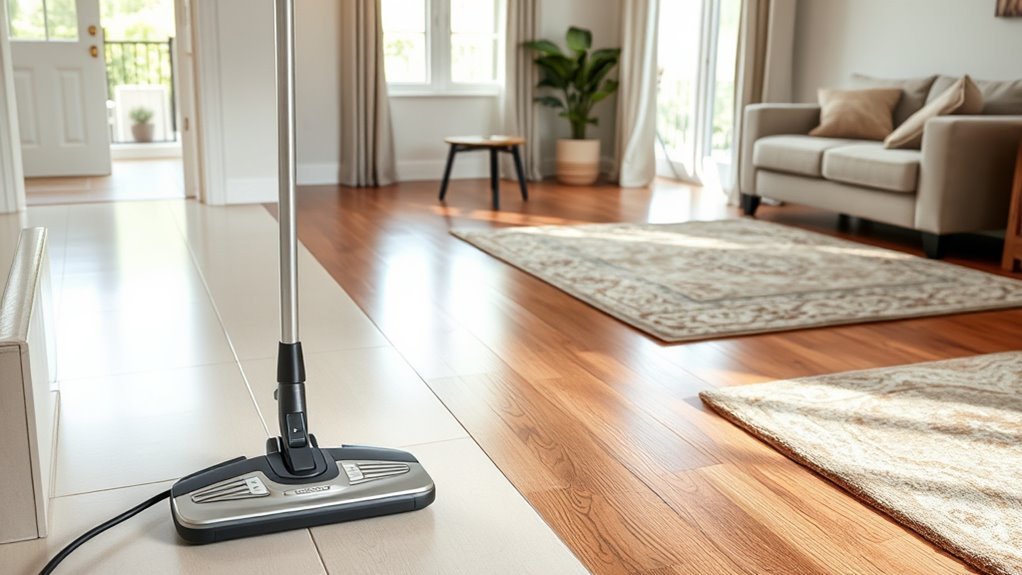
Steam mops are suitable for several common floor types, but only when the surface can tolerate heat and moisture. In practice, steam mops work on sealed hardwood, tile, stone, laminate, and many vinyl floors.
For cleaning hardwood, the critical requirement is a sound seal; sealed hardwood can usually handle steam, while unsealed boards and waxed finishes should be excluded because moisture can deform fibers and strip protective coatings.
Laminate should be treated more cautiously, using a low-temperature setting to reduce warping risk. Vinyl is often compatible, yet manufacturer instructions should be checked before use.
Stone and tile generally accept steam well if grout and surface coatings are intact. Before full application, a test in an inconspicuous area is advisable. This simple verification limits damage, supports informed use, and preserves freedom from unnecessary replacement costs.
How Steam Mops Clean Hard Floors
High-temperature vapor loosens embedded soil on hard floors by softening grime and lifting it from the surface, allowing the mop pad to remove debris without harsh chemicals.
Steam mops direct high-temperature steam into microscopic gaps, where heat and moisture break the bond between residue and the floor. The pad then captures the loosened particles, leaving a cleaner surface with less effort.
High-temperature steam loosens grime in microscopic gaps, and the pad lifts away the residue with less effort.
This process also reduces microbial load, because the steam can kill bacteria, viruses, and dust mites on contact.
For sealed floors, including tile, sealed hardwood, and vinyl, the method supports deep cleaning while preserving surface integrity when settings are matched to the material.
Regular use helps limit buildup, which can protect floor finish and extend lifespan.
The practical result is cleaner, healthier flooring with fewer products, less labor, and more control over household maintenance.
Best Floors for Steam Mopping
The best candidates for steam mopping are hard, sealed surfaces that can tolerate heat and moisture without absorbing water.
Tile floors rank highest because they resist heat, handle moisture well, and allow steam to lift soil from both tile and grout lines.
Sealed hardwood can also be appropriate when a full sealing layer protects the wood from penetration; the steam should remain controlled and brief.
Sealed stone floors offer similar performance, provided the finish is intact and moisture cannot enter pores or joints.
Vinyl flooring is generally compatible with steam mops, though manufacturer guidance should be checked before use to confirm thermal limits and construction.
Laminate flooring may also be cleaned with steam when used on a low-temperature setting and with limited passes.
In each case, the practical aim is simple: remove grime efficiently while preserving the floor’s structure, finish, and freedom from avoidable damage.
Floors to Avoid With a Steam Mop
Not every floor that looks hard-wearing is suitable for steam cleaning. A steam mop should be kept off unsealed hardwood, because moisture can penetrate the grain, causing swelling, cupping, and long-term warping.
Waxed floors also belong on the avoid list; heat can soften and strip the wax layer, leaving a dull, tarnished finish that defeats both protection and appearance.
Waxed floors should avoid steam cleaning; heat can strip the wax, leaving a dull, tarnished finish.
Luxury vinyl, including luxury vinyl plank, is another cautious zone. High temperatures may distort its surface and weaken the protective wear layer, reducing durability.
Cork floors are similarly vulnerable, since their absorbent structure can expand and deteriorate under steam.
Carpets and floor mats are poor candidates as well; trapped moisture can encourage mold growth and leave fibers compromised.
For people seeking cleaner routines without hidden damage, the practical rule is simple: reserve the steam mop for surfaces designed to tolerate heat and moisture, and keep delicate or sealed finishes dry.
How to Check If Your Floor Is Safe
The floor should first be checked against the manufacturer’s maintenance instructions to confirm whether steam mopping is approved for that material.
A small, inconspicuous test area should then be cleaned to assess any discoloration, warping, or other surface damage.
If the test produces adverse effects, steam cleaning should be avoided.
Check Manufacturer Guidelines
Before steam cleaning, the floor’s manufacturer maintenance instructions should be checked to confirm whether the specific material is compatible with steam mop use.
These manufacturer guidelines identify approved cleaning methods, temperature limits, and moisture tolerances, reducing the risk of hidden damage. They also indicate whether the surface is properly sealed, which is essential for porous materials that can absorb steam and deteriorate.
If the instructions are unclear, the flooring brand or a qualified professional should be consulted before use. This step supports informed, independent upkeep and prevents unnecessary repairs.
Floors that are worn, cracked, or inadequately sealed may fail under steam exposure even when the material itself is compatible with steam cleaning.
Careful review of specifications preserves control, safety, and long-term performance.
Test A Small Area
After manufacturer guidance confirms that steam cleaning is permitted, a small concealed test area should be used to verify surface response before treating the full floor. This lets the user test a small area for warping, discoloration, softening, or finish failure before proceeding.
The surface should be inspected for damage, open joints, or weak sealing, because compromised material may absorb moisture and fail under heat. Sealed hardwood, tile, and stone usually tolerate steam; unsealed or porous flooring should be excluded.
Distilled water is preferred to reduce mineral buildup in the unit and on the floor. If results remain unclear, the flooring manufacturer’s maintenance instructions should be consulted again.
A careful check preserves autonomy while avoiding preventable damage and costly repair.
Steam Mop Tips for Safer Cleaning
A few basic precautions help steam mopping remain both effective and safe: floors should be vacuumed or swept first to remove loose debris, distilled water should be used to limit mineral buildup in the appliance, and the mop should be tested on a small inconspicuous area to confirm compatibility with the surface.
The steam setting should then be matched to the material, since different types of floors respond differently to heat and moisture. Lower outputs are generally prudent on delicate surfaces, while firmer settings may be suitable for more resilient finishes.
Surfaces cleaned using steam benefit from consistent, slow passes rather than repeated saturation. Mop pads should be cleaned or replaced regularly to preserve hygiene and maintain pickup performance.
These steps support efficient cleaning while reducing avoidable wear, helping users keep control over the process without surrendering floor integrity. Precise preparation and adjustment make steam cleaning a practical tool rather than a source of preventable damage.
Can You Steam Mop Hardwood, Laminate, and Vinyl?
Whether a steam mop is suitable for hardwood, laminate, or vinyl depends on the floor’s construction, finish, and age. On sealed hardwood floors, steam mops are generally tolerated, but unsealed or waxed surfaces can absorb moisture and warp.
Older poly-sealed boards may accept occasional steam cleaning, once or twice a year, yet newer plank flooring usually should not.
Laminate flooring can also be cleaned with steam, provided the unit is set to a low-temperature mode to protect the core.
Vinyl flooring is typically compatible, but manufacturer guidance should be checked, especially for luxury vinyl planks, which may deform under high heat.
In every case, a small inconspicuous test area should be used first. This controlled approach lets users evaluate compatibility, preserve material integrity, and maintain clean surfaces without surrendering autonomy over floor care.
Safer Alternatives for Delicate Floors
For delicate floors, safer cleaning methods usually rely on minimal moisture and controlled contact. Steam mops should stay off unsealed surfaces, because heat and vapor can warp a hardwood floor, swell laminate cores, and distort cork. The practical safer alternatives preserve freedom from repair costs while keeping finishes intact.
| Floor type | Safer alternative |
|---|---|
| Unsealed hardwood | Dry mop or lightly damp cloth |
| Sealed hardwood | Microfiber mop with pH-neutral cleaner |
| Laminate | Damp microfiber mop, not wet |
| Cork | Sweeping or dry mopping |
On luxury vinyl planks, a dry or barely damp mop limits edge lifting. For sealed wood, a microfiber pad delivers controlled contact without stripping finish. Laminate requires restraint; excess water enters seams and causes swelling. Cork benefits from low-friction cleaning only. Manufacturer guidance remains essential, since product construction varies. These safer alternatives reduce risk, maintain appearance, and allow floors to remain durable without dependence on steam mops.
Frequently Asked Questions
What Flooring Can You Not Use a Steam Mop On?
Steam mops should not be used on unsealed hardwood floors, waxed floors, cork, luxury vinyl, laminate flooring, carpets, or floor mats, because heat and moisture can cause warping, swelling, discoloration, mold, and coating failure.
Is a Steam Mop Safe for All Floors?
No, it is not safe for all floors. Like a key fitting only certain locks, a steam mop requires sealed surfaces, ideal steam settings, and floor preparation tips to preserve steam mop benefits without damage.
What Surfaces Cannot Be Steam Cleaned?
Steam mops cannot safely clean unsealed hardwood, waxed floors, carpet, mats, cork, or LVP, because steam mop limitations reduce surface compatibility and cleaning efficiency, causing warping, moisture retention, wax damage, and structural deterioration.
Why Are My Floors Still Dirty After Steam Mopping?
Floors stay dirty after steam mopping because 70% of failures trace to prep or pad issues. Steam mop effectiveness drops with common cleaning mistakes; vacuum first, replace pads, use distilled water, and follow maintenance tips.
Conclusion
To sum up, steam mops are most effective on sealed hardwood, tile, stone, laminate on low settings, and standard vinyl, where controlled heat and moisture can lift residue without causing harm. Unsealed wood, waxed surfaces, luxury vinyl, cork, and carpets remain high-risk choices. Manufacturer guidance and a small test area are the safest path forward. When floor compatibility is verified, cleaning becomes straightforward; otherwise, it is best to keep one’s powder dry and use a safer method.