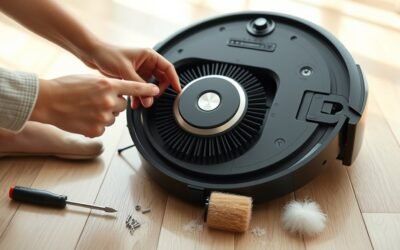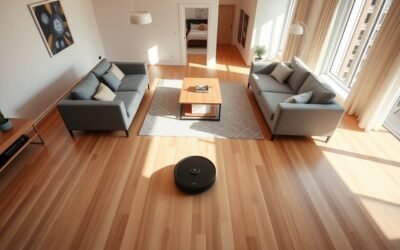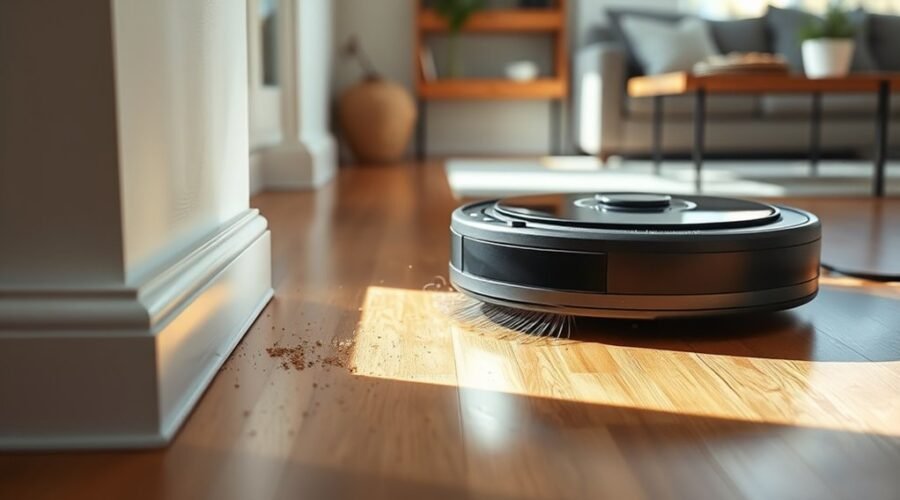
Edge cleaning on a robot vacuum is a focused mode designed to handle dirt along walls, baseboards, and furniture edges. It usually slows the machine, increases suction, and puts side brushes to work pushing debris toward the main intake. That helps it reach spots a normal pass can miss. But corners and tight angles still create challenges, and the way the vacuum handles them can make a big difference.
What Is Edge Cleaning on a Robot Vacuum?
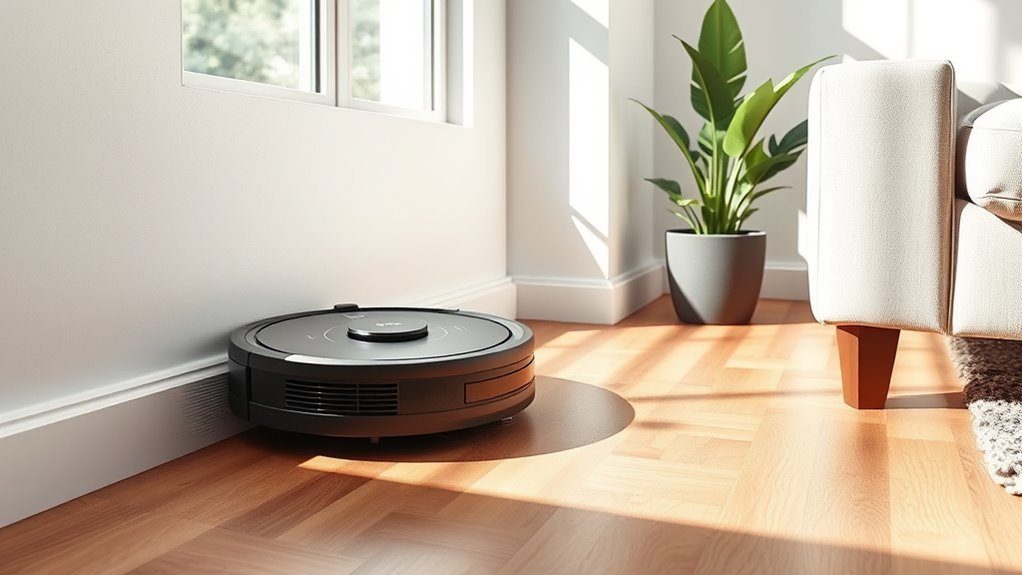
Edge cleaning on a robot vacuum is a specialized cleaning mode designed to improve debris removal along walls, baseboards, and furniture edges. It helps a robot vacuum target corners and edges where dirt buildup often lingers after routine passes.
Most models use side brushes that sweep debris inward, guiding it toward the suction path for better cleaning performance. In advanced navigation systems, the machine may slow down, hug boundaries more closely, and make repeated passes to collect fine dust near trim and cabinetry.
Side brushes guide debris inward, while smarter navigation slows and tightens passes for cleaner edges and corners.
Some units also increase suction power during this mode, which improves pickup along tight spaces without requiring extra effort from the user. In a smart home setting, edge cleaning supports more complete daily maintenance by reducing the need for manual sweeping.
High-end designs may use sensors or AI to refine movement, giving a more deliberate, efficient approach to perimeter cleaning and helping maintain cleaner living spaces with less labor.
Why Robot Vacuums Miss Edges and Corners
Robot vacuums often miss edges and corners because their round bodies cannot fit neatly into 90-degree angles where dust collects.
Their side brushes can help reach nearby debris, but brush length, flexibility, and speed limit how well they clear tight spaces.
Corners also become harder to clean when furniture, clutter, or irregular room layouts block the vacuum’s path.
Round Body Limitations
The round shape of many robot vacuums makes it difficult for them to clean tightly into 90-degree corners, leaving small triangular gaps where dust and debris tend to collect. This round body design favors smooth movement around furniture, yet it weakens cleaning along edges.
Because the central suction inlet sits away from the wall line, airflow often cannot fully reach trapped debris, creating missed spots in corner cleaning. A single side brush may help, but it cannot always steer dust into the intake path.
Compared with D-shaped models, these limitations are more visible along walls. Advanced technologies, including AI mapping and side brush optimization, are improving results, but the basic geometry still shapes performance.
For households seeking cleaner, freer spaces, the design compromise remains important.
Brush Reach Constraints
Although side brushes are meant to sweep dust inward, their reach is still limited by length, flexibility, and the angle at which they contact a wall.
In many robot vacuum features, the central suction path sits too far from the boundary to capture fine dust left in corners and along trim. Side brushes can help, but they often bend away before fully dislodging debris, especially where walls meet.
Edge-cleaning mode and extra side brushes in advanced models can improve cleaning along edges, yet results still depend on design, brush stiffness, and contact pressure.
Navigation systems and sensor upkeep also matter, because accurate positioning supports tighter passes without wasted movement.
Even then, the machine cannot fully replace a careful manual sweep in tight corners.
Corner Navigation Challenges
Because robot vacuums are typically round, they leave triangular gaps in corners where the suction path cannot fully reach tight angles. This shape limits edge cleaning because the robot’s central suction inlet cannot pull debris from sharp corners with equal force.
Side brushes help sweep material inward, but they may still fall short in 90-degree corners. Navigation systems, including LiDAR mapping and AI, improve detection of walls and corners, yet physical design constraints remain.
Obstacles, clutter, and irregular room layouts further disrupt access, forcing the robot to miss edge debris. For users seeking freedom from manual sweeping, these limits matter: a robot can reduce effort, but it cannot always replace targeted corner cleaning or guarantee complete coverage along every boundary.
How Side Brushes Push Dirt Into the Path
Side brushes spin outward to sweep dust and crumbs from edges and corners toward the vacuum’s suction path.
Their length, flexibility, and speed help them keep contact with debris along baseboards and guide it into the cleaner’s intake.
In corner areas, this routing action improves pickup by pulling trapped dirt into reach before the vacuum passes.
Side Brush Sweep
Spinning outward along the vacuum’s perimeter, side brushes sweep dirt and debris from edges and corners into the path of the central suction inlet. This Edge Clean process helps the vacuum reach along baseboards where suction alone may miss loose debris.
Side Brushes vary in length, flexibility, and rotation speed, so performance differs by model. Most units use one brush, while some cleaning modes in advanced designs add a second brush for wider coverage.
When the robot moves in edge-cleaning modes, it often slows and makes repeated passes, giving debris more time to be gathered. The result is a practical, efficient sweep that improves corner pickup and supports cleaner boundaries without requiring extra effort from the user.
Corner Debris Routing
As side brushes sweep along edges and into corners, their angled rotation guides loose debris inward so it falls into the central suction path. This corner debris routing supports edge cleaning by helping the robot clean along baseboards without leaving debris behind.
Longer, flexible bristles can reach deeper into tight spaces, then bend to match tile, wood, or carpet junctions. Faster brush speeds often improve pickup, especially where dust gathers near walls.
Most models use one brush, while dual-brush systems can widen coverage and strengthen corner cleaning performance. With advanced mapping and other navigation systems, some vacuums adjust brush engagement around furniture and corners, keeping debris into the suction stream.
The result is a more complete, controlled path toward cleaner edges and less manual follow-up.
How Robot Vacuums Clean Baseboards
Robot vacuums clean baseboards by using side brushes that rotate outward, sweeping dust and debris from the wall edge into the suction path. This edge cleaning approach helps robot vacuums target baseboards where dirt buildup is common, without requiring manual effort.
Smart navigation systems, including LiDAR, guide movement along walls so the machine can follow edges with better cleaning coverage and fewer missed spots. When a model slows near boundaries, suction power may increase to lift finer particles from tight gaps.
D-shaped robot vacuums often track baseboards more closely than round units because their flatter front reaches corners and edges with less wasted space. Performance depends on the condition of side brushes and sensors, since dirt buildup can reduce accuracy and edge pickup.
With proper maintenance and smart navigation, baseboards can be cleaned consistently, making edge cleaning a practical path toward a cleaner, more autonomous home environment for those seeking freedom.
iRobot 900 Series Edge Clean Mode
iRobot’s 900 Series includes Edge Clean Mode, a feature designed to improve cleaning along walls and furniture edges where dust often collects. In the iRobot Roomba 900 Series, Edge Clean is set to on by default, supporting thorough cleaning around baseboards and tight furniture edges.
Through the iRobot® HOME App, users can change this in Cleaning Preferences, shaping the vacuum to fit their cleaning preferences without extra effort.
Through the iRobot® HOME App, users can adjust Cleaning Preferences to match their cleaning needs effortlessly.
- Increased suction targets edge debris
- Multiple passes help lift stubborn dirt
- Default on setting reduces missed spots
- Off mode can speed cycles, but may leave gaps
This mode helps the vacuum work with more precision, especially where open floors meet boundaries. Disabling it may shorten runtime, yet it can also weaken coverage along edges.
For households seeking cleaner, more self-directed routines, Edge Clean offers a practical way to keep dust from settling in hard-to-ignore places.
How Smart Navigation Improves Edge Cleaning
Smart navigation gives robot vacuums a major advantage along edges by helping them detect walls, baseboards, and furniture with centimeter-level precision. Using smart navigation, LiDAR mapping, and AI vision, the machine traces perimeters without drifting, which supports thorough coverage and reduces missed dirt. Advanced algorithms create adaptive cleaning paths that tighten passes near walls, while edge-cleaning modes fine-tune speed, brush action, and suction power for stronger pickup.
| Feature | Edge-cleaning effect |
|---|---|
| LiDAR mapping | Precise wall tracking |
| Advanced algorithms | Adaptive cleaning paths |
| Edge-cleaning modes | Higher perimeter focus |
| Obstacle avoidance | Fewer interruptions |
| Real-time adjustments | Better consistency |
Smart sensors also make real-time adjustments when objects appear, helping the vacuum shift course smoothly instead of stopping or scattering debris. This kind of obstacle avoidance keeps cleaning efficient and controlled, giving users a more autonomous path to cleaner edges and less manual effort.
Why Corners Are Still Hard to Reach?
Corners remain one of the toughest areas for robot vacuums because most models use a round body that cannot fit neatly into sharp 90-degree angles where dust tends to collect. The central suction inlet also misses fine debris trapped in tight spaces, so corners are detected only after repeated passes.
Corners are a robot vacuum’s hardest challenge, where round bodies and central suction often leave dust behind.
- Side brushes to sweep debris inward, but their limited length can still leave residue behind.
- Around furniture, maneuverability drops, especially when obstacles block direct access.
- Baseboards without a straight approach often stay dusty, even in advanced models.
- Cleaning tips for better results include clearing clutter and giving the robot open paths.
Some advanced models use extendable brushes and dynamic edge cleaning, yet they still cannot guarantee to clean tight corners completely.
For households seeking freedom from constant manual sweeping, understanding these limits helps set realistic expectations and choose smarter routines.
Best Cleaning Modes for Better Edge Coverage
Edge cleaning improves when a robot vacuum switches into modes designed specifically for walls, baseboards, and corners. These edge cleaning modes usually slow the machine, raise suction power, and let side brushes sweep debris into the intake path. The result is stronger coverage along boundaries where dust collects most stubbornly.
In premium models, dynamic algorithms adjust brush speed and suction in real time, creating adaptive cleaning strategies as the vacuum approaches an edge. Navigation technologies such as LiDAR help the machine map rooms precisely and maintain close, efficient passes without wasting movement.
Some units also offer customizable cleaning options through mobile apps, letting users choose dedicated edge runs or extra perimeter passes. When these features work together, the vacuum can reach roughly 80 to 90 percent of edge areas, reducing manual cleanup and giving households a cleaner, more independent routine overall.
How to Improve Edge Cleaning at Home
Improving edge cleaning at home often starts with the right robot vacuum features, especially advanced side brushes with extendable bristles that can sweep debris from walls and tight corners more effectively. A robot vacuum with strong edge cleaning logic can move freely, avoid obstacles, and support better cleaning with less effort.
- Use app edge-cleaning modes for slower, repeated passes.
- Clear corners and set no-go zones around clutter.
- Schedule routine cleaning to prevent dust buildup.
- Clean sensors and side brushes for peak performance.
When the layout stays open, the robot vacuum reaches more corners and collects debris with fewer interruptions.
Regular maintenance keeps side brushes responsive, while smart scheduling preserves cleanliness without constant oversight. By combining better settings, lighter rooms, and simple upkeep, edge cleaning becomes more reliable and less demanding.
Frequently Asked Questions
What Are the Downsides of Using a Robotic Vacuum Cleaner?
The downsides include uneven robot performance, weaker suction power on some floor types, higher noise levels, upkeep with maintenance tips, limited battery life, and a higher price comparison; smart home convenience may still leave gaps in user experience.
Is It Okay to Run a Robot Vacuum Every Day?
Yes, running one daily is usually okay; daily cleaning benefits often outweigh concerns if robot vacuum maintenance is regular, cleaning schedules fit floor types compatibility, battery life considerations, noise levels comparison, smart home integration, pet hair challenges, advanced features overview.
Which Robot Vacuum Cleaner Is Best for Cleaning Corners?
The best corner cleaner is the DEEBOT X9 PRO OMNI: precise corner navigation meets strong suction power. Its brush design, mapping technology, obstacle detection, and size compatibility shine; battery life, price comparison, and user reviews matter too.
Which Robot Vacuum Has the Best Mopping Function?
The DEEBOT X9 PRO OMNI appears strongest for mopping efficiency, with smart features, navigation technology, and surface compatibility. Its water tank, cleaning pads, and battery life matter; comparison with Roborock and Dreame should include maintenance tips and price comparison.
Conclusion
Edge cleaning helps a robot vacuum focus on the places debris collects most: along walls, baseboards, and corners. By slowing down, boosting suction, and using side brushes to pull dirt inward, it improves coverage where standard cleaning often misses. One useful statistic: many homeowners notice that a large share of everyday dust gathers at room edges. Better navigation and the right mode can make edge cleaning noticeably more effective.