A good backpack leaf blower should match your property size, debris load, noise limits, and tolerance for battery charging or gas-engine maintenance. The three models below all fit the backpack-blower category, but they serve different buyers: Greenworks for cordless convenience, Husqvarna for stronger sustained gas performance, and Poulan Pro for a simpler older-style gas option.
This 2026 guide compares verified manufacturer-listed airflow, airspeed, power source, controls, comfort features, and practical ownership tradeoffs so you can choose the right blower without relying on changing star ratings or review counts.
Quick Verdict
Choose Greenworks 80V if low maintenance, cordless operation, and battery-platform compatibility matter most. Choose Husqvarna 350BT if you need longer continuous runtime and stronger gas-powered clearing for larger areas. Consider Poulan Pro PR48BT if you want a straightforward 48cc gas backpack blower and can confirm current seller, warranty, and return terms before purchase.
Affiliate disclosure: This article contains Amazon affiliate links. If you buy through a qualifying link, we may earn a commission at no extra cost to you.
Top Picks
|
Category |
Product |
Best For |
|---|---|---|
|
🏆 Best Battery-Powered |
Low-maintenance cordless cleanup |
|
|
🎯 Best for Large Properties |
Large properties and sustained runtime |
|
|
💨 Straightforward Gas Alternative |
Buyers who confirm current seller support |
Selection Criteria
We prioritized airflow, airspeed, blowing force where the manufacturer publishes it, power source, runtime pattern, controls, harness comfort, noise considerations, maintenance needs, and current support information. These factors matter more than a single headline number because wet leaves, open lawns, tight beds, and long cleanup sessions place different demands on a blower.
CFM figures also need context. Manufacturers may publish airflow measured at the nozzle, in the housing, or as a maximum system value, so numbers are not always directly comparable. For this guide, the comparison table labels the Husqvarna 350BT’s nozzle and housing figures separately instead of presenting 692 CFM as though it were the nozzle output.
Greenworks 80V

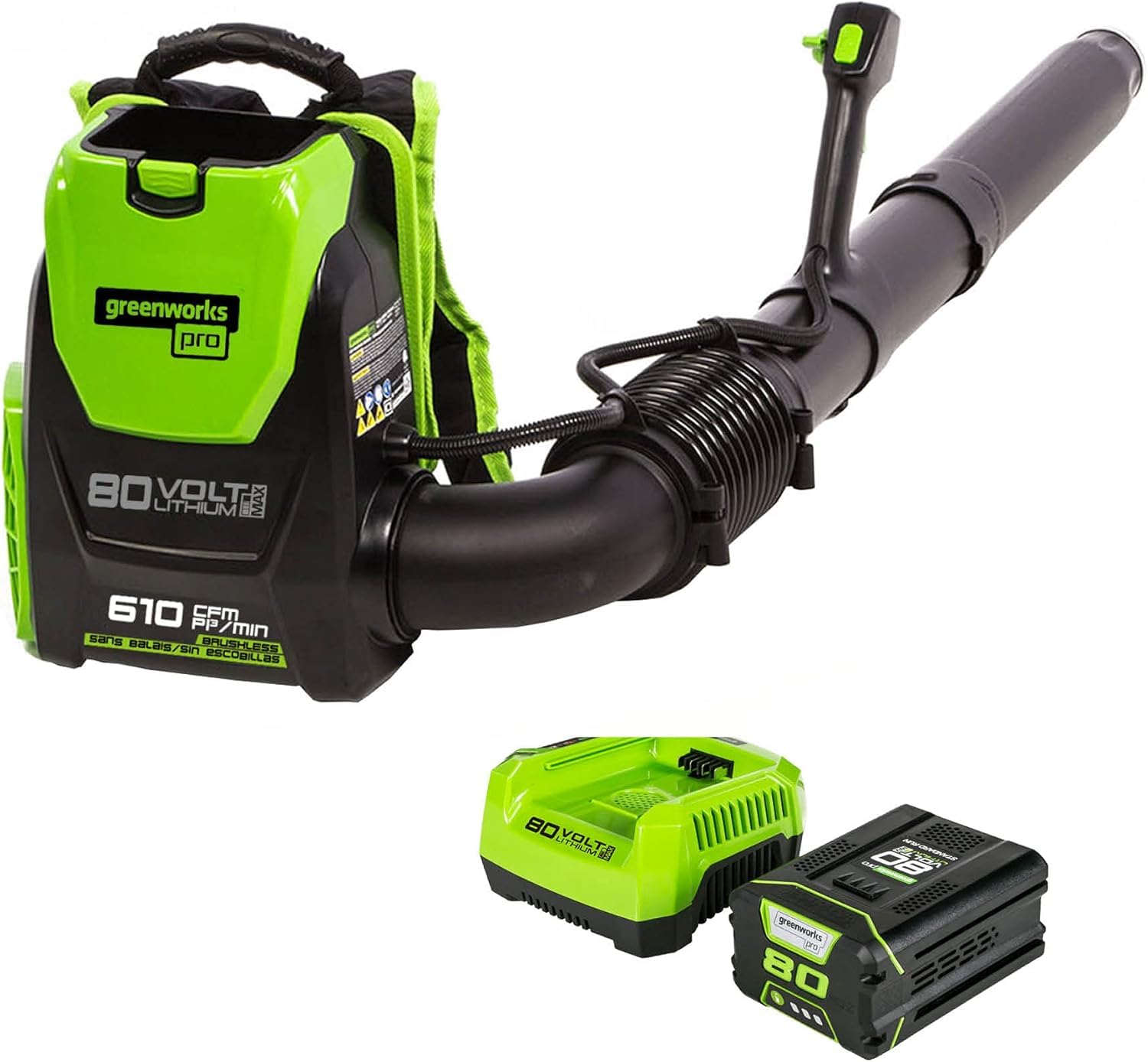
If you want a cordless backpack blower, the Greenworks 80V is the easiest of these three to own because there is no gasoline, fuel mixing, spark-plug service, or cold-start routine. Greenworks currently lists this platform at up to 610 CFM and 180 MPH with a brushless motor, variable-speed trigger, cruise control, and turbo mode.
It is best suited to residential cleanup where convenience and lower routine maintenance matter more than uninterrupted all-day runtime. The exact battery capacity and charger included with the linked Amazon ASIN can vary by listing or package revision, so confirm the current box contents before ordering.
Review Snapshot
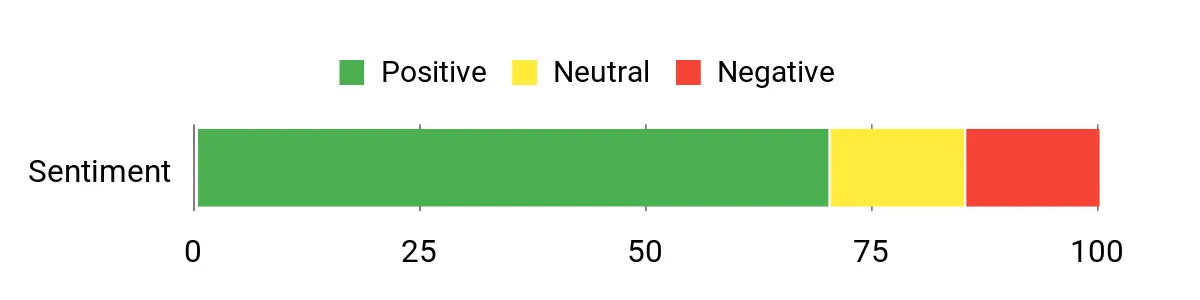
The existing sentiment graphic below is a historical review snapshot, not a current rating or review count. Use the latest Amazon reviews to check recent reports about battery runtime, harness comfort, charging, and long-term battery performance before buying.
Buyer takeaway: The main tradeoff is simple: cordless convenience and low upkeep versus shorter continuous runtime than a refuelable gas blower.
|
Pros |
Cons |
|---|---|
|
✅ Cordless 80V operation with no gasoline or fuel mixing |
❌ Runtime can be short on high boost settings |
|
✅ Up to 610 CFM and 180 MPH manufacturer-listed output |
❌ Less raw power than heavy-duty gas backpack blowers |
|
✅ Ergonomic backpack reduces shoulder strain |
❌ Runtime depends heavily on speed setting and battery capacity |
|
✅ Adjustable speed and cruise control for control |
Cost Benefits
You save on fuel, spark plugs, and routine engine service compared with gas blowers, and you avoid exhaust-related upkeep. Expect eventual battery replacement costs, but if you already use the same battery platform for other tools you can amortize that expense across devices.
Value Considerations
The ownership advantage is lower routine engine maintenance and easy starts. Value improves if you already own compatible Greenworks 80V batteries, but battery replacement cost and the number of packs needed for longer jobs should be part of your budget.
Situational Benefits
|
Situation |
How It Helps |
|---|---|
|
Small to Medium Yards |
Delivers enough airflow to clear lawns, sidewalks, and patios without the fuss of gas, letting you finish routine chores smoothly. |
|
Noise-Sensitive Neighborhoods |
Quieter operation compared with gas units keeps early-morning or late-evening cleanups less disruptive to neighbors. |
|
Quick Cleanups Between Mows |
Variable speed and cruise control let you dial in power for light debris so you can tidy up fast without wasting battery. |
Time Savings
Faster startup reduces prep time, and the backpack design can be more comfortable than a handheld blower for broader areas. If the current package includes a rapid charger, charging downtime may also be reduced; confirm the exact kit contents before purchase.
Ease Of Use
|
Feature |
Ease Level |
|---|---|
|
Assembly |
Easy |
|
Controls and Trigger |
Easy |
|
Weight Distribution |
Moderate |
|
Battery Swap |
Moderate |
Versatility
Works well for general residential tasks and pairs with the Greenworks battery ecosystem, making it useful if you already own compatible tools or want one platform for multiple jobs.
Durability
Greenworks currently lists a 4-year tool warranty for its 80V backpack blower platform. Battery longevity depends on pack age, workload, temperature, storage, and charging habits, so follow the battery manual rather than relying on a fixed lifespan estimate.
Problem Solving
Solves common homeowner pain points like noisy gas engines, fuel maintenance, and cold starts. It’s not the best choice if you need prolonged, uninterrupted power for commercial-scale properties.
Key Benefits
- Cordless convenience with no gas, oil, or tune-ups
- Strong airflow for most residential clearing tasks
- Comfortable backpack design that reduces fatigue
- Variable speed and cruise control for precise work
Manufacturer-listed core specs: 80V brushless power, up to 610 CFM, up to 180 MPH, variable speed, cruise control, and turbo mode.
Check Product Details on Amazon
Husqvarna 350BT
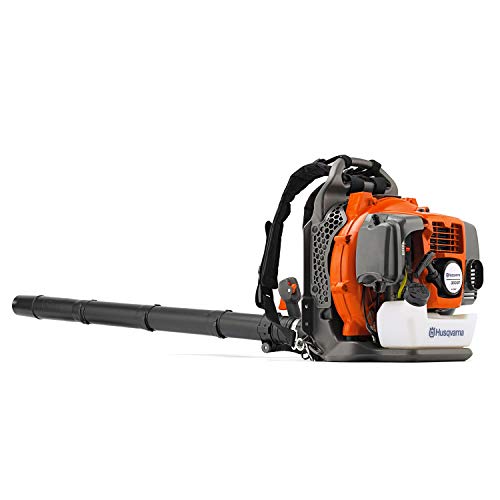
If you need longer continuous runtime for a larger property, the Husqvarna 350BT is the strongest fit in this group. Husqvarna currently lists a 50.2cc X-TORQ engine, 21 N maximum blow force, 494.41 CFM maximum airflow at the round nozzle, 180.01 MPH maximum nozzle airspeed, and a 22.5 lb listed weight.
Its LowVib system, padded harness with hip belt, air purge, adjustable handle, and variable-speed throttle with cruise control are aimed at longer cleanup sessions. It still brings the normal tradeoffs of a two-stroke gas tool: fuel handling, engine maintenance, exhaust, and more operating noise than a battery model.
Review Snapshot
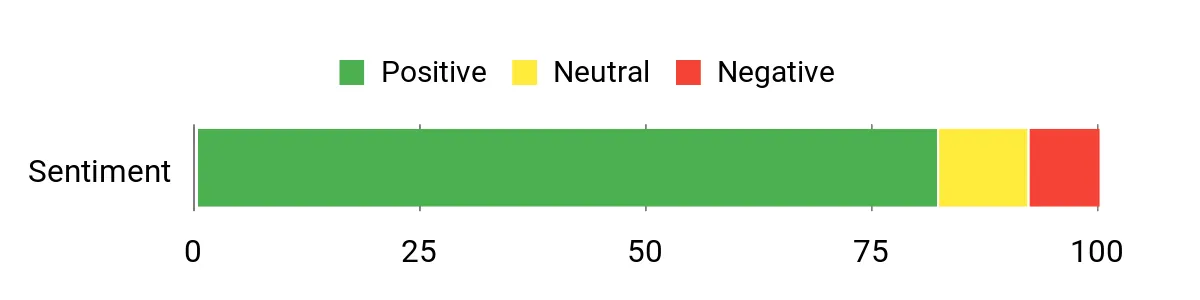
The existing sentiment graphic below is a historical snapshot rather than a current rating. When checking recent buyer feedback, focus on starting behavior, harness fit, tube assembly, vibration, fuel use, and parts/service access.
Buyer takeaway: This is the better choice here when sustained runtime and gas-powered blow force matter more than low maintenance or quiet operation.
|
Pros |
Cons |
|---|---|
|
✅ 21 N max blow force with 494 CFM at the nozzle |
❌ Heavier than battery alternatives for some users |
|
✅ Comfort-focused harness and anti-vibration tech |
❌ Not ideal for noise-sensitive neighborhoods |
|
✅ X-TORQ engine is designed for power and efficiency |
❌ Plastic tubing may require effort to assemble |
|
✅ Reliable starting aids like air purge |
Cost Benefits
Expect regular fuel and maintenance costs typical of gas equipment. Husqvarna describes the X-TORQ engine as designed for power and efficiency, but actual fuel use and ownership cost depend on workload, throttle use, maintenance, and local fuel prices.
Value Considerations
The 350BT makes the most sense when you regularly need long sessions without battery swaps. Factor fuel, two-stroke oil, filters, spark-plug service, and other routine engine maintenance into the ownership cost rather than judging value only by purchase price.
Situational Benefits
|
Situation |
How It Helps |
|---|---|
|
Large Lawns and Estates |
The 21 N manufacturer-listed blow force and 494 CFM nozzle airflow are suited to broad leaf and grass-clipping cleanup on larger areas. |
|
Professional Landscaping |
The padded harness, hip belt, LowVib system, and cruise-control throttle are designed to improve comfort during longer cleanup sessions. |
|
Wet or Heavy Debris |
Strong blowing force moves damp leaves and compacted clippings that lighter units struggle with. |
Time Savings
Gas refueling avoids battery charging pauses, while the cruise-control throttle lets you hold a steady setting during longer cleanup sessions.
Ease Of Use
|
Feature |
Ease Level |
|---|---|
|
Assembly |
Moderate |
|
Starting |
Easy |
|
Harness Adjustment |
Easy |
|
Throttle Controls |
Easy |
Versatility
Primarily tuned for mid-to-large properties and professional work, it handles leaf cleanup, grass clippings, and heavier debris well but is less convenient for quick, light tasks where a handheld or battery model would be faster.
Durability
Husqvarna currently maintains product support, manuals, parts information, and warranty resources for the 350BT. Following the maintenance schedule in the operator manual is the safest way to protect performance and service life.
Problem Solving
Solves the challenge of clearing large or stubborn debris quickly while minimizing operator fatigue through harness design and anti-vibration tech, though it doesn’t address neighborhood noise concerns.
Key Benefits
- High airflow and blowing force for efficient clearing
- Ergonomic harness with weight distribution for comfort
- LowVib reduces fatigue during extended use
- Air purge and tube-mounted controls for easier starting and operation
Manufacturer-listed core specs: 50.2cc gas engine, 21 N max blow force, 494.41 CFM at the nozzle, 180.01 MPH, integrated harness, LowVib, air purge, and cruise-control throttle.
Check Product Details on Amazon
Poulan Pro PR48BT
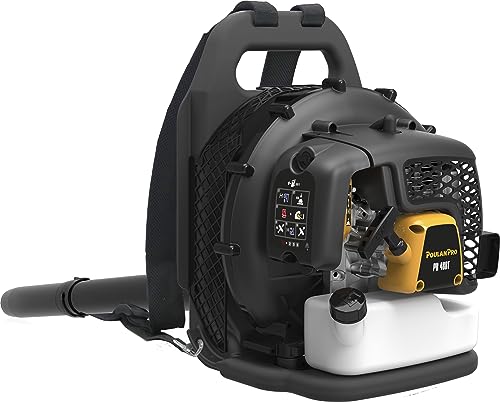
The Poulan Pro PR48BT is a straightforward 48cc two-cycle gas backpack blower with published output of up to 475 CFM and 200 MPH. It fits the article topic and remains useful for comparing a simpler gas design with the battery Greenworks and the more feature-rich Husqvarna.
However, this is an older model. Poulan Pro still provides PR48BT support documentation, but current manufacturer retail status is not clear from the support site. Before ordering from the linked Amazon page, confirm that the seller is reputable and check the current warranty, return policy, parts support, and whether the item is new rather than old stock.
Review Snapshot
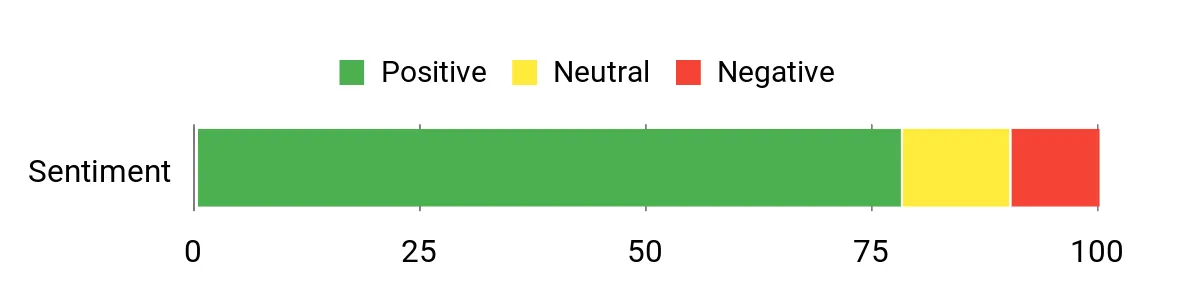
The existing sentiment graphic below is a historical snapshot and should not be treated as a current rating or review count. Read recent Amazon feedback for starting, harness comfort, parts availability, assembly, and seller support.
Buyer takeaway: The PR48BT offers simple gas-powered performance, but current seller and support terms deserve more scrutiny than with the actively marketed Husqvarna 350BT.
|
Pros |
Cons |
|---|---|
|
✅ Published output up to 475 CFM and 200 MPH |
❌ Older model; current seller and warranty terms need checking |
|
✅ Backpack harness helps distribute the engine load |
❌ Not as quiet as battery models |
|
✅ Comfortable straps for extended use |
❌ Routine gas-engine maintenance required |
|
✅ Variable-speed throttle and cruise control |
Cost Benefits
Expect ongoing fuel and maintenance costs typical of gas equipment. The 48cc engine provides continuous operation as long as you can refuel, but ownership value depends on maintenance, condition, parts support, and current seller terms.
Value Considerations
Value depends heavily on the current seller, condition, warranty coverage, and parts support because the PR48BT is an older model. Compare those factors with the price of an actively supported alternative before treating it as a budget win.
Situational Benefits
|
Situation |
How It Helps |
|---|---|
|
Rural Properties |
High airflow clears large driveways and acreage faster so you spend less time on routine maintenance. |
|
Replacing Lost Equipment |
Provides a familiar 48cc gas-backpack format for buyers replacing older equipment, but compare current support and seller terms before choosing it over a newer model. |
|
Wet or Compacted Debris |
Stronger blowing force moves damp leaves and clumps that lighter blowers struggle with, reducing repeat passes. |
Time Savings
A refuelable gas design can suit longer sessions without charging pauses, while the variable-speed throttle and cruise control help maintain a chosen output.
Ease Of Use
|
Feature |
Ease Level |
|---|---|
|
Assembly |
Moderate |
|
Starting |
Easy |
|
Harness Adjustment |
Easy |
|
Maintenance |
Moderate |
Versatility
Well suited to buyers who prefer a traditional gas backpack design for larger-yard cleanup; less convenient for quick, lower-noise touchups where battery models are usually easier to live with.
Durability
Longevity depends on fuel quality, storage, maintenance, and parts availability. Follow the PR48BT manual for fuel, filter, spark-plug, cooling-system, and storage procedures.
Problem Solving
Addresses the need for strong, sustained power to move heavy or wet debris, making tough cleanups faster while remaining manageable to wear and operate.
Key Benefits
- Solid mid-range gas power for heavy debris
- Backpack harness distributes the engine load across the shoulders
- Handles wet and compacted leaves effectively
- Simple controls and straightforward maintenance
Published core specs: 48cc two-cycle gas engine, up to 475 CFM, up to 200 MPH, variable-speed throttle, cruise control, and backpack harness.
Check Product Details on Amazon
Before You Buy
- Match runtime to the job: battery is convenient for shorter sessions; gas is easier to refuel for long continuous work.
- Compare airflow carefully: check whether CFM is measured at the nozzle, in the housing, or as a maximum system figure.
- Check comfort: harness padding, hip support, vibration, and control placement matter during longer sessions.
- Check local noise rules: some neighborhoods and municipalities restrict blower hours or gas-powered equipment.
- Budget for ownership: batteries eventually age; gas engines need fuel, oil, filters, spark plugs, and periodic service.
- Confirm the exact listing: verify included battery/charger, seller, warranty, return terms, and model number before purchase.
FAQ
Battery or Gas: Which Backpack Blower Is Better?
Choose battery when you value easy starting, lower routine maintenance, no exhaust at the tool, and compatibility with batteries you already own. Choose gas when long continuous runtime and quick refueling are more important than noise, fuel handling, and engine maintenance.
For a battery blower, estimate how long you actually run at high output and price any spare battery you may need. For gas, include fuel, two-cycle oil, filters, spark plugs, storage, and seasonal maintenance in the ownership decision.
What Do CFM, MPH, and Blow Force Mean?
CFM describes air volume, MPH describes air speed, and blow force (often listed in newtons) combines factors that better reflect how strongly a blower can move debris. Do not compare CFM figures blindly because manufacturers may measure airflow at different points such as the nozzle or housing.
For wet or matted debris, strong blow force and useful nozzle airflow matter more than chasing the highest single number. For lighter sweeping, variable speed and good tube control can be more valuable.
How Do I Use a Backpack Leaf Blower Safely?
Wear eye protection and hearing protection, keep people and pets away from the discharge path, and fit the harness according to the manual. Never run a gas blower in an enclosed area, never refuel a hot engine, and keep the muffler and exhaust away from dry combustible material.
For battery models, inspect the battery and charger for damage and follow the manufacturer’s storage and charging guidance. For gas models, use the specified fuel/oil mixture and service intervals. Check tubing, fasteners, guards, and controls before use, and follow local blower-noise rules and operating-hour restrictions.
Customer Preferences
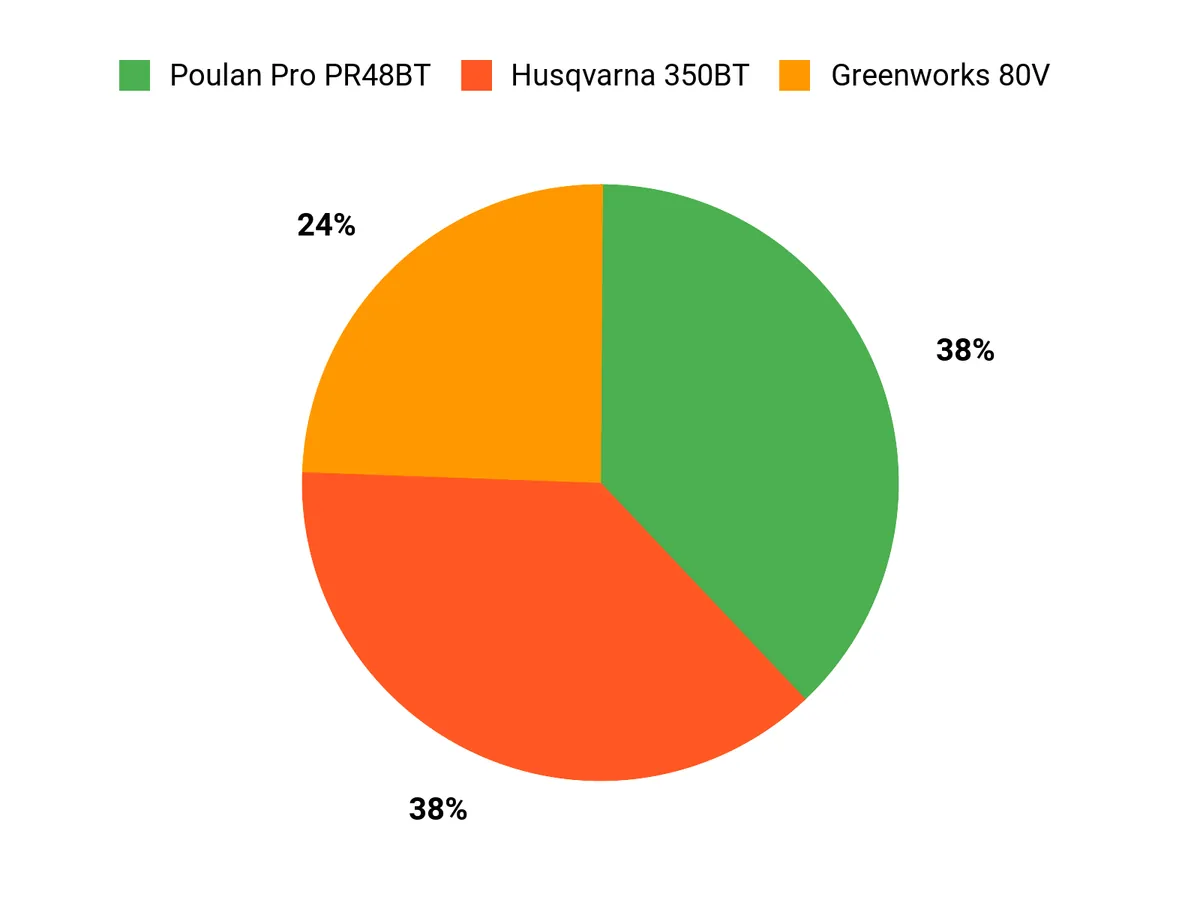
Your decision mainly comes down to runtime pattern and maintenance tolerance. Choose the Greenworks when cordless convenience, lower routine maintenance, and 80V platform compatibility matter most. Choose the Husqvarna when you need longer uninterrupted operation, 21 N of manufacturer-listed blow force, and comfort features for larger properties. Consider the Poulan Pro when you specifically want its simpler 48cc gas design and have confirmed current seller, warranty, and parts-support terms.
Note: The chart below is an existing historical preference graphic. Treat it as a visual summary only, not as current sales, rating, or review-count data.
Wrapping Up
All three products are genuine backpack leaf blowers, but they solve different problems. Greenworks 80V is the easiest fit for buyers who prioritize cordless operation and low routine maintenance. Husqvarna 350BT is the stronger choice for larger properties where sustained gas runtime and published blow force matter. Poulan Pro PR48BT remains a relevant comparison, but because it is an older model, confirm seller quality, warranty, returns, and parts support before buying.
Final Decision Shortcut
Low maintenance: Greenworks 80V. Longer continuous runtime: Husqvarna 350BT. Older simple gas option: Poulan Pro PR48BT, only after checking current seller and support terms.
| Greenworks 80V Cordless Backpack Blower | Husqvarna 350BT Gas Leaf Blower | Poulan Pro PR48BT Backpack Leaf Blower | |
|---|---|---|---|
 |
 |
 |
|
| Power Source | Cordless Electric | Gas Powered | Gas Powered |
| Air Flow Capacity (CFM) | Up to 610 CFM | 494 CFM at nozzle (692 CFM in housing) | Up to 475 CFM |
| Max Speed (MPH) | Up to 180 MPH | 180 MPH at round nozzle | Up to 200 MPH |
| Power Details | 80V brushless motor | 50.2cc 2-stroke gas engine | 48cc 2-cycle gas engine |
| Best Fit | Residential buyers prioritizing low maintenance | Large properties and longer continuous sessions | Buyers comfortable verifying support for an older model |
| Check Product Details on Amazon | Check Product Details on Amazon | Check Product Details on Amazon |
Comparison note: Airflow figures are manufacturer-published but not always measured at the same point. Husqvarna lists 494.41 CFM at the round nozzle and 692.17 CFM in the housing, so the table shows both to avoid an apples-to-oranges comparison.
This roundup is reader-supported. When you click qualifying affiliate links, we may earn a referral commission at no extra cost to you.