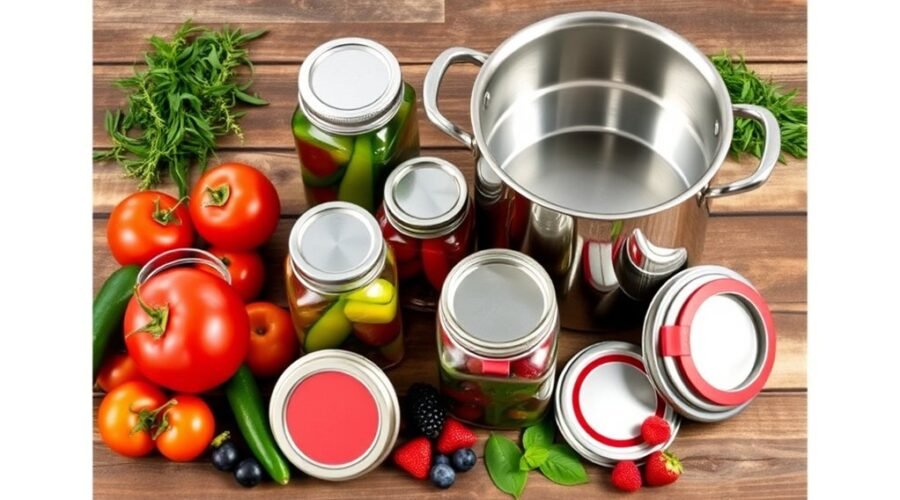
The five best canning supplies for food preservation in 2027 include Ball Mason Jar Lids for secure sealing, Dissolvable Canning Labels for easy identification, a Harvest Stainless Steel 20 Qt Canning Pot for efficient processing, a Presto 09995 7 Function Canning Kit for essential tools, and Cozcty Mason Jars with Airtight Lids for freshness. Spoiled batches, failed seals, and sticky, unreadable labels are the most common reasons home canning goes wrong — the right supplies fix all three. These products enhance efficiency and safety in home canning. Exploring these options further can help guarantee successful food preservation.
Disclosure: This post contains Amazon affiliate links. If you buy through them, we may earn a small commission at no extra cost to you.
Quick Verdict: Best Canning Supplies at a Glance
- Best for Reliable Sealing: Ball Mason Jar Lids, Wide Mouth
- Best for Mess-Free Labeling: Dissolvable Canning Labels
- Best Overall / Most Versatile: Harvest Stainless Steel 20 Qt Canning Pot
- Best for Beginners: Presto 09995 7 Function Canning Kit
- Best for Small-Batch Gifting: Cozcty 12 Pack Mason Jars
Ball Mason Jar Lids, Wide Mouth, 12 CT (Pack of 2)
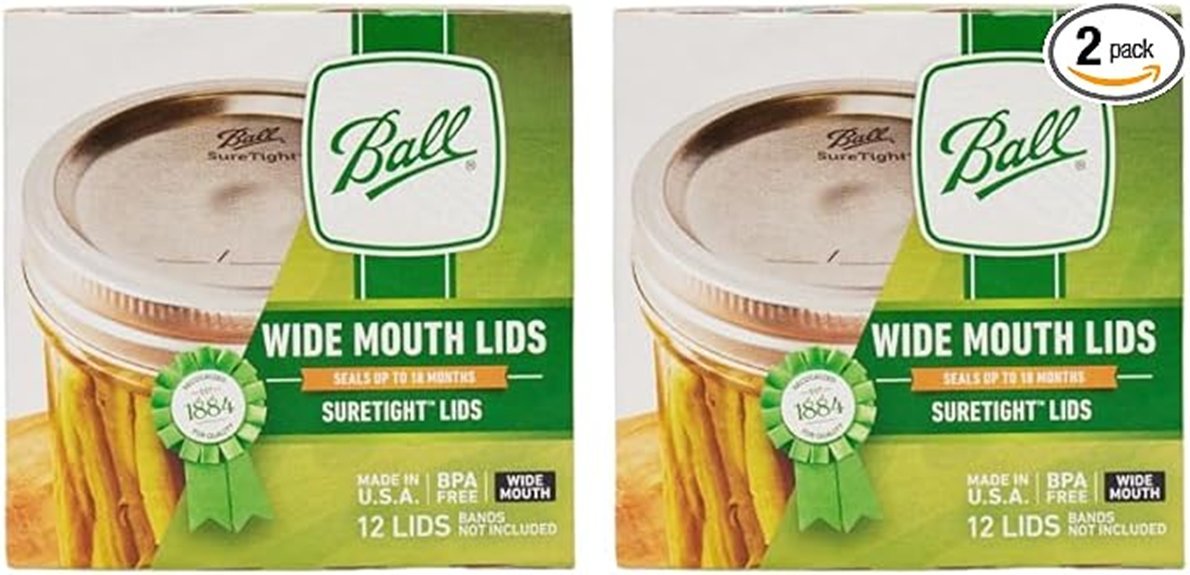
For home canners seeking reliable and efficient food preservation solutions, the Ball Mason Jar Lids, Wide Mouth, 12 CT (Pack of 2) stands out as an excellent choice. Designed specifically for wide mouth glass jars, these lids guarantee a secure seal that locks in freshness for homemade foods. Made for long-term, shelf-stable preservation, they are sized specifically for standard wide mouth glass preserving jars (they are not designed to fit regular mouth jars). Each lid is intended for one-time use, assuring peak sealing performance with every use. The packaging, containing a total of 24 lids, provides ample supply for various canning projects, making it a valuable addition to any canning toolkit.
Best For: Home canners looking for reliable, one-time-use lids to preserve homemade foods in wide mouth glass jars.
Who Should Avoid This: Skip these if your jars are regular mouth — you’ll need the regular mouth version instead, since the two lid sizes are not interchangeable.
Pros:
- Secure seal that locks in freshness for optimal food preservation.
- Sized specifically for wide mouth glass preserving jars for a proper fit.
- Generous packaging of 24 lids, ideal for multiple canning projects.
Cons:
- One-time use only, requiring frequent repurchase.
- Limited to wide mouth jars, not suitable for regular mouth jars.
- Not reusable, which may contribute to waste.
Dissolvable Canning Labels for Mason Jars (200/Roll)
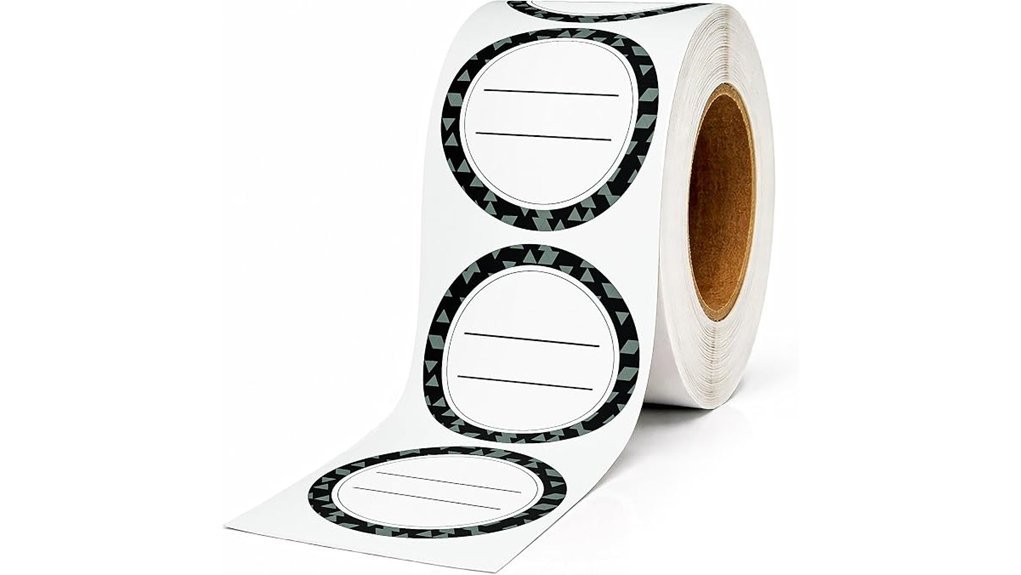
Dissolvable canning labels are perfect for home canners seeking a mess-free labeling solution. Each roll contains 200 slate-colored, 2-inch round labels that easily adhere to standard mason jar lids. Designed for versatility, these labels dissolve instantly in water, leaving no sticky residue behind. They can be written on with pens, pencils, or markers, making them ideal for clearly marking dates and contents. Their compatibility extends to jars, plastic, metal, or wood containers, enhancing organization for canning, meal prep, and pantry storage. Additionally, these labels are 100% biodegradable, aligning with environmentally conscious practices.
Best For: Home canners and organizers looking for a clean, efficient labeling solution for jars and containers.
Who Should Avoid This: Skip these if you need permanent, weather-resistant labels for long-term freezer storage beyond a season — these are built to come off intentionally, not to withstand indefinite exposure to moisture.
Pros:
- Instant dissolution in water, ensuring no sticky residue is left behind.
- Writable surface compatible with various writing instruments for easy labeling.
- 100% biodegradable, making it an eco-friendly choice for labeling needs.
Cons:
- Labels may dissolve prematurely if exposed to moisture before intended removal.
- Limited to a 2-inch round size, which may not fit all labeling needs.
- Requires water for removal, which might not be convenient for all users.
Harvest Stainless Steel 20 Qt Canning Pot with Rack
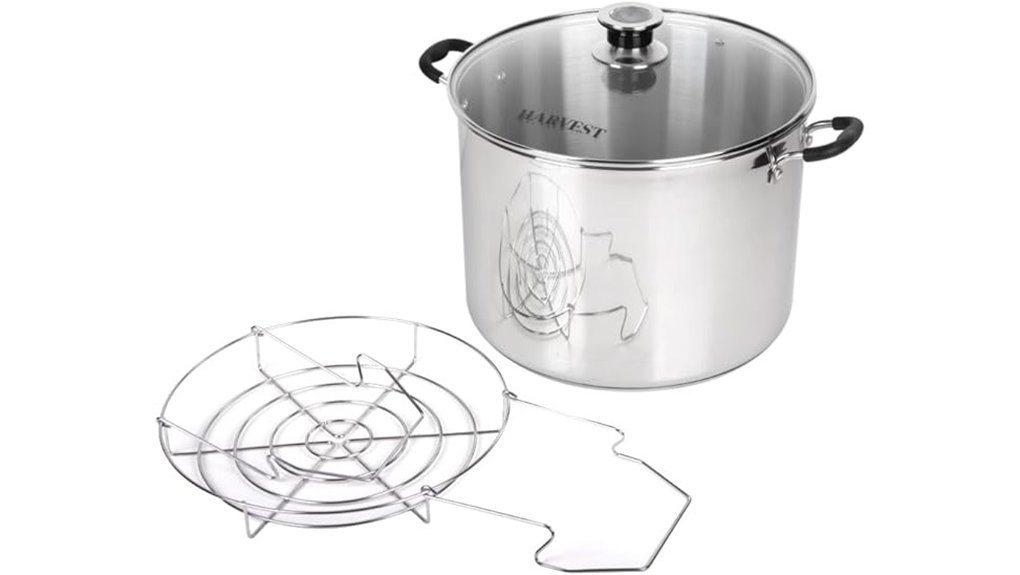
The Harvest Stainless Steel 20 Qt Canning Pot with Rack is ideal for home canners seeking versatility and efficiency. This pot is compatible with all cooktops, including induction, glass, and gas, thanks to its flat clad bottom that guarantees even heating. It supports both steam and water bath canning, featuring a double-sided stainless steel canning rack for added convenience. With a generous capacity of 20 quarts, it accommodates up to 8 pint or 7 quart jars. A built-in temperature indicator on the tempered glass lid simplifies timing. Constructed for durability, it is backed by a thorough 5-year warranty.
Best For: Home canners seeking a versatile and efficient solution for both steam and water bath canning of high-acid foods.
Who Should Avoid This: If you plan to can meats, poultry, or low-acid vegetables, you’ll need a pressure canner instead of this pot.
Pros:
- Compatible with all cooktops, ensuring versatility in any kitchen.
- Generous 20-quart capacity allows for canning multiple jars at once.
- Durable construction backed by a 5-year warranty for peace of mind.
Cons:
- May be too large for those who only can in small batches.
- The weight of the pot when full can make it cumbersome to handle.
- Not suitable for low-acid foods that require pressure canning.
Presto 09995 7 Function Canning Kit
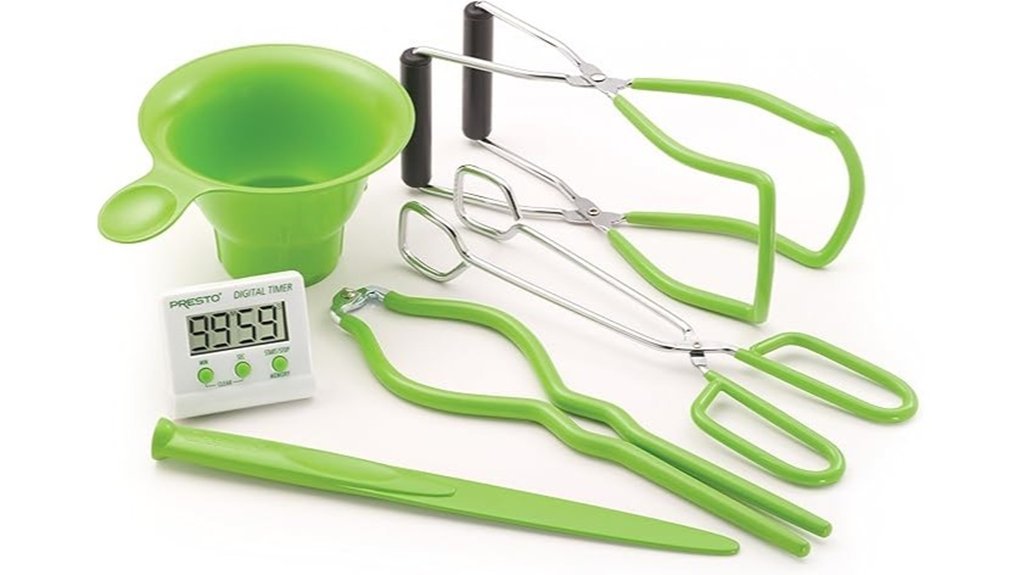
Designed for both novice and experienced canners, the Presto 09995 7 Function Canning Kit offers essential tools for efficient food preservation. This kit includes a funnel for filling both regular and wide mouth jars, a bubble remover to release trapped air, and a digital countdown timer to help track processing times accurately. For handling hot items, it features a magnetic lid lifter, kitchen tongs, and a jar lifter, ensuring safety during the canning process. Additionally, a jar wrench aids in removing sticky screw bands. Overall, the kit streamlines canning, enhancing both safety and efficiency for users dedicated to preserving their food.
Best For: Both novice and experienced canners looking for an efficient and safe canning solution.
Who Should Avoid This: This kit is tools-only — it doesn’t include a canning pot or jars, so pair it with those separately if you’re starting from scratch.
Pros:
- Streamlines the canning process with essential tools.
- Includes a digital timer so you don’t have to guess when processing time is complete.
- Enhances safety when handling hot jars and lids.
Cons:
- May require some practice for complete beginners.
- Tools only — a canning pot and jars are needed separately.
- Some users may find the kit bulky to store.
Cozcty 12 Pack Mason Jars with Airtight Lids
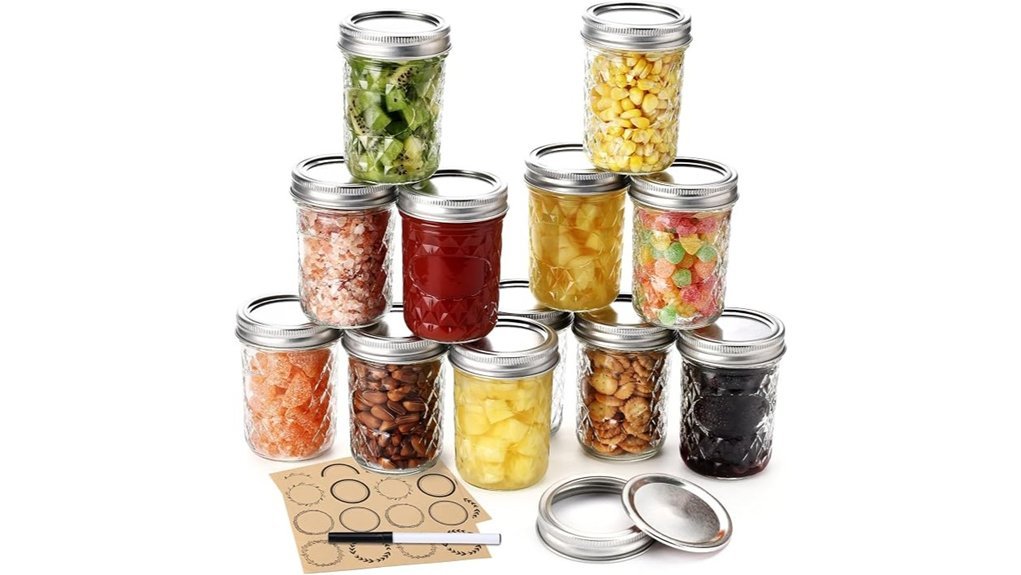
Cozcty 12 Pack Mason Jars with Airtight Lids are perfect for home canners and food enthusiasts. Each jar holds 8 ounces in a regular mouth opening and features a small quilted crystal design, enhancing both functionality and aesthetics. The lids are a 2-piece, split-type design (flat lid plus screw band) that’s genuinely canning-safe, not just decorative. This extensive pack includes 12 jars, 12 airtight lids, and matching bands, ensuring a secure seal for food preservation. It also comes with round labels, chalkboard labels, and writing tools, promoting easy identification — check the current listing for exact accessory counts, as bundle contents can change over time. Versatile in use, these jars are ideal for storing jellies, jams, overnight oats, and meal prep. Their airtight lids guarantee freshness, making them an essential tool for any kitchen.
Best For: Home canners, food enthusiasts, and anyone looking to store food securely and stylishly in small batches.
Who Should Avoid This: If you need larger-capacity jars for big-batch canning, size up to pint or quart jars instead.
Pros:
- Versatile usage for a variety of food items such as jellies, jams, and meal prep.
- Genuine 2-piece canning-safe lids ensure long-lasting freshness and preservation.
- Includes labels and markers for easy identification and organization.
Cons:
- Small capacity of 8 oz may not be suitable for larger batches.
- Glass material can be fragile and prone to breaking.
- Regular mouth design may limit the types of food that can be easily filled or removed.
Quick Comparison Table
| Product | Best For | Key Feature | |
|---|---|---|---|
| Ball Wide Mouth Lids | Reliable sealing | Single-use, secure seal | Check Price |
| Dissolvable Labels | Mess-free labeling | Dissolves in water, no residue | Check Price |
| Harvest 20 Qt Canning Pot | Best overall / versatility | Water bath + steam, 5-yr warranty | Check Price |
| Presto 7 Function Kit | Beginners / essential tools | Includes digital timer | Check Price |
| Cozcty 12 Pack Mason Jars | Small-batch gifting | Genuine canning-safe 2-piece lids | Check Price |
Factors to Consider When Choosing Canning Supplies: Jars, Tools, and Gear for Preserving Food
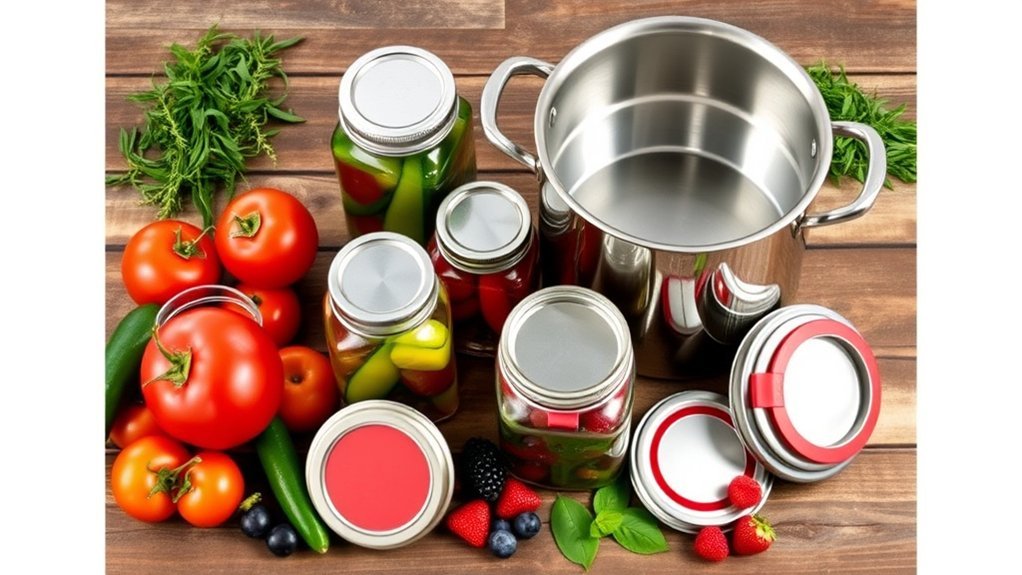
When selecting canning supplies, several key factors must be considered to guarantee effective food preservation. The variety of jar types and sizes, essential tools for the canning process, and appropriate lids and sealing options all play critical roles. Additionally, effective labeling solutions and efficient storage organization contribute to a successful canning experience.
Jar Types And Sizes
Selecting the right jar type and size is essential for effective food preservation. Mason jars are available in various sizes, ranging from 4 oz to 64 oz, with regular mouth and wide mouth options. Wide mouth jars are ideal for whole fruits and larger food items due to their easy filling and cleaning, while regular mouth jars are better for liquids and smaller ingredients. The capacity affects how much food can be preserved; pint-sized jars (16 oz) are popular for fruits and vegetables, whereas quart-sized jars (32 oz) accommodate larger batches. Proper jar size is vital for sealing; overfilling can prevent lids from sealing correctly. Specialty jars enhance presentation and serve functional purposes, making them suitable for gifting homemade preserves.
Essential Canning Tools
Essential canning tools play a pivotal role in the food preservation process, ensuring efficiency and safety. Key items include a funnel for easy jar filling, a bubble remover to eliminate trapped air, and a magnetic lid lifter for safely handling hot lids. A jar lifter is essential for securely removing hot jars from the canner, while kitchen tongs help manage hot foods without burns. Additionally, a jar wrench simplifies the removal of sticky screw bands, facilitating a smooth sealing process. Many canning kits offer a combination of these tools, designed to streamline the canning experience and enhance safety when handling hot items. Investing in a thorough canning kit can greatly improve overall efficiency, making food preservation more manageable.
Lids And Sealing Options
Lids and sealing options are critical components in the canning process, directly influencing the quality and longevity of preserved foods. For ideal freshness, it is advisable to select single-use canning lids, which guarantee a strong seal. Wide mouth lids are particularly beneficial for preserving larger pieces or bulkier items, while regular mouth lids provide a reliable fit with standard glass jars, preventing leaks during storage. Additionally, choosing lids that dissolve easily in water helps facilitate a hassle-free clean-up after canning. Compatibility between lids and the specific jars being used is essential for safe and efficient food preservation. Careful consideration of these factors will enhance the effectiveness of the canning process and the quality of the preserved goods.
Water Bath vs. Pressure Canning: Know the Difference
Not all canning pots do the same job. Water bath and steam canners — like the stainless steel pot featured above — are designed for high-acid foods: fruits, jams, jellies, pickles, and properly acidified tomatoes. Pressure canners are a separate category of equipment required for low-acid foods such as plain vegetables, meats, poultry, and seafood, because only a pressure canner reaches the temperatures needed to destroy the bacteria that cause botulism in these foods. Before buying a canning pot, confirm which category your usual recipes fall into.
Labeling Solutions And Tips
Effective labeling enhances the organization and usability of preserved foods in canning. Utilizing dissolvable canning labels provides easy identification of jar contents and canning dates, without leaving sticky residue after washing. Labels should be writable with pens, pencils, or markers, ensuring clear indication of contents and dates, which is crucial for efficient food storage. Biodegradable labeling solutions are recommended, aligning with environmentally friendly practices and promoting sustainability in canning. Additionally, the size of the labels should fit standard mason jar lids to guarantee compatibility and visibility. Proper labeling is essential for maintaining peak freshness, allowing users to consume their preserved foods within the appropriate timeframe, ultimately reducing waste and enhancing the canning experience.
Storage And Organization Needs
Choosing the right canning supplies is essential for successful food preservation, as various factors influence the effectiveness and efficiency of the process. Selecting appropriate jars, such as regular or wide-mouth mason jars, accommodates different food types and guarantees proper sealing. Utilizing canning labels organizes jars by clearly marking contents and dates, making identification during storage easier. Incorporating airtight lids and bands enhances preservation, keeping items fresh longer. A canning pot with adequate capacity allows for processing multiple jars simultaneously, optimizing time and efficiency. Specific tools like funnels and jar lifters streamline the canning process, improving safety and organization when handling hot items. Together, these considerations create an effective system for storing and organizing canned goods.
Durability And Maintenance Considerations
Guaranteeing the durability and maintenance of canning supplies is essential for effective food preservation. When selecting tools, materials such as stainless steel are preferable due to their corrosion resistance and longevity. Regular inspections of jars and lids for wear or damage are critical, as compromised seals can result in spoilage and food safety hazards. Products that include warranties can indicate a manufacturer’s confidence in their durability. Additionally, choosing easy-to-clean designs helps maintain hygiene, which is fundamental for safe canning practices. It’s also important to take into account temperature resistance; tools used in high-heat environments should withstand repeated exposure without degrading. Prioritizing these factors guarantees the efficacy and safety of the canning process.
Frequently Asked Questions
Can I Reuse Mason Jar Lids for Canning?
Reusing mason jar lids for canning is not recommended. The sealing compound may degrade after the first use, compromising the seal and risking spoilage. New lids guarantee a proper seal for safe food preservation.
How Long Do Canned Foods Last on the Shelf?
For best quality, the USDA and the National Center for Home Food Preservation generally recommend using home-canned foods within about one year. The food usually remains safe to eat beyond that as long as the jar’s seal stays intact and there are no signs of spoilage — such as a bulging lid, off odors, mold, or liquid spurting out when opened — but flavor, texture, and color will decline the longer jars sit on the shelf.
What Safety Precautions Should I Take While Canning?
When canning, individuals should guarantee jars are sterilized, use fresh ingredients, follow proper processing times, check seals, and maintain a clean workspace to prevent contamination. Adhering to these precautions enhances safety and food quality.
Can I Can Non-Acidic Foods Safely at Home?
Yes, but low-acid foods such as vegetables, meats, poultry, and seafood must be processed in a pressure canner, not a water bath or steam canner. A water bath or steam pot — like the one featured above — doesn’t reach the temperatures needed to destroy the bacteria that cause botulism in low-acid foods. If you plan to can these foods, use a dedicated pressure canner and follow a research-tested recipe, such as those in the USDA Complete Guide to Home Canning.
What’s the Best Way to Clean Canning Supplies?
To clean canning supplies effectively, one should wash jars, lids, and utensils in hot, soapy water, then rinse thoroughly. Boiling jars for ten minutes can further sanitize, ensuring safe food preservation practices.
Before You Buy: Quick Checklist
- Know whether your recipes need water bath/steam canning (high-acid foods) or pressure canning (low-acid foods) before choosing a pot.
- Match your lids to your jars’ mouth size — wide mouth and regular mouth lids are not interchangeable.
- Buy enough single-use lids for a full season; they can’t be reused once processed.
- Check whether a tool kit includes a pot and jars, or tools only, so you don’t end up short on your first batch.
- Confirm jar size matches your typical batch size to avoid overfilling or wasted space.
Conclusion
In the ever-evolving world of food preservation, the right canning supplies can make all the difference. As home canning gains popularity, these top picks for 2027 not only enhance the experience but also guarantee safety and quality. From reliable Ball Mason jar lids to innovative canning kits, each item plays an essential role in the preservation journey. As enthusiasts gather for canning sessions, they find not just sustenance but a shared passion for creativity and tradition.