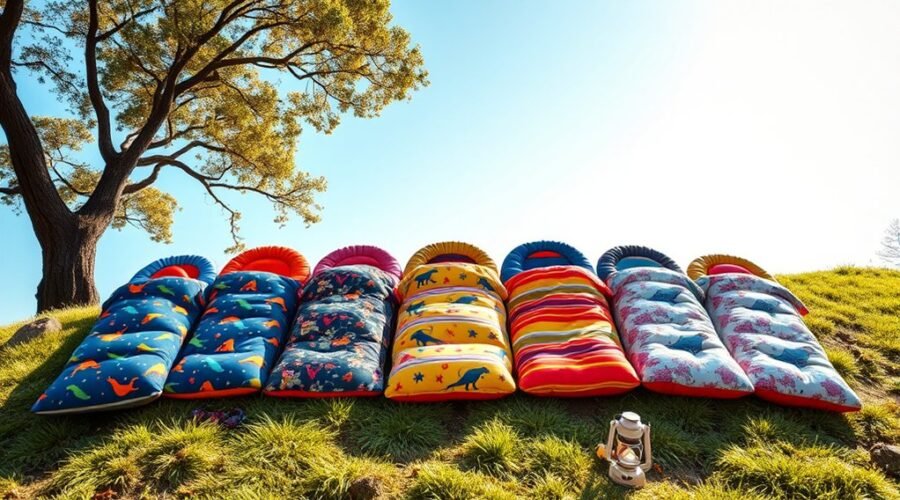
For 2027, top picks for kids’ sleeping bags include the KidzAdventure Mummy, sized for kids up to 4’3″ and youth up to 5’7″, and the AceCamp Glow-in-the-Dark, perfect for camping and slumber parties. The Kelty Mistral rounds out the list, built for reliable three-season warmth and durability. Each option is sized specifically for kids or youth — not just a shrunken adult bag — making them a safer, more comfortable fit for young campers. Discover more details on sizing, warmth ratings, and safety features below.
| Product | Best For | Size / Fit | Temp Rating | Weight | Get It |
|---|---|---|---|---|---|
| KidzAdventure Mummy | Best Overall | Kids up to 4’3″ / Youth up to 5’7″ | 32°F–59°F | 2 lbs | Check Price |
| AceCamp Glow-in-the-Dark | Best for Sleepovers & Fun | Kids up to 4’8″ / Youth up to 5’5″ | 30°F | Not specified by manufacturer | Check Price |
| Kelty Mistral 30F | Best for Serious Campers | Fits up to 5′ tall | 30°F | 2 lbs 9 oz | Check Price |
KidzAdventure Mummy Style Kids Sleeping Bag with Pillow
🏅 Best Overall Pick
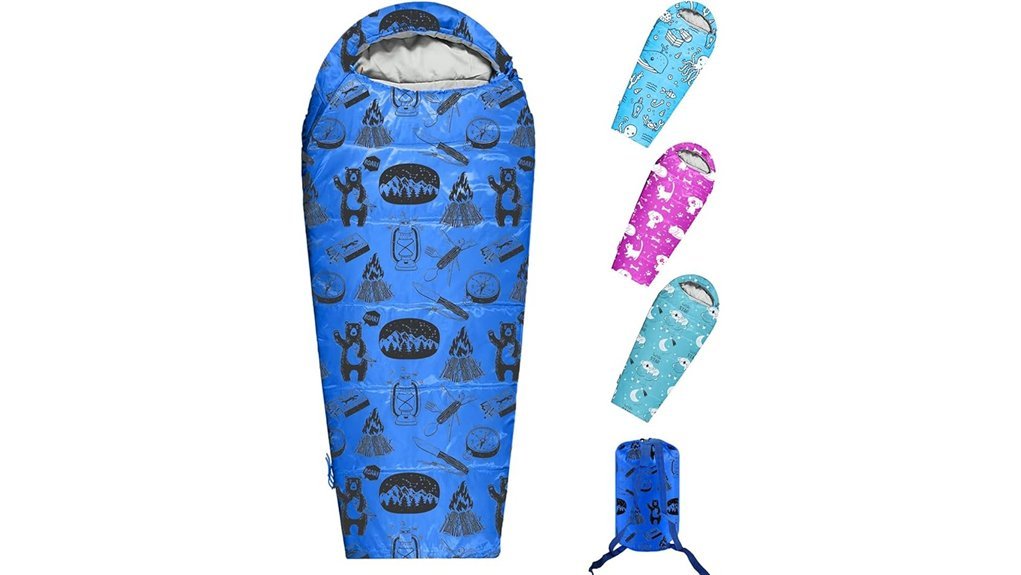
The KidzAdventure Mummy Style Kids Sleeping Bag with Pillow is an excellent choice for young adventurers, with a kids size fitting up to 4’3″ and a youth size fitting up to 5’7″. This sleeping bag features an engaging adventure theme, complete with characters like forest bears and campfires, making it appealing for children. Its mummy design minimizes empty space, enhancing warmth retention, while additional features like a draft tube and cozy hoodie add comfort during chilly nights. Weighing just 2 lbs, it is lightweight and portable, suitable for camping and sleepovers. The manufacturer labels it for 4-season use within its 32°F–59°F comfort range — it’s best thought of as a warm, cool-weather bag rather than one built for deep winter or sub-freezing nights.
Best For: Young adventurers looking for a cozy, adventure-themed sleeping bag for camping and sleepovers.
Who Should Avoid This: Taller children approaching the 5’7″ youth-size limit, or families who need a bag rated well below freezing for genuine winter camping.
Pros:
- Engaging adventure theme with fun characters appeals to kids.
- Lightweight design (2 lbs) makes it easy for children to carry.
- Wide size range covers kids through youth as they grow.
Cons:
- Youth size may feel snug for taller children nearing 5’7″.
- Limited color/design options could be less appealing to some kids.
- Durability guarantee of only 3 years might not satisfy heavy users.
AceCamp Glow-in-the-Dark Sleeping Bag for Kids
🌟 Best for Sleepovers & Fun
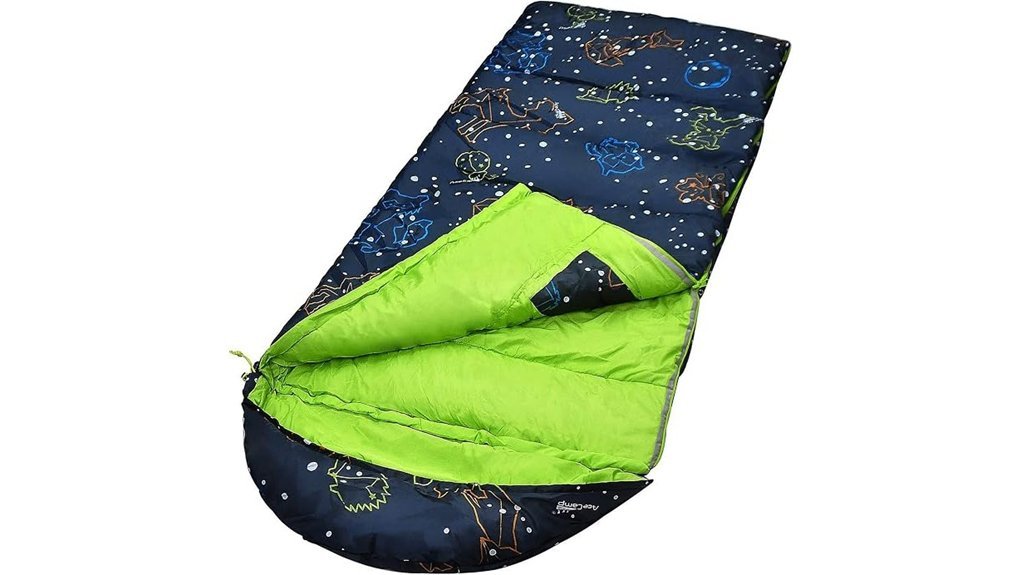
Designed specifically for children, the AceCamp Glow-in-the-Dark Sleeping Bag adds a fun twist to nighttime adventures. With a temperature rating of 30°F (-1°C), it is ideal for camping, hiking, and slumber parties, with kids sizing up to 4’8″ and youth sizing up to 5’5″. The bag’s durable 191T embossed polyester exterior is both breathable and water-resistant, while the soft interior guarantees a comfy experience. It features a unique design allowing two bags to zip together for extra space and includes an inside pocket for small items.
Best For: Kids and youth who enjoy camping, hiking, and slumber parties with a fun glow-in-the-dark feature.
Who Should Avoid This: Families camping in temperatures colder than 30°F, or anyone expecting the glow effect to stay bright all night without re-exposure to light.
Pros:
- Durable and Water-Resistant: High-quality 191T embossed polyester for enhanced longevity.
- Comfortable Insulation: Soft interior for a cozy sleeping experience.
- Versatile Design: Zips together with another bag for extra space, plus an inside pocket for convenience.
Cons:
- Temperature Limitation: Rated for 30°F, not suitable for colder conditions.
- Size Options: Limited to Kids and Youth sizes, which may not fit older teens.
- Glow Feature: Needs light exposure to charge and may dim over the night.
Kelty Mistral Kids Sleeping Bag 30F (Deep Teal)
🏕️ Best for Serious Campers
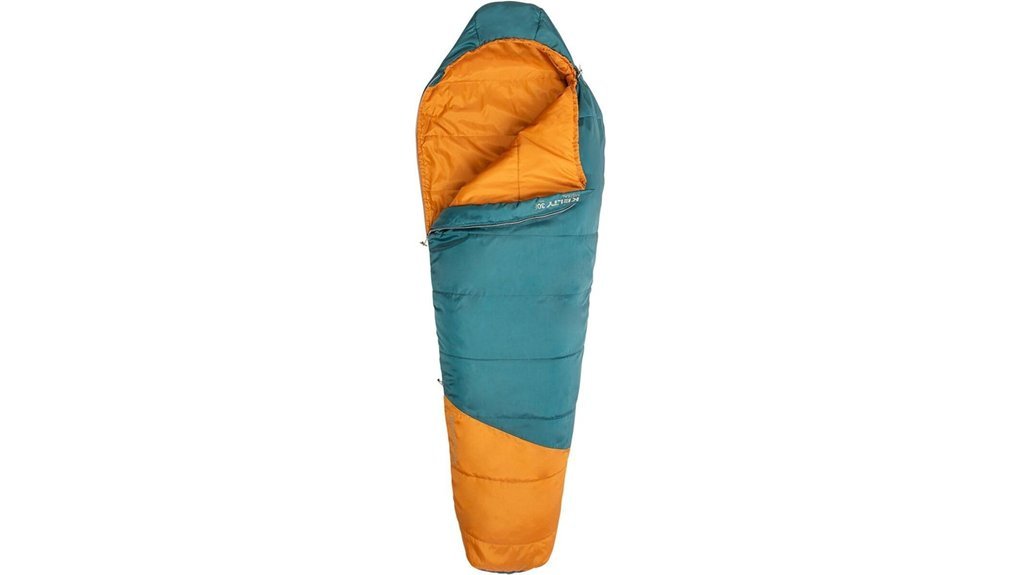
Perfect for young adventurers, the Kelty Mistral Kids Sleeping Bag 30F offers warmth and comfort for outdoor camping, fitting kids up to 5′ tall. Constructed from durable polyester taffeta, this sleeping bag features Cloudloft synthetic insulation, ensuring good heat retention and packability at roughly 2 lbs 9 oz. Its mummy shape provides a snug fit, optimizing warmth in temperatures as low as 30°F. Designed for three-season use, it’s suitable for both backpacking and car camping. Proudly built by Kelty, a long-standing outdoor gear brand, it combines quality construction with child-friendly features.
Best For: Young adventurers seeking a warm, well-built sleeping bag for regular outdoor camping.
Who Should Avoid This: Kids taller than 5′, or families needing a bag rated for genuinely cold, sub-freezing winter nights.
Pros:
- Durable Materials: Polyester taffeta construction built to last.
- Good Insulation: Cloudloft synthetic insulation provides solid heat retention at a manageable weight.
- Versatile Design: Suitable for three-season use — backpacking or car camping.
Cons:
- Limited Temperature Range: Rated to 30°F, not adequate for colder conditions.
- Shorter Length: Sized for kids up to 5′ tall, so it won’t stretch far as they grow.
- Mummy Shape: Some kids may find the snug fit less roomy than a rectangular bag.
Kids’ Sleeping Bags Buying Guide: What to Look For
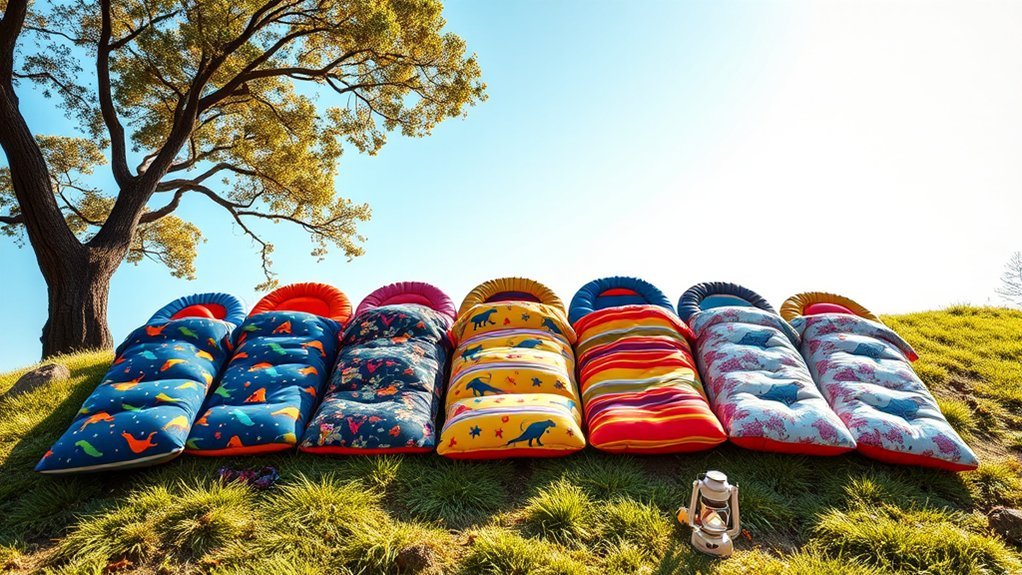
When selecting kids’ sleeping bags, several key factors must be considered to guarantee comfort and safety. Size and fit are essential for a good night’s sleep, while temperature ratings determine suitability for various climates. Additionally, material, insulation types, design options, and portability all play significant roles in making the right choice for young campers.
Size and Fit Considerations
Selecting the right size and fit for a kids’ sleeping bag is vital. Look at the manufacturer’s stated height limit rather than an age range alone, since kids of the same age can vary widely in height. Mummy-style sleeping bags are particularly beneficial for younger campers, as they minimize empty space and enhance warmth. Parents should look for options that cater to both kids and youth sizing, ensuring longevity as their child grows. The sleeping bag should allow for some movement while remaining snug enough to retain body heat. Considering the weight of the sleeping bag is also essential; ultralight designs are easier for children to carry on their own.
Temperature Rating Importance
Temperature rating indicates the lowest temperature at which the sleeping bag is designed to keep a child warm. Higher ratings, such as 30°F, are suitable for spring, summer, and fall camping, but are not a substitute for a true winter bag on genuinely cold nights. For year-round use in colder climates, look for bags rated well below freezing, or plan to add a liner and extra layers. Considering the child’s age and size is also important, as these factors influence insulation needs and fit.
Material and Insulation Types
Material and insulation types greatly influence the effectiveness and comfort of kids’ sleeping bags. Common materials like polyester and taffeta offer durability and moisture resistance, enhancing performance in various weather conditions. For insulation, synthetic options such as Cloudloft provide effective heat retention while remaining lightweight, making them ideal for young campers who need warmth without added bulk. Comfort features such as soft liners and extra padding around zippers minimize drafts and enhance the overall sleeping experience for children.
Design and Theme Options
When considering kids’ sleeping bags, the design and theme options play an essential role in enhancing the camping experience. Adventure-themed designs featuring animals or campfire motifs can spark excitement for outdoor activities. Mummy-style shapes are advantageous for warmth retention, minimizing empty space and ensuring coziness during colder nights. Glow-in-the-dark features add a whimsical touch, transforming bedtime into an adventure and easing nighttime fears. Unique elements, such as pillow sleeves, enhance comfort by allowing kids to use their favorite pillows, providing a familiar sleep environment.
Portability and Weight Factors
Portability and weight are vital considerations for parents choosing kids’ sleeping bags. Ideal options weigh around 2–3 lbs, guaranteeing easy transport during outdoor activities. Compact designs that pack into small stuff sacks make it simpler for children to carry and store their sleeping bags. Features like double-sided zippers and draft tubes can enhance comfort without greatly increasing weight.
Maintenance and Care Tips
To maintain a sleeping bag, it’s essential to follow the manufacturer’s care instructions, as improper washing can compromise insulation. Cleaning is typically done in a front-loading washing machine on a gentle cycle with mild detergent. After washing, air-drying is preferable, or a low-heat dryer setting can help preserve insulation integrity. For storage, keeping the sleeping bag loosely in a breathable cotton or mesh bag allows air circulation and prevents moisture buildup. Regular inspections for tears or broken zippers enable timely repairs, extending the sleeping bag’s lifespan.
Safety and Quality Standards
Selecting a sleeping bag for kids involves careful consideration of safety and quality. Look for materials that are both durable and breathable, such as polyester or taffeta, and check that the listing references applicable child-safety and textile standards. Extra padding around zippers helps reduce drafts and discomfort, and moisture-resistant materials help protect against damp conditions. Always review the temperature rating against where and when you’ll actually be camping.
Frequently Asked Questions
What Age Group Are These Sleeping Bags Suitable For?
Fit is based on height rather than age alone. Across these three picks, kids sizing covers children up to roughly 4’3″–4’8″, and youth sizing extends up to about 5’5″–5’7″ (Kelty’s kids sizing fits up to 5′). Check each product’s specific size chart before buying.
How Do I Clean and Maintain Kids’ Sleeping Bags?
To clean kids’ sleeping bags, follow the manufacturer’s instructions — typically machine wash on a gentle cycle with mild detergent, then air dry to preserve insulation and avoid damaging the shell material.
Are These Sleeping Bags Waterproof or Water-Resistant?
Most kids’ sleeping bags, including these, are water-resistant rather than fully waterproof. This helps protect against light moisture, but it’s worth checking each product’s specific listing for exact water-resistance details.
Can These Sleeping Bags Be Used for Year-Round Camping?
These three bags are rated between 30°F and 59°F, which makes them well-suited to spring, summer, and fall camping, plus cool (not extremely cold) nights. None are designed for deep winter or sub-freezing conditions — for true winter camping, look for a bag rated well below freezing, or add a liner and extra insulating layers.
What Materials Are Commonly Used in Kids’ Sleeping Bags?
Common materials used in kids’ sleeping bags include synthetic fibers like polyester for insulation, and polyester taffeta for the shell. These materials offer warmth, lightweight portability, and easier care for active young campers.
Conclusion
In the world of childhood adventures, the right sleeping bag can turn a simple night under the stars into a cherished memory. As parents choose gear sized and rated for their child rather than a scaled-down adult bag, camping becomes safer and more comfortable for everyone. Each of these three picks for 2027 is built specifically with kids in mind — from adventure-themed comfort to glow-in-the-dark fun to rugged three-season durability — helping every child drift off to sleep ready for the next day’s discoveries.