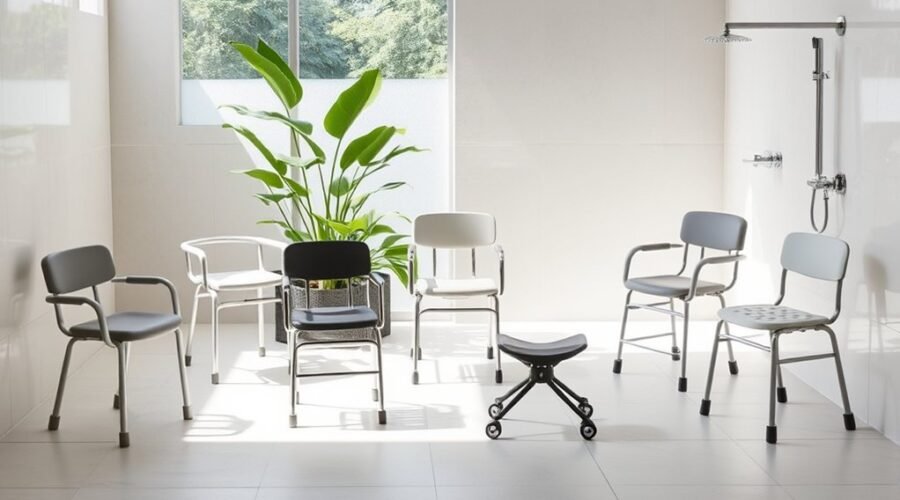
Choosing the best shower chair for 2027 comes down to more than comfort alone. Seat dimensions, stability, transfer style, bathroom fit, adjustability, and ease of cleaning can all affect whether a chair works well for a particular user. This guide focuses only on shower chairs and transfer benches that directly match that buyer intent.
For a padded, multi-use option, the Platinum Health Foldable Commode & Shower Chair offers adjustable height, pivoting armrests, and a foldable frame. The Platinum Health HydroSlide Shower Chair is designed for users who need more help moving across a bathtub edge, while the Carex Shower Bench provides a straightforward transfer-bench design. The Platinum Health GentleBoost is the most specialized choice for users who may benefit from assisted sitting and standing.
Affiliate disclosure: This article contains Amazon affiliate links. We may earn a commission from qualifying purchases at no additional cost to you.
Selection note: The labels below are based on product type, listed features, and common buyer needs. They do not represent hands-on testing. Always check current product dimensions, weight limits, installation requirements, and manufacturer instructions before purchasing.
Quick Comparison: Best Shower Chairs for 2027
| Product | Best For | Standout Feature | Check Before Buying | Amazon |
|---|---|---|---|---|
| Platinum Health Foldable Commode & Shower Chair | Best Overall / Multi-Use | Padded, adjustable, foldable design | Overall dimensions and bathroom clearance | Check Price |
| Platinum Health HydroSlide Shower Chair | Best for Bathtub Transfers | Sliding/swivel transfer design | Tub dimensions and transfer space | Check Price |
| Carex Shower Bench and Chair | Best Traditional Transfer Bench | Adjustable legs and reversible entry setup | Tub width, entry direction, and listed 300-lb limit | Check Price |
| Platinum Health GentleBoost | Best for Sit-to-Stand Assistance | Uplift-assist seat with handrails | User fit, bathroom space, and transfer needs | Check Price |
Platinum Health Foldable Commode & Shower Chair
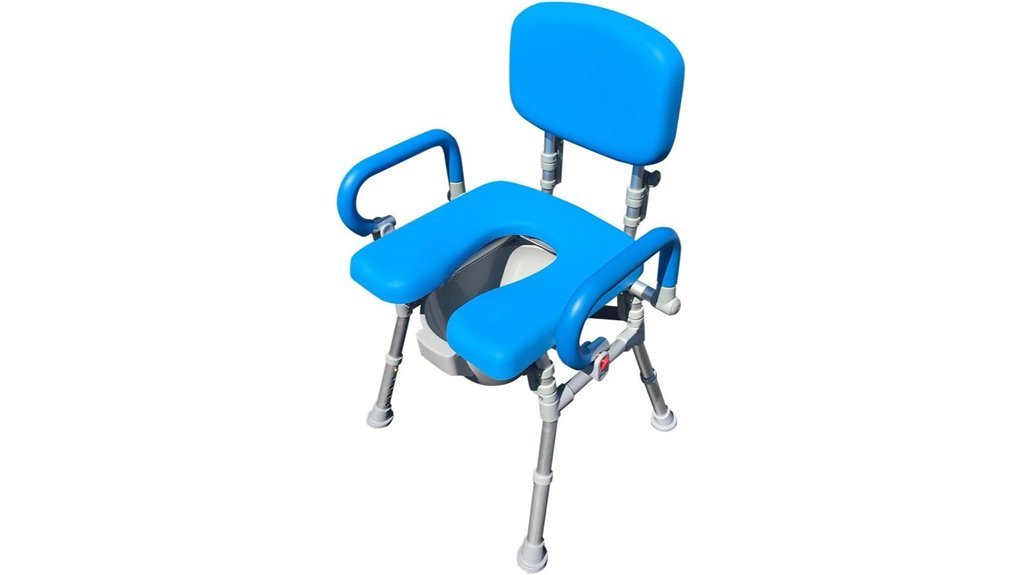
The Platinum Health Foldable Commode & Shower Chair is a practical choice for buyers who want one seat that can support both bathing and toileting routines. Its padded seat, backrest, and armrests use water-resistant polyurethane foam, helping make the chair more comfortable than a basic hard-plastic shower seat.
The chair has an open-front seat design, pivoting armrests, adjustable height, and an aluminum frame. The armrests can make side access and transfers easier for some users, while the adjustable seat height helps match the chair more closely to the user and bathroom setup.
Its foldable construction is especially useful when storage space is limited or when the chair needs to be transported. However, this is still a relatively substantial chair, so buyers should measure both the shower area and available clearance before ordering.
Best For: Buyers who want a padded, adjustable shower chair that can also function as a commode and fold for storage or transport.
Why You’ll Like It: It combines padding, adjustability, open-front access, pivoting armrests, and multi-use functionality in one design.
Who Should Avoid It: Buyers with a very compact shower or bathroom should carefully compare the product dimensions with their available space.
Pros:
- Padded seat, backrest, and armrests improve comfort compared with hard seating.
- Adjustable height helps accommodate different users and bathroom configurations.
- Pivoting armrests can provide easier side access during transfers.
- Foldable design simplifies storage and transportation.
- Can serve as both a commode and shower chair.
Cons:
- Its larger multi-use design may take up more room than a basic shower stool.
- Padded surfaces still require regular cleaning and drying.
- Buyers should carefully check seat and overall dimensions before ordering.
Platinum Health HydroSlide Shower Chair for Seniors
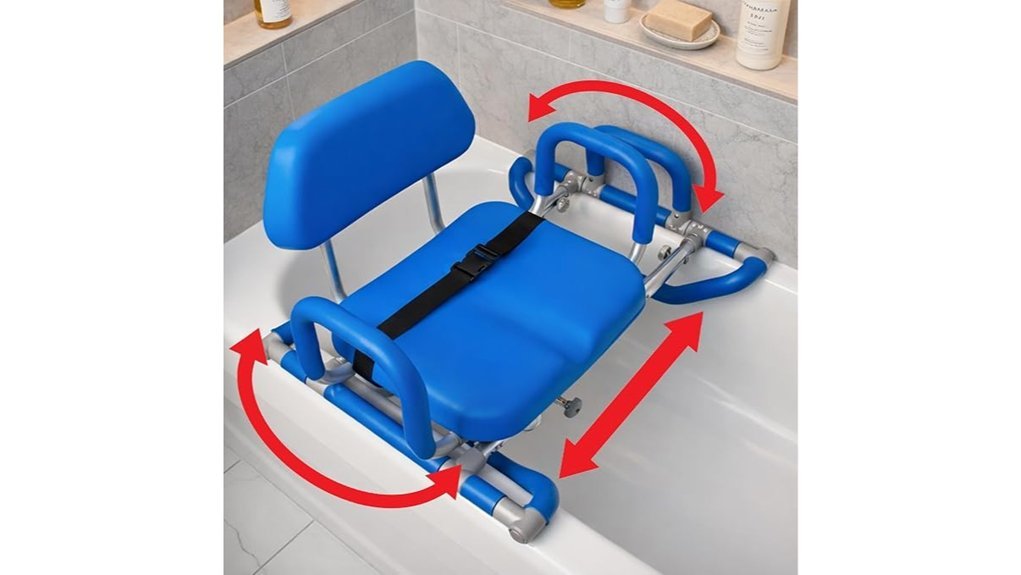
The Platinum Health HydroSlide Shower Chair is designed for users who need more assistance getting into and out of a bathtub than a stationary shower seat provides. Its sliding and swivel-style design is intended to reduce the amount of stepping and repositioning required during a bathtub transfer.
The chair includes a gap-bridge design intended to support smoother movement across the tub edge. Its seat, backrest, and armrests are padded, which may be more comfortable for users who dislike hard plastic seating.
Unlike transfer benches that can extend farther into the bathroom, the HydroSlide is designed to make efficient use of the bathtub area. That can be useful in bathrooms where exterior floor space is limited. Still, bathtub dimensions and transfer clearance need to be checked carefully before purchase.
Best For: Users who have difficulty stepping over a bathtub wall and want a sliding/swiveling transfer-chair design.
Why You’ll Like It: The combination of sliding movement, a swiveling seat, padding, and arm support addresses one of the hardest parts of bathing for users with limited mobility: entering and exiting a bathtub.
Who Should Avoid It: Buyers who only need a simple stationary seat may find this design more specialized than necessary.
Pros:
- Sliding and swiveling design can make bathtub transfers more manageable.
- Padded seat, backrest, and armrests improve sitting comfort.
- Designed to reduce the need to step directly over the bathtub wall.
- Space-conscious configuration can be useful in some smaller bathrooms.
Cons:
- More specialized than a basic stationary shower chair.
- Correct bathtub dimensions and positioning are important for proper use.
- Assembly and setup may require caregiver assistance for some users.
Carex Shower Bench and Chair for Elderly
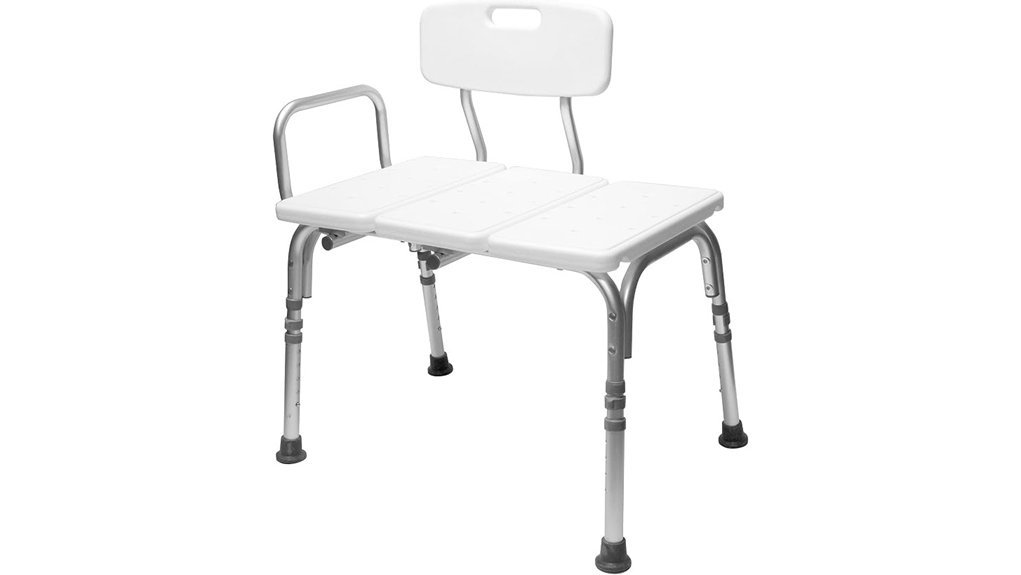
The Carex Shower Bench is a straightforward option for users who want to sit down before moving their legs across a bathtub edge. Its transfer-bench layout places part of the bench outside the tub and part inside, reducing the need to stand while stepping directly over the bathtub wall.
The adjustable legs help level the bench for different bathtub setups, and its configuration can accommodate right- or left-hand entry. Slip-resistant tips are designed to improve contact with the floor, while the listed 300-lb maximum user weight should be checked against the intended user’s needs.
This Carex model is less compact than a shower stool because of its transfer-bench shape. Buyers should measure the bathtub, bathroom floor space, and surrounding fixtures before ordering.
Best For: Users who want a traditional bathtub transfer bench with adjustable height and flexible entry orientation.
Why You’ll Like It: Its bench-style design allows the user to sit before moving into the bathing area instead of relying entirely on standing balance.
Who Should Avoid It: It may not be ideal for bathrooms without enough floor space outside the tub for the extended bench.
Pros:
- Transfer-bench design reduces the need to step directly over the bathtub wall.
- Adjustable legs help suit different user heights and bathtub configurations.
- Can be configured for right- or left-side entry.
- Slip-resistant tips help provide stable floor contact.
- Listed to support users up to 300 lbs.
Cons:
- Takes up more horizontal space than a compact shower chair.
- Requires careful measurement of the tub and surrounding bathroom area.
- A hard bench-style seat may be less comfortable than heavily padded options for longer bathing routines.
Platinum Health GentleBoost Raised Toilet Seat with Handles
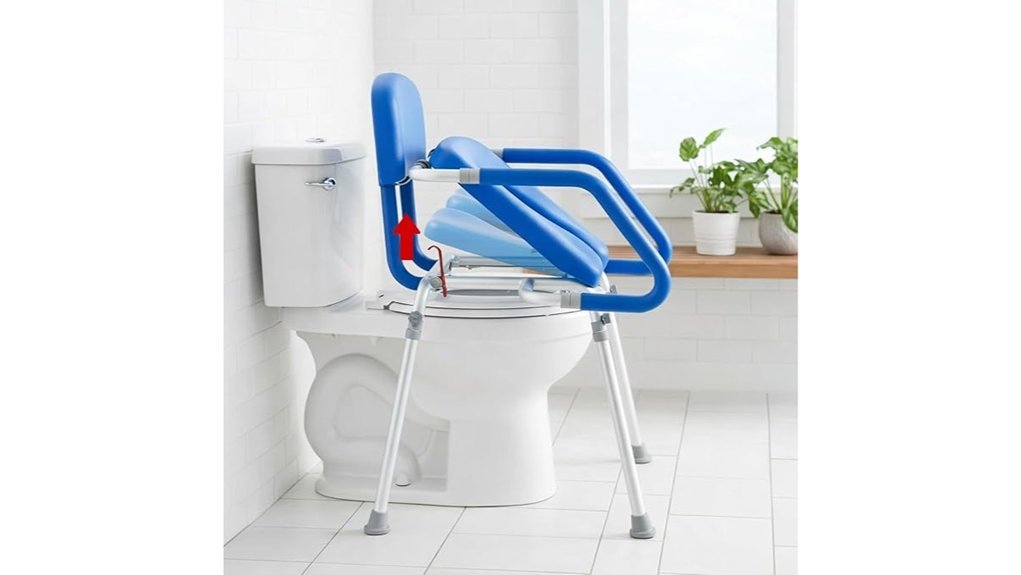
The Platinum Health GentleBoost is a specialized multi-use chair for buyers who need more help with sitting down and standing up. It can function as a commode, toilet chair, and shower chair, making it different from a conventional stationary shower seat.
Its GentleBoost uplift mechanism is designed to assist the user’s movement between seated and standing positions. Integrated handrails offer additional places to hold during positioning, while padded components can make the seat feel warmer and more comfortable than exposed hard surfaces.
This is a larger and more specialized product than most standard shower chairs. Buyers should therefore check the intended user’s dimensions, bathroom clearance, transfer ability, and current product instructions carefully before choosing it.
Best For: Users who may benefit from additional sit-to-stand assistance and want a chair that can serve several bathroom-related functions.
Why You’ll Like It: Its distinguishing feature is the assisted-uplift design, which addresses a different need than simple shower seating.
Who Should Avoid It: Buyers who only need a basic lightweight shower chair may prefer a simpler and more compact design.
Pros:
- Multi-use design can function as a commode, toilet chair, and shower chair.
- Uplift mechanism is designed to assist sitting and standing movements.
- Integrated handrails provide additional support points.
- Padded components improve comfort compared with basic hard seating.
Cons:
- Larger and more specialized than a standard shower chair.
- May be unnecessary for users who do not need sit-to-stand assistance.
- Bathroom dimensions and user fit should be checked carefully before purchasing.
Factors to Consider When Choosing Shower Chairs for 2027
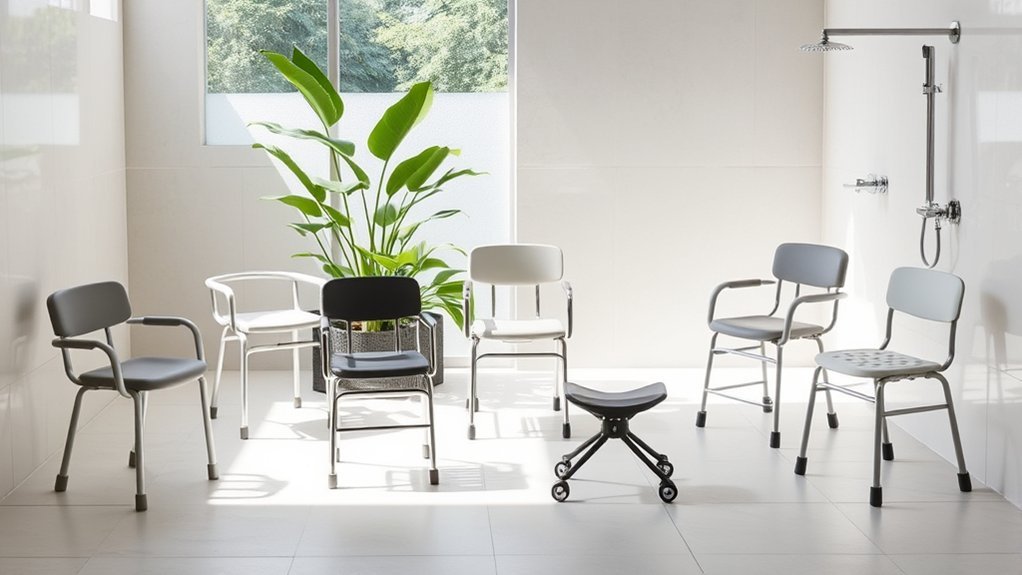
The best shower chair depends on the user’s body size, mobility, transfer method, and bathroom layout. Before choosing one, compare seat comfort, stability, dimensions, weight capacity, adjustable height, transfer features, portability, and cleaning requirements.
1. Comfort and Padding Features
A padded seat, backrest, or armrests can make bathing more comfortable, particularly for users who find hard plastic seating uncomfortable. Water-resistant padding is also easier to maintain than absorbent cushioning.
However, more padding does not automatically make a chair better. Buyers should also look at the usable seat width and depth, armrest spacing, and whether the seat shape allows comfortable positioning.
2. Safety and Stability Design
Wet bathrooms require careful attention to stability. Look for shower chairs or benches with slip-resistant feet, a stable frame, properly adjusted legs, and sufficient contact with the bathroom surface.
No shower chair can eliminate fall risk. It should sit level and stable before use, and buyers should follow the manufacturer’s instructions for positioning, transfers, cleaning, and maximum user weight.
3. Adjustable Height Options
Adjustable legs can help position the seat at a more practical height for the user. A seat that is too low may make standing more difficult, while one that is too high can affect foot placement and stability.
When possible, choose a model with straightforward height adjustments and confirm that all legs lock securely at the same intended setting.
4. Transfer Style
A major difference between shower-chair designs is how the user gets into the bathing area. A conventional chair sits inside a walk-in shower, while a transfer bench extends across a bathtub wall. Sliding or swiveling chairs can provide another approach for users who have difficulty stepping over a tub edge.
Think about the user’s current transfer ability before choosing a design. A caregiver, occupational therapist, or other qualified professional may be useful when transfer needs are complex.
5. Portability and Storage Convenience
Foldable or easily disassembled chairs can be useful when the bathroom is shared, storage space is limited, or the chair needs to travel between locations.
Lightweight construction can also make repositioning easier for a caregiver, but portability should not come at the expense of appropriate stability or user capacity.
6. Compatibility With Bathroom Spaces
Measure the bathroom before ordering. Important dimensions can include the shower floor, bathtub width and wall height, door opening, toilet clearance, surrounding floor space, and distance from nearby fixtures.
Transfer benches require enough space both inside and outside the bathtub. Sliding or swivel models may have different clearance needs, while a compact shower chair still needs enough room to sit flat without interfering with shower doors.
7. Weight Capacity and User Fit
Never assume that all shower chairs have the same weight limit. Check the specific manufacturer’s stated maximum user weight for the exact model being considered.
Seat width, seat depth, armrest spacing, and chair height are just as important. A chair can meet the user’s weight requirement and still be uncomfortable or difficult to use if its dimensions are wrong.
8. Material Durability and Maintenance
Shower chairs are repeatedly exposed to water, soap, and humidity. Materials designed for wet environments, such as corrosion-resistant metal frames and water-resistant seating surfaces, can simplify maintenance.
Choose a design with surfaces that are easy to reach and clean. Regularly inspect the frame, feet, fasteners, adjustment points, padding, and moving components for wear or looseness.
Before You Buy: Quick Checklist
- Measure the shower, bathtub, doorway, and surrounding floor area.
- Check the exact manufacturer’s maximum user weight.
- Compare seat width, depth, armrest spacing, and height range with the intended user.
- Decide whether you need a stationary chair, transfer bench, sliding chair, or uplift-assist design.
- Confirm the feet can sit flat on the intended surface.
- Check whether the user can transfer safely with the selected chair design.
- Consider storage space if the chair will not stay in the bathroom permanently.
- Review current assembly, cleaning, and maintenance instructions before use.
Frequently Asked Questions
How Do I Clean and Maintain My Shower Chair?
Follow the manufacturer’s cleaning instructions for the specific chair. In general, regularly clean soap residue and grime from the seat, frame, feet, armrests, and adjustment points, then allow the chair to dry. Inspect the frame, rubber tips, fasteners, padding, and moving components for wear or damage before continued use.
Are Shower Chairs Safe for Use in Wet Environments?
Shower chairs are designed for wet bathing environments, but they still need to be correctly sized, assembled, adjusted, and positioned. Slip-resistant feet, a level setup, an appropriate weight capacity, and correct transfer technique are all important. A shower chair can provide support but cannot eliminate the possibility of slipping or falling.
Can Shower Chairs Accommodate Larger Body Types?
Some models are available with wider seats and higher weight capacities, but specifications vary considerably. Check the exact seat width, depth, armrest spacing, and manufacturer-stated weight limit rather than relying on a general category description.
What Is the Weight Limit for a Shower Chair?
There is no single weight limit that applies to all shower chairs. Capacity depends on the exact frame and design. For example, the Carex transfer bench featured in this guide lists a 300-lb maximum user weight. Always verify the current specification for the exact product before purchase or use.
What Is the Difference Between a Shower Chair and a Transfer Bench?
A standard shower chair generally sits completely inside a shower or bathing area. A transfer bench is longer and typically spans a bathtub wall so the user can sit on the outside portion before moving across the bench. Transfer benches are often more suitable for people who have difficulty stepping over a bathtub edge.
Should I Choose a Padded or Hard Shower Seat?
Padded seating can feel warmer and more comfortable, while hard molded seats are often simple to rinse and clean. The better option depends on the user’s comfort needs, skin sensitivity, cleaning routine, and transfer method.
Do Shower Chairs Come With Warranties or Guarantees?
Warranty coverage varies by manufacturer, model, seller, and region. Check the current manufacturer’s warranty information and seller terms for the exact product before purchasing rather than assuming a standard coverage period.
Final Recommendation
Best Overall: The Platinum Health Foldable Commode & Shower Chair is the most versatile option in this group because it combines padding, adjustable height, pivoting armrests, folding storage, and shower/commode functionality.
Best for Bathtub Transfers: Choose the Platinum Health HydroSlide when getting across a bathtub edge is the primary challenge and a sliding/swiveling transfer design better matches the user’s needs.
Best Traditional Transfer Bench: The Carex Shower Bench offers a simpler adjustable bench configuration for users who want to sit before moving into a bathtub.
Best Specialized Option: The Platinum Health GentleBoost is worth considering when sit-to-stand assistance is a major part of the buying decision.
Conclusion
The best shower chair for 2027 is the one that fits both the user and the bathroom—not simply the model with the longest feature list. Start by measuring the available space, checking seat dimensions and weight capacity, and deciding whether the user needs a stationary chair, transfer bench, sliding seat, or assisted-uplift design.
For most buyers seeking a comfortable multi-use chair, the Platinum Health Foldable Commode & Shower Chair offers the broadest mix of useful features. Users who struggle specifically with bathtub entry may prefer the HydroSlide or Carex transfer bench, while the GentleBoost serves a more specialized sit-to-stand need. Whichever design you choose, confirm the current specifications and manufacturer instructions before use.