Travertine is porous natural stone, so choosing a steam mop for travertine floors requires more caution than choosing one for ordinary ceramic tile. Steam should only be considered when your travertine is properly sealed and the flooring, sealer, and cleaning-equipment guidance all permit steam use.
After reviewing the products in this roundup, three options have the strongest fit for this buyer intent because their current product information includes sealed stone, marble, granite, or closely related natural-stone surfaces. Even then, no steam mop is universally safe for every travertine installation. Always test a hidden area and use the lowest effective steam output.
Affiliate disclosure: This article contains Amazon affiliate links. We may earn a commission from qualifying purchases at no additional cost to you.
Important Travertine Safety Note
Do not use steam on unsealed, cracked, loose, recently installed, moisture-sensitive, or deteriorating travertine. Your flooring or sealer manufacturer’s instructions should override general steam-mop marketing. If steam is not specifically permitted for your floor, use a stone-safe pH-neutral cleaner and a lightly damp microfiber mop instead.
Quick Comparison: Steam Mops to Consider for Sealed Travertine
| Product | Best For | Why It Made the List | CTA |
|---|---|---|---|
| Shark Steam Pickup 3-in-1 Steam Mop Cleaner (SD201) | Best overall stone-oriented option | Manufacturer lists sealed stone and marble; also picks up debris while steam cleaning | Check Amazon |
| BISSELL PowerFresh 1940A Steam Mop for Hard Floors | Simple adjustable steam cleaning | BISSELL lists sealed granite and marble and provides three steam settings | Check Amazon |
| Rvwsx 12-in-1 Steam Mop with Detachable Handheld Cleaner | Multipurpose and detail cleaning | Listing identifies sealed stone and marble compatibility plus three steam modes | Check Amazon |
Quick Verdict
Shark Steam Pickup SD201 is the strongest overall match because Shark specifically lists sealed stone and marble among its compatible surfaces. Choose the BISSELL PowerFresh 1940A if you want a lighter, more traditional steam mop with three settings. Choose the Rvwsx 12-in-1 if detachable handheld cleaning and grout-detailing accessories matter more to you. In every case, confirm that your exact travertine installation permits steam before use.
For travertine, product features are only part of the buying decision. Adjustable output, gentle floor-contact materials, minimal lingering moisture, manageable weight, and clear sealed-stone compatibility matter more than maximum steam power. The goal is controlled maintenance cleaning, not prolonged heat or saturation.
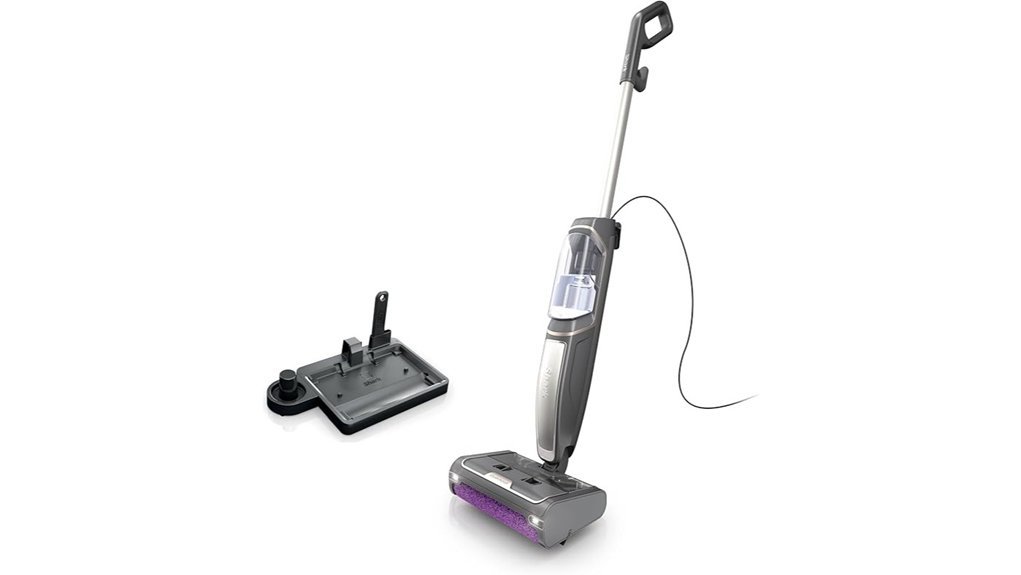
Shark Steam Pickup 3-in-1 Steam Mop Cleaner (SD201)
Best Overall for Sealed-Stone Compatibility
The Shark Steam Pickup SD201 has the clearest direct stone compatibility among the products retained in this roundup. Shark identifies it for sealed hard floors including stone and marble, making it a more relevant starting point for a travertine owner than a mop whose documentation only mentions generic hard flooring.
Its biggest convenience is the 3-in-1 cleaning system. It picks up wet and dry debris, scrubs the floor, and uses steam in the same cleaning process. That can reduce the amount of separate sweeping needed before routine maintenance in kitchens, entryways, and other high-traffic areas.
The self-cleaning brushroll helps separate and remove collected mess instead of relying on a traditional flat pad. Shark lists the unit at about 7 pounds with a 25-foot cord, so it is lighter than many multi-function floor cleaners while still giving you powered debris pickup.
For travertine, the important limitation is that “sealed stone” compatibility does not automatically mean every travertine floor is suitable for steam. Check your stone and sealer instructions first, begin with the lowest practical setting, keep the machine moving, and stop if moisture remains in pits, joints, cracks, or grout.
Why You’ll Like It: It combines debris pickup and steam cleaning while having one of the clearest sealed-stone compatibility statements in this group.
Best For: Busy households with sealed travertine or other approved sealed stone floors that regularly collect crumbs, hair, tracked-in dirt, and small everyday messes.
Who Should Skip It: Skip it if your travertine is unsealed, damaged, heavily pitted, or not approved for steam, or if you prefer a basic microfiber mop with no powered brushroll.
Pros:
- Manufacturer identifies sealed stone and marble among compatible surfaces
- Combines debris pickup, scrubbing, and steam cleaning in one machine
- Self-cleaning brushroll can reduce dirty-pad handling during routine cleanup
- Relatively light for a powered 3-in-1 floor cleaner
Cons:
- More moving parts and maintenance than a basic flat steam mop
- Powered scrubbing may be unnecessary for very delicate or lightly soiled stone
- Steam suitability still depends on your specific travertine, grout, and sealer
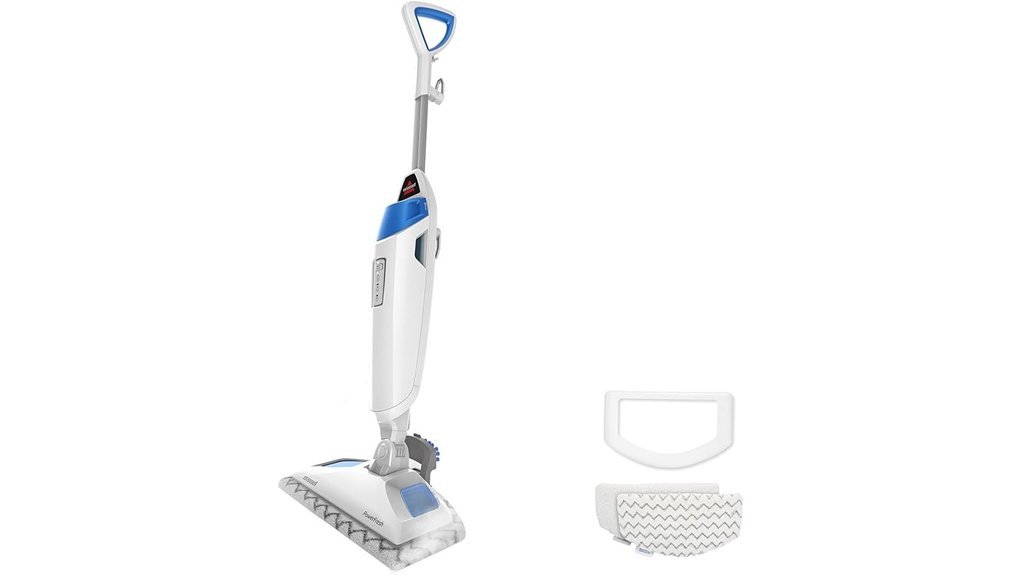
BISSELL PowerFresh 1940A Steam Mop for Hard Floors
Best Simple Adjustable Steam Mop
The BISSELL PowerFresh 1940A is a straightforward option for shoppers who do not need debris pickup, a wet-dry vacuum, or a detachable handheld cleaner. BISSELL lists sealed granite and marble among the surfaces it can clean, which makes it more relevant to natural-stone shoppers than steam mops limited to wood or ceramic tile.
You can choose between three steam settings, giving you more control over cleaning intensity. That matters on natural stone because routine footprints and surface dust should not require the most aggressive setting.
The PowerFresh has a removable 16-ounce water tank, a 23-foot power cord, swivel steering, and a listed weight of about 6.2 pounds. The built-in Easy Scrubber can provide extra agitation on stubborn grime, but it should be used cautiously around worn grout, filled travertine, soft edges, or areas where the finish is already compromised.
Although BISSELL identifies marble and granite compatibility, it does not specifically name travertine. Treat this as a conditional option: only use it after confirming that steam is acceptable for your exact floor and sealer.
Why You’ll Like It: It offers a traditional steam-mop design, relatively low weight, and adjustable steam without the bulk of a multi-function wet-dry cleaner.
Best For: Homeowners who want a simpler steam mop for approved sealed natural-stone or other sealed hard floors.
Who Should Skip It: Skip it if you need vacuum pickup, powered spinning pads, cordless operation, or direct manufacturer confirmation specifically naming travertine.
Pros:
- Three steam settings provide useful control over output
- BISSELL lists sealed granite and marble among compatible floor surfaces
- Lightweight traditional steam-mop design is easier to maneuver than larger multi-function cleaners
- Washable microfiber pads help reduce dependence on disposable pads
Cons:
- Travertine is not specifically named in BISSELL’s surface list
- No vacuum or debris-pickup function
- Easy Scrubber should be used carefully on delicate stone edges and aging grout
Rvwsx 12-in-1 Steam Mop with Handheld Detachable Cleaner
Best Multipurpose Option
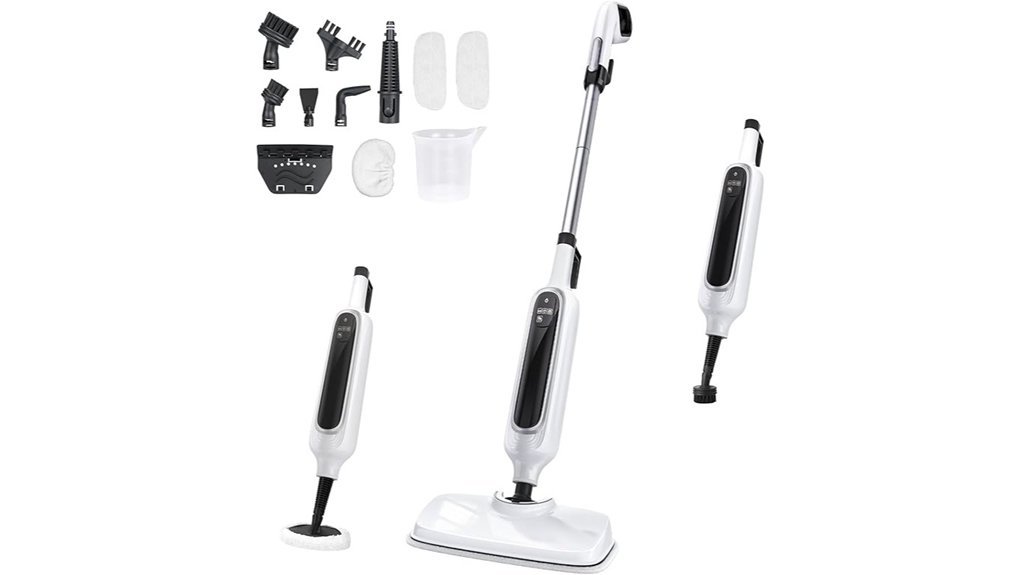
The Rvwsx 12-in-1 steam mop is the most versatile option retained in this roundup. Its current product listing identifies sealed stone and marble among compatible floor types and combines floor cleaning with a detachable handheld steam cleaner for detail work.
The unit offers three steam modes, an LED display, a 23-foot cord, and fast heat-up. Adjustable output is particularly useful when you are trying to avoid unnecessary moisture on a sensitive natural-stone floor.
The detachable handheld section can be useful for household cleaning away from the floor, but be careful with grout and stone detailing. Concentrated steam held in one place can expose joints, fillers, sealers, and damaged areas to more heat and moisture than a moving floor pass.
This product is sold under the Rvwsx name and is less established than the BISSELL and Shark models above, so buyers should review the latest listing, included accessories, warranty information, and current availability before purchasing.
Why You’ll Like It: One machine can handle ordinary floor passes plus selected above-floor cleaning tasks without requiring a separate handheld steamer.
Best For: Buyers with approved sealed stone and mixed household surfaces who value attachments and multipurpose cleaning.
Who Should Skip It: Skip it if you only need a simple floor mop, prefer a major-brand support network, or do not plan to use the handheld accessories.
Pros:
- Current listing identifies sealed stone and marble among compatible surfaces
- Three steam modes provide more control than a fixed-output steamer
- Detachable handheld design expands use beyond floors
- 23-foot cord provides useful reach for larger rooms
Cons:
- Less established brand than Shark or BISSELL
- Multiple attachments create more components to store and maintain
- Current Amazon purchasing options can vary, so availability should be checked before buying
Factors to Consider When Choosing a Steam Mop for Travertine Floors
For travertine, compatibility matters more than maximum cleaning power. Before buying, look at surface approval, adjustable steam output, pad or brush design, moisture control, maneuverability, maintenance requirements, and the condition of your stone and grout.
Before You Buy
- Confirm that your travertine is sealed and in good condition.
- Check the stone, flooring, and sealer manufacturer’s cleaning instructions.
- Confirm that the steam-mop maker permits use on sealed stone or a comparable natural-stone surface.
- Choose adjustable steam rather than fixed maximum output when possible.
- Avoid abrasive pads or brushes unless specifically approved for your finish.
- Check replacement-pad, brushroll, filter, and accessory availability.
Steam Output Control
Adjustable steam levels are preferable for travertine because they let you match moisture and heat output to the cleaning task. Light footprints and ordinary dust usually do not require the most aggressive setting.
A no-steam or low-steam option can also be useful around questionable joints, edges, worn sealant, or areas where you want mechanical wiping without additional steam. Avoid holding concentrated steam over one location.
Water Tank Capacity
A larger water tank reduces refill stops, but it also adds weight. For a sensitive stone floor, tank size is less important than controlled output and the mop’s ability to leave the surface only lightly damp.
If you have a large travertine area, balance capacity against maneuverability. A lighter mop may be easier to keep moving continuously, which is preferable to leaving a hot cleaning head sitting in one position.
Pad Material Quality
Use manufacturer-approved, nonabrasive floor-contact materials. Microfiber pads are common on traditional steam mops because they collect loosened soil while remaining relatively gentle on sealed hard surfaces.
Powered brushrolls can provide more agitation, but additional scrubbing is not automatically better for natural stone. Check compatibility with your particular finish, especially on honed, filled, aged, or already scratched travertine.
Maneuverability and Reach
A lightweight design, swivel head, and adequate cord length make it easier to clean continuously instead of pausing over the floor. This is particularly helpful around furniture, edges, and narrow pathways.
If you choose a powered brushroll model, also consider how easily the brushroll and debris tray can be removed and cleaned after use.
Surface Compatibility Check
This is the most important step. “Sealed hard floors” is a broad category, and not every manufacturer specifically includes natural stone. Preference should be given to products whose current documentation identifies stone, marble, granite, or another relevant natural-stone category.
Even when the mop manufacturer permits sealed stone, your travertine manufacturer, installer, or sealer instructions may impose tighter cleaning restrictions. Follow the more conservative instruction.
Moisture and Drying
There is no universal number of minutes that every steam-cleaned travertine floor should take to dry. Room temperature, ventilation, steam output, stone finish, grout condition, and cleaning technique can all affect remaining moisture.
The practical rule is simple: avoid puddling and prolonged dampness. If moisture remains in pits, joints, edges, or grout after cleaning, remove it promptly with a clean, soft towel.
Cleaning Solution Compatibility
Natural stone generally calls for careful chemical selection. Avoid vinegar and other acidic cleaners on travertine because acids can damage calcium-based stone surfaces.
For the steam function itself, follow the machine manual. Do not pour essential oils, fragrances, detergents, or homemade mixtures into a steam reservoir unless the manufacturer specifically authorizes them. Some machines are designed for water only, while other multi-function cleaners have separate systems for approved formulas.
Maintenance Ease
A steam mop is more useful when you can clean and dry its pads, tanks, brushes, and trays easily after each session. Dirty floor-contact materials can redistribute soil instead of removing it.
Wash reusable pads according to the manufacturer’s directions, rinse removable components when required, and let damp parts dry fully before storage. For brushroll models, check whether the brushroll or other wear components need periodic replacement.
How to Use a Steam Mop Carefully on Travertine
- Use steam only on sealed, intact travertine when your floor or sealer guidance permits it.
- Confirm that the steam mop is approved for sealed stone or an appropriate natural-stone surface.
- Vacuum or remove loose grit first unless your machine is specifically designed to pick it up safely.
- Start with the lowest effective steam setting.
- Keep the mop moving and avoid prolonged steam exposure in one spot.
- Use clean, manufacturer-approved pads or brushrolls.
- Do not intentionally saturate grout lines, holes, cracks, pits, or tile edges.
- Remove lingering surface moisture with a clean soft towel.
- Avoid vinegar, acidic cleaners, bleach, abrasive pads, and unapproved reservoir additives.
- Test the complete cleaning process in an inconspicuous area before cleaning the full room.
Frequently Asked Questions
Can Steam Mops Damage Travertine Grout Lines?
They can create problems when grout is cracked, loose, deteriorated, recently repaired, or repeatedly exposed to concentrated heat and moisture. Keep the mop moving, avoid directing steam at damaged joints, and stop using steam if your grout or installation guidance prohibits it.
Is Distilled Water Required for Travertine Steam Cleaning?
Not universally. Follow the water instructions for your exact steam mop. Some manufacturers permit ordinary water, while distilled or demineralized water may be recommended in certain machines or hard-water situations. Do not assume that a particular water type is required unless your manual says so.
How Long Should Travertine Take to Dry After Steam Mopping?
There is no reliable universal drying time. The floor should be left without puddles or prolonged damp patches. Ventilation, humidity, steam output, stone finish, and grout condition all affect drying, so wipe away any moisture that remains in pits, joints, or edges.
Can Essential Oils Be Added to a Steam Mop?
Do not add essential oils or other additives unless the steam-mop manufacturer specifically permits them in the reservoir. Unapproved liquids can affect internal components and may also leave unwanted residue on natural stone.
Does Steam Mopping Affect Travertine Sealant Longevity?
Sealants vary by product and installation, so there is no reliable universal resealing interval based solely on steam-mop use. Follow the sealer manufacturer’s maintenance and reapplication guidance and stop using steam if the finish begins absorbing water, darkening unusually, or showing other signs that protection may be compromised.
Is a Steam Mop the Best Way to Clean Travertine?
Not necessarily. Routine dust removal followed by a lightly damp microfiber mop and a stone-safe pH-neutral cleaner is often the more conservative approach. A steam mop should be treated as an optional method only when your sealed travertine installation and cleaning-equipment guidance permit it.
Conclusion
If you have confirmed that your sealed travertine can be steam cleaned, the Shark Steam Pickup SD201 is the strongest overall match in this group because its manufacturer specifically identifies sealed stone and marble compatibility. It also combines debris pickup and steam cleaning, making it useful for busy kitchens and high-traffic areas.
The BISSELL PowerFresh 1940A is a better choice if you want a lighter, straightforward steam mop with three settings, while the Rvwsx 12-in-1 Steam Mop makes more sense when you want a detachable handheld cleaner and multiple household cleaning functions.
Final Recommendation
Do not choose a steam mop for travertine based on steam power alone. First confirm that your exact floor and sealer permit steam. Then prioritize clear sealed-stone compatibility, adjustable output, gentle floor contact, and minimal lingering moisture. If your flooring documentation does not approve steam, use a pH-neutral stone-care method instead.