
Affiliate disclosure: As an Amazon Associate I earn from qualifying purchases. This article contains affiliate links to Amazon, so we may earn a commission if you buy through them, at no extra cost to you.
The 5 best wooden spoons for 2026 are NAYAHOSE Wooden Kitchen Utensils Set, Riveira Bamboo Cooking Spoons, HANSGO Wooden Spoons for Eating, OXO Good Grips Large Wooden Spoon, and ADLORYEA 9″ Korean Wooden Spoons. Each offers a mix of durability, heat resistance, and cookware-safe performance. NAYAHOSE and Riveira stand out for full sets, while OXO and ADLORYEA excel in comfort and finish. A few key factors can help narrow the best choice further.
NAYAHOSE Wooden Kitchen Utensils Set with Storage Barrel
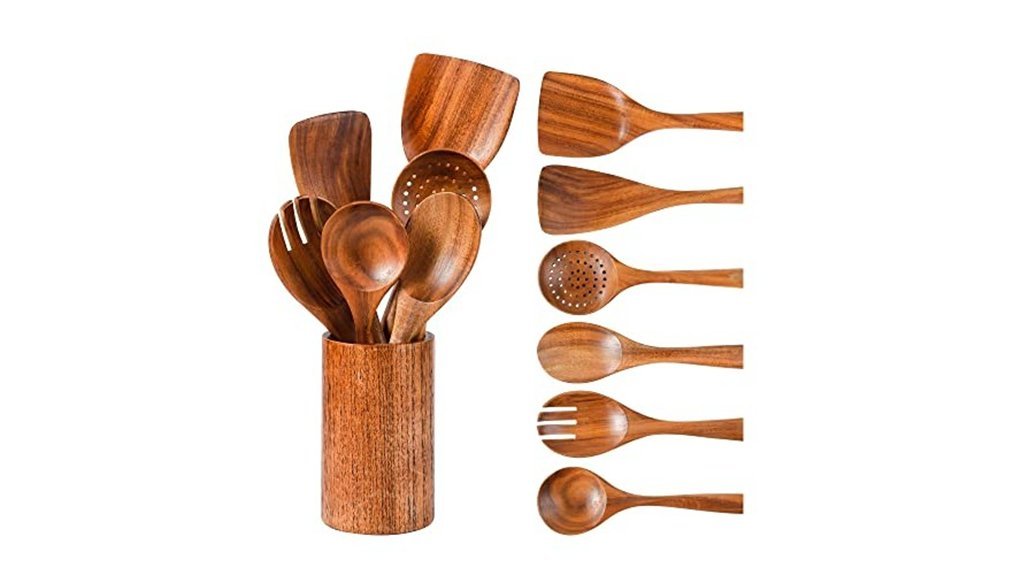
The NAYAHOSE Wooden Kitchen Utensils Set with Storage Barrel is a strong choice for cooks who want a durable, non-scratch option for everyday use. Made from natural wood, the seven-piece set includes six spatulas and a storage barrel, offering practical coverage for routine prep and serving. Its handmade construction is designed to resist deformation and handle high temperatures, while the BPA-free material supports eco-friendly use. The utensils are safe for non-stick cookware and should be handwashed with mild detergent, then air-dried. Health standards compliance adds further reassurance for daily kitchen tasks.
Best For: Home cooks and eco-conscious users who want a durable, non-scratch wooden utensil set for everyday cooking and serving.
Pros:
- Made from natural wood that is handmade, durable, and resistant to deformation and high temperatures.
- Safe for non-stick cookware and helps prevent scratches.
- Includes a storage barrel, making it easy to keep the 7-piece set organized.
Cons:
- Requires handwashing and air drying, so it is less convenient than dishwasher-safe utensils.
- Wood may need more care over time to maintain its condition.
- The set includes only spatula-style utensils, which may limit versatility for some cooks.
Riveira Bamboo Cooking Spoons 6-Piece Wooden Utensil Set
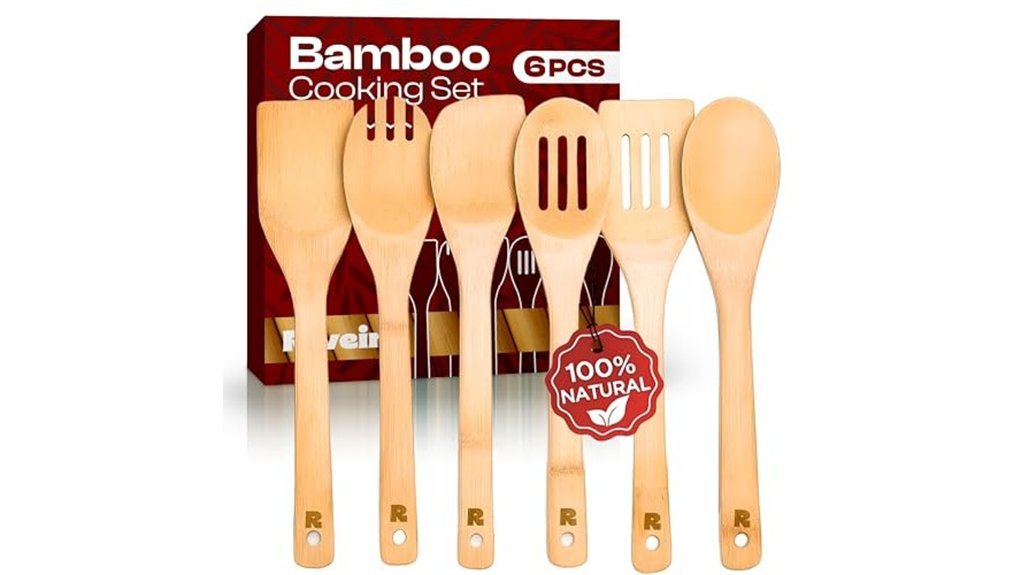
Riveira’s 6-piece bamboo set suits cooks seeking a durable, all-purpose utensil collection. Made from 100% organic bamboo, the utensils include spoons, spatulas, slotted tools, and a turner for stirring, flipping, and serving. Their lightweight build still feels sturdy, while the premium material helps resist cracks and stains. The non-toxic design works safely with varied cookware. Each piece supports daily meal prep with dependable performance and a classic natural finish. Cleaning is simple, and the limited lifetime warranty adds reassurance, making the set practical for kitchens or gifting.
Best For: Home cooks, beginners, and gift shoppers looking for a durable, all-purpose bamboo utensil set for everyday stirring, flipping, and serving.
Pros:
- Made from 100% organic bamboo with a sturdy, lightweight feel
- Versatile 6-piece set includes spoons, spatulas, slotted tools, and a turner
- Non-toxic, easy to clean, and backed by a limited lifetime warranty
Cons:
- Bamboo utensils may not be ideal for those who prefer silicone or metal tools
- Requires a bit more care than dishwasher-safe kitchenware
- Limited to basic cooking tasks rather than specialized kitchen functions
HANSGO Wooden Spoons for Eating, 6 PCS Small Wooden Spoons, 6 Inch
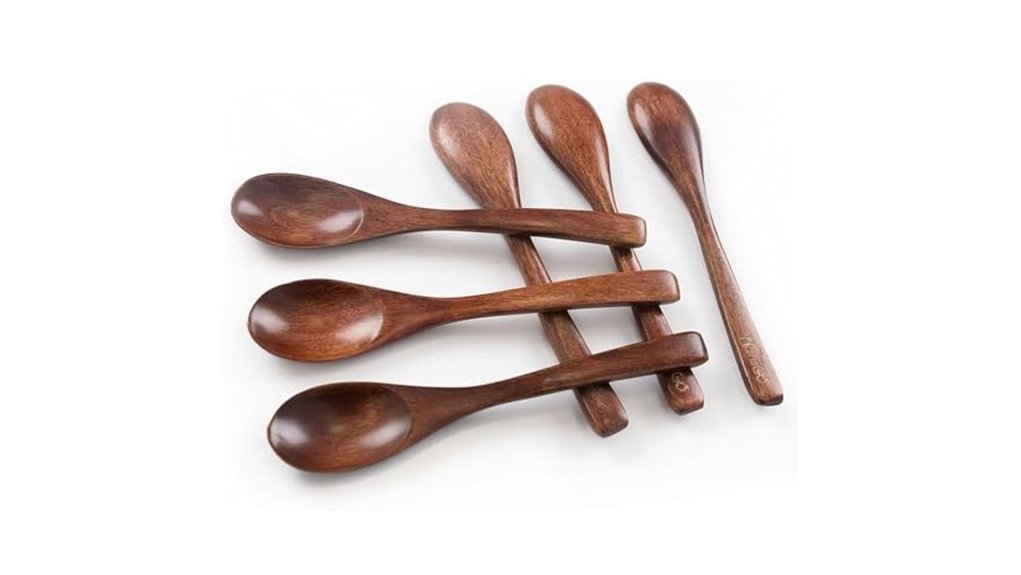
Compact and elegant, HANSGO’s 6-inch wooden spoons suit yogurt lovers and small-jar users alike. The six-piece set uses a deep brown hardwood finish and a 1.2-inch head sized for 4oz to 8oz jars. Smooth, burr-free construction helps protect non-stick cookware and ceramic bowls, while the low-heat wood keeps handles comfortable during use. A food-safe coating supports direct contact with ingredients without altering flavor. Beyond eating, the spoons also work well for coffee stirring, appetizers, desserts, and condiment jars, making them a practical, easy-care choice for frequent kitchen use.
Best For: People who want a compact, attractive set of small wooden spoons for yogurt, desserts, coffee stirring, or serving from small jars.
Pros:
- 6-inch size with a 1.2-inch head is well suited for 4oz to 8oz jars.
- Smooth hardwood finish is gentle on non-stick cookware and ceramic bowls.
- Food-safe, low-heat wood makes them comfortable and versatile for everyday use.
Cons:
- Small size may not be ideal for larger servings or heavier mixing tasks.
- Wood requires more care than metal or silicone to keep in good condition.
- Not dishwasher-friendly if you want to preserve the finish and longevity.
OXO Good Grips Large Wooden Spoon
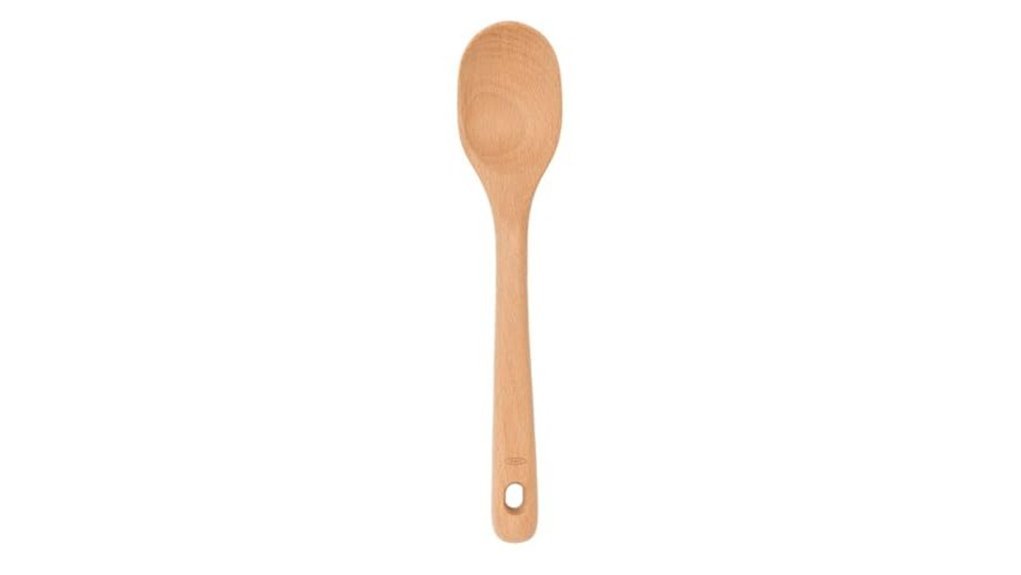
OXO’s large, comfortable handle suits cooks who want easy control while stirring, chopping, or serving. The OXO Good Grips Large Wooden Spoon, model 1058024, is a solid one-piece beechwood utensil finished with natural oil for added protection. Made from FSC-certified beechwood, it reflects responsible forest management. Its natural color and simple construction give it a classic look, while the size and shape support everyday kitchen tasks. It is safe for non-stick cookware and works well in a range of kitchen settings.
Best For: Home cooks who want a sturdy, classic wooden spoon for everyday stirring, chopping, and serving, especially with non-stick cookware.
Pros:
- Solid one-piece beechwood construction feels durable and dependable.
- Large, comfortable handle offers easy control during cooking.
- FSC-certified wood with a natural oil finish adds responsible sourcing and protection.
Cons:
- Wood requires more care than metal or silicone utensils.
- Not ideal for users who prefer dishwasher-safe tools.
- May be too large for small pots or delicate tasks.
9″ Korean Wooden Spoons for Eating, ADLORYEA 6 Pieces Small Wood Spoons
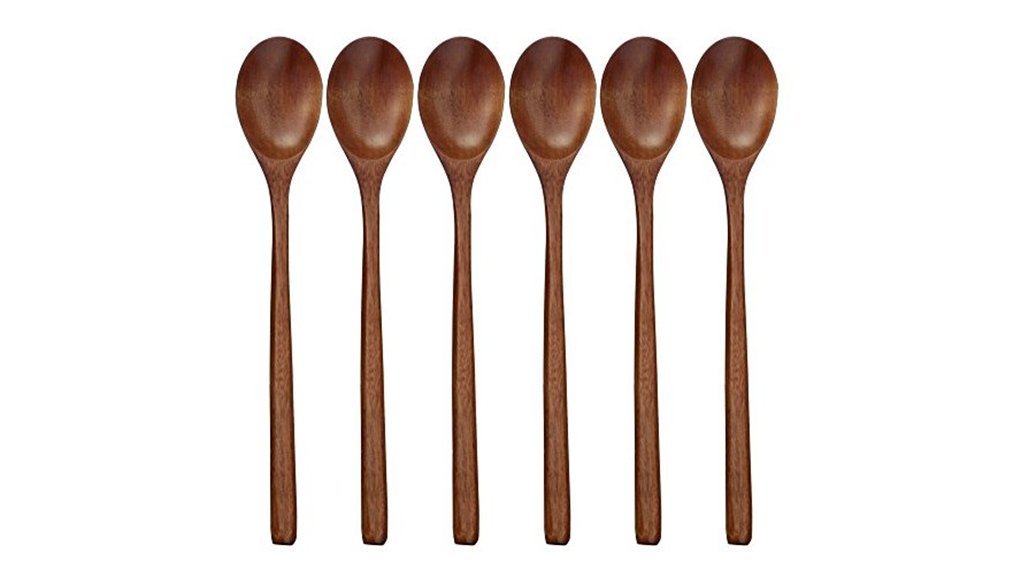
ADLORYEA’s 9-inch Korean wooden spoons suit cooks who want a lightweight, eco-friendly everyday set. Made from Phoebe Nanmu wood and finished with natural plant oil glaze, the six-piece set emphasizes safety and sustainability. Each spoon shows distinct grain patterns, reflecting the wood’s natural character. Hand-ground and smoothly finished, the spoons feel sturdy without excess weight. They work well for rice, cereal, curries, coffee, and hot soups, and they are gentle on non-stick cookware. Packaged in a gift box, the set also suits practical gifting, with customer support available after purchase.
Best For: People who want a lightweight, eco-friendly set of wooden spoons for everyday meals, stirring, and serving, especially with non-stick cookware.
Pros:
- Made from natural Phoebe Nanmu wood with a plant oil glaze for an eco-friendly finish.
- Lightweight, smooth, and sturdy with unique grain patterns in each spoon.
- Versatile for rice, cereal, curries, coffee, and hot soups, and comes in a gift box.
Cons:
- Wooden spoons may require more care than metal or silicone alternatives.
- The 9-inch size may be too small for some users who prefer larger utensils.
- Natural wood grain and finish can vary from spoon to spoon.
Factors to Consider When Choosing Wooden Spoons 2026: Top Picks and Buying Guide
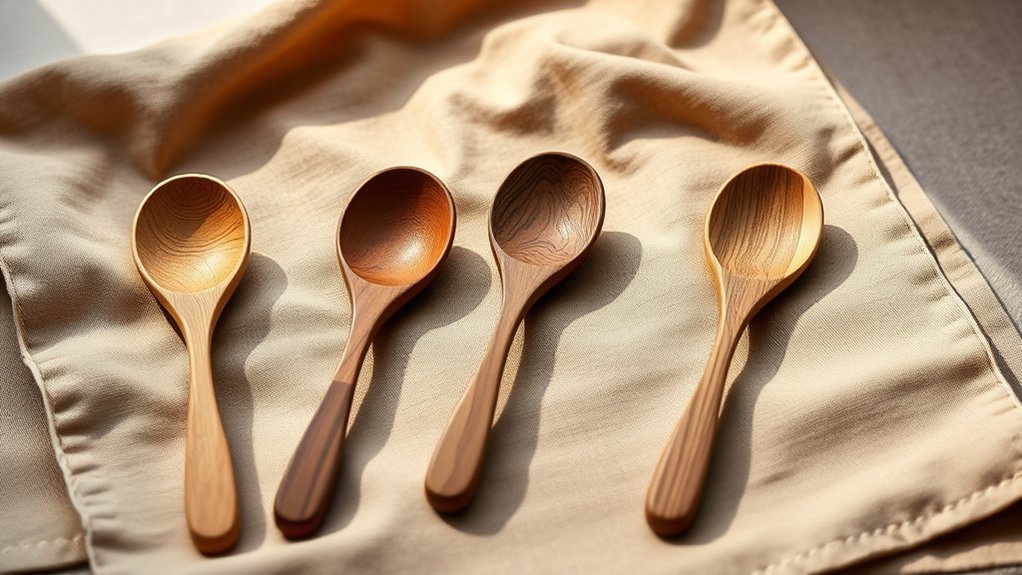
When choosing wooden spoons, the wood type, spoon size, and heat resistance are key factors that shape everyday performance. Finish quality also matters, since it affects smoothness, durability, and how well the spoon resists wear. Care instructions should be reviewed as well to guarantee the spoon stays in good condition over time.
Wood Type
Wood type is one of the most important factors in choosing a wooden spoon, since materials like bamboo and beechwood differ in durability, heat resistance, and overall feel in daily use. Bamboo is often valued for its light weight, natural resistance to wear, and eco-friendly profile, while beechwood is known for sturdiness and low thermal conductivity, which helps keep handles comfortable during cooking. Natural hardwoods and bamboo are also favored because they avoid harmful chemicals and support safer food preparation. Beyond performance, each wood brings distinct grain patterns and tones that can add rustic warmth or refined character to a kitchen. Maintenance also varies: some woods benefit from regular oiling to prevent drying or cracking, while others remain easier to clean and maintain.
Spoon Size
Spoon size plays a major role in how well a wooden spoon performs in different cooking tasks. Smaller spoons, around 6 inches, suit tasting and serving individual portions, while larger models, 9 inches or more, handle stirring and serving bigger dishes with ease. Head diameter matters too: wider heads move ingredients efficiently, whereas narrower heads offer better control for sauces and delicate mixing. Length should match the cookware; deeper pots call for longer spoons, and shallow pans benefit from shorter ones. Handle size and shape also affect comfort, especially during prolonged use. Choosing the right size improves versatility, efficiency, and overall cooking satisfaction, since each task, from mixing to serving, benefits from a spoon proportioned to the job.
Heat Resistance
Heat resistance is one of the main advantages of wooden spoons, since quality options can typically handle temperatures up to 400°F without warping or melting. This makes them suitable for stirring soups, sauces, and other hot dishes without losing shape. Natural materials such as bamboo and beechwood also insulate against heat, helping keep handles comfortable during use. Because wood has low thermal conductivity, it reduces the chance of burns when cooking over high heat. Another practical benefit is safety: wooden spoons do not leach harmful chemicals when exposed to heat, unlike some plastic utensils. To preserve these benefits, they should be kept away from prolonged extreme temperatures and not left soaking in water, which can weaken performance over time.
Finish Quality
A well-crafted finish can make a wooden spoon far more durable, helping it resist moisture, cracking, and warping through repeated use. Finish quality also shapes how the spoon performs in everyday cooking. A natural oil finish can enrich the grain while creating a protective barrier against stains and odors, supporting safe food contact. Smooth finishes lower friction, so the spoon moves easily through ingredients, cleans more readily, and is less likely to mark non-stick surfaces. Eco-friendly options, especially plant-based oils, add sustainability benefits without sacrificing function. High-quality finishes further extend utensil life, helping wooden spoons handle frequent stirring, mixing, and serving across many recipes. In this category, workmanship matters as much as appearance, because the right finish protects both the wood and the cooking tools it touches.
Care Instructions
Proper care helps wooden spoons last longer and perform better in daily cooking. They should be handwashed with mild detergent, then rinsed promptly without soaking, since prolonged water exposure can cause warping and damage. After washing, they need air drying in a well-ventilated spot; dishwashers and direct heat can weaken the wood and shorten its lifespan. A food-safe mineral oil or natural oil finish should be applied regularly to preserve moisture and reduce cracking. Abrasive cleaners and scouring pads are best avoided because they scratch the surface and dull the finish. Storage also matters: wooden spoons should rest in a cool, dry place, preferably in a dedicated holder or drawer, where humidity and environmental stress are minimized for dependable use over time.
Frequently Asked Questions
Are Wooden Spoons Safe for Nonstick Cookware?
Yes, wooden spoons are generally safe for nonstick cookware because they do not scratch delicate coatings. They should still be smooth, clean, and free of splinters, and high heat may eventually cause wear.
How Often Should Wooden Spoons Be Replaced?
Like weathered companions, wooden spoons should be replaced every one to three years, or sooner if cracked, splintered, deeply stained, or persistently odorized. Regular inspection matters, since wear quietly undermines safety and performance.
Can Wooden Spoons Go in the Dishwasher?
Wooden spoons generally should not go in the dishwasher, because heat and prolonged moisture can warp, crack, or split them. Hand washing with mild soap and prompt drying usually preserves their condition and lifespan better.
Do Wooden Spoons Absorb Food Odors Over Time?
Yes, wooden spoons can absorb food odors over time; after many garlicky dinners, they may seem to have a memory grand enough to perfume a whole kitchen. Proper washing, drying, and occasional oiling help reduce lingering smells.
How Do You Remove Stains From Wooden Spoons?
Stains on wooden spoons can be lifted by scrubbing gently with baking soda and water, then rinsing and air-drying. For stubborn marks, a brief soak in vinegar or lemon juice may help, but prolonged soaking should be avoided.
Conclusion
Choosing the right wooden spoon can feel trivial, but the best options prove otherwise. The NAYAHOSE, Riveira, HANSGO, OXO, and ADLORYEA picks stand out for durability, comfort, and everyday usefulness. Some shoppers may worry wooden spoons are hard to maintain, yet proper care keeps them reliable for years. For cooking or eating, these selections offer practical value and a warmer feel than metal or plastic utensils, making them smart additions to any kitchen.