Disclosure: As an Amazon Associate I earn from qualifying purchases. If you click a link on this page and make a purchase, we may receive a small commission at no extra cost to you.
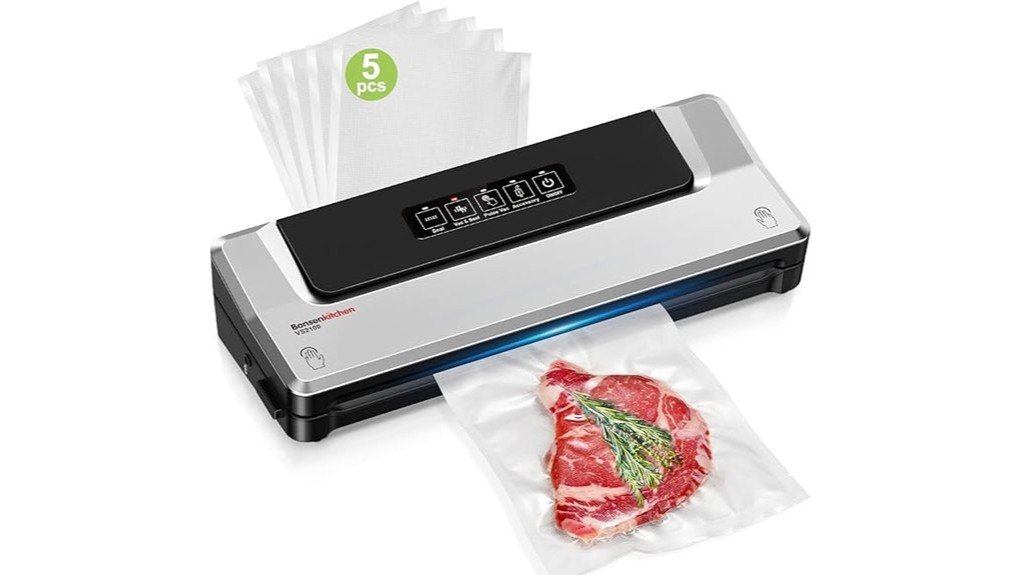
Keeping food fresh, preventing freezer burn, and saving money on bulk groceries can feel like a constant struggle in a busy kitchen. The Bonsenkitchen Vacuum Sealer Machine (Model VS2100) offers a slim, budget-friendly solution engineered to handle up to 30 continuous seals in just 15 minutes. In this review, we test its suction power, operating modes, and real-world durability to help you decide if this compact sealer deserves a spot on your kitchen counter.
Quick Verdict
Rating: 8.8 / 10 (Recommended)
Best For: Meal preppers, bulk grocery shoppers, and sous-vide cooking enthusiasts seeking a reliable, drawer-friendly budget vacuum sealer.
Skip If: You want built-in bag roll storage and an integrated sliding cutter, or you regularly process liquids without pre-freezing.
Key Strengths: Fast 10–12 second sealing cycles, 30-bag continuous sealing capacity, manual Pulse Vac control for delicate foods, and a 3-year warranty.
Bottom Line: The Bonsenkitchen VS2100 Vacuum Sealer delivers dependable -60 kPa suction, airtight thermal seals, and responsive pulse control at an entry-level price point. While it lacks an onboard bag cutter and requires textured vacuum bags, its 2.7-pound footprint and 3-year warranty make it a standout value for everyday home food preservation.
| Specification | Detail |
|---|---|
| Brand & Model | Bonsenkitchen VS2100 (also sold as VS2100-40P 40-Bag Bundle) |
| Dimensions | 15.28 x 5.71 x 3.03 inches (388 x 145 x 77 mm) |
| Weight | 2.7 lbs (approx. 1.2–1.3 kg) |
| Motor Power & Voltage | 120W–135W (120V ~ 60Hz) |
| Suction Strength | Up to -60 kPa |
| Maximum Seal Width | 11.81 inches (30 cm) |
| Sealing Speed & Capacity | 10–12 seconds per bag; up to 30 continuous bags in 15 minutes |
| Operational Modes | Vac & Seal, Pulse Vac, Seal Only, Accessory Mode |
| Housing Material | Acrylonitrile Butadiene Styrene (ABS) in Silver or Black |
| Bag Requirement | Textured/embossed vacuum sealer bags or channel rolls (up to 11 in. wide) |
| Included Starter Kit | 5 Pre-Cut Bags (8 x 12 in.) in standard kit, or 40 Pre-Cut Bags (twenty 6 x 10 in. + twenty 8 x 12 in.) in bundle kit; Air Suction Hose; User Manual |
| Warranty | 3-Year Manufacturer Warranty (1-year base + 2-year extension) |
| Price Tier | Budget-Friendly (Check Price on Amazon) |
What Is the Bonsenkitchen Vacuum Sealer?
The Bonsenkitchen Vacuum Sealer Machine (Model VS2100) is a slim, countertop kitchen appliance engineered to extend food shelf life by extracting oxygen from textured storage bags and vacuum containers. Weighing just 2.7 lbs and measuring 15.28 x 5.71 x 3.03 inches, it fits easily into a standard kitchen drawer when not in use.
Designed for home cooks, weekly meal preppers, and sous-vide enthusiasts, the VS2100 pulls up to -60 kPa of vacuum pressure to slow oxidation, lock in moisture, and prevent freezer burn. Its 11.81-inch heating bar accommodates both standard 8-inch and 11-inch vacuum bags or rolls. From portioning bulk warehouse meat to vacuum-sealing mason jars and crisper canisters with the included external suction hose, it delivers practical food preservation without occupying permanent counter space.
Pro Tip: When sealing liquid-rich dishes, marinades, or raw meat with surface juices, pre-freeze the food on a parchment-lined baking sheet for 1 to 2 hours before vacuum sealing. This prevents liquid from getting drawn into the vacuum chamber and compromising the heat seal.
Who Should Buy It?
Best For
- Meal preppers who batch-cook and freeze weekly portions ahead of time.
- Wholesale club shoppers buying bulk meat, poultry, cheese, or coffee beans.
- Sous-vide cooks needing tight, water-resistant bag seams for immersion water baths.
- Small kitchens and apartments where drawer storage matters more than onboard roll compartments.
Skip If
- You need heavy-duty commercial processing exceeding 50 to 100 bags per session.
- You want an integrated sliding bag cutter and internal roll storage chamber.
- You expect to vacuum seal standard smooth plastic zip-top or sandwich bags.
Key Features Breakdown
Globefish Technology for 30-Bag Continuous Sealing
A common frustration with entry-level vacuum sealers is mandatory cool-down pauses after just 5 or 6 bags. The Bonsenkitchen VS2100 uses the brand’s Globefish continuous-working design and a rapid thermal heating bar to seal up to 30 bags in a 15-minute window. Each automatic vacuum-and-seal cycle finishes in roughly 10 to 12 seconds, allowing you to break down a wholesale pack of chicken breasts or steaks in a single session without overheating interruptions.
Four Operational Modes for Different Food Types
Different ingredients require different suction intensity. Rather than adding a separate “Dry/Moist” toggle, the VS2100 combines automatic extraction with manual pulse control across four top-panel modes:
- Vac & Seal Mode: Fully automated one-touch air extraction followed immediately by thermal sealing. Best for firm foods like raw steaks, pork chops, hard cheeses, nuts, and frozen vegetables.
- Pulse Vac Mode: Gives you manual, feather-touch control over the vacuum pump. Press and hold the button to extract air in short bursts, release to pause the suction at any point, and press Seal when ready. This prevents soft foods like fresh berries, burger buns, pastries, or moist foods from being crushed or having liquid pulled into the channel.
- Seal Only Mode: Activates the 11.81-inch heating element without running the vacuum pump. Use it to create custom-length bags from continuous rolls or to reseal original foil-lined potato chip and snack bags.
- Accessory Mode: Pairs with the included external air suction hose to evacuate air from compatible vacuum canisters, marinating bowls, mason jar sealers, or wine bottle stoppers.
Compact Footprint & Easy Moisture Cleanup
At 2.7 lbs and just over 3 inches tall, the ABS housing is light enough to lift with one hand and slim enough to slide beside foil and wrap boxes in a kitchen drawer. The brushed silver top panel resists fingerprints and wipes clean easily, while the internal vacuum chamber baffle catches minor moisture droplets so you can wipe it out between batches.
Before You Buy: Standard smooth polyethylene food bags or thin sandwich bags will only seal shut—they will not vacuum properly. You must use textured (embossed) vacuum sealer bags or channel rolls so trapped air can travel out through the micro-channels before the heat bar fuses the plastic.
What to Expect in Everyday Use
For Weekly Meal Prep
When portioning cooked grains, marinated chicken breasts, or blanched vegetables for the week ahead, the automated Vac & Seal cycle completes in 10 to 12 seconds once the lid is latched. Removing air allows stacked bags to lie completely flat in the freezer, freeing up shelf space and preventing frost buildup.
For Bulk Foods and Wholesale Meat
Dividing family packs of ground beef, salmon fillets, or pork tenderloin into meal-sized portions is where the 30-bag continuous sealing rating shines. You can pre-load 10 to 15 bags on the counter and seal them back-to-back without waiting a full minute between every single bag.
For Soft Produce, Bread, and Moist Foods
Because the VS2100 does not have an automated “Moist” button, the Pulse Vac button serves as your manual control for both delicate and juicy items. When sealing raspberries, muffin halves, or marinated meats, pulsing the suction lets you watch the bag tighten and stop the pump the exact moment moisture approaches the top lip, followed by a press of the Seal button.
For Sous-Vide Cooking and Canister Preservation
Sous-vide cooking requires complete air removal so bags stay submerged in circulating water baths without floating. The VS2100 pulls a tight vacuum around seasoned cuts, and the heat bar creates an even seam across bags up to 11.81 inches wide. For extra security during long 24-hour water baths, you can run a second parallel seal 0.25 inches above the first seam using the Seal Only button.
Placement, Usage, and Maintenance Tips for Best Results
- Leave Proper Headspace and Side Margins: Follow the manufacturer’s manual by leaving at least 3 inches (76 mm) of empty space between the food and the open top of the bag, plus at least 0.5 inches (12.7 mm) of clearance along both side edges.
- Position the Bag Mouth Flat in the Chamber: Insert the open end of the bag flat inside the lower vacuum chamber up against the baffle. Wrinkles or folds across the heating strip can leave tiny air channels that leak over time.
- Wipe the Inner Bag Lip Clean: Fold the top cuff of the bag outward when loading raw meat, or wipe the inside sealing area dry with a paper towel before closing the lid so grease does not weaken the thermal bond.
- Lock Both Side Latches Until They Click: Press down firmly on both ends of the lid until you hear an audible click on the left and right latches. If one side isn’t fully latched, the foam gaskets won’t compress and the pump won’t pull a vacuum.
- Wait for the Indicator Light Before Releasing: Keep the lid locked until the LED indicator light turns off completely, then press the left and right release buttons simultaneously to open the lid.
- Store the Lid Unlatched: When putting the machine away in a drawer or cabinet, leave the lid unlatched. Keeping the latches locked in storage permanently compresses the upper and lower foam sealing gaskets, which eventually causes suction loss.
Food Safety and Material Care
Vacuum sealing extends storage life significantly—often keeping frozen meats free of freezer burn for 1 to 2 years compared to 2 to 6 months in conventional wrap—but it does not replace refrigeration or freezing. Always unplug the unit and wipe out the vacuum chamber trough and sealing strip with a soft damp cloth and mild dish soap after sealing raw meat, poultry, or fish. Never submerge the appliance in water. When cooking sous vide or reheating in the microwave, verify that your embossed bags are BPA-free and rated for boiling or simmering temperatures.
Pros and Cons
Pros
- 30-bag continuous sealing capacity in 15 minutes prevents frustrating cool-down delays.
- Fast 10–12 second vacuum-and-seal cycles with -60 kPa suction strength.
- Pulse Vac mode gives exact manual suction control for soft produce and juicy foods.
- Slim 2.7 lb frame (15.28 x 5.71 x 3.03 in.) fits easily in standard kitchen drawers.
- Wide 11.81-inch sealing bar works with both 8-inch and 11-inch bags and rolls.
- Available in starter kits with either 5 bags or a generous 40-bag bundle plus accessory hose.
- Backed by a 3-year manufacturer warranty.
Cons
- Lacks a built-in bag cutter and internal roll storage compartment.
- No dedicated one-touch “Moist” button (requires manual timing via Pulse Vac or pre-freezing liquids).
- Lower drip trough is non-removable, requiring careful wiping after sealing raw meats.
- Requires firm two-handed downward pressure to click both side latches shut.
Check Latest Price on Amazon →
Is It Worth the Price?
Positioned firmly in the budget vacuum sealer tier, the Bonsenkitchen VS2100 delivers strong everyday value for home kitchens. Many entry-level machines in this price bracket lack manual pulse control and overheat after sealing fewer than 10 bags in a row. By pairing 30-bag continuous sealing capability with an external accessory port and a 40-bag bundle option, the VS2100 eliminates the hidden upfront cost of buying extra bags immediately.
When you factor in savings from buying meat in bulk, preventing freezer-burned produce, and having a 3-year manufacturer warranty, the sealer easily pays for itself within a few grocery trips.
How It Compares to Alternatives
Before buying the Bonsenkitchen VS2100, it helps to see how it stacks up against sibling models in Bonsenkitchen’s lineup as well as leading competitors from Geryon, FoodSaver, and Nesco:
- Bonsenkitchen VS2100 vs. Bonsenkitchen VS2000 & VS3802: The VS2000 shares the exact same internal 135W platform and 15.28 x 5.71 x 3.03-inch dimensions as the VS2100, primarily differing in exterior trim color (matte black vs. brushed silver) and starter bag count. If you want an onboard bag cutter, internal roll storage, and a dedicated Dry/Moist mode selector, step up to the Bonsenkitchen VS3802 (140W, -70 kPa suction, 16.02 x 6.54 x 3.62 inches, 4.19 lbs).
- Bonsenkitchen VS2100 vs. Geryon E2900-MS: The Geryon E2900-MS is another popular compact budget sealer (14.4 x 5.5 x 2.7 inches, 2.6 lbs) that features dedicated Dry/Moist buttons and a detachable lower base for easier sink cleaning. However, the Geryon lacks a manual Pulse Vac button for delicate foods and requires longer cool-down intervals between seals than the Bonsenkitchen VS2100.
- Bonsenkitchen VS2100 vs. FoodSaver FM2000: The FoodSaver FM2000 (16.3 x 3.9 x 4.0 inches, 7 lbs, 120W) offers an ergonomic Easy-Lock Latch lever and a 5-year limited warranty, but it costs noticeably more, takes up more storage space, and lacks a manual Pulse mode on the base unit.
- Bonsenkitchen VS2100 vs. Nesco Deluxe VS-12: If you process large batches of game meat, fish, or garden harvests, the Nesco VS-12 (16.0 x 8.0 x 4.5 inches, 6 lbs) is a serious mid-range upgrade. It packs a 130W double vacuum pump (25.1 inHg), variable pressure settings, a double heat seal option, and built-in roll storage with a bag cutter—though at roughly double to triple the cost and footprint of the Bonsenkitchen.
| Model | Weight & Size | Key Features | Warranty | Best For |
|---|---|---|---|---|
| Bonsenkitchen VS2100 | 2.7 lbs 15.28 x 5.71 x 3.03 in. |
-60 kPa, 30 continuous seals, Pulse Vac, Accessory port | 3 Years | Best budget pick for compact storage & continuous meal prep |
| Bonsenkitchen VS3802 | 4.19 lbs 16.02 x 6.54 x 3.62 in. |
-70 kPa, built-in cutter, roll storage, Dry/Moist modes | 3 Years | Shoppers who want onboard roll storage & a sliding cutter |
| Geryon E2900-MS | 2.6 lbs 14.4 x 5.5 x 2.7 in. |
Detachable base for cleaning, Dry/Moist settings | 1 Year | Light users prioritizing a removable lower lid for washing |
| FoodSaver FM2000 | 7.0 lbs 16.3 x 3.9 x 4.0 in. |
120W, Easy-Lock Latch lever, accessory hose port | 5 Years | Buyers wanting a long 5-year warranty & lever latch |
| Nesco Deluxe VS-12 | 6.0 lbs 16.0 x 8.0 x 4.5 in. |
130W double pump (25.1 inHg), double heat seal, cutter | 1 Year | Heavy-duty bulk freezing, hunters, and large families |
Frequently Asked Questions
Can I use regular plastic sandwich bags or other brands of vacuum bags?
Regular smooth plastic sandwich or zip-top bags will not work for vacuum extraction; you must use textured or embossed vacuum sealer bags so air can escape through the micro-channels. However, you do not have to buy Bonsenkitchen-branded bags—any third-party embossed vacuum bag or roll up to 11.81 inches wide (including standard 8-inch and 11-inch FoodSaver rolls) works seamlessly.
How do I clean the vacuum sealer after processing raw meat?
Unplug the machine and allow the heating strip to cool completely. Wipe down the exterior ABS casing, foam gaskets, and internal vacuum chamber trough using a soft damp cloth with mild dish soap or kitchen-safe disinfectant, then dry thoroughly. Never use abrasive scouring pads or submerge the appliance in water.
What is covered under the 3-year manufacturer warranty?
Bonsenkitchen backs the VS2100 with a 3-year warranty (extending its original 1-year coverage by 2 additional years), which covers defects in materials and workmanship under normal household use.
Does this sealer work with liquid foods like soups or marinades?
Yes, with proper technique. Because the VS2100 does not have a separate “Moist” button, you should use the Pulse Vac button to manually stop suction before liquid reaches the vacuum channel, then press Seal. For soups, stocks, and heavy marinades, pre-freeze the liquid solid for 1 to 2 hours before vacuum sealing.
Can I vacuum seal delicate items like soft fruits or fresh bread?
Yes. Using the Pulse Vac mode lets you pull air out in short, controlled bursts while watching the bag. As soon as the bag snugs up against strawberries, raspberries, or baked goods without squishing them, release the Pulse button and press Seal.
Does it come with starter bags and accessories?
Yes. Depending on the package option selected, the standard VS2100 kit includes 5 pre-cut bags (8 x 12 inches), while the VS2100-40P bundle includes 40 pre-cut vacuum bags (twenty 6 x 10-inch bags and twenty 8 x 12-inch bags). Both kits include the external air suction hose and user manual.
Why is my vacuum sealer running but not pulling air out of the bag?
Check three things: first, confirm you are using a textured/embossed vacuum bag rather than a smooth plastic bag; second, ensure the open end of the bag is placed inside the lower vacuum chamber channel (not extending past the air intake port); and third, press down firmly on both ends of the lid until both the left and right latches click into place.
The Bottom Line
The Bonsenkitchen Vacuum Sealer Machine (VS2100) excels at delivering fast, airtight food preservation without the bulk or high cost of oversized countertop systems. Its 2.7-pound drawer-friendly profile, 30-bag continuous sealing stamina, and manual Pulse Vac control make it an easy recommendation for weekly meal preppers, sous-vide cooks, and budget-conscious households looking to cut down on food waste.
Ready to Upgrade Your Meal Prep?
Check current bundle options, availability, and pricing on Amazon before making your decision.