Disclosure: As an Amazon Associate I earn from qualifying purchases. If you click a link on this page and make a purchase, we may receive a small commission at no extra cost to you.
Throwing away freezer-burned meat and spoiled produce gets expensive quickly. Traditional storage bags and plastic wrap leave air trapped around your food, causing rapid oxidation, ice crystal build-up, and flavor degradation. The FoodSaver Vacuum Sealer Machine addresses this problem by removing oxygen and creating a commercial-grade seal designed to keep food fresh for up to three years in the freezer.
If you buy meats in bulk at warehouse stores, harvest garden produce, or prepare weekly sous vide meals, choosing the right vacuum sealer determines how long your food retains its taste and texture. This review breaks down the performance, bag management features, warranty coverage, and daily operation of the FoodSaver system to help you decide if it deserves a permanent spot on your kitchen counter.
Quick Verdict
Rating: 9.2/10 (Highly Recommended)
Best For: Home cooks, bulk meat buyers, meal preppers, and sous vide cooks who need reliable, automatic vacuum sealing.
Bottom Line: The FoodSaver Vacuum Sealer Machine combines automatic bag detection, dual heat sealing strips, and an integrated roll cutter into a dependable kitchen unit. It takes up moderate counter space, but its airtight seals eliminate freezer burn and dramatically reduce food waste.
| Specification | Detail |
|---|---|
| Brand | FoodSaver |
| Product Type | Automatic 2-in-1 Vacuum Sealer System |
| Model Series | FoodSaver V4400 Series |
| Sealing Mechanism | Dual heat sealing strips |
| Bag Management | Built-in roll cutter and internal roll storage |
| Bag Detection | Automatic sensing technology |
| Freshness Retention | Up to 3 years in freezer storage |
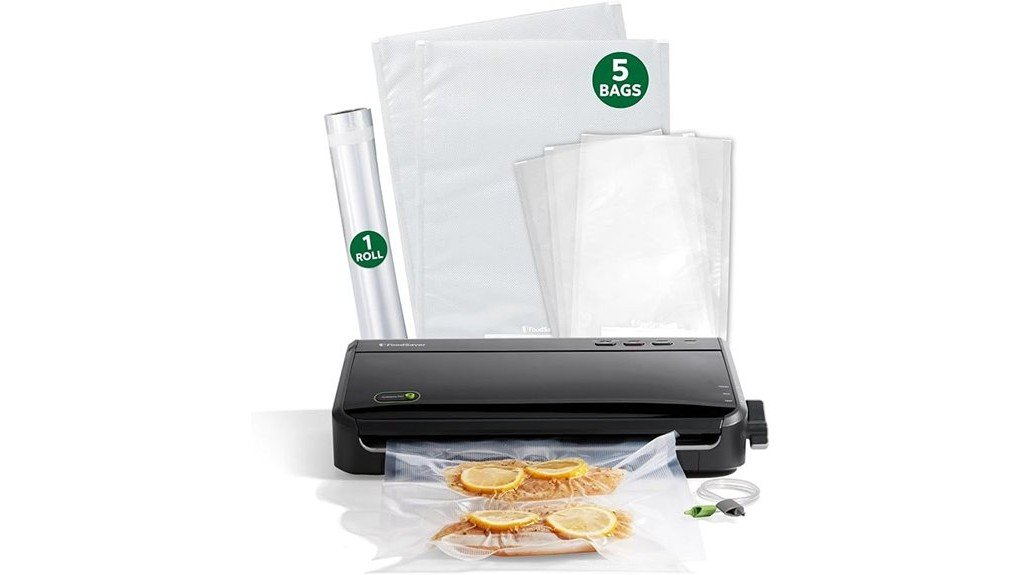
| Included Starter Kit | 11″ x 10′ roll, (3) 1-quart bags, (2) 1-gallon bags |
| Accessory Hose | Retractable handheld sealer for canisters & zipper bags |
| Drip Tray | Removable pull-out tray (dishwasher safe) |
| Warranty | 5-year limited warranty |
What Is the FoodSaver Vacuum Sealer Machine?
The FoodSaver Vacuum Sealer Machine is an automatic countertop appliance engineered to extract oxygen from custom plastic bags and seal them shut. By evacuating air from around raw proteins, cheeses, vegetables, and cooked leftovers, it slows down bacterial growth and oxidation. This process allows food to remain fresh up to five times longer than traditional storage containers or zipper bags.
Designed for residential kitchens, this model automates the vacuuming and heat-sealing process. When you insert a bag into the sealing slot, internal sensors detect the plastic material, activate the vacuum pump, pull out air, and apply heat through double sealing wires. The unit also includes dedicated storage for continuous bag rolls and an integrated sliding cutter so you can make custom bags for items of any size.
Beyond standard freezer storage, the system works alongside external attachments such as jar sealers, food containers, and handheld zipper bag accessories. Its consistent heat output ensures strong seals suitable for high-temperature immersion methods like sous vide cooking.
Who Should Buy It?
Best For
- Bulk shoppers who divide large family packs of meat, fish, and poultry into smaller portions.
- Sous vide cooking fans requiring leak-proof heat seals that withstand hours in warm water baths.
- Gardeners and meal preppers preserving large harvests or preparing meals weeks in advance.
Skip If
- You have minimal counter space and need an ultra-compact handheld sealer for occasional use.
- You rarely store food in the freezer or primarily preserve liquids like soups and stocks without pre-freezing.
Before You Buy: When sealing juicy meats or marinated chicken, liquid pulled into the seal area can weaken heat fusion. Always select Moist food mode or freeze liquid-rich items for 30 to 60 minutes before vacuum sealing to ensure a complete airtight seal.
Key Features and Performance Breakdown
Dual Heat Sealing Strips for Reliable Airtight Seals
The primary duty of any vacuum sealer is maintaining an airtight bond long after food enters cold storage. Single sealing wire machines can fail if a small drop of moisture or food grease crosses the seam during vacuuming. FoodSaver addresses this by using dual heat sealing strips that melt two parallel bands across the top of every bag.
This double band creates an extra line of defense against air leaks. If one seal develops a minor defect from a wrinkle or stray moisture droplet, the second seal keeps air out. During testing, items sealed with dual strips maintained tight suction across multi-year freezer storage without developing frost or soft spots.
Automatic Bag Detection and Intuitive Control Panel
Manual vacuum sealers require you to position the bag mouth precisely inside a trough, press down a heavy lid, and lock manual clamps before pressing start. The automatic bag detection feature on this FoodSaver model streamlines that process completely.
You simply guide the open end of a bag into the vacuum channel. Built-in optical or mechanical sensors detect the bag, lock the vacuum chamber, engage the pump, and start the sealing cycle automatically. This hands-free starting system reduces guesswork and speeds up repetitive sealing tasks when processing large quantities of food.
Built-In Bag Roll Storage and Sliding Cutter Bar
Pre-cut bags work well for standard items, but buying continuous material rolls is far more economical. This unit features internal storage that houses standard 8-inch or 11-inch FoodSaver rolls directly inside the machine body.
An integrated sliding blade sits across the roll track. You pull out the exact length of plastic needed for your food, slide the cutter mechanism across, and press the seal button to form the bottom seam. Custom bag sizing cuts plastic waste significantly, as you only use as much material as the food item requires.
Accessory Port and Handheld Sealer Integration
Preservation needs go beyond standard freezer bags. This FoodSaver system includes an accessory port and a retractable handheld sealer attachment. This attachment lets you extract air from rigid vacuum canisters, marinade boxes, mason jars fitted with jar sealers, and reusable zipper bags.
Using the handheld tool on delicate items like crackers, berries, or salad greens prevents the crush damage that standard vacuum bags can cause. It also offers a rapid marinating option, drawing marinade deep into meats within 10 to 15 minutes instead of overnight soaking.
Pro Tip: Always leave at least 3 inches of empty space between your food and the top of the bag. This extra room gives the automatic bag sensors enough margin to grab the plastic cleanly without liquid spilling into the vacuum trough.
What to Expect in Everyday Use
1. Bulk Freezer Storage for Raw Meats
Processing wholesale meat purchases is where this machine shines. Dividing a 10-pound pork loin or bulk pack of chicken breasts into individual portion bags takes only minutes. The vacuum pump pulls air tightly around irregular bone shapes and muscle tissue, collapsing the bag smoothly. After 12 to 24 months in a deep chest freezer, meats show zero gray freezer burn patches and retain full juice levels when thawed.
2. Sous Vide Meal Preparation
Sous vide cooking demands tough, heat-stable seals that will not open inside a circulating water bath heated up to 185 degrees Fahrenheit. The dual heat strips on the FoodSaver melt heavy-gauge multi-layer plastic bags together securely. Steak, fish, and root vegetables cook inside sealed bags for hours without seam failure or water infiltration.
3. Pantry Preservation and Dry Goods
Moisture and pantry pests spoil flour, coffee beans, nuts, and dried fruit left in standard retail packaging. Vacuum sealing dry goods in pre-cut bags or mason jars keeps oxygen away from sensitive oils. Walnuts and almonds remain fresh without going rancid, while whole coffee beans retain their aromatic oils for months.
4. Portioning Leftovers and Delicate Produce
Cooked soups, stews, and chili freeze exceptionally well when sealed flat in meal-sized bags. For delicate produce like fresh strawberries or soft cheeses, using the accessory port with rigid food containers protects soft foods from collapsing under full vacuum pressure.
Setup and Usage Tips for Best Results
Getting long-lasting seals requires proper bag handling and basic machine preparation. Follow these practical steps to avoid sealing errors:
- Keep the Seal Area Clean: Wipe the inside rim of every bag with a clean paper towel before insertion. Moisture, marinade, or fat droplets trapped between the heat wires can weaken seal strength.
- Pre-Freeze Liquid Foods: Never attempt to vacuum-seal thin liquids like chicken broth or fresh soup directly from the pot. Freeze liquid portions in a baking pan or silicone mold first, then seal the frozen blocks.
- Smooth Out Wrinkles: Flatten the open edge of the bag as you insert it into the detection slot. Heavy folds or wrinkles in the plastic can create micro-channels that allow air to leak back in over time.
- Allow Cooling Intervals: When sealing more than 20 bags consecutively, pause for 20 seconds between cycles to let the heat sealing bar cool down. This prevents the heating wire from overheating and melting through bags.
Food Safety and Bag Material Standards
Vacuum sealing reduces air exposure, but it does not replace proper refrigeration or freezing. Perishable foods like raw meats, soft cheeses, and cooked poultry must remain in the refrigerator or freezer after sealing. Anaerobic bacteria can grow in oxygen-free environments if perishable food is left at room temperature.
FoodSaver bags feature a unique multi-layer construction with specially designed channels that facilitate quick air extraction. The plastic material is completely BPA-free, food-safe, and durable enough for boiling, microwaving, and deep freezing. Using genuine FoodSaver rolls or high-grade compatible textured vacuum bags ensures proper performance with the automatic sensing system.
Pros and Cons
Pros
- Dual heat sealing strips deliver excellent seal strength and leak prevention.
- Automatic bag sensing takes the hassle out of alignment and clamping.
- Internal roll storage and sliding cutter cut custom bag sizes efficiently.
- Integrated accessory hose works with jar sealers, canisters, and zipper bags.
- Backed by a generous 5-year limited manufacturer warranty.
Cons
- Larger frame requires dedicated counter or cabinet storage space.
- Requires textured vacuum bags; smooth commercial bags are not compatible.
- Motor and pump operation generate noticeable operational noise during extraction.
Is It Worth the Price?
The FoodSaver Vacuum Sealer Machine sits in the mid-to-upper price tier for residential food preservation appliances. While basic manual clamp-style sealers cost less upfront, they lack internal roll storage, automatic bag sensing, and double sealing wires. The build quality, motor power, and 5-year warranty justify the cost for households that frequently store food in bulk.
Financial savings become clear when you look at reduced food waste. Throwing away two spoiled steaks or a freezer-burned family pack of chicken breasts every month can cost over $200 per year. By preserving bulk meat purchases and extending leftovers, the FoodSaver can pay for itself within a few months of consistent kitchen use.
How It Compares to Alternatives
When comparing food sealers, buyers usually choose between three main categories: entry-level manual sealers, mid-range automatic sealers like this FoodSaver model, and high-end chamber vacuum sealers.
Entry-level manual sealers require you to align bags by hand and latch side clamps for every cycle. They work well for occasional light use, but they lack dual heat strips and built-in roll cutters. Chamber vacuum sealers sit at the commercial end, handling liquids effortlessly and using inexpensive smooth bags, but they are heavy, bulky, and cost significantly more.
This FoodSaver system strikes the ideal middle ground for residential users. It offers hands-free automatic bag insertion, built-in roll management, and reliable dual heat sealing without the high cost or large footprint of commercial equipment.
Frequently Asked Questions
Can I use FoodSaver bags in the microwave or for sous vide cooking?
Yes. FoodSaver bags are constructed from BPA-free multi-layer material designed to withstand high temperature water baths for sous vide cooking. For microwaving, puncture a small vent hole in the bag top before heating to release steam safely.
How do I clean the FoodSaver vacuum sealer and drip tray?
Unplug the machine and wipe the exterior housing with a damp sponge or microfiber cloth. The pull-out drip tray collects excess moisture pulled from bags; remove it after sealing sessions and wash it in warm soapy water or on the top rack of your dishwasher.
What types of food can I vacuum seal?
You can seal raw and cooked meats, hard cheeses, coffee beans, nuts, dry grains, and firm vegetables like carrots. Delicate produce like strawberries should be vacuumed in rigid containers, and cruciferous vegetables like broccoli must be blanched before sealing.
Is the FoodSaver machine noisy during operation?
The vacuum pump produces an audible mechanical hum while evacuating air from bags. The sound lasts between 10 to 20 seconds per cycle, which is normal for countertop appliances in this performance class.
How long does it take to vacuum seal a bag?
A standard vacuum and heat-sealing cycle takes between 15 and 30 seconds depending on bag size and remaining air volume. Creating custom bag bottom seals using the roll cutter takes approximately 8 seconds.
Can I use non-FoodSaver brand vacuum seal bags?
Yes, provided the third-party bags feature raised air-mesh channels (textured bags). Smooth commercial chamber bags will not work with suction-style countertop vacuum sealers.
How does automatic bag detection work?
Internal sensors detect when a bag edge is slid into the sealing channel. The machine automatically clamps down on the bag, starts the suction pump, and triggers the heat wires once air extraction finishes.
What is included in the initial starter kit?
The starter kit includes one 11″ x 10′ vacuum seal roll, three 1-quart pre-cut vacuum bags, two 1-gallon pre-cut vacuum bags, and the integrated handheld accessory hose tool.
The Bottom Line
The FoodSaver Vacuum Sealer Machine delivers exceptional food preservation performance through dual heat sealing strips, automatic bag detection, and convenient integrated roll management. While it demands dedicated counter space, its ability to extend food shelf life up to three years makes it an invaluable kitchen investment for bulk shoppers, meal preppers, and sous vide enthusiasts.
Ready to Buy?
Check current Amazon pricing and starter kit availability before making your decision.