
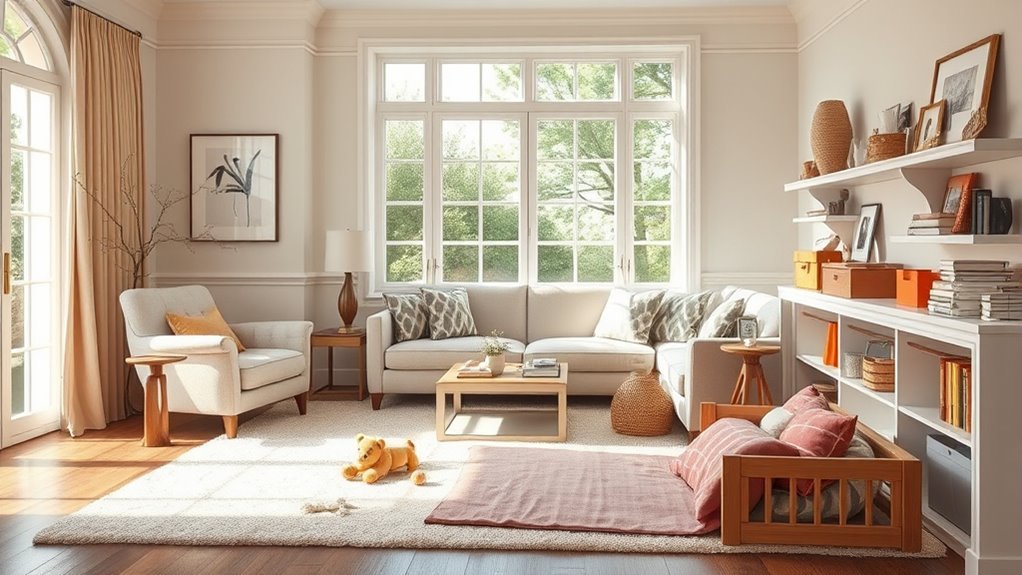
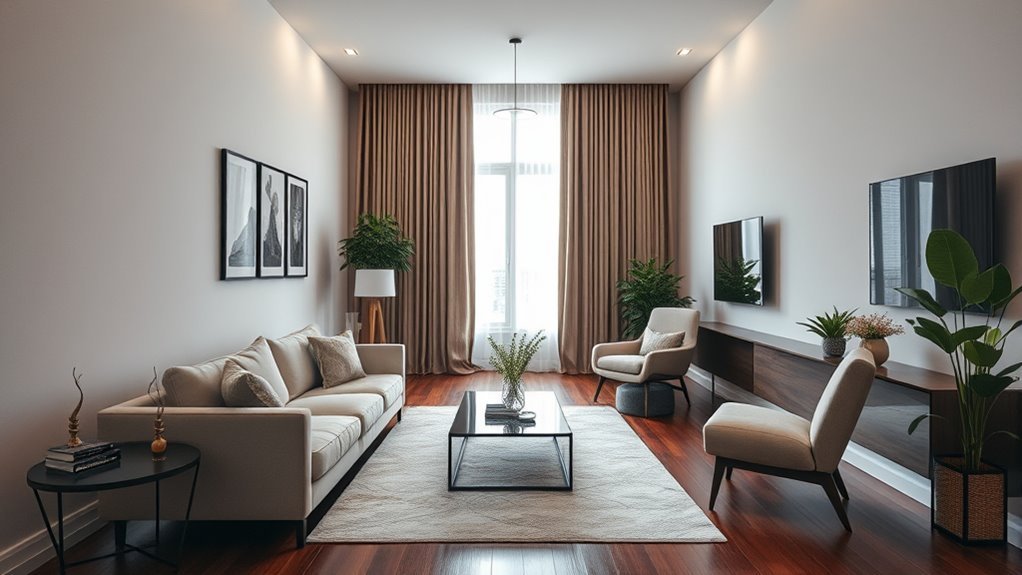
Childproofing a living room does not have to mean covering every surface in foam or giving up the calm, polished look you worked hard to create. The best approach is to layer safety into the design: soften sharp corners, anchor heavy furniture, control cords, choose washable fabrics, hide small hazards, and use storage that looks intentional. The result is a room that feels warm, grown-up, and easier for little ones to explore with fewer risks.
Quick Answer
To childproof a living room without losing style, start by anchoring furniture and TVs, then choose rounded pieces, washable performance fabrics, closed storage, cordless window coverings, non-slip rugs, and décor that cannot shatter or become a choking hazard. Keep the room beautiful by using woven baskets, built-ins, soft textures, and safety gates that match your finishes.
Key Takeaways
- Treat anchoring as the first design step: bookshelves, media consoles, dressers, cabinets, and TVs should be secured before you style the room.
- Rounded furniture, soft rugs, and washable fabrics make the room safer and easier to live in, but they do not replace supervision.
- Use closed cabinetry, lidded baskets, and toy rotation to reduce clutter while keeping small parts, batteries, cords, and breakable décor out of reach.
- Choose cordless window coverings where children live or visit, and keep lamp, charger, and baby-monitor cords managed and inaccessible.
- Review the room monthly as your child learns to crawl, pull up, climb, open drawers, or reach higher shelves.
At a Glance
| Time Required | 2 to 4 hours for a basic living-room safety reset; longer if you are installing multiple anchors, gates, or new storage. |
| Difficulty | Easy to moderate. Most changes are simple styling swaps; wall anchoring and gate installation require careful measuring and secure hardware. |
| Tools Needed | Furniture/TV anchoring kits, drill, drill bit, screwdriver, stud finder, measuring tape, cord covers, cabinet locks, non-slip rug pads, and lidded storage. |
| Cost | About $50 to $250 for basic childproofing supplies; more if you replace furniture, window coverings, rugs, or cabinetry. |
Start With a Child-Eye-Level Safety Audit
Before buying new furniture or accessories, walk through the living room from a child’s point of view. Sit or kneel on the floor and look for what a baby or toddler can touch, pull, climb, chew, tip, open, or put in their mouth. This one step keeps the room from becoming a collection of pretty fixes that miss the real hazards.
Focus first on the items that can cause the most serious harm:
- Unanchored bookcases, cabinets, dressers, media consoles, and TVs.
- Dangling cords from lamps, chargers, baby monitors, blinds, shades, or draperies.
- Small décor, loose toy parts, button batteries, magnets, coins, remotes, and decorative stones.
- Glass, ceramic, or sharp-edged objects on low tables and shelves.
- Rugs that slide, curl at the edges, or create a tripping point.
- Plants that may be irritating or toxic if chewed.
Note: Childproofing reduces risk, but it does not make a room “accident-proof.” Supervision still matters, especially when children begin crawling, pulling up, climbing, or opening drawers.
Choose Rounded Furniture for Safety
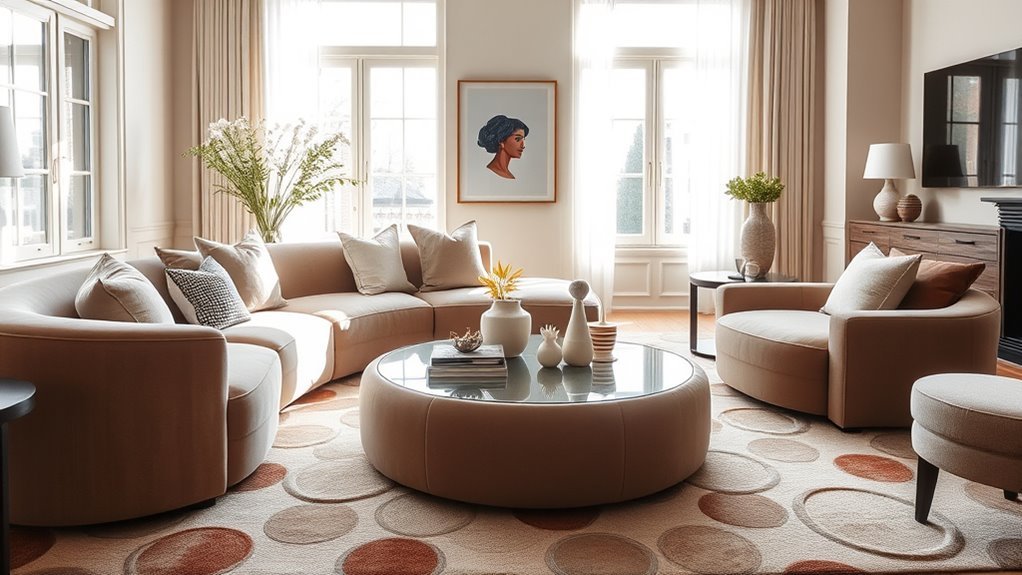
Rounded furniture is one of the easiest ways to make a living room feel softer and more family-friendly without making it look childish. A round coffee table, oval ottoman, curved sofa, or rounded side table reduces the number of sharp corners at toddler head height and helps traffic flow more naturally through the room.
Instead of a glass coffee table with pointed corners, consider a large upholstered ottoman with a tray on top. It gives you a soft landing zone, hidden storage, and a place for drinks when adults are using the room. If you prefer wood, look for radius corners, bullnose edges, or circular nesting tables with a stable base.
Rounded furniture should still be sturdy. Avoid lightweight accent tables that tip easily, pedestal tables with a narrow base, or poufs that slide across hard flooring. A beautiful piece is not child-friendly if a child can pull it over, climb it, or use it to reach a hazard.
Pro Tip: If you love an existing square coffee table, soften it with high-quality corner guards while your child is in the bump-and-climb stage, then remove them later when the risk changes.
Choose Childproof Fabrics That Are Both Durable and Stylish
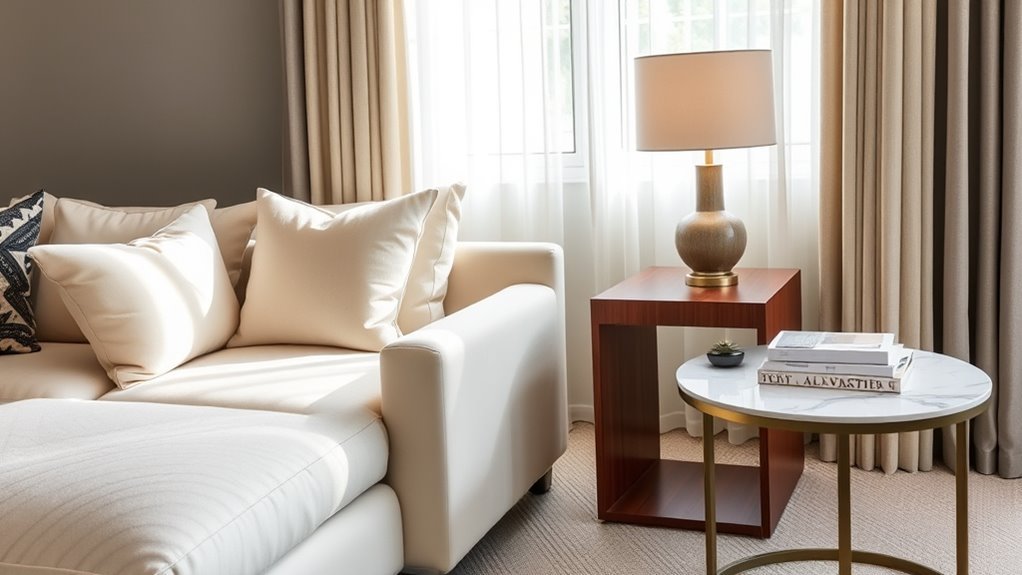
To create a stylish yet childproof living room, choose fabrics that can handle spills, snack crumbs, sticky hands, and frequent cleaning. Performance fabrics, indoor-outdoor textiles, washable slipcovers, microfiber, and tightly woven upholstery are practical choices because they are usually easier to spot-clean than delicate linen, velvet, or loosely woven fabric.
Look for these features when choosing upholstery:
- Tight weave: Helps resist snagging and makes crumbs easier to vacuum.
- Medium or patterned color: Hides small stains better than bright white or flat dark fabric.
- Removable covers: Useful for sofas, chairs, and throw pillows that need regular washing.
- Clear cleaning code: Check the manufacturer’s label before using water, solvent, steam, or stain remover.
- Durable cushion fill: Firmer cushions are easier for children to climb on safely than sagging, unstable ones.
Leather can also work, especially protected or finished leather that wipes clean, but not every leather behaves the same way. Some finishes scratch, stain, or absorb oils more easily, so test cleaning products in a hidden area first. If you want a lighter sofa, choose machine-washable slipcovers or a fabric with a strong stain-resistance warranty rather than hoping a delicate textile will survive daily family life.
Recommended Products

【Premium Polyester Material】 Made of high-quality 330g polyester fabric, offering a soft, durable, and comfortable feel for everyday use. The fabric provides a cozy and clean look to refresh your room while maintaining excellent shape and comfort. Designed with a regular fit, the cover is removable and machine washable for easy care. Perfect for families with kids or pets, helping protect your sofa from daily wear and stains.

NEW PATTERN FABRIC: Elevate your home with the ZNSAYOTX sofa slipcover, crafted from a premium, stretchy blend of 85% polyester and 15% spandex. The fabric isn't just durable; it features a unique, elegant texture that adds instant style and charm to your living space. This versatile couch cover is designed for all seasons, keeping your sofa looking fashionable and feeling comfortable throughout the year. It's the effortless upgrade for any room.

NEW PATTERN FABRIC: Elevate your home with the ZNSAYOTX sofa slipcover, crafted from a premium, stretchy blend of 85% polyester and 15% spandex. The fabric isn't just durable; it features a unique, elegant texture that adds instant style and charm to your living space. This versatile couch cover is designed for all seasons, keeping your sofa looking fashionable and feeling comfortable throughout the year. It's the effortless upgrade for any room.
Incorporate Smart Storage Solutions
Creating a childproof living room does not have to mean sacrificing style; it can be an opportunity to use smarter storage that keeps the room calmer. Closed cabinetry, soft-close doors, built-in benches, and oversized woven baskets help hide toys, books, blankets, and baby gear while keeping visual clutter under control.
The safest storage is both attractive and realistic for daily use. If a toy bin is too hard for a child to open, toys will end up on the floor. If a basket has a heavy lid, it can pinch fingers. Choose storage that matches the child’s age and the hazard level of what is inside.
- Use open baskets for soft toys, board books, and blankets.
- Use lidded or latched storage for small parts, art supplies, batteries, remotes, and anything that needs adult access.
- Use closed cabinets for media equipment, cords, cleaning supplies, candles, matches, and fragile décor.
- Use high shelves for display pieces, but avoid placing heavy objects where they could fall.
- Use labels or picture labels so children can help clean up without dumping every bin.
For a polished look, choose storage in materials already present in the room: cane, oak, walnut, painted cabinetry, linen bins, leather handles, or woven seagrass. Repeating those textures makes childproofing look like part of the design instead of an afterthought.
Recommended Products

Oversized Capacity. The woven storage basket has a generous capacity of 83 liters, which provides ample space for storing a variety of items

Reinforced Built-in Handles - Features thickened seamless integrated handles with multilayer woven construction for strong load-bearing. Smooth edge design avoids snagging clothes. Soft grip allows easy carrying from room to room.

XXL Capacity for All Your Storage Needs, Measuring 21.7"D x 13.8"H, this spacious basket effortlessly holds family clothing, blankets, pillows, toys, and laundry. One basket to declutter your entire home
Anchor Furniture, TVs, and Heavy Decor
Anchoring is the least glamorous step, but it is one of the most important. The U.S. Consumer Product Safety Commission’s Anchor It campaign emphasizes securing furniture with drawers, doors, and shelves to help prevent tip-over injuries and deaths. In a living room, that usually means anchoring bookcases, media cabinets, console tables, shelving units, storage cabinets, and televisions.
Warning: Do not rely on a piece being “heavy” to keep it safe. Children can pull out drawers, climb shelves, tug on handles, or grab a TV stand. Secure tall, narrow, or climbable furniture to wall studs with the correct anchoring hardware.
To anchor living-room furniture without hurting the design, hide straps behind the piece, choose low-profile brackets, and place large furniture against walls where anchors can reach studs. If you rent, ask your landlord for permission in writing and keep a small wall-repair kit for move-out. A few small anchor holes are easier to repair than a serious tip-over accident.
Also check what sits on top of furniture. Heavy lamps, framed art, speakers, vases, and sculptures should not sit on low surfaces where a child can pull them down. Use museum putty for lightweight decorative objects placed out of reach, but do not use it as a substitute for anchoring heavy furniture or TVs.
Integrate Style and Safety in Design

Achieving a balance between style and safety comes down to choosing pieces that do more than one job. A storage ottoman can replace a sharp coffee table. A low, anchored media console can hide electronics. A washable rug can soften play space while grounding the room. A decorative safety gate can separate a fireplace, stair opening, or office nook without clashing with the rest of the décor.
Think in layers: soft surfaces at child height, stable furniture at the walls, clear pathways through the center, and adult-only items moved higher or behind doors. This keeps the room functional for everyday family life while preserving the calm, styled look you want.
For a cohesive room, match safety accessories to existing finishes. Choose matte black gates with black hardware, warm wood gates in a wood-toned room, white outlet covers against white trim, and fabric bins that coordinate with the sofa or rug. When safety items repeat the room’s colors, they feel intentional rather than temporary.
Manage Cords, Outlets, Windows, and Plants
Cords are easy to overlook because adults stop seeing them after a while. Children do not. Lamp cords, charging cables, baby-monitor cords, power strips, blind cords, and drapery cords can become pulling, tripping, chewing, or strangulation hazards.
For window coverings, the safest option in homes where young children live or visit is to choose cordless products. CPSC’s Window Covering Cords guidance says children have strangled on cords from blinds, shades, draperies, and other window coverings, sometimes even when an adult is nearby. Move furniture, cribs, toys, and climbable pieces away from windows, and replace older corded coverings when possible.
For everyday electronics, route cords behind furniture, use cord channels that attach securely to the wall, and keep power strips inside a ventilated cable box or behind a latched cabinet. Avoid running loose cords under rugs, where they can create heat, wear, or tripping problems.
Plants can still be part of a childproof living room, but choose and place them carefully. Spider plant is listed by the ASPCA as non-toxic to dogs and cats, while golden pothos is listed by the ASPCA as toxic to dogs and cats. Even with lower-risk plants, keep soil, pebbles, plant stands, and trailing vines out of reach so they do not become choking, pulling, or tipping hazards.
Design a Layout for Safety and Functionality
While designing a layout for your living room, prioritizing safety and functionality does not mean sacrificing style. Start by arranging furniture to create clear paths between the sofa, entry, play area, and hallway. Toddlers move quickly and unevenly, so reduce tripping hazards by keeping toys, cords, poufs, and small stools out of main walkways.
Place bulky pieces like bookshelves and cabinets against walls and secure them with anchors. Use soft, low-pile rugs with non-slip pads to cushion play areas without creating curled edges. Incorporate multifunctional furniture, such as ottomans with hidden storage, to reduce clutter and make cleanup easier. Choose rounded-edge designs where children spend the most time, especially around coffee tables, side tables, hearths, and media units.
| Furniture Type | Safety Feature | Functionality |
|---|---|---|
| Ottomans | Soft edges and optional hidden storage | Replaces sharp coffee tables and reduces clutter |
| Sofas | Durable upholstery and stable frame | Comfortable seating that handles daily spills |
| Area rugs | Low pile with non-slip pad | Creates a softer play surface and defines zones |
| Bookshelves | Wall-anchored and styled with heavy items low | Adds vertical storage without becoming a climbable hazard |
| Media consoles | Anchored, cord-managed, and closed-front | Hides electronics, remotes, and cables |
Choose Safety Gates and Room Dividers That Look Intentional
Safety gates are useful when a living room opens to stairs, a fireplace, a home office, a kitchen, or a hallway you want to block during playtime. The key is to choose the right gate for the location and make it look like part of the room.
Use hardware-mounted gates where a gate must be especially secure, such as near stairs or high-risk zones. Pressure-mounted gates can work in lower-risk doorways, but they are not the right solution for every location. Always follow the manufacturer’s installation instructions and check the gate often for loose hardware, worn latches, or gaps a child can squeeze through.
For a more stylish look, choose gates with clean vertical lines, wood tones, metal finishes, or mesh panels that coordinate with your furniture. Around fireplaces or media areas, a wider configurable barrier can create a safe boundary while still keeping the space open and airy.
Recommended Products

CERTIFIED SAFE FOR STAIRS: Our baby gate for stairs is the perfect solution to use at the top or bottom of a staircase. The walk through baby gate has no threshold to trip over. The gate for stairs is Baby Safety Alliance and ASTM certified.

4 Pack 8MM Baby Gate Threaded Spindle Rod, Extra Longer 12CM (4.8 Inches) Replacement Hardware Parts Kit for Pet & Dog Pressure Mounted Safety Gates - Extra Long Wall Mounting Accessories Screws Rods Adapter Bolts Black

WOODEN BABY GATE - Playtime is made safer in the blink of an eye with our wood baby gate. The wooden gate keeps babies and toddlers safely contained. Our child gate is the perfect solution for creating child-safe zones around the home.
Choose Decor That Is Beautiful but Harder to Break
The easiest way to keep style in a childproof living room is to move fragile décor higher and replace low-level pieces with items that can handle real life. At toddler height, skip glass bowls, ceramic sculptures, taper candles, heavy bookends, sharp metal objects, and small decorative fillers. Use soft textiles, oversized wooden objects, framed fabric art, large baskets, and wall-mounted décor instead.
When styling shelves, place heavier books and baskets on lower shelves to improve stability, then place lighter décor higher. Avoid tempting “ladder shelves” with open rungs if your child is climbing. If you use framed art, secure it properly to the wall rather than leaning it on furniture where it can slide or fall.
For toys, check labels and age ratings, especially for children under 3. The CPSC’s small parts guidance explains that objects fitting entirely into the small-parts cylinder can pose choking, aspiration, or ingestion hazards for young children. In practical terms, keep tiny accessories, loose buttons, beads, coins, button batteries, and magnets out of reach and behind latched storage.
Do a Monthly Safety Reset
A childproof living room is never truly finished because children change quickly. A setup that worked for a baby who only rolled may not work for a crawler, and a room that worked for a crawler may need another pass once your child can climb, open bins, pull drawers, or move stools.
Once a month, do a quick reset:
- Tug gently on anchored furniture to make sure straps are still secure.
- Check gates, cabinet locks, and drawer latches for loose parts.
- Look for new choking hazards under the sofa and between cushions.
- Confirm cords are still hidden, shortened, or secured.
- Move breakable décor higher if your child’s reach has changed.
- Check the CPSC recall database for furniture, toys, gates, and children’s products you own.
Note: If you buy secondhand furniture or accept hand-me-downs, inspect stability, missing hardware, loose parts, peeling finishes, and recall status before bringing the piece into a child’s main play space.
Frequently Asked Questions
What are the best materials for childproof furniture?
The best materials are sturdy, washable, and low-maintenance. Look for solid wood with rounded edges, upholstered ottomans, protected leather, microfiber, indoor-outdoor fabrics, and performance upholstery with a clear cleaning code. Avoid fragile glass, unstable lightweight tables, sharp metal corners, and delicate fabrics in high-use family zones.
How can I maintain a stylish look with safety gates?
Choose a safety gate that repeats a finish already in the room, such as black metal, warm wood, white trim, or neutral mesh. Use hardware-mounted gates for higher-risk locations and follow the manufacturer’s instructions. A gate looks more intentional when it aligns with nearby trim, railings, or furniture instead of standing out as a random add-on.
Are there childproofing accessories that blend with decor?
Yes. Look for low-profile outlet covers, clear corner guards, fabric cord channels, cabinet locks installed inside doors, lidded baskets, decorative fireplace barriers, and furniture anchors hidden behind pieces. The most seamless childproofing accessories either match the room’s finishes or disappear behind furniture.
Can I use plants safely in a childproof living room?
Yes, but choose plants carefully and keep them out of reach. Spider plant is a better option for many pet-owning homes than pothos, which ASPCA lists as toxic to dogs and cats. Avoid loose pebbles, unstable plant stands, trailing vines within reach, and heavy planters that can tip if pulled.
How do I choose decor that will not break easily?
Use large-scale, durable décor at low levels: woven baskets, soft poufs, fabric bins, wood trays, washable pillows, and wall-mounted art. Move glass, ceramic, sharp metal, candles, small decorative objects, and heavy sculptures above reach or behind closed doors.
Do I need to anchor furniture if it feels heavy?
Yes. Heavy furniture can still tip when drawers are opened, shelves are climbed, or a child pulls on handles. Anchor bookcases, cabinets, dressers, media consoles, shelving units, and TVs to wall studs with appropriate hardware.
What should I do with window blind cords?
The safest choice is to replace corded window coverings with cordless options where young children live or visit. Until then, move furniture and toys away from windows, shorten dangling cords, use proper hold-down devices for looped cords, and follow CPSC guidance. Retrofit steps may reduce risk, but they do not eliminate the hazard.
How often should I update my living-room childproofing?
Review the room at least once a month and any time your child reaches a new stage, such as crawling, pulling up, walking, climbing, opening drawers, or reaching higher surfaces. Childproofing should grow with your child’s abilities.
Conclusion
A stylish, childproof living room is built through thoughtful layers: anchored furniture, rounded edges, durable fabrics, smart storage, managed cords, safe plants, non-slip rugs, and décor that can handle family life. Picture a room where woven baskets hide toys, soft textures invite play, closed cabinets conceal hazards, and every major piece feels stable and intentional. With a few careful upgrades and regular safety checks, you can create a living room that feels calm, beautiful, and more ready for curious little explorers.
Sources
- CPSC Anchor It — furniture and TV anchoring guidance.
- CPSC Window Covering Cords — cordless window-covering and cord hazard guidance.
- CPSC Small Parts Ban and Choking Hazard Labeling — small-parts and choking-hazard guidance for children’s products.
- ASPCA Spider Plant — pet toxicity listing for spider plant.
- ASPCA Golden Pothos — pet toxicity listing for pothos.
- CPSC Walmart Mainstays Dresser Recall — current example of tip-over and entrapment hazards when furniture is not anchored.




[…] How to Childproof a Living Room Without Sacrificing Style: Step-By-Step Guide […]