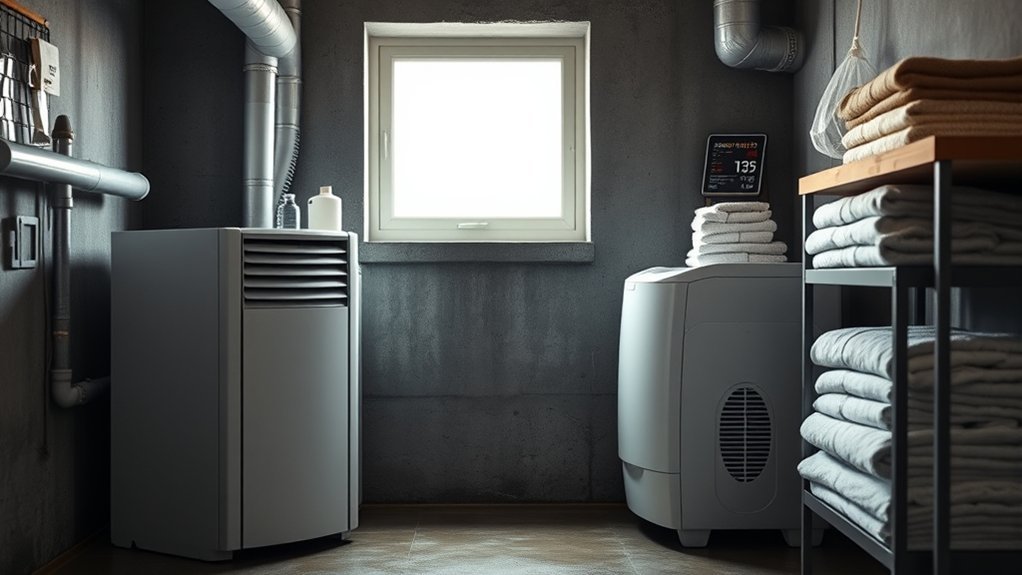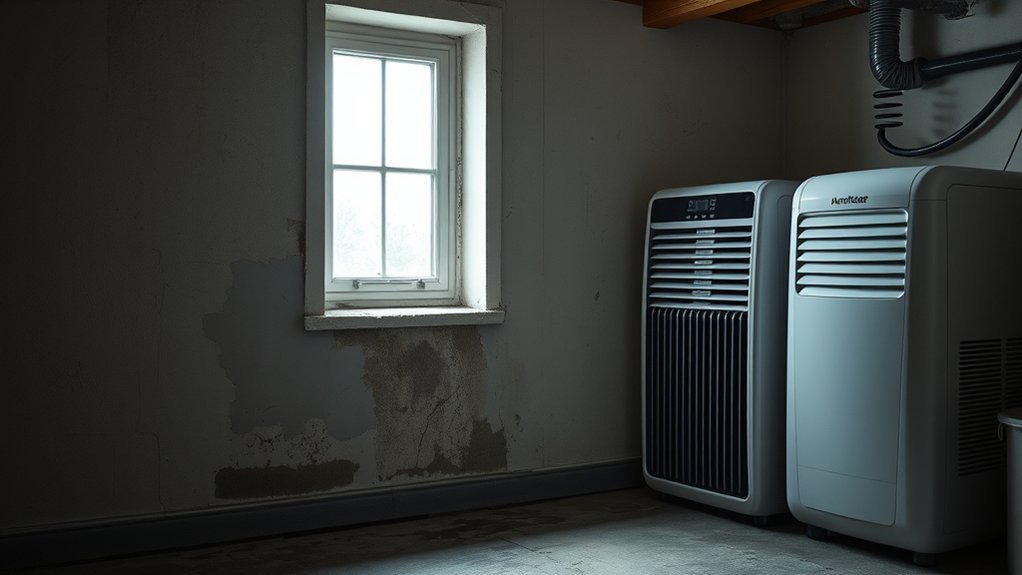
A dehumidifier can help prevent mold by lowering indoor moisture, but it is not a mold-removal tool. The goal is simple: keep indoor relative humidity low enough that mold has less moisture to grow, then fix the leaks, condensation, or damp materials that caused the problem in the first place.
Quick Answer
Yes, a dehumidifier can help prevent mold by keeping indoor humidity below 60%, and ideally between 30% and 50%. It will not kill existing mold, remove spores from surfaces, dry soaked materials by itself, or fix leaks. Use it with ventilation, cleanup, and moisture-source repairs.
Key Takeaways
- Set the dehumidifier to keep relative humidity around 30% to 50%; do not let it stay above 60%.
- Use a hygrometer instead of guessing, because the dehumidifier’s built-in reading may not match the room’s dampest corner.
- A dehumidifier helps prevent new growth, but visible mold still needs safe cleaning or professional remediation.
- If humidity stays high, look for leaks, poor drainage, condensation, dryer vent problems, or weak bathroom/kitchen exhaust.
- People with asthma, COPD, chronic lung disease, or immune suppression should avoid moldy spaces and should not clean mold themselves.
At a Glance
| Time Required | 15–30 minutes to set up; several hours to several days to stabilize a damp room |
| Difficulty | Easy for humidity control; moderate if leaks, drainage, or condensation repairs are needed |
| Tools Needed | Dehumidifier, hygrometer, clean filter, drain hose if using continuous drainage, mild detergent for cleaning the tank |
| Cost | About $10–$50 for a humidity meter; dehumidifier cost varies by room size, capacity, drain options, and efficiency |
Does a Dehumidifier Prevent Mold?
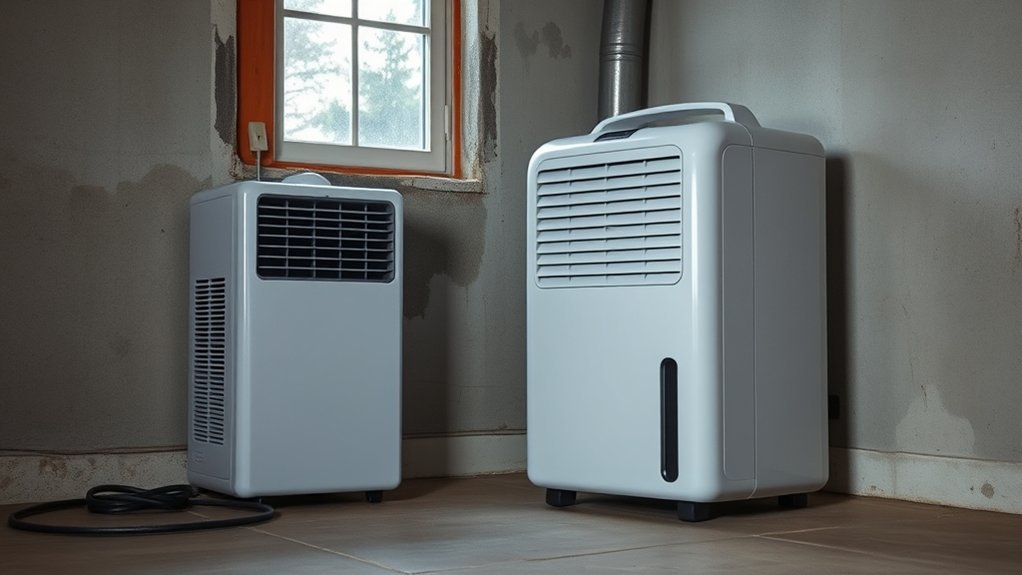
Yes, a dehumidifier can help prevent mold when excess humidity is part of the problem. Mold needs moisture to grow, and the EPA recommends keeping indoor relative humidity below 60%, ideally between 30% and 50% when possible.
That does not mean a dehumidifier “solves” mold. It cannot remove visible mold, clean contaminated drywall, fix a leaking pipe, stop roof seepage, or dry soaked carpet fast enough after major water damage. Think of it as one part of a mold-prevention plan: it controls moisture in the air while you remove mold safely and fix the source of dampness.
Note: A dry room can still have mold if wet materials, hidden leaks, damp insulation, or contaminated HVAC components are present. Humidity control helps prevent growth; it does not replace inspection or cleanup.
How Mold Grows in Damp Air
Mold spores are common indoors and outdoors. They become a problem when they land on a damp surface with enough moisture and food, such as dust, paper, wood, drywall, fabric, or carpet backing. The CDC explains that mold spores grow when they land in places with excessive moisture, such as leaks, flooding, or damp building materials.
High humidity can keep surfaces slightly damp even when there is no obvious standing water. Basements, crawl spaces, laundry rooms, bathrooms, and poorly ventilated rooms are common trouble spots because moisture can linger after showers, washing, cooking, condensation, or ground seepage.
The best way to control indoor mold growth is to control moisture.
What Humidity Level Stops Mold?
There is no magic humidity number that kills mold instantly, but there is a practical prevention range. Keep indoor relative humidity below 60%, and aim for 30% to 50% for better mold prevention. In colder climates during heating season, the lower end of that range may also help reduce window condensation.
A hygrometer, also called a humidity meter, is the easiest way to check this. Place one in the room you are treating, then check it at different times of day because humidity rises and falls with temperature, showers, cooking, laundry, weather, and HVAC cycles.
- Below 50% RH: best everyday target for most damp rooms.
- 50%–60% RH: watch closely, especially in basements, bathrooms, closets, and crawl spaces.
- Above 60% RH: mold risk increases, and you should run the dehumidifier, improve ventilation, and look for moisture sources.
Pro Tip: Put a separate hygrometer across the room from the dehumidifier. Built-in humidistats often read the air closest to the unit, not the dampest corner behind furniture or near an exterior wall.
Where a Dehumidifier Helps Most
A dehumidifier works best in enclosed areas where damp air lingers. It is especially useful in rooms that regularly feel clammy, smell musty, show condensation, or hold humidity above 50% to 60%.
Bathrooms and Laundry Rooms
Bathrooms and laundry rooms can spike in humidity after showers, baths, washing, and indoor drying. A dehumidifier can help, but it should not be your only moisture-control tool. Use an exhaust fan that vents outdoors, run it during and after showers, and keep the door open afterward when privacy is no longer needed.
In laundry rooms, make sure the dryer vents outdoors and that the vent is not crushed, disconnected, or clogged. A dehumidifier can remove leftover humidity, but it cannot make an indoor-vented dryer safe or moisture-free.
Basements and Crawl Spaces
Basements and crawl spaces often need the most help because they can collect moisture from foundation seepage, bare soil, poor grading, window wells, condensation on cold surfaces, or poor airflow. In these spaces, a dehumidifier can run for long periods during humid seasons.
Choose a unit sized for the space and dampness level. ENERGY STAR notes that dehumidifier capacity is measured in pints per 24 hours and depends on both the space size and the dampness conditions. If a basement is very damp, smells musty, or has seepage, an undersized unit may run constantly without reaching the target humidity.
Bedrooms and Living Areas
Bedrooms and living areas usually need dehumidification only when humidity stays high, windows sweat, closets smell musty, or exterior walls feel damp. Keep air moving around furniture, avoid pushing large items tightly against cold exterior walls, and do not block supply or return vents.
If one bedroom is damp while the rest of the home is normal, look for a room-specific issue, such as a window leak, poorly insulated wall, blocked vent, wet carpet pad, or bathroom moisture drifting into the room.
Where a Dehumidifier Falls Short
A dehumidifier lowers moisture in the air. Mold control also requires removing existing growth and fixing the reason moisture keeps returning.
Existing Mold Remains
A dehumidifier does not kill or remove visible mold colonies. Mold on hard surfaces still needs safe cleaning, and moldy porous materials may need removal if they cannot be cleaned and dried. The EPA advises fixing water problems, scrubbing mold off hard surfaces with detergent and water, and drying items completely.
If the moldy area is less than about 10 square feet, many homeowners can handle cleanup themselves when they are healthy and the water source is clean. Larger areas, sewage or contaminated water, HVAC contamination, major water damage, or health concerns call for professional guidance.
Hidden Moisture Sources
If mold keeps coming back, the room still has a moisture source. Common causes include leaking plumbing, roof leaks, foundation seepage, missing bathroom ventilation, dryer vents that do not exhaust outdoors, condensation on cold pipes, blocked HVAC drains, damp crawl spaces, and poor grading outside the foundation.
Do not judge the room by smell alone. Use a hygrometer, look for staining, check under sinks, inspect around windows, and watch for condensation on walls, pipes, or ducts.
Structural Fixes Needed
A dehumidifier can reduce symptoms, but structural moisture fixes prevent the cycle from continuing. Clean gutters, slope soil away from the foundation, repair roof and plumbing leaks, insulate cold surfaces that collect condensation, and vent moisture-producing appliances outdoors whenever possible.
Warning: Do not run a dehumidifier as a substitute for fixing active leaks, sewage contamination, flooding, or visible mold in HVAC ducts. If you suspect HVAC contamination, do not run the system until it is evaluated because it can spread mold through the building.
Why Mold Returns After Cleaning
Mold often returns after cleaning because the moisture problem was never solved. Wiping a wall or scrubbing grout may remove visible growth, but spores and fragments can remain in cracks, porous materials, dust, insulation, carpet backing, or hidden wall cavities.
Recurring mold usually means one of these problems is still active:
- Humidity stays above 50% to 60% for long periods.
- A leak is still wetting building materials.
- Condensation forms on cold pipes, windows, ducts, or exterior walls.
- Bathroom, kitchen, or laundry moisture is not venting outdoors.
- Water-damaged porous materials were cleaned on the surface but never fully dried.
- The dehumidifier tank, filter, or coils are dirty and reducing performance.
To stop the return cycle, clean the mold, dry the area, repair the moisture source, and monitor humidity for several days after the room looks dry.
Why Pair a Dehumidifier With a HEPA Air Purifier?
A dehumidifier and a HEPA air purifier do different jobs. The dehumidifier reduces moisture. The air purifier reduces airborne particles. Pairing them can be useful during cleanup or in rooms where mold-sensitive people need better particle control, but neither tool replaces mold removal.
The EPA explains that a HEPA filter can theoretically remove at least 99.97% of dust, pollen, mold, bacteria, and other airborne particles at 0.3 microns under filter conditions. For real-world results, the unit must be properly sized for the room, run long enough, and maintained with clean filters.
- Use the dehumidifier to keep RH in the 30% to 50% range.
- Use the HEPA air purifier to reduce airborne mold particles and dust.
- Still clean visible mold and fix leaks, because filters do not clean contaminated surfaces.
Recommended Products

WHY CHOOSE AHAM VERIFIDE AIR PURIFIERS: AHAM (Association of Home Appliance Manufacturers) is an ANSI-accredited organization that sets strict standards for appliance performance. Air purifiers with the AHAM VERIFIDE seal have been independently tested for air cleaning performance and energy efficiency. When you choose an AHAM certified air purifier, you're choosing a product trusted for reliable and effective indoor air quality improvement

Cleaner Air In Minutes: Purivortex is proven to filter common pollutants from your home’s air. This air purifier purifies rooms up to 880 ft² in one hour. It can purify a 215 ft² room in about 15 minutes, giving you noticeably fresher air in a short time. Breathe clean, crisp air and feel the difference in your space. (*Tested in an ISO 17025 certified laboratory under typical residential room ventilation conditions.)

𝐀𝐇𝐀𝐌 𝐕𝐞𝐫𝐢𝐟𝐢𝐞𝐝 & 𝐇𝐢𝐠𝐡 𝐂𝐀𝐃𝐑 𝐕𝐚𝐥𝐮𝐞: Certified by the Association of Home Appliance Manufacturers, this air purifier provides reliable performance with a Smoke/Dust/PM2.5 CADR of 226 CFM (384 m³/h) and a Pollen CADR of 244 CFM (415 m³/h). AHAM certification guarantees effective, high-speed air purification for your home.
How to Set Up a Dehumidifier for Mold
Set up the dehumidifier where moisture is highest, then verify the result with a separate hygrometer. The goal is not simply to run the machine; the goal is to keep the room in the target humidity range consistently.
| 1. Measure first | Use a hygrometer to confirm the room is above the target range before and after running the unit. |
| 2. Place it correctly | Keep intake and exhaust clear. If the model does not have top discharge, leave space around walls and furniture so air can circulate. |
| 3. Set the humidity target | Start around 45% to 50% RH. Adjust lower only if condensation or musty odors continue. |
| 4. Close the space | Close exterior windows and doors while the unit runs so it is not trying to dry outdoor air. |
| 5. Drain and clean it | Empty the bucket before it shuts off, or route a hose to a safe drain. Clean the tank, filter, and coils as the manual recommends. |
Run the unit until the room holds steady in the target range. In a mildly damp bedroom, that may take a few hours. In a basement after humid weather, it may take days. If the bucket fills quickly or humidity never drops, the room may need a larger unit, continuous drainage, air sealing, leak repair, or better ventilation.
Warning: Follow the manufacturer’s electrical instructions. Do not place drain hoses near electrical cords, do not create a trip hazard, and do not use the unit where standing water or flood hazards are present.
Recommended Products

Face Icon Comfort Indicator: Humidity temperature gauge features face icons to indicate DRY/COMFORT/WET air conditions, quickly informs you how to adjust your humidifier or dehumidifier to achieve optimal comfort.
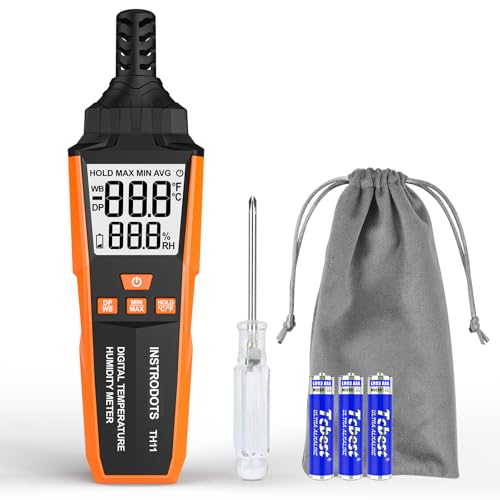
HIGH-PRECISION THERMOMETER HYGROMETER - Unlike traditional temperature humidity meter, this digital hydrometer adopts a high-precision semiconductor sensor from SWITZERLAND to ensure measurements accurately and quickly. With short response time and strong anti-interference ability, more secure and accurate, the humidity meter can be used for a wide range of applications.

【Readings be Switched Between Fahrenheit and Celsius】 Round Digital Thermometer ease to achieve the mutual conversion between Fahrenheit (°F) and Celsius (°C),(with temperature switch button- °C/°F mode)
How to Choose the Right Size Dehumidifier
Dehumidifier capacity is usually listed as pints of water removed per 24 hours. A small damp room may need much less capacity than a wet basement with seepage. ENERGY STAR recommends sizing based on both the square footage and how damp the space is before dehumidification.
Use these practical signs when choosing:
- Slightly damp: room sometimes feels humid or has an occasional musty smell.
- Very damp: room often smells musty, feels clammy, or shows damp spots.
- Wet: walls or floors sweat, seepage appears, or laundry drying adds a heavy moisture load.
If you are replacing an older unit, remember that newer dehumidifier ratings may look smaller than older labels because DOE testing changed to cooler conditions that better reflect basement performance. A newer lower-pint model may still perform like an older higher-pint model in real use.
Recommended Products

This dehumidifier delivers powerful performance — removing up to 80 pints of moisture per day and covering up to 5000 sq.ft, perfect for whole homes, basements, large living rooms, and garages. It effectively eliminates dampness and musty odors, keeping your entire large space dry and comfortable all day long, even in highly humid environments (90-100% relative humidity).

4,500 SQ. FT. DEHUMIDIFIER – Removes up to 50 pints of moisture per day with an adjustable humidity setting from 35% to 85%. Perfect for use in basement, bathroom, bedroom, office, kitchen, cellar, or crawlspace. Maintain a healthy 45%-55% humidity range

EASY TO CLEAN WASHABLE FILTER: Capture dust from the air and keep your dehumidifier working efficiently with our easy-to-clean washable filter.
Can Mold Grow Inside a Dehumidifier?
Yes. A neglected dehumidifier can grow mold or mildew in the water bucket, filter, drain hose, or damp internal areas. That is why maintenance matters.
To keep the unit from becoming part of the problem:
- Empty the bucket before water sits for long periods.
- Wash and dry the tank regularly with mild detergent.
- Clean or replace the filter on the schedule in the manual.
- Inspect the drain hose for slime, kinks, or standing water.
- Keep the unit away from heavy dust that can clog coils and grills.
If the dehumidifier smells musty when it runs, unplug it and clean it before using it again.
When to Call for Mold Remediation
Call a mold remediation professional or qualified contractor when the problem is beyond simple surface cleaning. A dehumidifier may help after the source is corrected, but it should not be used to delay cleanup.
Get professional help if:
- Mold covers more than about 10 square feet.
- There has been major flooding or long-lasting water damage.
- The water source may involve sewage or contaminated water.
- You suspect mold in HVAC ducts, air handlers, or insulation.
- Mold returns after repeated cleaning.
- You smell mold but cannot find the source.
- Anyone in the home has asthma, COPD, chronic lung disease, immune suppression, severe allergies, or worsening symptoms.
The CDC advises people with asthma, other lung conditions, or immune suppression to avoid buildings with visible or smelled mold after severe weather events. Children should not take part in cleanup work.
Warning: If you clean small mold areas yourself, protect your eyes, skin, and breathing. Never mix bleach with ammonia or other cleaners, and ventilate the area when using cleaning products.
Frequently Asked Questions
Can mold grow even with a dehumidifier?
Yes. Mold can still grow if the dehumidifier is too small, placed poorly, poorly maintained, or fighting an active leak. It can also grow on wet porous materials even when the room air feels drier.
Will a dehumidifier kill existing mold?
No. Lower humidity can make conditions less favorable for new growth, but it does not remove visible mold or sanitize contaminated surfaces. Existing mold needs proper cleaning, removal, or remediation.
What humidity setting should I use to prevent mold?
Set the dehumidifier around 45% to 50% RH for everyday mold prevention. Keep the room below 60% at minimum, and use a separate hygrometer to confirm the reading away from the unit.
Should you use a dehumidifier if you have COPD?
A dehumidifier may help keep humidity lower, but people with COPD or other chronic lung disease should avoid moldy spaces and should not clean mold themselves. Ask a clinician for advice if symptoms worsen or if mold is visible or smelled indoors.
What are the downsides of a dehumidifier?
The main downsides are electricity use, noise, heat added to the room, maintenance, bucket emptying, and possible mold inside the unit if it is not cleaned. An undersized unit may also run constantly without solving the moisture problem.
Can you live in a house with mold in the basement?
You should not ignore basement mold. Mold can affect indoor air quality, and basement air can move into living areas. Fix the moisture source, clean or remove moldy materials, run the dehumidifier after cleanup, and get professional help for large or recurring growth.
Conclusion
A dehumidifier can help prevent mold, but only when you use it as part of a complete moisture-control plan. Keep indoor humidity below 60%, aim for 30% to 50%, verify the room with a hygrometer, and maintain the unit so it does not become dirty or moldy inside.
If you already see or smell mold, do not rely on dry air alone. Clean small areas safely when appropriate, call a professional for larger or risky situations, and fix the leak, condensation, drainage, or ventilation problem that allowed mold to grow.
Sources
- EPA Mold Course Chapter 2 — backs the 30% to 50% ideal indoor relative humidity range and below-60% guidance.
- EPA Brief Guide to Mold, Moisture and Your Home — backs moisture control, humidity meters, ventilation, and dehumidifier use.
- EPA Mold Cleanup in Your Home — backs the 10-square-foot cleanup guideline and professional remediation triggers.
- CDC About Mold — backs mold health effects and prevention steps.
- CDC Mold Clean Up Guidelines and Recommendations — backs PPE, bleach safety, and vulnerable-person cleanup cautions.
- ENERGY STAR Dehumidifiers Buying Guidance — backs capacity, placement, drainage, operating temperature, and sizing guidance.