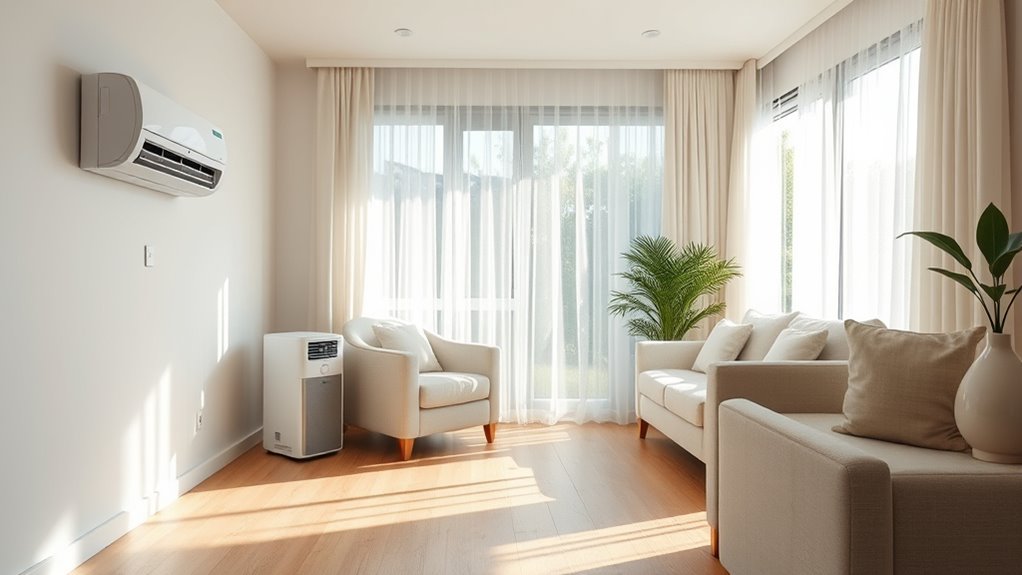
You can use a dehumidifier with air conditioning, but you do not always need both. Start by measuring indoor relative humidity with a hygrometer. If your air conditioner keeps the space comfortable at about 30% to 50% relative humidity, let the AC handle the job. Add a dehumidifier when humidity remains high, damp rooms stay musty, or condensation keeps returning.
Quick Answer
Run a dehumidifier with your air conditioner when indoor humidity stays above about 50% to 60% despite normal cooling, or when a basement or other problem area remains damp. Set the dehumidifier near 45% to 50%, monitor the room with a hygrometer, and fix leaks or ventilation problems instead of relying on appliances alone.
Key Takeaways
- Aim for roughly 30% to 50% indoor relative humidity and keep it below 60% when practical.
- Use the AC alone when it controls both temperature and humidity without leaving the room clammy.
- Add a dehumidifier when humidity remains high, especially in basements, laundry rooms, or other damp zones.
- A portable dehumidifier releases warmer air, so running both appliances may improve comfort but does not guarantee lower total energy use.
- Fix leaks, drainage issues, and moisture sources. A dehumidifier manages moisture in the air but does not repair the cause.
What Indoor Humidity Level Should You Aim For?
The best target for most homes is about 30% to 50% relative humidity. The U.S. Environmental Protection Agency recommends keeping indoor humidity below 60% and ideally between 30% and 50% to reduce condensation and mold risk. A small digital hygrometer gives you a better answer than how the room feels alone. See the EPA moisture and mold guidance for the full recommendation.
Use the reading as a guide, not a single rigid number. In a hot, humid climate, a setting near 45% to 50% often balances comfort and energy use. During cold weather, a lower indoor setting may be needed to prevent condensation on windows and other cold surfaces.
Measure indoor humidity before adding another appliance. A room can feel cool while still holding enough moisture to create condensation, odors, and mold risk.
How a Dehumidifier Works
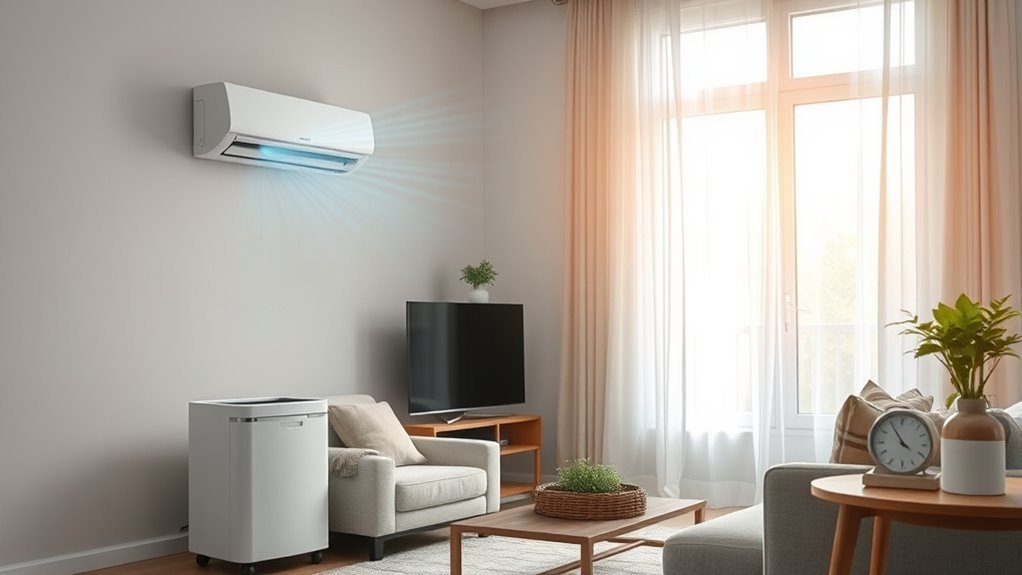
A dehumidifier pulls humid air across a cold evaporator coil. Water vapor condenses into droplets, collects in a bucket, or flows through a drain hose. The air then passes over a warm condenser coil before returning to the room.
This process lowers relative humidity, but it also releases heat. Warm exhaust is normal, and a portable unit may make the room slightly warmer while it runs. That is why a dehumidifier controls moisture but does not replace air conditioning for cooling. GE Appliances explains that dry air is reheated and returned to the room during normal dehumidifier operation.
Capacity is usually listed as pints of water removed per 24 hours under standardized test conditions. Actual water collection changes with room temperature, starting humidity, airflow, and moisture entering the space. Choose a unit by its rated capacity and the condition of the room rather than assuming one daily removal figure fits every home.
How Air Conditioning Removes Humidity
An air conditioner removes moisture while it cools. Warm room air passes over the cold indoor coil, water condenses, and the condensate drains away. The AC stops removing much moisture when the cooling cycle ends, so temperature control and humidity control do not always finish at the same time.
A properly sized system usually runs long enough to cool and dehumidify the room. An oversized unit may cool the space quickly and shut off before removing enough moisture. ENERGY STAR warns that an oversized room air conditioner can cool a room before it has time to reduce humidity effectively. Its room air conditioner guidance explains why correct sizing matters.
Some air conditioners include a Dry or dehumidification mode. This can help during mild, muggy weather when you need moisture removal but little cooling. Operation varies by model, so check the manual before choosing Dry mode instead of normal cooling.
When Your Air Conditioner Is Enough
Your air conditioner is enough when it keeps both temperature and indoor humidity within a comfortable range. You probably do not need a separate dehumidifier when all of the following are true:
- Indoor humidity stays around 30% to 50% during normal AC operation.
- The room does not feel clammy after reaching the thermostat setting.
- You do not see recurring condensation on windows, ducts, walls, or pipes.
- There are no musty odors, damp materials, or known water leaks.
- The AC completes steady cooling cycles instead of switching on and off every few minutes.
Do not decide based only on outdoor relative humidity. Outdoor temperature, dew point, air leakage, ventilation, and indoor moisture sources all affect the reading inside your home.
When to Use a Dehumidifier and AC Together
Use a dehumidifier and AC together when cooling alone leaves indoor humidity above your target. You do not need to wait until the room reaches 75% humidity. By that point, the space is already very damp. Start investigating when readings remain above about 50% to 60%, especially if you also notice condensation, odors, or damp materials.
| Signal | Best Action | Why It Helps |
|---|---|---|
| Indoor RH stays above 50% to 60% | Run the AC and set the dehumidifier near 45% to 50% | Separates temperature control from moisture control |
| Condensation returns on glass, pipes, or ducts | Dry the surface, reduce humidity, and check insulation or air leaks | Treats both the moisture and the cold-surface cause |
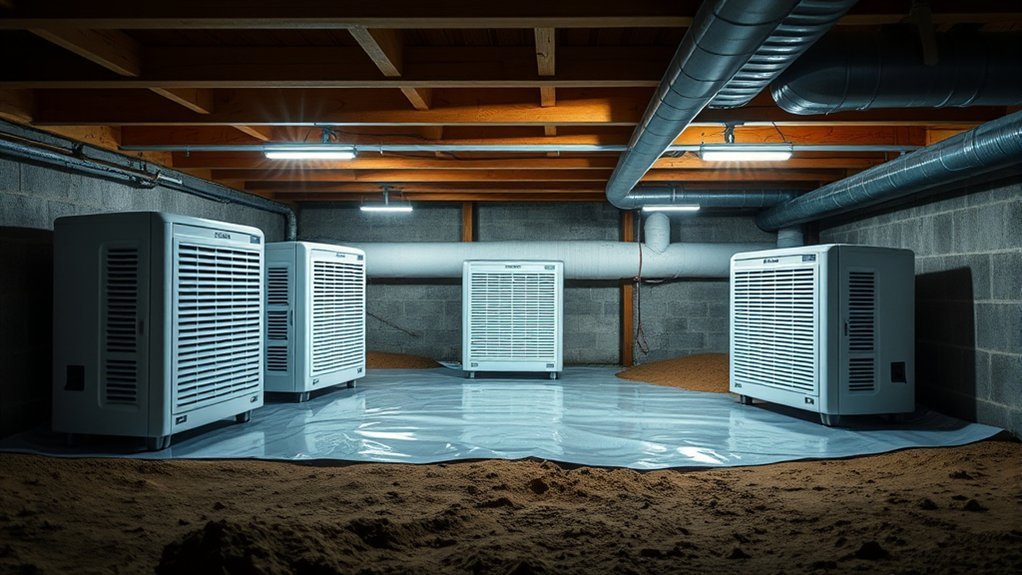
| A basement stays damp while upstairs is comfortable | Place a properly sized dehumidifier in the basement | Targets the moisture problem without overcooling the whole home |
| The room is cool but feels clammy | Check AC sizing and operation, then add dehumidification if needed | Corrects poor moisture removal instead of lowering the thermostat further |
| A leak, seepage, or wet material is present | Stop the water source first, then dry the area | Prevents the appliance from masking an ongoing problem |
Recommended Products

【45-80 Pints for 4500 Sq.Ft Moisture Control】:This dehumidifier for basement and home features flexible 45–80 pints dehumidification output with an ultra-wide 4500 square feet coverage range, offering premium whole-space moisture control. No matter damp basement, humid bathroom, quiet bedroom for restful sleep, large living room, or compact RV traveling space, this multi-functional dehumidifier for home effortlessly sucks up excess moisture,, maintaining ideal humidity levels for all indoor environments.

【Reduce humidity - Enhance comfort】:Massive Capacity + Wide Coverage. This dehumidifier has dehumidification capacity ranging 45- 80 pints—outperforming standard units while covering 4,500 sq. ft. of living space. Great dehumidifier for basements, large house, garages, bedroom, bathroom and gyms where excess humidity triggers cause unpleasant odors and discomfort. The result? A noticeably drier, fresher, and more comfortable environment for your entire family.
How to Run Both Units Efficiently
- Measure first. Place a hygrometer away from the AC outlet and dehumidifier exhaust.
- Set a realistic target. Start around 45% to 50% RH instead of using continuous mode all day.
- Use the AC for temperature. Select normal cooling or the manufacturer’s recommended humidity mode.
- Place the dehumidifier near the damp zone. Keep the intake and outlet clear according to the owner’s manual.
- Close doors and windows to humid outdoor air. Keep interior doors open only when the unit is intended to serve connected rooms.
- Use continuous drainage when practical. Route the hose to an approved drain with a steady downward slope unless the unit uses a pump.
- Recheck the reading. Once the target is stable, let the humidistat cycle the dehumidifier on and off.
Pro Tip: Do not keep lowering the thermostat to solve humidity. A room can become cold and clammy. Measure RH, use the dehumidifier’s humidistat, and have the AC checked if it short cycles or cannot hold humidity below 60%.
Warning: Keep the dehumidifier away from standing water, follow its electrical instructions, and do not use a damaged cord. Never route a drain hose where it can leak onto wiring, flooring, or finished surfaces.
Dehumidifier vs. AC Dry Mode vs. Whole-Home Dehumidifier
| Option | Best For | Main Limitation |
|---|---|---|
| Normal AC cooling | Hot weather when the system already controls RH | Moisture removal stops or slows when cooling demand ends |
| AC Dry mode | Mild, muggy days with modest moisture loads | Performance and controls vary by model |
| Portable dehumidifier | One damp room, basement, bathroom, or laundry area | Adds heat, uses floor space, and needs bucket or drain management |
| Whole-home dehumidifier | Widespread humidity problems in a ducted home | Higher purchase and installation cost |
Recommended Products

POWERFUL 2,500 SQ. FT. COVERAGE - Stop letting sticky, heavy air dictate your comfort. The BANABIE dehumidifier utilizes a high-efficiency rotary compressor to deliver heavy-duty moisture removal, extracting 32 pints daily (at 95°F, 90%RH). Engineered with a smart integrated airflow system, this unit effectively covers up to 2,500 Sq. Ft., ensuring that your basement, crawl space, or large open floor plans stay bone-dry

Semiconductor dehumidifiers use thermoelectric cooling to remove moisture from the air. They create a drier, more comfortable environment by reducing humidity and improving air quality.

【Ideal for Large Homes & Basements (Up to 5,000 Sq. Ft)】The Waykar 80 pint dehumidifier efficiently removes up to 80 pints of moisture per day in high-humidity conditions (95°F, 90% RH). In warmer, damp spaces like basements (86°F, 80% RH), it removes 62 pints/day. This dehumidifier for basement is perfect for large areas such as basements, bathrooms, bedrooms, and living rooms. Customize your space by adjusting the humidity level from 30% to 80%, creating a drier and healthier environment
Why Lower Humidity Improves Comfort
Lower humidity helps sweat evaporate from your skin, so the room can feel less sticky at the same air temperature. You may be comfortable with a slightly higher thermostat setting after excess moisture is under control.
However, lower humidity does not automatically mean lower total energy use. A portable dehumidifier consumes electricity and releases heat into the room, which the AC may then need to remove. The combination can still be worthwhile for comfort or moisture protection, but the energy result depends on equipment efficiency, settings, runtime, climate, and the severity of the moisture problem.
- Keep indoor RH near 30% to 50% for balanced comfort.
- Use a humidistat so the dehumidifier stops after reaching the target.
- Choose an ENERGY STAR certified model when available. ENERGY STAR says certified dehumidifiers use about 20% less energy than comparable conventional models.
- Fix air leaks and water sources so both appliances run less.
Where a Dehumidifier Works Best
Dehumidifiers work best in enclosed spaces with a persistent moisture load. Common problem areas include basements, crawl spaces, bathrooms, kitchens, laundry rooms, and rooms affected by seasonal humidity. A unit can also help dry a space after a minor clean-water leak once the water source has been stopped and wet materials are being handled correctly.
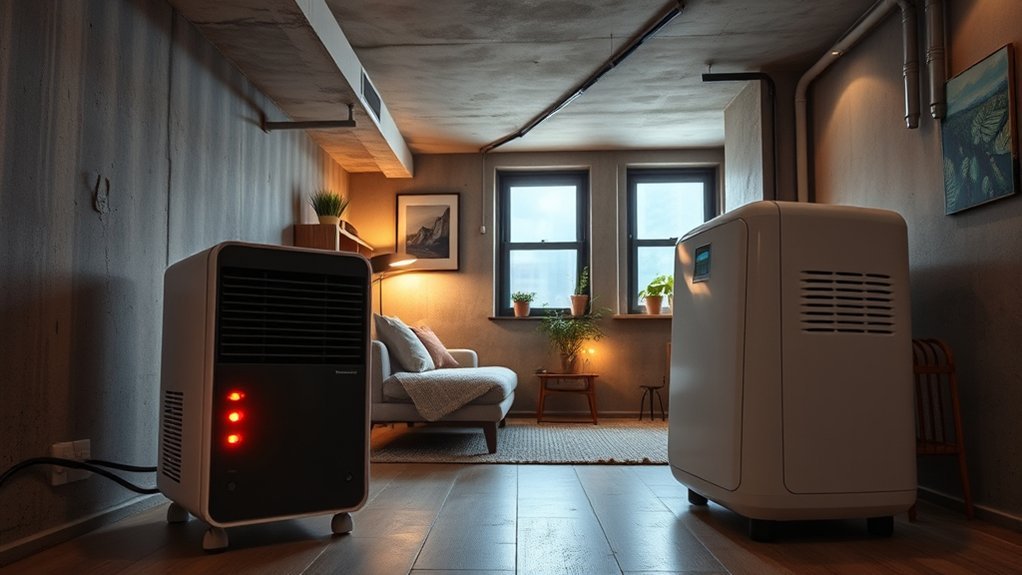
Place the unit where air can move freely through the intake and outlet. Follow the clearance listed in the manual rather than pushing it tightly against furniture. Keep exterior doors and windows closed while it runs in humid weather. In a cool basement, confirm that the model is rated for the room temperature because compressor dehumidifiers can frost or lose performance in cold conditions.
If humidity is high throughout a ducted home, a whole-home dehumidifier may be more practical than moving a portable unit between rooms. ENERGY STAR provides current capacity and efficiency guidance for both portable and whole-home dehumidifiers.
Signs You Need a Dehumidifier
A hygrometer reading above your target is the clearest sign, but the room may also show visible clues. Look for repeated condensation, musty odors, damp textiles, peeling finishes, swollen wood, or a basement that feels cool and clammy.
Condensation on Surfaces
Frequent condensation on windows, walls, pipes, ducts, or other cold surfaces can signal high indoor humidity. Dry the surface promptly and investigate why it is becoming wet. Lowering RH may help, but insulation gaps, air leaks, plumbing leaks, or poor ventilation may also be involved.
- Measure RH near the affected area.
- Check for leaks and missing pipe or duct insulation.
- Use kitchen and bathroom exhaust fans that vent outdoors.
- Run a dehumidifier if humidity remains high after obvious sources are controlled.
Musty Odors and Mold
A musty odor often points to damp materials or hidden microbial growth. A dehumidifier can make conditions less favorable for future growth, but it does not remove existing mold or repair wet building materials. Find and stop the moisture source, dry the area, and clean or remove affected materials as appropriate.
Warning: Large mold problems, heavy water damage, contaminated water, or mold affecting an HVAC system may require professional help. EPA guidance says homeowners can often handle areas smaller than about 10 square feet, but larger or complex jobs need more caution. Review the EPA mold cleanup guidance before disturbing mold.
Why Your AC May Not Control Humidity
The Air Conditioner Is Oversized or Short Cycling
An oversized system may drop the temperature quickly and shut off before the coil has removed enough water. Frequent short cycles can also point to control, airflow, refrigerant, or installation problems. Have an HVAC professional evaluate the system if it starts and stops repeatedly or the home remains clammy.
Fan Operation Is Re-Evaporating Moisture
On some systems, fan-only operation after the compressor stops can evaporate water left on the indoor coil and return some moisture to the room. Use the fan setting recommended in your equipment manual. For a central system with humidity problems, an HVAC technician can check blower settings and controls rather than relying on a universal fan rule.
Airflow or Drainage Is Restricted
A dirty filter, blocked return, dirty indoor coil, clogged condensate drain, or incorrect blower setup can reduce cooling and moisture removal. Replace or clean accessible filters as directed. Call a technician for coil, refrigerant, electrical, or drainage work beyond normal owner maintenance.
Moisture Is Entering Faster Than the AC Can Remove It
Open windows, air leaks, unvented clothes drying, long showers, cooking, damp crawl spaces, foundation seepage, and plumbing leaks can overwhelm the system. Source control is usually more effective than running another appliance without fixing the cause.
How to Choose and Set Up a Dehumidifier
Recommended Products

【The Undisputed Champion — Industry‑Leading Dehumidifier Brand】When you choose AEOCKY, you get double market validation. In 2025, AEOCKY was an industry‑leading dehumidifier brand on Amazon US. This means you’re not just choosing a flagship from a market leader, but the top choice proven by millions of real users—representing the ultimate combination of performance, quality, and trust.
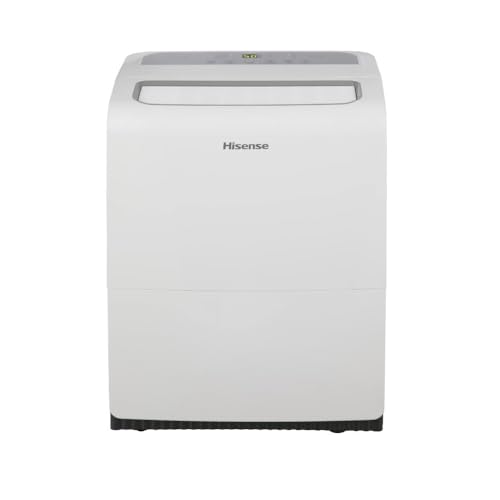
Built-in pump with included quick-connect drain hose makes it easy to remove water from unit

[ Keeps Your Home Dry and Cozy – 2025’s Energy Star Top Pick ] Humidity sneaks in quietly and damages floors, furniture, and even your sleep.Our dehumidifier, with its 2025 ENERGY STAR "Most Efficient" certification, quietly changes all of that. removes up to 140 pint/day in extreme heat and humidity (95℉, 95% RH).Designed for homes up to 6,000 sq. ft. A smarter, quieter way to protect what matters—your home, your family, and your peace of mind(Dehumidification capacity≠Water Tank Volume)
Choose Capacity by Room Condition
Use the manufacturer’s rated capacity in pints per day and match it to the room size and dampness level. A small room with a musty odor needs less capacity than a large basement with wet floors or seepage. ENERGY STAR’s sizing guide separates spaces into slightly damp, very damp, and wet conditions.
Use a Humidistat
Choose a model with an adjustable humidistat and set it near 45% to 50% to start. Continuous mode is useful for short drying periods, but leaving it on indefinitely can waste energy and make the room warmer than necessary.
Plan Safe Drainage
A bucket is simple but stops the unit when full. A gravity hose needs a drain lower than the outlet and a hose that slopes downward without kinks. A built-in pump can move water upward within the limits in the manual. Test the setup and check it for leaks before leaving it unattended.
Maintain the Unit
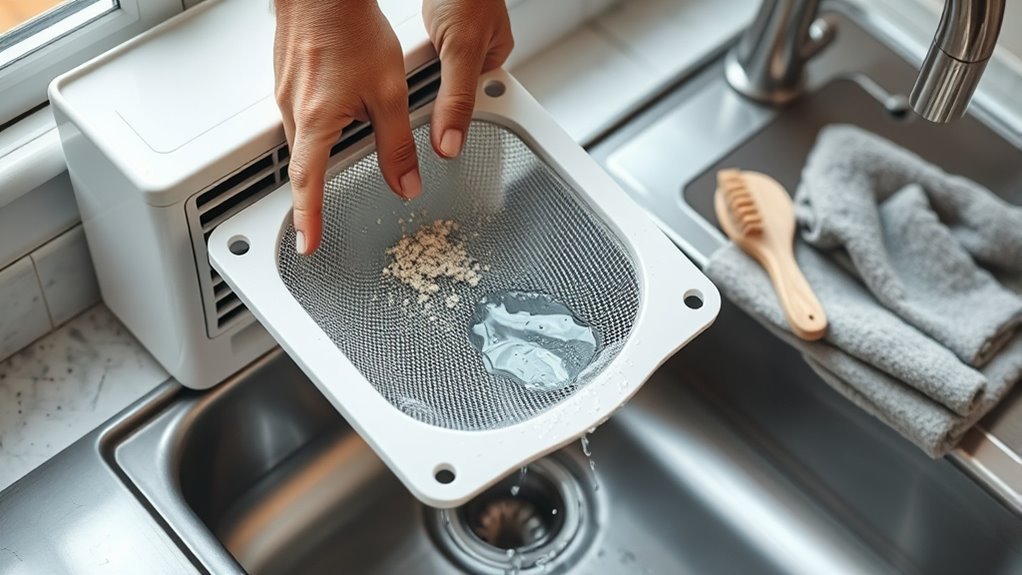
- Clean the air filter at the interval in the owner’s manual.
- Keep the intake and exhaust clear.
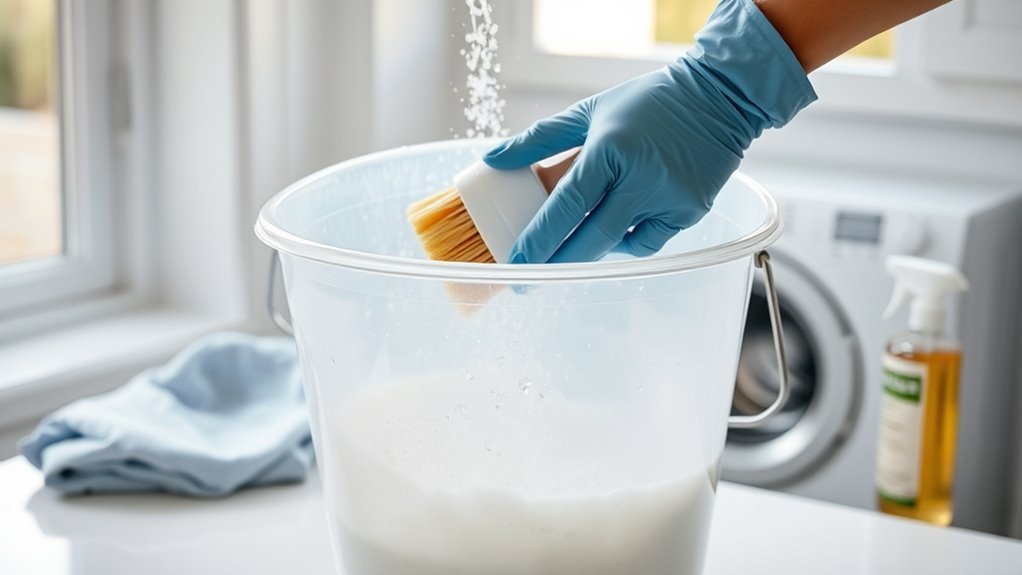
- Wash and dry the bucket to limit residue and odors.
- Inspect the hose and drain connection.
- Stop using the unit if the plug, cord, or housing becomes damaged.
Troubleshooting Common Problems
Humidity Is Not Falling
Close doors and windows, confirm the setpoint is below the current RH, clean the filter, and make sure the unit has enough capacity. Also check whether a leak, dryer, shower, or open crawl space is adding moisture continuously.
The Unit Is Not Collecting Water
The room may already be below the setpoint, the temperature may be too low for the model, the bucket may not be seated correctly, or the filter may be blocked. Check the display and manual before assuming the compressor has failed.
The Room Is Getting Warmer
Warm exhaust is normal for a portable dehumidifier. If the temperature rise is uncomfortable, use the unit in the damp zone rather than the main occupied room, run it during cooler periods, or discuss a whole-home system with an HVAC professional.
The Unit Runs Constantly
Confirm that continuous mode is off and the setpoint is realistic. Constant operation may also mean the unit is undersized, the space is open to humid air, or moisture is entering from a leak or damp foundation.
Health and Air Quality Considerations
Humidity control can help limit conditions that support mold and dust mites, but a dehumidifier is not an air purifier and does not remove all allergens or pollutants. Keep the unit clean, address visible mold correctly, ventilate moisture-producing rooms, and use filtration appropriate for your HVAC system.
People with asthma, allergies, COPD, or other lung conditions may be sensitive to high humidity, mold, heat, cold, or overly dry air. The American Lung Association lists high humidity and extreme weather among possible COPD triggers and advises using air conditioning on hot or humid days. Because triggers differ, discuss persistent symptoms and home humidity goals with a healthcare professional. See its guidance on preventing COPD flare-ups.
Note: Humidity control may support comfort, but it is not medical treatment. Seek urgent care for severe breathing trouble, chest pain, bluish lips or fingertips, confusion, or a sudden major worsening of symptoms.
Frequently Asked Questions
Do I need a dehumidifier if I have air conditioning?
Only if the AC does not keep indoor humidity in a healthy, comfortable range. Measure RH. If it remains above about 50% to 60%, or a basement stays damp, a dehumidifier can provide separate moisture control.
What is the 3-minute rule for air conditioners?
Many air conditioners delay compressor restart for about three minutes after being switched off. This protects the compressor from an immediate restart. Do not keep changing the thermostat or power-cycling the unit during the delay. LG describes this built-in three-minute compressor protection.
How do Amish families cool their homes without air conditioning?
Practices differ by community and household. Traditional approaches can include shade trees, cross-ventilation, porches, thick insulation, basements, fans, and planning work around cooler parts of the day. Some Amish households also use permitted mechanical systems, so there is no single method used by everyone.
Should you use a dehumidifier if you have COPD?
It may help when high humidity is one of your triggers, but it should not be treated as a universal COPD recommendation. Avoid over-drying the room, monitor symptoms, and ask your healthcare professional what indoor conditions are best for you.
What setting should a dehumidifier use with AC?
Start around 45% to 50% RH. Let the humidistat cycle the unit off after reaching the target. A lower setting may increase runtime, heat, and electricity use without adding meaningful comfort.
Will running a dehumidifier and AC lower my electricity bill?
Not necessarily. Drier air may let you use a higher thermostat setting, but a portable dehumidifier also consumes electricity and adds heat to the room. The net cost depends on runtime, efficiency, climate, and whether you correct the underlying moisture source.
Can a dehumidifier remove existing mold?
No. It can lower humidity and reduce the chance of new growth, but existing mold still needs proper cleanup and the water source must be fixed. Large, hidden, HVAC-related, or contaminated-water problems may require professional remediation.
Conclusion
So, should you use a dehumidifier with air conditioning? Use both when measured indoor humidity remains high even though the AC is cooling normally, or when a specific room stays damp. Keep RH near 30% to 50%, use a humidistat, and expect a portable dehumidifier to add some heat. Most importantly, repair leaks, improve ventilation, and correct AC problems so the appliances are not hiding the real moisture source.
Sources
- U.S. Environmental Protection Agency: A Brief Guide to Mold, Moisture and Your Home — indoor humidity targets, condensation, moisture control, and mold prevention.
- ENERGY STAR: Dehumidifiers — sizing, humidistats, drainage, capacity, placement, and efficiency guidance.
- ENERGY STAR: Room Air Conditioners — correct sizing and the effect of oversized equipment on humidity removal.
- GE Appliances: Dehumidifier Operation — condensation process and normal warm exhaust air.
- LG Support: Three-Minute Compressor Restart Delay — compressor protection after restarting an air conditioner.
- American Lung Association: Prevent a COPD Exacerbation or Flare-Up — humidity, weather, and indoor-air triggers for people with COPD.