Affiliate disclosure: As an Amazon Associate I earn from qualifying purchases. This article contains affiliate links to Amazon, so we may earn a commission if you buy through them, at no extra cost to you.
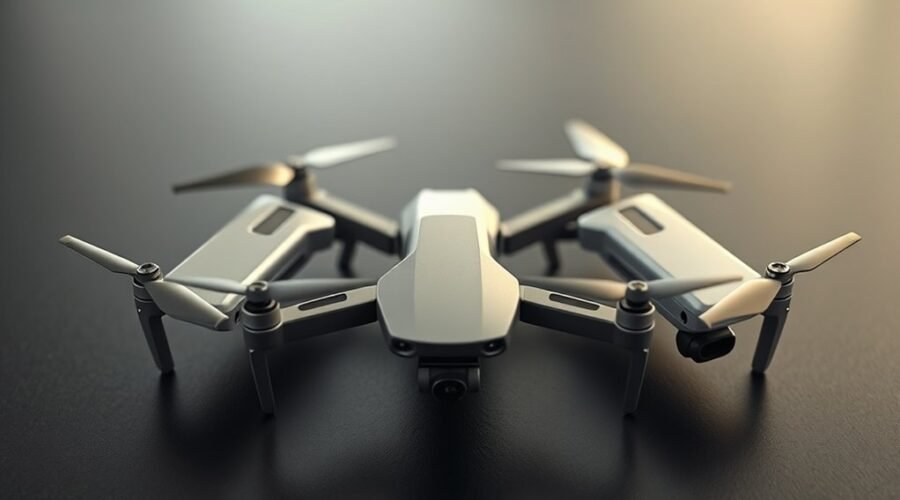
The three best photography drones for 2026 are the DJI Mini 2 Fly More Combo, Autel Robotics EVO 2 Pro V3, and Holy Stone HS100. The DJI Mini 2 offers a portable sub-249 g frame, 4K video, and stable 3-axis gimbal footage. The Autel EVO 2 Pro V3 delivers a 1-inch sensor, 6K HDR video, and long flight time. The Holy Stone HS100 suits beginners with GPS stability and simple controls. More details follow below.
DJI Mini 2 Fly More Combo Drone (CP.MA.00000306.01)
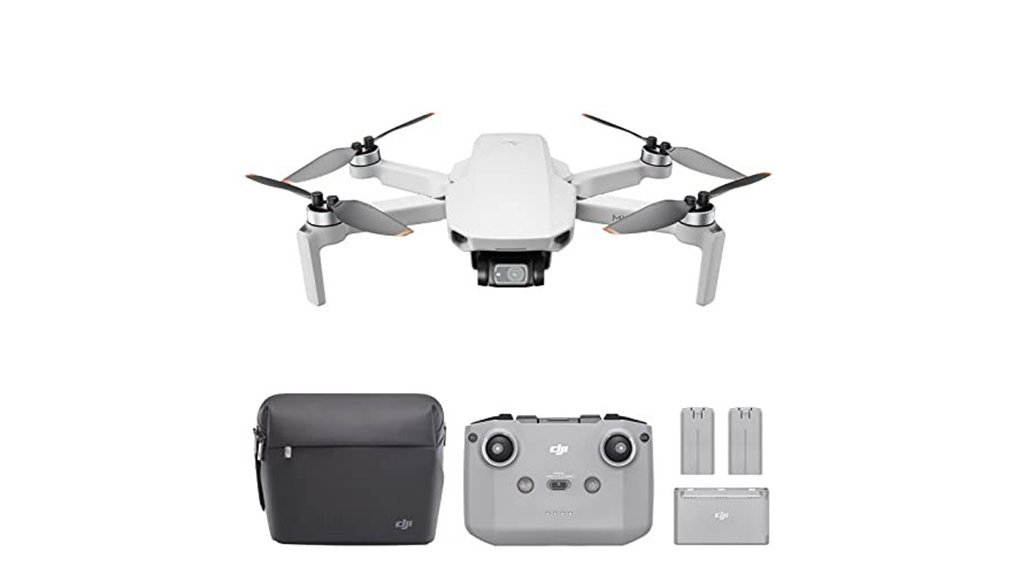
The DJI Mini 2 Fly More Combo is a strong choice for travelers and hobbyist photographers who want a capable drone without the bulk, thanks to its sub-249 g foldable design and 4K camera. Its 12MP stills, 3-axis gimbal, and 4x digital zoom support steady, flexible framing. OcuSync 2.0 extends transmission up to 10 km with strong interference resistance. Flight time reaches 31 minutes, while Level 5 wind resistance and a 4,000-meter ceiling broaden its use. QuickShots and the DJI Fly app simplify polished video creation.
Best For: Travelers and hobbyist photographers who want a lightweight, foldable drone with strong camera quality and easy-to-use video features.
Pros:
- Sub-249 g foldable design makes it highly portable
- 4K camera with 12MP photos, 3-axis gimbal, and 4x digital zoom for flexible shooting
- OcuSync 2.0 offers up to 10 km transmission with solid interference resistance
Cons:
- 31-minute max flight time may require extra batteries for longer sessions
- No advanced features beyond the basics compared with newer premium drones
- Wind resistance and altitude limits may reduce performance in more extreme conditions
Autel Robotics EVO 2 PRO V3, 1″ CMOS &12-Bit Image 6K HDR Video, ISO 44000
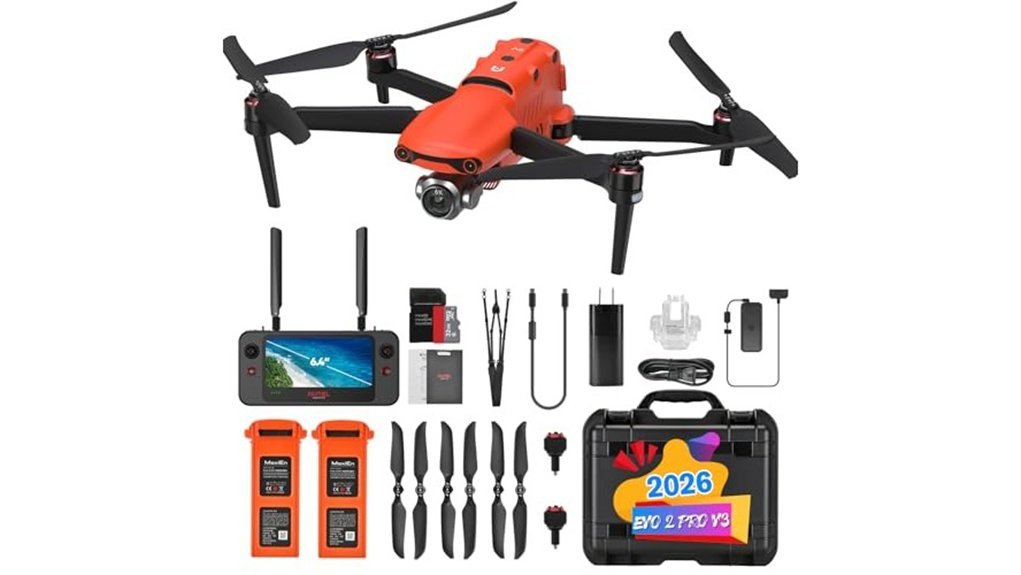
Autel’s EVO 2 Pro V3 suits creators who need cinema-grade aerial stills and low-light flexibility. Its 1-inch CMOS sensor, 12-bit DNG capture, and 6K HDR recording support rich color and strong dynamic range, while the F/2.8-F/11 aperture adds exposure control. Moonlight Algorithm 2.0 and ISO 44000 help in night scenes. A 3x optical zoom and omnidirectional obstacle sensing improve framing and safety. With up to 40 minutes of flight, 15 km transmission, and a Smart Controller SE, it remains a capable imaging platform for demanding work.
Best For: Creators, filmmakers, and advanced drone users who want cinema-grade aerial imaging, strong low-light performance, and long-range flight capabilities.
Pros:
- 1-inch CMOS sensor with 12-bit DNG and 6K HDR video delivers rich color and strong dynamic range.
- Moonlight Algorithm 2.0 and ISO 44000 improve performance for night and low-light shooting.
- Up to 40 minutes of flight time, 15 km transmission, and omnidirectional obstacle sensing enhance usability and safety.
Cons:
- Higher-end features may be more than casual users need.
- The larger, advanced controller and feature set can add complexity for beginners.
- Premium imaging and flight capabilities typically come at a higher price point.
Holy Stone HS100 2K GPS FPV Drone
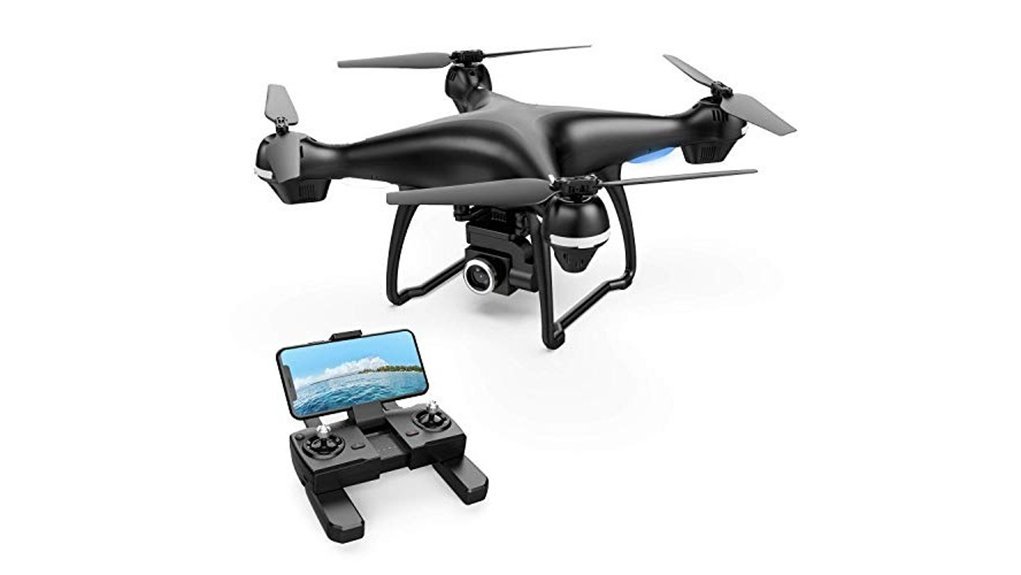
With 2K FPV imaging and GPS stability, the Holy Stone HS100 suits beginner aerial photographers. This large black quadcopter measures 16.9 x 16.9 x 6.9 inches and uses powerful motors to hover steadily in wind. Its 2K optimized camera offers a 120° field of view, a 90° adjustable angle, and 5GHz Wi-Fi transmission for real-time framing. Flight time reaches 18 minutes, with control extending to 1968 feet. Headless mode, altitude hold, one-key takeoff and landing, and Follow Me simplify operation. Foldable propellers and quick assembly improve portability and setup.
Best For: Beginner aerial photographers and casual drone users who want an easy-to-fly GPS drone with stable hovering, simple controls, and decent 2K FPV camera quality.
Pros:
- 2K camera with 120° FOV and 90° adjustable angle for flexible aerial shots
- GPS assistance, altitude hold, headless mode, and one-key takeoff/landing make it beginner-friendly
- Foldable propellers and quick assembly improve portability and setup convenience
Cons:
- 18-minute flight time is fairly modest compared with some newer drones
- Large size may make it less convenient to carry than smaller compact models
- 1968-foot control range is good, but not ideal for advanced long-range flying
Factors to Consider When Choosing Photography Drones 2026: Top Picks and Buying Guide
When selecting photography drones for 2026, camera sensor quality and resolution remain central to capturing sharp, detailed images. Flight stability features, transmission range, and battery flight time also shape how reliably a drone performs in real shooting conditions. These factors together help narrow the top picks for photographers seeking strong image quality and dependable operation.
Camera Sensor Quality
Camera sensor quality is one of the most important factors in choosing a photography drone, since sensor size, resolution, dynamic range, and image processing all shape the final image. Larger sensors, such as 1-inch CMOS units, collect more light and generally deliver cleaner files, stronger low-light performance, and better tonal gradation. Enhanced dynamic range helps preserve highlight and shadow detail in scenes with mixed lighting, producing more balanced aerial photographs. Image processing also matters, because advanced color algorithms can improve accuracy and consistency across photos and video. In addition, adjustable aperture control gives the photographer more flexibility over exposure and depth of field, supporting greater creative control in demanding shooting conditions. Together, these qualities determine how reliably a drone captures polished, professional-looking imagery.
Resolution And Detail
Resolution and detail determine how much usable image information a photography drone can capture, especially when shooting scenes that may later need cropping or enlarging. Higher-resolution cameras, including 4K and 6K models, record finer textures and preserve clarity when framing is adjusted afterward. Megapixel count also matters: 12MP is usually adequate for casual work, while higher counts suit professional editing and large prints. A larger sensor, such as a 1-inch CMOS, improves dynamic range and low-light performance, which helps retain color depth and fine structure in shadows and highlights. Optical zoom of 3x or more keeps detail intact at different distances, unlike digital enlargement. HDR processing and advanced imaging algorithms further refine output by balancing contrast and color in difficult lighting.
Flight Stability Features
Flight stability is a critical factor in photography drones, since smooth, controlled movement directly affects image quality. A 3-axis gimbal is essential because it keeps the camera steady, even when wind introduces vibration. Wind resistance ratings also matter; a Level 5 rating, for example, shows better control in gusts between 8.5 and 10.5 m/s. GPS-assisted flight improves hovering accuracy and helps maintain precise framing during aerial shots. Obstacle avoidance systems with multiple sensors add 360° awareness, reducing collision risk and supporting smoother routes. Longer flight times, such as up to 40 minutes, further support stability by limiting disruptive landings and battery changes during a shoot. Together, these features help produce consistent, professional results in varied conditions.
Transmission Range
Beyond stability, the connection between drone and controller shapes how reliably a photography drone can be flown for precise shots. Transmission range determines how far that link remains dependable, with consumer models spanning roughly 2 km to more than 15 km. Systems such as OcuSync and SkyLink extend usable distance while limiting interference and preserving clearer video feeds, which matters when framing subjects from remote vantage points. Manufacturers list a maximum range under ideal conditions, and that figure should be treated as a benchmark rather than a guarantee. Obstacles, crowded radio environments, and nearby electronics can shorten performance in practice. For photography, stronger range usually means greater freedom to position the drone creatively, capture wider perspectives, and maintain control without compromising image planning.
Battery Flight Time
Battery flight time is one of the most important specifications for a photography drone, since longer endurance allows extended shoots with fewer stops for recharging. Typical models last 18 to 31 minutes, while high-performance options can reach about 40 minutes on a charge. That extra air time supports panoramic captures, time-lapse work, and multiple framing attempts without rushing. Actual performance depends on payload, weather, wind, and the style of shooting, so published figures should be treated as best-case estimates. Buyers should compare real-world endurance rather than marketing claims alone. Spare batteries and quick-swap designs can also improve productivity during outdoor sessions, especially when charging access is limited. Longer flight time generally means more flexibility and better chances of capturing the right shot.
Portability And Weight
Portability and weight are key considerations when choosing a photography drone, especially for travel and outdoor shoots where quick deployment matters. Models under 250 grams, such as the DJI Mini 2, are often easier to carry and less cumbersome in transit. Compact frames can fit into a small bag or even the palm of a hand, which improves convenience during hikes, road trips, and fast-moving assignments. Foldable propellers further reduce packed size, making storage simpler without limiting flight performance. Lightweight drones also tend to place less strain on batteries, which can support longer sessions relative to their size. For photographers, a drone that is easy to transport is more likely to be used spontaneously when a strong shot appears.
Smart Shooting Modes
Smart shooting modes can make a photography drone far easier to use in the field, especially when speed and consistency matter. QuickShots and similar automated tools help capture polished video sequences with little effort, giving even complex cinematic moves a streamlined execution. Follow Me mode adds value by tracking subjects automatically, which supports active scenes and reduces the need for constant manual control. Customizable shooting modes expand creative options by offering varied angles and perspectives suited to different compositions. Stability features such as altitude hold improve image sharpness and help prevent blur during recording. In advanced models, intelligent flight systems can also adjust settings according to environmental conditions, helping maintain strong image quality across changing light, wind, and terrain.
Frequently Asked Questions
What Drone Licenses Are Needed for Aerial Photography in 2026?
Drone licenses vary by country, but aerial photography generally requires a basic pilot registration, remote pilot certificate, and sometimes commercial operation authorization. Local airspace, altitude, and privacy rules may also apply.
How Does Wind Resistance Affect Drone Photo Quality?
Wind resistance affects photo quality by stabilizing or destabilizing the drone’s flight; stronger gusts can cause blur, framing shifts, and vibration. Better wind handling usually produces sharper, steadier aerial images overall.
Which Drones Support Interchangeable Camera Lenses?
Only a few drones support interchangeable lenses: modular cinema drones, heavy-lift platforms, and select custom rigs. They trade portability for flexibility, they trade simplicity for control, and they trade affordability for advanced optics.
Can Photography Drones Fly Safely Near Wildlife?
Photography drones can fly safely near wildlife only with strict distance, altitude, and noise controls; otherwise, they may disturb or endanger animals. Responsible operators follow local rules, avoid nesting areas, and prioritize animal welfare.
What Editing Software Pairs Best With Drone Images?
Adobe Lightroom pairs best with drone images for color, exposure, and lens corrections, while Photoshop handles advanced composites. Affinity Photo and Capture One are also strong choices, depending on whether speed or precision is prioritized.
Conclusion
In 2026, the best photography drones balance image quality, portability, and reliability. The DJI Mini 2 Fly More Combo remains a standout for travelers, while the Autel Robotics EVO 2 Pro V3 offers the most advanced imaging with its 1-inch CMOS sensor. For budget buyers, the Holy Stone HS100 delivers solid value. With drone sales projected to keep rising, choosing the right model now matters more than ever for capturing sharper, more creative aerial shots.