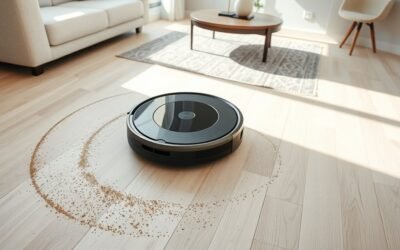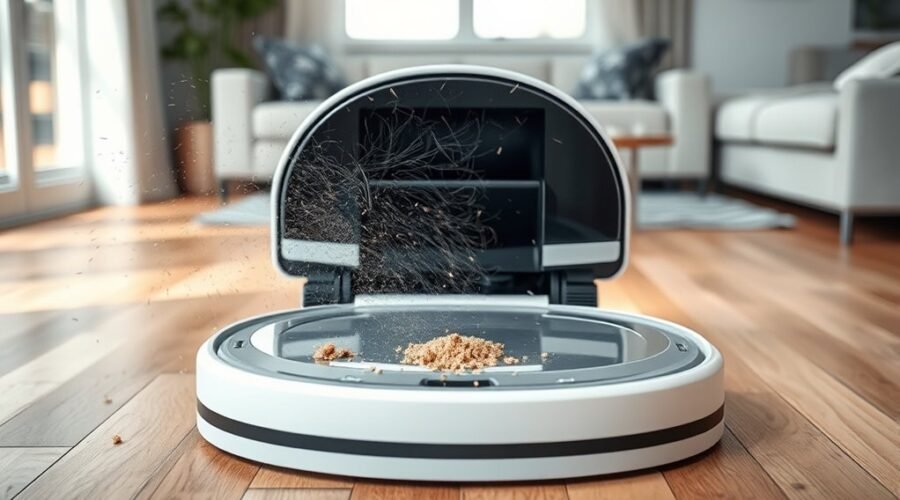
Robot vacuum suction power, usually measured in Pascals, is often presented as the main indicator of cleaning strength. Yet the number alone does not fully explain how well a machine lifts dust, pet hair, or debris from different surfaces. Airflow, brush design, and maintenance can change results considerably. The real question is not just how much suction a robot claims, but how that power performs in practice under everyday conditions.
What Is Robot Vacuum Suction Power?
Robot vacuum suction power is typically measured in Pascals (Pa), a unit that indicates how effectively a vacuum can lift dirt and debris from a surface.
Robot vacuum suction power is measured in Pascals, reflecting how effectively it lifts dirt and debris from surfaces.
In a robot vacuum, suction power quantifies the negative pressure available at the intake, shaping cleaning performance across hard floors, rugs, and carpets. Common values range from 1,500 Pa to over 30,000 Pa, while entry-level units often sit near 2,000 to 2,500 Pa for light use.
Higher suction usually improves debris pickup, especially where pet hair and embedded soil resist weak airflow. Models around 4,000 to 8,000 Pa are often suitable for stronger household demands, and units above 10,000 Pa are designed for deep cleaning.
Yet suction power alone is not sufficient; brush design, airflow management, and regular maintenance all affect real-world results. A well-maintained robot vacuum can preserve performance, support cleaning autonomy, and reduce the burden of manual intervention.
Why Pa Isn’t the Whole Story
Pa ratings quantify pressure, but they do not by themselves determine cleaning effectiveness.
Airflow retention, brush geometry, motor efficiency, and internal leakage often have greater influence on how well debris is lifted and transported.
As a result, overall system design can outperform a higher Pascal value under real operating conditions.
Airflow Matters More
Although suction is commonly advertised in Pascals (Pa), that figure alone does not fully describe a robot vacuum’s cleaning performance. Airflow is the decisive companion metric: measured in liters per second, it governs how rapidly debris reaches the bin, shaping dust pick-up rate and overall efficiency.
A unit may claim high suction, yet if airflow is weak, debris transport slows and performance drops. For peak performance, balanced performance between suction power and airflow matters more than isolated Pa values.
- 10,000 Pa with low airflow can leave particles behind.
- 5,000 Pa with 20 L/s airflow can outperform 8,000 Pa with 10 L/s.
- Effective design aligns both metrics to support liberation from dirt across varied surfaces, improving cleaning performance without waste.
Design Affects Performance
Suction power, measured in Pascals (Pa), is only one component of robot vacuum performance, because brush design, airflow efficiency, motor output, and seal integrity all affect how effectively debris is lifted and transported. A robot vacuum with strong Pa ratings can still underperform on carpet if brush design is weak. | Factor | Effect | Result |
| — | — | — |
|---|---|---|
| airflow design | directs debris | efficient airflow |
| brush design | agitates fibers | stable pickup |
| overall design | preserves seal | consistent suction |
Automatic surface sensing further improves cleaning power by adjusting output in real time. This integration matters because Pa ratings alone do not define performance. A lower-rated unit with superior airflow design and better sealing can deliver stronger debris transfer and more reliable results. Liberation from marketing requires evaluating the whole system, not a single number.
How Much Suction Power Do You Need?
Required suction power depends primarily on floor type: 1,500 to 2,500 Pa is typically adequate for hard floors, while mixed surfaces usually need 2,500 to 4,000 Pa.
Homes with pets, medium-pile carpets, or heavier debris loads generally benefit from 4,000 to 6,000 Pa, with thick carpets often requiring 6,000 Pa or more for deeper extraction.
Higher Pa ratings should be weighed against runtime, since excessive suction can reduce battery life without improving overall cleaning if airflow and brush design are not matched to the environment.
Floor Type Needs
Floor type largely determines the suction level a robot vacuum needs to clean effectively. For hard floors, 1,500 to 2,500 Pa usually delivers reliable debris removal, because dust and crumbs sit on the surface.
Mixed floors need 2,500 to 4,000 Pa for stable cleaning performance across hardwood and low-pile carpet. Homes with pets or deeper fiber loads often require 4,000 to 6,000 Pa, while deep cleaning thick carpet may demand 6,000 to 8,000+ Pa. Higher suction power alone is not liberation; efficient design matters.
- Hard floors: moderate suction, strong airflow.
- Mixed floors: balanced suction, consistent carpet cleaning.
- Thick carpets: higher suction, effective deep cleaning.
Brush geometry, sealed airflow, and debris path efficiency can outperform raw suction ratings when floor conditions vary.
Pet Hair And Carpets
Pet hair on carpets typically requires higher suction than bare floors because fibers trap strands and dander below the surface. A robot vacuum targeting effective cleaning should match suction power to carpet depth and load.
| Carpet type | Pa range | Result |
|---|---|---|
| Low-pile | 3,000-4,000 | Lifts pet hair safely |
| Medium-pile | 4,000-6,000 | Strong cleaning performance |
| High-pile | 6,000+ | Deep extraction |
For medium-pile carpets, 4,000 to 6,000 Pa is usually sufficient; high-pile carpets and heavy pet fur often need more than 6,000 Pa. Advanced brush systems improve capture efficiency, especially in a robot vacuum built for pet homes. Regular maintenance—emptying the dustbin and cleaning filters—preserves suction power and supports consistent, liberated cleaning outcomes.
Balance Power And Runtime
Although higher suction can improve cleaning performance, it often reduces runtime, so the ideal setting depends on floor type and debris load.
Suction power, measured in pascals, should match the task rather than chase maximum output. For hard floors, 1,500 to 2,500 Pa can deliver efficient dust pick-up rate; mixed floor types usually benefit from 2,500 to 4,000 Pa; households with pets or heavy debris may require above 4,000 Pa, and deep carpet cleaning may need 6,000 to 8,000 Pa.
- Adjustable suction preserves battery life while enabling peak performance.
- Maintenance, including emptying dustbins and cleaning filters, supports stable runtime.
- The correct balance improves cleaning performance without unnecessary energy loss, allowing users to reclaim time and reduce dependence on repeated passes.
Best Suction Power for Your Floor Type
Selecting the right suction power depends on the floor surface and the type of debris being handled. On hard floors, vacuum suction power of 1,500 to 2,500 Pa is usually enough for dust and light debris, preserving efficiency without excess strain.
For different floor types, especially hardwood paired with low-pile carpet, 2,500 to 4,000 Pa supports cleaner pickup and more consistent cleaning performance. In homes with pets and medium-pile carpets, 4,000 to 6,000 Pa helps remove pet hair and embedded dirt more decisively.
For deep cleaning on thick carpets, 6,000 to 8,000 Pa or higher is appropriate when heavy buildup must be lifted. Still, higher Pa alone does not define the best robot vacuums; peak performance depends on how the machine translates suction power into contact, airflow, and debris capture.
A rational choice matches power to the floor, enabling cleaner spaces and greater autonomy.
What Affects Real-World Cleaning Performance?
Real-world cleaning performance depends on more than rated suction alone; airflow efficiency, brush design, filtration resistance, and system sealing all shape how effectively debris is removed and retained. Suction power matters, yet cleaning performance emerges from whole-system design, where motor performance, ducts, and seals preserve pressure.
Real cleaning performance depends on airflow, brush design, filtration, and sealing—not suction alone.
- Airflow efficiency determines whether loosened dirt reaches the bin or stalls in the head.
- Brush design affects agitation, especially on carpets, where fibers hold debris tightly.
- A filtration system can restrict airflow; clogged filters and full bins reduce consistent suction, weakening capture of fine particles.
In practice, the strongest vacuum is not merely the loudest or highest-rated. Liberation from dust requires coordinated engineering that converts input power into usable airflow, stable pickup, and retention.
When sealing is poor or resistance rises, the machine loses effective cleaning performance even if nominal suction remains high. The result is less autonomy for the user and less control over the living environment.
How to Keep Suction Strong Over Time
Maintaining strong suction over time depends on preserving the airflow path and reducing mechanical and filtration resistance. To maintain suction performance, the user should clean the dustbin after every cycle, because accumulated debris from surfaces can reduce airflow and weaken suction power.
Filters should be cleaned regularly and replaced on schedule; clogged filters create drag that limits intake efficiency and undermines strong suction. Brush assemblies also require attention: inspect brush rolls for hair, threads, and compacted lint, since tangles increase load and reduce cleaning efficiency.
A consistent cleaning schedule prevents heavy buildup, allowing the machine to operate with less strain and more stable output. Keeping sensors clean supports accurate navigation, which helps the unit reach dirty zones without wasting passes.
Taken together, these maintenance steps preserve airflow integrity, protect mechanical components, and keep suction performance closer to its intended level over time.
Best High-Suction Robot Vacuums
High-suction robot vacuums are defined by airflow capacity, brush design, and filtration efficiency, with top-tier models delivering performance well beyond standard consumer units.
High-suction robot vacuums blend airflow, brush design, and filtration to deliver powerful cleaning beyond standard consumer models.
In this category, suction power is best judged by Pa rating and sustained cleaning performance across different floor types. The DEEBOT X11 OmniCyclone, at 19,500 Pa, moves dust and debris aggressively, while the DEEBOT X9 PRO OMNI, at 16,600 Pa, adds a Triple Lift System for dry and wet cleaning.
Premium models can reach 30,000 Pa, supporting deep cleaning on thick carpets. Midrange high-suction robot vacuums often span 4,000 to 8,000 Pa; entry units, 1,500 to 2,500 Pa.
Efficient airflow channels and regular maintenance, including filter cleaning and dustbin emptying, preserve output.
- 19,500 Pa for heavy debris
- 16,600 Pa with dual-task control
- Up to 30,000 Pa for deep cleaning
Which Robot Vacuum Suits Your Home?
Choosing the right robot vacuum depends on floor type, debris load, and cleaning goals rather than suction power alone. For hard floors, 1,500 to 2,500 Pa usually supports light dust and crumbs with adequate cleaning performance.
Homes with mixed flooring, especially hardwood plus low-pile carpet, typically benefit from 2,500 to 4,000 Pa to maintain stable pickup across surfaces. When pet hair or medium-pile carpets are present, 4,000 to 6,000 Pa better supports continuous debris removal and reduces missed fibers.
Thick carpets and heavy debris demand 6,000 to 8,000+ Pa for ideal cleaning and deeper extraction. Yet suction power is only one variable. Airflow efficiency, brush design, maintenance, and other vacuum features can improve or weaken results.
A model with balanced engineering may outperform a stronger unit with poor brush contact. Selection should consequently prioritize the floor profile and required autonomy, enabling efficient, liberated cleaning with less manual intervention and more consistent outcomes.
Frequently Asked Questions
What’s a Good Suction Power for a Robot Vacuum?
A good suction power is 2,500–4,000 Pa for mixed floor types; 4,000–6,000 Pa suits pets and carpets. It balances cleaning efficiency, battery life, noise levels, price range, brand comparison, user reviews, feature benefits, maintenance tips.
What Are the Downsides of Using a Robotic Vacuum Cleaner?
Iron gears, like a caged sparrow, reveal downsides: robot vacuum maintenance burdens, suction power impact, floor type compatibility gaps, noise level concerns, battery life issues, mapping technology limitations, navigation obstacles, pet hair challenges, price vs performance, user experience feedback.
Is 20,000 Pa Suction Good for a Robot Vacuum?
Yes, 20,000 Pa is excellent. In suction technology terms, cleaning efficiency for pet hair improves, though battery life, noise levels, and surface compatibility vary. Maintenance tips, brand comparison, user reviews, and price range still matter.
Is 4000 Pa Suction Good for a Robot Vacuum?
Yes—4,000 Pa is generally good, a steady workhorse in mixed-floor homes. It offers solid suction efficiency and cleaning performance for pet hair; floor types, battery life, noise level, filter maintenance, brand comparison, user reviews, and price range still matter.
Conclusion
In the end, robot vacuum suction power is only one part of an engineering equation that determines whether a machine merely skims dust or performs near-miraculous floor recovery. A model with towering Pa ratings may look unstoppable, yet brush geometry, airflow, filtration, and maintenance can dominate real cleaning outcomes. The best choice is not the loudest specification, but the vacuum whose suction, design, and floor compatibility align most precisely with the home’s demands.