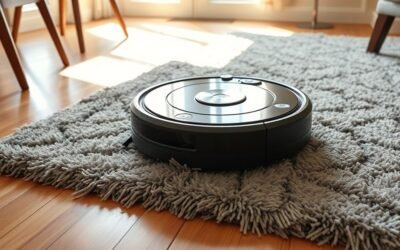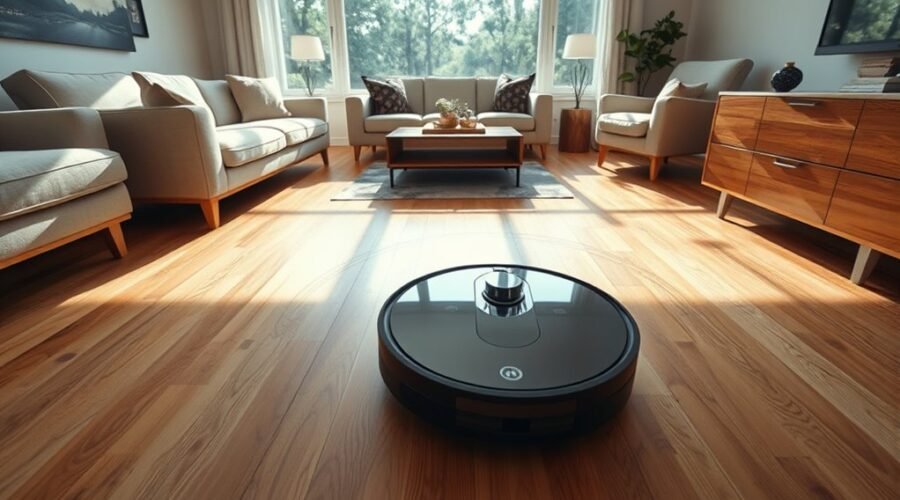
A robot vacuum cleaning path is the route it follows to cover a floor with minimal gaps and overlap. It is not random; it is shaped by mapping data, sensor input, and the selected cleaning mode. The machine may switch between straight lines, edge tracking, and obstacle avoidance as conditions change. But the exact logic behind those decisions depends on the room layout, app settings, and onboard control system.
What Is a Robot Vacuum Cleaning Path?
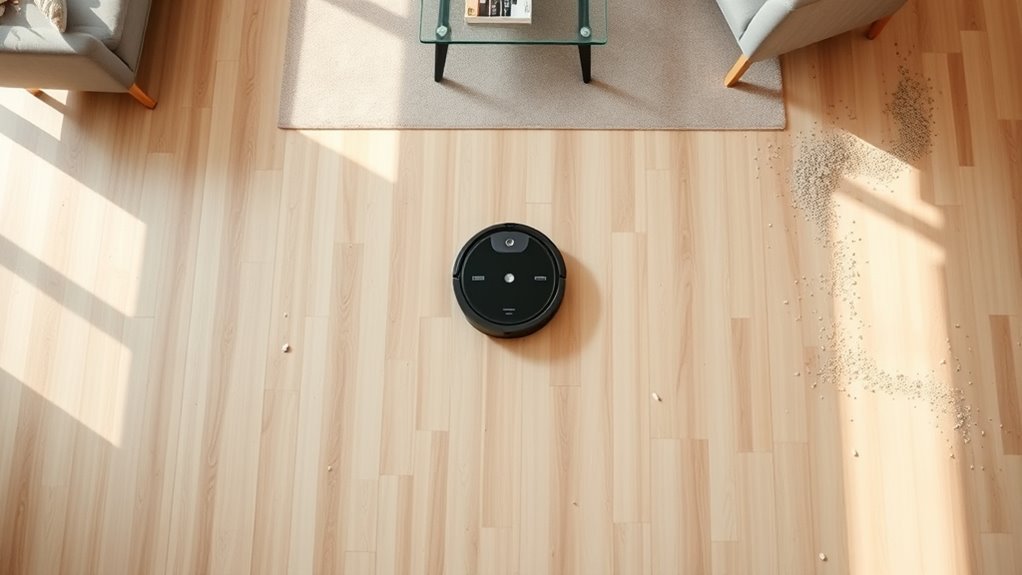
A robot vacuum cleaning path is the planned route a device follows to cover a defined area efficiently while avoiding obstacles and maximizing floor coverage.
In technical terms, a robot vacuum cleaning path is a control strategy that links mapping, sensors, obstacle avoidance, and coverage optimization into one operational sequence. The system selects efficient cleaning paths to reduce missed zones and unnecessary overlap.
A control strategy uniting mapping, sensors, obstacle avoidance, and coverage optimization for efficient cleaning paths.
During execution, real-time adjustments allow the unit to react to furniture, cables, or moving objects without losing trajectory integrity. Different cleaning patterns, including Z-shaped and spiral routes, are applied according to room size and clutter density.
Edge cleaning is also integrated, with side brushes extending reach along walls and into corners where debris persists. This framework gives the machine disciplined autonomy, limiting wasteful movement and supporting systematic floor treatment.
The result is a precise cleaning process designed for consistent coverage and practical efficiency.
How Robot Vacuums Map Rooms
Robot vacuums begin by scanning rooms with LiDAR, infrared, or VSLAM systems to generate a digital layout of walls, furniture, and obstacles.
The resulting sensor data defines cleaning boundaries, no-go zones, and route priorities, while real-time feedback supports map updates during operation.
After the initial run, companion app settings allow map refinement for improved path accuracy and coverage.
Initial Room Scanning
Using LiDAR and infrared sensing, a robot vacuum performs an initial scan of the room to generate a detailed spatial map before cleaning begins. This initial room scanning relies on advanced sensors to detect furniture, obstacles, and boundary conditions, forming the basis of the mapping process.
The resulting data informs navigation systems that calculate an efficient cleaning path while preserving access to constrained areas. By registering spatial dynamics with precision, the unit reduces collision risk and supports effective cleaning across variable floor plans.
After the scan, the map is stored and may be reviewed through the app, allowing user-directed refinement. During operation, real-time adjustments occur as sensor feedback updates movement decisions, enabling the machine to maintain coverage and preserve autonomous freedom from repetitive manual oversight.
Sensor-Based Mapping
Sensor-based mapping converts raw environmental data into a navigable digital floor plan, allowing the vacuum to identify furniture, obstacles, and room boundaries with precision.
Using sensor technology such as LiDAR, infrared, ultrasonic sensors, and cliff detection, the robot builds a stored map that supports systematic mapping of each zone. This process gives the cleaning path structure, letting the machine move with calculated autonomy rather than random drift.
In real time, the control system interprets incoming signals and adjusts motion when obstacles appear. Dirt sensors in advanced models can further bias coverage toward high-traffic regions, increasing efficiency without human oversight.
The resulting floor plan enables repeatable operation, precise coverage, and adaptive navigation across complex layouts, reducing wasted movement and preserving user freedom.
Map Refinement Settings
After the initial scan, the vacuum’s map can be refined in the app to correct layout errors, adjust room boundaries, and improve route accuracy.
These map refinement settings edit the virtual map produced by LiDAR or infrared sensing, aligning it with actual obstacles and passageways. User adjustments can split rooms, merge zones, or mark no-go zones around fragile objects, giving the robot clearer limits for its cleaning routes.
Priority areas may also be assigned so high-traffic spaces receive more coverage without waste. This structured control supports efficient navigation by reducing confusion and rework.
When furniture shifts or orientation degrades, regular re-mapping restores accuracy and sustains cleaning efficiency. The result is a navigable, user-directed system that preserves autonomy while keeping the floorplan intelligible and operational.
How Robot Vacuums Choose a Route
Robot vacuums select routes by converting the mapped room layout into a navigable plan that balances coverage, edge traversal, and efficient path length.
During operation, sensor inputs from LiDAR, infrared, and surface feedback continuously modify that plan to avoid obstacles and adapt to local conditions.
The resulting motion is typically pattern-based and algorithmically adjusted to improve coverage while minimizing overlap and missed areas.
Map-Based Route Planning
Map-based route planning allows autonomous vacuums to convert sensor data into a navigable floor plan, using LiDAR and infrared systems to detect furniture, walls, and obstacles with high spatial precision. The resulting map guides vacuum cleaners toward an effective cleaning route, balancing coverage and time. Initial scans classify rooms and support ideal cleaning through structured passes.
| Element | Function |
|---|---|
| Sensors | Build the map |
| Routes | Organize coverage |
| No-go zones | Prevent entry |
For larger areas, Z-shaped trajectories are common; for cluttered zones, spiral paths reduce missed debris. Users can define no-go zones and priority areas, giving the machine a constrained but effective operating frame. When mapping errors occur, the app can regenerate the map, restoring navigational accuracy. Real-time adjustments preserve path integrity without sacrificing systematic coverage.
Sensor-Driven Path Adjustment
Once a navigable floor plan has been established, route selection becomes a dynamic process shaped by live sensor feedback. The robot vacuum uses ultrasonic, infrared, and LiDAR sensors to refine navigation, detect obstacles, and issue path adjustments in real time.
Collision sensors trigger re-routing before contact, preserving efficient cleaning patterns across open and constrained spaces. AI analyzes prior sessions, identifies high-traffic zones, and revises the route to improve coverage without unnecessary repetition.
Surface and dirt sensors further modulate suction and movement, allowing the machine to adapt its cleaning patterns to carpet, tile, or debris concentration. By limiting overlap and avoiding dead-end loops, the system reduces energy waste and extends battery life, giving the user more autonomous cleaning with less intervention and fewer constraints.
Best Paths for Open Rooms and Tight Spaces
In open rooms, robot vacuums typically favor Z-shaped cleaning paths to maximize coverage and minimize missed areas, while tight spaces are better served by spiral patterns that let the machine work around obstacles and focus on concentrated debris.
A robot vacuum relies on initial mapping from LiDAR or infrared sensors to choose cleaning paths that match spatial geometry. In open rooms, broad sweeps improve efficiency and reduce overlap. In tight spaces, tighter loops strengthen obstacle navigation and concentrate suction where clutter accumulates.
- Edge cleaning remains essential along walls and corners.
- Sensors refine routes in real time.
- Mapping guides path selection before cleaning starts.
- Path changes preserve coverage in complex layouts.
This analytical approach gives the robot vacuum autonomy without sacrificing precision, allowing movement to adapt to the room rather than forcing the room to conform.
Best App Settings for Full Coverage
After the vacuum’s path logic is established, the app settings determine how fully that logic is applied across the home. A robot vacuum should first run initial mapping to generate a reliable virtual map, because room dimensions and furniture placement shape the cleaning path.
The map should then be reviewed and corrected when layouts shift, so the software can compute efficient routes without wasted motion. Appropriate cleaning modes matter: Boost can increase pickup on demanding surfaces, while Edge cleaning refines perimeter results.
Reviewed maps and tailored modes help the vacuum trace efficient routes, boosting pickup and refining edges without wasted motion.
Priority cleaning can be assigned to high-traffic areas, directing more time where wear accumulates fastest. App settings should also instruct the robot to avoid obstacles that would interrupt operation or create damage risk.
When these controls are calibrated well, the machine gains autonomy, and the user gains liberation from repetitive oversight. The result is thorough coverage, with less manual intervention and more predictable performance across the home.
Using No-Go Zones and Priority Areas
No-go zones allow the robot vacuum to exclude sensitive areas from its route, such as spaces around delicate furniture, pet food bowls, or other obstacles that should remain untouched. In the app, these no-go zones and priority areas let users customize navigation for specific room layouts, improving cleaning efficiency without manual intervention.
- Define boundaries around fragile objects.
- Mark priority areas in high-traffic zones.
- Match zone shapes to room layouts.
- Review settings as rooms change.
This cleaning strategy gives the robot vacuum a precise operational map, reducing time spent in low-value spaces and directing effort where it matters most.
Priority areas can be assigned to entries, halls, or work zones that collect debris faster, while restricted zones preserve untouched surfaces. By adjusting these controls, users gain a liberated, low-friction approach to household maintenance.
Regular updates keep the system aligned with changing furniture placement, ensuring navigation remains accurate and efficient.
Cleaning Modes That Change the Path
Cleaning modes alter a robot vacuum’s route by changing how it prioritizes coverage, suction, and edge tracking across different surfaces.
Standard cleaning modes typically follow a systematic cleaning path suited to routine maintenance, reducing unnecessary overlap while preserving efficiency.
Max mode increases suction power and tightens coverage for thorough cleaning on carpets and heavily soiled zones.
Edge cleaning mode redirects movement along baseboards and corners, extending the path to capture debris where freedom from dust is hardest won.
Custom cleaning mode lets users specify high-traffic areas, concentrating effort where wear accumulates.
In advanced models, AI can adjust cleaning behavior in response to surface feedback, but the core function remains mode selection.
Each mode reshapes the cleaning path to match the task, balancing speed, reach, and intensity.
The result is a more deliberate, user-directed system that supports cleaner spaces with less manual intervention.
How AI and Sensors Adjust the Route
Beyond preset cleaning modes, modern robot vacuums refine their routes through sensor input and onboard AI. Machine-learning models review prior runs to improve the cleaning path, while sensors measure surfaces, obstacles, and dirt density. LiDAR technology builds spatial maps, giving navigation a precise framework and helping the machine cover open zones without waste. Dirt sensors and infrared or ultrasonic detectors then trigger real-time adjustments when conditions change.
- Route segments are reordered for efficient coverage.
- Collision feedback redirects travel instantly.
- Suction power increases in heavily soiled areas.
- Environmental maps support obstacle-aware navigation.
This closed-loop design reduces unnecessary motion and gives the vacuum greater autonomy. The system does not merely follow a script; it recalculates, adapts, and advances with each pass.
For users seeking liberation from manual control, AI-guided navigation transforms cleaning from a fixed routine into an adaptive process that responds to the room as it is, not as it was programmed to be.
Common Robot Vacuum Cleaning Path Problems
Common robot vacuums frequently encounter pathing errors that reduce coverage and efficiency. Mapping inaccuracies can skew routes, especially when systems fail to detect walls or align with charging stations, leaving missed areas and delaying cleaning tasks.
Navigational confusion becomes more likely in complex layouts, where the robot may lose orientation and require manual repositioning to restore progress. Poor edge detection often leaves corners and perimeter dust untouched, because some units do not tighten their path near barriers.
Complex layouts can disorient robot vacuums, forcing manual repositioning while poor edge detection leaves corners and perimeter dust behind.
In addition, overlapping cleaning zones waste energy by sending the machine across already serviced floors, increasing the robot vacuum’s cleaning time without improving results. The most effective systems rely on sensors that detect obstacles and support real-time adjustments from sensor feedback.
Without that adaptive control, pathing remains inefficient, particularly in high-traffic rooms, where repeated passes and incomplete coverage limit the autonomy and practical freedom users expect from automated floor care.
Frequently Asked Questions
What Are the Downsides of Using a Robotic Vacuum Cleaner?
Downsides include limited Cleaning efficiency, poor Floor compatibility, reduced Navigation accuracy, rising Maintenance costs, short Battery life, and variable Noise levels. Smart features help, yet user reviews often report missed obstacles, edge damage, and frequent intervention.
How Do Robot Vacuums Know Where to Clean?
They know through mapping technology and navigation systems; one study found 90% of units improve routes after first run. Room recognition, obstacle avoidance, sensor accuracy, cleaning patterns, floor types, and battery life guide precise, adaptive coverage.
Do Robotic Vacuum Cleaners Really Work?
Yes, robotic vacuum cleaners really work when suction power, navigation technology, battery life, and floor types are matched well; maintenance tips sustain performance, noise levels vary, and brand comparisons plus user reviews help evaluate effectiveness.
Do I Need a Mop if I Have a Robot Vacuum?
Yes; a mop remains useful, especially where stains cling like shadows. A robot vacuum offers robot vacuum benefits, yet floor types, mopping capabilities, cleaning efficiency, smart features, user experience, cost comparison, and maintenance tips may justify both tools.
Conclusion
In sum, a robot vacuum cleaning path is not a random drift but a calculated sequence shaped by mapping, sensing, and route selection. Open rooms invite broad sweeps; narrow spaces require tighter maneuvers; app settings and no-go zones refine the result. Yet when obstacles, poor mapping, or sensor errors intervene, even the best plan falters. The question remains: can a machine ever clean perfectly if the room itself keeps changing?