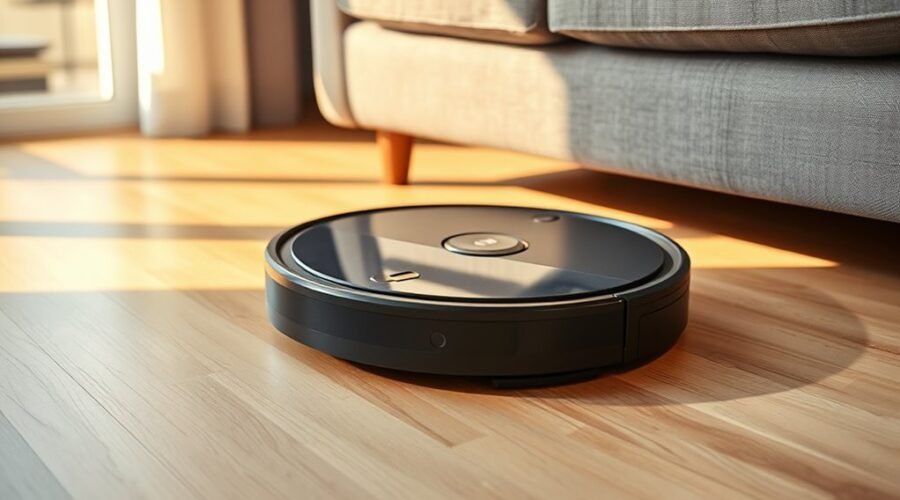
Mop lifting on a robot vacuum is a feature that raises the mop pad when carpet is detected, helping prevent wetting and damage. It uses sensors and lift mechanisms to switch smoothly between hard floors and rugs, often adjusting height automatically. The result is cleaner mixed-floor cleaning with less manual setup. But the real difference lies in how well it responds to different carpet types and room layouts.
What Is Mop Lifting on a Robot Vacuum?
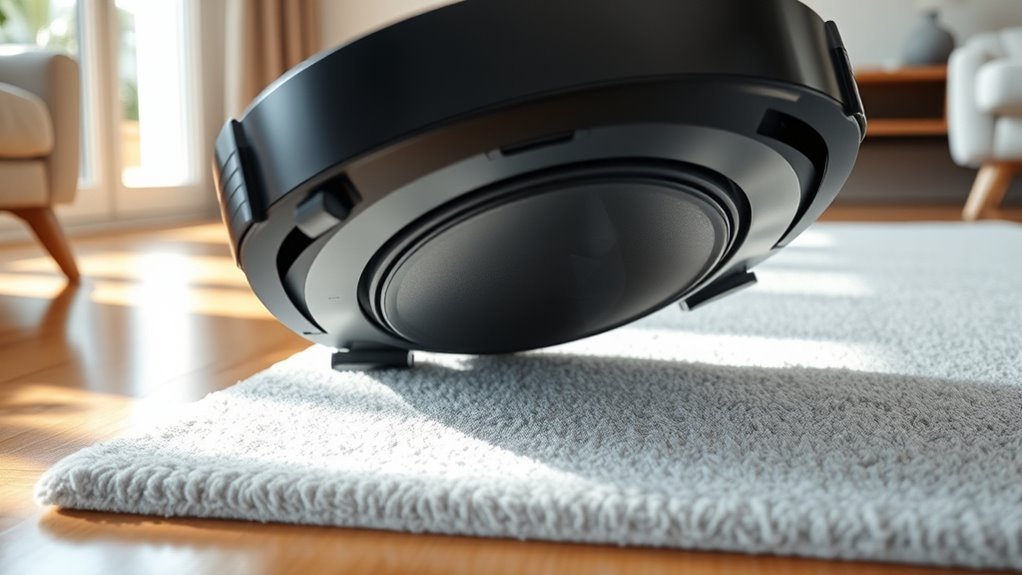
Mop lifting on a robot vacuum is an automatic feature that raises the mop pad when the machine detects carpet, helping avoid moisture damage while maintaining cleaning performance across mixed flooring.
In practical terms, mop lifting technology lets robot vacuums move from hard floors to rugs with less manual intervention. Carpet detection relies on real-time sensor data to trigger an automatic raise, keeping the mop pad clear of fibers and reducing the risk of mold or wear.
On many systems, the lift range is tuned for mixed homes, while no-mop zones in the app add another layer of control for users who want specific areas left dry.
Advanced models may use servo motors to position the mechanism more precisely. The result is cleaner shifts, better floor care, and less dependence on constant oversight.
How Robot Mop Lifting Works
Behind mop lifting’s basic purpose lies a simple mechanism: when carpet is detected, the robot vacuum raises the mop pad about 10.5 to 20 mm before it can contact the fibers. This mop lifting technology relies on auto-lift mechanisms that respond in real-time to RGB cameras and pressure sensors.
Servo motors shift the mop upward, keeping moisture saturation off carpet while preserving freedom on mixed flooring.
- Carpet is detected by onboard sensors.
- The system calculates lift height instantly.
- Servo motors raise the mop pad.
- Customizable mop engagement settings adjust behavior by floor type.
Premium models let users tune these settings through an app, making the system more adaptable.
Premium models let users fine-tune mop settings in an app, making floor transitions more adaptable.
Proper functioning is essential: if auto-lift mechanisms fail, the mop may drag or leave wet streaks. Used well, the feature supports clean changes across low-pile carpets under 0.5 inches, without interrupting floor care.
Why Mop Lifting Matters on Carpet
Mop lifting matters on carpet because it keeps moisture off fibers, helping prevent saturation, adhesive weakening, and mold growth.
The lift height must be sufficient, typically around 10.5–20 mm, so the mop clears low-pile carpet without leaving wet streaks.
Smart carpet detection enables real-time lifting adjustments, which is especially important in homes with mixed flooring.
Carpet Moisture Protection
When a robot vacuum shifts from hard floors to carpet, mop lifting helps protect fibers by raising the pad about 10.5–20 mm to avoid moisture saturation. This mop lifting technology supports carpet moisture protection by keeping the mop pad from dragging wet across pile and preserving carpet integrity.
In homes with mixed flooring, auto-lift mechanisms reduce risk while advanced sensors enable real-time adjustment. The practical result is cleaner movement with less worry and more freedom from cleanup damage.
- Limits damp contact.
- Helps prevent mold growth.
- Reduces adhesive weakening.
- Supports no-mop zones through app settings.
These controls matter most on high-pile areas, where excess moisture can trigger warranty issues and costly repairs.
Lift Height Matters
Lift height determines whether a robot vacuum can move from hard floors to carpet without leaving moisture behind.
In mop lifting technology, lift height usually rises 10.5–20 mm, enough to keep the pad clear during carpet shifts. Sensors and servo motors support real-time adjustment, so the robot can maintain effective cleaning across mixed surfaces without dragging a wet mop into fabric.
This auto-lift function reduces moisture exposure, which helps prevent fiber saturation, adhesive weakening, and mold risk. For homes with rugs, no-mop zones in the app add another layer of control.
Models with reliable lift height can handle low-pile carpet safely, preserving freedom from manual resets and avoiding repeated cleanup.
Smart Carpet Detection
Smart carpet detection is what turns mop lifting from a useful feature into a dependable one on mixed flooring. In robot vacuums, mop lifting technology raises the pad 10.5–20 mm when carpet appears, limiting moisture saturation and protecting carpet integrity.
- RGB cameras identify surface changes fast.
- Pressure sensors confirm carpet contact.
- Real-time optimization adjusts lift height on the move.
- No-mop zones keep rugs dry through app control.
This matters because wet fibers can weaken adhesives, encourage mold, and trigger costly repairs or warranty issues.
Smart carpet detection lets robot vacuums move freely between carpets and hard floors without forcing users to choose between clean floors and dry textiles.
How Lift Height Affects Different Carpets
Carpet type determines how effective mop lifting will be in protecting flooring. Mop lifting technology typically raises the pad 10.5 to 20 mm when carpet is detected, reducing moisture damage to carpet fibers.
Carpet type shapes mop lift effectiveness, with 10.5 to 20 mm of lift helping protect fibers from moisture damage.
For low-pile surfaces, the ideal lift height is about 0.5 inches, which usually keeps the mop clear without sacrificing cleaning freedom. High-pile carpet is less forgiving; even a raised pad can brush the fibers, so no-mop zones are often the safer choice.
If the pad contacts carpet without enough lift, adhesives can weaken, mold growth can follow, and warranties may be at risk.
Premium auto lift technology improves protection through real-time adjustment using RGB cameras and pressure sensors, especially on mixed flooring types. Although this adds cost, often $200 to $400, it can prevent carpet damage and is especially useful in homes with varying floor types, where one setting rarely fits all.
Features That Support Mop Lifting
Mop lifting on a robot vacuum depends on a few key components working together, especially servo motors, RGB cameras, and pressure sensors. These parts power mop lifting technology by raising the pad 10.5 to 20 mm when carpet detection signals a soft surface, helping preserve fibers and keep cleaning efficient on mixed flooring.
- Servo motors engage before contact, giving real-time optimization of lift height.
- RGB cameras and pressure sensors refine detection for low-pile carpets under 0.5 inches.
- App control on premium models lets users adjust mop engagement across rooms.
- Regular maintenance of auto lift motors supports a lifespan beyond four years.
For homeowners seeking practical freedom from manual switching, this feature can be a reliable investment. It reduces moisture risk, supports smooth transitions, and keeps the robot focused on floor care without constant oversight.
Mop Lifting vs No-Mop Zones: Which Works Better?
When comparing mop lifting and no-mop zones, the former usually offers better real-time protection because it raises the mop pad by 10.5–20 mm as soon as carpet is detected, reducing the risk of moisture saturation on mixed flooring.
This mop lifting technology supports real-time adaptation, which is useful in homes with varied flooring where surfaces change often.
No-mop zones, set in the app, can also prevent wet cleaning in selected areas, but they may need manual updates if rugs are moved.
Their accuracy depends on advanced technologies such as LiDAR and AI camera fusion, and high-end models can keep deviation under 2 cm.
Even so, no-mop zones are less responsive to layout changes than carpet detection.
For practical use, combining both methods usually delivers ideal protection, limiting the risk of moisture-related damage while preserving coverage.
That balance gives users more freedom from constant floor management.
Best Robot Vacuums With Mop Lifting
Top robot vacuums with mop lifting use sensors and servo motors to raise the mop pad 10.5–20 mm as soon as carpet is detected, helping prevent moisture damage while cleaning mixed flooring.
In a robot vacuum mop combo, mop lifting technology supports smart cleaning for hardwood floors and rugs without manual swaps. For homes with mixed floors, models with auto lift technology and carpet focus technology, such as the MOVA S10 and Dreame L50 Ultra, offer app control and real-time adjustments that keep the cleaning routine smooth and less restrictive.
Strong picks often include a dual flow tangle-free system for hair control and reliable navigation.
- Lift height at least 0.8 inches.
- Verify precise app-based mop control.
- Prioritize stable carpet detection.
- Compare the extra $200–$400 cost against added convenience.
This feature gives cleaner separation between wet mopping and dry carpet care, supporting more independent, flexible home cleaning.
Frequently Asked Questions
Is the Mop Feature Worth It on Robot Vacuums?
The mop feature is worth it for mixed floor types, improving cleaning efficiency and mop effectiveness. Cost analysis, brand comparisons, and user reviews matter; maintenance requirements, water usage, battery life, and stain removal vary by model.
What Are the Downsides of Using a Robotic Vacuum Cleaner?
Downsides include cost efficiency concerns, maintenance requirements, weaker suction power, imperfect navigation technology, limited floor compatibility, short battery life, higher noise levels, unnecessary smart features, unclear warranty options, and mixed user reviews.
Is It Okay to Run a Robot Vacuum Every Day?
Sunlight over clean floors: yes, daily cleaning suits most homes. With sensible maintenance tips, carpet compatibility, floor types, scheduling options, noise levels, battery life, pet hair, app integration, and suction power, it remains practical.
Which Robot Vacuum Has the Best Mopping Function?
Narwal Flow appears best for mopping technology, with real-time self-cleaning and strong cleaning efficiency. Eufy Omni E25 and E35 also impress; compare water tank, smart navigation, floor types, suction power, battery life, user reviews, maintenance tips, brand comparison.
Conclusion
In the end, mop lifting is a surprisingly polite robot habit: the vacuum notices carpet and raises the mop before it can make a mess. That small lift helps protect rugs, improve cleaning efficiency, and reduce the need for constant no-mop zones. Of course, what once sounded futuristic is now just another quiet feature doing the obvious thing well—keeping floors dry where they should stay dry, and clean where they should stay clean.