A robot vacuum dock performs best when placed on a hard, level surface with clear space on both sides and several feet open in front. Corners, clutter, and thick carpet can interfere with alignment and stability. Moving the dock is simple, but the new position can change how the vacuum navigates. The next step is to set it correctly and verify whether docking remains consistent.
Choose the Best Robot Vacuum Dock Location
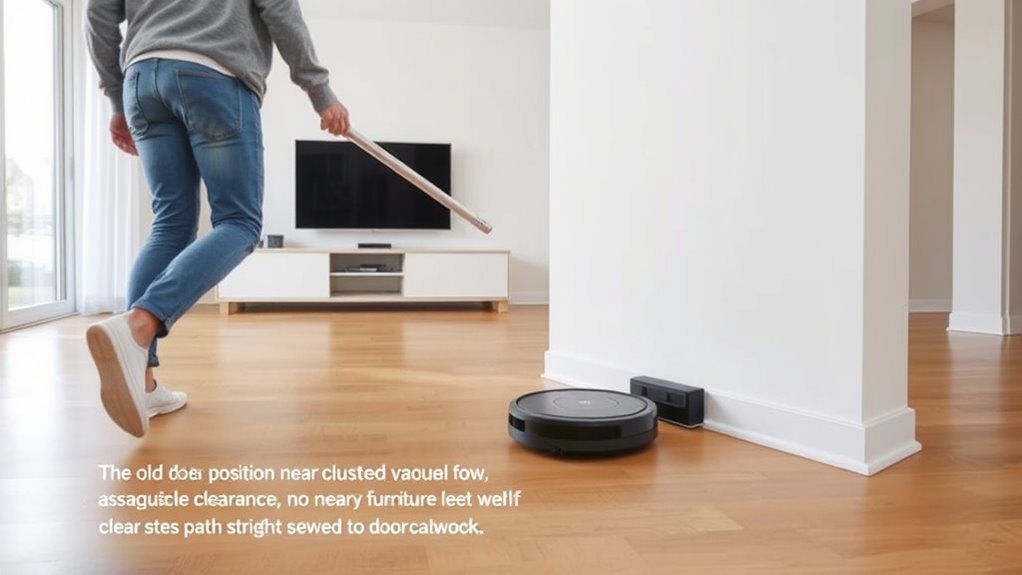
The robot vacuum dock should be placed in an open, level area with at least 5 to 6 inches of clearance on both sides and 4 to 5 feet of open space in front to allow reliable docking. This positioning gives robot vacuums a predictable return path and reduces failed alignments.
A hard, flat surface is preferred because high pile carpet can disrupt contact and charging performance. The docking station should also sit near a power outlet so the unit can charge without strain or cable improvisation. Level ground supports stable parking and consistent sensor readings.
A hard, flat surface helps maintain solid contact, reliable charging, and steady docking performance.
Placement should remain away from stairs or ledges to preserve safe navigation and prevent falls. In practical terms, the best location is one that removes friction from daily operation and lets the machine work without interference.
Such setup respects autonomy through dependable access, efficient charging, and uninterrupted return cycles.
Clear the Area Around the Dock
Clear the space around the dock so the robot vacuum can approach and connect without obstruction. For reliable docking, clearing should leave 5 to 6 inches on both sides of the dock and 4 to 5 feet in front. This buffer gives the machine a direct, low-friction path and reduces failed approach cycles.
Furniture legs, loose cables, shoes, and other clutter should be removed from the zone, since even small obstacles can trap the robot or force unnecessary rerouting. The dock itself should rest on a level surface; uneven ground can disrupt alignment and weaken the charging contact.
Routine inspection matters as well. Dust, pet hair, and debris should be cleared regularly to preserve open access and stable performance. A disciplined clearing routine supports independence by allowing the robot to return home without supervision, preserving time and reducing manual intervention.
Move the Robot Vacuum Dock
Relocating the dock requires placing it on a hard, level surface with the recommended 5 to 6 inches of clearance on each side and 4 to 5 feet of open space in front.
The docking station should remain in an uncluttered zone, not pressed into corners or surrounded by furniture, so the robot can approach in a straight path and achieve reliable docking.
High-pile carpet should be avoided because soft flooring can reduce stability and charging contact. A flat floor improves alignment, minimizes search errors, and supports consistent power connection.
When the dock is moved, its new position should preserve clear access after every cleaning session. If the station is transferred between floors, separate maps may be needed so navigation remains accurate and the robot is not forced to hunt blindly.
Regular inspection helps confirm that the dock stays visible, reachable, and free of obstructions, allowing the system to operate with greater autonomy and less human correction.
Re-map After Moving the Dock
Once the dock has been moved, the robot vacuum should be restarted to begin a new mapping cycle so it can relearn the dock’s position and surrounding layout. This re-map process helps the system update coordinates and improve finding the dock without relying on outdated spatial data.
During the first sessions, the dock should remain visible with a clear line of sight, allowing sensors to register its new placement accurately. App-based mapping tools can then be used to guide the robot through controlled cleaning runs, which may take multiple passes before the map stabilizes.
If the machine still hesitates, the dock can be positioned in a more open area to reduce visual obstruction and support cleaner navigation. After re-mapping, the robot’s docking attempts should be observed closely to confirm that it recognizes the new location consistently and operates with greater independence.
Troubleshoot Docking Problems
If docking issues persist after the dock has been moved, the station should be checked for proper placement and surrounding space. A docking station needs 5 to 6 inches of clearance on both sides and 4 to 5 feet in front. The floor should be hard, not carpet, because soft surfaces can disrupt alignment and power contact. The area must remain uncluttered so the robot has a clear path and does not become trapped during approach. If the unit fails after moving between floors, reset the vacuum or fine-tune its position to restore navigation. Community feedback can also support troubleshooting by revealing model-specific fixes.
| Check | Requirement | Result |
|---|---|---|
| Side clearance | 5–6 in. | Improved approach |
| Front space | 4–5 ft. | Stable docking |
| Surface | Hard floor | Reliable contact |
This troubleshooting process protects autonomy and keeps the docking station usable without dependence on guesswork.
Frequently Asked Questions
How Do I Change the Position of the Dock?
Change the dock placement to a level, open area, with 5–6 inches clearance on both sides and 4–5 feet ahead. This improves vacuum performance, prevents obstruction, and keeps charging access clear and reliable.
How to Relocate the Roborock Dock?
To relocate the Roborock dock, he treats it like a lighthouse: open, level, and unobstructed. He follows robot vacuum features and dock placement tips—hard floor, 5–6 inches clearance, 4–5 feet ahead, then remap.
What Happens if I Move the Dock of My Roborock?
Moving the dock can cause docking issues because the robot may not recognize the new location immediately. Ideal placement requires adequate clearance; otherwise, remapping, failed returns, and manual assistance may be needed until adaptation occurs.
Where to Put a Robot Vacuum Dock?
The dock belongs on level hard flooring in an open, clutter-free area; 4–5 feet front clearance and 5–6 inches per side improve docking. One statistic matters: up to 30% of docking failures stem from poor ideal placement and dock height.
Conclusion
With the dock placed on a hard, level surface and the required clearance restored, the robot vacuum is ready for its next approach. The surrounding space remains open, the path forward unobstructed, and the map refreshed after relocation. Yet reliable docking is not guaranteed until the unit is restarted and its first returns are watched closely. If alignment drifts or contact fails, a small adjustment to the dock may quietly resolve the final, critical approach.