Affiliate disclosure: This article contains Amazon affiliate links. As an Amazon Associate, we may earn from qualifying purchases at no extra cost to you. Product specifications and seller terms can change, so confirm the current listing and manual before buying.
Updated August 2026
If you need a dehumidifier with a built-in pump, focus on more than the biggest advertised pint number. The right model should match your room conditions, pump water high enough to reach the drain, operate within your noise tolerance, and provide a practical way to clean the filter, tank, hose, and pump system.
The four models below fit pump-equipped buyer intent. The GE 50-pint model is the clearest all-around choice for buyers who want a standard-rated 50-pint unit. The Gasbye stands out for its removable pump, while the AEOCKY and Sijipt target larger or more demanding spaces with higher manufacturer-advertised maximum capacities.
Quick verdict
- Best Overall: GE 50-Pint Dehumidifier with Built-In Pump and Smart Dry
- Best Maintainable Pump: Gasbye 75-Pint Dehumidifier with Replaceable Pump
- Best Smart Premium Pick: AEOCKY LEO-001 Smart Dehumidifier with Pump
- Best for High-Humidity Maximum Capacity: Sijipt Guardian SJ80P
| Model | Capacity Wording | Pump Drainage | Best For | Amazon |
|---|---|---|---|---|
| GE with Smart Dry | 50 pints/day | Included hose; up to 16 ft | Straightforward 50-pint basement use | Check Details |
| Gasbye DryPrime 35 | Up to 75 pints/day | Replaceable pump; up to 16.5 ft | Buyers concerned about pump serviceability | Check Details |
| AEOCKY LEO-001 | Up to 80 pints/day | Included 5 m hose for upward drainage | Quiet, smart operation in larger areas | Check Details |
| Sijipt Guardian SJ80P | Up to 80 pints/day at 95°F/90% RH; lower under DOE testing | Pump hose up to 16.4 ft; gravity hose included | Large, very humid spaces needing flexible drainage | Check Details |
Capacity note: Advertised “maximum” pint figures may use hotter and more humid test conditions than the current U.S. Department of Energy procedure. Compare standardized capacity when it is available, and treat square-foot coverage as a starting estimate rather than a guarantee.
GE Portable Dehumidifier with Built-In Pump and Smart Dry
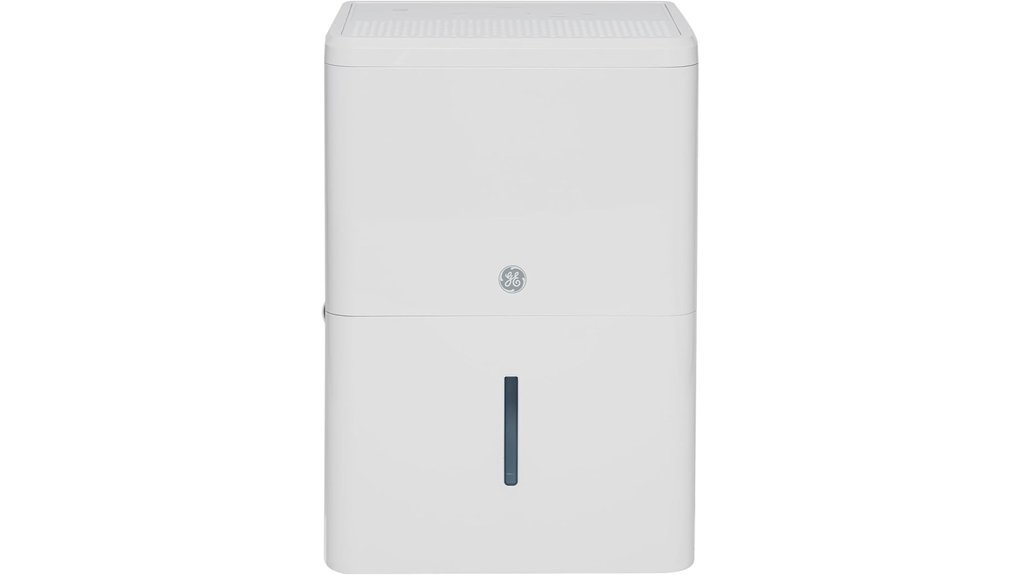
GE’s pump-equipped 50-pint dehumidifier is the most direct match for buyers who specifically want a 50-pint model with upward drainage. It removes up to 50 pints of moisture per day, and the included pump hose can send collected water to a convenient drain up to 16 feet away. Smart Dry changes the fan speed in response to room humidity, while the empty-bucket alarm, filter reminder, digital controls, handles, and casters make daily use easier.
Why You’ll Like It: It combines a standard 50-pint rating with a built-in pump and simple automatic controls, without relying on an unusually high maximum-capacity claim.
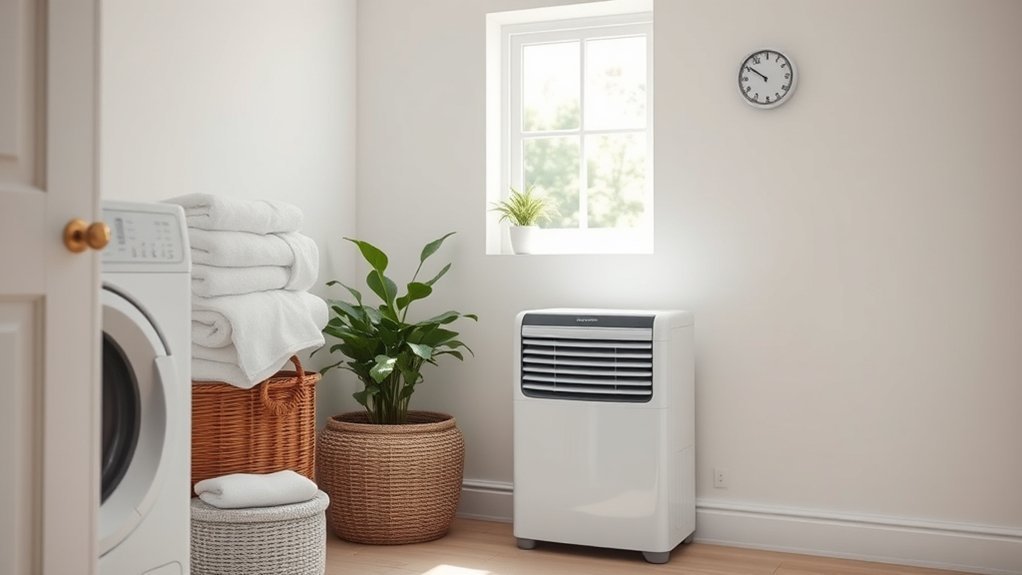
Best For: Damp basements, garages, laundry areas, and other spaces where a floor drain is unavailable or higher than the dehumidifier.
Who Should Avoid It: Buyers who only need a small-room unit or who prefer a user-removable pump for easier long-term servicing.
Pros:
- Removes up to 50 pints per day.
- Built-in pump and included hose support drainage up to 16 feet away.
- Smart Dry, filter reminders, bucket alerts, and easy-roll wheels improve convenience.
Cons:
- The internal pump is more complex than gravity drainage.
- The article source did not provide a verified decibel rating for this exact listing.
- It may be more capacity than a lightly damp small room needs.
Gasbye Energy Star Dehumidifier with Replaceable Pump
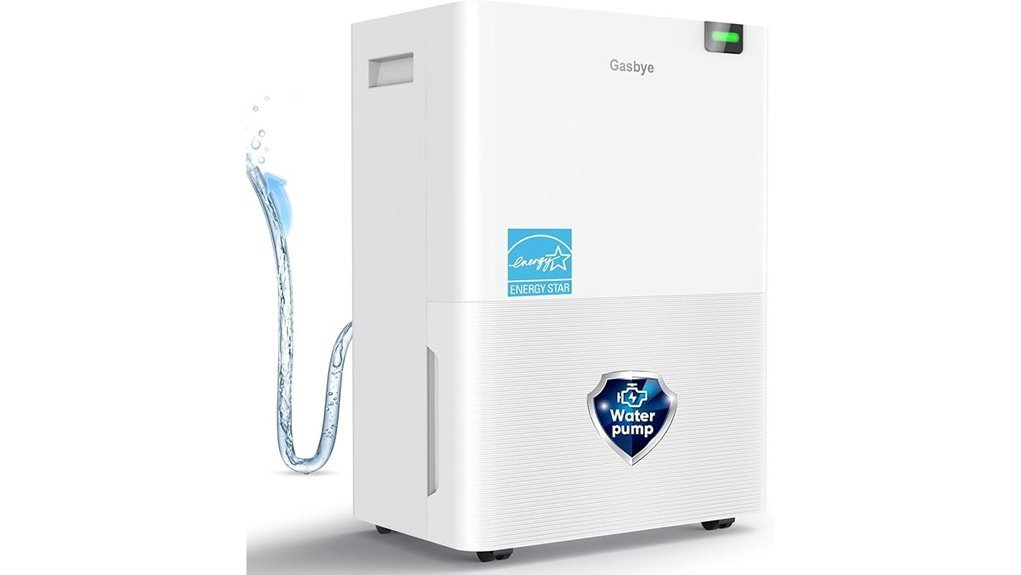
Gasbye’s DryPrime 35 series is the most distinctive option here because the pump is designed to be removed, cleaned, and replaced. That can reduce the risk of discarding the entire dehumidifier if the pump eventually clogs or fails. The manufacturer lists a maximum capacity of 75 pints per day, pump drainage up to 16.5 feet, 44 dB operation, a 1.45-gallon tank, several operating modes, auto-restart, and a two-year warranty.
Why You’ll Like It: Pump serviceability addresses one of the main ownership concerns with pump-equipped dehumidifiers.
Best For: Buyers who expect frequent pump use and want easier access for cleaning or replacement.
Who Should Avoid It: Anyone who only needs gravity drainage or prefers a simpler, lower-capacity unit.
Pros:
- Removable, cleanable, and replaceable pump.
- Includes a 16.5-foot pump hose for flexible drain placement.
- Manufacturer-listed 44 dB operation and multiple operating modes.
Cons:
- The 75-pint figure is a manufacturer-advertised maximum, so compare standardized capacity before choosing by pint number alone.
- The removable pump still requires periodic cleaning and correct hose setup.
- The manufacturer identifies it as ENERGY STAR Most Efficient 2024, not “Energy Star 2026.”
AEOCKY 4500 Sq.Ft Smart Dehumidifier with Pump
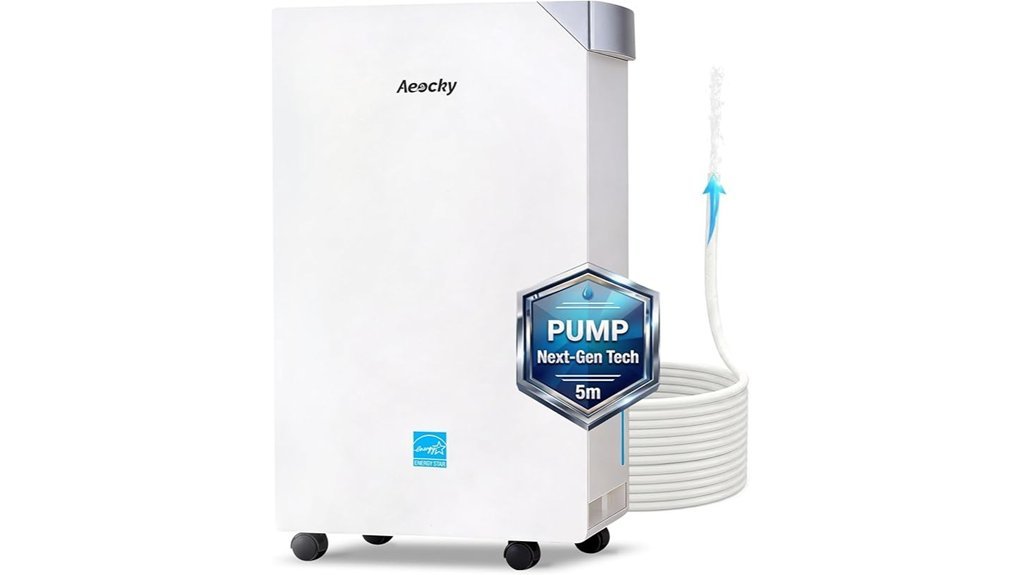
The AEOCKY LEO-001 targets buyers who want quiet pump drainage and automated humidity control in a larger space. The manufacturer advertises up to 80 pints per day, coverage up to 4,500 square feet, 44 dB operation, and an included 5-meter hose for pumping water upward. It also lists smart humidity control, a low-vibration pump design, removable pump-nozzle access, and a three-year warranty.
Why You’ll Like It: It pairs a long upward-drain route with a relatively low manufacturer-listed sound level and smart controls.
Best For: Finished basements, large living areas, or garages where a nearby floor drain is not available.
Who Should Avoid It: Buyers who do not need a pump or who want the simplest possible controls and maintenance routine.
Pros:
- Included 5-meter hose supports upward pump drainage.
- Manufacturer-listed 44 dB operation and intelligent humidity control.
- ENERGY STAR Most Efficient 2025 designation and three-year warranty.
Cons:
- The 4,500-square-foot figure is a manufacturer coverage estimate, not a universal sizing guarantee.
- The 80-pint figure is a maximum-capacity claim and should not be compared directly with all standardized 50-pint ratings.
- Smart controls and pump components add complexity compared with a basic gravity-drain model.
Sijipt 80-Pint Dehumidifier with Pump
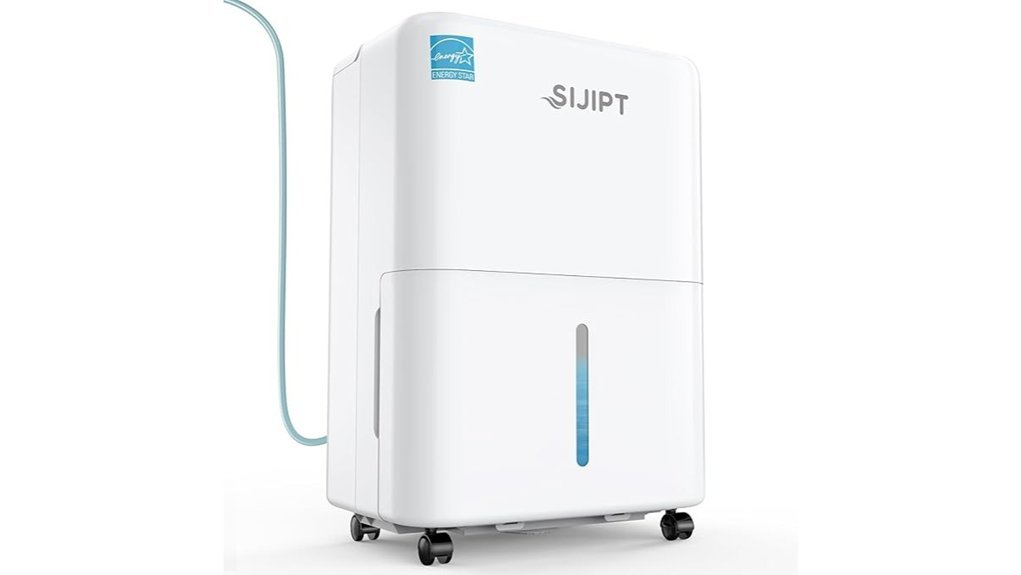
The Sijipt Guardian SJ80P is marketed for large, very humid spaces and can pump condensate horizontally or vertically up to 16.4 feet. The package includes a pump hose, a 6.56-foot gravity-drain hose, a 5-liter tank, a washable filter, automatic defrost, a timer, and auto-restart. The manufacturer advertises up to 80 pints per day at 95°F and 90% relative humidity and operation around 45 dB.
Important Capacity Context: Its ENERGY STAR listing reports 23.41 pints per day under the current DOE Appendix X1 test procedure. That does not mean the unit cannot remove more water in hotter, wetter air; it means the “80-pint” marketing figure and the standardized rating use different test conditions.
Why You’ll Like It: It offers both pumped and gravity drainage, giving you more freedom to change the installation later.
Best For: Large basements, garages, or open areas that become very humid during warm weather.
Who Should Avoid It: Buyers who want a true standardized 50-pint rating or who are sizing a unit only from the advertised 5,000-square-foot figure.
Pros:
- Built-in pump supports drainage up to 16.4 feet.
- Includes both pump and gravity-drain hoses.
- Manufacturer lists 45 dB operation, auto-defrost, auto-restart, and a washable filter.
Cons:
- The advertised 80-pint maximum differs substantially from the standardized DOE capacity.
- The 5,000-square-foot claim should be treated as a marketing estimate.
- The internal pump requires correct hose placement and routine cleaning.
Factors to Consider When Choosing a Dehumidifier With Pump
A pump makes drainage more flexible, but it does not replace proper sizing, placement, or maintenance. Compare the standardized moisture-removal rate when available, the drain route, operating temperature, sound level, filter access, and warranty before choosing.
Capacity Ratings and Test Conditions
A pint-per-day rating only makes sense when you know the test conditions. Current DOE testing for portable dehumidifiers uses cooler conditions that better reflect many basements, so a modern standardized rating may look lower than an older or high-temperature marketing claim. Compare like with like, and do not assume an “80-pint maximum” automatically outperforms every standardized 50-pint model in a cool basement.
Pump Lift Height and Drain Route
Measure the full route from the unit to the drain, including vertical rise, horizontal distance, bends, and any point where the hose could kink. Choose a model whose rated lift comfortably exceeds your actual vertical rise. Keep the hose secured, avoid crushing it behind furniture, and follow the manual for pump activation and routing.
Energy Efficiency
Look for a current ENERGY STAR certification and compare the standardized capacity and integrated energy factor when available. Avoid treating phrases such as “Energy Star 2026” as a separate certification level unless the official listing uses that exact designation.
Coverage Area and Room Conditions
Square-foot claims are only rough starting points. A cool, divided, leaky, or extremely wet basement can need more dehumidification than a warm, open room of the same size. Consider temperature, starting humidity, water intrusion, airflow between rooms, ceiling height, and whether doors will remain open.
Noise Level
Manufacturer sound claims for the retained models range from about 44 to 45 dB where a figure is supplied, but real sound depends on fan speed, pump cycling, floor vibration, and room acoustics. Place the unit on a firm, level surface and leave the required clearance around the air inlet and outlet.
Pump Maintenance
A pump adds a reservoir, tubing, and moving parts that can collect dust or biological buildup. Clean the bucket, filter, pump inlet, and hose as directed by the manual. A removable pump, such as Gasbye’s design, may be easier to service, but it still needs routine inspection.
Cold-Temperature Operation
Portable compressor dehumidifiers are not designed for freezing operation. Many models use automatic defrost and list a minimum operating temperature around 41°F to 42°F. Below the manual’s limit, ice can form on the coils and reduce moisture removal. Use a model approved for the actual room temperature.
Smart Controls
Automatic humidity control, fan-speed adjustment, timers, auto-restart, and alerts can reduce daily attention. Wi-Fi is useful when the unit runs in a remote basement or second property, but drainage reliability and correct sizing matter more than app features.
Before You Buy Checklist
- Measure the vertical lift and total hose route to the drain.
- Check the standardized pint rating, not only the maximum marketing number.
- Confirm the minimum operating temperature for the room.
- Verify what hoses and adapters are included.
- Check whether the pump can be cleaned or replaced.
- Plan access for filter, tank, and hose maintenance.
Frequently Asked Questions
Do I Need a Built-In Pump?
You need a pump when the drain is higher than the dehumidifier or when the hose cannot maintain a continuous downward slope. If a nearby floor drain is lower than the unit, gravity drainage is simpler and usually requires less maintenance.
How Loud Are Pump-Equipped Dehumidifiers During Operation?
The retained models with published manufacturer figures are listed around 44 to 45 dB, but fan speed and room acoustics can make them sound louder. The pump may also create brief clicks, hums, or water-moving sounds when it activates.
Can These Dehumidifiers Run Continuously in Freezing Conditions?
No. Follow the minimum temperature in the manual. Many portable compressor models are designed for operation only down to about 41°F or 42°F, and freezing air can cause coil icing and poor performance.
Do Built-In Pumps Affect Long-Term Maintenance Needs?
Yes. Pump-equipped models add tubing, an intake, a reservoir, and pump components that need inspection and cleaning. Keep the filter and water path clean, check for leaks or kinks, and use the manufacturer’s storage or forced-drain procedure before moving the unit.
What Hose Length Works Best for Pump Drainage?
Use the included hose when possible and keep the route shorter and straighter than the maximum rating. The critical specification is usually vertical lift, not hose length alone. Extra bends, kinks, and unnecessary rise can reduce drainage reliability.
Are Pump Dehumidifiers Safe for Unfinished Basements?
They can be used in an unfinished basement when the model is approved for the temperature and location. Set the unit on a level surface, use a grounded outlet, protect the cord and hose from standing water and foot traffic, maintain clear airflow, and correct active leaks rather than relying only on the dehumidifier.
What Humidity Setting Should I Use?
The U.S. EPA recommends keeping indoor relative humidity below 60% and ideally between 30% and 50%. A setting around 45% to 50% is a practical starting point for many basements, then adjust for comfort, condensation, and how often the unit cycles. See the EPA indoor humidity guidance for more context.
Conclusion
Final Recommendation: Choose the GE 50-Pint Dehumidifier with Built-In Pump when you want the clearest match to a standard 50-pint pump model. Choose the Gasbye when pump cleaning and replacement are top priorities. The AEOCKY is the stronger smart-feature option, while the Sijipt offers flexible drainage for very humid large spaces but requires extra attention to the difference between maximum and standardized capacity.
A dehumidifier can help control indoor moisture, but it cannot repair leaks or remove existing mold. Fix the moisture source, dry wet materials promptly, and keep indoor humidity below 60%, ideally in the 30% to 50% range.