Low-VOC paint can reduce one source of indoor volatile organic compounds (VOCs) compared with higher-VOC coatings, but a low VOC-content number does not guarantee low emissions, no odor, or a chemical-free product. For indoor projects, compare the exact VOC number and finish, confirm whether tinting changes the final value, look for credible low-emitting certification when it matters, and ventilate during application and drying.
Quick Answer
Low-VOC paint means lower VOC content than a higher-VOC alternative, but “low-VOC” is not one universal limit for every coating. A common benchmark is under 50 g/L for flat or matte interior paint, while limits vary by finish, product category, rule, and certification program. Low VOC content can reduce the paint-related VOC load, but it does not prove low indoor emissions. Check the final tinted product, ventilate well, and follow the label.
Key Takeaways
- Low-VOC paint can reduce the VOC load from paint, but low VOC content does not automatically mean low emissions, zero odor, or “non-toxic.”
- Check the exact VOC number, finish, technical data sheet, and whether tint or colorant changes the final product.
- For the strongest indoor-air comparison, separate three questions: VOC content in the can, tested chemical emissions into air, and odor during use.
- Ventilation matters during painting and drying, and re-entry timing should follow the product label rather than a universal hour count.
- For pre-1978 homes, do not sand or scrape old paint until you have considered the possibility of lead-based paint.
What Are VOCs and Why Low-VOC Matters for Indoor Air Quality?

Volatile organic compounds, or VOCs, are organic chemicals that can evaporate into the air under normal indoor conditions. According to the U.S. Environmental Protection Agency, VOCs are released by many household products, including paints, varnishes, waxes, paint strippers, cleaning products, building materials, and hobby supplies.
VOCs matter indoors because they can build up faster inside than outside, especially when windows are closed or ventilation is weak. EPA notes that many VOC concentrations are consistently higher indoors, and its TEAM studies found several common organic pollutants averaged two to five times higher indoors than outdoors.
Indoor VOC exposure depends on the product, the room size, ventilation, temperature, drying time, and how long people stay in the space.
Choosing low-VOC paint can reduce one common indoor VOC source. That can be useful in bedrooms, nurseries, home offices, apartments, and other spaces where people spend long periods. Extra caution is sensible for children, older adults, people with respiratory conditions, and anyone who is sensitive to paint odors or chemicals.
What Low-VOC Really Means on a Paint Label
“Low-VOC” sounds simple, but it is not one universal legal promise across every paint category. A common consumer benchmark is under 50 grams per liter, or 50 g/L, for flat or matte interior paint. Regulatory ceilings can be very different: the current South Coast AQMD Rule 1113 table lists 50 g/L for flat and nonflat coatings, while the federal architectural coatings rule lists 250 g/L for interior flat coatings and 380 g/L for interior nonflat coatings. Those are regulatory limits, not a universal definition of “low-VOC.”
Decision shortcut: Treat VOC content, chemical emissions, and odor as three different measures. The can or data sheet tells you VOC content. A low-emitting certification tests what enters indoor air. Your nose only tells you what you can smell, not the total emission level.
For the safest comparison, look beyond the front label. Check the technical data sheet, safety data sheet, product category, VOC content, whether the number includes tinting, and whether the product has a credible low-emitting certification.
Key Differences Between Low-VOC and No-VOC Paints
Low-VOC and zero-VOC paints both aim to reduce VOC content, but neither term guarantees how a finished room will smell or what a product will emit while drying. Green Seal’s consumer guidance generally treats flat or matte paint under 50 g/L as low-VOC and paint under 5 g/L as zero-VOC; it uses a higher low-VOC benchmark for nonflat finishes. Because rules and certification criteria vary, verify the exact product, finish, and final tint instead of relying on the front label alone.
| Paint Type | What It Usually Means | What to Check |
|---|---|---|
| Low-VOC | Lower VOC content than higher-VOC alternatives; a common benchmark is under 50 g/L for flat or matte interior paint. | VOC content after tinting, product category, finish, odor, and ventilation needs. |
| No-VOC or Zero-VOC | A common benchmark is under 5 g/L, but “zero-VOC” does not mean zero chemical emissions. | Whether tint, colorants, additives, or specialty bases change the VOC level. |
| Low-emitting certified | Tested for emissions into indoor air, not just VOC content in the can. | Certifications such as Green Seal GS-11 or UL GREENGUARD. |
Recommended Products

Self-Priming formula - requires no sanding

ALL-IN-ONE PAINT AND PRIMER: Saves time and effort by priming, sealing, and finishing in one step for smooth, efficient coverage

Used Book in Good Condition
What Are the Health and Comfort Benefits of Low-VOC Paint?
Choosing low-VOC paint can reduce one source of chemical exposure during and after painting. The EPA notes that exposure to some VOCs can cause eye, nose, and throat irritation, headaches, dizziness, nausea, and other effects depending on the compound, concentration, and duration of exposure.
Low-VOC paint can also make some indoor projects more comfortable because many low-VOC, water-based products have less solvent odor than higher-VOC coatings. Lower odor is useful for comfort, but it should not be used as a safety meter because odor and chemical emissions are not the same thing.
Warning: Low-VOC paint is not a medical guarantee. If someone in the home has asthma, another respiratory condition, or strong sensitivity to odors or chemicals, follow the product precautions carefully and consider keeping that person away during application and early drying.
The goal is not to eliminate every possible VOC in the home, which is unrealistic. The practical goal is to reduce avoidable exposure by choosing lower-emitting materials, using products as directed, and giving fresh paint enough air and time to dry.
How Can Low-VOC Paint Affect Indoor Air Quality?
Low-VOC paint can lower the VOC load contributed by the coating, but VOC content in the can does not directly predict real-world indoor emissions. That is why a low-emitting certification can be more informative when indoor-air emissions are the main concern. Paint is also only one source: cleaning products, furniture, flooring, adhesives, air fresheners, and stored chemicals can all add VOCs indoors.
| Feature | Low-VOC Paints |
|---|---|
| VOC Content | Often marketed around 50 g/L or less for many interior wall paints; always verify the product label and data sheet. |
| Odor | Usually less odor than high-solvent paints, but low odor does not always mean low emissions. |
| Health Comfort | May reduce exposure to some paint-related VOCs, but sensitive people can still react to odors or other ingredients. |
| Environmental Impact | Lower VOC content can reduce one source of solvent load, but tested indoor emissions depend on the full formulation. |
Choosing the Best Low-VOC Paint for Your Space
To compare low-VOC paint well, use the front label as a starting point, then verify the data behind the claim.
- Check the VOC number and category. Look for grams per liter on the can or technical data sheet. A 50 g/L benchmark is common for flat or matte interior paint, but the relevant limit depends on the finish, coating category, and standard being used.
- Check the final tint. Colorants can affect VOC content. Confirm the VOC value or claim for the final tinted product, not only the untinted base.
- Choose the right finish. Flat, eggshell, satin, semi-gloss, primers, stains, floor coatings, and specialty coatings can have different VOC limits and performance needs.
- Look for low-emitting evidence. Programs such as Green Seal and UL GREENGUARD can add useful third-party information, but their criteria differ, so read what the certification actually covers.
- Test a sample for performance. Paint a small area and check coverage, sheen, color, and odor. A sample can help with comfort and finish decisions, but it is not an emissions test.
- Compare water-based options when practical. Many low- and zero-VOC interior paints are water-based and are often lower odor than solvent-heavy alternatives, but verify the exact formulation.
Pro Tip: For bedrooms, nurseries, and small apartments, prioritize the final tinted product rather than assuming a lighter color is automatically lower-VOC. Ask for the finished VOC value or choose a product whose certification covers the tinted system.
Recommended Products

Extremely durable interior paint ideal for use on properly prepared interior walls, ceilings or trim composed of new or previously painted drywall, plaster, masonry, wood and metal

ALL-IN-1 PAINT & PRIMER: A hardy multi-purpose and multi-surface one-coat paint and primer in one for almost any indoor or outdoor surface. A wall, ceiling, floor, skirting board, cabinet, furniture and door paint for your bathroom, kitchen, home and garden.
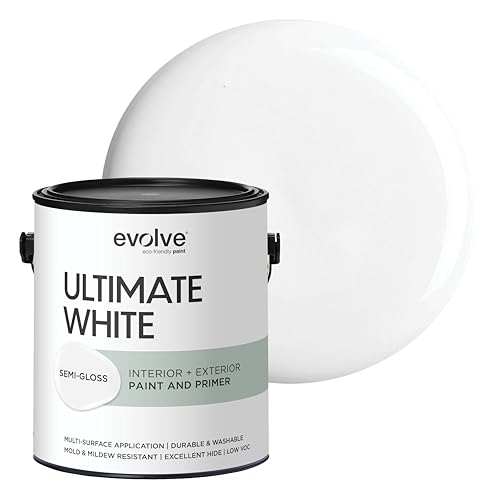
ALL-IN-ONE PAINT AND PRIMER: Saves time and effort by priming, sealing, and finishing in one step for smooth, efficient coverage
Safe Ventilation and Application Tips
Even with low-VOC paint, ventilation is one of the most important exposure-control steps. When outdoor conditions allow, open windows and use a fan or exhaust setup that moves indoor air outdoors rather than simply recirculating it. Keep ventilating during application and early drying, and follow the product label for drying, recoat, cure, ventilation, and re-entry instructions.
- Paint when you can provide outdoor air or mechanical exhaust without creating another indoor-air problem.
- Keep children, pets, and people who are sensitive to fumes out of the work area during painting.
- Close paint cans and trays when not in use.
- Buy only what you need and dispose of unused paint through local household hazardous waste or paint recycling programs when available.
- Do not rely on candles, air fresheners, or fragrance sprays to cover paint odor; they may add more indoor pollutants.
Warning: If your home was built before 1978, old paint may contain lead. Before sanding, scraping, or disturbing painted surfaces, review EPA lead safety guidance and consider a certified lead-safe professional.
When Low-VOC Paint May Not Be Enough
Low-VOC paint is a strong upgrade, but it is not the only factor that affects indoor air. If a room has poor airflow, dampness, new carpet, new furniture, adhesive products, or frequent use of scented cleaners, indoor air can still feel heavy or irritating.
For people who are highly sensitive to odors or chemicals, consider low-emitting certified paint, a verified zero-VOC tint system, mineral or clay-based options, or professional guidance from an indoor air quality specialist. In rental spaces or shared housing, plan the project so the room can remain lightly occupied or unused until the coating is dry, ventilation has been adequate, and the product’s re-entry guidance has been met.
Also remember that durability matters. A paint that requires extra coats or frequent repainting may not be the best long-term option. The best low-VOC paint is the one that balances low emissions, good coverage, washable finish, and the right sheen for the room.
Frequently Asked Questions
Is low-VOC paint better?
Low-VOC paint is often a better indoor choice when reducing paint-related VOC content is a priority. It is not automatically better in every way. Compare coverage, durability, finish, the final tinted VOC value, and whether the product has credible low-emitting evidence.
Is low-VOC paint safe to breathe?
Low-VOC paint can reduce exposure to some paint-related VOCs, but you should still avoid breathing fresh paint vapors. Ventilate, follow the label, and keep children, pets, and people who are sensitive to fumes out of the work area during application.
Can you sleep in a room after painting with low-VOC paint?
There is no single re-entry time that applies to every low-VOC paint. Follow the product label, let the coating dry as directed, and ventilate the room well before sleeping there. Be more conservative for children or people who are sensitive to fumes. Do not use “no smell” as proof that emissions have stopped.
What paints are low in VOC?
Many water-based interior wall paints are sold as low-VOC or zero-VOC. Do not rely on the brand name or front label alone. Check the exact product, finish, colorant system, VOC number, technical data sheet, and any emissions certification.
Does low odor mean low VOC?
Not always. Odor can be a useful comfort clue, but it is not a reliable measure of VOC content or indoor emissions. Some VOCs have little odor, and some low-odor products can still contain ingredients that bother sensitive people.
Can paint colorants add VOCs?
Yes. Some colorants can change the final VOC content, while some tint systems are designed to keep it very low. Check the claim or VOC value for the final tinted paint, not only the untinted base.
How long should you ventilate after painting?
Ventilate during painting and continue through the drying period as the product label directs. The needed time varies with the paint, room size, airflow, temperature, humidity, and amount applied. If fumes or odor remain noticeable, keep ventilating; the absence of odor does not prove that emissions are zero.
Does low-VOC mean non-toxic?
No. “Low-VOC” describes VOC content, not the complete toxicology of every ingredient or the product’s total indoor emissions. If that distinction matters for your project, review the safety data, final tinted VOC value, and a credible low-emitting certification rather than treating “low-VOC” as a synonym for “non-toxic.”
Conclusion
Low-VOC paint is a practical way to reduce one source of indoor VOC exposure, but the label should be the start of your comparison, not the end. Check the exact VOC number and finish, verify the final tint, distinguish VOC content from tested emissions, choose the durability you need, and follow the product’s ventilation and re-entry directions. In pre-1978 homes, add lead-safe preparation to that checklist before disturbing old paint.
Sources
- U.S. EPA: Volatile Organic Compounds’ Impact on Indoor Air Quality — VOC sources, indoor levels, health effects, and exposure-reduction steps.
- U.S. EPA: Technical Overview of Volatile Organic Compounds — VOC definitions, indoor vs. outdoor VOC concerns, and label/certification limitations.
- eCFR: 40 CFR Part 59 Subpart D — national architectural coating VOC standards by coating category.
- South Coast AQMD Rule 1113 Table of Standards — current regional VOC limits for architectural coating categories.
- U.S. EPA: Protect Your Family from Sources of Lead — lead-based paint risks in homes built before 1978 and safe renovation guidance.
- UL GREENGUARD Certification Program — third-party certification information for low chemical emissions from products.
- U.S. CPSC: The Inside Story — A Guide to Indoor Air Quality — ventilation and exposure-reduction guidance for indoor pollutants and painting.