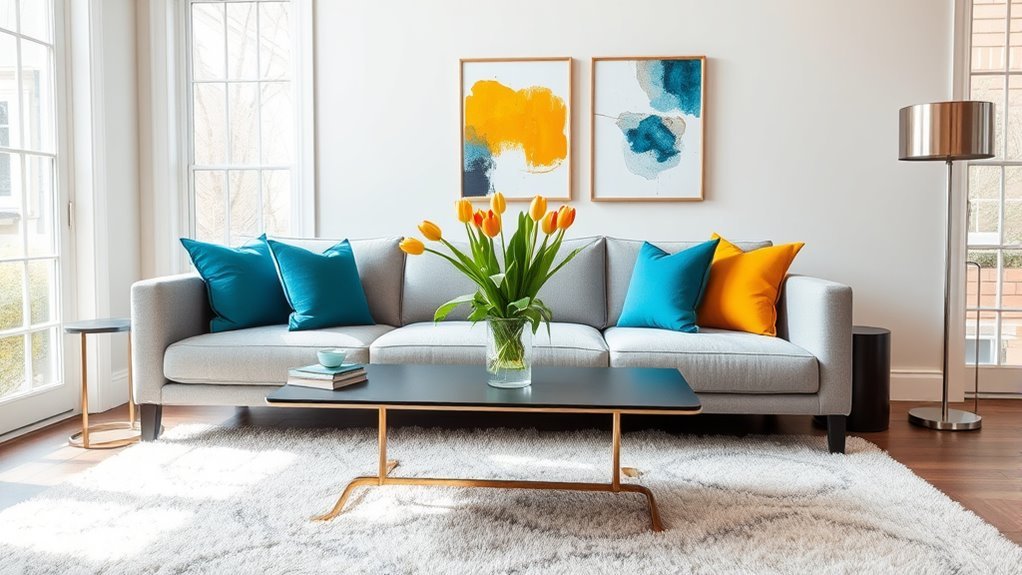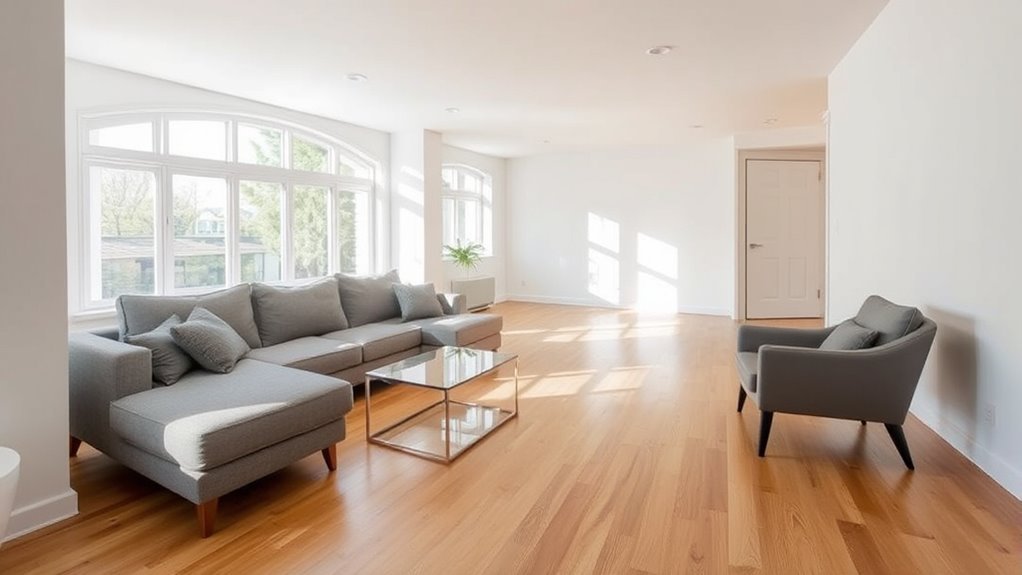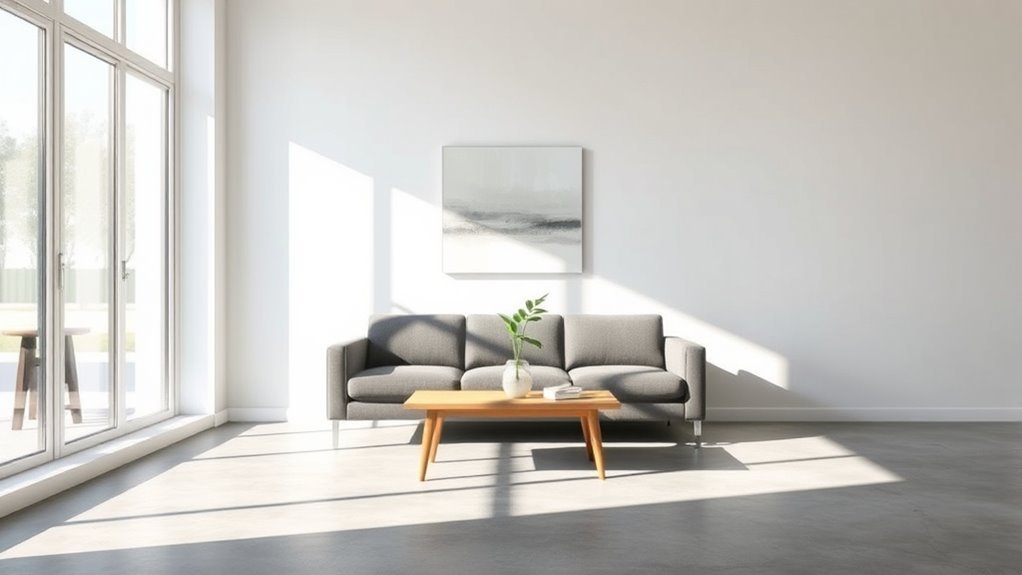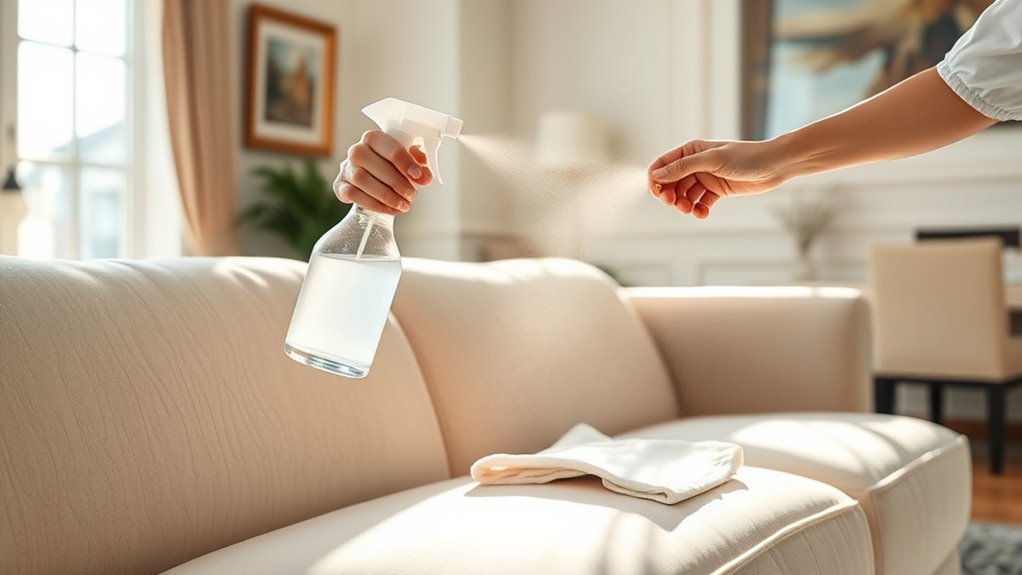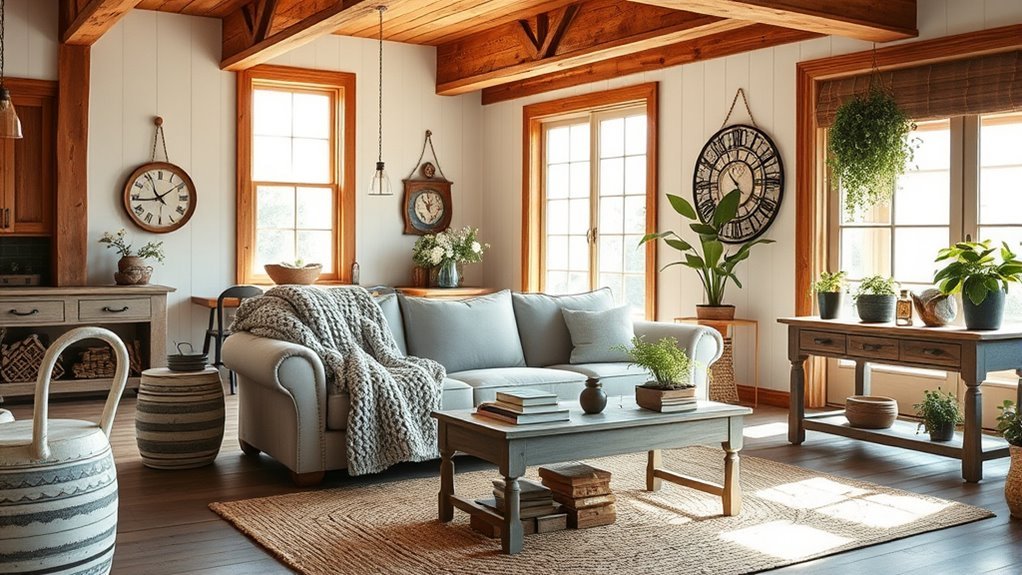
Farmhouse living room style blends the comfort of a well-loved country home with cleaner, more current design choices. The look is relaxed, practical, and personal: think weathered wood, soft neutral colors, cozy textiles, vintage accents, and furniture that invites people to sit down and stay awhile. Done well, it feels collected over time rather than copied from a showroom.
Quick Answer
Farmhouse living room style is a warm, casual decorating look built around rustic materials, comfortable seating, soft neutral colors, layered textiles, and meaningful vintage or handmade decor. To make it feel fresh instead of themed, balance reclaimed wood and antique pieces with clean lines, practical lighting, and a few modern accents.
Key Takeaways
- Start with a calm base of warm whites, creams, beige, greige, taupe, or soft gray, then add wood, woven textures, and a few earthy accent colors.
- Choose furniture for comfort first: deep seating, sturdy tables, washable fabrics, and storage pieces all fit the farmhouse mood.
- Use vintage decor sparingly. A few meaningful pieces feel charming; too many signs, crates, and distressed finishes can make the room feel staged.
- Layer lighting with overhead, table, floor, and accent lights so the room feels welcoming at night, not flat or harsh.
At a Glance
| Time Required | A weekend for simple styling updates; 2–6 weeks for new paint, furniture, lighting, and built-ins. |
| Difficulty | Beginner to intermediate, depending on whether you are only decorating or also installing wall treatments and lighting. |
| Tools Needed | Tape measure, painter’s tape, paint samples, level, drill, picture-hanging kit, fabric swatches, and a simple room plan. |
| Cost | About $150–$500 for decor refreshes; $1,000–$5,000+ for larger updates with furniture, rugs, paint, and lighting. |
What Is Farmhouse Living Room Style?
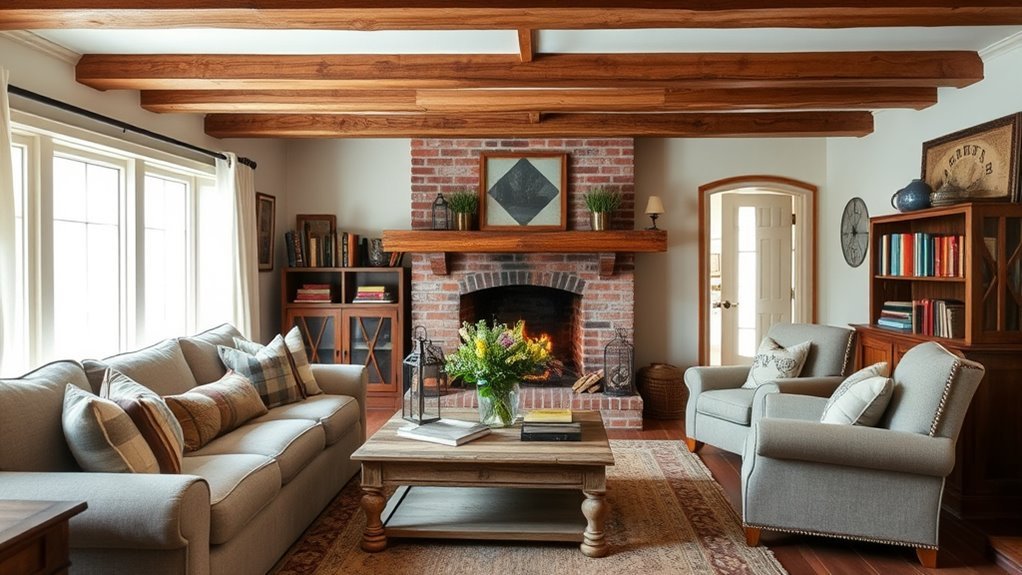
Farmhouse living room style is a decorating approach inspired by rural homes, practical family spaces, and natural materials. The room usually feels casual rather than formal, with furniture that is comfortable, durable, and easy to live with.
Common farmhouse living room decor includes weathered wood furniture, shiplap or plank-style wall details, woven baskets, linen or cotton textiles, antique or vintage-inspired pieces, and a color palette built around soft neutrals. The best versions also include modern restraint: cleaner silhouettes, fewer decorative clichés, and enough open space for the room to breathe.
Traditional farmhouse leans more rustic, with distressed finishes, antiques, slipcovers, quilts, and handmade accents. Modern farmhouse uses many of the same materials but pairs them with straighter lines, matte black or aged metal fixtures, simple upholstery, and a more edited color palette.
Key Characteristics of Farmhouse Design
In farmhouse design, comfort and character matter more than perfection. The goal is a room that looks welcoming, useful, and lived-in. To get there, focus on natural materials, inviting colors, layered texture, and decor that has meaning.
Rustic Material Selection
Natural materials are the backbone of farmhouse style. Reclaimed wood, pine, oak, stone, brick, iron, rattan, jute, linen, cotton, and wool all help create the relaxed, tactile feeling that defines the look. A rustic coffee table, exposed beams, a stone fireplace, woven baskets, or a wood mantel can add farmhouse character without overwhelming the room.
Use distressed finishes carefully. One weathered table or vintage cabinet can be beautiful; too many chipped, painted, or heavily distressed pieces can make the room look artificially aged. Balance rough textures with smoother finishes, such as a clean-lined sofa, simple curtains, or a modern lamp.
Inviting Color Schemes
Farmhouse living rooms often start with a light, soothing base: warm white, ivory, cream, beige, greige, taupe, mushroom, or soft gray. These colors make the room feel open and calm while allowing wood tones and vintage pieces to stand out.
For depth, add earthy accents through pillows, rugs, art, ceramics, or flowers. Terracotta, olive green, muted blue, charcoal, rust, and aged brass work especially well because they feel grounded rather than flashy.
Comfort-First Layout
A farmhouse living room should support conversation, relaxing, and everyday life. Arrange seating so people can talk easily, set a table within reach of each seat, and leave clear walkways through the room. If the room has a fireplace, large window, or built-in shelves, use that feature as the focal point and arrange furniture around it.
Pro Tip: Before buying large furniture, tape the sofa, chairs, and rug dimensions on the floor. Farmhouse rooms should feel generous and relaxed, not crowded with oversized pieces.
Popular Color Palettes for Farmhouse Living Rooms
Color is one of the easiest ways to set the mood in a farmhouse living room. The safest approach is to build a calm neutral foundation, then layer in one or two accent colors that connect to the natural materials already in the space.
Warm Neutrals and Earth Tones
A warm neutral palette can make your farmhouse living room feel cozy without looking dark. Try creamy white walls, a beige or greige sofa, a natural jute rug, and medium wood furniture. Add warm brown, clay, soft black, or muted green accents for contrast.
This palette works especially well in rooms with lots of natural light because the lighter walls and textiles keep the space airy, while wood and woven textures prevent it from feeling plain.
Bold Accent Color Combinations
Bold accent colors can work in farmhouse living rooms when they are used with restraint. Deep navy, forest green, charcoal, mustard, oxblood, rust, and burnt orange can add personality against a neutral background.
For a balanced look, repeat the accent color in at least three small places: a pillow, a piece of art, a vase, a throw, or a patterned rug. This makes the color feel intentional instead of random.
Soft Pastels for Serenity
Soft pastels can give farmhouse decor a gentler cottage-inspired mood. Pale blue, dusty pink, sage, buttercream, and faded lavender work best when paired with warm whites, natural wood, and simple textiles.
To keep pastels from looking too sweet, add grounding materials such as a rustic wood table, a black metal lamp, a woven basket, or a vintage landscape print.
Essential Furniture for a Farmhouse Aesthetic
Farmhouse furniture should be comfortable, sturdy, and useful. Choose pieces that can handle real life: movie nights, pets, kids, guests, coffee cups, books, and blankets.
- Sofa or sectional: Look for deep seating, washable performance fabric, linen blends, cotton slipcovers, or textured neutrals.
- Accent chairs: Wingback chairs, spindle chairs, skirted chairs, or simple upholstered armchairs add character and extra seating.
- Coffee table: Reclaimed wood, a trunk-style table, a large square table, or a simple turned-leg design can anchor the seating area.
- Storage: Use cabinets, baskets, benches, and consoles to hide clutter while keeping the room relaxed.
- Side tables: Mix wood, metal, or painted finishes instead of buying a perfectly matched set.
Scale matters. A tiny coffee table can make a large sectional feel awkward, while an oversized sectional can swallow a small room. Leave enough space to walk comfortably around the seating area and choose a rug large enough for at least the front legs of the main furniture pieces to sit on it.
Recommended Products

Elevate your living room with LINSY HOME's Farmhouse Coffee Table. Enjoy charming details such as an enhanced base and curved design, while benefiting from the added storage space with open display and drawers.
Textile Choices for Farmhouse Decor
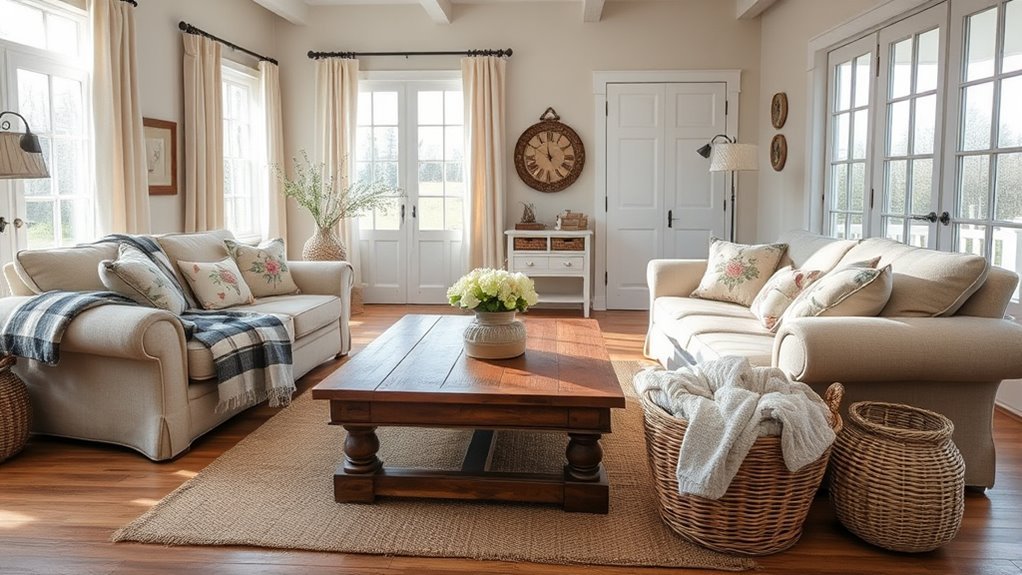
Textiles bring softness to all the wood, metal, and stone commonly used in farmhouse design. Linen, cotton, wool, jute, sisal, and washed canvas feel natural and relaxed. Plaid, ticking stripe, faded floral, check, block print, and subtle geometric patterns also fit the style.
Layer textiles gradually. A rug, two or three pillow patterns, one throw blanket, and simple curtains are usually enough for a polished but unfussy room.
| Textile Type | Best Use in a Farmhouse Living Room |
|---|---|
| Linen | Curtains, pillow covers, slipcovers, and relaxed upholstery. |
| Cotton | Washable throws, pillow covers, quilts, and casual curtains. |
| Wool | Warm throws, durable rugs, and cozy winter texture. |
| Jute or Sisal | Natural fiber rugs that add texture and work well under patterned rugs. |
| Persian or Kilim Rugs | Color, pattern, age, and a collected-over-time feel. |
Note: If you have pets, kids, or heavy daily use, choose washable covers, performance fabrics, and rugs with forgiving patterns. Farmhouse style should make life easier, not more delicate.
Lighting Tips for Enhancing Farmhouse Style
Lighting can make or break a farmhouse living room. A single overhead fixture often feels harsh, while layered lighting creates warmth and depth. Aim for a mix of ambient, task, accent, and decorative lighting.
- Ambient lighting: A chandelier, lantern-style pendant, flush mount, or recessed lights provide overall brightness.
- Task lighting: Floor lamps and table lamps near seating make reading and relaxing easier.
- Accent lighting: Picture lights, sconces, or small lamps highlight shelves, art, stone, or wood details.
- Decorative lighting: Vintage-inspired fixtures, ceramic lamps, iron sconces, and linen shades add style even when turned off.
Choose warm bulbs rather than cool blue-toned light. Dimmers are especially helpful because they let the room shift from bright family space during the day to soft, cozy retreat at night.
Step-by-Step Farmhouse Living Room Makeover
If you are starting from scratch, use this simple process to build the farmhouse look without overbuying or overdecorating.
- Choose your farmhouse direction. Decide whether you want traditional farmhouse, modern farmhouse, cottage farmhouse, rustic farmhouse, or a cleaner transitional version.
- Pick a neutral base. Choose wall, sofa, and rug colors first. These large surfaces set the mood for the entire room.
- Anchor the seating area. Place the sofa, chairs, coffee table, and rug so conversation feels natural and walkways stay open.
- Add wood and woven texture. Bring in a wood coffee table, mantel, console, basket, bench, or picture frame to create warmth.
- Layer textiles. Add pillows, throws, curtains, and rugs in natural fabrics and quiet patterns.
- Mix old and new pieces. Pair vintage art, antique furniture, or heirlooms with clean-lined modern pieces so the room feels collected, not themed.
- Edit the decor. Remove anything that feels too matchy, too wordy, or too staged. Leave space for the best pieces to stand out.
Blending Rustic and Modern Farmhouse Elements
Blending rustic and modern farmhouse elements keeps the style current. Rustic pieces bring warmth and history; modern pieces bring simplicity and breathing room. The strongest rooms include both.
| Rustic Element | Modern Balance | Result |
|---|---|---|
| Reclaimed wood | Clean-lined upholstery | Warm but not heavy |
| Stone fireplace | Simple mantel styling | Strong focal point |
| Vintage decor | Minimal accessories | Collected, not cluttered |
| Cozy textiles | Limited color palette | Layered but calm |
Tips for Personalizing Your Farmhouse Living Room
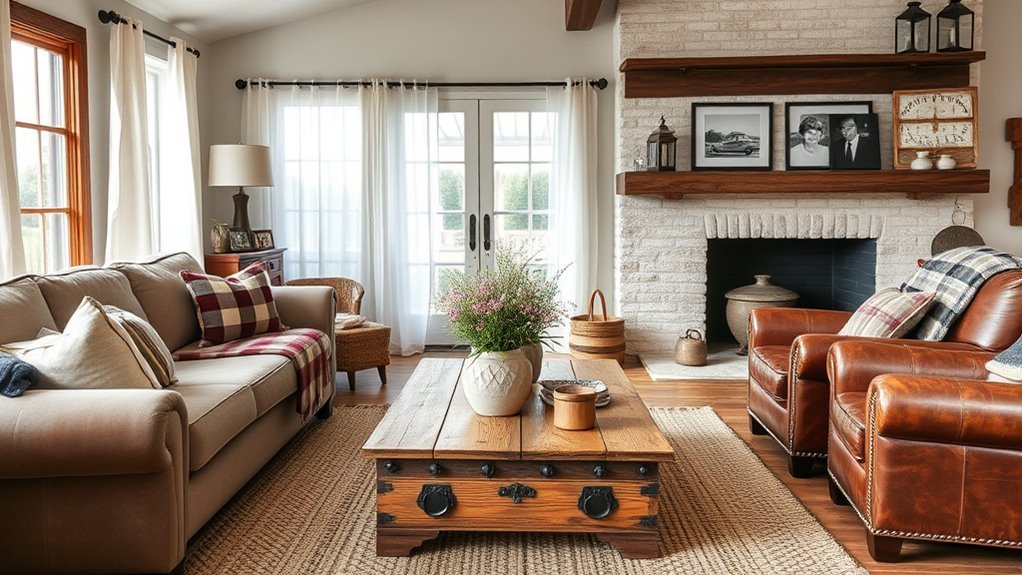
The most inviting farmhouse living rooms feel personal. Instead of filling the space with generic signs and matching accessories, choose objects that connect to your family, travels, hobbies, or local history.
Incorporate Personal Touches
Display family photos in wood, brass, or simple black frames. Add handmade pottery, a quilt, a vintage mirror, a stack of favorite books, or art from a local market. These details make the room feel like yours instead of a copy of a catalog page.
Plants and fresh flowers also work beautifully in farmhouse spaces. Try olive branches, eucalyptus, hydrangeas, herbs, fern, or simple seasonal stems in stoneware, glass, or ceramic vases.
Select Meaningful Decor Items
Meaningful decor is more powerful than a large amount of decor. A single antique trunk, inherited rocking chair, handmade bowl, framed recipe, or vintage landscape can tell a story and give the room depth.
| Decor Item | Personal Touch |
|---|---|
| Vintage Photos | Family memories and a sense of history. |
| Handmade Art | Local character and one-of-a-kind detail. |
| Reclaimed Wood | Texture, warmth, and rustic charm. |
| Antique Finds | A collected-over-time look that reflects your interests. |
Budget-Friendly Farmhouse Living Room Ideas
You do not need to replace everything to create a farmhouse living room. Small changes can shift the mood quickly.
- Paint walls a warm white or soft neutral.
- Swap shiny hardware for aged brass, matte black, bronze, or iron-style finishes.
- Add woven baskets for blankets, toys, books, or firewood.
- Use thrifted frames for a gallery wall.
- Layer a vintage-style rug over a natural jute rug.
- Replace bright white bulbs with warmer bulbs and add lamps near seating.
- Style shelves with fewer items: books, pottery, baskets, greenery, and one or two vintage pieces.
Recommended Products

XXL Capacity for All Your Storage Needs, Measuring 21.7"D x 13.8"H, this spacious basket effortlessly holds family clothing, blankets, pillows, toys, and laundry. One basket to declutter your entire home

Reinforced Built-in Handles - Features thickened seamless integrated handles with multilayer woven construction for strong load-bearing. Smooth edge design avoids snagging clothes. Soft grip allows easy carrying from room to room.

【NATURAL COTTON ROPE DESIGN | SOFT & DURABLE】 Made with natural cotton rope, this woven storage basket features a soft texture without plastic materials or harsh chemicals. The gentle rope construction is safe for family use, while the durable handwoven design helps the basket maintain its structure and provides long-lasting everyday storage.
Small-Room and Renter-Friendly Farmhouse Tips
Farmhouse style can work in small living rooms and rentals if you keep the foundation light and avoid bulky furniture. Choose raised-leg sofas and chairs so more floor is visible. Use mirrors to reflect light, wall shelves instead of heavy cabinets, and narrow side tables where space is tight.
For renter-friendly farmhouse character, try peel-and-stick wallpaper with a subtle plank or linen texture, plug-in sconces, washable slipcovers, vintage art, woven shades, and freestanding storage. You can still create the feeling of farmhouse style without installing permanent shiplap or built-ins.
Key Mistakes in Farmhouse Design and How to Avoid Them
Farmhouse design works best when it feels relaxed and authentic. The biggest mistakes usually happen when the theme becomes too literal or the room fills with too many decorative pieces.
- Overdecorating: Choose a few strong pieces instead of filling every wall, shelf, and tabletop.
- Using too many signs: Word art can feel dated quickly. Mix in landscapes, portraits, botanical prints, mirrors, and family photos.
- Overdoing distressed finishes: Balance aged wood with cleaner upholstery, simple curtains, and modern lighting.
- Ignoring comfort: A beautiful room still needs good seating, soft lighting, and tables within reach.
- Choosing the wrong rug size: A rug that is too small makes the room feel disconnected. Aim for at least the front legs of the main furniture to sit on the rug.
- Forgetting natural light: Heavy window treatments can make the room feel dark. Use linen, cotton, woven shades, or sheers when privacy allows.
Warning: Vintage wood, upholstered furniture, rugs, and baskets can hold musty odors or moisture damage. Before bringing secondhand pieces indoors, inspect them carefully, clean them, and avoid items with visible mold. The EPA recommends moisture control as the key to preventing indoor mold.
Check Out These Inspiring Farmhouse Living Room Examples
If you need inspiration, start by choosing the farmhouse mood that fits your home. A cottage farmhouse living room might use pale colors, floral prints, and painted furniture. A rustic farmhouse room might lean into wood beams, stone, leather, and antique pieces. A modern farmhouse room may use cleaner furniture, black metal lighting, warm white walls, and fewer accessories.
| Design Element | How It Helps |
|---|---|
| Shiplap or Plank Walls | Adds texture and architectural interest. |
| Vintage Lighting | Creates warmth and character. |
| Plush Sofas | Makes the room comfortable for gathering. |
| Reclaimed Furniture | Introduces age, texture, and sustainability-minded style. |
| Personal Touches | Makes the room feel authentic and lived-in. |
Frequently Asked Questions
What defines a farmhouse living room?
A farmhouse living room is defined by comfortable seating, rustic or natural materials, warm neutral colors, layered textiles, vintage accents, and a relaxed layout made for gathering. It should feel welcoming and practical, not overly formal.
What are common mistakes in farmhouse decor?
Common farmhouse decor mistakes include using too many word signs, overdoing distressed finishes, choosing furniture that is too bulky, using rugs that are too small, ignoring lighting, and filling every surface with accessories. The fix is to edit carefully and balance rustic pieces with cleaner modern elements.
What is replacing farmhouse style?
Farmhouse style is not disappearing, but it is becoming less themed and more refined. Many homeowners now prefer warmer neutrals, natural textures, vintage pieces, organic modern furniture, and collected decor instead of heavy distressing, word art, and overly coordinated farmhouse sets.
How do I make my living room look farmhouse style?
Start with a warm neutral palette, add comfortable seating, include wood or woven textures, layer pillows and throws, choose vintage-inspired lighting, and personalize the room with family photos, handmade pieces, plants, books, or antique finds. Keep the room edited so it feels cozy rather than cluttered.
Can farmhouse style work in a small living room?
Yes. Use light wall colors, smaller-scale seating, raised-leg furniture, mirrors, woven storage, and fewer decorative pieces. Choose one or two rustic focal points instead of filling the room with large, heavy furniture.
What colors are best for a farmhouse living room?
Warm whites, cream, beige, greige, taupe, soft gray, muted green, dusty blue, terracotta, rust, and warm brown all work well. The best palette depends on your light, flooring, and wood tones, so test paint and fabric samples in the room before committing.
Conclusion
Farmhouse living room style works because it puts comfort, warmth, and personal meaning at the center of the room. Start with a soft neutral base, add natural materials, choose furniture people actually want to use, and layer in vintage or handmade pieces with restraint. When rustic charm and modern simplicity are balanced, the result is a cozy living room that feels timeless, welcoming, and truly lived in.
Sources
- U.S. Environmental Protection Agency: A Brief Guide to Mold, Moisture and Your Home — moisture control, humidity, and mold-prevention guidance for homes.
- USDA Forest Service: Wood Handbook—Wood as an Engineering Material — wood properties, moisture relations, drying, finishing, and material behavior.
- Google Search Central: Article Structured Data — Article schema guidance and validation recommendations.
- Schema.org: FAQPage — FAQPage structured data vocabulary.