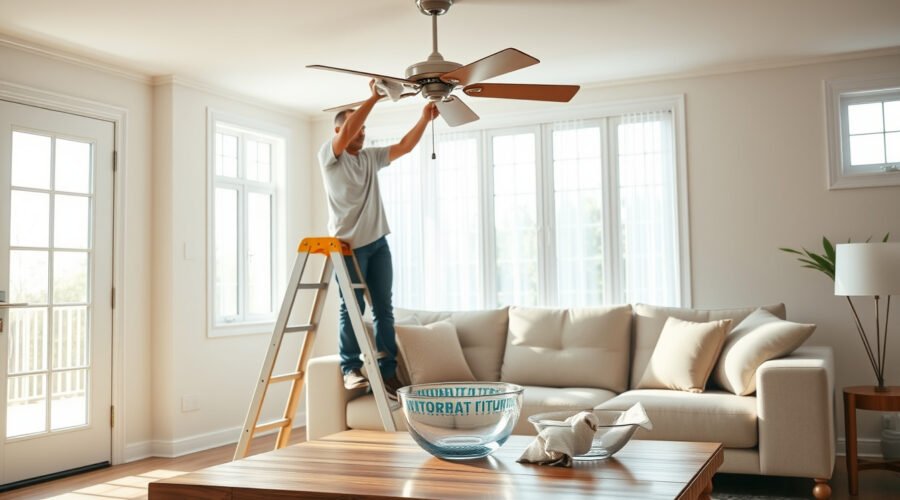
How to Clean Ceiling Fans and Light Fixtures in Your Living Room
Dusty fan blades and cloudy light covers can make your living room feel dull fast. They can also spread dust when the fan runs and block light from clean bulbs. Use the right tools, shut off power first, and clean each part with care so your fans and fixtures look better and work well.
Quick Answer
To clean ceiling fans and light fixtures in your living room, turn off the power, use a stable ladder, and dust fan blades with a pillowcase or microfiber cloth. Remove glass light covers when possible, wash them in warm soapy water, rinse, and dry them fully before reattaching them.
Key Takeaways
- Turn off fans and light fixtures before you clean them.
- Use a pillowcase to trap dust on ceiling fan blades.
- Wash removable glass light covers with warm water and mild dish soap.
- Dry every part fully before you put fixtures back together.
- Check for loose screws, wobbling blades, and burned-out bulbs during each cleaning.
Estimated Time Before You Begin
Most living room ceiling fans and light fixtures take about 20 to 45 minutes to clean. Add more time if your fixtures have several glass shades or heavy dust buildup.
Plan to clean during daylight if possible. Natural light helps you see dust, streaks, and loose parts more clearly.
Safety Precautions Before You Start Cleaning
Before you start cleaning your ceiling fans and light fixtures, put safety first. Switch off the fan and light fixture at the wall switch or breaker panel so they can’t turn on while you work.
Use a stable stepladder to reach high fixtures without stretching or leaning. Clear nearby furniture and clutter to reduce trip risks.
Warning: Never spray cleaner directly into a fan motor, light socket, or wired fixture base.
Wear safety goggles if dust may fall into your eyes. Choose non-aerosol cleaning products and keep the room well ventilated when you use any cleaner.
Essential Tools You’ll Need for Effective Cleaning
Gather your tools before you climb the ladder. The right supplies help you clean faster, trap dust better, and avoid scratches.
| Tool | Purpose | Notes |
|---|---|---|
| Stable stepladder | Reaches high fans and fixtures | Check that it sits flat before climbing |
| Microfiber cleaning cloth | Captures dust without lint or scratches | Use dry cloths first, then damp cloths for grime |
| Pillowcase or cloth bag | Traps dust from fan blades | Helps keep dust off floors and furniture |
| Mild dish soap | Cleans glass light covers | Mix with warm water for a gentle wash |
| Compressed air | Clears dust from tight areas | Use short bursts around vents and housing gaps |
Keep a dry towel nearby for glass covers and small parts. A small bowl also helps hold screws, clips, and finials while you clean.
Recommended Products

Strong Absorbent & Streak-Free: Crafted with premium microfiber, these cleaning rags quickly absorb water and wipe away spills, dust, grease, and dirt without leaving streaks. Ideal for drying dishes, cleaning countertops, or polishing surfaces in the kitchen, car, or around the home.

Unparalleled Cleaning Performance: Our microfiber towels provide outstanding water absorption and adhesion; effortlessly absorb dirt and liquid, delivering exceptional cleaning results that will leave your car looking brand new

Excellent Water Absorption: AIDEA white microfiber cleaning cloth is crafted from a blend of 87% polyester and 13% polyamide; boasts exceptional water absorption; ensures fast drying; keeps surfaces spotless and fresh
Step-by-Step Guide to Cleaning Ceiling Fans
- Turn off the fan. Use the wall switch or breaker panel before you touch the blades.
- Set your ladder in a safe spot. Place it on a flat surface and avoid leaning too far to either side.
- Cover each blade with a pillowcase. Slide the pillowcase over one blade, press lightly, and pull it back to trap dust inside.
- Wipe sticky spots. Use a lightly damp microfiber cloth for grime, then dry the blade right away.
- Dust the motor housing. Use a dry microfiber cloth, and keep moisture away from vents and openings.
- Check for loose parts. Tighten visible loose screws and look for wobbling blades before you turn the fan back on.
Use compressed air in short bursts if dust collects around the motor housing. Avoid soaking the area, since moisture can damage electrical parts.
Pro tip: Clean one blade at a time so you can spot missed dust before you climb down.
Recommended Products

【Ceiling Fan Cleaner Duster Kit】This kit comes with 2 different interchangeable cleaning heads and a 4 - section aluminum pole, which helps you tackle both household and automotive cleaning tasks. You can use it to dust high ceiling fixtures and window frames, or clean ceiling fan blades, vents, and car dashboards.

【Upgraded Sturdy 5 PCS Feather Duster Kit】: Tiumso dusters for cleaning include a bendable microfiber duster head, a chenille duster head, a crevice brush, a cobweb duster, and a telescoping pole. Perfect for furniture, corners of high ceilings, ceiling fans, blinds, windows, webers, cars, bookshelves, sofa etc. With its lightweight feature, easy for both adults and children to use.
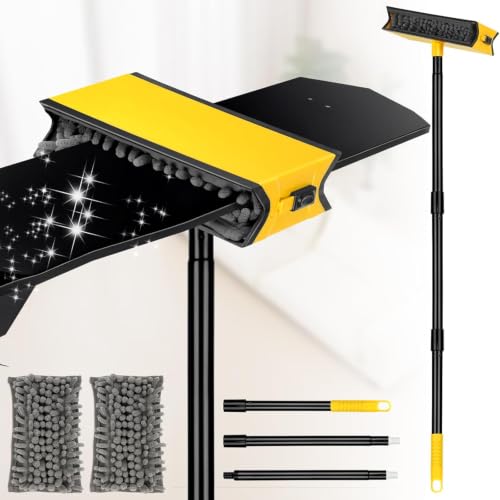
Effortless Cleaning: Efficiently remove dust and grime from ceiling fans with our specialized ceiling fan cleaner duster, designed for high spaces without ladders or disassembly.
Effective Techniques for Cleaning Light Fixtures
- Turn off the fixture. Switch off the light and let bulbs cool before you touch them.
- Remove bulbs and covers. Unscrew or unclip glass covers gently, then place small parts in a bowl.
- Soak glass covers. Use warm water and mild dish soap to loosen dust, grease, and fingerprints.
- Scrub with a soft sponge. Clean the inside and outside of each cover without using abrasive pads.
- Rinse and dry fully. Use clean water, then dry each piece with a lint-free microfiber cloth.
- Wipe the fixture base. Use a dry microfiber cloth, then reassemble the fixture once every part feels dry.
Clean bulbs with a dry cloth before reinstalling them. Replace burned-out bulbs while the fixture is open so you don’t need to repeat the job later.
Recommended Products

Effective Cleaning: Take these cleaning cloths in the perfect size (11.5" x 11.5") to clean your worktop, kitchen, windows, or even your car and other delicate surfaces; with just water or cleaner, you can achieve streak-free and neat results

ABSORBENT & FAST DRYING - Microfiber material provides super absorbent water ability of the cloths makes quick drying large surface. They deliver extreme absorbency, so at the same time ensure quick drying.

10x GRIP-ROOT WEAVE - TRAP MORE, WORK LESS: Ultra-absorbent microfiber towels for car Grip Root weave works like PLANT ROOT FOLLICLES, sucking up & LOCKING AWAY 8x to 10x its weight in liquid, particulates, moisture, grime and dirt in far LESS TIME than traditional ‘Heavy Duty’ Cleaning Rags.
How to Tackle Common Issues With Fans and Fixtures
Small fan and fixture problems often show up while you clean. Look for wobbling blades, odd noises, flickering lights, and loose covers before they become bigger issues.
Common Fan Problems
If your fan blades wobble, check for loose screws, uneven blade arms, or dust buildup on one side. Tighten loose parts you can reach safely.
Clicking, grinding, or rattling sounds often point to loose parts or parts that need service. If the fan still makes noise after basic cleaning and tightening, contact a qualified electrician or fan repair professional.
If the fan doesn’t move air well, check the direction switch. Use counterclockwise rotation in warm weather for a cooling breeze and clockwise rotation in cold weather to move warm air down.
Light Fixture Issues
Flickering lights can come from loose bulbs, poor bulb contact, or wiring issues. Tighten the bulb after it cools, then seek professional help if flickering continues.
Dirty covers reduce brightness and make the room feel dim. Clean glass shades often, and replace burned-out bulbs as soon as you notice them.
Consider light-emitting diode (LED) bulbs when you replace old bulbs. They last longer than many common bulb types and use less energy in most fixtures.
Maintenance Tips for Longevity
Use a simple maintenance checklist to keep fans and fixtures in good shape. Inspect fan blades, screws, bulbs, covers, and fixture bases during each deeper cleaning.
Check your fan manual before you oil the motor. Some ceiling fans need light oil, while many sealed motors do not need oil at all.
Clean fan blades monthly if dust builds up fast in your home. Regular dusting helps airflow and keeps dust from spreading across your living room.
Seasonal Tips for Maintaining Ceiling Fans and Light Fixtures
Seasonal maintenance helps your fan support comfort in both warm and cold weather. It also gives you a routine time to inspect bulbs, screws, and glass covers.
Seasonal Adjustments for Efficiency
In cold weather, set your ceiling fan to rotate clockwise on low speed. This setting helps move warm air down from the ceiling.
In warm weather, set the fan to rotate counterclockwise. The airflow can help you feel cooler without lowering the thermostat as much.
Check light covers and bulbs during the same seasonal reset. Clean covers help your fixtures give off brighter, clearer light.
Cleaning Schedule Recommendations
A simple cleaning schedule keeps dust from getting out of hand. Use this plan as a starting point, then adjust it for pets, allergies, and room use.
| Frequency | Task | Notes |
|---|---|---|
| Every 2 weeks | Dust ceiling fans and light fixtures | Use a dry microfiber cloth |
| Monthly | Inspect light bulbs | Replace burned-out bulbs |
| Quarterly | Clean fixtures more thoroughly | Wash removable glass covers |
| Seasonally | Adjust fan rotation | Use counterclockwise in warm weather and clockwise in cold weather |
| Annually | Deep clean fans and fixture parts | Review the product manual before oiling or disassembly |
Inspection for Wear Signs
Regular inspections help you catch small problems early. Focus on the parts that move, heat up, or hold glass in place.
- Fan blades: Look for dust buildup, chips, cracks, or loose blade arms.
- Wobbling: Check for loose screws or uneven blade weight.
- Noises: Listen for clicking, scraping, humming, or grinding.
- Light covers: Look for cracks, loose clips, and cloudy glass.
- Fan direction: Match the rotation to the season and comfort needs.
Common Mistakes to Avoid
Don’t clean a fan while it still has power. Even a quick bump to a switch can start the blades while your hands are nearby.
Don’t use abrasive pads on glass covers or painted fan blades. They can scratch finishes and make dust stick faster.
Don’t reinstall glass covers while they remain damp. Water near sockets and wiring creates risk, so dry every part first.
When to Consider Professional Cleaning Services
Consider professional cleaning services if your fan or fixture sits too high to reach safely. A professional can also help with large chandeliers, fragile glass, or heavy buildup.
You should also call a qualified electrician if you notice sparks, burning smells, hot fixture parts, or ongoing flickering. Cleaning can improve appearance, but it can’t fix unsafe wiring.
For homes in Greensboro, Burlington, and High Point, a local cleaning company can handle hard-to-reach fans and fixtures. Ask about their process before you book, especially for delicate or antique fixtures.
Frequently Asked Questions
What Are Some Common Mistakes When Cleaning a Fan?
Common mistakes include leaving the power on, spraying cleaner into the motor, and wiping blades too roughly. Use a pillowcase or microfiber cloth, and inspect the motor housing only with dry tools unless the manual says otherwise.
What Is the Best Tool to Clean Ceiling Fans With?
A pillowcase works best for dusty fan blades because it traps debris instead of dropping it. An extendable duster also helps when you need light dusting between deeper cleanings.
How Often Should You Clean Living Room Ceiling Fans?
Clean ceiling fans about once a month if you use them often. Dust them more often if you have pets, open windows, or heavy dust in the room.
Can You Wash Light Fixture Covers in the Sink?
You can wash many removable glass covers in a sink with warm water and mild dish soap. Check the fixture manual first if the cover has special coatings, painted details, or delicate trim.
When Should You Call an Electrician for a Light Fixture?
Call an electrician if lights flicker after you tighten the bulbs, or if you notice heat, sparks, buzzing, or a burning smell. These signs may point to wiring or fixture problems that cleaning can’t solve.
Conclusion
Clean ceiling fans and light fixtures make your living room brighter, fresher, and easier to enjoy. Start with power off, use gentle tools, and dry every part before you reassemble it.
Build fan and fixture care into your regular cleaning routine. A few careful minutes now can help your living room feel cleaner every time you switch on the light or fan.