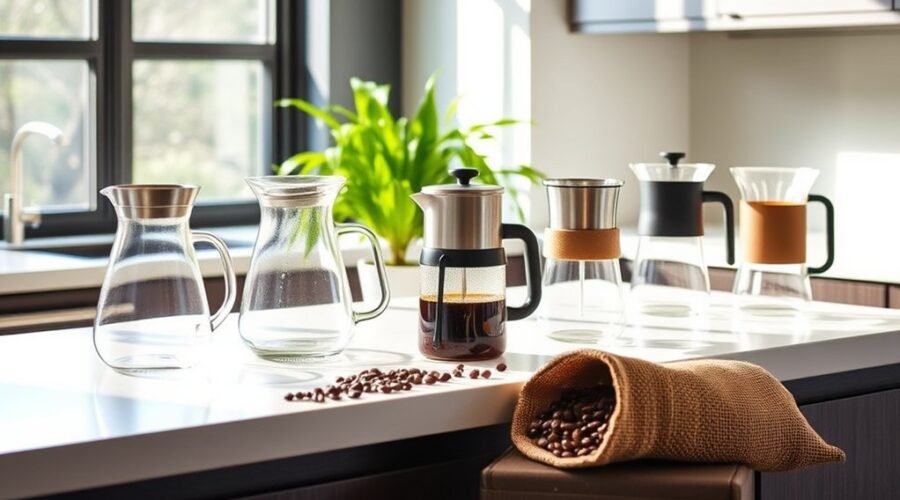
Choosing the right cold brew coffee maker can make homemade cold brew easier, cleaner, and more consistent. For 2026, these four options cover very different needs: the OXO Brew Compact saves refrigerator and counter space, the OVALWARE Airtight Cold Brew Maker combines brewing and sealed storage, Hario’s Mizudashi offers a simple manual setup, and the VINCI Express dramatically reduces the waiting time with an electric brewing system. Whether you want a compact brewer, a larger cold brew pitcher, or fast electric brewing, the best choice depends on your space, batch size, cleaning preferences, and how long you are willing to wait for each batch.
Disclosure: This article contains Amazon affiliate links. We may earn a commission from qualifying purchases at no extra cost to you.
Quick Comparison of the Best Cold Brew Coffee Makers for 2026
| Cold Brew Maker | Brewing Style | Capacity | Typical Brew Time | Best For |
|---|---|---|---|---|
| OXO Brew Compact | Manual concentrate brewer | 24 oz brewing container | About 12-24 hours | Small kitchens and limited fridge space |
| OVALWARE Airtight 1.0L | Manual immersion brewer | 1.0L / 34 oz | About 12-18 hours refrigerated | Brewing and airtight storage in one pitcher |
| Hario Mizudashi | Manual immersion brewer | 1000ml | About 8 hours | Simple everyday manual brewing |
| VINCI Express | Electric circulation brewer | 1.4L model featured | Minutes rather than overnight | Fast cold brew and adjustable strength |
OXO Brew Compact Cold Brew Coffee Maker
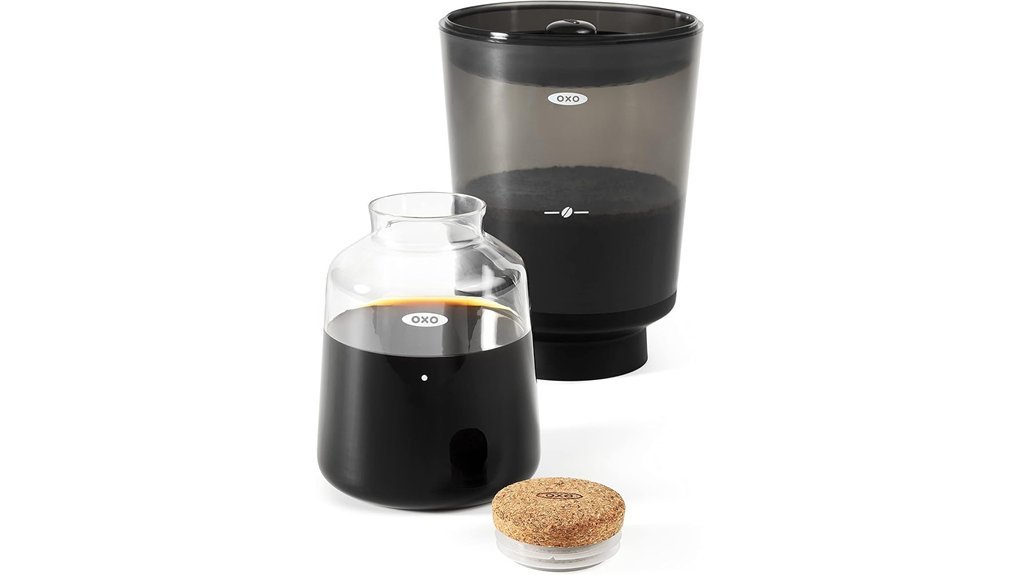
The OXO Brew Compact Cold Brew Coffee Maker is designed for people who want homemade cold brew concentrate without giving up much counter or refrigerator space. Its 24-ounce brewing container uses OXO’s perforated Rainmaker™ top to distribute water across the coffee grounds, while the brewing container automatically starts draining when placed on the glass carafe.
The system uses a borosilicate glass carafe and an ultra-fine reusable stainless-steel mesh filter. OXO recommends brewing for roughly 12-24 hours on the counter, with longer refrigerator brewing also possible. Because the finished liquid is a concentrate, you can dilute it with water or milk to suit hot or iced drinks.
Best For: Small kitchens, apartments, dorm-style spaces, or anyone who wants a compact cold brew concentrate maker.
Why You’ll Like It: The brewer nests together for storage and automatically drains into the serving carafe, reducing the mess involved in transferring and filtering a batch manually.
Pros:
- Compact design uses relatively little counter and refrigerator space.
- Rainmaker™ top helps distribute water over the grounds.
- Automatic draining makes filtering the finished concentrate straightforward.
- Reusable stainless-steel mesh filter reduces the need for disposable paper filters.
Cons:
- Traditional steeping means you need to prepare the batch many hours in advance.
- The compact brewing container is less suitable for people who need large batches at once.
- The container must be aligned correctly with the base to help prevent leaking.
OVALWARE Airtight Cold Brew Coffee Maker (1.0L)
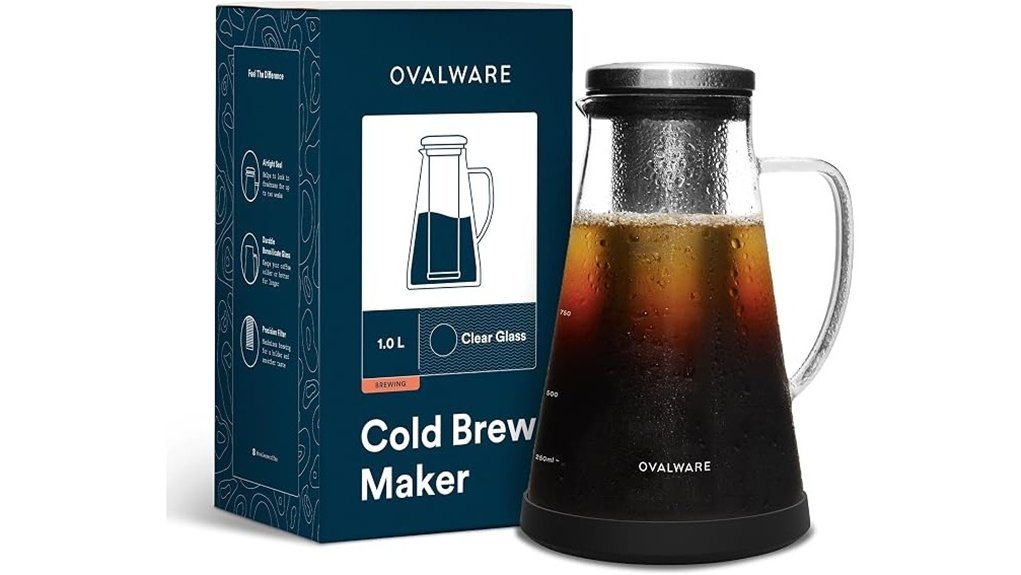
The OVALWARE Airtight Cold Brew Coffee Maker is a strong fit for people who want to brew, serve, and store cold brew in the same pitcher. The 1.0L version holds about 34 ounces and combines a borosilicate glass carafe with an ultra-fine 18/8 stainless-steel filter and cap.
Its BPA-free silicone seal creates an airtight closure when installed correctly. OVALWARE recommends coarse or extra-coarse coffee and roughly 12-18 hours of refrigerated steeping for its standard cold brew method. The manufacturer states that the sealed pitcher can keep cold brew fresh for up to two weeks, although flavor quality will still depend on ingredients, cleanliness, and storage conditions.
The reusable filter can also be used for cold-brewed tea, giving this pitcher more versatility than a coffee-only setup. The removable parts and dishwasher-safe construction also make routine cleanup relatively simple.
Best For: Coffee drinkers who value airtight refrigerator storage and want a reusable glass cold brew pitcher.
Why You’ll Like It: You can remove the grounds after steeping, seal the same carafe, and store the finished cold brew without transferring it to another bottle.
Pros:
- 1.0L capacity works well for individual drinkers and small households.
- Airtight silicone seal helps limit exposure to refrigerator odors and air.
- Borosilicate glass and 18/8 stainless-steel brewing components provide a simple reusable setup.
- Can also be used for cold-brewed tea.
Cons:
- The 1.0L size may require frequent brewing for households with several daily cold brew drinkers.
- Glass construction requires more careful handling than an all-plastic pitcher.
- The airtight lid needs to be fitted correctly, and the pitcher should not be treated as a leakproof travel bottle.
Hario “Mizudashi” Cold Brew Coffee Maker, 1000ml, Brown
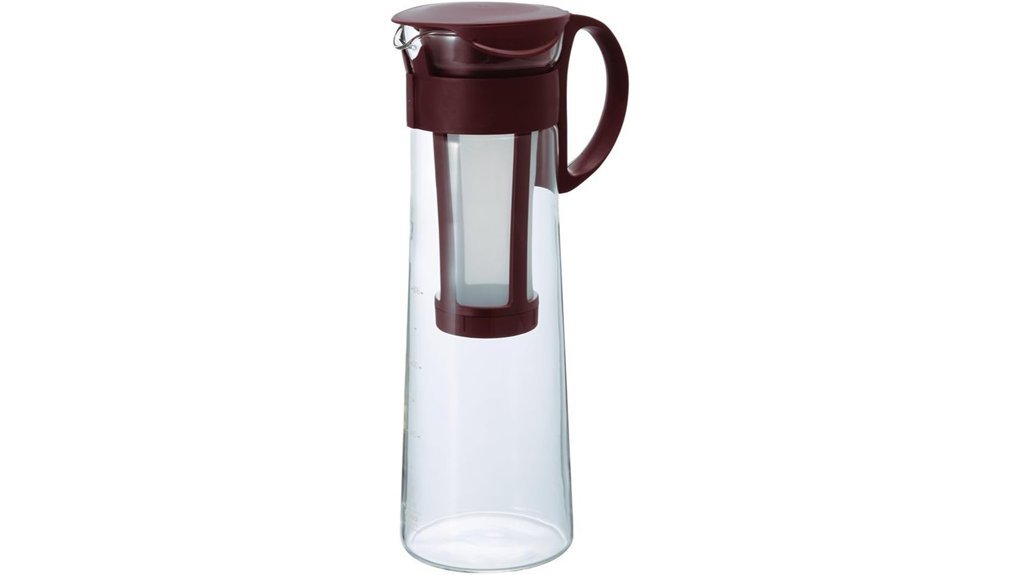
For buyers who prefer a straightforward manual brewer, the Hario “Mizudashi” Cold Brew Coffee Maker keeps the process simple. The brown 1000ml model uses Hario heatproof borosilicate glass with a reusable fine-mesh brewing basket. Add ground coffee, pour in water, refrigerate the brewer, and remove the filter when extraction is complete.
Hario’s instructions describe an approximately eight-hour cold extraction for the 1000ml model. Brew character can also be adjusted through coffee choice and grind size. Hario notes that a coarser grind can produce a lighter result, while a finer grind can add more body, although grinding too fine can increase sediment.
The filter is removable for cleaning, and the pitcher doubles as the serving vessel after brewing. This uncomplicated design makes the Mizudashi particularly attractive to people who want cold brew without electricity, pumps, or complicated controls.
Best For: Cold brew drinkers who want a simple reusable manual brewer with a 1-liter capacity.
Why You’ll Like It: There are few moving parts, the reusable basket handles filtration, and you can brew and pour from the same glass pot.
Pros:
- 1000ml capacity is practical for routine home brewing.
- Fine-mesh removable basket makes brewing and cleanup straightforward.
- Heatproof borosilicate glass provides a clean, simple serving vessel.
- Manual operation requires no electrical outlet.
Cons:
- The brew still needs several hours in the refrigerator before it is ready.
- Glass construction should be handled carefully.
- Very fine grounds can pass through the mesh and increase sediment in the finished coffee.
VINCI Express Electric Cold Brew Coffee Maker
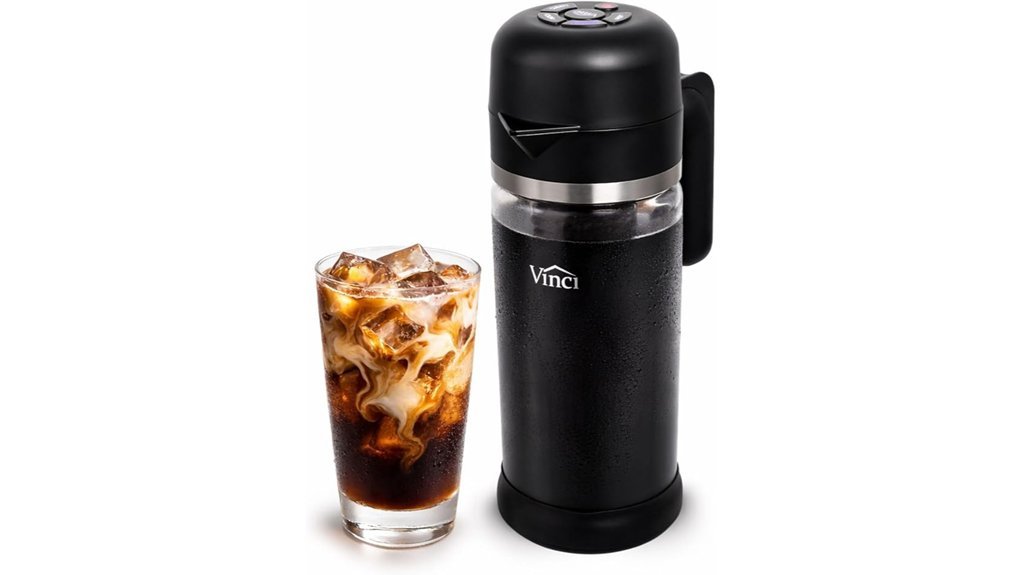
The VINCI Express Electric Cold Brew Coffee Maker targets the biggest inconvenience of traditional cold brewing: the long wait. Instead of leaving coffee to steep overnight, its proprietary Circle Flow Brewing Technology continuously circulates room-temperature water through the coffee grounds to prepare cold brew in minutes.
The 1.4-liter version featured here provides adjustable brew-strength settings, allowing users to make ready-to-drink cold brew or a stronger concentrate. Brewing takes place directly in the glass carafe, which can then be fitted with its serving lid for refrigerator storage. VINCI states that finished cold brew can be stored in the carafe for up to 10 days under its recommended conditions.
A built-in clean cycle flushes residual coffee from the brewing path, although removable components still need normal washing according to the product instructions. VINCI recommends medium-ground coffee and room-temperature water rather than fine grounds or hot water.
Best For: Frequent cold brew drinkers who want much faster preparation and adjustable strength without overnight steeping.
Why You’ll Like It: It delivers the greatest time savings of the four options and lets you adjust brew strength with push-button controls.
Pros:
- Produces cold brew in minutes rather than requiring an overnight steep.
- Adjustable strength settings make it easier to tailor the finished coffee.
- Glass carafe handles brewing, serving, and refrigerator storage.
- Built-in clean cycle helps flush the internal brewing path.
Cons:
- Requires electricity, so it is less portable than a manual cold brew pitcher.
- Has more components and operating instructions than the manual brewers in this guide.
- The glass carafe requires careful handling.
Factors to Consider When Choosing a Cold Brew Coffee Maker in 2026
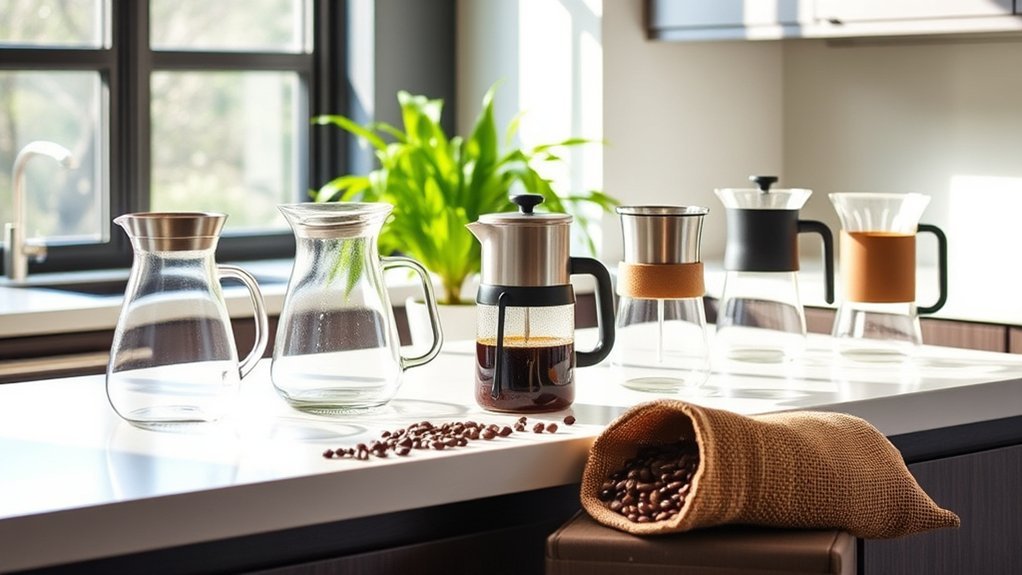
Choosing a cold brew coffee maker is easier when you compare how you actually plan to use it. Brewing method, capacity, refrigerator space, filter design, cleaning requirements, materials, and brew time all affect whether a particular brewer will fit your routine.
Manual vs. Electric Brewing
Manual cold brew makers are simple and generally require no electricity, but they rely on a long steeping period. Depending on the brewer, that can range from roughly eight hours to a full overnight brew. They work well if you can prepare tomorrow’s coffee the night before.
An electric cold brew maker is more appropriate if speed matters. Systems such as the VINCI Express circulate water through the coffee instead of relying only on passive immersion, reducing the brewing process to minutes. The tradeoff is additional components, an electrical requirement, and generally more involved cleaning.
Capacity and Refrigerator Space
Think about how much cold brew you drink before automatically choosing the largest brewer. The OXO’s compact 24-ounce brewing container is useful when refrigerator space is tight, while 1-liter and larger pitchers make more sense for frequent drinkers or small households.
Also check the brewer’s physical dimensions, not just its listed liquid capacity. A tall pitcher that technically fits your refrigerator may still interfere with shelf placement. Compact or nesting designs can be especially helpful in apartments and smaller kitchens.
Concentrate vs. Ready-to-Drink Cold Brew
Not every brewer produces coffee at the same strength. Some systems are designed around cold brew concentrate that you dilute with water or milk, while others use ratios intended to produce a ready-to-drink beverage.
This difference matters when comparing capacities. A smaller brewer that creates concentrate may produce more finished servings after dilution than its raw carafe capacity suggests. Follow the manufacturer’s coffee-to-water ratio rather than assuming every 1-liter brewer produces the same strength.
Check the Recommended Grind Size
Coarse coffee is common for long immersion brewing because it is easier to filter and tends to reduce fine sediment. However, grind recommendations are not identical for every system. Hario allows grind adjustments to change body, while VINCI recommends medium-ground coffee for its electric circulation system.
For the best results, use the grind range specified for your brewer instead of treating “coarse grind” as a universal rule.
Material Quality
Common cold brew materials include borosilicate glass, stainless steel, silicone seals, and food-contact plastics. Glass allows you to see the brew and does not retain coffee aromas easily, while stainless-steel reusable filters can reduce dependence on disposable paper filters.
Glass still requires careful handling, particularly when removing a full pitcher from a refrigerator. Seals and filter frames should also be inspected periodically for wear or trapped coffee residue.
Cleaning and Maintenance
Coffee oils and fine particles can accumulate inside filters, seals, lids, and brewing paths. Removable filters simplify routine maintenance, while dishwasher-safe components can save time where the manufacturer permits dishwasher cleaning.
Electric models deserve extra attention because their powered components may have separate cleaning instructions. A built-in cleaning cycle can help flush an internal brew path, but it should not automatically be treated as a replacement for washing removable parts.
Storage and Freshness
If you make several days of cold brew at once, look for a secure lid or sealing system. Airtight storage helps reduce exposure to refrigerator odors and oxygen, but freshness claims vary by brewer and brewing method.
For the best flavor, refrigerate finished cold brew promptly in a clean, covered container and avoid leaving grounds in the finished drink longer than the brewer recommends. Manufacturer storage claims should be treated as product-specific guidance rather than a universal rule for every homemade cold brew.
Design and Everyday Usability
A cold brew maker should be easy to fill, move, filter, pour, and store. Features such as nesting components, removable baskets, stable bases, controlled-pour spouts, and serving lids may matter more in daily use than decorative details.
Clear glass can also make it easier to monitor the brewing process and remaining volume. If portability is important, remember that most glass cold brew pitchers are designed primarily for refrigerator and countertop use rather than carrying a finished drink around all day.
Price and Warranty
Manual cold brew pitchers are mechanically simple, while electric models add pumps, controls, and other components. Consider whether faster brewing or extra convenience is worth the additional complexity for your routine.
Warranty terms can also matter more with an electric brewer than with a basic glass pitcher. Before purchasing, check the current manufacturer’s warranty, return terms, replacement-part availability, and Amazon product details rather than relying on an older article for time-sensitive information.
Frequently Asked Questions
How Long Does Cold Brew Coffee Stay Fresh?
There is no single freshness period that applies to every homemade cold brew. Keep finished coffee refrigerated in a clean, covered container and drink it while the flavor is still fresh. Some manufacturers provide longer storage guidance for their specific sealed systems—for example, OVALWARE states up to two weeks for its airtight pitcher, while VINCI states up to 10 days for cold brew stored in its carafe. Follow the instructions for your brewer and discard coffee if its smell, appearance, or taste seems abnormal.
Can I Use Regular Coffee Grounds for Cold Brew?
You can use normal coffee beans or pre-ground coffee, but the grind size should match your brewer. Coarse or extra-coarse grounds are common in manual immersion brewers such as OVALWARE. Hario allows some grind adjustment for lighter or fuller-bodied coffee, while VINCI recommends medium-ground coffee for its electric system. Avoid assuming one grind size works best in every cold brew maker.
What’s the Difference Between Cold Brew and Iced Coffee?
Cold brew is extracted with cold or room-temperature water over a longer period, or with a specialized accelerated cold-brewing system. Traditional iced coffee is normally brewed hot and then cooled or poured over ice. Because the extraction methods differ, they can produce noticeably different flavor, aroma, body, and perceived acidity.
Is Cold Brew Coffee Stronger Than Hot Brewed Coffee?
Not automatically. Some cold brew preparations—especially concentrated recipes—can contain more caffeine per ounce than some hot-brewed coffees, but the final amount depends on the coffee-to-water ratio, beans, grind, brewing method, extraction time, dilution, and serving size. If caffeine intake matters to you, compare the actual recipe and serving size rather than assuming every cold brew is stronger.
How Much Coffee Do I Need for Cold Brew?
The correct amount depends on the brewer and whether it is designed to make concentrate or ready-to-drink coffee. For example, OXO’s compact brewer uses a concentrate-style recipe, OVALWARE recommends about 85g of coffee for its 1.0L brewer, and Hario’s 1000ml instructions use about 80g. Electric systems can have different requirements again. For consistent results, start with the manufacturer’s recipe and then adjust strength to your taste.
Which Cold Brew Maker Is Best for a Small Kitchen?
The OXO Brew Compact is the strongest fit among these four when counter and refrigerator space are limited. Its components nest together for storage, and its 24-ounce brewing container takes up less space than the larger pitcher-style options.
Which Cold Brew Maker Is Fastest?
The VINCI Express is the clear choice here when brewing speed is the priority. Unlike traditional manual brewers that steep for hours, its electric Circle Flow system prepares cold brew in minutes. The tradeoff is that it requires electricity and has more components than a basic immersion pitcher.
Conclusion
The best cold brew coffee maker for 2026 depends more on your routine than on a single feature. Choose the OXO Brew Compact if saving space and making concentrate are your priorities. The OVALWARE 1.0L is attractive when you want a reusable glass pitcher with airtight storage. The Hario Mizudashi keeps manual brewing simple and affordable in terms of complexity, while the VINCI Express is the standout option when you do not want to wait overnight for cold brew.
Before buying, compare capacity, brew time, grind requirements, refrigerator space, cleaning needs, and whether you prefer concentrate or ready-to-drink coffee. Matching those factors to your daily habits will make it much easier to choose a cold brew maker you will actually enjoy using.