
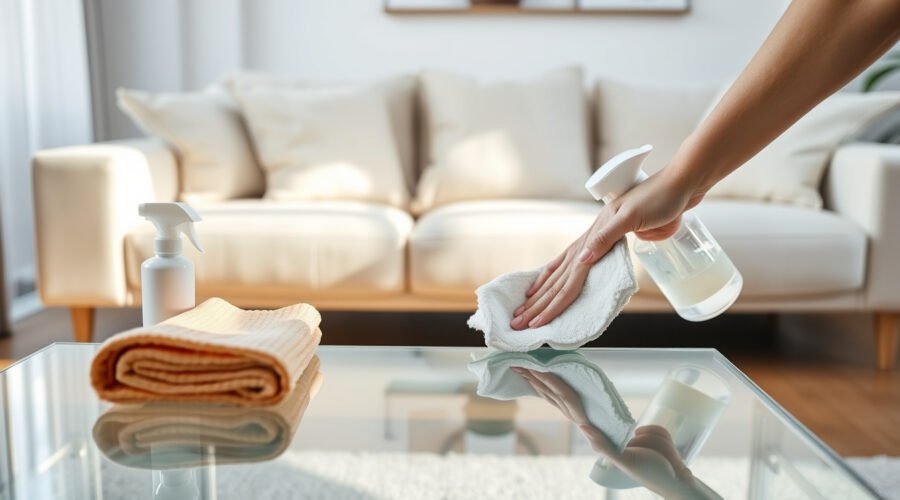
A glass coffee table looks bright and polished when it is clean, but it also shows fingerprints, dust, water rings, and lint quickly. The easiest way to clean it without streaks is to use a clean microfiber cloth, a light amount of glass-safe cleaner, and a dry buffing cloth at the end. Work when the glass is cool and out of direct sunlight so the cleaner does not dry before you wipe it away.
Quick Answer
To clean a glass coffee table without streaks, dust it first with a dry microfiber cloth, spray a small amount of ammonia-free glass cleaner onto the cloth or glass, wipe in overlapping side-to-side passes, treat smudges with small circles, then buff dry with a second clean microfiber cloth.
Key Takeaways
- Use two microfiber cloths: one for cleaning and one dry cloth for the final buff.
- Clean glass when it is cool and shaded to prevent fast drying and streaks.
- Choose an ammonia-free glass cleaner as the safest everyday option, especially if your table has wood, metal, coated, or tinted details.
- Use a 1:1 mix of distilled white vinegar and distilled water for cloudy hard-water film, but do not mix vinegar with bleach or other cleaners.
At a Glance
| Time Required | 5 to 10 minutes for routine cleaning |
| Difficulty | Easy |
| Tools Needed | Two microfiber cloths, ammonia-free glass cleaner, optional spray bottle, distilled white vinegar, distilled water, cotton swabs for edges |
| Cost | Usually under $10 if you already have microfiber cloths |
Supplies You Need
Gather everything before you start so the cleaner does not sit on the glass too long.
- Two clean microfiber cloths
- Ammonia-free glass cleaner or a glass-safe cleaner labeled for mirrors and tabletops
- Distilled white vinegar and distilled water for cloudy mineral film
- Small spray bottle for a homemade vinegar-water solution
- Cotton swabs or a soft detail cloth for edges and corners
- Coasters or a tray for preventing future rings
Warning: Never mix cleaning products. Do not mix bleach with ammonia, vinegar, acids, or other cleaners. The Washington State Department of Health warns that bleach can react with ammonia and acids to release toxic gases. Use one cleaner at a time, read labels, and ventilate the room.
Recommended Products
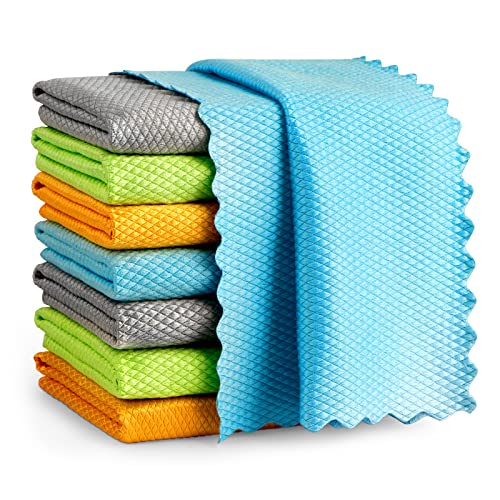
Lint-Free & Non-Abrasive: AIDEA microfiber cloths are non-abrasive; protect delicate surfaces from scratches; strong anti-lint fiber construction captures dust and dirt; ideal for achieving streak-free and lint-free cleaning results

Premium Ultra-Soft Microfiber: Effortlessly removes fingerprints, smudges, oil, and dust without scratching—leaving lenses and screens spotless and streak-free.

STREAK-FREE CLEANING: These microfiber cleaning cloths leave windows, mirrors, and other glass surfaces crystal clear without streaks or haze. Each lint free microfiber cleaning cloth works as a reliable glass cleaner cloth and mirror cleaning cloth for everyday use.
Before You Clean Your Glass Coffee Table
Remove books, trays, candles, remotes, and decor from the table first. If your table has a wood, metal, stone, painted, tinted, or coated edge, spray the cleaner onto your cloth instead of directly onto the glass. That keeps liquid from running into seams or sitting on trim.
Choose a time when sunlight is not hitting the table. Direct sun and warm glass can make cleaner dry too quickly, which is one of the most common reasons glass looks streaky after you wipe it.
Note: If your coffee table has specialty coated, tinted, antique, etched, frosted, or manufacturer-treated glass, follow the table maker’s care instructions first. When in doubt, test your cleaner on a small hidden edge.
How to Clean Your Glass Coffee Table: Step-by-Step
- Dust the surface first. Wipe the tabletop with a dry microfiber cloth to remove crumbs, dust, grit, and pet hair. This prevents loose debris from being dragged across the glass.
- Apply a small amount of cleaner. Lightly spray an ammonia-free glass cleaner onto the cloth or onto the center of the glass. Do not soak the table; too much cleaner can leave residue.
- Wipe in overlapping passes. Move side to side or in an S-pattern so you cover the full surface evenly. Work from one end of the table to the other.
- Treat fingerprints and sticky smudges. For stubborn spots, use small circular motions only on the smudge, then go back over the area with straight overlapping passes.
- Clean the edges. Use the corner of the cloth or a cotton swab to clean around seams, corners, and under raised edges where dust collects.
- Buff with a dry cloth. Finish with a second clean, dry microfiber cloth. Buff until the glass feels dry and looks clear from different angles.
Pro Tip: Keep one microfiber cloth for cleaning and a separate cloth only for dry buffing. A cloth that already has cleaner, dust, or furniture polish on it can create smears.
Recommended Products
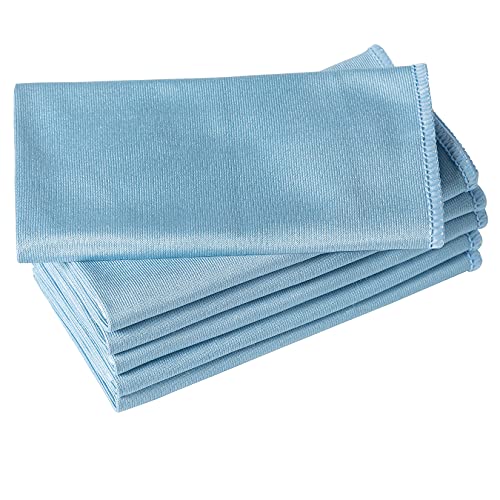
ABSORBENT & FAST DRYING - Microfiber material provides super absorbent water ability of the cloths makes quick drying large surface. They deliver extreme absorbency, so at the same time ensure quick drying.

Glasses cleaner - Sourced from the highest quality microfiber that absorbs and removes dust, oil, smudges, fingerprints, dirt, and more. Leaves no scratches, streaks, marks, or lint behind. The perfect eyeglass cleaner for reading glasses, women, men, adults, him, her, teens, and more.
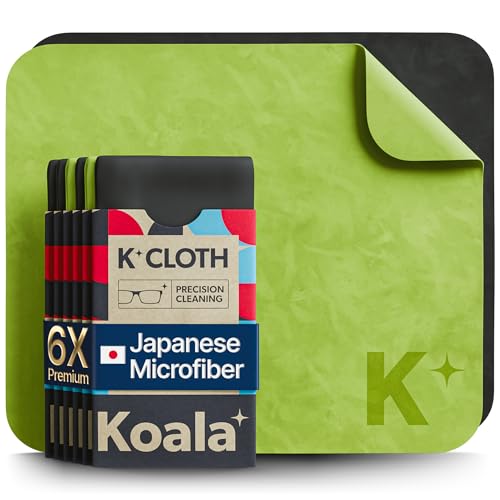
UNPARALLELED CRYSTAL-CLEAR PERFORMANCE: The only obsessively engineered, best-in-class microfiber cleaning cloth, meticulously crafted from proprietary, ultra-dense, super-absorbent Japanese woven fabric, effortlessly absorbing the toughest dirt, grime, and oils - leaving your lenses spotless - every time.
Why Regular Cleaning Is Essential for Your Glass Coffee Table
A glass coffee table shows everyday mess faster than wood or stone because dust, fingerprints, water rings, and crumbs sit on a clear reflective surface. Quick upkeep keeps the table looking bright and makes deeper cleaning easier.
For a frequently used coffee table, dust it once or twice a week and clean visible fingerprints or spills as soon as you notice them. A full cleaner-and-buff routine once a week is enough for most homes. If the table is in a busy family room, near a pet bed, or used for snacks and drinks, clean it more often.
Regular care also protects nearby materials. Wiping up spills quickly keeps moisture from running into joints, under rubber pads, or onto wood and metal frames.
Avoid These Common Mistakes When Cleaning Your Glass Coffee Table
- Cleaning in direct sunlight: Heat can dry cleaner before you finish wiping, leaving streaks.
- Using paper towels: Paper towels can leave lint and may not buff as cleanly as microfiber.
- Using a dirty cloth: Old polish, grease, or dust on the cloth can smear across the glass.
- Spraying too much cleaner: More product does not mean a cleaner table. Excess liquid often leaves residue.
- Scrubbing with abrasive pads: Steel wool, rough sponges, and gritty powders can scratch or dull glass.
- Using one motion for everything: Small circles help loosen a stuck smudge, but the final cleaning and buffing pass should be straight and overlapping.
- Ignoring the frame or trim: Cleaners that are safe for glass may not be safe for wood, metal, stone, tint, or coatings.
How to Keep Your Glass Table Streak-Free
The best streak-free routine is simple: use less cleaner, wipe with a clean microfiber cloth, and always finish with a dry buff. Streaks usually come from residue, lint, too much spray, dirty cloths, or cleaner drying too fast.
Optimal Cleaning Techniques
For normal fingerprints and dust, an ammonia-free glass cleaner works well. Spray lightly and wipe with steady overlapping strokes. For food smudges or sticky spots, hold a damp microfiber cloth on the area for a few seconds to soften the residue before wiping.
For cloudy hard-water rings, mix equal parts distilled white vinegar and distilled water in a spray bottle. Spray the cloudy area, let it sit for 5 to 10 minutes, then wipe with a damp microfiber cloth and buff dry. Do not use vinegar on surrounding stone, wood, or metal trim unless the manufacturer says it is safe.
Best Cleaning Products
For everyday cleaning, choose a glass cleaner labeled for glass, mirrors, or tabletops. An ammonia-free formula is the safest default for most coffee tables because it is gentler around nearby finishes and avoids ammonia fumes.
If you prefer a product with an independent safety review, the EPA Safer Choice label helps identify products reviewed for safer chemical ingredients, performance, pH, packaging, and VOC limits. You can also search the EPA’s Safer Choice product database and filter by Window/Glass Cleaners.
- Best everyday choice: Ammonia-free glass cleaner plus a microfiber cloth.
- Best DIY option for cloudy film: Equal parts distilled white vinegar and distilled water.
- Best tool upgrade: A fresh, dry microfiber cloth reserved only for buffing glass.
Troubleshooting Streaks, Smudges, and Cloudy Film
If your glass table still looks streaky after cleaning, use the problem to choose the fix.
- Streaks appear right away: You may have used too much cleaner, cleaned in sunlight, or skipped the dry buff. Rewipe with a barely damp microfiber cloth, then buff dry.
- Smears spread around: The cloth may be dirty or contaminated with furniture polish. Switch to a fresh microfiber cloth and use less cleaner.
- Cloudy white rings remain: The marks may be hard-water minerals. Use a 1:1 distilled white vinegar and distilled water solution, let it sit for 5 to 10 minutes, wipe, and dry.
- Cloudiness does not improve after vinegar: The glass may be etched, scratched, or damaged. Cleaning can remove surface film, but it cannot reverse permanent etching.
- Sticky spots keep coming back: The cleaner may be leaving residue, or a spill may be trapped near the edge. Clean the spot with a damp cloth first, then use glass cleaner and buff dry.
- Dust returns quickly: Wash microfiber cloths without fabric softener, which can leave a coating that reduces absorbency and causes smears.
Best Tools for Cleaning Your Glass Coffee Table
The right tools matter more than using a lot of product. Keep your glass-cleaning kit simple.
- Microfiber cloths: Use one cloth to clean and a second dry cloth to buff.
- Ammonia-free glass cleaner: A safe everyday choice for clear glass tabletops, especially when the table has surrounding trim.
- Vinegar-water solution: Use equal parts distilled white vinegar and distilled water for cloudy mineral film, not for every spill.
- Cotton swabs: Helpful for cleaning dust along seams and corners without overspraying.
- Coasters and trays: The easiest way to prevent water rings, candle wax, and sticky drink residue.
Recommended Products


Descales your coffee maker, fighting hard water deposits and mineral buildup for a better tasting brew

REVITALIZE WITHOUT SCRATCHING: Non-abrasive cooktop pads help easily remove heavily burned on foods, grease & grime. Our cooktop cream uses micro-bead technology to boost cleaning power.
How to Keep Your Glass Coffee Table Clean Longer
- Use coasters under cold drinks, mugs, and planters.
- Place candles, remotes, and decor on a tray so you can lift everything at once before dusting.
- Wipe spills as soon as they happen, especially sugary drinks, coffee, wine, and oily snacks.
- Dust before guests arrive instead of spraying cleaner every time; over-cleaning with too much product can create residue.
- Wash microfiber cloths regularly and keep them away from fabric softener and dryer sheets.
- Clean the underside of the glass once a month if the table is transparent and shows fingerprints from below.
Frequently Asked Questions
How do you clean a glass coffee table?
Dust the table with a dry microfiber cloth, apply a small amount of ammonia-free glass cleaner, wipe in overlapping passes, treat stuck smudges with small circles, and finish by buffing with a second dry microfiber cloth.
How do you clean a glass table without smears?
Use less cleaner than you think you need, avoid direct sunlight, and use two clean microfiber cloths. One cloth removes the dust and cleaner; the second dry cloth buffs away moisture and residue that cause smears.
How do I get the cloudy film off my glass table?
Spray the cloudy area with equal parts distilled white vinegar and distilled water. Let it sit for 5 to 10 minutes, wipe with a damp microfiber cloth, and buff dry. If the cloudiness does not change, the glass may be etched or scratched rather than dirty.
Can I use vinegar on a glass coffee table?
Yes, diluted vinegar can help remove cloudy mineral film from plain glass. Use equal parts distilled white vinegar and distilled water, keep it away from stone, wood, metal, and specialty coatings, and never mix vinegar with bleach or other cleaners.
Can I use paper towels to clean a glass coffee table?
A paper towel can work in a pinch, but microfiber is better for a streak-free finish. Paper towels often leave lint behind, while microfiber is better at lifting dust and buffing the glass dry.
How often should I clean a glass coffee table?
Dust a frequently used glass coffee table once or twice a week, then use cleaner when you see fingerprints, rings, or smudges. Clean spills right away so liquid does not run into seams or onto the frame.
Conclusion
Cleaning a glass coffee table is quick when you use the right order: dust first, clean lightly, treat spots only where needed, and buff dry at the end. A microfiber cloth, an ammonia-free glass cleaner, and a vinegar-water solution for cloudy mineral film will handle most everyday messes. Avoid direct sunlight, abrasive tools, excess spray, and mixed cleaners, and your table will stay clear, bright, and ready to be the centerpiece of the room.
Sources
- U.S. EPA: Learn About the Safer Choice Label — backs up safer cleaning-product selection and Safer Choice criteria.
- U.S. EPA: Search Products that Meet the Safer Choice Standard — backs up the availability of Window/Glass Cleaners in the EPA Safer Choice product search.
- Washington State Department of Health: Dangers of Mixing Bleach with Cleaners — backs up the warning not to mix bleach with ammonia, vinegar, acids, or other cleaners.








[…] How to Clean Glass Coffee Tables Without Streaks: Step-By-Step Guide […]