
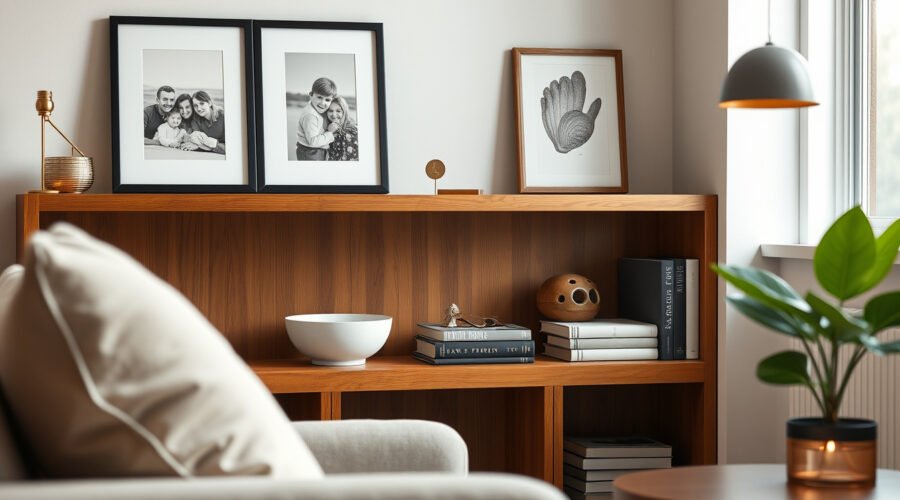
Sentimental items can make a living room feel warm, layered, and unmistakably yours—but only when they are edited, protected, and displayed with intention. The goal is not to turn every shelf into a memory box. It is to choose the pieces that still feel meaningful, give them a clear place in the room, and protect fragile originals from light, dust, adhesives, and handling damage.
Quick Answer
To incorporate sentimental items into your living room decor, choose a few meaningful pieces, group them by story or color, protect fragile originals with archival materials or display copies, and style them in one intentional area such as a gallery wall, shelf, tray, shadow box, or cabinet.
Key Takeaways
- Choose keepsakes for meaning, condition, and display value—not just because you own them.
- Display fragile photos, letters, certificates, and children’s art as copies when possible, and store the originals safely.
- Use one strong display zone, repeated colors or frame finishes, and plenty of breathing room to prevent sentimental decor from looking cluttered.
- Rotate items seasonally so your living room evolves without becoming overcrowded.
At a Glance
| Time Required | 1–3 hours for sorting and styling; longer if framing, scanning, or ordering archival supplies |
| Difficulty | Easy to moderate |
| Tools Needed | Soft cloth, measuring tape, pencil, picture-hanging hardware, frames, shadow boxes, trays, archival sleeves or boxes, optional scanner |
| Cost | $0 if using items and frames you already own; $20–$150+ for archival supplies, mats, frames, or shadow boxes |
How to Choose the Most Meaningful Items for Display
Start by gathering your sentimental items in one place so you can see what you actually have. Include family photographs, travel souvenirs, handwritten notes, inherited objects, children’s artwork, medals, ticket stubs, small sculptures, textiles, and anything else that carries a memory.
Then sort each item into one of four groups:
- Display now: Pieces that still feel meaningful and fit the room’s style, scale, and mood.
- Store safely: Fragile originals, duplicate photos, loose papers, and items you want to keep but do not need to see every day.
- Digitize: Letters, old photos, drawings, recipes, certificates, and flat keepsakes that can be scanned or photographed before storage.
- Release or pass on: Items that no longer carry meaning for you but may matter to another family member.
Instead of using a strict rule such as “if you have not thought about it in a year, let it go,” ask better questions: Does this item still make me feel connected to a person, place, season, or achievement? Is it sturdy enough to display? Does it support the feeling I want in this living room? Would one strong piece tell the story better than five similar ones?
Note: Sentimental does not have to mean old or expensive. A child’s drawing, a beach stone, a concert ticket, or a handwritten recipe can be just as powerful as an inherited antique when it is displayed with care.
How to Prepare Your Keepsakes for Effective Display
Before you frame, hang, or style anything, check each item’s condition. Dust stable objects gently with a soft, dry cloth. For papers and photographs, work on a clean, dry surface away from food and drinks. The National Archives recommends clean hands for handling paper and gloves for photographs and negatives because fingerprints can leave permanent stains.
For flat keepsakes such as photographs, certificates, letters, postcards, and children’s art, decide whether to display the original or a copy. The safest choice for fragile or irreplaceable papers is often to display a high-quality copy and store the original in an archival folder or box.
Warning: Avoid putting tape, glue, sticky notes, rubber bands, paper clips, or unknown adhesives directly on original photographs, letters, certificates, or artwork. These materials can stain, tear, or become difficult to remove later.
When framing originals, use preservation-minded materials. The National Archives advises using UV-filtering glass or acrylic, acid-free or pH-neutral mat board, and spacers or a window mat so the glass or acrylic does not touch the surface of the original. If you are framing photographs, use materials that have passed the Photographic Activity Test when possible.
For three-dimensional keepsakes, shadow boxes and display cases can work beautifully. They are especially useful for medals, small heirlooms, baby shoes, travel finds, dried flowers, pins, shells, or letters layered with a small object. Choose a case deep enough that nothing is pressed against the glazing, and keep it away from direct sunlight, fireplaces, vents, and damp exterior walls.
The best sentimental displays protect the memory and the material. If an item is fragile, valuable, or one-of-a-kind, display a copy and store the original safely.
How to Seamlessly Integrate Mementos Into Your Living Room
To keep sentimental decor from feeling random, give it a clear role in the room. Choose one main display zone rather than scattering small memories across every surface. Good options include:
- A gallery wall above a sofa, console table, reading chair, or stair opening near the living room.
- A bookshelf or built-in shelf where photos, books, small objects, and framed notes can be layered.
- A shadow-box grouping for letters, medals, travel keepsakes, or heirlooms.
- A coffee table tray for sturdy items such as a small bowl from a trip, a carved box, or a stack of meaningful books.
- A glass-front cabinet for delicate objects that need dust protection.
Once you choose the zone, connect the display to your existing decor. Repeat one or two elements already in the room, such as black frames, brass accents, warm wood, linen texture, blue tones, or ceramic finishes. This makes personal pieces feel collected rather than cluttered.
A simple formula works well: choose one anchor piece, add two to four supporting pieces, then leave open space around them. The anchor might be a large framed family photo, a travel map, a textile, or a meaningful piece of art. Supporting pieces might include a small framed note, a souvenir bowl, a candle, a stack of books, or a small plant.
Pro Tip: Before making holes in the wall, arrange frames and objects on the floor first. Take a phone photo of your favorite layout, then use that photo as your hanging guide.
Recommended Products
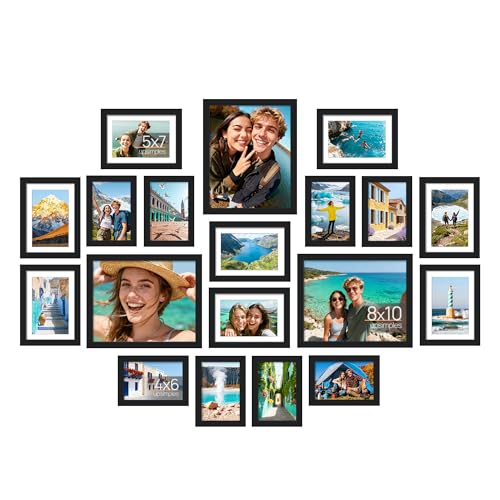
【Durable Material】Our collage frame is made of well made wood frame. Comes with a plastic cover, which provides a clear view of photos and is lighter than glass. No need to worry about hurt by glass broken.

Modern Minimalist Style: Our Picture frames are carefully packaged with minimalist art in mind, featuring natural colors such as black, white, and brown. Whether used as wall hangings or desk decorations,the gallery wall frame set is suitable for all seasons. We prioritize the perfect balance of aesthetics and functionality, ensuring a comfortable and natural experience for our customers.
Explore Creative Display Options for Your Treasures
Different keepsakes need different display methods. Use the item’s size, condition, and story to decide where it belongs.
Create a Personal Gallery Wall
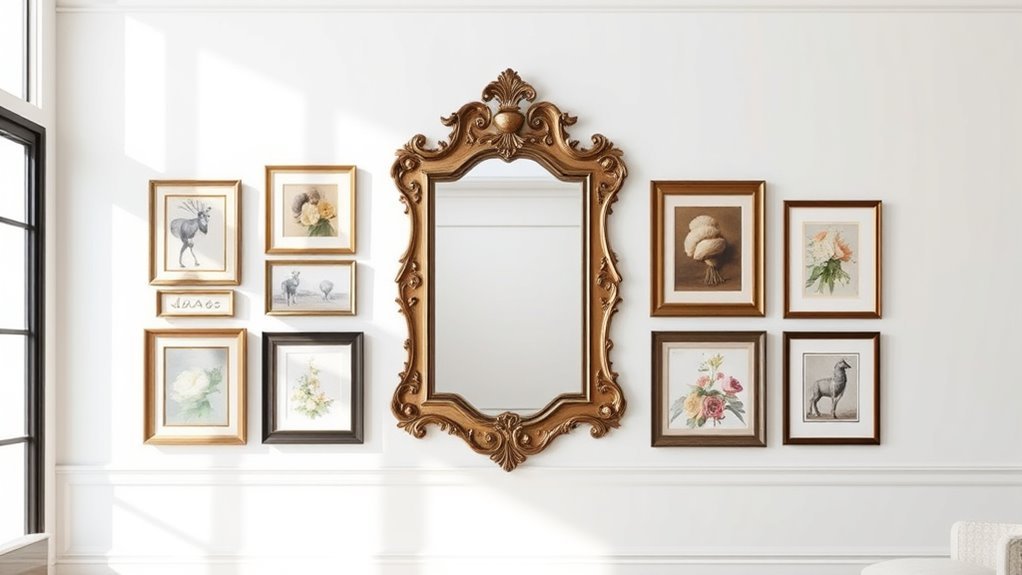
A gallery wall is ideal for family photos, travel prints, handwritten notes, children’s art, maps, and small framed mementos. For a cohesive look, repeat a frame color or mat style, then vary the contents. Mix portraits with landscapes, documents, small art prints, and one unexpected item such as a tiny shadow box or framed fabric swatch.
Use Shadow Boxes for Dimensional Keepsakes
Shadow boxes add depth while protecting small objects from dust and handling. They work well for medals, letters, vintage keys, baby keepsakes, shells, dried flowers, ticket stubs, or travel collections. Keep the arrangement simple: one main object, one flat background item, and one small label often looks stronger than a crowded box.
Style Bookshelves With Memory Layers
Bookshelves are perfect for sentimental items because they already combine function and display. Place heavier books and baskets first, then layer keepsakes in front of or beside them. Use odd-numbered groupings, vary heights, and leave empty space so each memory has room to breathe.
Turn a Tray Into a Small Memory Vignette
If you prefer subtle decor, use a tray on a coffee table, ottoman, or console. Add one sturdy sentimental object, one practical item, and one softening element. For example: a travel bowl, a stack of coasters, and a small vase. This keeps the display meaningful without taking over the room.
Frame Textiles, Recipes, and Children’s Art
Flat sentimental pieces can become beautiful wall decor. Consider framing a handwritten recipe, a small textile, a vintage scarf, a child’s drawing, or a postcard from a favorite trip. If the original is delicate, scan or photograph it and frame the copy while storing the original in an archival sleeve or box.
Protecting Fragile Sentimental Items From Light, Dust, and Damage
Sentimental decor should be visible, but it should not be sacrificed to sunlight, heat, humidity, or poor materials. According to the National Archives, exposure to visible and ultraviolet light can cause fading, darkening, and other changes in papers and photographs. It recommends displaying copies of originals when possible and keeping originals in a box.
The Library of Congress also recommends housing photographs in protective folders or sleeves and using photo-safe boxes. For storage, choose a cool, stable, relatively dry location. Avoid attics, basements, garages, fireplaces, radiators, vents, and damp exterior walls.
For items not on display, use storage that supports the object instead of squeezing it. Papers and photos should lie flat or stand upright without bending. The National Archives recommends containers that are large enough for originals, not overstuffed, and made from lignin-free, acid-free, or buffered materials.
How to Avoid Clutter While Still Honoring Your Memories
The easiest way to make sentimental decor look polished is to edit. You do not need to display every memory at once. In fact, displaying fewer pieces often makes each one feel more important.
Use these clutter-control rules:
- Limit each surface to one story. A shelf might focus on family history, while a tray might focus on travel.
- Repeat one design element. Matching frame color, similar matting, or a shared color palette creates order.
- Use closed storage nearby. Keep extra keepsakes in labeled boxes, baskets, or archival folders.
- Leave negative space. Empty space makes sentimental pieces feel intentional instead of crowded.
- Rotate seasonally. Swap in holiday photos, summer travel memories, school artwork, or family milestones at different times of year.
If a display starts to feel busy, remove one-third of the items and look again. The pieces you miss are the ones worth keeping out.
Digitize and Label the Stories Behind Your Keepsakes
A beautiful display is even more meaningful when the story is easy to remember. Digitize fragile photographs, letters, recipes, children’s artwork, and documents before storing them. The National Archives notes that digitizing allows you to view and share items without handling originals, though originals should still be kept because digital files can be lost.
Add simple labels where they help: a date on the back of a frame, a small caption inside a shadow box, or a note in your digital folder. Keep file names simple and consistent, and back up digital copies in more than one place.
Note: A label does not have to be formal. “Grandma Rose’s recipe card, 1978” or “Lisbon tile shop, anniversary trip” is enough to keep the memory attached to the object.
Evaluating and Adjusting Your Decor Over Time
As your life changes, your sentimental displays should change too. Review your living room every few months and ask whether the items still feel connected to your current season. Some pieces may deserve a more prominent place, while others may be ready for safe storage.
Take photos of your arrangements so you can compare what works over time. A display that looks balanced in person may feel crowded in a photo, and a small adjustment in height, spacing, or color can make the whole room feel calmer.
Seasonal updates are an easy way to keep memories alive without adding clutter. In spring, you might display botanical prints, travel photos, or lighter frames. In winter, you might bring out family holiday photos, handwritten recipes, or heirloom ornaments in a bowl or shadow box. The point is not to decorate around trends; it is to let your home reflect the memories that still feel alive to you.
Common Mistakes to Avoid
- Displaying too many small items at once: Group small pieces in a tray, shadow box, or cabinet instead of scattering them across the room.
- Hanging originals in direct sunlight: Use copies when possible, or choose UV-filtering glazing and a low-light location.
- Using unsafe adhesives: Avoid tape, glue, sticky notes, and rubber cement on originals.
- Forgetting the room’s style: Repeat colors, frame finishes, or textures already in the living room.
- Ignoring scale: Tiny items need a tray, mat, riser, or grouping so they do not disappear on a large wall or shelf.
- Never rotating anything: Rotation lets you enjoy more memories while keeping the room edited.
Frequently Asked Questions
How do I decorate a living room with sentimental items step by step?
Start by gathering all keepsakes, then sort them into display, store, digitize, and pass-on groups. Choose one main display area, prepare fragile items safely, repeat a color or frame finish, arrange pieces on the floor first, then hang or style them with enough open space around each item.
In what order should I decorate a living room with personal items?
Place large furniture first, then rugs, lighting, and main artwork. After the room’s foundation is set, add sentimental items as the final layer. This order helps your keepsakes support the design instead of competing with the sofa, tables, lamps, and traffic flow.
How can I decorate with things I already have?
Shop your own home first. Reframe old photos, group travel souvenirs on a tray, stack meaningful books, place heirlooms on a shelf, or turn children’s art into a small rotating gallery. The key is to edit, group similar pieces, and repeat one visual element so the display feels intentional.
How do I decorate with personal items without making the room look cluttered?
Limit the display to one main story per area, such as family photos on a gallery wall or travel keepsakes on a shelf. Use trays, frames, shadow boxes, or cabinets to contain small pieces, and leave visible space between objects. If the room feels busy, rotate some items into storage.
Should I display original family photos and letters?
Display copies when the original is fragile, valuable, faded, or irreplaceable. If you display an original, keep it out of direct sunlight, use UV-filtering glass or acrylic, choose acid-free or pH-neutral matting, and make sure the glazing does not touch the item.
What sentimental items look best in a shadow box?
Shadow boxes work best for small, dimensional keepsakes such as medals, pins, baby shoes, dried flowers, shells, vintage keys, ticket stubs, and travel souvenirs. Keep the layout simple, avoid pressing items against the glass, and use safe mounting methods that do not damage the original.
Conclusion
Sentimental treasures do not have to compete with your throw pillows, artwork, or furniture. When you choose carefully, protect fragile originals, and give each memory a clear place to shine, your living room becomes more than a styled space—it becomes a living record of the people, places, and moments that shaped you. Trends may change, but a well-displayed memory always feels at home.
Sources
- National Archives — Displaying Family Papers and Photographs — supports guidance on light exposure, UV-filtering glazing, matting, framing, and displaying copies.
- National Archives — Storing Family Papers and Photographs — supports advice on temperature, humidity, archival containers, acid-free materials, and safe storage.
- National Archives — Handling Family Papers and Photographs — supports handling guidance for clean hands, gloves, and clean work surfaces.
- National Archives — Digitizing Family Papers and Photographs — supports advice on scanning, sharing, metadata, and backups.
- Library of Congress — Care, Handling, and Storage of Photographs — supports guidance on photo-safe enclosures, boxes, handling, and storage environments.

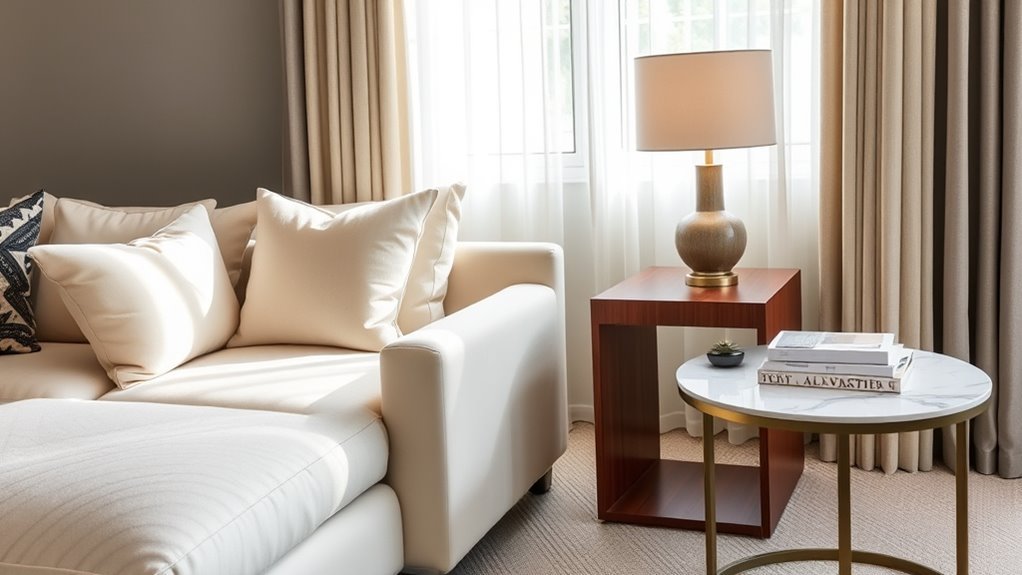
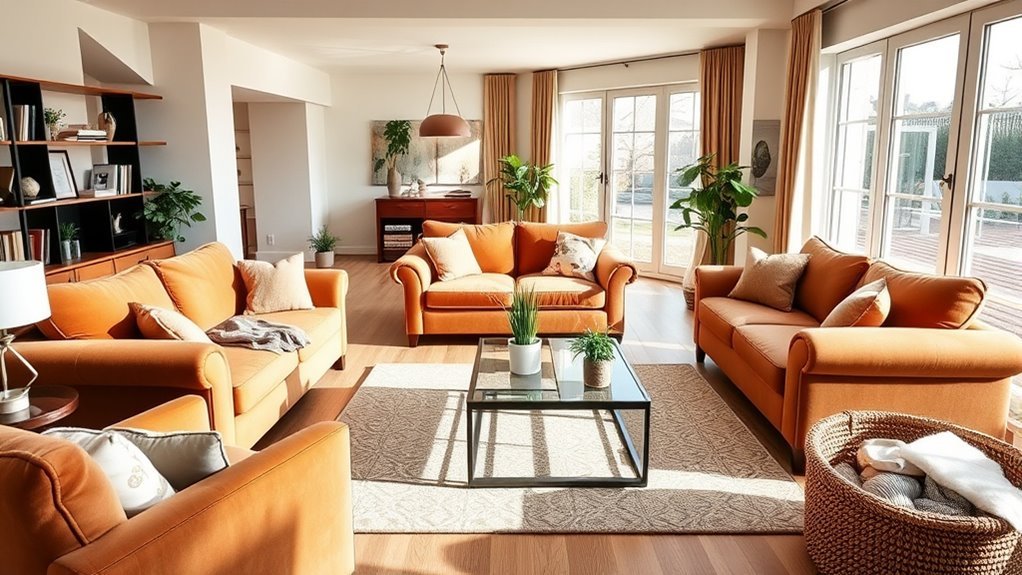
[…] is easier to edit than an entire furniture layout. You can also use the same principle when you display sentimental items, arrange pillows, choose artwork, or repeat materials around a […]