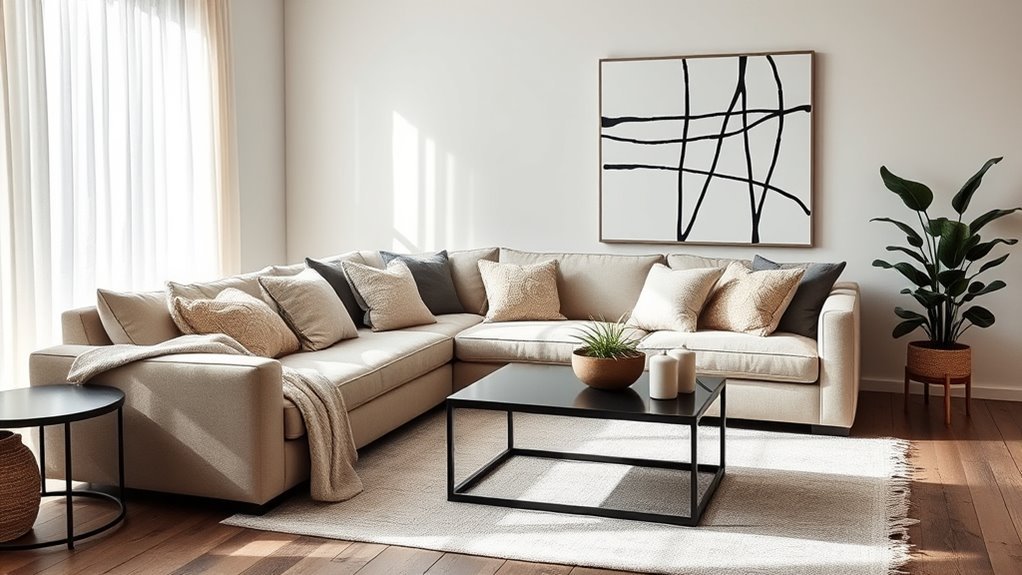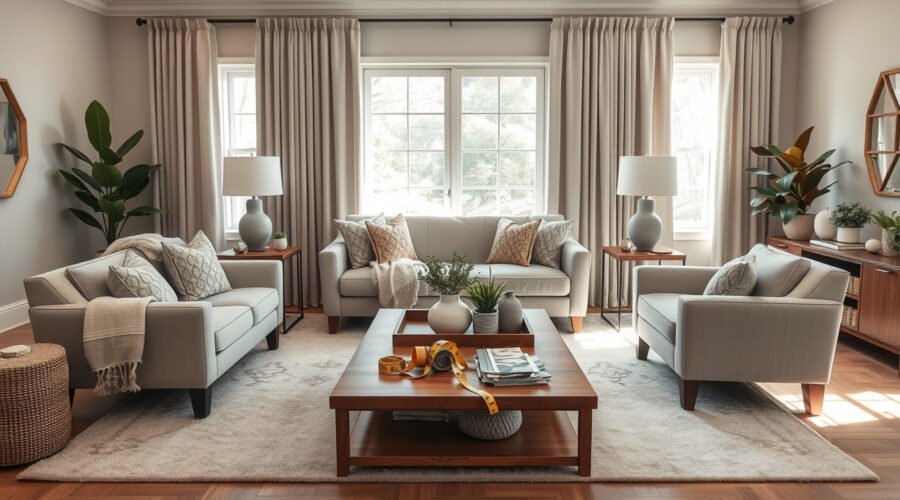
A living room can feel too casual when the furniture floats without a plan, the lighting comes from one harsh source, the rug is the wrong size, or every surface is either empty or cluttered. To elevate the space, focus on the details that make a room feel intentional: a measured layout, a cohesive palette, layered textures, comfortable furniture, better lighting, and a few polished finishing touches.
Quick Answer
To elevate a casual living room, measure the space first, choose one clear style direction, improve furniture placement, add a properly sized rug, layer textures, and use ambient, task, and accent lighting. Finish with edited accessories, hidden clutter, and safety checks so the room feels polished without losing comfort.
Key Takeaways
- Start with the floor plan. A room looks more expensive when furniture, walkways, lighting, and storage are planned instead of guessed.
- Use a focused palette and repeat materials so the space feels collected, not random.
- Layer rugs, curtains, pillows, throws, wood, metal, ceramic, and plants for warmth without clutter.
- Upgrade lighting with multiple sources, compatible dimmers, and bulbs chosen by lumens and color temperature.
- Edit the final layer. A few larger, meaningful pieces usually look more polished than many small accessories.
At a Glance
| Time Required | 1 weekend for planning, editing, and restyling; 2–6 weeks if ordering furniture, lighting, or window treatments |
| Difficulty | Beginner to moderate, depending on whether you are rearranging, buying new pieces, or installing lighting |
| Tools Needed | Tape measure, painter’s tape, graph paper or floor-plan app, phone camera, rug pad, cord clips, bulb labels, and basic hand tools |
| Cost | $0–$150 for rearranging, editing, bulbs, and small accessories; $300–$2,500+ for rugs, lighting, storage, curtains, or furniture upgrades |
Assess Your Space: Measure Before You Move Anything
To effectively assess your living room, start by measuring its dimensions. Use a tape measure to capture the room’s length and width, then note the height of the walls, ceiling details, windows, doors, fireplace, built-ins, outlets, vents, radiators, and any awkward corners. These details affect furniture placement, curtain length, rug size, lighting, and storage.
Next, sketch a simple floor plan on graph paper or in a digital planning tool. Mark the fixed features first, then add your current sofa, chairs, tables, media unit, and storage pieces. Use painter’s tape on the floor to test new furniture footprints before buying anything.
- Measure the full room length and width.
- Measure each wall section between doors, windows, and built-ins.
- Record doorway widths and swing direction.
- Mark outlet locations so lamps and media cords do not become an afterthought.
- Identify the natural focal point: fireplace, TV, view, bookcase, or main conversation area.
- Leave clear traffic paths through the room instead of forcing people to weave around furniture.
Note: For accessibility-minded planning, the 2010 ADA Standards for Accessible Design use 36 inches as the minimum clear width for many accessible walking surfaces. Private homes are not always required to follow ADA rules, but this is a useful reference point when you want easier movement through a living room.
Define Your Style: Choose a Cohesive Living Room Aesthetic
Finding your unique style is essential, but a polished room needs more than a mood board. Start by choosing 5–10 inspiration images that share something in common: warm neutrals, tailored furniture, organic textures, traditional details, modern lines, or a bolder color story. Look for patterns in what you save rather than copying one room exactly.
Then build a simple palette:
- Base color: the main wall, sofa, or rug color that grounds the room.
- Secondary colors: one or two supporting tones used in curtains, chairs, pillows, or art.
- Accent color: a smaller dose used in accessories, books, artwork, or flowers.
- Material repeats: wood tone, metal finish, woven texture, stone, ceramic, or glass.
A room feels elevated when pieces relate to each other without looking like a furniture showroom set. For example, pair a clean-lined sofa with vintage-style side tables, a woven basket, linen curtains, ceramic lamps, and one metal finish that repeats two or three times. That mix creates visual interest while still feeling intentional.
Pro Tip: Before buying decor, take photos of your living room in daylight and at night. The camera makes mismatched undertones, cluttered corners, undersized rugs, and uneven lighting easier to spot.
Create an Intentional Layout That Invites Conversation
A casual living room often feels unfinished because the layout is based on wall space instead of use. Start with the main activity: conversation, TV watching, reading, entertaining, or family lounging. Then arrange furniture around that purpose.
For a more refined seating area, avoid pushing every piece against the walls unless the room is very narrow. Floating the sofa or chairs even a few inches can make the arrangement feel designed. Place seats close enough for conversation, add a surface within reach of each seat, and keep traffic lanes open.
- If the room has a fireplace: let it anchor the seating area, then balance it with art, sconces, or a pair of chairs.
- If the TV is the focal point: center the main sofa on the screen, then soften the media wall with art, plants, closed storage, or picture lighting.
- If the room is awkward: divide it into zones, such as a main seating area plus a reading corner, game table, or console moment.
- If the room is small: use lighter-scale furniture, raised legs, nesting tables, storage ottomans, and wall-mounted lighting.
Layer Textures for Depth, Warmth, and Polish
Layering textures is one of the fastest ways to turn a basic living room into a cozy retreat. Start with the largest soft surface: the rug. A rug that is too small can make the room look disconnected, while a larger rug helps the sofa, chairs, and tables feel like one planned zone. In most seating areas, aim for at least the front legs of the sofa and chairs to sit on the rug.
Then add texture in layers:
- Curtains: linen, cotton, velvet, or lined panels soften hard edges and make windows feel finished.
- Pillows and throws: mix smooth, nubby, woven, and plush fabrics instead of using identical sets.
- Hard surfaces: balance fabric with wood, metal, stone, glass, or ceramic.
- Storage texture: woven baskets, lidded boxes, and trays hide clutter while adding warmth.
- Natural elements: plants, branches, wood bowls, and stone objects keep the space from feeling flat.
Warning: Rugs, cords, and loose accessories should not create trip hazards. Use a rug pad, secure curled corners, route cords along walls, and keep main walkways clear. The CDC recommends removing things people can trip over and improving home lighting as part of fall prevention.
Recommended Products

PET FRIENDLY & NON-SLIP BACKING: 8x10 area rugs featuring simple of colors while promising a luxurious feel underfoot. The blend of a hexagon pattern and a stylish design. Non-slip TPR backing makes the covering for bringing your space together. Make the most of your time at home with our pet-friendly and easy-to-clean area rugs. Elevate the floors of your home with this show-stopping and detailed rug

Ultra-Soft Low Pile Rug: Gent drizz living room rugs 8x10 made of Upgraded durable low pile faux wool fibers, 0.25'' thick, featuring a soft fuzzy density surface, soft and pliable to the touch, providing great comfort for your bare feet. The low pile makes it easy for your Large area rug to clean and is perfect for homes with kids and pets

Trendy Modern Rug: Our area rug is designed in today's popular minimalist style, featuring adaptable printed patterns that seamlessly blend into a wide range of interior aesthetics. This neutral rug adds understated elegance with a strong feeling of individuality to your living room, bedroom, dining room, nursery or playroom.
Choose Functional Furniture for Comfort and Style
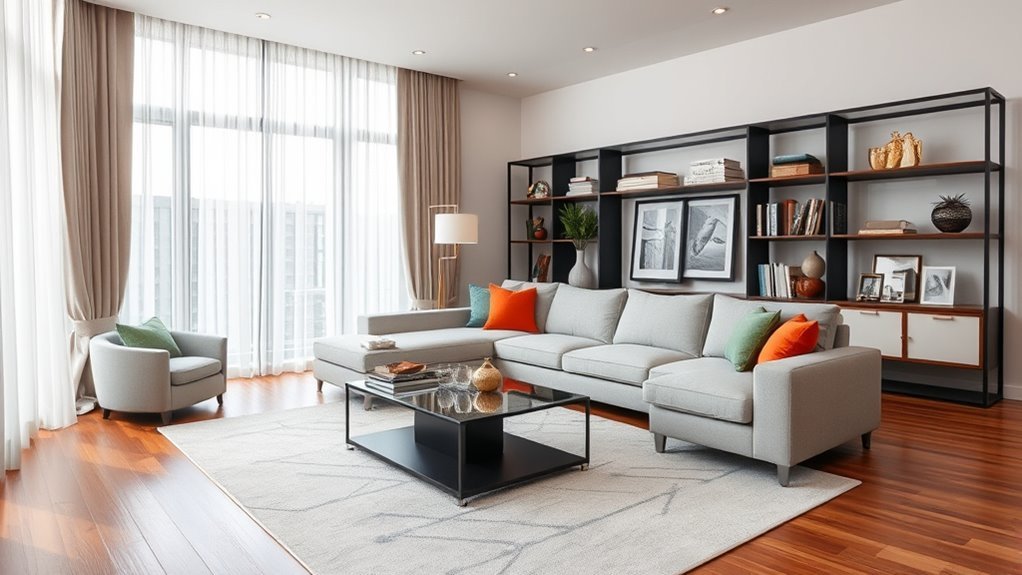
Transform your living room by selecting functional furniture that blends comfort, scale, and style. Start with the biggest piece: the sofa or sectional. It should fit the room, support the way you actually lounge, and leave enough space for tables, lamps, and walkways.
Choose accent chairs that add shape or texture rather than simply matching the sofa. A pair of tailored chairs can make the room feel balanced, while one sculptural chair can create a strong focal point in a smaller space. For tables, look for pieces that are both useful and refined: a coffee table with a shelf, a storage ottoman with a tray, nesting side tables, or a console that hides media clutter.
Multi-functional pieces are especially helpful when a living room needs to look polished but still serve daily life. Closed cabinets hide games, remotes, chargers, pet supplies, and extra throws. Benches, ottomans, and baskets give casual items a home so the room does not slide back into clutter.
Note: If you use bookcases, cabinets, dressers, or TV furniture in the living room, secure tall or tip-prone pieces. The U.S. Consumer Product Safety Commission’s Anchor It campaign recommends anchoring furniture with drawers, doors, and shelves to help prevent tip-over injuries and deaths.
Recommended Products

Delivered in 3 Separate Packages: Considering the large volume of product packaging, in order to meet practical needs and facilitate transportation, this 4-seater L-shaped couch will be divided into 3 separate packages for delivery, so they may not arrive at the same time. Package 1: one single sofa and one ottoman. Package 2: 2 single sofas and 2 throw pillows. Package 3: left and right armrests for the couch

Tool-Free Assembly & Ready to Use: Skip the hassle of traditional furniture—no tools, screws, or complicated instructions needed. This sectional sofa arrives vacuum-packed for safe delivery and easy handling. Simply unbox, remove the packaging, and let each piece expand naturally. Within 24–48 hours, the cushions fully regain their shape and comfort. With no learning curve, it’s ideal for apartments, first homes, rentals, or housewarming gifts—effortless, intuitive, and stress-free from day one.
Brighten Up Your Space With Layered Lighting
Layered lighting is essential because one ceiling fixture rarely makes a living room feel warm, polished, and useful. The U.S. Department of Energy recommends matching the amount and quality of light to the function and using task lights where needed.
Use three types of lighting:
- Ambient lighting: ceiling fixtures, recessed lighting, flush mounts, pendants, or reflected light that gives the room general brightness.
- Task lighting: table lamps, floor lamps, and reading lights placed near seats, desks, or game tables.
- Accent lighting: picture lights, sconces, shelf lighting, or small lamps that highlight art, architecture, bookshelves, or plants.
When replacing bulbs, choose brightness by lumens instead of guessing by watts. The Department of Energy’s Lumens and Lighting Facts guidance explains that lumens measure how much light a bulb provides. For a calm living room, keep bulb color temperature consistent within each zone. Warm white often feels cozy for evening seating areas, while slightly brighter task lighting can help near reading chairs or work surfaces.
LED bulbs can use up to 90% less energy and last up to 25 times longer than traditional incandescent bulbs, according to the U.S. Department of Energy.
Install dimmer switches where appropriate, but check that the dimmer and bulbs are compatible. Add timers, smart plugs, or lamp switches where they make the room easier to use. A polished living room should feel just as inviting at 8 p.m. as it does at noon.
Recommended Products

Multi-Function Dimmable Lamp: Vertical lamp includes an 12W dimmable LED bulbs that can be set to different color temperatures (3000K-6500K). 5%-100% dimmable brightness can be used to create different atmospheres and customize your favorite bedroom floor lamp.

Modern Fully Dimmable(0-100%) Floor Lamp & Convenient Rotary Switch: Compared with traditional Non-dimmable floor lamps for living room, our floor lamp is fully Stepless Dimmable, which suitable for all the room style and using situation ,find the perfect light for your needs. This standing lamp is very easy to turn on and off. Just simply twist it and then you can adjust the arc floor lamps brightness what you want. 4.1FT rotary switch, which is very convenient for you to adjust it.

Stable Base & Linen Shade: This floor lamp set features a sturdy metal base that provides reliable support, preventing wobbling or tipping. The matching linen shade diffuses light softly and evenly, effortlessly creating a warm and inviting home atmosphere
Style the Finishing Touches Without Adding Clutter
The final layer is where many living rooms either become elevated or start to feel busy. Choose fewer, better-scaled pieces instead of scattering small decor everywhere. A large tray on the coffee table, a stack of books, one bowl, and a small vase usually looks more refined than ten unrelated objects.
Use these finishing details to make the room feel complete:
- Artwork: hang pieces at a comfortable viewing height and choose art that relates to your palette.
- Mirrors: place them where they reflect light, a view, or a strong architectural feature.
- Bookshelves: vary height, leave breathing room, and mix books with objects, baskets, framed photos, and ceramics.
- Window treatments: hang curtain rods high and wide enough to make windows feel larger and more finished.
- Greenery: use one larger plant or a few intentional stems instead of many tiny scattered pots.
Common Mistakes That Keep a Living Room Looking Too Casual
If the room still feels unfinished after you decorate, look for these common issues:
- The rug is too small. It should connect the seating area instead of floating under only the coffee table.
- Everything matches too closely. Mix furniture styles, textures, and finishes so the room feels collected.
- Lighting is too harsh or too flat. Add lamps and accent lighting instead of relying only on overhead light.
- The room lacks closed storage. Everyday clutter needs a hidden place to land.
- Furniture blocks movement. Shift pieces until the room has clear, comfortable traffic paths.
- Accessories are too small. Use larger art, taller lamps, bigger pillows, and more substantial trays or vases.
- There is no focal point. Give the eye a place to rest, such as a fireplace, art wall, media wall, or styled bookcase.
Frequently Asked Questions
How do you stage an awkward living room?
Stage an awkward living room by choosing one focal point, dividing the room into zones, and arranging furniture for conversation instead of forcing every piece against the wall. Use a rug to define the main seating area, add lamps where the room feels dark, and keep walkways open so the layout feels deliberate.
What makes a living room look more polished?
A polished living room usually has a clear layout, a properly sized rug, layered lighting, repeated colors or materials, edited surfaces, and furniture that fits the room’s scale. Small upgrades like better lamps, longer curtains, a larger tray, matching bulb temperatures, and hidden cord management can make a big difference.
How can I elevate a living room on a small budget?
Start with free changes: declutter, rearrange furniture, create a stronger focal point, and move lamps to darker corners. Then spend where it shows most, such as new pillow covers, a larger rug pad, warm LED bulbs, thrifted art, matching frames, a storage basket, or longer curtain panels.
What lighting is best for a cozy but elevated living room?
Use at least three lighting layers: ambient lighting for the whole room, task lighting near reading or work areas, and accent lighting for artwork, shelves, or architectural details. Choose bulbs by lumens, keep color temperature consistent in each zone, and use compatible dimmers where possible.
Do I need to replace all my furniture to make the room feel elevated?
No. Many living rooms look better after rearranging furniture, changing the rug placement, adding lamps, editing accessories, and improving storage. Replace only the pieces that are the wrong scale, uncomfortable, damaged, or impossible to work into your style plan.
Conclusion
By measuring your space, defining your style, improving the layout, layering textures, choosing functional furniture, and adding better lighting, you can turn a too-casual living room into a polished retreat. The goal is not to make the room feel formal or untouchable. The best elevated living rooms still feel comfortable, but every choice has a purpose: the rug anchors the furniture, the lighting supports the mood, the storage hides daily clutter, and the finishing touches make the space feel personal and complete.
Sources
- U.S. Department of Energy — Lighting Design — supports layered lighting, task lighting, lighting quality, and matching light to room function.
- U.S. Department of Energy — Lighting Choices to Save You Money — supports LED efficiency and lifespan guidance.
- U.S. Department of Energy — Lumens and the Lighting Facts Label — supports choosing bulbs by lumens, brightness, bulb life, and color appearance.
- CDC — Preventing Falls and Hip Fractures — supports removing trip hazards and improving home lighting for safer movement.
- U.S. Consumer Product Safety Commission — Anchor It — supports anchoring furniture and TVs to help prevent tip-over injuries.
- ADA.gov — 2010 ADA Standards for Accessible Design — supports the 36-inch accessible walking-surface reference used for circulation planning.