

A living room without a clear focal point can feel unfinished, even when the furniture and decor are attractive. The fix is not always buying something new. Start by choosing one main visual anchor, then arrange the seating, rug, color, texture, and lighting so everything quietly supports that anchor instead of competing with it.
Quick Answer
To fix a living room lacking a focal point, choose one main anchor such as a fireplace, window, built-ins, TV wall, statement sofa, mirror, or large artwork. Arrange seating to face or frame it, anchor the area with a rug, repeat its colors or textures, and highlight it with layered lighting.
Key Takeaways
- Pick one primary focal point; too many competing features can make the room feel busy.
- Use what the room already gives you first: windows, a fireplace, built-ins, an alcove, a long wall, or a view.
- If the room has no fireplace, create a focal point with art, a mirror, a console vignette, a media wall, a statement sofa, or a tall bookcase.
- Furniture should support both the focal point and conversation, not block walkways or force awkward seating angles.
- Lighting, texture, and color should strengthen the focal point without making every piece in the room shout for attention.
At a Glance
| Time Required | 1 to 3 hours for rearranging and styling; a weekend if painting, hanging large art, or installing new fixtures |
| Difficulty | Beginner to intermediate |
| Tools Needed | Tape measure, painter’s tape, level, picture-hanging hardware, floor-plan sketch, lamps, pillows, throws, and existing decor |
| Cost | $0 if you rearrange what you own; $50 to $500+ for art, lighting, rugs, paint, or decor upgrades |
Identify Key Features to Create a Focal Point
Before buying new decor, stand in each doorway and notice where your eye naturally lands. A strong focal point is usually the feature that gives the room direction: a fireplace, a window, a built-in bookcase, a beautiful view, a tall wall, a media wall, or a large piece of furniture.
Use this quick scan to find the strongest option:
- Architectural features: fireplaces, bay windows, exposed brick, beams, alcoves, arches, or built-ins.
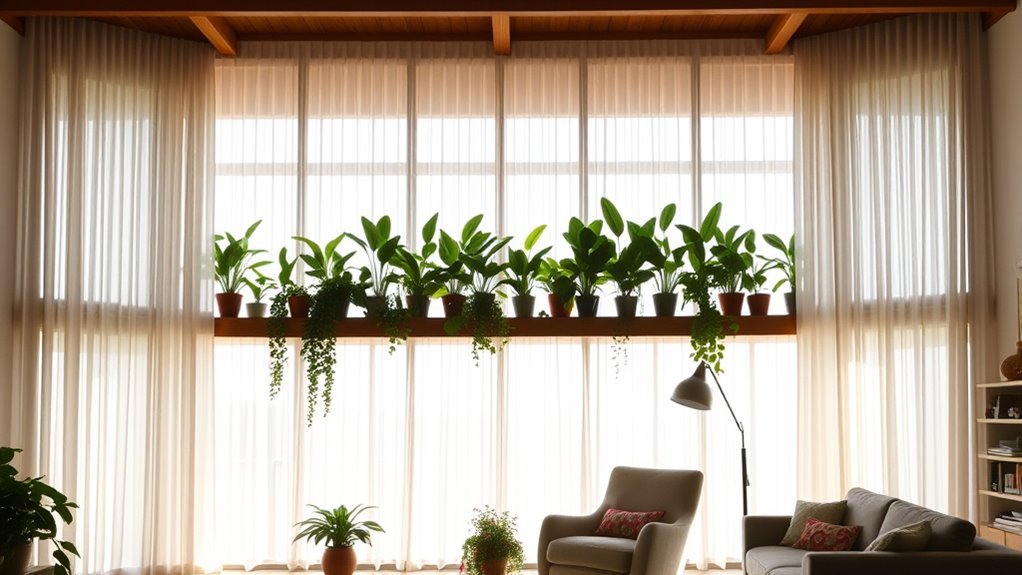
- Natural light: a large window, garden view, or bright corner that already draws attention.
- Largest uninterrupted wall: the best place for oversized art, a gallery wall, a console table, or a media unit.
- Main activity zone: the place where people watch TV, talk, read, or gather most often.
- Statement furniture: a bold sofa, armoire, cabinet, bookcase, or sculptural chair that can anchor the room.
Note: A room can have secondary features, but it should have one main star. If the fireplace, TV, view, and gallery wall all compete at equal strength, the room can feel cluttered instead of intentional.
Create a Focal Point With No Fireplace
If your living room has no fireplace, create a focal point with one confident design move. Interior designers often use emphasis in interior design to guide the eye through contrast, scale, texture, lighting, or color. The key is restraint: make one area special, then let the surrounding pieces support it.
Best No-Fireplace Focal Point Ideas
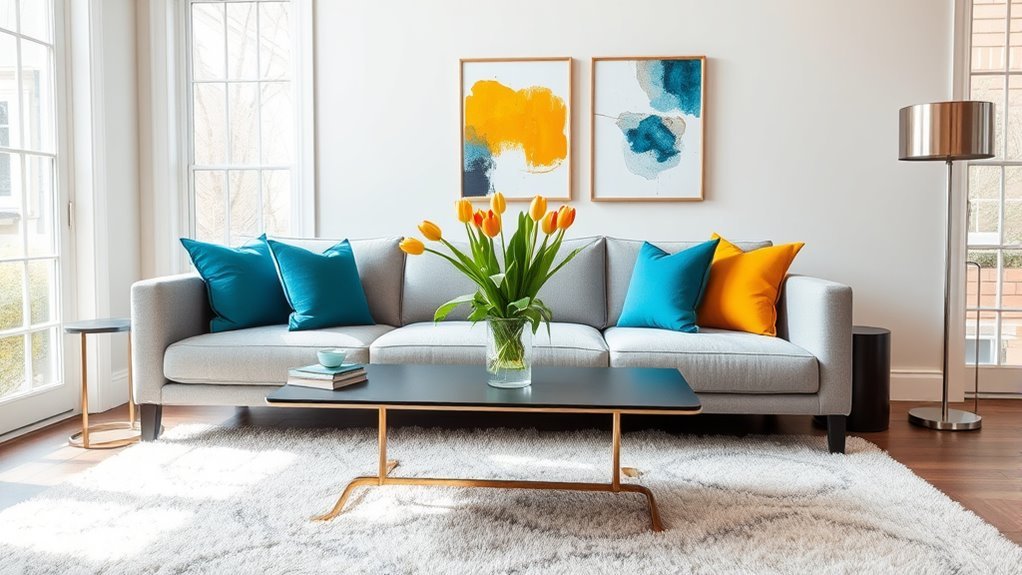
- Oversized artwork: Hang one large piece above the sofa or console instead of several small pieces scattered around the room.
- Gallery wall: Use matching frames, a consistent color palette, or a tight grid so the collection reads as one strong feature.
- Mirror and console table: Pair a large mirror with lamps, books, branches, or ceramics to create height and reflection.
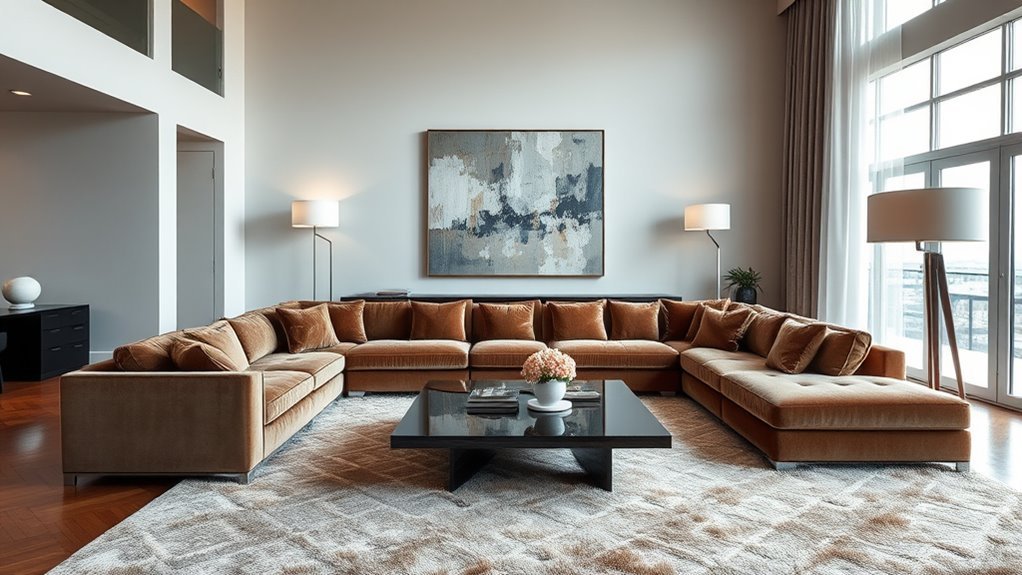
- Statement sofa: Choose a sofa in a rich color or distinct shape, then keep nearby pieces quieter.
- Bookcase or built-in shelving: Style shelves with books, baskets, art, and negative space so they look curated, not crowded.
- Accent wall: Use paint, wallpaper, wood slats, or limewash on one well-chosen wall, especially behind the main seating area.
- Sculptural lighting: A chandelier, pendant, floor lamp, or pair of sconces can pull attention toward the center of the room.
- Large indoor tree: A tall plant can soften a blank corner and add height, especially beside a chair or window.
Pro Tip: If you are unsure which wall should become the focal point, choose the wall you see first when entering the room. That first sightline often sets the tone for the whole space.
Arrange Furniture to Enhance the Focal Point
Bold decor sets the stage, but furniture placement decides whether the focal point actually works. A good living room layout should support the feature, make conversation easy, and leave clear paths through the room. Expert living-room layout guidance recommends planning around a focal point while also protecting traffic flow and comfortable spacing, including generous main walkways and practical distances between seating and tables. Living room layout guidance commonly points to about 36 inches for main walkways and about 16 to 24 inches between a sofa and coffee table.
Use these placement rules:
- Face or frame the focal point: The sofa can face the focal point directly, while chairs can angle toward both the focal point and the conversation area.
- Avoid pushing every piece to the wall: Floating a sofa or chairs a few inches inward can make the room feel more intentional when space allows.
- Keep pathways open: Do not make people walk through the middle of a conversation zone to cross the room.
- Use pairs for balance: Two chairs, two lamps, or two side tables can make the focal point feel grounded.
- Do not block the view: Low chairs, open-leg tables, and slim consoles help preserve sightlines to windows, art, or a fireplace.
Recommended Products

Vintage Arm Chair: This vintage accent chairs elevate your living room, This armchair features nailhead trim, vintage wooden legs and a beautiful patterned design for a traditional and chic look, making it a perfect addition to any living room.
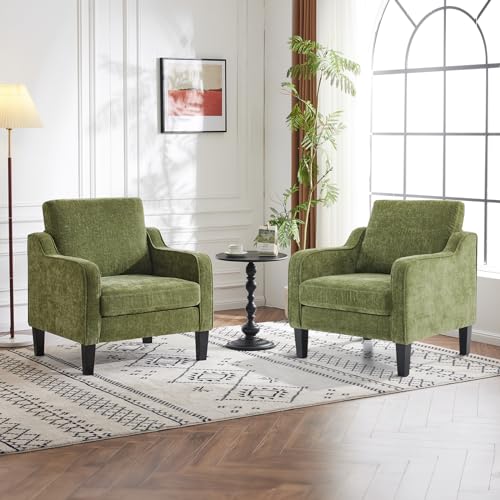
Premium Comfort & Support -- Individually wrapped pocket coils and high-density foam keep the seat supportive instead of saggy, so this comfy accent chair stays cozy for reading, napping, or watching TV in the living room.

Superior Construction: This accent chair is built of a solid wood & manufactured wood frame and corduroy fabric upholstered seat, giving you a reliable and soft sitting experience. The splayed legs not only provide extra stability but also inject a retro accent to your home. It’s capable of holding up to 300 lb
Anchor the Seating Area With a Rug and Surfaces
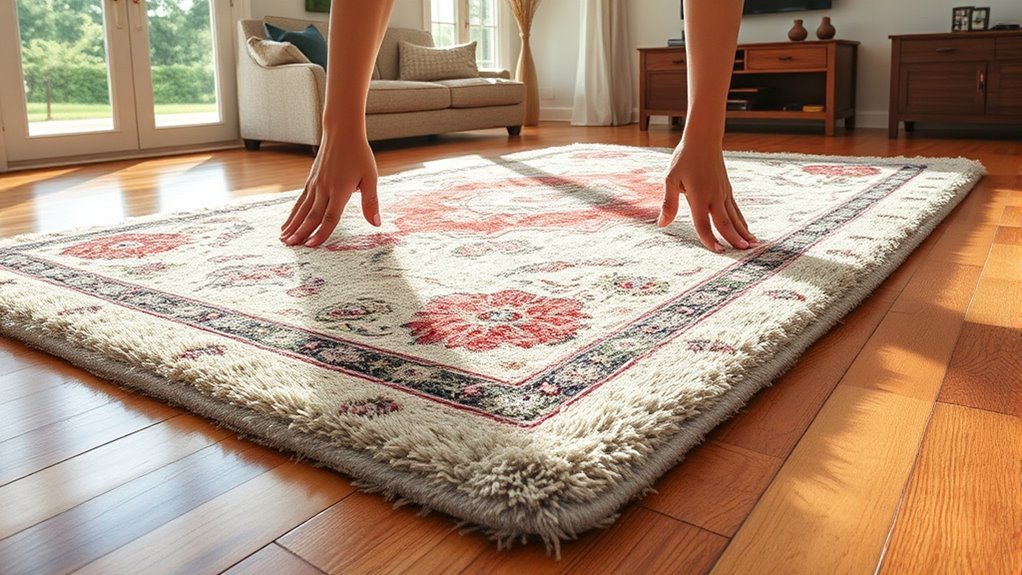
An area rug helps the focal point feel connected to the seating area instead of floating on its own. Choose a rug large enough for at least the front legs of the sofa and chairs to sit on it. This creates one visual zone and makes the furniture arrangement feel deliberate.
Then add reachable surfaces. A coffee table, side tables, nesting tables, or ottoman tray gives every seat a place for a drink, book, or remote. This small detail matters because a beautiful focal point will not save a room that feels inconvenient to use.
Recommended Products

【Easy-Care Machine Washable Rug】 Designed for active households, this low-maintenance boho rug combines style with practicality. Conveniently machine washable (cold gentle cycle recommended), and do not add bleach. Maintain its vibrant print between washes with routine vacuuming or spot cleaning. Minor shipping creases naturally relax within days when laid flat – no extra effort needed.

Soft & Durable: This 8x10 area rug low-pile combines soft faux wool fibers with a 0.25-inch height for comfort. Tight weaving reduces shedding and edge fraying, making it perfect for high-traffic areas like living rooms, bedrooms, and entryways

PET FRIENDLY & NON-SLIP BACKING-9x12 area rugs featuring simple of colors while promising a luxurious feel underfoot. The blend of a hexagon pattern and a stylish design. Non-slip TPR backing makes the covering for bringing your space together. Make the most of your time at home with our pet-friendly and easy-to-clean area rugs. Elevate the floors of your home with this show-stopping and detailed rug
Add Color and Texture for Impact
A strong color palette and rich textures can breathe life into your living room without overwhelming it. Start with the focal point, then repeat two or three colors from that feature in smaller pieces around the room. For example, if your artwork includes blue, rust, and cream, echo those tones in pillows, a throw, a vase, or a rug.
Texture adds depth, especially if the room uses many neutral colors. Mix smooth, soft, matte, woven, glossy, and natural surfaces so the focal point feels layered rather than flat. Try a textured area rug, linen pillows, velvet chairs, a wood coffee table, woven baskets, ceramic lamps, or framed art with a visible mat and frame.
A focal point works because the eye knows where to land. When every piece is bold, nothing feels important.
Incorporate Lighting to Highlight Your Focal Point
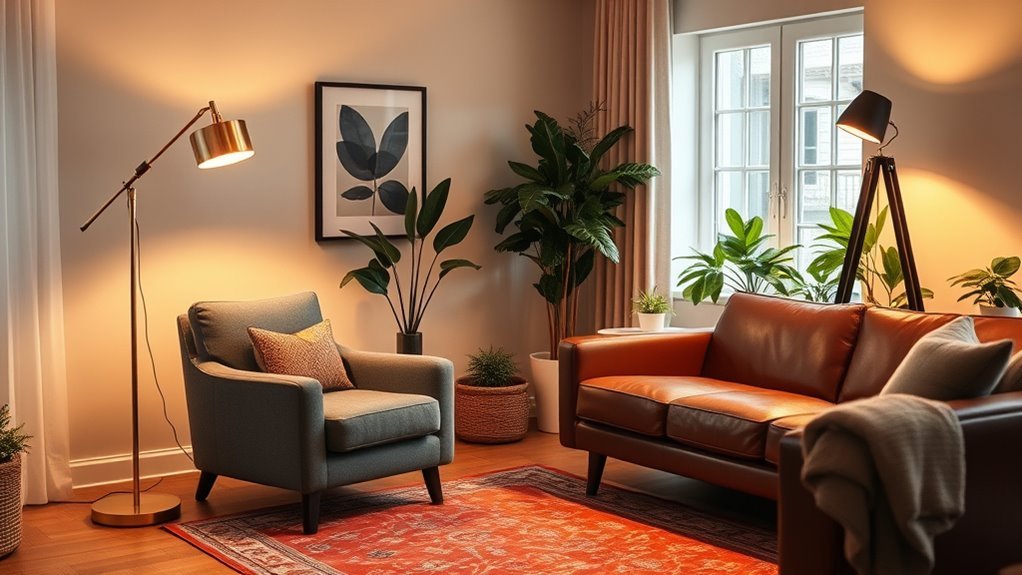
Lighting can turn a good focal point into the most inviting part of the room. Instead of relying on one overhead fixture, layer ambient, task, and accent lighting. This approach helps the room function at different times of day and lets you draw attention to art, shelves, a fireplace, a reading corner, or a textured wall. Designers also recommend layered lighting and mirrors to brighten small living rooms and reflect natural light. Small living room design guidance often highlights lighting, mirrors, scale, and vertical space as high-impact fixes.
| Lighting Type | Purpose | Fixture Example |
|---|---|---|
| Ambient | General illumination for the whole room | Ceiling fixture, flush mount, chandelier, or large floor lamp |
| Task | Focused light for reading, games, or conversation zones | Table lamp, reading lamp, swing-arm sconce, or floor lamp |
| Accent | Draws attention to the focal point | Picture light, track lighting, uplight, shelf lighting, or wall washer |
Warning: If you add hardwired sconces, pendants, recessed lights, or new outlets, hire a qualified electrician and follow fixture wattage ratings. The Electrical Safety Foundation International warns that overloaded or outdated electrical systems can create fire hazards.
Recommended Products

【Reliable & Sturdy Construction】 This uplighting indoor floor can light works as a floor uplight, plug in spotlight, or short corner lamp. Crafted from premium aluminum (6"H x 2.52"W) for great heat dissipation, sturdy structure and solid durability. With fine workmanship and sleek black finish, it delivers reliable spot lights performance — perfect accent lighting for dim indoor spaces.

RELIABLE & STYLISH FLOOR CAN LIGHT - All components are UL certified, including light bulb, lamp holder, cable and switch, safe and durable. White metal construction, 8" high × 3.5" wide beveled cylindrical shape give the uplights fashion and art, perfect for indoor accent lighting.

【Great Quality 3000K Up Lights Indoor】Built with a durable metal body and replaceable warm white GU10 bulbs, this 2-pack offers great quality and works well for reliable everyday lighting, while the warm light is great for creating a cozy, relaxing atmosphere
Solve Common Focal Point Problems
If the TV and Fireplace Compete
Choose which one leads. If the fireplace is beautiful and used often, let it be the main focal point and treat the TV as a secondary feature. If the TV is the room’s main function, make the media wall feel intentional with a console, art, shelves, or closed storage so it does not look like an afterthought.
If the Room Is Small or Narrow
Use fewer, larger pieces instead of many tiny items. A large mirror, one bold artwork, a slim console, raised-leg furniture, and wall-mounted lighting can create a focal point without crowding the floor. Keep the rug simple if the room is already visually busy.
If There Are Too Many Focal Points
Edit the room so one feature is strongest. Keep the main focal point high-contrast or well-lit, then soften the others. For example, if the artwork is the star, use quieter curtains, simpler pillows, and less crowded shelves.
If the Focal Point Still Feels Weak
Add scale, contrast, or light. A small picture above a large sofa may disappear, but a larger frame, a pair of lamps, a bolder mat, or a darker wall color behind it can make the same area feel more anchored.
Step-by-Step Focal Point Fix Checklist
- Choose one main anchor. Pick the fireplace, window, built-ins, media wall, sofa, art, mirror, or console moment that deserves the most attention.
- Remove visual competition. Clear clutter, reduce busy accessories, and move small decor away from the main focal area.
- Test the layout with painter’s tape. Mark the rug, sofa, chairs, and tables before moving heavy furniture.
- Face or frame the focal point. Angle seating so people can enjoy the feature without losing conversation flow.
- Anchor the zone with a rug. Let the front legs of the main seating pieces sit on the rug when possible.
- Add supporting color and texture. Repeat colors from the focal point in pillows, throws, art, books, or ceramics.
- Layer the lighting. Add ambient light for the room, task light for seating, and accent light for the focal feature.
- Check the room from every entrance. If your eye lands on the intended feature first, the focal point is working.
Frequently Asked Questions
How do you create a focal point in a living room with no fireplace?
Use one strong feature such as oversized artwork, a gallery wall, a large mirror over a console, a statement sofa, built-in shelving, a media wall, or a bold accent wall. Then arrange the seating and rug so that area clearly feels like the room’s anchor.
How do you create a focal point in a living room?
Choose the feature you want people to notice first, such as a fireplace, window, artwork, TV wall, or sofa. Place the largest seating pieces to face or frame it, define the seating area with a rug, and repeat the focal point’s colors or textures in nearby decor.
How do you find focal points in a living room?
Stand at the room’s main entrance and look for the feature that naturally catches your eye. Common focal points include fireplaces, windows, views, built-ins, tall walls, media units, large furniture, and artwork. If nothing stands out, choose the most visible wall and create one.
Can a TV be the focal point of a living room?
Yes, a TV can be the focal point if watching TV is the room’s main purpose. To make it look designed instead of accidental, place it with a console, shelves, art, closed storage, or balanced lighting. If there is also a fireplace, decide which feature should lead.
What is the easiest focal point for a small living room?
The easiest focal point for a small living room is usually one large wall piece, such as oversized art, a mirror, or a slim console vignette. It adds impact without taking up much floor space. Wall-mounted lighting or shelves can also help draw the eye upward.
How many focal points should a living room have?
A living room should usually have one primary focal point and one or two quieter supporting features. For example, the fireplace can be the main anchor, while bookshelves and a window view support the room without competing for equal attention.
Conclusion
Creating an enchanting living room starts with one clear decision: what should the eye notice first? Once you choose that anchor, the rest becomes easier. Arrange the furniture to support it, add a rug to ground it, repeat color and texture for harmony, and use layered lighting to make the feature feel intentional. With a few thoughtful changes, your living room can feel balanced, inviting, and finished without a full redesign.
Sources
- Homes & Gardens: How to Plan the Perfect Living Room Layout — supports focal point selection, spacing, movement, rug zoning, and layout troubleshooting.
- Good Housekeeping: Pro Designers Share the Living Room Mistakes Most People Make — supports advice on traffic flow, not pushing every piece against walls, avoiding too many focal points, and balancing TV use.
- Good Housekeeping: Small Living Room Mistakes to Avoid — supports small-room guidance on vertical space, mirrors, scale, and layered lighting.
- Livingetc: Emphasis in Interior Design — supports the design principle of using emphasis, contrast, scale, texture, and restraint to create a focal point.
- Electrical Safety Foundation International: Home Electrical Safety — supports the lighting safety warning for hardwired fixtures, overloaded circuits, and electrical hazards.



[…] How to fix a living room with no clear focal point […]