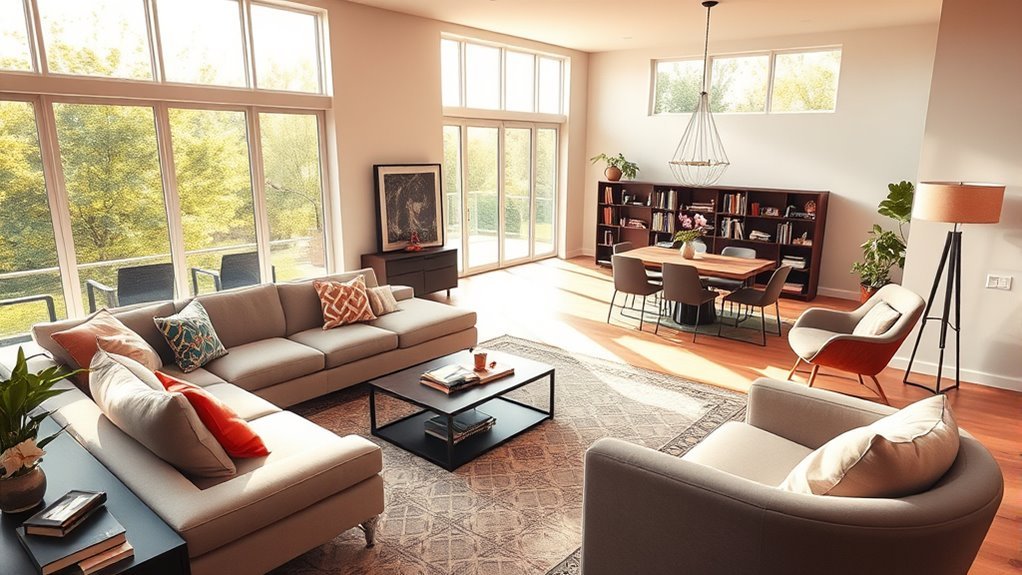
Creating zones in an open concept living room helps one large space feel calm, useful, and intentional without closing it off with full walls. The goal is simple: give every activity a clear place while keeping the room easy to walk through, bright, and connected.
Quick Answer
To zone an open concept living room, decide what each area needs to do, then use furniture placement, rugs, lighting, color, shelving, curtains, plants, and clear walkways to separate those functions visually. Keep the design cohesive by repeating finishes, tones, and materials across the whole room.
Key Takeaways
- Start with function first: lounging, dining, working, reading, play, or storage.
- Use rugs, sofa backs, consoles, lighting, and open shelves to create soft boundaries.
- Keep main walkways clear; aim for about 36 inches where accessibility and comfort matter most.
- Repeat colors, wood tones, metals, and textiles so the zones feel connected instead of chopped up.
- Use soft furnishings to reduce echo, but do not rely on rugs or curtains for full soundproofing.
At a Glance
| Time Required | 1–3 hours for planning and furniture testing; a weekend if you are adding rugs, lighting, shelves, or curtains. |
| Difficulty | Easy to moderate, depending on whether you are only rearranging furniture or adding fixtures and dividers. |
| Tools Needed | Tape measure, painter’s tape, notepad, floor plan app or graph paper, rug pad, lighting plan, and furniture sliders. |
| Cost | $0 if rearranging what you own; $100–$1,500+ if adding rugs, lamps, storage, curtains, or shelving. |
What Is an Open Concept Living Room?
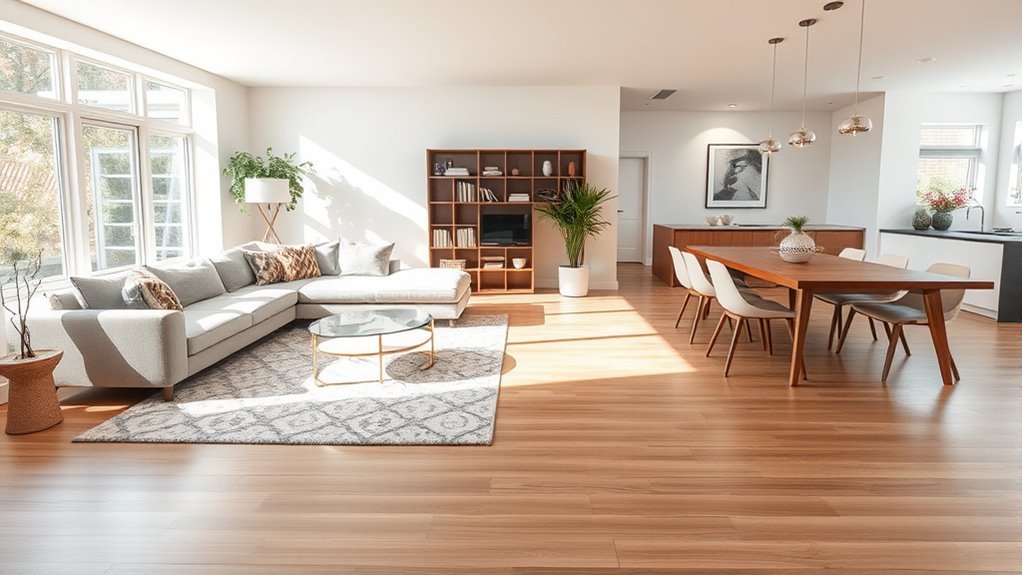
An open concept living room is a shared space where the living area connects visually to nearby rooms, often the kitchen, dining area, entry, or home office. Instead of using full walls to separate each function, the layout relies on sightlines, furniture, flooring, light, and materials.
That openness can make a home feel brighter and more social, but it can also make everyday life feel messy if every activity blends together. Zoning solves that problem by giving each function a clear place while keeping the spacious feeling that makes an open floor plan appealing.
Why Zoning Addresses Common Open Concept Challenges
Open rooms often work best when they are divided into smaller “moments.” A conversation area, dining area, reading chair, kids’ play corner, or compact desk can all live in the same room when each zone has a visual anchor.
| Challenge | Zoning Solution | Benefit |
|---|---|---|
| Visual clutter | Define activity areas | The room feels calmer and more organized |
| Lack of privacy | Use shelves, curtains, plants, or screens | Creates softer boundaries without closing the room |
| Echo and noise | Add rugs, curtains, upholstery, and bookshelves | Softens sound reflections |
| Awkward traffic flow | Keep clear walkways between zones | Makes the layout easier to navigate |
| Disconnected decor | Repeat colors, metals, wood tones, and textiles | Keeps the full space cohesive |
Identifying Functional Areas in Your Open Space
Before moving furniture, list what actually happens in the room. Most open concept living rooms need two or three main zones, not seven. Too many zones can make the space feel busy.
Common zones include:
- Lounging: sofa, chairs, coffee table, media console, and side tables.
- Dining: table, chairs, pendant light, buffet, or bar cabinet.
- Work: small desk, task lamp, storage basket, and outlet access.
- Reading: accent chair, floor lamp, side table, and soft rug.
- Kids or pets: washable rug, storage bins, low shelves, or a small play mat.
- Entry/drop zone: bench, hooks, shoe storage, tray, or console table.
Note: The best zones come from your habits, not from a perfect floor plan. A room used for movie nights, homework, and casual dinners needs different zoning than a room used mainly for entertaining.
How to Plan Your Zones Before Moving Furniture
A little planning prevents the most common open concept mistake: buying new pieces before understanding the room’s flow.
- Mark the traffic paths. Use painter’s tape to outline how people walk from the kitchen to the sofa, from the entry to the dining table, and from doors to outdoor areas.
- Choose the main focal point. This might be a fireplace, TV, picture window, built-in shelves, or a view into the kitchen.
- Assign each zone one job. A seating area can support conversation and TV, but it should still have one dominant purpose.
- Anchor each zone. Use a rug, light fixture, furniture grouping, or ceiling detail to make the zone feel intentional.
- Check scale. Leave enough space to pull out chairs, open cabinets, and walk around furniture.
- Repeat one design thread. Carry a color, metal finish, wood tone, or texture through each zone.
Warning: Do not block exits, door swings, heat registers, electrical panels, or the main path through the room. For a more accessible layout, use the U.S. Access Board’s 36-inch clear width as a helpful minimum target for primary walkways.
How to Arrange Furniture for Effective Zoning
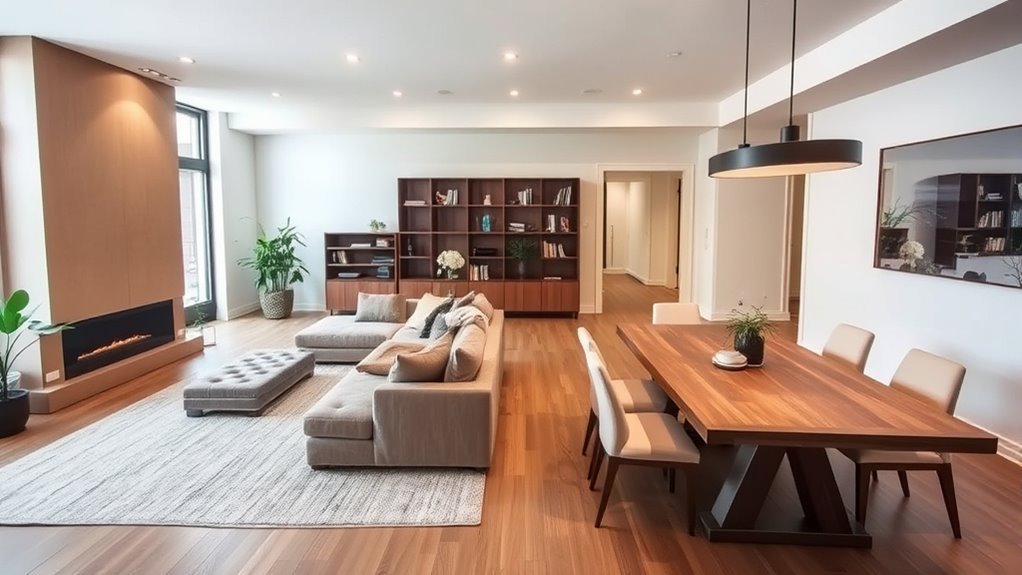
Furniture is the strongest zoning tool because it changes how people move and gather. Instead of pushing every piece against the walls, float key pieces inward to create smaller areas inside the larger room.
Furniture Placement Strategies
- Use the back of a sofa as a boundary. A sofa can separate the living area from a dining area, office nook, or play space.
- Face seating inward. Position sofas and chairs toward each other to create a conversation zone.
- Add a console behind the sofa. It creates a visual edge and can hold lamps, books, baskets, or a charging station.
- Float chairs near a window. A chair, small table, and lamp can become a reading zone without needing much space.
- Keep furniture proportional. Oversized sectionals can swallow an open room and make nearby zones feel squeezed.
- Use multipurpose pieces. Storage ottomans, nesting tables, benches, and modular shelving make zones flexible.
For everyday comfort, aim for about 30–36 inches on main walking routes where possible. Leave enough space behind dining chairs so people can sit and stand without bumping the living area. Around a coffee table, 16–18 inches from the sofa usually feels comfortable for reaching drinks while still allowing legroom.
Define Zones With Rugs
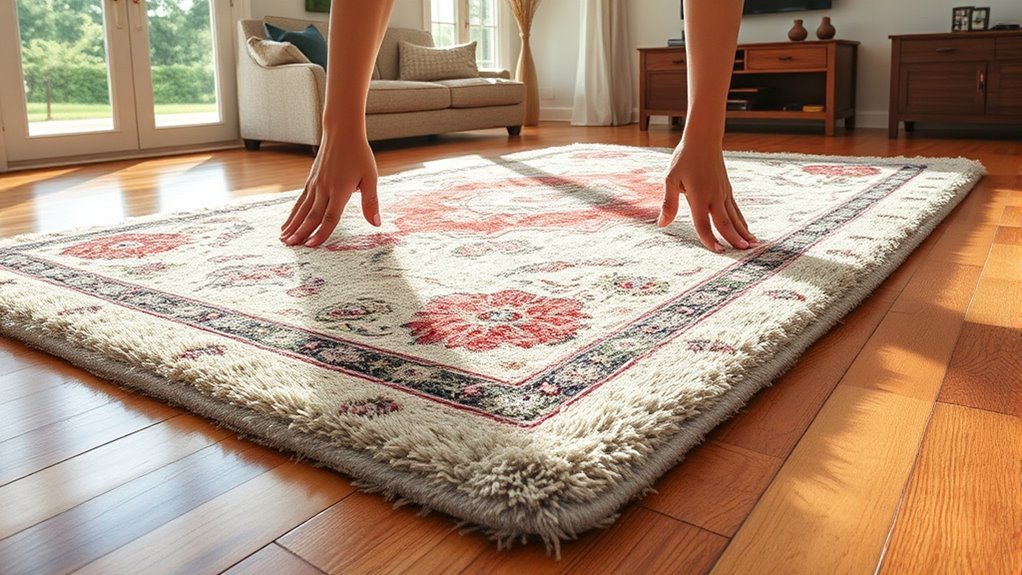
Rugs are one of the easiest ways to create “rooms within a room.” A rug under the sofa and chairs tells the eye, “This is the living zone.” A second rug under the dining table or office chair can signal a separate function.
- Choose a rug large enough for at least the front legs of the sofa and chairs to sit on it.
- Use a flatweave or low-pile rug under dining chairs so chairs slide easily.
- Try a round rug under a reading nook or small breakfast table.
- Layer a smaller patterned rug over a large neutral rug for texture.
- Use rug pads to prevent slipping and to make each zone feel more comfortable.
How to Use Rugs to Create Cozy Spaces
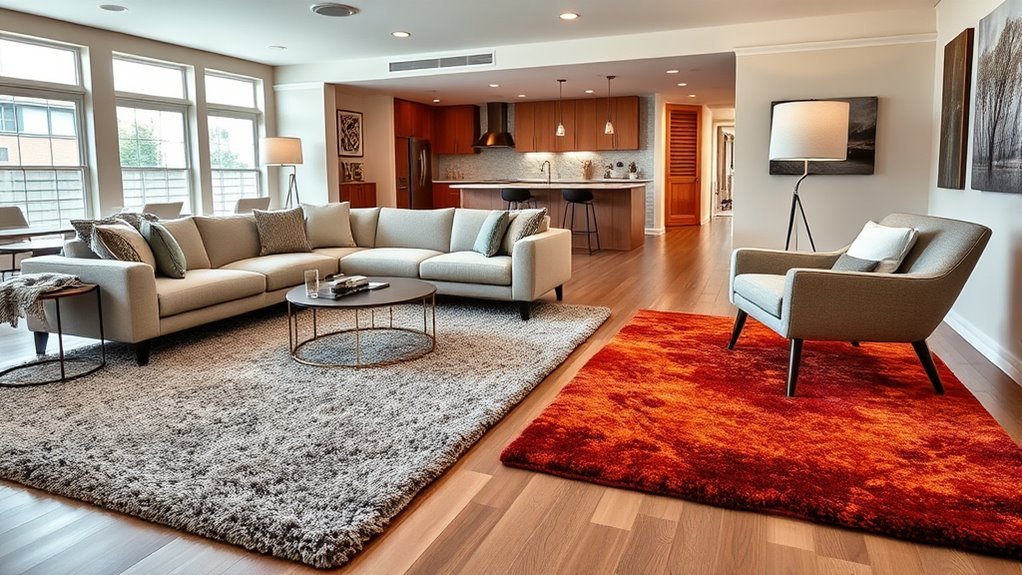
Rugs make open rooms feel warmer because they add softness underfoot, frame furniture groupings, and reduce the amount of bare hard flooring. They also help absorb some sound reflections, especially when paired with curtains, upholstered furniture, pillows, and bookshelves.
For a seating zone, choose a rug that visually holds the whole group together. If the rug is too small, the furniture can look like it is floating around the edges. In a large room, a 9-by-12-foot rug often works better than several tiny rugs. In a smaller space, one large neutral rug can define the living area without making the room feel chopped up.
Pro Tip: Tape the rug size on the floor before buying. This lets you test whether chair legs, sofa legs, and walking paths feel right before you commit.
Recommended Products

Machine Washable & Fade & Stain Resistant: Designed for busy households and pet-friendly homes, this washable 8x10 area rug supports full machine washing. It performs excellently in fade resistance, stain resistance and non-shedding, maintaining its original color, texture and vintage floral look even after repeated deep cleaning.

CLASSIC VINTAGE AESTHETIC BEIGE RUG: The area rug 8x10 features a harmonious blend of beige tones that evoke a timeless vintage charm, making it an ideal addition for any room in your home—from retro bohemian and rustic farmhouse to modern minimalism. Perfect rugs for living room, bedrooms, dining room rugs for under table, entryways, playrooms, or home offices, this 8x10 rug serves as the finishing touch to your interior flooring decor

Trendy Modern Rug: Our area rug is designed in today's popular minimalist style, featuring adaptable printed patterns that seamlessly blend into a wide range of interior aesthetics. This neutral rug adds understated elegance with a strong feeling of individuality to your living room, bedroom, dining room, nursery or playroom.
Lighting Strategies for Zone Separation
Lighting helps each zone work at the right time of day. Instead of relying on one ceiling fixture, layer ambient, task, and accent lighting. The U.S. Department of Energy recommends matching the amount and quality of light to the function being performed and using task lights where needed.
- Ambient lighting: ceiling fixtures, recessed lights, or floor lamps that provide general brightness.
- Task lighting: desk lamps, reading lamps, under-cabinet lighting, or pendants over a dining table.
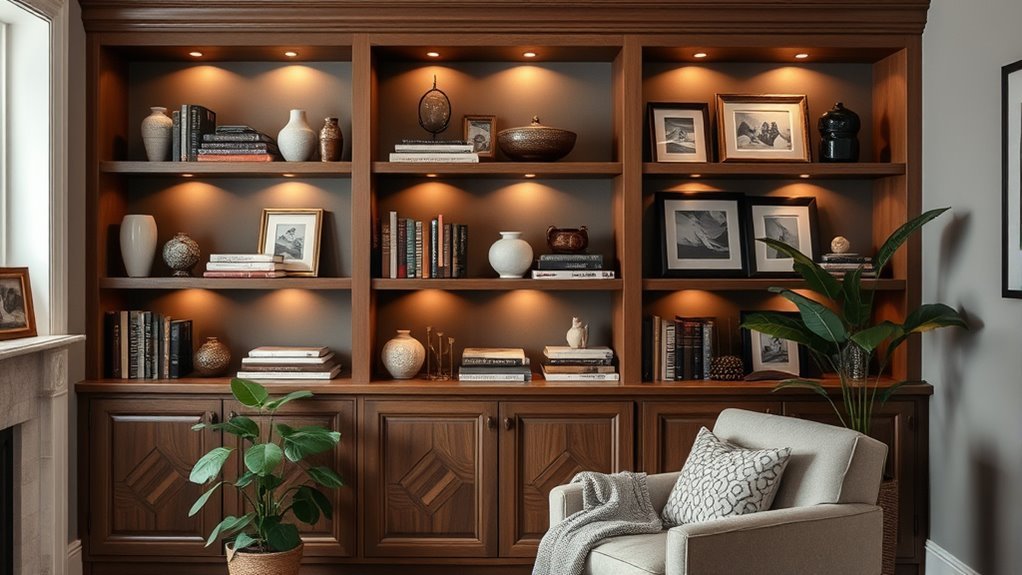
- Accent lighting: picture lights, shelf lighting, sconces, or small lamps that highlight art and architecture.
- Dimmers: useful for shifting the living zone from daytime activity to evening relaxation.
- LEDs: energy-efficient bulbs work well for layered lighting and are available in many tones and dimmable options.
Use a pendant or chandelier to center the dining zone, a floor lamp to mark a reading chair, and table lamps to soften the seating area. In a work zone, place the desk so daylight comes from the side instead of directly behind or in front of a screen.
Recommended Products

Magnetic Remote & Foot Switch: Enjoy dual control convenience. The magnetic remote attaches securely to the pole to prevent misplacement, while the foot switch allows for easy on/off control without bending down

3 Color Temperature Bulb Included: Dimension of this floor lamp is 60” height, diameter and height of lampshade is 10.04” and 7.87”, diameter of base is 8.66”. Includes a 9W LED bulb which has 3 different color adjustable temperature setting: 3000K/5000K/4000K. You can easily change the color temperature to set the overall ambiance of the room.

Elegant Layered Wooden Lampshade Design - The O’Bright Strata Floor Lamp features a beautifully crafted multi-tier wooden lampshade that creates a striking architectural silhouette. Available in two shade designs and light or dark oak finishes, the layered wood brings natural warmth and mid-century modern style to living rooms, bedrooms, reading corners, and offices.
How Natural Light Affects Open Concept Zones
Natural light can make an open room feel larger, but it should be managed carefully. The Department of Energy defines daylighting as using windows and skylights to bring sunlight into the home, and it notes that window direction affects glare, heat gain, and light quality.
Use brighter daylight areas for dining, plants, reading, or casual seating. Keep TV zones and computer workstations away from harsh glare when possible. Sheer curtains, woven shades, and adjustable blinds can soften the light without making the room feel closed off.
Best Color Schemes for Zoning Your Open Concept Living Room
Color can separate zones without making the room feel disconnected. The safest approach is to use one whole-room palette, then vary the intensity from zone to zone.
Complementary Color Combinations
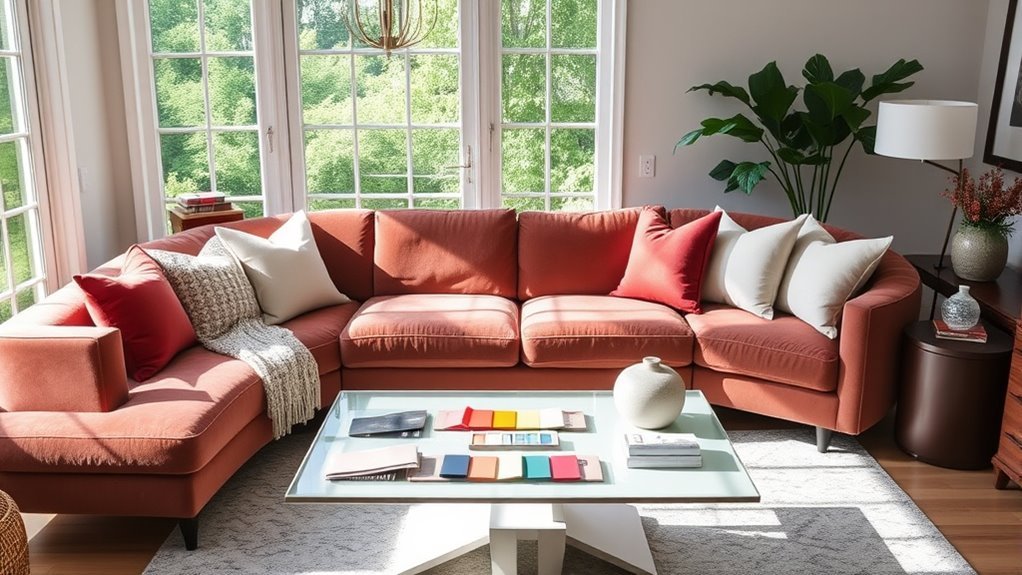
Choose one main neutral or base color for the entire open space. Then add two or three supporting colors through rugs, pillows, art, curtains, and dining chairs. For example:
- Warm neutral base: cream walls, oak wood, camel leather, and black accents.
- Soft coastal palette: white, sand, pale blue, woven textures, and warm brass.
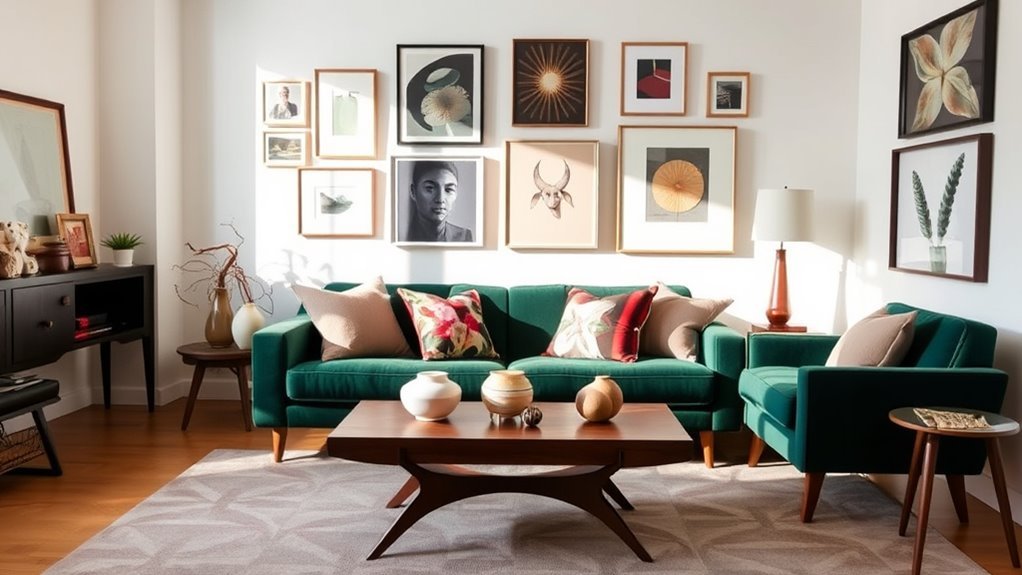
- Modern contrast: soft gray, charcoal, walnut, ivory, and muted green.
- Earthy palette: beige, olive, rust, warm wood, and linen.
Use the strongest accent color in the zone where you want energy, such as the dining area or reading corner. Use quieter colors in the lounge zone if you want it to feel restful.
Accent Colors Usage
Accent colors work best when they repeat at least twice across the room. A blue dining chair can connect to blue pillows in the sofa zone. A black pendant can connect to black frames, cabinet pulls, or table legs.
| Zone | Suggested Accent Colors | Best Use |
|---|---|---|
| Living Area | Warm neutrals, olive, soft blue | Creates a relaxed gathering zone |
| Dining Space | Terracotta, navy, deep green, black | Adds definition and energy |
| Reading Nook | Sage, cream, dusty rose, caramel | Makes a small corner feel cozy |
| Work Zone | Charcoal, walnut, soft white, muted blue | Supports focus without visual noise |
| Connecting Area | Soft gray, beige, white, natural wood | Keeps transitions calm |
Using Curtains and Shelves as Effective Room Dividers
Open concept rooms do not always need built walls. Flexible dividers can create privacy, storage, and visual rhythm while preserving light and air.
- Curtains: ceiling-mounted curtains can hide a desk, soften a sleeping nook, or create occasional privacy.
- Open shelves: freestanding shelves divide space while still letting light pass through.
- Console tables: a narrow console behind a sofa creates a boundary without blocking the view.
- Folding screens: useful for renters or temporary work-from-home setups.
- Plants: tall plants or grouped planters create a soft natural divider.
- Glass or slatted partitions: more permanent options that define areas without making the room feel boxed in.
If you use shelving as a divider, keep it balanced. Too many small objects can look cluttered from both sides. Mix books, baskets, ceramics, plants, and negative space so the divider feels intentional.
Recommended Products

Modern Open Design: Featuring clean lines and vertical metal bars, this room divider maintains an open, breathable feel while adding modern elegance to your interior. It visually defines areas without blocking natural light or airflow

Ample Storage: Measuring 47.2" W x 11.8" D x 70.9" H, this room divider wall features open shelves for books, plants, framed pictures, or daily essentials. This blend of storage and display functionality keeps your home tidy and stylish

Modern Open Design: Featuring clean lines and vertical metal bars, this room divider maintains an open, breathable feel while adding modern elegance to your interior. It visually defines areas without blocking natural light or airflow
Architectural Features That Enhance Zone Definition
If your room already has beams, columns, soffits, ceiling changes, arches, or flooring transitions, use them as natural zoning cues. A beam can mark the edge of a dining area. A change from wood to tile can separate kitchen from living space. Built-in shelves can frame a reading corner or media wall.
For remodels, consider half walls, pony walls, cased openings, slatted wood screens, or built-in banquettes. These features add structure while still keeping the benefits of an open layout.
Small-Space Zoning Tips
Small open concept rooms need fewer, stronger moves. Too many rugs, lamps, and dividers can make the space feel smaller.
- Choose one larger rug instead of several small rugs.
- Use a loveseat or apartment-size sofa instead of an oversized sectional.
- Try a round dining table to improve flow.
- Use wall-mounted shelves or sconces to free floor space.
- Choose storage ottomans, benches, nesting tables, and slim consoles.
- Keep colors lighter and repeat the same flooring when possible.
Renter-Friendly Ways to Zone an Open Living Room
You can create strong zones without drilling, rewiring, or remodeling. Use freestanding bookcases, plug-in sconces, floor lamps, tension rods, curtains, washable rugs, folding screens, and peel-and-stick floor decals. A console table, storage bench, or tall plant can create a boundary without changing the room permanently.
For a temporary office zone, place a compact desk behind the sofa and add a lamp, tray, and lidded basket for work supplies. At the end of the day, the basket hides the visual clutter and the sofa keeps the desk from taking over the living area.
Tips for Maintaining Flow and Cohion in Your Design
A zoned open concept room should still feel like one home. The easiest way to maintain flow is to repeat a few design choices in every zone.
Consistent Color Palette
Use a consistent palette across walls, rugs, furniture, and accessories. You can vary the mood in each area, but keep at least one repeated element: the same white trim, the same metal finish, the same wood tone, or the same accent color.
- Use one wall color or related tones throughout the open space.
- Repeat accent colors in at least two zones.
- Coordinate metals, such as all black, brass, chrome, or bronze.
- Use similar wood undertones so furniture does not feel mismatched.
- Connect zones with repeated textures like linen, boucle, rattan, leather, or wool.
Thoughtful Furniture Arrangement
Good zoning should make movement easier, not harder. Walk through the room as you normally would with groceries, a laundry basket, or a drink in hand. If a chair corner, table leg, or rug edge keeps getting in the way, the layout needs adjusting.
Keep sightlines open where connection matters, such as between the kitchen and living area. Use taller dividers only where privacy matters, such as around a desk or reading nook.
Common Open Concept Zoning Mistakes
- Using rugs that are too small: tiny rugs make zones feel accidental instead of anchored.
- Blocking traffic paths: a beautiful layout will not work if people cannot move through it easily.
- Choosing too many accent colors: open rooms need restraint because every zone is visible at once.
- Relying on overhead lighting only: one ceiling fixture flattens the room and makes zones less useful.
- Adding too many dividers: the room can start to feel like a maze.
- Forgetting sound: large hard surfaces can make open rooms echo, so add textiles and soft furniture.
Troubleshooting Your Layout
If the room still feels chaotic, remove one function or one visual divider. If it feels empty, pull furniture away from the walls and add a larger rug. If it feels dark, add lamps at different heights and consider lighter wall colors, as the Department of Energy notes that light-colored wall surfaces can reduce the need for artificial lighting.
If the space feels loud, add a rug pad, curtains, upholstered chairs, fabric shades, and bookshelves. These can reduce echo, but they will not fully block noise from another room. For true sound isolation, you usually need construction changes such as sealed doors, insulation, or acoustic assemblies.
A well-zoned open concept living room should feel like several useful areas working together, not several rooms competing for attention.
Frequently Asked Questions
How can I make my zones feel more inviting?
Use soft textiles, layered lighting, comfortable seating, and personal details. A lamp, throw blanket, side table, plant, and a few meaningful accessories can make a zone feel finished without adding clutter.
What size area rugs work best for zoning?
For a seating zone, choose a rug large enough for at least the front legs of the sofa and chairs to rest on it. In larger rooms, a 9-by-12-foot rug often works better than an 8-by-10-foot rug. For dining areas, the rug should extend far enough beyond the table so chairs remain on the rug when pulled out.
Can I use plants as dividers for my zones?
Yes. Tall plants, plant stands, and grouped planters can create a soft visual boundary between zones. They work especially well between a seating area and a dining area, near a reading nook, or beside a compact desk.
How do I choose lighting for different zones?
Match the light to the activity. Use pendants or chandeliers over dining areas, floor lamps near reading chairs, desk lamps in work zones, and softer table lamps in the lounge area. Choose dimmable LED bulbs when possible so the room can shift from bright daytime use to relaxed evening use.
What furniture styles work best in an open concept?
The style matters less than scale and consistency. Mid-century, Scandinavian, modern farmhouse, industrial, and transitional furniture can all work if the pieces share related colors, finishes, and proportions. Avoid mixing too many bulky silhouettes in one open room.
How do I zone an open concept living room without making it feel smaller?
Use low or transparent dividers, such as consoles, open shelves, plants, rugs, and lighting. Keep the main sightlines open, repeat colors across the room, and avoid tall solid dividers unless you truly need privacy.
What is the easiest way to start zoning today?
Start by moving the sofa or chairs into a tighter conversation group and placing a rug under that group. Then add one lamp to the zone and clear the main walking path. This creates an immediate sense of order without buying much.
Conclusion
Zoning an open concept living room is about creating purpose without losing openness. Start with the activities your room needs to support, then use rugs, furniture placement, lighting, color, dividers, and clear walkways to shape each area. When every zone has a job and every zone shares a few design details, the whole room feels more comfortable, connected, and easy to live in.
Sources
- U.S. Access Board — ADA Chapter 4: Accessible Routes — supports clear-width guidance for accessible walking surfaces.
- U.S. Department of Energy — Lighting Design — supports task lighting, daylighting, lighting quality, controls, and efficient indoor lighting principles.
- U.S. Department of Energy — Daylighting — supports natural light, window direction, glare, and daylight planning guidance.
- U.S. Department of Energy — Lighting Choices to Save You Money — supports LED efficiency and household lighting energy context.
- ENERGY STAR — Learn About LED Lighting — supports LED performance, heat management, and efficiency differences.
- Kumar, Aow, and Lee — Investigation of Lightweight Acoustic Curtains — supports the acoustic role of curtain fabrics in reducing certain sound transmission and improving acoustic comfort.