
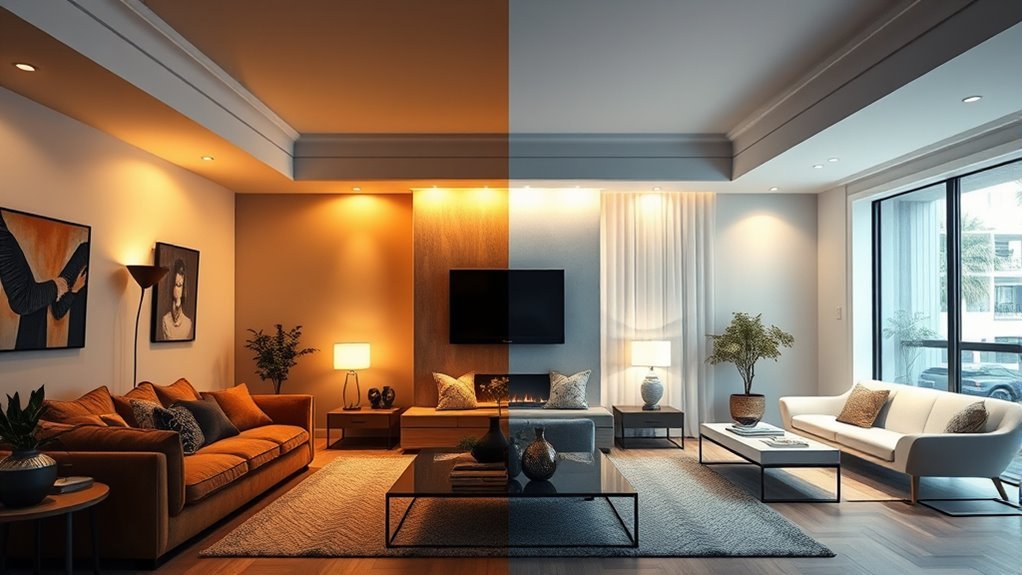
Choosing between warm white and cool white bulbs for a living room comes down to how you use the space. Most living rooms feel best with warm white light because it creates a softer, more relaxed atmosphere for conversation, TV, and evening use. Cool white can still help in a reading nook, hobby table, or home-office corner, but it usually works better as targeted task lighting than as the main room glow.
Last updated: August 19, 2026
Quick Answer
For most living rooms, choose warm white bulbs around 2700K to 3000K. Use 2700K for a softer, cozier evening look or 3000K for a slightly cleaner warm light in a multipurpose room. A 4000K cool white bulb can work in a focused task area, such as a desk or craft station, but it is rarely the best default for the whole living room.
Key Takeaways
- 2700K warm white is a good choice for a cozy living room used mainly in the evening.
- 3000K warm white stays warm but looks somewhat cleaner, making it a strong multipurpose choice.
- 4000K cool white can help define a desk, craft, or other task zone, but it may feel stark as the only room lighting.
- Choose brightness by lumens, not watts, and check CRI separately from Kelvin when color quality matters.
- Avoid mixing very warm and very cool bulbs in the same fixture or matching pair of lamps unless each lighting zone has a clear purpose.
At a Glance
| Best Default | 2700K–3000K warm white |
| Coziest Choice | 2700K for evening ambience, conversation, and TV areas |
| Multipurpose Choice | 3000K for a warm look with slightly crisper visual clarity |
| Task Corner | 3500K–4000K in a localized reading, desk, craft, or work light when desired |
| Color Quality | Look for CRI 90+ when accurate-looking artwork, textiles, wood, and skin tones matter |
Understanding Warm White vs. Cool White Light Bulbs
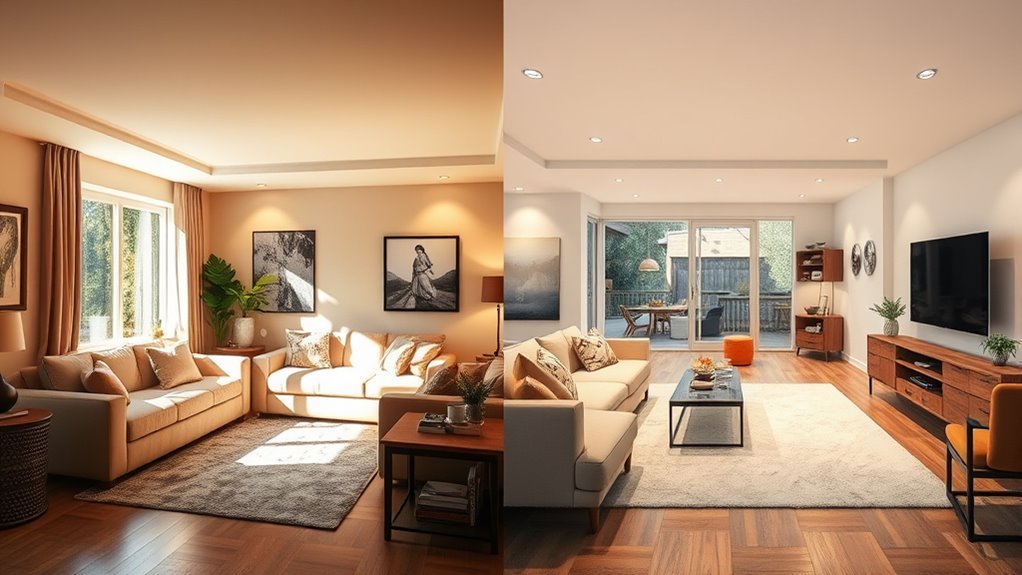
Color temperature tells you how warm or cool a bulb looks when it is turned on. It is measured in Kelvin, shown as “K” on bulb packaging. Lower Kelvin numbers look warmer and more golden. Higher Kelvin numbers look whiter, crisper, or slightly blue.
Bulb names such as “soft white,” “warm white,” “bright white,” “cool white,” and “daylight” can vary between manufacturers. Compare the Kelvin rating rather than relying only on the marketing name.
| Bulb Label | Common Kelvin Range | Best Living Room Use |
|---|---|---|
| Warm white / soft white | 2700K–3000K | Main lamps, ceiling lights, sconces, TV areas, conversation zones |
| Neutral / bright white | Around 3500K | Multipurpose or contemporary spaces that need a more neutral look |
| Cool / bright white | Around 4000K–5000K | Reading lamps, work corners, hobby tables, and other localized task lighting |
| Daylight | Around 5000K–6500K | Usually too cool for a cozy living-room default; more common in utility or precision task areas |
The key is not choosing the “brightest” color. Brightness and color temperature are different. ENERGY STAR explains that brightness is measured in lumens, not watts, while Kelvin describes the color appearance of the light.
Benefits of Warm White Lighting in Living Rooms
Warm white lighting is usually the safest choice for a living room because it creates a softer, more relaxed atmosphere. It works especially well with wood furniture, warm paint colors, natural fabrics, brass finishes, beige upholstery, traditional decor, and layered textures.
- It feels comfortable in the evening. Warm white is less crisp-looking than cool white and is well suited to a room used for relaxing after dark.
- It complements warm finishes. Wood, beige, cream, brass, and other warm-toned materials often pair naturally with 2700K–3000K light.
- Color quality can still matter. Kelvin controls the warm or cool appearance of the light, while color rendering affects how faithfully colors appear. The U.S. Department of Energy describes CRI 90 or higher as excellent color fidelity.
- It supports layered lighting. Floor lamps, table lamps, sconces, and dimmable ceiling fixtures can all use the same warm range for a consistent main seating area.
For a living room where you watch TV, host guests, read casually, or unwind at night, warm white bulbs are the most forgiving default.
Note: Warm light does not “create” better sleep on its own. Light level, timing, duration, and spectrum all matter. Bright, blue-rich light at night can interfere more strongly with circadian signals, so warmer, dimmer lighting is generally the more sensible evening setup.
Benefits of Cool White Lighting for Living Spaces
Cool white lighting has a cleaner, crisper appearance. In a living room, it can be useful when the space also functions as a craft zone, homework area, or home office. The trick is to use it with intention rather than filling the entire room with it.
Crisper Task Lighting for Reading and Work
A 3500K–4000K task lamp can look crisper for reading, paperwork, crafts, or desk work, but Kelvin alone does not determine how easy a task is to see. Use enough lumens, position the lamp to reduce shadows, and avoid direct glare from an exposed bulb or bright reflection.
Modern Aesthetic Appeal
Cooler light can suit white walls, black accents, glass, chrome, concrete, or minimalist furniture. However, it can make beige, cream, and warm wood finishes look noticeably different from how they appear under a warmer bulb. Test the light against the actual room finishes before replacing every bulb.
Why Cooler Light Can Feel More Alerting During the Day
Blue-rich light can have an alerting effect during the day. Harvard Health notes that blue wavelengths during daylight can boost attention, reaction times, and mood, while blue light is more disruptive at night. That supports using cooler light selectively in a daytime work zone rather than assuming it is the best evening ambience for the entire living room.
Warning: Avoid using very cool white or daylight bulbs as the only living-room lighting if the room is mainly for relaxing at night. The result can look stark compared with warmer residential lighting.
Which Light Bulbs Should You Choose: Warm vs. Cool?
For most living rooms, choose 2700K warm white LED bulbs if you want a classic cozy glow. Choose 3000K warm white if you want the room to look slightly cleaner while keeping a warm residential feel. A neutral 3500K can suit some contemporary or task-heavy spaces, while 4000K is usually better kept to a specific work or hobby zone rather than used as the default evening ambience.
Recommended Products

Ruboffcs A19 LED light bulbs is an energy-saving 9-watt bulb (equivalent to a 60-watt traditional incandescent bulb). Compared to the traditional 60-watt incandescent bulb, it can save up to 90% of energy. This LED bulb is well-designed and highly efficient, making it an ideal alternative to traditional bulbs.

Energy-Saving Brilliance: The EVELOR A19 LED light bulbs consumes only 13W while delivering the same brightness as a 100W incandescent bulb, achieving up to 90% energy savings. It's the perfect upgrade from outdated, inefficient lighting.
Reminder: Color temperature, measured in Kelvin (K), determines the hue of white light. LOWER Kelvin values produce a WARMER, YELLOWER light, while HIGHER Kelvin values produce a COOLER, Whiter light.
Best Default for a Living Room
The best default is usually 2700K to 3000K. This range provides a warm appearance for conversation, TV, entertaining, and general evening use without forcing you into an extremely amber look.
Is 2700K or 3000K Better for a Living Room?
Choose 2700K if the room is mainly for relaxing at night or if you prefer a softer, more traditional glow. Choose 3000K if the living room is multipurpose, has lighter or more contemporary finishes, or you want warm light that looks a little less yellow. Neither temperature is automatically brighter: compare bulbs with similar lumen output when judging the difference.
When Cool White Makes Sense
Cool white makes the most sense when the light has a clear task. Examples include a puzzle table, craft station, piano lamp, or desk tucked into the living room. Keep the cooler bulb localized so it does not compete with the warmer ambient lighting.
When to Choose Tunable White Bulbs
If your living room changes roles throughout the day, tunable white bulbs can provide more flexibility. You can use a cooler setting during work or detailed tasks, then shift to a warmer, dimmer setting in the evening. The U.S. Department of Energy explains that white-tunable LED products can shift from warm to neutral to cool appearances.
How to Test 2700K vs. 3000K Before Replacing Every Bulb
Instead of buying a full set immediately, compare one 2700K bulb with one 3000K bulb in the same fixture. Choose bulbs with similar lumen output and, when possible, similar CRI so you are mainly comparing color temperature rather than brightness or color quality.
- Check the room during daylight and again after dark.
- Look at wall paint, flooring, wood, upholstery, artwork, and people’s faces.
- Sit in your normal TV position and check for distracting glare.
- Read a page or complete your usual task under each bulb.
- Choose the temperature that works best in the room itself, then match the visible bulbs in that lighting zone.
How to Effectively Mix Warm and Cool White Lights in Your Home
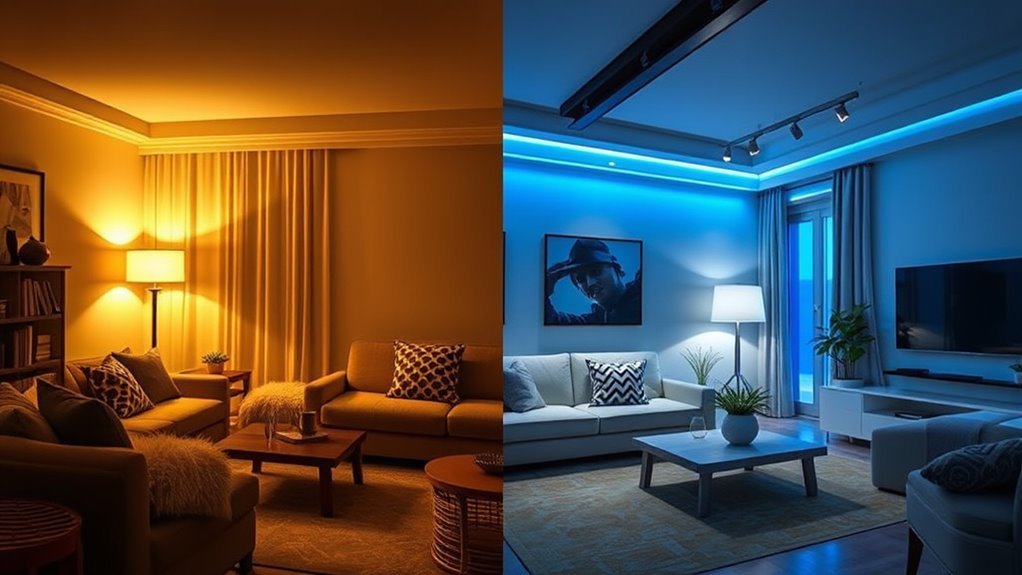
You can mix warm and cool white lighting, but it should look intentional. The easiest rule is this: use warm white for the main ambience and reserve cooler light for a clearly separated task zone when you actually need it.
| Light Type | Ideal Use |
|---|---|
| Warm White | Ambient lighting, lamps, sconces, ceiling fixtures, TV areas |
| Cool White | Task areas, desk lamps, work corners, craft lighting |
| LED | Energy-efficient bulbs, dimmable options, smart or tunable lighting |
Do not put a 2700K bulb and a 5000K bulb side by side in the same chandelier, ceiling fan, or pair of matching lamps. The contrast can look accidental. Instead, separate the color temperatures by zone. A warm floor lamp beside the sofa and a cooler adjustable desk lamp across the room can work because each one has a clear purpose.
Pro Tip: If you are unsure, choose the same Kelvin rating for every visible bulb in the main seating area. Then add a separate task lamp only where you need more focused light.
Recommended Products

Elegant Arched Hang Profile for Living Rooms: Architecturally crafted with a sweeping 65-inch tall curved metal neck that gracefully reaches over large sectionals, section sofas, or armchairs. It directs glare-free overhead illumination straight to your reading or sitting zone without taking up valuable side-table space.

【6000LM SUPER BRIGHT LED FLOOR LAMP】 Honeywell office floor lamp features an ultra-wide lighting panel (24*11.3 inches), delivering bright and even 6,000 lumens of illumination that covers up to 113 square feet. The top light source (3,048LM) provides ambient fill lighting, while the bottom light source (2,952LM) is specifically designed for task lighting. This creates an ideal bright yet comfortable lighting environment for various spaces such as studies, offices, living rooms, piano rooms, and bedrooms

White Modern Floor Lamp: This floor light fits in any room from industrial to modern or traditional décor. Its simple and elegant design can make it easy to place in any room of the house.
How Many Lumens Should a Living Room Bulb Have?
Kelvin controls the color appearance of light, while lumens measure light output. A bulb can therefore be warm and bright, warm and dim, cool and bright, or cool and dim.
There is no single whole-room lumen number that works for every living room. Room size, ceiling height, daylight, wall and floor colors, fixture design, lampshades, and the activities you do in the room all affect how much light feels comfortable.
ENERGY STAR lists common incandescent replacement levels of about 450 lumens for a traditional 40-watt bulb, 800 lumens for a traditional 60-watt bulb, 1,100 lumens for a traditional 75-watt bulb, and 1,600 lumens for a traditional 100-watt bulb. Use these as per-bulb reference points rather than as total-room requirements.
- 450 lumens: a useful reference for lower-output lamps and accent lighting.
- 800 lumens: the common reference point for replacing a traditional 60-watt bulb.
- 1,100 lumens: a brighter 75-watt-equivalent reference point.
- 1,600 lumens: a high-output 100-watt-equivalent reference point.
If the room feels dim, add or reposition light sources before assuming you need a colder color temperature. Better placement and more usable lumens can solve a brightness problem without changing the room’s warm appearance.
Look for Dimmable LEDs and Good Color Quality
LED bulbs are usually the most practical choice for living rooms because they are efficient and available across many color temperatures. The U.S. Department of Energy says LEDs can use up to 90% less energy and last up to 25 times longer than traditional incandescent bulbs.
Before buying, check these details on the bulb or package:
- Kelvin: usually 2700K–3000K for the main living-room mood.
- Lumens: the bulb’s light output.
- CRI: consider CRI 90+ when accurate color appearance is important.
- Dimmable rating: use a dimmable LED when the lamp or circuit is connected to a compatible dimmer.
- Fixture compatibility: match the base and shape, stay within the fixture’s rated wattage, and check that the LED is approved for an enclosed fixture if that is where it will be installed.
DOE advises checking the packaging or technical specifications before using an LED lamp in a fully enclosed fixture, because trapped heat can affect some LED products.
Color quality deserves separate attention from color temperature. DOE notes that a CRI of 90 or higher indicates excellent color fidelity. CRI is not a perfect measure of every aspect of LED color quality, but it is a useful package-level comparison when you care about artwork, wood, patterned textiles, paint, or skin tones.
Recommended Products

【Classic Vintage Design & Wide Application】Designed based on Thomas Edison's original filament bulb, the vintage retro style making this led bulb also a beautiful decorative lights. Those led bulbs are suitable with chandeliers, ceiling fans, pendant lighting, sconces, lamp post, lanterns or any home lighting fixture with an E26 medium standard base socket. Widely used in bedroom,living room,dinning room, bathroom, laundry room, porch or entryway.

Replacement Soft White Bulbs: Make your home more energy efficient with our soft white LED light bulbs; Relax HD Light Bulbs offer a warm, soft white light that is perfect for comfortable moments and cozy spaces
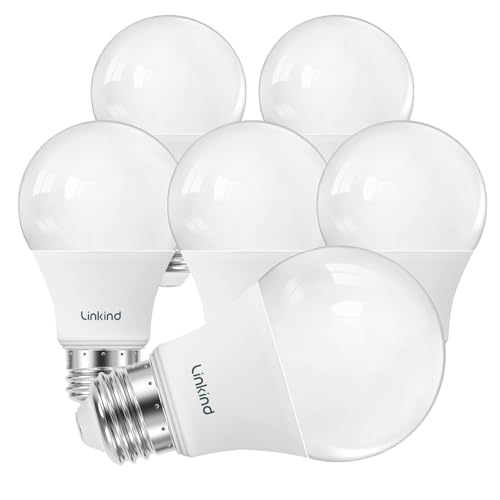
✔ 2700K WARM YELLOWISH LIGHT: The A19 dimmable LED light bulbs give off 800 lumens of 2700k cozy color light. Easy installation with the standard medium screw base E26. NOTE: Please confirm the Kelvin (K) value. This is the most accurate way to select your desired light color. This bulb is 2700K light, which produces a WARM YELLOWISH light. It is not a Bright White or Daylight White bulb. If you prefer a whiter light, please consider our 4000k Cool White or 5000K Daylight options.
How to Create the Perfect Ambiance in Your Living Room
To create a living room that feels comfortable at different times of day, layer the lighting instead of relying on one overhead fixture. A useful mix includes ambient light for the room, task light for reading or work, and accent light for shelves, art, plants, or architectural details.
- Start with warm ambient light. Use 2700K–3000K bulbs in ceiling fixtures, sconces, and main lamps.
- Add task lighting where needed. Use a well-positioned lamp near a desk, craft area, or task-heavy reading spot.
- Use dimmers when compatible. Dimming helps the same room move between cleaning, hosting, movie nights, and quiet evenings.
- Reduce glare. Use lampshades, frosted bulbs, indirect light, or fixtures that shield bright LEDs from direct view.
- Keep visible fixtures consistent. Matching Kelvin ratings within the same fixture group or main seating zone makes the lighting look intentional.
If your living room feels dull, do not automatically switch to cool white bulbs. First compare lumen output, add another light source, try a lighter lampshade, or place a lamp in a dark corner. Often, the problem is the amount or placement of light rather than its Kelvin rating.
Frequently Asked Questions
Is cool white good for a living room?
Cool white can work in a living room when it serves a specific task, such as desk work, crafts, or another detail-oriented activity. For the main evening ambience, 2700K–3000K warm white is usually the safer choice.
Should I use warm white or cool white bulbs?
Use warm white bulbs for the main living-room lighting. Choose 2700K for a softer, cozier appearance or 3000K for a slightly cleaner warm look. Keep cooler light for a separate task zone when you prefer extra visual crispness there.
Is 2700K or 3000K better for a living room?
Choose 2700K for a softer, more traditional evening glow and 3000K for a warm but somewhat cleaner look. For a multipurpose living room, 3000K is often easier to use throughout the day, while 2700K is especially suited to cozy evening ambience.
What color LED light is best for a living room?
The best LED color for most living rooms is warm white, usually 2700K to 3000K. It provides a comfortable residential appearance while still working well for conversation, TV, entertaining, and everyday use.
Is warm white or soft white better for living rooms?
Warm white and soft white labels can overlap or vary between brands. For a living room, check the Kelvin rating instead: roughly 2700K gives a softer, warmer appearance, while 3000K looks slightly cleaner but remains warm.
Can I mix warm white and cool white bulbs in the same room?
Yes, but separate them by purpose. Keep the main ambience at one consistent warm temperature and use a cooler bulb only in a clearly defined task zone if needed. Avoid putting noticeably different Kelvin ratings in the same chandelier, ceiling fan, or matching pair of lamps.
Are daylight bulbs too bright for a living room?
Daylight bulbs are not automatically brighter because brightness is measured in lumens, not Kelvin. However, their higher color temperature can look colder and more intense than warm residential lighting, so they are rarely the first choice for a relaxing living room.
What CRI is best for living-room lighting?
CRI 90 or higher is a useful target when you want artwork, textiles, wood, paint, and skin tones to appear with good color fidelity. Kelvin and CRI measure different things, so check both when choosing a bulb.
Conclusion
For most living rooms, warm white bulbs are a better default than cool white bulbs. Choose 2700K for a softer evening glow or 3000K for a warm, versatile look. Use 3500K–4000K selectively when a desk or task area benefits from a crisper appearance. Then choose the brightness separately by lumens, look for CRI 90+ when color fidelity matters, and use dimmable or tunable LEDs when you want the room to change with the time of day.
Sources
- U.S. Department of Energy — Lighting Choices to Save You Money — LED efficiency and lifespan guidance.
- ENERGY STAR — Learn About Brightness — lumens, wattage equivalents, and brightness-shopping guidance.
- U.S. Department of Energy — LED Basics — color rendering, CRI, and LED light-quality guidance.
- U.S. Department of Energy — Understanding LED Color-Tunable Products — warm-to-cool white tuning and lighting controls.
- U.S. Department of Energy — Purchasing Energy-Efficient Light Bulbs — enclosed-fixture compatibility guidance.
- Harvard Health Publishing — Blue Light Has a Dark Side — daylight alerting effects and nighttime blue-light considerations.
- CDC/NIOSH — The Color of the Light Affects Circadian Rhythms — blue light and circadian-response guidance.




[…] Warm White vs. Cool White Bulbs Explained for Living Rooms […]