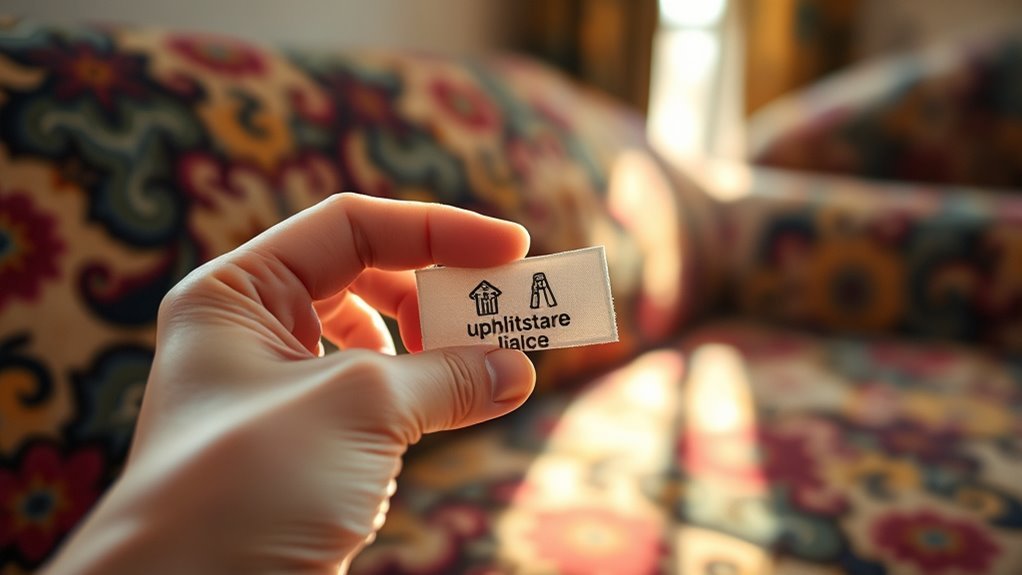
Upholstery cleaning codes tell you which type of cleaner a furniture fabric can tolerate. “W” allows water-based upholstery cleaners, “S” calls for water-free solvent cleaners, “WS” or “SW” allows either method, and “X” means vacuuming or light brushing only. Find the care tag under cushions, along seams, on the frame, or near the base before you treat a stain. Always follow the furniture maker’s exact instructions and test any permitted cleaner in a hidden area first.
Last updated: August 19, 2026
What’s in This Article
- How to Properly Clean Upholstery: Understanding Cleaning Codes
- Why Upholstery Cleaning Codes Matter for Your Furniture
- Get to Know Upholstery Cleaning Codes
- How to Find Upholstery Cleaning Codes on Your Furniture
- Steps to Take If Cleaning Codes Are Missing
- What You’ll Need Before Cleaning Upholstery
- How to Clean Upholstery by Code
- Top Tips for Upholstery Maintenance Between Cleanings
- Avoid These Common Upholstery Cleaning Mistakes
- When to Call a Professional Upholstery Cleaner?
- Choosing Upholstery That Suits Your Lifestyle Needs
- Frequently Asked Questions
- Conclusion
Quick Answer
“W” means water-based upholstery cleaner, “S” means water-free solvent cleaner, “WS” or “SW” means either type may be used, and “X” means vacuuming or light brushing only. These codes guide spot cleaning; they do not automatically mean a removable cover is machine washable. Follow the manufacturer’s full care instructions and test any permitted cleaner in a hidden spot first.
Upholstery Cleaning Codes at a Glance
| Code | What it allows | What to avoid |
|---|---|---|
| W | Water-based upholstery shampoo or foam cleaner | Water-free solvents; over-wetting; assuming the cover is machine washable |
| S | Water-free upholstery or dry-cleaning solvent | Water, steam, and water-based cleaners |
| WS / SW | Water-based or water-free solvent cleaning | Skipping a spot test; over-saturating the fabric |
| X | Vacuuming or light brushing | Water, solvent, foam, steam, or other liquid cleaners |
Key Takeaways
- Check the furniture tag before you use water, soap, or solvent on upholstery.
- Use water-based upholstery cleaners only when the label permits them, such as “W” or “WS/SW.”
- Use water-free solvent cleaners only when the label permits them, such as “S” or “WS/SW.”
- For “X,” use only vacuuming or light brushing at home; ask a professional about stains or deeper cleaning.
- Blot spills right away instead of rubbing them into the fabric.
How to Properly Clean Upholstery: Understanding Cleaning Codes
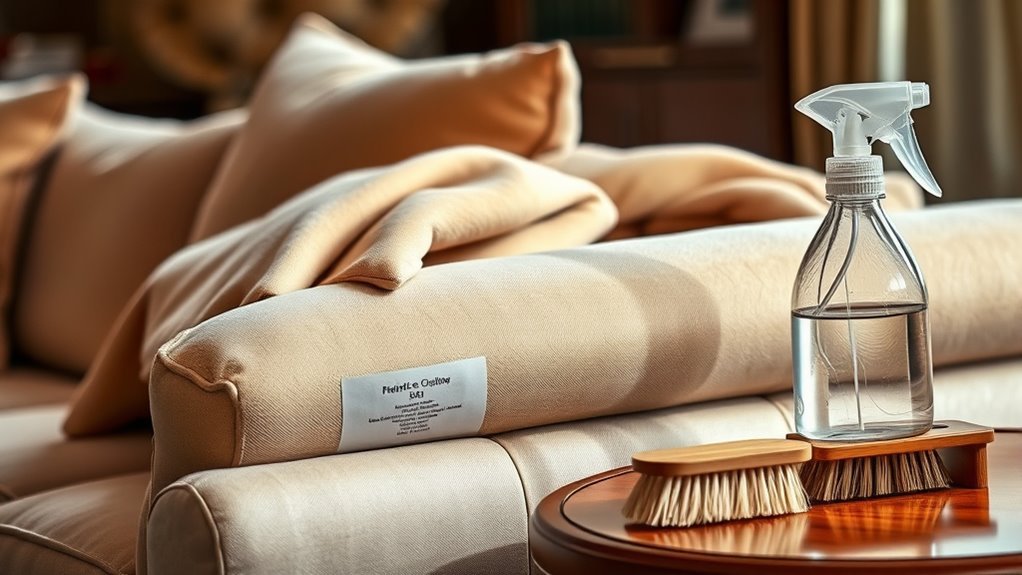
Upholstery cleaning codes help you choose a cleaning agent that matches the fabric maker’s care guidance. Current fabric and furniture guides from Sailrite and American Leather use the same core W, S, WS/SW, and X framework.
If you see “W,” use a water-based upholstery cleaner. An “S” means you should use a water-free solvent cleaner and avoid water. If the code reads “WS” or “SW,” either category may be permitted, but you should still pre-test the product. An “X” means no liquid cleaner: use vacuuming or light brushing for routine home care.
Warning: Never soak upholstery, even when the tag allows water-based cleaning.
Important: A “W” or “WS” code does not automatically mean a removable cushion cover can go in a washing machine. Machine washing can affect backing, stitching, fit, or finish unless the manufacturer specifically allows it.
Why Upholstery Cleaning Codes Matter for Your Furniture
Upholstery cleaning codes protect your furniture from cleaning damage. They also help you build a simple maintenance routine that fits your fabric. When you follow the label, you improve your chance of removing stains without harming the upholstery.
Ensures Proper Cleaning Methods
Cleaning codes point you toward the right method before you start. They show whether you can use water, solvent, both, or vacuuming only. That matters because the wrong cleaner can leave rings, fade color, or change the fabric texture.
For example, water can damage solvent-only fabrics, while a solvent may be inappropriate for a fabric labeled for water-based spot cleaning. Reading the code first keeps the cleaning agent within the maker’s stated care category.
Prevents Fabric Damage
The right cleaning code helps you protect the fabric’s color, texture, and backing. This can extend the life of your sofa, chair, ottoman, or dining seat. Use the code as your first check before trying any spot treatment.
- Use water-based cleaners on fabrics marked “W.”
- Use solvent-based cleaners on fabrics marked “S.”
- Use either water-based or solvent-based cleaners on fabrics marked “WS” or “SW.”
- Use vacuuming only on fabrics marked “X.”
Informs Maintenance Routine
Cleaning codes also guide routine care. You can vacuum, rotate cushions, and spot clean more confidently when you know what the fabric allows. This keeps your furniture looking clean between deeper cleanings.
Use the code before buying sprays, foams, or spot cleaners. A cleaner that works on one sofa may damage another. Your care label gives you the best starting point.
Get to Know Upholstery Cleaning Codes
Most upholstery care tags use a short code to explain safe cleaning options. Here’s what each standard code means:
- W: Use water-based cleaners only.
- S: Use solvent-based cleaners only and avoid water.
- WS or SW: Use water-based or solvent-based cleaners.
- X: Vacuum only and avoid liquid cleaners.
You may also see manufacturer-specific wording such as “Dry Clean Only,” “DRY,” “DryCln,” or “DC.” These labels are not interchangeable with a universal extra letter code, so follow the exact wording on your furniture or fabric specification. If the label requires professional dry cleaning, do not substitute a household cleaner.
How to Find Upholstery Cleaning Codes on Your Furniture
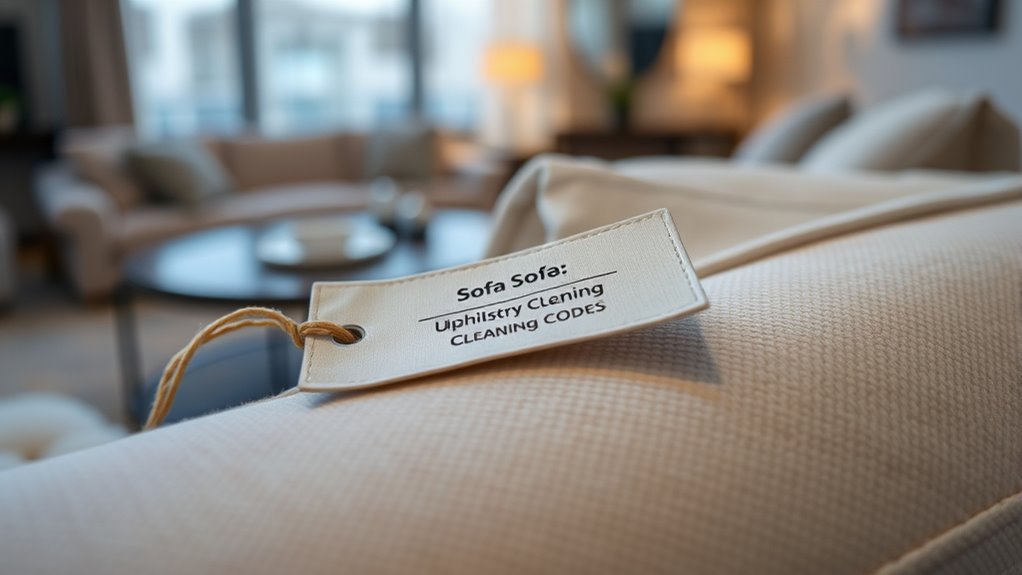
To find upholstery cleaning codes on your furniture, start with the care tag. The tag may sit in a hidden spot, so check the whole piece before you clean. If you can’t find the tag, contact the manufacturer or retailer for care instructions.
Common Tag Locations
Cleaning code tags often appear in places you don’t see during daily use. Check these areas first:
- Under seat cushions: Look on the cushion base, underside, or seam.
- Along frame edges: Check the back, side, bottom, or inner frame.
- Near the sofa base: Look under the dust cover or near the legs.
- Inside paperwork: Review the fabric sample book, receipt, or product guide.
Hidden Label Areas
Some labels hide inside seams, folds, or removable covers. Use a flashlight and check the underside of each cushion. If the furniture has a skirt, lift it and inspect the frame below.
Do not assume the same code applies to every piece in a set. A sofa, accent chair, and ottoman may use different fabrics. Check each item before cleaning.
Contacting Manufacturers For Codes
If your upholstery cleaning code is missing, contact the manufacturer for help. Share the model number, purchase date, and fabric name if you have them. Photos of the furniture and any tags can help customer service identify the fabric.
- Gather details: Note the model, fabric name, retailer, and purchase date.
- Check online resources: Search the brand’s product page or care guide.
- Ask the retailer: Retailers may have fabric care sheets for recent purchases.
Steps to Take If Cleaning Codes Are Missing
Missing cleaning codes call for extra care. Start by inspecting hidden areas again, including cushion undersides, seams, the deck under the cushions, and the frame. If you still can’t find the code, ask the manufacturer or retailer for the exact fabric care instructions.
Do not guess a cleaning code from the fabric’s color, feel, or fiber name alone. Until you identify an approved method, stick to dry routine care such as careful vacuuming and blot fresh liquid with a clean, dry white cloth. For a stain that needs a cleaner, get manufacturer guidance or use a professional upholstery cleaner rather than experimenting on a visible area.
Note: A hidden test is useful only after you know the cleaner is permitted for that code. It can reveal obvious color or texture changes, but it does not override the care label.
What You’ll Need Before Cleaning Upholstery
Gather your supplies before you start. This helps you work slowly and avoid grabbing the wrong product during stain removal.
- Vacuum with an upholstery attachment
- Clean white cloths or microfiber towels
- Small bowl for a permitted water-based cleaner, if the code allows it
- Manufacturer-approved water-based upholstery shampoo or foam cleaner, if the code allows it
- Water-free upholstery or dry-cleaning solvent labeled for the fabric, if the code allows solvent cleaning
- Soft-bristled brush for gentle fabric grooming
- Fan for airflow while the fabric dries
Drying time: It varies with the fabric, cushion construction, room conditions, and how much moisture was used. Keep the area uncovered and do not sit on it until it is fully dry.
Recommended Products

ONE EASY STEP … 3D Extractor Shampoo cleans and deodorizes carpet, upholstery and more with one simple step!

One 64 fl oz refill of OxiClean Large Carpet Cleaner is a carpet cleaner liquid that can be used in any carpet cleaning machine

OUR MOST POWERFUL FORMULA: Best for tough ground-in dirt and stains.
How to Clean Upholstery by Code
Follow the code on your furniture tag before you choose a cleaner. Work from the gentlest method first. Clean one small area at a time so you can control moisture and product use.
- Vacuum the fabric. Remove loose dust, crumbs, pet hair, and grit before applying any cleaner.
- Test the cleaner. Apply a small amount in a hidden area and let it dry fully.
- Blot the stain. Press with a clean white cloth instead of rubbing the fibers.
- Apply the right cleaner. Use a permitted water-based upholstery cleaner for “W,” a water-free solvent cleaner for “S,” and a label-approved option for “WS” or “SW.”
- Use minimal moisture. Lightly dampen the fabric and avoid soaking the cushion or backing.
- Let the fabric dry. Use airflow, keep the area uncovered, and wait before sitting on it.
- Recheck the spot. Repeat gently if needed, or call a professional for stubborn stains.
If you use a solvent cleaner, follow its product label, ventilate the room, and keep it away from flames or other ignition sources. Do not use steam on “S” or “X” upholstery unless the furniture maker explicitly gives different care instructions.
Pro tip: Use white cloths so dye from the cloth cannot transfer onto your upholstery.
Recommended Products

CHEMICAL GUYS LIGHTNING FAST STAIN EXTRACTOR (SPI_191_16) – Professional-strength stain remover formula penetrates deep into carpet, upholstery, and fabric to quickly break down and lift stains, dirt, and odors for a restored, like-new look

StainLift Technology. Lift and remove deep down dirt, stains and odors.

EVERY PURCHASE SAVES PETS. Every purchase makes it possible for BISSELL to continue our support of BISSELL Pet Foundation and its mission of saving pets in need.
Top Tips for Upholstery Maintenance Between Cleanings
Regular care keeps dirt from grinding into the fabric. It also helps your furniture hold its shape and color. Use these habits between deeper cleanings:
Regular maintenance helps your upholstery stay cleaner, brighter, and more comfortable between deep cleanings.
- Vacuum regularly, with more frequent cleaning in high-use homes or where pets and food add debris.
- Rotate and fluff reversible cushions as the manufacturer allows to spread wear more evenly.
- Blot spills right away with a clean, dry cloth.
- Limit direct sunlight to help reduce fading over time.
- Use fabric protectants only when the furniture maker or care tag allows them.
Avoid These Common Upholstery Cleaning Mistakes
Small cleaning mistakes can cause permanent marks. Before you clean, compare your plan with the furniture tag. The table below shows common mistakes and why they matter.
| Mistake | Consequence |
|---|---|
| Ignoring cleaning codes | You may damage the fabric or backing |
| Using water on “S” coded fabrics | Water rings, stains, or texture changes can appear |
| Rubbing or scraping stains | The stain can spread or fibers can fray |
| Over-saturating “W” fabrics | Moisture can reach the cushion and cause odor or mildew |
| Machine washing a “W” or “WS” cover without approval | The cover, backing, stitching, or fit can be damaged |
| Using liquid cleaners on “X” fabrics | The fabric can suffer lasting damage |
Always check your cleaning code before you apply a spray, foam, soap, or solvent. Use less product than you think you need. You can repeat a gentle treatment, but you can’t undo soaked fabric.
When to Call a Professional Upholstery Cleaner?
Some fabrics and stains need professional care. Call a cleaner if your tag shows “S,” “X,” or “Dry Clean Only” and you feel unsure. You should also get help with silk, velvet, antique furniture, strong odors, and large stains.
- Call a professional when the care code limits your cleaning options.
- Get help when stains stay after a gentle spot test.
- Use a trained cleaner for delicate fabrics, old pieces, and valuable furniture.
- Ask about fiber testing if you can’t identify the upholstery material.
Professional help is especially useful when the fabric is unidentified, the care instructions are restrictive, or a stain remains after a permitted spot-cleaning attempt. A trained cleaner can assess the fabric, dye stability, backing, and stain before choosing a method.
Recommended Products

UNDO TOUGH SPOTS AND STAINS THROUGHOUT YOUR HOME: Shark StainStriker is a portable carpet and upholstery cleaner that delivers powerful tough stain elimination. It’s loaded with a lineup of tools that give you maximum cleaning performance on carpets, rugs, stairs, cars, and more.

Certified Gentle & Safe Pet Carpet Cleaner Solution: Chlorine free, color safe, no hazardous propellants or residue; safe to use around pets and children; certified safe for all carpets with a Seal of Approval by the Carpet and Rug Institute (CRI)

AMERICA'S #1 BRAND IN PORTABLE DEEP CLEANING: Trusted by over 7 million households.
Choosing Upholstery That Suits Your Lifestyle Needs
Choose upholstery that fits how you live, not just how the fabric looks in a showroom. For high-traffic areas, compare the fabric maker’s durability information, cleaning code, stain-resistance guidance, and warranty instead of judging durability from fiber name alone.
If you have pets or children, a “W” or “WS/SW” cleaning code can give you more at-home spot-cleaning options than an “S” or “X” code. Also check whether removable covers are actually washable, because the upholstery code by itself does not answer that question.
Balance comfort, care requirements, durability information, and style before you buy. A fabric is easier to live with when its care instructions match the spills, traffic, pets, sunlight, and maintenance routine in your home.
Frequently Asked Questions
How to Clean a Couch With a WS Code?
To clean a couch with a WS code, start by vacuuming the fabric and choosing a cleaner permitted by the manufacturer. Test that product in a hidden spot, then blot gently with either a water-based upholstery cleaner or a water-free solvent cleaner as allowed. Avoid soaking the fabric.
What Does the W Mean on an Upholstery Furniture Cleaning Code?
The “W” on an upholstery cleaning code means the fabric allows water-based upholstery cleaning products for spot cleaning. Use a product permitted by the furniture or fabric maker, pre-test it in a hidden area, and avoid over-wetting. “W” does not automatically mean the cover is machine washable.
What Does Fabric Code Ws Mean?
Fabric code WS means the upholstery can be spot cleaned with either a water-based cleaner or a water-free solvent cleaner, subject to the manufacturer’s instructions. You do not need to test both. Choose a permitted product, test that product in a hidden area, and use as little moisture or solvent as needed.
What Does Cleaning Code X Mean?
Cleaning code “X” means you should not use water-based or solvent-based cleaners on the upholstery. Use vacuuming or light brushing for routine home care. Ask a professional about stains or deeper cleaning.
Can You Use a Steam Cleaner on Upholstery?
Use a steam cleaner only when the furniture maker specifically allows it. Steam adds moisture and heat, so it is not appropriate for “S” or “X” upholstery under the standard code guidance. Even on “W” or “WS/SW,” follow the maker’s instructions for the full furniture piece, not just the face fabric.
How Often Should You Clean Upholstery?
Vacuum often enough to keep loose soil, crumbs, and pet hair from building up; high-use furniture usually needs more frequent care. Blot fresh spills promptly and use only a cleaning method allowed by the care label. Consider deeper cleaning when routine vacuuming no longer removes visible soil or odors.
Does Code W Mean the Cushion Cover Is Machine Washable?
No. Code “W” means water-based upholstery cleaning products are permitted for spot cleaning; it does not automatically authorize machine washing. Check the furniture maker’s separate laundering instructions before removing or washing any cover.
What If My Couch Has No Cleaning Code?
Check under and around every cushion, along seams, on the deck, and on the underside of the frame. If the code is still missing, contact the manufacturer or retailer with the model and fabric details. Until you have an approved method, avoid liquid cleaners on visible upholstery.
Conclusion
Start every upholstery-cleaning job with the care label: “W” allows water-based products, “S” requires water-free solvent cleaning, “WS/SW” allows either category, and “X” limits home care to vacuuming or light brushing. Then follow the manufacturer’s full instructions, pre-test the permitted product, and avoid over-wetting. If the code is missing, the fabric is delicate, or the stain does not respond safely, stop guessing and use professional help.