Can you use a steam mop on sealed hardwood floors without damaging them? Some steam mop manufacturers allow it, but wood flooring manufacturers often advise against it. Even a sealed surface can have small gaps or worn areas where heat and moisture may cause damage. The right cleaning method depends on your floor’s finish, condition, and manufacturer instructions.
Quick Answer
A steam mop may be used on certain sealed hardwood floors, but only when both the flooring manufacturer and steam mop manufacturer approve it. Sealing alone does not guarantee safety. Steam can enter seams and damage wood or finishes. For routine cleaning, a microfiber mop and manufacturer-approved hardwood cleaner are the safer choice.
Can You Use a Steam Mop on Hardwood?
You can use a steam mop on hardwood only when your specific flooring and cleaning equipment are compatible. Although some steam mop brands approve sealed wood, many flooring manufacturers recommend avoiding steam altogether.
The National Wood Flooring Association (NWFA) advises against wet mops and steam mops because repeated exposure can damage the finish and wood.
However, the advice from steam mop manufacturers differs:
- Shark: Its steam mop guidance allows use on sealed hardwood and recommends testing a hidden area.
- BISSELL: The PowerFresh Deluxe is designed for various sealed hardwood floors, subject to the flooring manufacturer’s instructions.
This difference matters because a steam mop’s compatibility label does not override your flooring warranty.
A sealed surface has a protective coating, often polyurethane or another finish. That coating helps resist everyday spills, but it does not make every seam waterproof.
Steam also cleans with heat rather than added detergent. However, a quick pass does not guarantee sanitization. Proper sanitizing conditions may require longer contact, which can increase moisture exposure.
For everyday hardwood maintenance, avoid treating a steam mop as an automatic replacement for a regular floor mop.
Which Hardwood Floors Are Safe for Steam?
A hardwood floor is a candidate for steam cleaning only when its manufacturer specifically permits it. The finish must also be intact, with no exposed wood, loose boards, or damaged seams.
Even then, approval applies to the particular flooring product and cleaning method, not every sealed wood floor.
Flooring manufacturer approval is more important than a steam mop’s general sealed-floor compatibility claim.
Before deciding, consider these common flooring types:
- Sealed solid hardwood: Steam may be permitted by some manufacturers, but sealing alone is not enough to establish compatibility.
- Engineered hardwood: Check the exact product instructions. Moisture and heat can affect its wood layers, finish, and adhesives.
- Unsealed or unfinished hardwood: Avoid steam because exposed wood can absorb moisture.
- Waxed or oil-finished wood: Avoid steam unless the finish manufacturer explicitly approves it. Heat and moisture can alter the surface.
- Worn or damaged flooring: Do not steam areas with exposed seams, lifting edges, cracks, or a failing finish.
Also, inspect the floor before use. Look for dull patches, lifted edges, loose planks, and gaps that could allow moisture to enter.
Test a hidden area only after confirming manufacturer approval. A successful spot test may reveal an immediate finish reaction, but it cannot rule out hidden moisture damage from repeated cleaning.
In short, an intact sealant, low-moisture setting, hidden-area test, and manufacturer approval are all relevant. None of these precautions alone guarantees safety.
How Steam Mops Damage Hardwood Floors
Steam mops can damage hardwood when heat and moisture reach the wood through seams or weak areas in the finish. Repeated exposure may cause swelling, cupping, dullness, or changes in the surface coating.
Unsealed wood can absorb moisture directly. On a sealed floor, gaps and worn edges are common points of concern.
Engineered hardwood has multiple bonded layers. Excessive heat and moisture may affect those layers or the adhesives holding them together.
| Risk source | Possible result |
|---|---|
| Steam on unsealed wood | Moisture absorption, swelling, or raised grain |
| High temperature | Finish clouding, dullness, or softening |
| Prolonged exposure | Cupping or warping |
| Gaps and cracks | Moisture entering beneath the surface |
| Engineered construction | Possible damage to bonded layers |
Steam damage may also affect your warranty. Shaw’s hardwood care instructions explicitly advise against wet mops and steam mops.
Similarly, Bruce’s hardwood flooring FAQs state that steam mop damage is not covered under its warranty.
Therefore, choosing a low-steam setting does not make a prohibited cleaning method warranty-safe.
Recommended Products

Microfiber Mops for Floor Cleaning: Flat floor mop with adjustable long handle, flexible lightweight but sturdy, great for housewives, the elderly, children or any home with pets
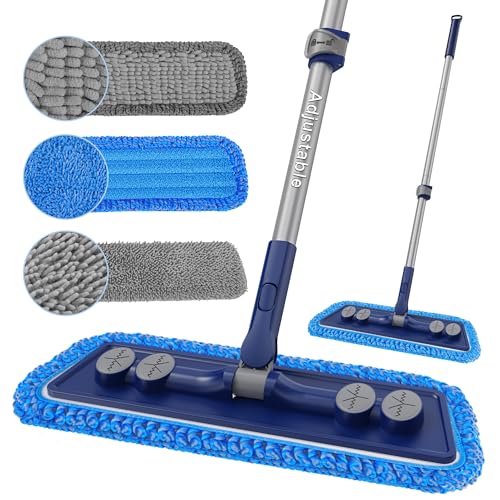
【Adjust the Length You Need】The length of the dust mop can be adjusted from 44" to 55". It's lightweight and suitable for kids, ladies and the elderly. Large 18.5” mop head make cleaning quick and easy, perfect for busy homemakers and pet owners.
How to Steam Mop Hardwood Safely
If both manufacturers explicitly allow steam cleaning, use the least aggressive method described in the equipment instructions. The goal is to remove surface dirt while limiting heat, moisture, and contact time.
Never attempt steam cleaning on unsealed, damaged, or otherwise incompatible flooring.
Warning: Do not use steam on hardwood simply because your mop has a hardwood or low-steam setting. If the flooring manufacturer prohibits steam, choose a different cleaning method.
Step 1: Confirm Both Manufacturers Allow Steam
Read the flooring care instructions and the steam mop manual. Check whether they permit use on your particular finish and floor construction.
If you cannot identify the flooring, ask the installer or a wood flooring professional before proceeding.
Step 2: Sweep or Vacuum the Floor
Remove dust, grit, and loose dirt with a soft broom, microfiber dust mop, or vacuum designed for hard floors.
Turn off the vacuum’s rotating beater brush when required. This prevents loose particles from scratching the finish during cleaning.
Step 3: Inspect the Finish and Test a Hidden Area
Check for cracks, loose boards, exposed wood, and worn edges. Do not steam if you notice these problems.
Test an inconspicuous area using the approved setting. Stop if the finish becomes cloudy, soft, discolored, or otherwise affected.
Step 4: Use the Lowest Approved Steam Setting
Select the lowest steam or moisture setting permitted by the equipment instructions.
Use the recommended cleaning pad and fill the tank with the water specified by the mop manufacturer. Do not add cleaning chemicals or vinegar unless the manual explicitly permits them.
Step 5: Keep the Mop Moving
Move the mop steadily across the surface. Avoid holding it over one board, seam, or stubborn stain.
Do not leave a hot steam mop resting on hardwood while it is operating.
Brief contact helps limit exposure, although it does not eliminate the underlying risk.
Step 6: Remove Moisture and Inspect the Floor
Wipe away any visible moisture immediately with a clean, dry microfiber cloth.
Inspect the cleaned area for haze, raised edges, swelling, or finish changes. Stop using steam if any of these appear.
If damage develops, avoid further wet cleaning and consult a flooring professional.
These steps reduce some risks when steam cleaning is expressly permitted. They do not make steam cleaning appropriate for every hardwood floor.
Best Alternatives to Steam Mopping Hardwood
A microfiber mop with a manufacturer-approved hardwood cleaner is generally a better choice for routine cleaning. It removes dirt without exposing the floor to concentrated steam.
For most sealed hardwood floors, use a cleaner designed for the particular finish. A pH-neutral hardwood cleaner, such as an appropriate Bona product, may be suitable when the flooring manufacturer permits it.
Recommended Products

【WORK ON EASY】With it’s large 18 Inch base can cover a lot of areas in a single scan, clean in high efficiency with less effort. Industrial grade mop, Stainless steel handle which withstands friction and frequent use, the mop head is made of solid aluminum alloy, which is more durable than plastic mop head. Velcro design makes the pad easier to attach and replace.
Dry Microfiber Mopping
A microfiber dust mop works well for everyday dust, hair, and grit.
It needs no added moisture and helps prevent abrasive dirt from scratching the finish.
Slightly Damp Microfiber Mopping
For a deeper clean, use a slightly damp microfiber mop or an approved spray cleaner.
Apply only enough liquid to clean the surface. The mop should not leave puddles or visible standing water.
If the flooring instructions require spray-and-wipe cleaning instead of damp mopping, follow that method.
Spot Cleaning
For food spills, footprints, or small stains, use a soft cloth with a little manufacturer-approved cleaner.
Wipe the area gently and remove any remaining moisture.
Avoid abrasive pads, which can scratch the protective coating.
Avoid Vinegar and Harsh Household Cleaners
Although diluted white vinegar is sometimes recommended for sealed wood, its acidity may harm some finishes over time.
Bruce’s hardwood cleaning guidance advises against homemade vinegar or ammonia solutions.
Also avoid bleach, abrasive cleaners, and oil-based products unless the finish manufacturer specifically approves them.
Professional Cleaning and Finish Maintenance
If the floor has stubborn residue, widespread dullness, or a damaged finish, consider professional care.
A wood flooring specialist can identify the finish and determine whether cleaning, recoating, or repair is appropriate.
Regular dry cleaning, prompt spill removal, and suitable cleaning products help preserve hardwood without unnecessary steam exposure.
Frequently Asked Questions
What Is the Best Way to Clean Sealed Hardwood Floors?
The best routine method is dry dusting followed by cleaning with a manufacturer-approved hardwood cleaner. Use a microfiber mop or an approved spray-and-wipe method. Remove spills promptly, avoid standing water, and follow the instructions for your particular floor finish.
What Flooring Should You Not Use a Steam Mop On?
Avoid steam on unsealed hardwood, waxed wood, damaged flooring, and surfaces whose manufacturers prohibit it. Cork, laminate, luxury vinyl plank (LVP), carpets, and floor mats require product-specific instructions. Some products allow steam under defined conditions, while others do not. Never assume that a sealed surface is automatically steam-safe.
Can You Steam Mop Unsealed Hardwood Floors?
No. Unsealed hardwood lacks the protective surface coating needed to resist moisture. Steam can enter the wood fibers and cause raised grain, swelling, or warping. Use dry cleaning methods and a product recommended for the floor’s finish instead.
What Is the Best Mop for Unsealed Hardwood Floors?
A dry microfiber dust mop is a suitable choice for unsealed hardwood. It collects loose dirt without adding moisture. For stains or deeper cleaning, ask a flooring specialist which products suit the wood and any existing oil or wax treatment.
Can You Use a Steam Mop on Sealed Engineered Hardwood?
Only if the flooring manufacturer explicitly allows it. Engineered hardwood has bonded layers that can be affected by excessive heat and moisture. A factory-applied finish or water-resistant construction does not automatically make it suitable for steam cleaning.
Can Steam Mopping Void a Hardwood Floor Warranty?
Yes, steam-related damage may be excluded from your flooring warranty. The exact terms depend on the manufacturer and product. Keep the flooring care instructions and confirm that steam cleaning is permitted before using the equipment.
Conclusion
A steam mop on sealed hardwood floors is appropriate only when both manufacturers permit its use. Even then, worn finishes and open seams create moisture risks.
For example, a sealed oak floor with minor polyurethane wear near the seams may absorb moisture during repeated steaming.
Before cleaning, identify your flooring and read its care instructions. If approval is unclear, choose a microfiber mop and a suitable hardwood cleaner instead.
Sources
- National Wood Flooring Association — Maintenance: Guidance on steam mops, routine cleaning, and wood floor protection.
- Shark — Steam Mop Guidance: Sealed-floor compatibility, spot testing, and cleaning precautions.
- BISSELL — PowerFresh Deluxe: Equipment compatibility and manufacturer instructions.
- Shaw Floors — Hardwood Care: Recommended cleaning methods and steam mop restrictions.
- Bruce — Hardwood Flooring FAQs: Steam cleaning risks and warranty exclusions.
- American Cleaning Institute — Hardwood Floors and Steam Mops: Industry guidance on steam cleaning engineered hardwood.
- Bruce — How to Make Wood Floors Last Longer: Moisture control, appropriate cleaning methods, and avoiding vinegar or ammonia.