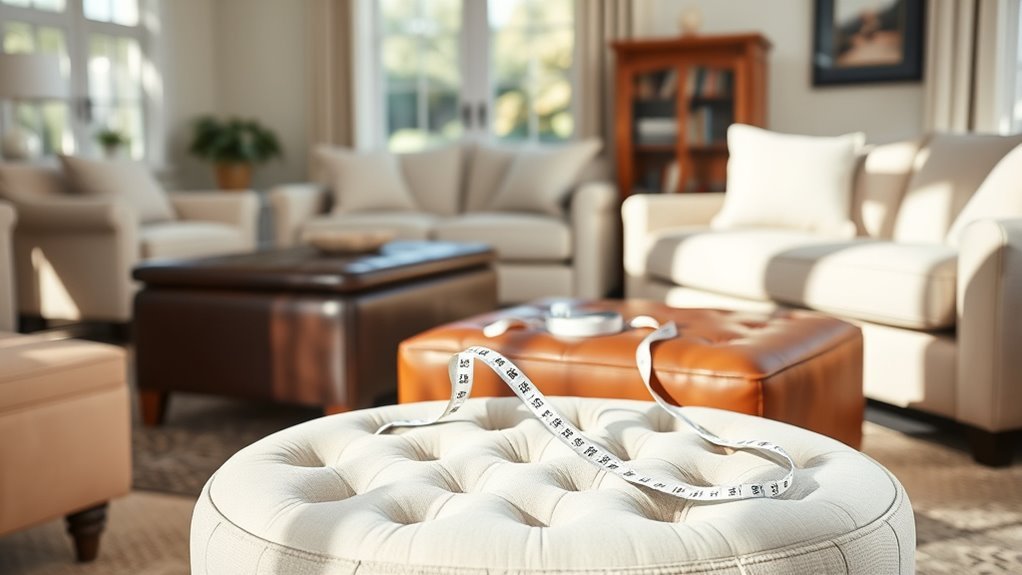
Quick Answer: What Size Ottoman Do You Need?
Last updated: August 19, 2026
Choosing the right size ottoman starts with your sofa seat height, sofa length, and the clear floor space in front of it. There is no single standard ottoman size. For most living rooms, start with an ottoman about half to two-thirds of the sofa’s length. For footrest use, aim for the sofa-seat height or slightly lower, commonly about 1–3 inches lower; for coffee-table use, keep the top close to sofa-seat height. Then test the footprint so doors, drawers, recliners, and walking paths still work.
Quick Answer
Start with an ottoman about half to two-thirds the sofa’s length. For a footrest, keep it at sofa-seat height or slightly lower, commonly about 1–3 inches lower; for a coffee-table ottoman, keep it close to sofa-seat height. Leave about 12–18 inches between the sofa and ottoman; 14–18 inches is a common coffee-table spacing range. Preserve about 30 inches for a normal walking path, or 36 inches where accessible-route width is a priority.
Key Takeaways
- For a footrest, start at sofa-seat height or slightly lower; published guidance ranges from about 1 inch to 2–3 inches lower, so test what feels comfortable on your sofa.
- For a coffee-table ottoman, aim for a height close to your sofa seat and use a stable tray on upholstered tops.
- A balanced ottoman is usually half to two-thirds the length of the sofa, depending on room size and function.
- Leave about 12–18 inches between the sofa and ottoman; for coffee-table use, 14–18 inches is a strong starting range. Preserve about 30 inches for a normal walking path where people need to pass.
- Tape the ottoman footprint on the floor before buying so you can test doors, drawers, walkways, and traffic flow.
At a Glance
| Key Measurements | Sofa seat height, sofa length, and clear floor space in front |
| Length Starting Point | About 50%–67% of sofa length |
| Height Starting Point | Footrest: seat height or about 1–3 inches lower; coffee-table use: close to seat height |
| Clearance Starting Point | 12–18 inches from sofa; 14–18 inches for coffee-table use; about 30 inches for a normal walking path |
Understanding the Functions of Ottomans and Footstools in Your Living Room
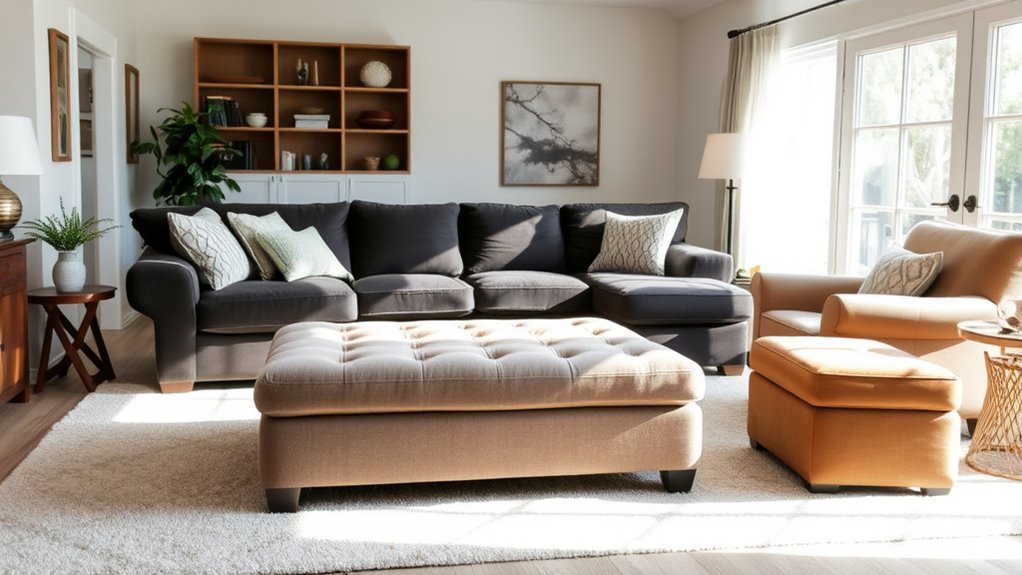
An ottoman can be a footrest, a coffee-table substitute, a storage piece, or flexible extra seating. A footstool is usually smaller and lighter, making it best for resting your feet or moving between chairs. The right choice depends on how you actually live in the room.
If you want a footrest, comfort comes first. If you want a coffee table ottoman, you need enough surface area for a tray, books, and drinks. If you need storage, check the lid style, hinge safety, and interior depth. If you need extra seating, choose a firm, stable piece rather than a soft pouf that sinks under weight, and confirm the manufacturer states that the ottoman is intended for seating.
Note: Ottoman measurements are design guidelines, not strict rules. A deep lounge sofa, low-profile sectional, recliner, or small apartment layout may need a slightly different size.
Measuring Your Space for the Perfect Ottoman
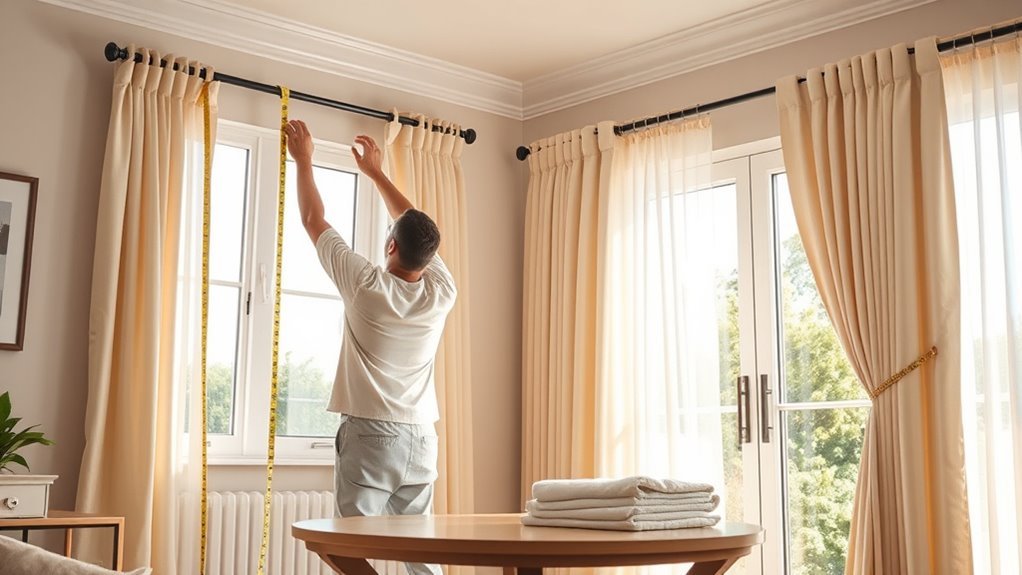
Start with your sofa, then measure the open floor area in front of it. Grab a tape measure and write down three sofa dimensions: seat height, overall sofa length, and sofa depth. Then check the room’s clearances, including doors, drawers, rug edges, and the main walking path.
Recommended Products

【Perfect Footrest】Length 17 x width 13 x height 13 inches (43 x 33 x 33 cm), a comfortable footrest size with thickened, high quality soft foam for comfortable foot spacing. By reducing pressure on the legs, placing your feet on the footstool helps prevent blood clots associated with deep vein thrombosis, reduces pressure on the lower back, and reduces swelling and varicose veins.

Plush Material: Step into comfort with our cozy pouf ottoman! SHOUREN pouf ottoman is made with soft corduroy and filled with high-quality memory foam, which make the ottoman more comfortable and lightweight

Plush Material: Step into comfort with our cozy pouf ottoman! SHOUREN pouf ottoman is made with soft corduroy and filled with high-quality memory foam, which make the ottoman more comfortable and lightweight
Step-by-Step Ottoman Measuring Process
- Measure sofa seat height. Measure from the floor to the top of the seat cushion, not the sofa arm.
- Measure sofa length. Measure the full seating width from one outside arm to the other, or the usable seat length on an armless sectional.
- Choose the ottoman role. Decide whether it will work mainly as a footrest, coffee table, storage bench, or extra seat.
- Calculate the target length. Multiply the sofa length by 0.5 and 0.67. That range is your starting point.
- Mark the footprint. Use painter’s tape on the floor to outline the ottoman size before you buy.
- Walk around it. Open nearby doors, pull out drawers, sit down, stretch your legs, and check whether the ottoman feels too close or too far away.
| Measurement | Best Starting Point |
|---|---|
| Footrest ottoman height | At sofa-seat height or slightly lower; about 1–3 inches / 2.5–8 cm lower is a practical starting range |
| Coffee-table ottoman height | Close to sofa-seat height; many coffee tables fall around 14–20 inches high |
| Ottoman length | Half to two-thirds of the sofa length |
| Ottoman depth | About 20–28 inches for footrest use; about 28–35 inches for coffee-table use, then confirm the taped footprint preserves clearance |
| Clearance from sofa | About 12–18 inches / 30–45 cm; 14–18 inches is a common coffee-table placement range |
| Main walking path | About 30 inches / 76 cm for a normal home walking path; use 36 inches / 91 cm where accessible-route width is a priority |
| Side seating clearance | If people need to pass here, preserve about 30 inches / 76 cm rather than squeezing a larger ottoman into the route |
Ottoman Size Examples by Sofa Length
| Sofa Length | Balanced Ottoman Length Range | Best Use |
|---|---|---|
| 72 inches | 36–48 inches | Apartment sofa, small rectangular ottoman, or two compact poufs |
| 84 inches | 42–56 inches | Standard sofa with a footrest or coffee-table ottoman |
| 96 inches | 48–64 inches | Long sofa, larger storage ottoman, or tray-top ottoman |
| 108 inches | 54–72 inches | Large sofa, sectional, or two matching ottomans |
For example, if your sofa is 84 inches long, a balanced ottoman will usually land between 42 inches and 56 inches long. Choose the lower end if the room is tight or the ottoman is mainly a footrest. Choose the higher end if it will replace a coffee table or anchor a large sectional.
Several interior-design and furniture guides support these proportion and clearance ranges. Better Homes & Gardens recommends 30 inches of walking clearance around furniture and 14–18 inches between a sofa and coffee table. Poly & Bark gives a broader 12–18-inch range between seating and a coffee table or ottoman. OKA says there is no single standard ottoman size and recommends about two-thirds of sofa length for a balanced setting. Furniture in Fashion uses roughly 50–70 cm (about 20–28 inches) of depth for footrest use and 70–90 cm (about 28–35 inches) for coffee-table use. For mobility-friendly routes, the 2010 ADA Standards for Accessible Design specify a 36-inch minimum clear width for accessible walking surfaces in covered public and commercial settings, which is a useful reference when planning a home for easier movement.
What’s the Right Height for Your Ottoman?
The best ottoman height depends on the job. A footrest should usually sit a little lower than the sofa seat so your knees and ankles relax. A coffee-table ottoman should sit closer to the sofa-seat height so trays, books, and drinks are easy to reach.
Published guidance varies slightly, which is why comfort-testing matters. Vale Footstools recommends a footrest around 1 inch below the seat, while Southern Living quotes designer guidance of 2–3 inches below the chair height. Treat 1–3 inches lower as a starting range, not a rigid rule. If the ottoman will act like a coffee table, use your sofa seat height as the guide; The Spruce notes that coffee tables commonly fall between 14 and 20 inches high and should relate closely to sofa-seat height.
Recommended Products

Versatile Functionality: Transform this storage ottoman into a storage box, footstool, or even a stylish coffee table. It seamlessly fits anywhere you desire – from the living room to the bedroom's foot, foyer, or beneath a window

Aesthetic and stylish Decor: The square leather ottoman is made of high-density foam and faux leather fabric material, the top tufted button decoration, and the bottom metal rivets locking edge craftsmanship, showing the elegant mid-century style

【Soft Cloud - Like ComfortFoam Round Side Table Cushiong】- This ottoman footstool combines soft corduroy fabric with plush foam filling. these tables remain securely in place and protect hardwood or tile floors from scratches and dents. The corduroy feels gentle against your skin, while the high - density foam offers supportive cushioning. Sit to chat, rest your feet, or use it as a small table—every touch is pure comfort.
Ottoman Height by Use
- Footrest: at sofa-seat height or slightly lower; about 1–3 inches / 2.5–8 cm lower is a useful starting range.
- Coffee-table ottoman: close to sofa-seat height, especially if you use trays often.
- Extra seating: near the height of nearby chairs and sofa seats so guests do not feel too low.
- Low lounge setup: match the lower profile of the sofa rather than forcing a standard-height ottoman into the room.
Pro Tip: Sit on your sofa and place a stack of books or a box where the ottoman will go. Adjust the height until your legs feel relaxed, then measure that height before shopping.
Choosing the Ideal Shape and Style for Your Ottoman
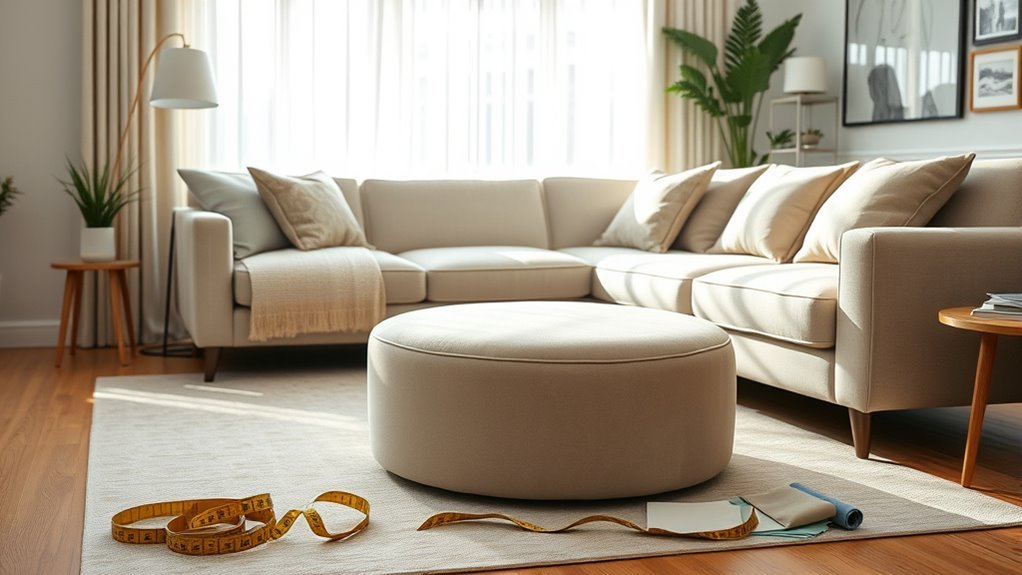
The right shape should echo your seating layout and leave smooth paths around the room. A beautiful ottoman that blocks knees, doors, or walkways will feel wrong no matter how well it matches the décor.
Best Ottoman Shape by Room Layout
- Round ottoman: best for small rooms, tight corners, curved sofas, and homes where people walk around the seating area often.
- Square ottoman: works well with sectionals, paired chairs, and symmetrical seating groups.
- Rectangular ottoman: best for standard sofas, long sectionals, and coffee-table use because it offers more surface area.
- Oval ottoman: gives you length like a rectangle but softer edges for better flow.
- Pouf: best as a casual footrest or flexible accent, not as the main coffee table.
For materials, choose based on use. Leather and performance fabrics handle frequent foot traffic well. Bouclé, velvet, and pale linen can look beautiful but may show lint, pet hair, spills, and wear more quickly. Wood-framed or tray-top ottomans are helpful if the piece will regularly hold drinks.
Warning: If you have children, pets, or older adults at home, avoid unstable trays, sharp corners, lightweight ottomans that tip easily, and storage lids without safe hinges.
How to Coordinate Your Ottoman With Existing Furniture
Your ottoman does not have to match your sofa exactly. In fact, a slight contrast often looks more intentional. The goal is to repeat at least one element already in the room: color, texture, shape, leg finish, fabric tone, or visual weight.
If your sofa is bulky, choose an ottoman with enough presence to balance it. If your sofa has slim legs and a light profile, a massive block ottoman can feel heavy. If your room already has several rectangular pieces, a round or oval ottoman can soften the layout.
Simple Coordination Rules
- Match one finish. Repeat a wood tone, metal leg finish, or fabric color from the room.
- Vary the texture. Pair a smooth leather sofa with a woven, bouclé, or linen ottoman for depth.
- Balance the visual weight. Large sofas need larger ottomans; slim sofas usually need lighter pieces.
- Use pattern carefully. A patterned ottoman works best when the sofa and rug are quieter.
- Check the rug. Keep the ottoman base on a level surface; a thick rug under only part of the base can make some designs rock or sit unevenly.
Using an Ottoman as a Coffee Table
A coffee-table ottoman needs a flatter, firmer top than a simple footstool. Soft, rounded cushioning is comfortable for feet but risky for drinks. Use a tray that is clearly smaller than the ottoman top, does not overhang the edges, and leaves some upholstered surface free for books, a throw, or your feet.
Keep the tray stable and easy to lift. A tray with handles and a raised lip is safer than a completely flat tray. For square or round ottomans, a round tray often looks natural. For rectangular ottomans, a rectangular tray usually gives better usable space.
A good ottoman should feel close enough to reach, low enough to relax, and small enough that the room still breathes.
Common Ottoman Sizing Mistakes
- Buying before measuring: Always tape the footprint on the floor first.
- Choosing a footrest that is too tall: If your knees lift awkwardly, the ottoman is too high.
- Choosing a coffee-table ottoman that is too soft: Use a firmer top or add a stable tray.
- Forgetting side clearance: Leave room for people to walk around the seating area, not just room between the sofa and ottoman.
- Ignoring doors and drawers: Test cabinet doors, media consoles, storage benches, and recliners before buying.
- Matching everything too closely: A coordinated ottoman usually looks better than a perfectly matched furniture set.
Final Ottoman Fit Check Before You Buy
Before ordering, run one final room-fit check. Sit in every main seat, reach toward the ottoman, stretch your legs, and walk the normal path from the doorway to the sofa. Then open the media console, nearby drawers, storage lids, and any recliner footrests.
- Comfort check: Your feet should rest without raising your knees sharply.
- Reach check: You should reach a tray or book without leaning far forward.
- Traffic check: People should pass around the ottoman without turning sideways.
- Door check: Cabinet doors, drawers, and storage lids should open fully.
- Safety check: The ottoman should not slide, tip, or create a sharp-corner hazard in the main path.
Recommended Products

【QUICK ASSEMBLY, EASY FOLDAWAY】This storage ottoman from the SONGMICS MAZIE Collection has a foldable design that allows quick setup in seconds by simply inserting the bottom panel. Easily fold and store it under the bed or in a closet when not in use.

【QUICK ASSEMBLY, EASY FOLDAWAY】This storage ottoman from the SONGMICS MAZIE Collection has a foldable design that allows quick setup in seconds by simply inserting the bottom panel. Easily fold and store it under the bed or in a closet when not in use

Heavy-Duty Support: Built with thick MDF panels for strong structural support, this storage ottoman bench holds up to 660 lbs. The cushioned top features high-density foam and breathable linen fabric, providing a comfortable seating experience
Related Guides
Frequently Asked Questions
How do I know what size ottoman to buy?
Measure your sofa seat height, sofa length, and the open space in front of the sofa. For most rooms, start with an ottoman that is half to two-thirds the sofa length, at sofa-seat height or slightly lower for footrest use, and about 12–18 inches away from the sofa.
How big should an ottoman be compared to a couch?
A balanced ottoman is usually half to two-thirds the length of the couch. For an 84-inch sofa, that means about 42–56 inches long. Use the smaller end for a footrest and the larger end for a coffee-table ottoman.
Should an ottoman be lower than the sofa?
Usually, a footrest works best at sofa-seat height or slightly lower. Published guidance ranges from about 1 inch to 2–3 inches lower, so use that as a starting point and test your leg position. For a coffee-table ottoman, keep the height close to the sofa seat.
Can an ottoman be taller than the sofa seat?
A slightly taller ottoman can work as an accent or side surface, but it is usually less comfortable as a footrest. For footrest use, stay close to sofa-seat height or slightly below it and test your leg position before buying.
How far should an ottoman be from the sofa?
Place the ottoman about 12–18 inches from the sofa for most living rooms. For coffee-table use, 14–18 inches is a strong starting range; a dedicated footrest may slide closer when you are using it.
What size ottoman works with a sectional?
For an L-shaped sectional, a square ottoman often works best inside the corner, while a long rectangular ottoman fits better in front of the longest seat run. Leave enough side clearance so the ottoman does not block the open end of the sectional.
Should an ottoman tray be the same size as the ottoman?
No. Choose a tray that is smaller than the ottoman top, stays fully inside the edges, and leaves some upholstery exposed. The exact tray size is a styling and use choice, not a fixed furniture-sizing rule.
Where should I put an ottoman in a living room?
The most common spot is centered in front of the sofa, about 12–18 inches away. You can also place a small ottoman beside an accent chair, tuck a pouf under a console, or use two smaller ottomans instead of one large piece in a tight room.
Is a round or rectangular ottoman better?
Round ottomans are better for tight rooms and softer traffic flow. Rectangular ottomans are better for long sofas, sectionals, and coffee-table use because they provide more surface area.
Can an ottoman replace a coffee table?
Yes, if it has enough surface area and a stable top. Choose a height close to the sofa seat, keep it about 12–18 inches from the sofa, and use a tray for drinks or small items.
How do I choose an ottoman for a small living room?
Choose a round, oval, or narrow rectangular ottoman and tape the footprint before buying. In a tight room, two small ottomans can work better than one oversized piece because you can move them when you need more floor space.
Conclusion
The right ottoman should make your living room easier to use, not harder to move through. Start with your sofa height and length, choose the ottoman’s main purpose, then tape the size on the floor before you buy. When the height feels comfortable, the length feels balanced, and the clearance works from every seat, you’ve found the right fit.
Sources
- Better Homes & Gardens — 30-inch furniture walking clearance and 14–18-inch sofa-to-coffee-table spacing
- Poly & Bark — ottoman/coffee-table proportion and 12–18-inch seating clearance guidance
- OKA — no universal ottoman size and roughly two-thirds sofa-length proportion guidance
- Vale Footstools — footrest height and ottoman sizing guidance
- Southern Living — designer guidance on keeping an ottoman 2–3 inches below chair height for footrest comfort
- The Spruce — coffee table height, sofa proportion, and placement guidance
- Furniture in Fashion — ottoman length, depth, height, shape, and clearance guidance
- ADA.gov 2010 Standards for Accessible Design — 36-inch accessible walking-surface clear-width reference for covered public/commercial settings