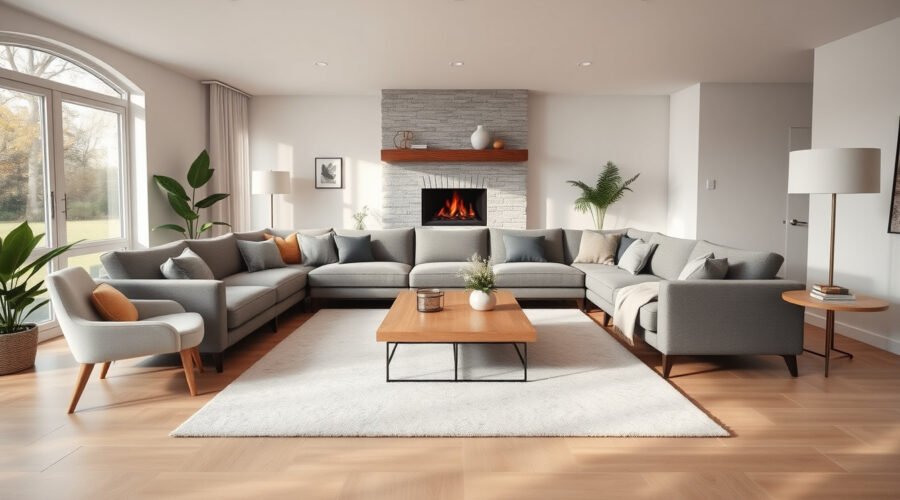
A large sectional can make a living room feel cozy, grounded, and easy to use, but only when the room has enough breathing space around it. The key is to treat the sectional as the anchor, then balance it with clear walkways, the right rug, lighter accent pieces, and lighting that makes the seating area feel intentional instead of crowded.
Quick Answer
To balance a living room with a large sectional, place the sectional around a clear focal point, keep main walkways about 30 to 36 inches wide, choose a rug large enough to anchor the seating area, and add lighter chairs, tables, lighting, and decor so the sectional does not visually overpower the room.
Key Takeaways
- Start with the room’s main focal point, such as a fireplace, TV, large window, or artwork.
- Measure the room, the sectional, the delivery path, and the open walkways before you commit to a layout.
- Aim for about 30 inches of clearance in tighter rooms and 36 inches where comfort or accessibility matters.
- Use a rug that connects the sectional, coffee table, and nearby chairs so the seating zone feels finished.
- Balance the sectional’s visual weight with slim tables, accent chairs, layered lighting, pillows, throws, and greenery.
At a Glance
| Time Required | 30 to 90 minutes for measuring, taping the footprint, and testing furniture placement |
| Difficulty | Easy to moderate, depending on room size and sectional shape |
| Tools Needed | Tape measure, painter’s tape, phone camera, notepad, and the sectional’s dimensions |
| Cost | $0 if rearranging existing pieces; varies if adding a rug, lamps, tables, or accent seating |
How to Identify Your Living Room Focal Point
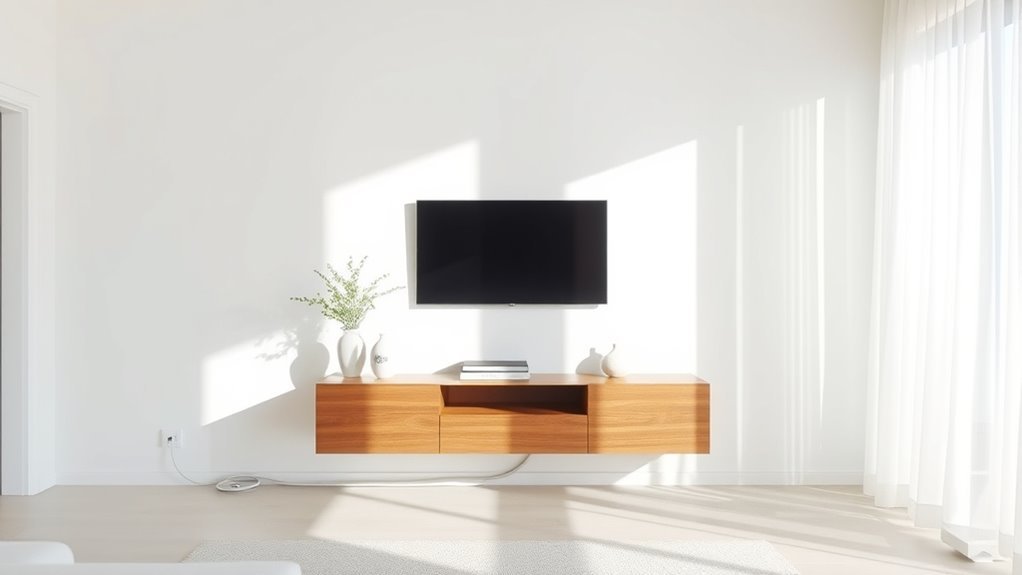
Start by choosing the feature the room naturally wants to face. In many living rooms, that focal point is a fireplace, TV, picture window, built-in shelving, or a large piece of art. Once you know the focal point, angle or position the sectional so most seats have a comfortable view without forcing people to twist their necks.
If your room has two focal points, such as a fireplace and a TV, decide which one matters most for daily use. A sectional can face the TV directly while an accent chair turns slightly toward the fireplace, or the sectional can sit at a soft angle so both features stay visible.
Note: A focal point does not have to be built into the room. If your living room lacks a fireplace, TV wall, or standout window, create one with large-scale art, a console table, tall shelving, or a grouped gallery wall.
Measure Your Space to Optimize Sectional Placement
Before moving the sectional, measure the room’s length and width, then write down the sectional’s full footprint, including chaise depth, arm width, recliner clearance, and ottoman size if you use one. Also measure doors, halls, stairs, elevators, and tight corners so you know the sectional can actually reach the room.
Use painter’s tape to mark the sectional on the floor. Then walk around it as you would on a normal day: from the door to the sofa, from the sofa to the kitchen, from the hallway to the window, and from each seat to the coffee table. This simple test shows whether the layout works before you lift anything heavy.
Pro Tip: Take a photo of the taped layout from each doorway. If the sectional looks like it blocks the room before furniture is even moved, shift the footprint inward, rotate the chaise, or try the sectional on a different wall.
Assess Room Dimensions First
A sectional should anchor the seating area without swallowing the whole room. If the sectional fills nearly every open wall and leaves no place for tables, lamps, or walkways, it is too large for the layout. If it floats in a large room with no rug or side pieces around it, it may look disconnected.
For most rooms, leave at least one clear path through the space. Better Homes & Gardens recommends maintaining about 30 inches of clearance for walking around furniture and placing coffee tables 14 to 18 inches from sofas for easy reach. For more comfortable movement, especially in busy households, aim closer to 36 inches on main paths. Better Homes & Gardens furniture spacing guidance and the U.S. Access Board’s accessible-route standards both support giving circulation space serious attention.
Identify Focal Points Strategically
Once you know your focal point and measurements, decide how the sectional should face the room. In a TV room, the longest side of the sectional usually faces the screen. In a conversation room, the sectional can face a pair of chairs or sit across from a fireplace. In an open-plan space, the sectional can define the living zone by floating with its back toward the dining area, as long as the back does not block the main entry path.
Allow For Traffic Flow
Traffic flow is what keeps a large sectional from feeling like an obstacle. Keep the chaise on the lower-traffic side when possible, such as near a corner, window, or side wall rather than directly beside the room’s main entrance. Leave enough room for people to pass without sidestepping around corners or bumping into the coffee table.
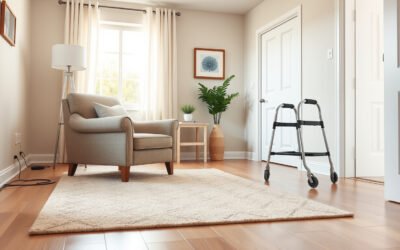
Warning: Do not block door swings, floor vents, radiators, fireplace clearance zones, or the path to frequently used storage. A sectional that technically fits can still make the room frustrating if it interrupts daily movement.
Keep Your Living Room Flowing Smoothly
To create a living room that feels open and inviting, keep the main route through the room simple. In tight rooms, 30 inches of clearance can work for a basic walkway. When you have the space, 36 inches feels easier for passing, carrying drinks, moving around pets, or making the room more accessible.
Do not automatically push every piece of furniture against the walls. A sectional can look more balanced when it floats a few inches from the wall or defines a seating zone in the middle of an open room. The goal is not to fill every edge; the goal is to create a comfortable path around the sectional and a clear reason for every piece of furniture.
Place the Chaise and Corners Where They Make Sense
The shape of your sectional changes the best layout. Use the sectional’s longest side and chaise direction to guide the room instead of forcing it into a corner that does not support the way you live.
- L-shaped sectional: Works well in corners, open-plan rooms, and TV-focused layouts. Keep the open side facing the main entry when possible so the room feels welcoming.
- Chaise sectional: Place the chaise on the low-traffic side, often near a wall, window, or quiet corner. Avoid placing the chaise where people need to cut through the room.
- U-shaped sectional: Best for large rooms and family rooms. It creates a strong conversation zone but needs generous clearance around the outside.
- Modular sectional: Best when your needs change often. Move armless chairs, ottomans, or chaise pieces to create extra seating for guests or more floor space for everyday use.
Choose Accessories to Complement Your Sectional
Accessories should make the sectional feel connected to the room, not heavier. Repeat colors, textures, and materials in small doses so the sectional looks intentional. For example, if the sectional is charcoal, add warm wood tables, cream pillows, a patterned rug, and brass or black lighting to break up the large block of upholstery.
Recommended Products

Material: Made of High quality durable linen blend, comfortable to touch and lay on. Quality fabric, hide your old pillow patterns perfectly. This material does not pilling or shedding, and holding up well after long time of use

Super Soft: A Grade Velvet, fine texture, soft handle and comfortable. It has elasticity, no pilling and no stimulation to the skin.

SOFT & DURABLE: Made of machine washable polyester, Comfortable & soft touch. Each pillow cover features the same pattern printed on both sides for a coordinated look from every angle.(Insert or filler not included)
Textiles and Patterns
Layer pillows and throws in different sizes, but keep the palette controlled. A good mix is one solid, one small-scale pattern, and one textured fabric. This gives the sectional depth without making it look busy. If the sectional is plain, you can use a stronger pattern on the rug or pillows. If the sectional already has texture or a bold color, keep the surrounding pieces calmer.
- Layered pillows: Use a mix of large back pillows, medium patterned pillows, and one or two smaller accent pillows.
- Textured throws: Add softness with cotton, linen, boucle, wool, or knit textures.
- Color repetition: Repeat the sectional color at least once elsewhere, such as in art, a vase, or a patterned rug.
Decorative Accents
Decorative accents should vary in height and shape. A low sectional often benefits from taller elements nearby, such as a floor lamp, tree, leaning art, or tall bookcase. Use round or oval tables to soften a boxy sectional, and choose slim legs or open bases when the room feels visually heavy.
Keep the coffee table or ottoman close enough to use. About 16 to 18 inches from the sectional is a comfortable target in many rooms, while slightly more room may work if you need extra passing space.
Lighting Solutions
Lighting keeps a sectional from feeling like one dark mass in the room. Use a mix of ambient, task, and accent lighting so the seating area works for conversation, reading, movie nights, and relaxing. Ambient lighting brightens the whole room, task lighting helps with reading or hobbies, and accent lighting highlights art, shelves, plants, or architectural details. Better Homes & Gardens explains these lighting layers as ambient, task, and accent light.
- Floor lamps: Place one near the chaise or open end of the sectional to add height and reading light.
- Table lamps: Use side tables with lamps at one or both ends if space allows.
- Dimmers: Add dimmable bulbs or fixtures so the room can shift from bright daytime use to a softer evening mood.
- Accent lights: Use sconces, picture lights, or LED strips to highlight art or shelving behind the seating area.
Incorporate Additional Seating for Better Functionality
A large sectional provides plenty of seating, but one or two extra pieces can make the room more flexible. Choose accent chairs, poufs, stools, or a bench that are lighter in scale than the sectional. This keeps the room balanced and gives guests a place to sit without making everyone line up on the same sofa.
Position accent chairs across from the sectional or at a right angle to encourage conversation. In a small room, use a swivel chair, armless chair, or pouf that can move easily. In a large room, a pair of chairs can help the sectional feel like part of a complete seating group instead of one oversized piece.
Recommended Products

【Medieval Aesthetic Design】Simple and smooth lines with a minimalist design perfectly match Medieval Modern, Nordic, and Luxury Minimalist styles. This chair easily lights up living rooms, bedrooms, and offices, adding an exquisite and high-end atmosphere to your home.

Mid-Century Charm - This lounge chair has a mid-century charm with its extra pillows, widened arms, and flared legs. The green color of the fabric complements the walnut color of the frame, which will fit in with any of your home decor styles.

Modern Oversized Accent Chair: This comfy reading chair features a sleek, contemporary design with an arched backrest and curved armrests. Its clean lines and elegant shape blend seamlessly into any living room, bedroom, or study, adding a touch of sophistication to your space
Select the Right Rug Size for Comfort and Balance
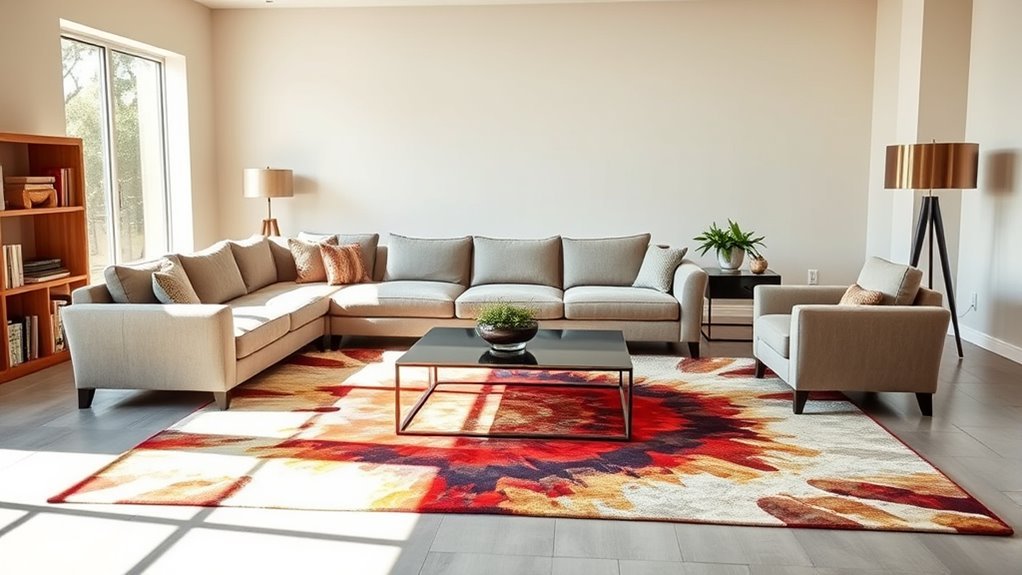
The rug is what visually ties the sectional, coffee table, and accent seating together. A rug that is too small can make the sectional look oversized and disconnected. A rug that is properly scaled makes the seating zone feel intentional. Architectural Digest recommends using furniture placement as a guide and choosing a rug that lets the furniture sit fully on the rug or at least places the front legs of the main seating on it. Architectural Digest rug sizing guidance
Use these starting points:
- Small sectional: A 6×9 or 8×10 rug may work if the front legs of the sectional can sit on the rug.
- Medium sectional: An 8×10 rug is often the minimum size for a pulled-together seating area.
- Large sectional: A 9×12 or 10×14 rug usually looks more balanced, especially when adding chairs or a large coffee table.
- Open-plan room: Go larger so the rug clearly defines the living area from the dining or kitchen zone.
A rug should not look like it is floating in front of the sectional. Let at least the front legs of the sectional touch the rug so the seating area feels connected.
Recommended Products

[DURABLE QUALITY HANDMADE CONSTRUCTION]: Hand-knotted by skilled artisans for a truly unique textured look and feel

Ultra-Soft Low Pile Rug: Gent drizz living room rugs 8x10 made of Upgraded durable low pile faux wool fibers, 0.25'' thick, featuring a soft fuzzy density surface, soft and pliable to the touch, providing great comfort for your bare feet. The low pile makes it easy for your Large area rug to clean and is perfect for homes with kids and pets

The handmade, hand-tufted construction adds durability to this rug, ensuring it will be a favorite for many years.
Common Mistakes to Avoid for a Balanced Living Room
Most sectional layout problems come from scale, clearance, or missing finishing pieces. Avoid these common mistakes before buying new decor.
| Mistake | Why It Hurts the Room | Better Fix |
|---|---|---|
| Buying a sectional before measuring | It may block doors, walkways, windows, or delivery paths. | Measure the room, sectional, and delivery route first. |
| Using a rug that is too small | The sectional looks oversized and disconnected. | Choose a rug that fits at least the front legs of the seating. |
| Blocking the main walkway | The room feels cramped even if it looks stylish. | Keep the chaise and corners away from the busiest path. |
| Pushing every piece against the wall | The seating area can feel distant and unfinished. | Float pieces slightly when clearance allows. |
| Overloading pillows and decor | The sectional becomes cluttered and hard to use. | Use fewer, better-scaled pieces with repeated colors and textures. |
Frequently Asked Questions
How do you lay out a living room with a sectional?
Start with the focal point, then place the longest side of the sectional so it supports the main use of the room. Keep the chaise on the lower-traffic side, leave about 30 to 36 inches for main walkways when possible, and use a rug and coffee table to connect the seating area.
Should a sectional go against the wall or float in the room?
Either can work. In a small room, placing the sectional near a wall may save space. In a larger or open-plan room, floating the sectional can define the living area and create a stronger conversation zone. The best choice is the one that keeps walkways clear.
What size rug works best under a sectional?
For many sectionals, an 8×10 rug is the smallest size that feels balanced. Larger sectionals often need a 9×12 or 10×14 rug. The rug should be large enough for at least the front legs of the sectional to sit on it, and ideally it should also connect the coffee table and nearby chairs.
How much space should be between a sectional and coffee table?
A good target is about 16 to 18 inches between the sectional and coffee table. This keeps drinks, remotes, and books within reach while still leaving enough room for knees and movement.
How do you make a large sectional look less bulky?
Balance it with lighter pieces around it. Choose slim side tables, open-leg chairs, a properly sized rug, layered lighting, and a few pillows or throws in varied textures. Tall items like a floor lamp, plant, or artwork can also pull the eye upward and reduce the sectional’s visual weight.
Conclusion
Balancing a living room with a large sectional comes down to proportion, flow, and finishing details. Choose a clear focal point, measure before you move anything, protect the main walkways, and use the rug, lighting, tables, and accent seating to make the sectional feel connected to the whole room. When each piece has a purpose, your sectional becomes the comfortable anchor of the space instead of the thing that overwhelms it.
Sources
- U.S. Access Board — ADA Chapter 4: Accessible Routes — supports the 36-inch accessible-route clearance reference.
- Better Homes & Gardens — How to Arrange Furniture — supports furniture spacing, walkway clearance, and coffee-table distance guidance.
- Architectural Digest — Rug Sizes Guide — supports rug proportion and front-leg/all-leg placement guidance.
- Better Homes & Gardens — Ambient, Task, and Accent Lighting — supports the layered lighting recommendations.
- Homes & Gardens — Living Room Layout Guide — supports focal point, flow, and negative-space layout principles.